
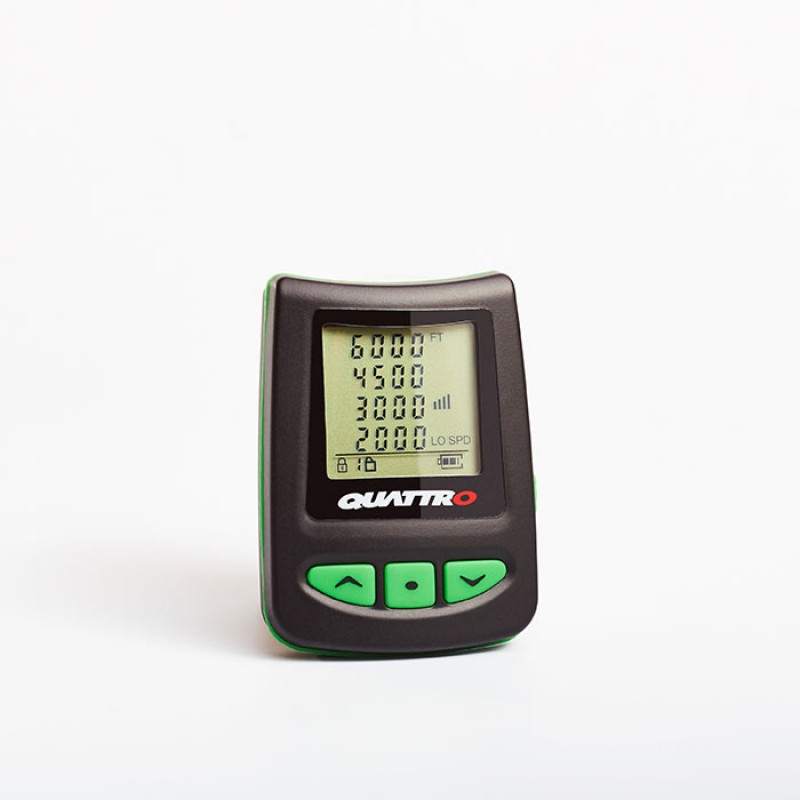
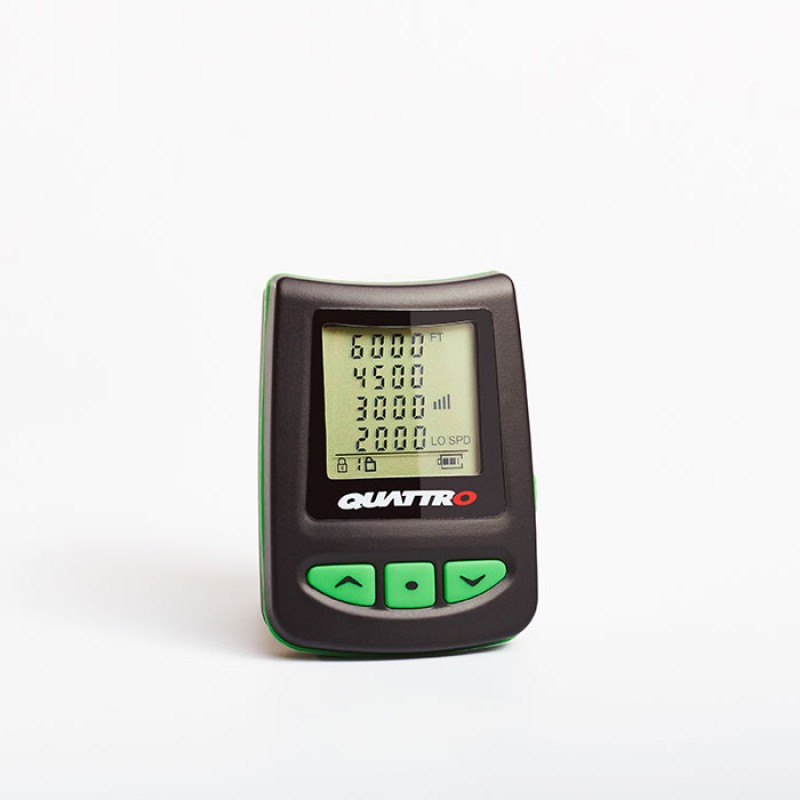
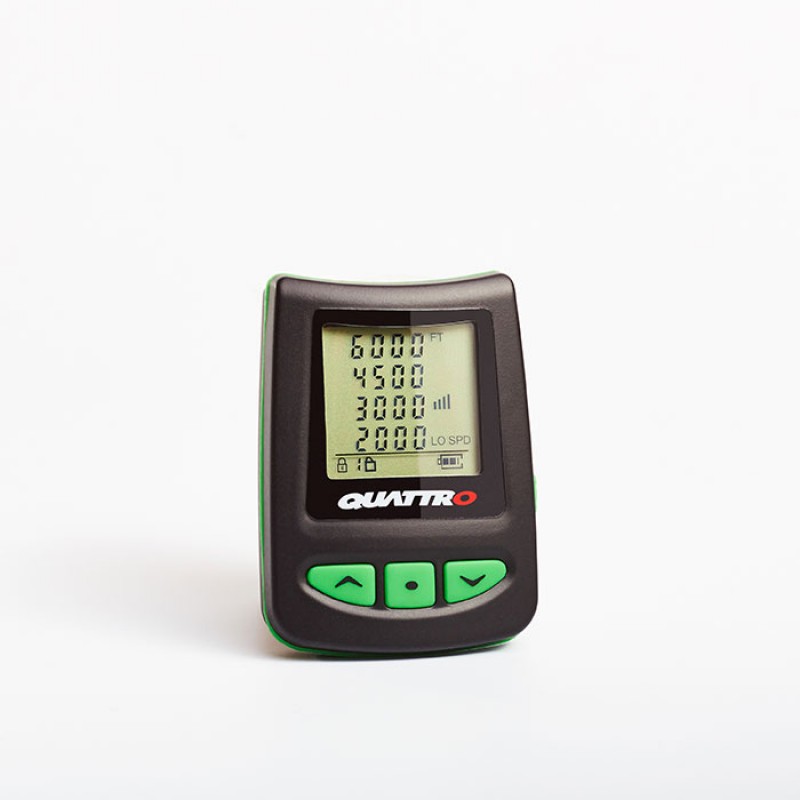
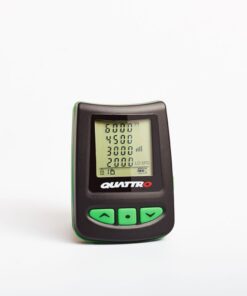

L&B Quattro Skydiving Audible Altimeter
€150.00
Product Description.
The L&B Quattro Skydiving Audible Altimeter is a compact altitude-warning instrument developed for skydivers who require clear, configurable audio alerts during freefall and canopy flight. Unlike a visual altimeter, which must be deliberately read, the Quattro communicates through audible warning patterns while it remains installed near the jumper’s ear inside a compatible helmet.
The device supports up to four high-speed warning altitudes and three low-speed warning altitudes. Therefore, a jumper can configure distinct cues for stages such as freefall separation, break-off, deployment preparation, canopy checks, landing-pattern awareness, or another procedure approved by an instructor or drop zone. The manufacturer lists its dimensions as approximately 56 × 41 × 11 millimetres and recommends two Renata CR2325 three-volt batteries.
L&B Quattro Skydiving Audible Altimeter: Advanced Freefall and Canopy Warning System
Precision Altitude Awareness Across Modern Skydiving Disciplines
Why Use the L&B Quattro Audible Altimeter?
Altitude awareness remains fundamental whether someone is planning a parachute jump Australia experience, visiting Skydive Byron Bay, considering Cairns skydiving, or researching Skydive Belize and skydiving Blue Hole Belize operations. However, the Quattro should not replace a visual altimeter, trained observation, established procedures, or personal responsibility. Instead, it functions as an additional altitude-awareness layer.
The Quattro can assist during belly flight, freeflying, a tracking jump, formation work, CRW skydiving, high-performance canopy flight, or carefully planned wingsuit activity. Nevertheless, warning altitudes must match the jump plan, discipline, experience level, deployment system, airspace, and drop-zone rules.
How the Audible Warning System Works
The instrument uses atmospheric-pressure changes to identify ascent, freefall, and lower-speed descent. Once a programmed altitude is reached, an audible sequence is produced near the jumper’s ear. Four high-speed alerts provide greater programming flexibility than a basic three-alarm device, while three low-speed alerts can support canopy-flight awareness.
This functionality may be useful when skydiving speed increases during freefly positions or when speed sky diving techniques create a rapidly changing altitude environment. Even so, no audible instrument can guarantee that a warning will be heard. Noise, helmet fit, incorrect programming, battery condition, ear protection, distraction, or equipment failure can affect perception.
Helmet Installation and Compatibility
The Quattro is normally placed in the audible pocket of a compatible skydiving helmet. Many modern skydive helmets provide dedicated internal spaces for audible devices. Examples commonly researched by jumpers include the Cookie G4 helmet, G35 helmet, a full face skydiving helmet, and open-face models.
The phrase best skydiving helmet does not identify one universally suitable model. Fit, audible-pocket position, field of view, ventilation, impact protection, communication needs, and discipline all matter. Whether a product is advertised as a sky helmet skydiving model, sky diving helmet, or skydiving helmet full face design, users should confirm Quattro compatibility with the helmet manufacturer.
A jumper asking, can you wear glasses while skydiving, should also discuss eyewear and helmet fit with the drop zone. Properly selected skydiving glasses or skydiver goggles must remain secure without preventing the audible warning from being heard.
Freefall, Tracking and Wingsuit Applications
During a tracking jump, groups require disciplined break-off plans, directional awareness, and sufficient separation. A configurable audible may help mark planned phases, but it cannot detect other jumpers or determine whether separation is adequate.
The same limitation applies to the wingsuit sport. A wingsuit, vector wingsuit, gliding suit wingsuit, skydiving gliding suit, or other fly suits can change horizontal movement, descent rate, deployment procedures, and emergency considerations. An indoor wingsuit facility operates under completely different conditions and does not make someone qualified for outdoor flight.
Searches for wing suits for sale, the price of wingsuit, or a supposed tandem wingsuit should never replace formal instruction. Wingsuit activity requires appropriate experience, coaching, compatible gear and discipline-specific procedures.
Canopy Flight and Landing Awareness
After deployment, the Quattro’s low-speed warnings can be programmed to support canopy-related altitude awareness. However, it does not calculate the correct landing pattern, turn point, flare timing, traffic separation, or safe canopy size.
Terms such as landing flight risers, smallest canopy, skydiving downsizing chart, Safire 3, Fluid Wings, and base canopy concern different equipment and decision-making areas. Downsizing should be based on competent coaching, demonstrated skills, wing loading, landing consistency, currency, local conditions, canopy design, and drop-zone policy—not on a generic chart alone.
A jumper pilot must also distinguish aircraft responsibilities from skydiver responsibilities. Meanwhile, pilots participating in canopy formations, flocking, or other specialized activities need procedures developed specifically for those disciplines.
Compatibility With the Complete Parachute System
The Quattro does not form part of the load-bearing parachute rig. A complete skydiving rig may include a harness, container skydive system, main canopy, reserve canopy, deployment components and, where fitted, an automatic activation device.
Understanding the parts of a parachute, monitoring linewear, arranging qualified skydiving rigging, and checking the freefly pud handle or other deployment components remain separate responsibilities. The audible should never interfere with the parachute rig, helmet fit, handles, emergency procedures, or communication.
A gear bag skydive setup may contain a visual altimeter, audible altimeter, helmet, goggles, jumpsuit, logbook, closing-loop supplies and other approved items. However, any skydiving equipment list should be reviewed with a qualified instructor or rigger.
Hook Knives and Emergency Equipment
A hook blade knife, hook knife skydiving tool, or skydive hook knife is unrelated to the Quattro’s operation. Hook knives are emergency cutting tools and require correct storage, accessibility and training. Likewise, phrases such as fire parachute or Cypres fire skydiving should not be interpreted as Quattro functions. An audible altimeter does not activate an automatic activation device or deploy a parachute.
BASE Jumping and Other High-Risk Searches
BASE jumping, sometimes incorrectly searched as baseline jumping, differs substantially from ordinary aircraft skydiving. The Quattro is marketed as a skydiving audible altimeter; its presence does not make a BASE jump safe or compensate for site assessment, specialized training, object clearance, deployment decisions, or legal restrictions.
Similarly, topics such as nude parachute jump, skydiving nude, iFly Colorado Springs, skydiving tube, new skydive, #skydiving latest, and a general skydiving website are not product features. They represent event, entertainment, destination or search-interest topics and should not be confused with the Quattro’s engineering purpose.
Weight Limits, Training and Responsible Use
A weight limit skydiving policy is normally determined by the operator, aircraft, harness-container system, tandem equipment, instructor requirements and local regulations. The Quattro does not determine whether a participant is eligible to jump.
Before use, the batteries, settings, audio output, helmet placement and programmed altitudes should be checked. Warning levels should be selected with an instructor, coach or safety professional. Most importantly, the wearer must maintain visual altitude awareness because the device is an additional warning aid rather than a primary decision-making system.
Design, Configuration, Daily Use, and Safety Considerations
Compact Electronic Design
The L&B Quattro is designed as a compact electronic altitude-warning device that sits inside a compatible headgear pocket close to the user’s ear. Its small housing allows it to remain secure without creating unnecessary bulk or interfering with normal movement.
Inside the unit, pressure-sensitive electronics monitor changes in atmospheric pressure. The device interprets these changes to determine whether the aircraft is climbing, whether the wearer is descending rapidly, or whether the descent rate has slowed after deployment.
Because the casing contains sensitive electronics, it should be protected from heavy impact, moisture, crushing, extreme heat, and unauthorized modification. The housing should never be opened for repairs unless the work is performed by an authorized technician.
Multiple Warning Levels
One of the main advantages of the Quattro is its ability to provide several independently programmed alerts. The user can assign different altitude levels to specific stages of a jump.
For example, one alert may indicate that a planned activity should end. Another may signal the time to create separation. A later warning can remind the wearer to prepare for deployment, while a final alert may act as an urgent backup signal.
Additional warnings can also be configured for the slower descent phase. These may support awareness during the pattern, approach, or another predetermined stage. However, every setting should match the wearer’s experience, training, equipment, and operating procedures.
The device does not automatically determine safe warning altitudes. Therefore, users should establish their settings with guidance from an experienced instructor, coach, or safety officer.
How Configuration Supports Better Awareness
Proper configuration allows the device to support an organized sequence of actions. Instead of programming random numbers, the user should connect each alert to a clear and rehearsed response.
Before boarding the aircraft, the wearer should know:
- What each sound means
- Which altitude activates each warning
- What action should follow each signal
- Which alert has the highest priority
- What to do when a warning is not heard
This preparation is important because decision-making time becomes limited during a rapid descent. A warning is only useful when the wearer understands it immediately.
Settings should be reviewed whenever the planned activity, exit altitude, deployment altitude, equipment, location, or experience level changes. Old settings may not remain appropriate for every situation.
Clear Audible Signals
The warning tones are intended to be noticeable in a noisy environment. However, the ability to hear them can be affected by wind noise, headgear fit, hearing protection, personal hearing ability, placement of the unit, or surrounding equipment.
The device should be positioned close enough to the ear for the signals to remain clear. At the same time, it should not cause discomfort or move loosely inside its pocket.
Before each use, the wearer should confirm that the sound opening is not blocked by fabric, padding, dirt, or another object. A quick audio check can help identify weak output, incorrect settings, or battery-related problems.
No user should depend entirely on sound. Visual instruments, direct observation, situational awareness, training, and established procedures remain essential.
Battery Care and Power Management
Reliable operation depends on suitable batteries and correct installation. Users should follow the battery type and replacement procedure stated in the official manual.
Battery condition should be checked regularly rather than waiting for the device to stop working. Weak batteries may reduce reliability, affect display functions, or produce less noticeable sound output.
When replacing batteries, both the compartment and contact points should be inspected. Dirt, corrosion, moisture, or damaged contacts may prevent proper electrical connection.
Batteries should be installed with the correct polarity. Mixing old and new cells should be avoided, and damaged batteries should never be inserted. Spare batteries should be stored safely so that their terminals cannot touch metal objects.
When the device will remain unused for an extended period, the manufacturer’s storage recommendations should be followed.
Pre-Use Inspection
A brief inspection should be completed before every jumping day. The wearer should confirm that the unit powers on, responds correctly, and displays the expected settings.
The programmed warning levels should be checked carefully. A misplaced digit may create an alert at the wrong altitude. Therefore, the numbers should be reviewed slowly rather than assumed to be correct.
The housing should also be examined for cracks, loose parts, moisture, battery leakage, or impact damage. A device that has been dropped heavily or exposed to water should not automatically be considered safe.
After installation, the unit should remain secure inside its pocket. It should not fall out when the user moves, turns their head, opens the visor, or removes the equipment.
Real-World Use During Aircraft Ascent
During the climb, the device monitors pressure changes and prepares for the descent phase. The wearer should avoid changing settings casually in the aircraft unless the procedure is understood and sufficient time is available.
The final equipment check should include confirmation that the device is active. However, this check must not distract from other essential responsibilities.
Unexpected aircraft altitude changes, pressure differences, rapid descents, or unusual operating conditions may affect electronic instruments. Consequently, the user should remain attentive and follow instructions from the responsible personnel.
Use During Rapid Descent
During descent, the alerts provide timed audio cues based on the programmed altitude levels. These signals may help reinforce a planned sequence, especially when the wearer is focused on body position, group movement, or another demanding task.
Nevertheless, an alert cannot evaluate traffic, stability, separation, equipment condition, or whether the planned action remains safe. It only reports that a programmed altitude has been reached.
When a warning is heard, the wearer should respond according to the established plan. Ignoring repeated warnings reduces the value of the device and may increase risk.
Use After Deployment
After the descent rate changes, the slower-speed warning functions may provide additional altitude information. These alerts can support awareness, but they cannot identify obstacles, traffic, wind changes, landing direction, or the correct time to turn.
The wearer must continue looking outside, observing other users, checking the landing area, and following local procedures. Electronic alerts should never encourage fixation on one instrument or replace active judgment.
Limitations of the Device
The Quattro is an additional awareness tool, not a guarantee of safety. Batteries can fail, settings can be entered incorrectly, sound may be missed, and electronics may become damaged.
The device cannot:
- Control deployment
- Correct poor planning
- Detect nearby users
- Select a safe landing area
- Judge weather conditions
- Replace training
- Prevent an emergency
- Make decisions for the wearer
Understanding these limitations encourages responsible use. The strongest safety system combines suitable equipment, regular practice, sound judgment, disciplined procedures, and continuous awareness.
Cleaning and Storage
The outer housing should be cleaned gently with a soft, dry cloth. Strong chemicals, solvents, excessive water, compressed air, or abrasive materials may damage the casing or internal components.
After use, the device should be stored in a dry, temperature-controlled environment. It should not be left in direct sunlight, inside a hot vehicle, near heating equipment, or in a damp equipment bag.
Before long-term storage, the unit should be inspected and its settings recorded. A functional check should then be completed before it is returned to service.
Practical Benefits, Performance Expectations, Maintenance, and Troubleshooting
Supporting Consistent Altitude Awareness
The main purpose of the device is to reinforce altitude awareness through programmed sound alerts. During a fast-moving jump, the user may need to manage several tasks within a limited period. These tasks can include maintaining body position, monitoring other participants, following the planned formation, checking separation, and preparing for deployment.
An audible warning can support this process by providing a recognizable signal at a predetermined altitude. However, the signal should complement active observation rather than replace it. The user must continue checking the visual instrument and surrounding environment throughout the descent.
Consistent awareness develops through training, repetition, and disciplined habits. Therefore, the device is most effective when each warning has already been connected to a clear action during ground preparation.
Advantages of Four High-Speed Alerts
Four programmable high-speed warnings provide additional flexibility for complex jump plans. A user may assign each alert to a different stage of the descent.
The first warning may indicate the end of the planned activity. The second may identify a separation point. The third may signal deployment preparation, while the fourth may serve as a final urgent warning.
This sequence can reduce uncertainty because the wearer does not need to interpret every signal in the same way. Each sound can have a specific meaning. Nevertheless, the settings must be selected carefully because unsuitable warning levels may create confusion or reduce the time available for safe action.
The chosen values should reflect the actual jump plan, experience level, deployment requirements, and local operating procedures.
Benefits of Low-Speed Alerts
The device also provides warning functions for the slower phase of descent. These alerts may help the wearer remain aware of altitude after deployment.
For example, one warning may support awareness before entering the planned landing pattern. Another may indicate a lower decision point, while the final alert may act as a reminder that the ground is approaching.
These warnings should never be used to determine exact turning points without visual confirmation. Wind strength, traffic, obstacles, landing direction, terrain, and individual flight characteristics can change the appropriate decision.
The user should always give priority to the surrounding environment and established traffic procedures.
Improving Routine Through Repetition
A well-configured audible can support a repeatable routine. When the same warning pattern is used consistently for similar jump types, the wearer may recognize each signal more quickly.
However, routine should not become careless dependence. The user should still review all settings before the first jump of the day and whenever the plan changes.
A strong routine may include:
- Checking the device before leaving the equipment area
- Confirming each warning altitude
- Testing the sound output
- Securing the device correctly
- Reviewing the planned response to each signal
- Confirming battery condition
- Rechecking the settings after any adjustment
This process may take only a short time, but it can prevent avoidable configuration errors.
Understanding Accuracy
The device calculates altitude by measuring changes in atmospheric pressure. Barometric instruments are widely used for altitude awareness, but they are still affected by environmental and operational conditions.
Weather systems, local pressure changes, rapid aircraft movement, temperature variation, and differences between takeoff and landing elevations may influence pressure-based readings.
For this reason, the device should be allowed to establish the correct local reference before use. The official operating instructions should be followed whenever the user moves between locations or changes the intended landing area.
Accuracy should not be judged from one isolated comparison. Instead, the user should compare the audible warnings with a reliable visual instrument over several normal jumps. Any repeated or significant difference should be investigated before continued use.
What to Do When an Alert Seems Incorrect
When a warning occurs earlier or later than expected, the user should first avoid assuming that the device is defective. The programmed values, local reference, battery condition, and visual instrument should all be checked.
The following questions may help identify the cause:
- Were the warning altitudes entered correctly?
- Was the device active before takeoff?
- Did the landing elevation differ from the departure point?
- Was the visual instrument correctly calibrated?
- Were the batteries weak or installed incorrectly?
- Did unusual pressure conditions occur?
- Was the sound confused with another user’s device?
The unit should not be relied upon again until the cause of a major discrepancy has been understood.
Weak or Difficult-to-Hear Sound
A weak signal may result from low battery power, incorrect placement, blocked sound openings, heavy internal padding, or personal hearing limitations.
The device should be positioned near the ear according to the equipment manufacturer’s guidance. Fabric or foam should not cover the sound outlet unless the design specifically requires it.
Battery replacement may be necessary when the volume becomes noticeably weaker. If the problem continues after proper installation and fresh batteries are fitted, the device should be inspected by an authorized service provider.
The user should never modify the sound opening or drill into the casing in an attempt to increase volume.
Failure to Power On
When the device does not start, the battery installation should be checked first. The cells may be depleted, reversed, loose, contaminated, or incompatible.
The battery contacts should be clean and free from corrosion. If leakage is present, the unit should not be used. Battery residue may damage the electronics and can irritate the skin.
Fresh batteries of the recommended type should be installed. If the device still does not operate, further use should stop until professional support is obtained.
Opening the main housing may damage the internal pressure sensor, electronics, seals, or display.
Unexpected Reset or Lost Settings
A sudden reset may occur after complete battery depletion, poor battery contact, impact, or an internal electronic fault. Therefore, all programmed values should be reviewed after batteries are replaced.
Users should never assume that previous settings remain stored. Each warning altitude should be checked individually before the unit returns to service.
Keeping a written record of the normal configuration can simplify this process. However, the stored values should still be reviewed whenever the jump plan changes.
Moisture and Impact Exposure
Electronic altitude instruments should be protected from rain, heavy perspiration, water immersion, and damp storage conditions. Moisture may affect the battery contacts, display, internal circuitry, or pressure sensor cypress fire skydiving.
If the unit becomes wet, it should be removed from service and allowed to dry naturally in a ventilated environment. Direct heat, ovens, hair dryers, and open flames must not be used.
After a severe impact, the casing may appear normal even when internal damage has occurred. A functional check should be completed before the device is used again.
Long-Term Reliability
Reliable performance depends on proper storage, regular inspection, careful battery management, and correct programming. The device should be treated as precision electronic equipment rather than an item that can be ignored between jumps.
A maintenance record may be useful for active users, schools, clubs, and equipment managers. The record can include battery changes, unusual behavior, service dates, and configuration checks.
Ultimately, the device provides the greatest value when it is integrated into disciplined preparation, continuous visual awareness, and sound decision-making skydiving tube.
Reviews
There are no reviews yet.