
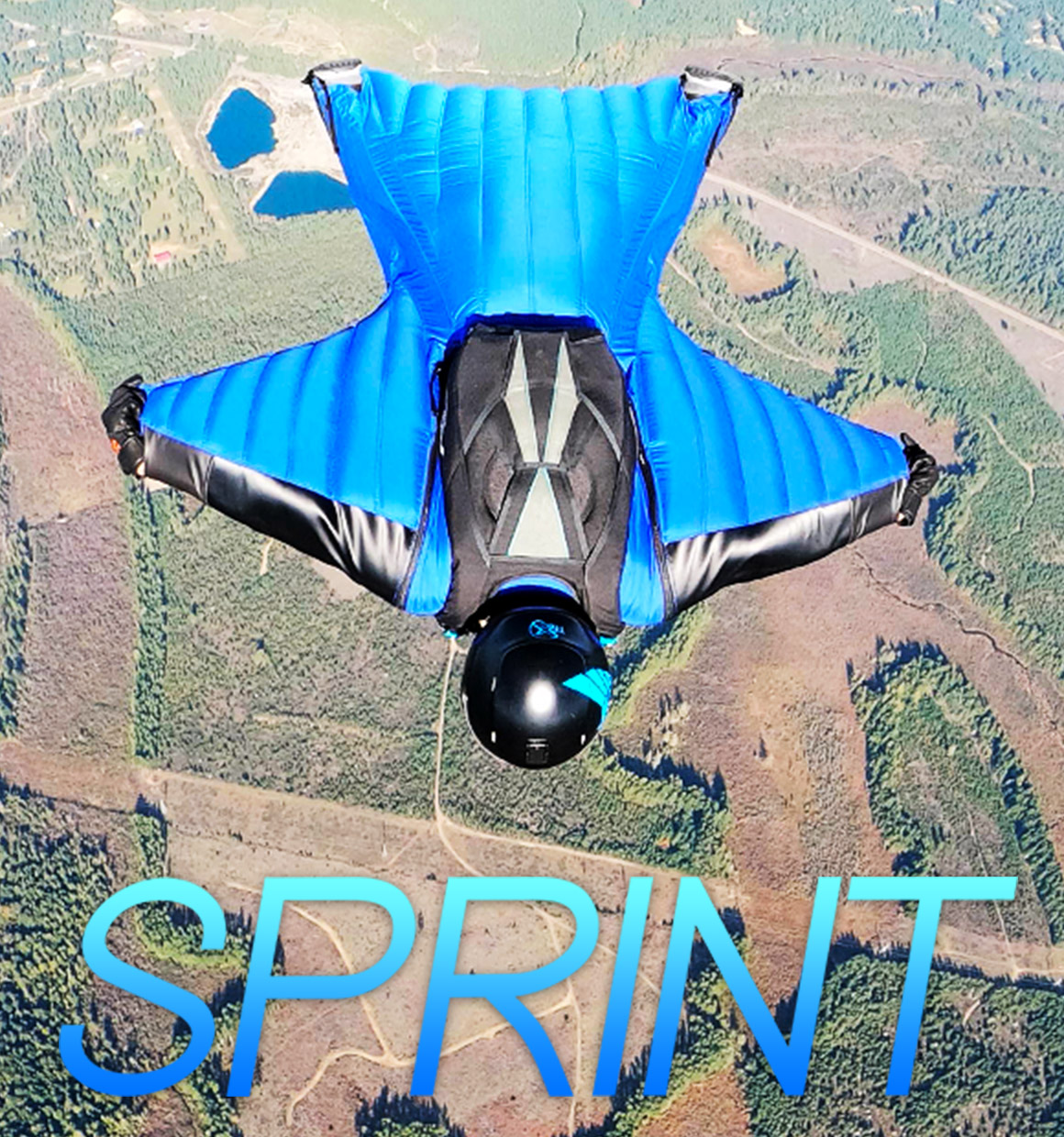
Squirrel SPRINT Wingsuit

€650.00
Squirrel SPRINT Wingsuit
The Squirrel SPRINT is an entry-level wingsuit developed specifically for supervised first-flight courses and structured progression programs. Designed to deliver exceptional stability, predictable handling, and improved deployment access, the SPRINT provides a reliable platform for new wingsuit pilots who are transitioning into human flight.
Its carefully engineered profile helps pilots maintain balance, improve body awareness, and develop the fundamental skills necessary for safe and efficient flight. Flexible arm construction, optimized internal pressurization, and enhanced riser access further contribute to confidence and control throughout every phase of the jump.
Built with safety, durability, and progression in mind, the SPRINT allows pilots to refine their technique while gaining valuable experience under professional guidance. Whether the goal is to improve stability, strengthen navigation skills, or establish a solid foundation for future advancement, the SPRINT offers an ideal introduction to wingsuit flying.
Squirrel SPRINT Wingsuit – Student Flight Design, Stability, Training Purpose, and Safety Guide
Squirrel SPRINT Wingsuit Overview, Design, Training Role, and Equipment Requirements
What Is the Squirrel SPRINT?
The Squirrel SPRINT is a beginner-oriented training wingsuit developed specifically for supervised student programs and first-flight instruction. Unlike larger performance suits, it emphasizes manageable handling, predictable stability, easy deployment access, and practical canopy-control preparation. Squirrel states that the suit is intended for student wingsuit pilots and training programs rather than unrestricted public retail.
The SPRINT uses flexible arm panels to support controlled aircraft exits, clean bottom-of-container access, and easier riser movement after parachute deployment. Its wing area is positioned close to the pilot’s center of gravity, which helps create stable pitch and roll characteristics during early flights.
Although shoppers may search for wing suits for sale, price of wingsuit, fly suits, gliding suit wingsuit, or skydiving gliding suit, the SPRINT should be obtained and used only through an approved instructor or training program.
Why the SPRINT Is Designed for Student Pilots
A first wingsuit jump introduces additional aerodynamic surfaces, altered exit procedures, horizontal movement, restricted arm motion, and a more complex deployment sequence. Therefore, student equipment must support learning rather than maximize speed.
The SPRINT is designed to help a new jumper pilot practise:
- Stable aircraft exits
- Controlled forward flight
- Altitude awareness
- Planned navigation
- Safe separation
- Reliable deployment procedures
- Immediate transition to canopy flight
- Effective control of the landing flight risers
USPA requires a jumper performing a wingsuit jump under its rules to have at least 200 skydives, hold a current license, and complete a first-flight course with an experienced coach.
A tracking jump background may help develop navigation and body awareness, but tracking experience alone does not qualify someone for wingsuit flight.
How the Suit Produces Flight
A wingsuit adds fabric surfaces between the arms, torso, and legs. Air enters internal chambers and pressurizes the suit, creating airfoil-shaped surfaces that generate lift and convert part of the jumper’s vertical descent into forward movement.
The pilot controls direction, glide, and skydiving speed through body position, pitch, tension, and wing shape. However, the suit cannot produce sustained powered flight or replace a parachute.
Searches for speed sky diving may refer to the separate sport of vertical speed skydiving, which differs from wingsuit performance flight. Likewise, indoor wingsuit training can support body awareness, but tunnel experience does not replace aircraft exits, live navigation, deployment practice, or parachute emergencies.
Required Parachute Equipment
The SPRINT is only one component within a complete skydiving equipment list. A suitable setup normally includes a properly fitted parachute rig, main canopy, reserve canopy, automatic activation device where required, pilot chute, deployment bag, altimeter, helmet, and other approved equipment.
Understanding the parts of a parachute remains essential. The container skydive system must allow clean deployment without interference from the suit. A freefly pud handle or another deployment handle must remain secure and accessible throughout flight.
A vector wingsuit setup may describe using the SPRINT with a Vector harness-container, but compatibility must be confirmed by a qualified skydiving rigging professional. The rigger should inspect handle access, bridle routing, pilot-chute extraction, container fit, and suit-to-rig interaction.
Linewear must also be monitored because worn lines can affect openings and canopy control. Canopies such as the Safire 3 or models from Fluid Wings should be selected according to the jumper’s experience, wing loading, opening requirements, container compatibility, and professional guidance.
Helmet, Eye Protection, and Emergency Tools
A properly fitted skydiving helmet protects against certain impacts and provides mounting or audible-altimeter options. Searches may include skydive helmets, sky helmet skydiving, sky diving helmet, full face skydiving helmet, skydiving helmet full face, G35 helmet, Cookie G4 helmet, and best skydiving helmet.
The best choice depends on fit, field of view, ventilation, communication needs, audible-altimeter compatibility, snag risk, and instructor approval.
A person asking, can you wear glasses while skydiving, may be able to use prescription-compatible skydiving glasses, over-glasses goggles, or secure skydiver goggles. The arrangement should be tested before boarding.
A hook blade knife, hook knife skydiving, or skydive hook knife may support certain trained emergency responses involving lines or fabric. However, carrying one does not replace emergency-procedure training.
Canopy Choice and Downsizing
The SPRINT does not determine the correct canopy size. Searches for the smallest canopy or a skydiving downsizing chart should never replace coaching and formal canopy evaluation.
Canopy selection depends on exit weight, jump numbers, currency, landing consistency, wing loading, terrain, and local policy. A smaller parachute can increase speed, descent rate, turn rate, and landing consequences.
A base canopy is built for a different deployment environment and should not automatically be used as a skydiving main. Likewise, CRW skydiving involves intentional canopy formations and requires specialized equipment and training.
Skydiving, BASE Jumping, and Unrelated Terms
The SPRINT is intended for aircraft skydiving instruction. Base jumping and the misspelled phrase baseline jumping involve fixed-object exits, lower deployment altitudes, different risk profiles, and specialized equipment. A skydiving setup must not automatically be treated as suitable for BASE use.
A tandem wingsuit is not a normal training progression. First-time participants should complete ordinary tandem or student skydives before working toward licensed solo experience and eventual wingsuit eligibility.
Terms such as fire parachute, Cypress fire skydiving, and skydiving tube are not SPRINT specifications. CYPRES is an automatic activation device brand, and its installation and servicing must follow official requirements.
Locations, Operators, and Participation Limits
Searches such as parachute jump Australia, Skydive Byron Bay, and Cairns skydiving refer to Australian jumping locations or operators. Skydive Belize, skydiving Blue Hole Belize, and iFLY Colorado Springs concern other destinations or training facilities rather than the SPRINT itself.
Every operator establishes its own weight limit skydiving policy based on equipment, aircraft, weather, instructor limits, and landing conditions. Current requirements should be confirmed directly with the operator.
A nude parachute jump or skydiving nude event requires explicit drop-zone approval because clothing affects temperature protection, harness contact, handle security, and injury exposure.
Broad phrases such as new skydive, skydiving website, and #skydiving latest are search terms rather than product features.
Why Professional Instruction Is Essential
The SPRINT is designed as instructional equipment, not as a shortcut into the wingsuit sport. USPA guidance emphasizes that a first-flight course should teach safe exits, controlled navigation, deployment procedures, canopy return, and landing planning.
The suit cannot guarantee stability or safety. Successful use depends on verified experience, current skills, instructor supervision, suitable equipment, conservative weather decisions, correct deployment procedures, and disciplined progression.
Flight Characteristics, Aerodynamic Efficiency, and Operational Performance
Understanding the Principles of Controlled Flight
Every successful flight depends upon the relationship between stability, lift generation, airspeed, body positioning, and environmental awareness. Although advanced engineering contributes significantly to overall performance, the pilot’s technique ultimately determines the quality of the experience.
As airflow moves across the suit’s surface, internal chambers become pressurized and create the structure necessary for controlled movement through the air. Consequently, even minor changes in posture may influence efficiency, direction, glide characteristics, and overall responsiveness.
This balance between engineering and technique allows pilots to achieve predictable and repeatable results while gradually improving their skills.
Why Stability Is Important
Stability remains one of the most valuable characteristics of beginner-oriented equipment. Rather than focusing exclusively on speed and aggressive maneuverability, modern training systems prioritize control and predictability.
Several elements influence stability during flight:
- Body alignment
- Airspeed
- Weight distribution
- Environmental conditions
- Altitude awareness
- Experience level
When these elements work together effectively, pilots often experience smoother transitions and improved confidence.
How Lift Is Generated
Lift is created when air flows around the body’s aerodynamic surfaces. The interaction between forward movement and internal pressurization allows the pilot to convert a portion of vertical descent into controlled forward motion.
Several factors contribute to lift generation:
- Surface design
- Body position
- Internal pressure
- Airflow management
- Atmospheric conditions
- Pilot input
As experience increases, pilots frequently become more efficient at maintaining balance while maximizing overall performance.
The Relationship Between Efficiency and Control
Efficiency and control should always complement one another. While greater speed may appear attractive, consistent control often produces safer and more reliable results.
Several characteristics contribute to improved efficiency:
- Smooth directional changes
- Consistent body positioning
- Controlled movements
- Awareness of surrounding conditions
- Effective altitude management
These practices often support more predictable and repeatable performance.
Why Preparation Matters
Preparation begins well before the aircraft leaves the ground. Thorough planning allows pilots to identify potential concerns while increasing confidence and reducing unnecessary stress.
An effective preparation routine often includes the following steps:
- Reviewing environmental conditions.
- Inspecting all equipment carefully.
- Confirming emergency procedures.
- Evaluating landing conditions.
- Reviewing flight objectives.
These habits frequently contribute to improved safety and operational efficiency.
Environmental Conditions and Their Influence
Environmental factors play an important role throughout every phase of operation. Wind strength, air density, humidity, visibility, and temperature can all influence performance.
Several conditions deserve particular attention:
- Wind direction
- Atmospheric pressure
- Visibility levels
- Cloud development
- Surface conditions
- Temperature changes
Careful evaluation of these variables frequently supports better decision-making.
Equipment Inspection Procedures
Routine inspections remain essential because repeated use gradually affects every component. Although modern materials are designed to withstand demanding conditions, regular maintenance continues to play a crucial role in preserving long-term reliability.
Recommended procedures include the following:
- Examining seams and stitching
- Inspecting fasteners and zippers
- Removing dirt and debris
- Verifying the condition of moving parts
- Checking all attachment points
These practices frequently help identify concerns before they become more serious.
Transportation and Storage Recommendations
Proper transportation methods help protect equipment from unnecessary wear. Excessive heat, moisture, sunlight, and repeated impacts may gradually affect structural integrity.
Several recommendations are widely followed:
- Store equipment in clean, dry environments.
- Protect surfaces from prolonged sunlight exposure.
- Avoid unnecessary compression.
- Conduct routine inspections.
- Keep equipment away from contaminants.
These habits often contribute to improved durability and reliability.
Frequently Asked Questions
Why is stability important during flight?
Stability allows pilots to maintain greater control while improving confidence and reducing unnecessary corrections.
Why should equipment be inspected regularly?
Regular inspections help preserve reliability while allowing potential concerns to be identified early.
How does preparation improve performance?
Preparation strengthens awareness, improves efficiency, and supports more effective decision-making.
Why is environmental awareness important?
Environmental conditions influence performance, visibility, control, and overall safety.
Final Thoughts
Long-term progress depends upon discipline, patience, preparation, and continuous learning. Pilots who remain committed to these principles often develop stronger skills while maintaining greater confidence throughout every stage of their progression.
Flight Development, Precision Handling, and Long-Term Skill Progression
Building a Strong Foundation for Continuous Improvement
Long-term success is rarely determined by a single flight. Instead, improvement is usually achieved through preparation, repetition, patience, and the gradual development of experience. Every flight creates opportunities to strengthen awareness, improve coordination, and refine movement patterns.
Pilots who focus on building a strong foundation often progress more efficiently because they develop reliable habits from the very beginning. Consequently, consistency frequently becomes one of the most valuable factors in long-term development.
Although modern equipment is designed to provide greater control and predictability, disciplined practice remains essential.
Understanding the Importance of Body Position
Body position influences nearly every aspect of flight. Even the smallest adjustments can affect lift, stability, speed, direction, and overall efficiency.
Several elements contribute to effective positioning:
- Head alignment
- Shoulder placement
- Arm movement
- Leg extension
- Hip position
- Weight distribution
When these factors are balanced correctly, movement often becomes smoother and more efficient.
Why Controlled Movements Produce Better Results
Abrupt corrections frequently create unnecessary instability. In contrast, smooth and deliberate movements often help preserve balance and maintain consistent airflow.
Several factors contribute to effective control:
- Continuous situational awareness
- Smooth directional changes
- Balanced posture
- Precise timing
- Consistent movement patterns
As pilots gain experience, these actions gradually become more natural and predictable.
Developing Greater Situational Awareness
Awareness remains essential throughout every stage of flight. Environmental conditions can change rapidly, which means that constant observation is necessary to maintain safety and efficiency.
Several factors should always be monitored carefully:
- Wind conditions
- Visibility levels
- Altitude changes
- Traffic awareness
- Landing conditions
- Weather patterns
Pilots who maintain a high level of awareness often adapt more effectively to changing situations.
The Importance of Mental Preparation
Technical knowledge alone is not enough to ensure consistent performance. Mental preparation also plays an important role because concentration, discipline, and confidence frequently influence decision-making.
Several habits often contribute to improved preparation:
- Reviewing established procedures
- Maintaining concentration
- Avoiding unnecessary distractions
- Evaluating environmental conditions
- Following consistent routines
These habits often strengthen confidence while supporting more effective decision-making.
Equipment Care and Maintenance
Proper maintenance contributes significantly to long-term reliability. Every component experiences gradual wear; therefore, regular inspections remain essential.
Recommended maintenance practices include the following:
- Inspect seams and stitching thoroughly.
- Examine all fastening systems carefully.
- Remove dust and contaminants.
- Verify the condition of all moving components.
- Store equipment in appropriate conditions.
These practices frequently help preserve durability while reducing the likelihood of avoidable damage.
Storage and Transportation Considerations
Appropriate storage methods help protect equipment from unnecessary deterioration. Excessive heat, moisture, sunlight, and contamination may gradually affect performance and appearance.
Several precautions are commonly recommended:
- Keep equipment clean and dry.
- Avoid unnecessary pressure during transportation.
- Protect surfaces from direct sunlight.
- Maintain adequate ventilation during storage.
- Conduct regular inspections.
These habits frequently improve long-term reliability.
Developing Long-Term Discipline
Discipline often separates temporary success from lasting improvement. Pilots who remain committed to continuous development frequently gain confidence while refining their abilities over time.
Several characteristics commonly support long-term progress:
- Patience
- Preparation
- Consistency
- Awareness
- Responsibility
- Commitment to learning
Together, these qualities often contribute to steady improvement and a more rewarding experience.
Frequently Asked Questions
Why is body positioning so important?
Body positioning influences stability, control, lift generation, speed, and overall efficiency throughout the flight.
Why should pilots practise consistently?
Consistent practice helps develop confidence, strengthen awareness, and improve decision-making abilities.
How often should equipment be inspected?
Equipment should be examined before use, after use, and whenever unusual conditions are detected.
Why is preparation important?
Preparation reduces uncertainty while improving organization, awareness, and operational efficiency.
Final Remarks
Continuous development requires patience, discipline, and a willingness to learn from experience. Pilots who remain committed to these principles often strengthen their abilities steadily while preserving the reliability and performance of their equipment.
Advanced Flight Techniques, Performance Optimization, and Operational Excellence
Strengthening Long-Term Flight Skills
Developing advanced skills requires patience, discipline, and a commitment to continuous improvement. While technical knowledge creates a strong foundation, experience allows pilots to apply that knowledge effectively in changing conditions.
Every flight presents opportunities to improve coordination, refine movements, and strengthen awareness. Consequently, steady progression frequently produces more reliable results than attempting to advance too rapidly.
As experience increases, confidence often grows alongside precision and consistency.
Understanding Energy Management
Efficient energy management plays an important role throughout every phase of flight. Smooth movements help maintain stability, whereas unnecessary corrections may reduce efficiency and disrupt overall control.
Several factors influence energy management:
- Airspeed awareness
- Body positioning
- Directional control
- Environmental conditions
- Flight planning
- Timing of movements
By understanding how these elements work together, pilots frequently achieve more predictable and efficient performance.
Improving Directional Control
Directional control depends upon precision, awareness, and balanced movement. Even minor adjustments can influence movement patterns, flight efficiency, and overall stability.
Several factors contribute to improved control:
- Consistent posture
- Controlled movements
- Proper weight distribution
- Continuous observation
- Careful preparation
Pilots who dedicate time to refining these skills often discover that efficiency improves naturally as experience grows.
The Importance of Environmental Awareness
Environmental conditions should always be evaluated carefully because changing conditions may influence performance unexpectedly.
Important considerations include:
- Wind strength and direction
- Temperature changes
- Visibility conditions
- Atmospheric pressure
- Humidity levels
- Surface conditions
A thorough understanding of these factors frequently contributes to safer and more efficient operations.
Building Confidence Through Preparation
Preparation remains one of the most valuable habits any pilot can develop. Careful planning frequently reduces uncertainty while increasing efficiency and confidence.
An effective preparation routine commonly includes the following:
- Reviewing current weather conditions.
- Performing complete equipment inspections.
- Confirming operational procedures.
- Identifying suitable landing locations.
- Reviewing emergency response procedures.
These practices often support more effective decision-making throughout the entire experience.
Maintaining Equipment Reliability
Proper maintenance helps preserve structural integrity while extending operational life. Although equipment is designed to withstand demanding environments, regular care remains essential.
Several recommendations are widely followed:
- Inspect all visible components carefully.
- Remove dust, dirt, and moisture.
- Examine seams and fasteners thoroughly.
- Protect equipment from excessive heat.
- Store equipment in clean environments.
Consistent maintenance frequently improves both reliability and durability.
Transportation and Storage Practices
Transportation methods influence long-term performance because repeated impacts and environmental exposure may gradually contribute to wear.
Several precautions are commonly recommended:
- Avoid unnecessary pressure during transportation.
- Keep storage areas clean and dry.
- Limit prolonged exposure to direct sunlight.
- Protect equipment from moisture.
- Conduct inspections regularly.
These habits often help maintain appearance, functionality, and structural integrity.
Continuous Learning and Skill Development
Learning should remain a lifelong process because techniques, technology, and procedures continue to evolve. Pilots who remain committed to improvement frequently adapt more effectively to changing conditions.
Several activities support continued development:
- Reviewing operational procedures
- Practising movement patterns
- Expanding technical knowledge
- Studying environmental influences
- Refining decision-making skills
These activities frequently strengthen confidence and improve overall performance.
Frequently Asked Questions
Why is experience important?
Experience helps pilots improve their awareness, refine their movements, and strengthen their ability to make sound decisions.
How does preparation influence performance?
Preparation supports better organization, improves confidence, and reduces unnecessary uncertainty.
Why should equipment be maintained regularly?
Routine maintenance helps preserve durability while identifying potential concerns before they become significant problems.
Why is environmental awareness important?
Environmental conditions influence stability, efficiency, visibility, and overall operational effectiveness.
Final Thoughts
Long-term success depends upon preparation, consistency, patience, and discipline. Pilots who remain committed to continuous development often strengthen their skills while enjoying greater confidence and more dependable performance over time.
Safety Practices, Skill Development, and Long-Term Performance
Establishing Consistent Operating Habits
Consistency forms the foundation of long-term success. Although advanced equipment contributes to improved efficiency and responsiveness, reliable performance ultimately depends upon preparation, discipline, and experience.
Every flight introduces different environmental conditions and operational challenges. Therefore, maintaining a structured approach frequently helps pilots remain focused and confident throughout the entire process.
Pilots who establish effective habits early often develop stronger technical abilities while improving their overall awareness and decision-making skills.
Why Attention to Detail Matters
Attention to detail plays an essential role in maintaining efficiency and reducing unnecessary risks. Small oversights can influence performance, which is why experienced pilots rely upon carefully developed routines before, during, and after every flight.
Several factors deserve careful consideration:
- Equipment condition
- Environmental awareness
- Altitude monitoring
- Communication procedures
- Flight planning
- Landing preparation
Because these elements influence one another continuously, careful observation frequently contributes to more predictable outcomes.
Building Greater Precision Through Practice
Precision is developed gradually through repetition and experience. Smooth, deliberate movements often create more efficient results than rapid and unnecessary corrections.
Several practices commonly support improved precision:
- Maintaining balanced body positioning
- Performing controlled movements
- Following established procedures
- Monitoring changing conditions
- Refining movement patterns continuously
Over time, these habits often strengthen confidence while improving consistency.
Understanding the Importance of Decision-Making
Every successful operation depends upon effective decision-making. Pilots must continuously evaluate changing conditions while adapting their actions accordingly.
Several factors influence sound decision-making:
- Experience level
- Environmental conditions
- Situational awareness
- Equipment reliability
- Personal readiness
- Operational objectives
Pilots who develop strong decision-making abilities frequently become more adaptable and more confident during challenging conditions.
Equipment Inspection Procedures
Routine inspections help maintain reliability while reducing the possibility of avoidable failures. Even high-quality equipment requires regular attention because repeated use naturally contributes to gradual wear.
A thorough inspection process commonly includes the following:
- Examining all visible surfaces carefully.
- Checking seams, stitching, and closures.
- Inspecting all connection points.
- Removing dirt, moisture, and debris.
- Confirming proper functionality.
These procedures often support improved durability and long-term reliability.
Protecting Equipment During Storage
Proper storage methods remain essential because environmental exposure may gradually affect materials over time. Excessive heat, humidity, dust, and sunlight can all influence long-term performance.
Several recommendations are commonly followed:
- Store equipment in dry environments.
- Maintain adequate ventilation.
- Protect surfaces from prolonged sunlight exposure.
- Avoid excessive pressure during storage.
- Conduct inspections regularly.
These practices frequently help preserve both appearance and functionality.
Transportation Recommendations
Transportation methods should always be approached carefully because unnecessary impacts may contribute to premature wear.
The following practices are often recommended:
- Use protective coverings whenever possible.
- Secure equipment carefully during transportation.
- Protect components from excessive moisture.
- Avoid unnecessary contact with contaminants.
- Inspect equipment after transportation.
These habits often help maintain reliability while extending operational life.
Long-Term Development Strategies
Meaningful progress is rarely achieved quickly. Instead, improvement usually results from patience, commitment, and continuous learning.
Several habits often contribute to successful long-term development:
- Maintaining consistent routines
- Expanding technical knowledge
- Improving awareness
- Practising emergency procedures
- Learning from previous experiences
These practices frequently strengthen both confidence and performance.
Frequently Asked Questions
Why is discipline so important?
Discipline supports consistency, strengthens awareness, and encourages more effective decision-making.
How does experience improve performance?
Experience allows pilots to recognize changing conditions more quickly while responding with greater confidence and precision.
Why should equipment be stored correctly gear bag skydive?
Proper storage helps protect materials from environmental damage while preserving long-term reliability.
Why should inspections be performed regularly?
Routine inspections help identify potential concerns before they become serious problems.
Final Remarks
Long-term success is built through patience, preparation, awareness, and dedication. Pilots who remain committed to these principles often develop stronger skills, greater confidence, and a deeper understanding of the techniques required for continued improvement skydiving tube.
Be the first to review “Squirrel SPRINT Wingsuit”
Related products

Wingsuits

Wingsuits

Wingsuits

Wingsuits

Wingsuits


Wingsuits
Wingsuits

Wingsuits
Reviews
There are no reviews yet.