
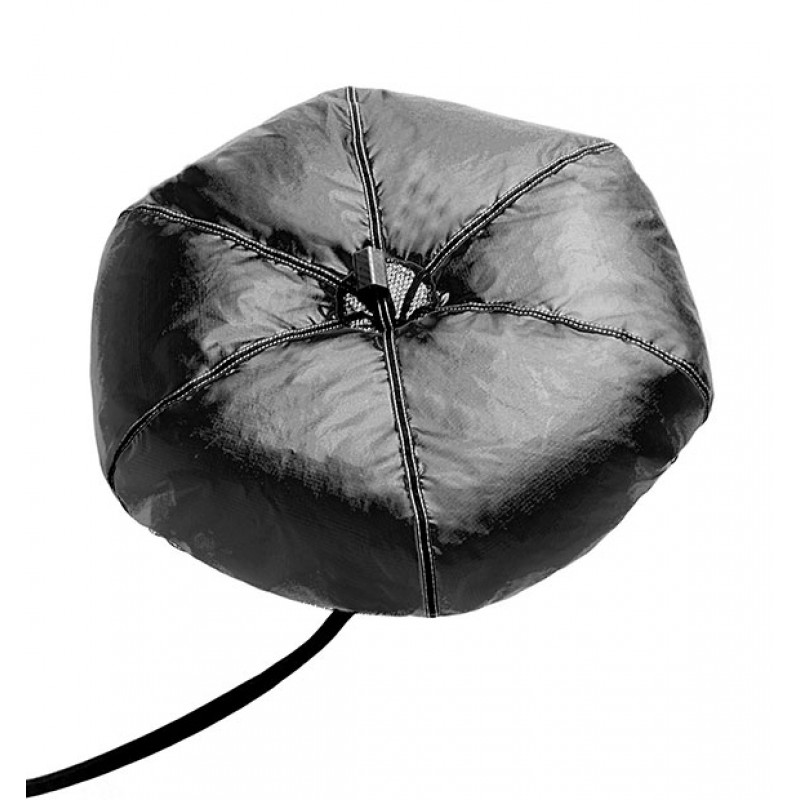


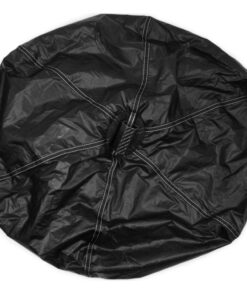

Squirrel SkySNATCH 2 Main Pilot Chute

€195.00
The Squirrel SkySNATCH 2 Main Pilot Chute is a specialized skydiving pilot chute developed around Squirrel’s toroidal-arc concept, with an emphasis on stability, symmetry, low weight, and reliable extraction behavior. Squirrel currently offers the SkySNATCH 2 in 26-inch and 30-inch sizes, both constructed from zero-porosity fabric with six gores, an apex vent, a kill-line bridle, and a lightweight carbon-fiber handle. The standard system also includes an 8-foot bridle measured from the pin to the pilot-chute attachment point, with an overall stated bridle length of 11 feet.
The manufacturer specifies that the SkySNATCH 2 is designed for deployment bags using a #4 or #5 bottom grommet only, making compatibility verification essential before installation. Squirrel describes the platform as primarily intended for wingsuit use, although the 26-inch version can also be appropriate for certain freefly, belly, or slick skydives. The 30-inch version is specifically not recommended by the manufacturer for non-wingsuit jumping.
Squirrel SkySNATCH 2 Main Pilot Chute – Detailed Technical Product Guide
SkySNATCH 2 Engineering, Stability, Wingsuit Use, and Skydiving Equipment Context
SkySNATCH 2 Toroidal-Arc Engineering
The defining feature of the SkySNATCH 2 is its three-dimensional partial toroidal shape. Squirrel states that this architecture was developed to improve pilot-chute stability compared with traditional designs. The second-generation version further refines the original concept through revised panel shaping, individually cut mesh panels, optimized skirt curvature, and a seam architecture that eliminates conventional radial webbing.
Squirrel also states that individual mesh panels are oriented to maintain more uniform tension and symmetry under load. Manufacturing tolerances are listed at approximately ±1 mm, reinforcing the emphasis on geometric consistency.
Wingsuit Sport and Wingsuit Applications
The terms wingsuit sport, wingsuit, vector wingsuit, gliding suit wingsuit, skydiving gliding suit, and fly suits are highly relevant to this product because Squirrel identifies wingsuit skydiving as the SkySNATCH 2’s primary intended application.
According to the manufacturer, the 26-inch version is generally suited to smaller wingsuits, while the 30-inch version is intended for larger wingsuits. These are broad manufacturer recommendations rather than universal compatibility rules. Exact pilot-chute selection should remain consistent with the current manual, container system, canopy, deployment configuration, jumper experience, and qualified professional guidance.
26-Inch and 30-Inch Size Context
The SkySNATCH 2 is offered in two sizes.
The 26-inch version is the more versatile configuration and is identified by Squirrel as suitable not only for smaller wingsuit use but also for some freefly, belly, and slick applications.
The 30-inch version is oriented toward larger wingsuits and is specifically not recommended for non-wingsuit jumps.
Size should therefore never be chosen simply because a larger pilot chute appears more powerful. Squirrel explicitly notes that the SkySNATCH 2 is not inherently stronger than another pilot chute of comparable size; its primary claimed advantage is improved stability.
Parachute Rig and Skydiving Rigging
The terms parachute rig, skydiving rig, and skydiving rigging are central to understanding how the product should be evaluated.
The SkySNATCH 2 is not a standalone parachuting system. It forms part of the deployment chain and must be compatible with the container, deployment bag, bridle arrangement, and other components.
Squirrel explains that a skydiving pilot chute is the first link in the deployment chain and must overcome container friction while extracting the deployment bag toward line stretch.
Because component compatibility is safety-critical, installation and inspection should follow the latest manufacturer manual and appropriate professional rigging practice.
Parts of a Parachute and Container Skydive Systems
Searches for parts of a parachute and container skydive frequently come from users learning how main deployment systems interact.
The SkySNATCH 2 includes the pilot chute, kill-line bridle, attachment maillons, and carbon handle as part of its standard configuration. However, these components still operate within a larger container and deployment-bag system.
Squirrel specifies compatibility with deployment bags using #4 or #5 bottom grommets only. That requirement should be treated as a technical limitation rather than a suggestion.
Stability, Inflation, and Drag
Squirrel’s engineering emphasis centers on stability rather than simple peak extraction force.
The company’s technical material explains that total drag force is a more meaningful factor than looking at “snatch force” alone.
A stable pilot chute can reduce unnecessary tumbling and rotation during the early deployment sequence. Squirrel attributes the SkySNATCH 2’s behavior to its toroidal geometry, mesh orientation, skirt shaping, low mass, and structural symmetry.
Carbon-Fiber Handle and Weight Distribution
The SkySNATCH 2 uses a lightweight hexagonal carbon-fiber handle.
Squirrel states that lower pilot-chute mass can reduce tumbling and decrease the chance of interaction between the pilot chute and bridle compared with heavier handle configurations.
The hexagonal shape is also designed to provide a distinct tactile profile while keeping overall weight low.
This illustrates why pilot-chute design involves more than canopy diameter alone.
Linewear and Component Condition
The term linewear reflects an important maintenance principle even though it is not a specific SkySNATCH 2 feature.
Pilot-chute systems can experience wear in the bridle, kill line, seams, mesh, fabric, handle attachment, and connection hardware.
Regular inspection should therefore consider the complete assembly rather than only the pilot-chute fabric.
Any unusual abrasion, distortion, contamination, damaged stitching, or change in kill-line behavior should be evaluated according to the current manufacturer documentation and by appropriately qualified personnel where necessary.
Gear Bag Skydive and Equipment Storage
A gear bag skydive setup can help protect a pilot-chute system during storage and transportation.
The equipment should be kept away from sharp objects, strong chemicals, excessive heat, and contamination.
Packing equipment tightly beneath heavy objects can also create unnecessary stress on lightweight components.
Organized storage additionally makes it easier to keep the pilot chute associated with the correct rig and service history.
Skydiving Equipment List
A skydiving equipment list may include a main canopy, reserve, container, automatic activation device where used, pilot chute, deployment bag, bridle, handles, helmet, eye protection, jumpsuit, altimeter, and other discipline-specific equipment.
The SkySNATCH 2 should be understood as one specialized element within that broader system.
Its suitability depends on the exact rig configuration and intended discipline rather than on generic product-category compatibility.
Skydiving Helmet and Skydive Helmets
Searches such as skydiving helmet, skydive helmets, sky helmet skydiving, sky diving helmet, full face skydiving helmet, skydiving helmet full face, g35 helmet, best skydiving helmet, and cookie g4 helmet concern head protection rather than the pilot chute itself.
Similarly, skydiving glasses, skydiver goggles, and can you wear glasses while skydiving relate to eye protection.
These products may be part of an overall equipment setup, but they do not determine SkySNATCH 2 compatibility.
Hook Blade Knife and Skydive Hook Knife
The terms hook blade knife, hook knife skydiving, and skydive hook knife refer to emergency tools used by trained skydivers in particular situations.
They should not be represented as included components of the SkySNATCH 2 unless specifically listed by the manufacturer.
Emergency equipment selection should remain separate from pilot-chute specifications and should follow established professional guidance.
Tracking Jump and Speed Sky Diving
A tracking jump and speed sky diving involve airflow conditions different from wingsuit flight.
Squirrel specifically distinguishes the SkySNATCH 2’s 26-inch and 30-inch applications, with the 30-inch version reserved for wingsuit use rather than general non-wingsuit applications.
This reinforces why discipline and airflow environment matter when selecting pilot-chute equipment.
Skydiving Speed
The search skydiving speed often relates to general freefall performance.
A pilot chute experiences different airflow depending on body position, equipment configuration, suit type, and deployment environment.
That is one reason Squirrel’s sizing guidance differentiates between smaller and larger wingsuit applications and non-wingsuit jumping.
Freefly PUD Handle
A freefly pud handle is another deployment-system component used in certain sport-skydiving configurations.
It should not be confused with the carbon-fiber handle included with the SkySNATCH 2.
Any change in handle configuration should be evaluated against manufacturer documentation and container compatibility rather than assumed interchangeable.
Canopy Flight and Landing Flight Risers
The terms canopy flight and landing flight risers concern the parachute after deployment and inflation.
They are therefore separate from the pilot chute’s primary task within the deployment sequence.
Likewise, skydiving downsizing chart, smallest canopy, safire 3, and fluid wings relate to canopy selection or canopy flight rather than SkySNATCH 2 specifications.
CRW Skydiving
crw skydiving refers to canopy relative work, a specialized discipline with its own training and equipment considerations.
The SkySNATCH 2 should not automatically be assumed appropriate for every discipline simply because it is a skydiving pilot chute.
Its manufacturer positions it primarily around wingsuit use, with limited additional applications for the 26-inch size.
BASE Jumping and Base Canopy
The terms base jumping, baseline jumping, and base canopy should be distinguished carefully from the SkySNATCH 2.
Squirrel manufactures a separate SNATCH 2 specifically for BASE use, available in a much broader range of sizes and configurations.
The SkySNATCH 2 is a skydiving product and should not be treated as interchangeable with the BASE-specific SNATCH 2.
Parachute Jump Australia, Skydive Byron Bay, and Cairns Skydiving
Searches for parachute jump australia, skydive byron bay, and cairns skydiving reflect location-based interest rather than equipment specifications.
Professional operators may use different rigs, canopy systems, and pilot-chute configurations.
Customers should therefore not assume that a specific product is used by a particular drop zone unless the operator confirms it.
Weight Limit Skydiving
The search weight limit skydiving concerns operator and equipment limitations rather than pilot-chute sizing alone.
Passenger or jumper limits depend on the complete approved system, operational procedures, and manufacturer restrictions.
A pilot chute should never be selected simply by matching jumper weight to diameter without reference to the approved configuration.
Skydive Belize and Skydiving Blue Hole Belize
The terms skydive belize and skydiving blue hole belize represent destination-related search intent.
Likewise, new skydive, skydiving website, and #skydiving latest relate to general information discovery rather than SkySNATCH 2 engineering.
For safety-critical equipment, official manufacturer documentation should take priority over generic online discussion or social-media content.
iFLY Colorado Springs and Indoor Wingsuit
ifly colorado springs and indoor wingsuit refer to indoor bodyflight rather than parachute deployment.
Wind tunnels can be valuable training environments, but they do not use a main pilot chute in the same way as an aircraft skydive.
Therefore, indoor bodyflight equipment should remain separate from SkySNATCH 2 compatibility discussions.
Nude Parachute Jump and Skydiving Nude
The terms nude parachute jump and skydiving nude concern unusual activity rather than technical equipment specifications.
They have no direct relationship to pilot-chute performance or compatibility.
Professional operators determine clothing, safety, and operational requirements for their activities.
Jumper Pilot and Operational Environment
A jumper pilot forms part of the wider aircraft-skydiving environment.
Safe parachuting depends on coordination between pilots, jumpers, instructors, riggers, and ground personnel.
The SkySNATCH 2 is one component within that larger system and should be treated accordingly.
Wingsuit Pricing and Tandem Wingsuit Searches
The terms wing suits for sale, price of wingsuit, and tandem wingsuit are commercial or discipline-related searches rather than pilot-chute specifications.
The SkySNATCH 2 is primarily designed around experienced wingsuit skydiving, but wingsuit selection and pilot-chute selection remain separate equipment decisions that should both follow appropriate manufacturer guidance.
Fire Parachute and Cypress Fire Skydiving
The terms fire parachute and cypress fire skydiving are ambiguous and should not be presented as SkySNATCH 2 features.
Where such searches refer to emergency systems or activation devices, those components belong to different parts of the overall parachute system.
Skydiving Tube
A skydiving tube is a specialty flying or training accessory and is unrelated to the SkySNATCH 2’s core engineering.
It should therefore remain separate from pilot-chute compatibility discussions.
Why the SkySNATCH 2 Matters
The SkySNATCH 2’s engineering value lies in its combination of toroidal-arc geometry, individually oriented mesh panels, refined skirt shaping, six-gore construction, low-mass carbon handle, ZP fabric, apex vent, and kill-line bridle.
Squirrel positions the product primarily around improved stability rather than increased raw extraction force.
That distinction is important because stability, symmetry, and predictable behavior are central design priorities in the deployment chain.
Overall Technical Perspective
The Squirrel SkySNATCH 2 Main Pilot Chute is a specialized skydiving component offered in 26- and 30-inch versions, with ZP fabric, six gores, an apex vent, kill-line bridle, carbon-fiber handle, attachment maillons, and an 8-foot pin-to-pilot-chute bridle section. It is intended for deployment bags using #4 or #5 bottom grommets only.
Its principal technical strength is Squirrel’s emphasis on stability, symmetry, low mass, and controlled aerodynamic behavior. The manufacturer identifies it primarily as a wingsuit pilot chute, while the smaller size also supports certain non-wingsuit applications.
Because skydiving and wingsuit flying involve serious inherent risk, the latest SkySNATCH 2 manual and official safety documentation should always control over general product descriptions. Squirrel explicitly states that its parachuting products are intended for experienced users and that no equipment or training can eliminate the risks involved.
Engineering Quality, Stability, Deployment Reliability, and Practical Use
The Squirrel SkySNATCH 2 Main Pilot Chute is designed around aerodynamic stability, low mass, consistent inflation behavior, and dependable interaction with a properly configured main deployment system. Although its dimensions and material specifications provide an important starting point, practical performance depends on much more than size alone. Fabric condition, mesh tension, bridle integrity, handle condition, kill-line behavior, deployment-bag compatibility, packing quality, environmental exposure, and overall system configuration all influence how reliably the pilot chute performs. Consequently, the component should be evaluated through stability, repeatability, structural condition, and compatibility rather than through diameter or visual appearance alone.
Aerodynamic Stability
Stability is one of the most important characteristics of a pilot chute.
During deployment, the component is exposed to turbulent airflow and changing body orientation. A stable design helps reduce unnecessary oscillation, tumbling, or asymmetrical behavior during the early part of the deployment sequence.
This matters because the pilot chute initiates extraction of the main deployment system.
Consistent aerodynamic behavior therefore contributes to a cleaner and more predictable transition from deployment initiation to bag extraction.
Low-Mass Construction
Reducing unnecessary mass can improve aerodynamic behavior.
A lighter component has less rotational inertia and may be less likely to tumble aggressively after release.
Low mass also reduces the amount of energy carried by the handle and fabric during movement through the airstream.
However, lightweight construction does not mean the component should be treated casually.
Fabric, seams, mesh, handle attachment, and bridle connections still require careful inspection and protection.
Fabric Quality
The upper fabric surface plays a major role in inflation and drag development.
Its condition should remain consistent, free from significant tears, burns, punctures, contamination, or other structural damage.
A small cosmetic mark may not automatically indicate loss of serviceability, but damage in load-bearing or aerodynamic areas deserves professional evaluation.
Because fabric properties can change with age, contamination, and repeated use, inspection should consider both visible condition and documented service history.
Mesh Condition
Mesh controls airflow through the lower portion of the pilot chute and contributes to shape stability.
Its tension and structural condition are therefore important.
Damaged, stretched, torn, or distorted mesh can affect how evenly the component inflates.
Inspection should look for unusual asymmetry, fraying, broken fibers, or signs of contamination.
Mesh should never be casually repaired with unsuitable materials because small changes in geometry can influence aerodynamic behavior.
Seam Integrity
The seams connect the fabric and mesh into the intended aerodynamic shape.
Broken stitching, pulled seams, or distorted panels may affect symmetry.
Because the design relies on carefully shaped panels, structural stitching should remain consistent and undamaged.
Repairs should follow approved procedures rather than improvised sewing methods.
Cosmetic appearance alone cannot confirm whether a seam remains structurally suitable.
Bridle Condition
The bridle forms a critical connection between the pilot chute and the main deployment system.
It should remain free from significant abrasion, cuts, burns, contamination, or deformation.
Repeated packing, deployment, and handling can gradually introduce wear.
Areas near attachment points and hardware deserve particular attention because they experience repeated loading and movement.
A damaged bridle should not remain in service simply because the pilot chute fabric itself appears undamaged.
Kill-Line Reliability
The kill line is an important part of the collapsible system.
Its condition influences whether the pilot chute can collapse as intended after deployment.
Wear, shrinkage, contamination, or incorrect adjustment can affect operation.
Because this component interacts with the bridle and deployment system, problems should be assessed by appropriately qualified personnel.
Routine inspection should therefore consider the complete collapsible mechanism rather than only the visible pilot-chute canopy.
Handle Condition
The deployment handle should remain securely attached and structurally intact.
A lightweight handle provides practical aerodynamic advantages, but it must also remain easy to identify and operate as intended.
Cracking, loosening, sharp damage, or unusual movement deserves attention.
The handle should not be modified casually because shape, mass, attachment method, and compatibility all form part of the complete design.
Deployment-Bag Compatibility
Compatibility with the deployment bag is a major engineering requirement.
A pilot chute can be in excellent condition yet still be unsuitable if the surrounding system does not match the intended configuration.
Grommet dimensions, bridle routing, attachment method, and bag design all influence the deployment chain.
For this reason, compatibility should be confirmed before installation rather than assumed from visual similarity.
Professional rigging guidance remains essential.
Packing Consistency
Reliable operation depends partly on correct packing.
A pilot chute that is twisted, poorly stowed, or inconsistently arranged may not behave as intended even when the component itself is undamaged.
Packing methods should follow current manufacturer instructions and approved system procedures.
Repetition can create familiarity, but familiarity should not lead to shortcuts.
Consistent packing discipline supports repeatable deployment behavior and makes abnormal conditions easier to identify.
Environmental Exposure
Fabric and textile components can be affected by moisture, dirt, dust, oils, chemicals, and ultraviolet exposure.
Prolonged contamination can weaken materials or alter their surface characteristics.
Equipment should therefore be kept clean and dry whenever possible.
After exposure to unusual environmental conditions, inspection should occur before the component returns to service.
Harsh cleaning products should be avoided unless specifically approved.
Water and Moisture
Moisture should not be allowed to remain trapped in the pilot chute or bridle during storage.
Wet packing can encourage material deterioration and contamination.
If the equipment becomes damp, appropriate drying should occur before long-term storage.
The drying process should avoid excessive heat or other conditions that could damage fabric, mesh, or lines.
A clean, dry storage environment provides the best foundation for preservation.
Heat and Sunlight
Excessive heat and prolonged direct sunlight can gradually affect synthetic materials.
Equipment should not be left unnecessarily in hot vehicles, exposed storage areas, or direct sunlight for extended periods.
Ultraviolet exposure can be particularly damaging over time.
Preventive environmental care is easier than determining whether material strength has been compromised after prolonged exposure.
Contamination
Fuel, oil, solvents, cleaning chemicals, and other substances can create significant concerns.
Some contamination may not be visible after drying.
If chemical exposure is suspected, professional assessment should occur before the component is returned to use.
Simply wiping the surface does not necessarily restore the original material condition.
Storage areas should therefore keep parachuting equipment separated from hazardous chemicals.
Inspection Before Use
A routine pre-use inspection helps identify obvious damage or abnormal condition.
Fabric, mesh, stitching, bridle, kill line, handle, and attachment areas should be examined according to approved procedures.
The objective is to confirm that no significant change has occurred since the last known serviceable condition.
Any unusual finding should be investigated before the system is packed for operational use.
Post-Deployment Inspection
After deployment, the component may experience significant aerodynamic loading and contact with other system elements.
Periodic inspection after use can help identify damage that was not present beforehand.
This is particularly important following unusual openings, entanglement concerns, hard landings, or suspected equipment contact.
A pilot chute should not automatically be considered unaffected simply because the main canopy deployed successfully.
Long-Term Wear
Repeated cycles of packing, deployment, collapse, and storage naturally introduce gradual wear.
Fabric coatings, stitching, mesh, lines, and attachment areas may all change over time.
For this reason, age alone is not the only factor that matters.
Jump numbers, deployment conditions, environmental exposure, storage quality, and maintenance history all contribute to long-term condition.
Professional Rigging Support
Safety-critical components should be inspected and serviced by appropriately qualified personnel whenever condition or compatibility is uncertain.
Professional riggers can assess wear patterns, line behavior, attachment integrity, and system interaction more effectively than a casual visual inspection.
This is particularly important when equipment is purchased used, transferred between systems, or installed into a different configuration.
Used Equipment Evaluation
Second-hand pilot chutes require careful assessment.
A clean-looking component may still have unknown exposure to chemicals, excessive heat, incorrect packing, repeated hard deployments, or unauthorized repairs.
Documentation and service history can therefore provide valuable context.
Unknown history should be treated as uncertainty rather than automatically accepted.
Professional inspection should occur before operational use.
Storage and Transportation
The component should be stored in a clean, dry environment protected from sharp objects, chemicals, moisture, direct sunlight, and excessive heat.
During transportation, it should not be crushed beneath heavy equipment or exposed to abrasive surfaces.
A dedicated gear bag or rig container can help reduce accidental damage.
Organized transport also helps keep the pilot chute associated with the correct deployment system.
Overall Engineering Perspective
The SkySNATCH 2 should be evaluated as a precision aerodynamic component within the main deployment chain.
Its quality depends on more than fabric size or shape. Stability, low mass, mesh condition, seam integrity, bridle reliability, kill-line function, handle condition, correct packing, and verified system compatibility all contribute to dependable operation.
Ultimately, responsible maintenance and disciplined inspection preserve the engineering advantages built into the design. Careful storage, environmental protection, accurate packing, professional servicing, and correct system integration help maintain predictable performance throughout the component’s authorized service life.
Durability, Inspection, Maintenance, Storage, and Long-Term Care
The Squirrel SkySNATCH 2 Main Pilot Chute is a safety-critical component whose long-term reliability depends on much more than how clean it looks. Fabric condition, mesh integrity, stitching, bridle wear, kill-line behavior, handle security, contamination, storage environment, service history, and professional inspection all influence whether the component remains suitable for continued use. Because wear can develop gradually through repeated packing and deployment cycles, preventive care should focus on preserving the original construction and identifying changes early. Any uncertainty about structural condition or system compatibility should be resolved before the component returns to service.
Long-Term Durability
Durability is influenced by both material quality and operating history.
Repeated use exposes the component to aerodynamic loading, packing friction, handling, environmental contamination, and repeated interaction with other parts of the deployment system.
No single jump necessarily creates obvious wear, but many cycles can gradually change fabric, stitching, mesh, lines, and attachment areas.
For this reason, age alone should not determine condition. Usage frequency, storage, environmental exposure, unusual deployments, and maintenance history all matter.
Fabric Preservation
The fabric should remain free from significant tears, punctures, burns, contamination, and abnormal surface deterioration.
Light cosmetic marks may occur during normal use, but structural damage deserves professional attention.
Fabric condition can also be influenced by heat, ultraviolet exposure, chemicals, and repeated abrasion.
Routine inspection should therefore consider both visible damage and the operating environment in which the component has been used.
When in doubt, professional evaluation is more appropriate than relying on appearance alone.
Mesh Condition
The mesh is critical to aerodynamic shape and airflow control.
Damage such as stretching, distortion, torn fibers, fraying, or uneven tension can influence how the component inflates.
Because mesh geometry contributes to symmetry, even relatively small changes may deserve attention.
Repairs should never be improvised with unsuitable materials.
If the mesh no longer appears uniform or structurally sound, the component should be assessed by qualified personnel before further use.
Stitching Integrity
Structural stitching maintains the relationship between the panels, mesh, and attachment areas.
Broken stitches, pulled seams, damaged reinforcement points, or visible separation should not be ignored.
Repeated loading can gradually affect stitching even when the surrounding fabric remains in good condition.
Repairs must preserve the original construction pattern and material requirements.
Ordinary sewing methods are not appropriate for safety-critical structural repairs.
Bridle Wear
The bridle experiences repeated loading, movement, and packing contact.
Areas near attachment points, hardware, and routing locations deserve particular attention because wear may concentrate there.
Inspect for abrasion, cuts, burns, contamination, deformation, or abnormal thinning.
A bridle that appears serviceable at first glance may still require closer inspection if its history is unknown.
The bridle should always be evaluated as part of the complete deployment system rather than as an isolated strap.
Kill-Line Condition
The kill line is central to the collapsible operation of the pilot chute.
Wear, shrinkage, contamination, incorrect length, or internal damage can affect its function.
Because its behavior is connected to the bridle and collapse system, assessment may require more than a simple external glance.
Any unexpected change in collapse behavior should be investigated.
Routine service should follow manufacturer instructions and qualified rigging practice rather than informal adjustment.
Handle Security
The deployment handle should remain structurally intact and securely attached.
Cracking, sharp damage, looseness, or deformation can affect both handling and reliability.
The handle’s low-mass design contributes to overall aerodynamic behavior, so replacement or modification should never be treated casually.
Any substitute component should be confirmed as suitable for the exact system.
A handle that feels different from its normal condition deserves inspection before operational use.
Attachment Hardware
Connection hardware and attachment points should remain in clean, serviceable condition.
Inspect for corrosion, deformation, cracks, sharp edges, or unusual movement.
Hardware that has been exposed to contamination or substantial impact deserves additional attention.
Small metal components may appear durable, but they still form part of a safety-critical load path.
Any uncertainty about their condition should be resolved by appropriately qualified personnel.
Pre-Use Inspection
A routine pre-use inspection provides a valuable opportunity to identify obvious changes.
Fabric, mesh, stitching, bridle, kill line, handle, and attachment points should be reviewed according to approved procedures.
The goal is to confirm that no meaningful deterioration has developed since the last known serviceable condition.
Any unusual finding should be investigated before packing or operational use continues.
Post-Use Inspection
After an unusual deployment or suspected interaction with other equipment, additional inspection may be appropriate.
Hard openings, abnormal extraction, entanglement concerns, or contact with sharp surfaces can introduce damage that is not immediately obvious.
The fact that the main canopy deployed does not automatically confirm that the pilot chute remained unaffected.
Inspection after abnormal events helps identify damage before the next packing cycle.
Cleaning Practices
Cleaning should remain conservative.
Dust and light contamination can be addressed using methods compatible with the materials.
Harsh chemicals, solvents, bleach, oils, and strong detergents can damage synthetic fibers, coatings, or stitching.
The manufacturer’s maintenance guidance should take priority over general household cleaning habits.
The objective is to remove contamination without changing the material properties of the component.
Moisture Management
Moisture should not remain trapped in the component during storage.
If it becomes damp, appropriate drying should occur before long-term packing.
Excessive heat should not be used to accelerate drying because it may damage fabric or lines.
A clean, well-ventilated environment is preferable.
Persistent dampness can encourage deterioration, contamination, and corrosion of nearby hardware.
Heat and Ultraviolet Exposure
Synthetic materials can degrade with prolonged exposure to heat and sunlight.
The component should not be left unnecessarily in hot vehicles, exposed on tarmac for extended periods, or stored in direct sunlight.
Ultraviolet damage can accumulate gradually and may not always be obvious immediately.
Preventing exposure is simpler than trying to assess hidden material degradation later.
Chemical Contamination
Fuel, solvents, oils, adhesives, and cleaning chemicals can create serious concerns.
Some substances may weaken fibers or coatings even after the surface appears dry.
If chemical contamination is suspected, the component should be isolated and professionally assessed.
Simply wiping the affected area does not necessarily restore structural integrity.
Storage and transportation should keep safety-critical equipment separated from chemicals whenever possible.
Packing Wear
Repeated packing introduces friction, folding, compression, and handling.
Over time, these cycles can contribute to wear in the fabric, mesh, seams, bridle, and kill line.
Packing should therefore follow the manufacturer’s approved method.
Poor technique can create unnecessary abrasion or distortion.
Consistency in packing also makes unusual changes easier to notice because the component behaves similarly from one cycle to the next.
Storage Environment
Long-term storage should prioritize cleanliness, dryness, temperature stability, and protection from sunlight.
The component should not be compressed beneath heavy equipment or stored near sharp objects.
Chemicals, excessive humidity, rodents, and pests should also be avoided.
A dedicated storage area helps preserve condition and makes it easier to keep the component associated with the correct rig and service records.
Transportation Protection
Transportation can introduce crushing, abrasion, contamination, and uncontrolled movement.
A suitable protective bag or rig compartment can reduce these risks.
Heavy equipment should not be stacked directly on top of the pilot chute assembly.
Sharp tools and metal hardware should be separated.
Organized transportation also helps prevent accidental mixing of components between different systems.
Service Records
Documentation adds significant value to long-term equipment management.
Useful records can include acquisition date, installation history, inspections, repairs, unusual deployments, contamination incidents, and component replacements.
This information becomes especially important when the pilot chute changes owners or is transferred between systems.
A clean appearance cannot substitute for a known service history.
Used Equipment Assessment
Second-hand equipment should be evaluated carefully.
Unknown storage conditions, previous hard deployments, unauthorized repairs, chemical exposure, or unrecorded modifications can create uncertainty.
Professional inspection helps reduce that uncertainty.
A used component should not be assumed serviceable simply because it appears clean or lightly worn.
Its history and compatibility with the intended system matter equally.
Professional Servicing.
Repairs and specialized maintenance should be completed by appropriately qualified personnel.
Structural stitching, bridle replacement, kill-line servicing, mesh repair, and hardware replacement all require suitable materials and procedures.
Improvised repairs can weaken the component or create hidden problems.
Whenever the correct repair method is uncertain, manufacturer guidance and qualified rigging support should control the decision.
Removal From Service
Any significant doubt about structural integrity, contamination, compatibility, or serviceability should result in the component being removed from operational use until assessed.
Continuing to use questionable equipment as a way of “testing” whether it is safe is not appropriate.
A clear isolation process helps prevent accidental reuse.
This is especially important in professional environments where multiple rigs may be handled at the same time.
Long-Term Care Perspective
The SkySNATCH 2’s long-term value depends on disciplined preservation of its original construction and aerodynamic condition.
Fabric, mesh, stitching, bridle, kill line, handle, and attachment areas all deserve routine observation and appropriate care.
Controlled cleaning, environmental protection, careful packing, organized transportation, secure storage, accurate records, and professional servicing can help maintain dependable condition.
Ultimately, maintenance should preserve stability, symmetry, structural integrity, and approved compatibility throughout the component’s authorized service life.
Be the first to review “Squirrel SkySNATCH 2 Main Pilot Chute”
Related products


Accessories

Accessories


Accessories
Accessories

Reviews
There are no reviews yet.