
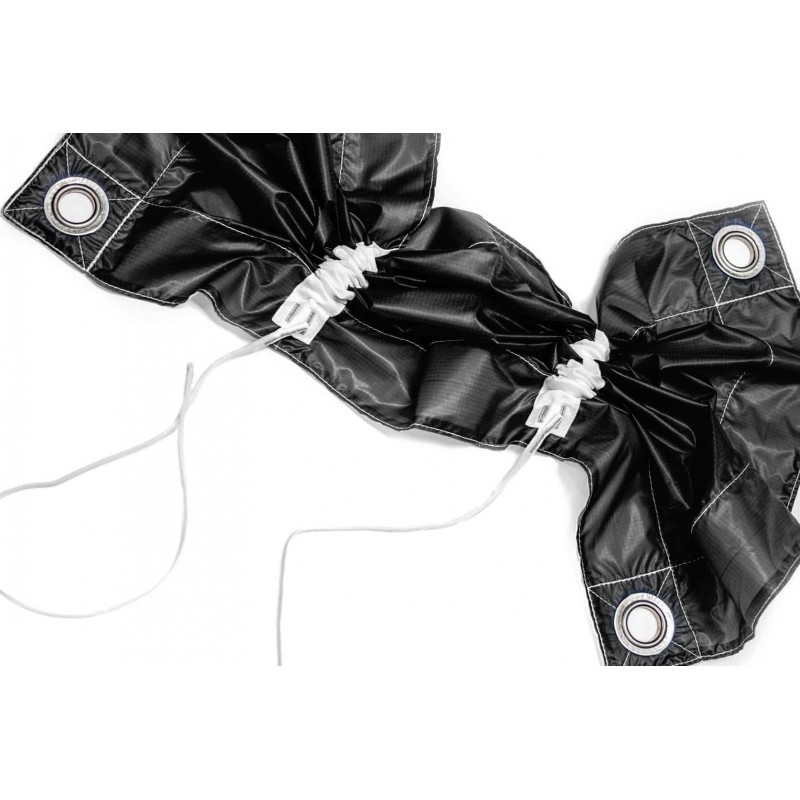

JYRO Sport Slider (not RDS)
€115.00
Technical Specifications.
|
Specification |
Detail |
|
Material |
High-tenacity nylon with reinforced edges |
|
Weight |
Ultra-light, approximately 150 grams |
|
Dimensions |
Custom fit for sport canopy sizes |
|
Stitching |
Triple-reinforced for maximum durability |
|
Compatibility |
Universal for sport canopies (non-RDS) |
|
Color Options |
Classic black with reflective trim |
|
Feature |
JYRO Sport Slider (not RDS) |
Standard Slider |
RDS Slider |
|
Opening Speed |
Controlled, gradual |
Moderate |
Rapid, aggressive |
|
Line Twist Prevention |
High |
Moderate |
Moderate |
|
Durability |
High |
Moderate |
Moderate |
|
Suitable for Sport Canopies |
Yes |
Yes |
Sometimes not preferred |
|
Weight |
Ultra-light |
Varies |
Varies |
Choosing the JYRO Sport Slider (not RDS) means selecting consistency and control tailored to your flying style.
JYRO Sport Slider (Not RDS): Custom Collapsible Slider for JYRO Sport Canopies
Understanding the JYRO Sport Slider and Its Role in Skydiving
Parachute Jump Australia, Skydive Byron Bay, and Cairns Skydiving
A parachute jump Australia operation, Skydive Byron Bay visit, or Cairns skydiving trip does not change the slider’s basic function. However, the complete system should be inspected after long-distance transport, exposure to coastal environments, or extended storage.
The slider must correspond to the exact canopy model and size. Temperature, humidity, packing methods, deployment speed, and line condition can also influence opening behavior, so equipment should be assessed as a complete system rather than as isolated parts.
Weight Limit Skydiving and Slider Selection
A weight limit skydiving calculation usually concerns the jumper’s exit weight, canopy size, harness limitations, and operating requirements. It does not directly determine slider size.
JYRO manufactures the product to suit a specified canopy type and size. Therefore, a heavier jumper should not independently order a larger or smaller slider as a way to modify opening speed. Changes to factory dimensions can significantly alter deployment behavior and should not be made without written manufacturer guidance and qualified rigging support.
Parachute Rig, Skydiving Rig, and Container Skydive Integration
The slider operates within the main deployment assembly of a parachute rig, skydiving rig, or container skydive system. It sits at the upper end of the suspension lines before deployment and moves downward as the canopy inflates.
The deployment bag, pilot chute, bridle, risers, lines, slider, and canopy must remain compatible. Replacing the slider does not correct an unsuitable pilot chute, damaged line set, poor container fit, or incorrectly configured deployment bag.
Parts of a Parachute and Slider Engineering
Among the parts of a parachute, the slider is a relatively small fabric panel with reinforced corners and four grommets. Nevertheless, its function is critical.
During deployment, suspension lines pass through the grommets. Air resistance and line tension initially keep the slider near the canopy, restricting how quickly the line groups can separate. As inflation progresses, the slider descends toward the risers and allows the canopy to reach its full span.
The JYRO version uses zero-porosity fabric, stainless-steel grommets, and collapsible drawstrings.
Linewear and Grommet Condition
Regular inspections for linewear should include the areas that repeatedly contact the slider grommets. Burrs, sharp edges, distortion, corrosion, or contamination can abrade suspension lines.
JYRO notes that compatible soft links can reduce slider-grommet damage and extend line life. However, link choice and installation must still match the canopy, risers, and line configuration.
A slider should be removed from service when its grommets become damaged, its fabric loses structural integrity, or its reinforcement stitching begins to fail.
Skydiving Rigging and Professional Compatibility Checks
Qualified skydiving rigging support is important when replacing a slider. The technician should confirm the canopy model, nominal size, serial number where required, line arrangement, grommet orientation, drawstring routing, and attachment configuration.
JYRO explicitly makes the sport slider to order for the selected canopy type and size. Consequently, a slider from another canopy should not be treated as interchangeable merely because it looks similar.
Tracking Jump, Skydiving Speed, and Speed Sky Diving
During a tracking jump, higher skydiving speed, or dedicated speed sky diving, deployment airspeed can influence opening forces.
The slider helps manage inflation, but it cannot compensate for an excessively fast or unstable deployment, incorrect packing, damaged components, or unsuitable equipment. Jumpers must follow the deployment-speed limitations and procedures associated with their canopy and discipline.
Wingsuit Sport, Vector Wingsuit, and Gliding Suit Wingsuit
The wingsuit sport, a large vector wingsuit, or another gliding suit wingsuit can create disturbed airflow behind the jumper. A wingsuit may also change deployment orientation and airspeed.
The correct factory slider should remain installed unless JYRO approves another configuration. Searches for wing suits for sale, the price of wingsuit, fly suits, a skydiving gliding suit, or a supposed tandem wingsuit do not establish canopy compatibility.
Experience gained in an indoor wingsuit environment also does not authorize equipment modifications.
Standard Sport Slider Versus Removable Deployment System
The product described here is a standard collapsible slider, not an RDS.
The standard unit remains connected after opening. By contrast, JYRO’s RDS is designed so the slider, deployment bag, and pilot chute can be removed after deployment, primarily to reduce drag for advanced canopy performance.
An RDS involves additional procedures, components, and risks. Therefore, buyers who only need a conventional replacement should select the sport slider rather than assuming the more complex option is automatically better.
Why Collapse the Slider?
Once the canopy has opened normally, the drawstrings allow the fabric to be gathered. Collapsing reduces fabric flapping behind the jumper’s head and may improve comfort, visibility, and aerodynamic cleanliness.
However, the user must first confirm that the canopy is controllable, traffic is clear, and sufficient altitude remains. A slider that does not collapse properly should be inspected rather than forcibly modified.
Skydiving Helmet, Skydive Helmets, and Full Face Skydiving Helmet
A skydiving helmet, skydive helmets, sky helmet skydiving design, sky diving helmet, or full face skydiving helmet is not mechanically connected to the slider.
Nevertheless, after deployment, an uncollapsed slider may remain near the wearer’s head. Helmet designs such as the G35 helmet, Cookie G4 helmet, or another skydiving helmet full face model should not interfere with visibility or normal post-deployment procedures.
Best Skydiving Helmet, Skydiving Glasses, and Skydiver Goggles
The best skydiving helmet depends on fit, field of view, discipline, and personal requirements. Similarly, skydiving glasses, skydiver goggles, and the question can you wear glasses while skydiving concern vision protection rather than slider compatibility.
However, all equipment around the head and neck should remain free from snag hazards after opening.
Hook Blade Knife, Hook Knife Skydiving, and Skydive Hook Knife
A hook blade knife, hook knife skydiving tool, or skydive hook knife is an emergency cutting device. It is not part of the slider and should never be used to remove a normal slider from an inflated canopy.
Emergency cutting actions require specialized training and must only be performed in circumstances covered by established procedures.
Skydiving Downsizing Chart and Smallest Canopy
A skydiving downsizing chart or search for the smallest canopy should not be used to select slider dimensions.
Different canopy models of the same nominal area may require different slider geometry. Additionally, downsizing changes speed, control sensitivity, recovery, and opening characteristics. JYRO advises pilots to consider experience, currency, wing loading, training, and coaching—not size alone—when progressing to another canopy.
Canopy Flight and Landing Flight Risers
The repeated phrase landing flight risers refers to riser control during canopy flight, not slider operation.
After the slider has descended and the canopy has been checked, trained pilots may pull it behind their heads or collapse it according to their approved procedure. The slider must not obstruct toggles, risers, emergency handles, or the pilot’s field of view.
Safire 3, Fluid Wings, and Canopy-Specific Sizing
A Safire 3, newer JYRO design, or canopy made by Fluid Wings may use different slider dimensions and opening engineering.
The JYRO Sport Slider should be ordered only for the compatible JYRO canopy identified during purchase. Even closely related models should not share parts unless the manufacturer confirms interchangeability. JYRO similarly warns that components such as line sets are model-specific, demonstrating why exact product identification matters.
CRW Skydiving and Jumper Pilot Considerations
During CRW skydiving, a qualified jumper pilot may operate close to other inflated canopies. Slider position, drawstrings, lines, and loose fabric must therefore be managed according to discipline-specific procedures.
A standard slider does not make a canopy suitable for formation contact. Canopy model, line type, pilot experience, emergency planning, and local requirements remain separate considerations.
Base Jumping, Baseline Jumping, and Base Canopy Distinction
Base jumping, sometimes incorrectly called baseline jumping, uses specialized systems and deployment methods. A base canopy slider may differ significantly from a sport-skydiving slider.
The JYRO Sport Slider should not be installed in a BASE system unless the relevant manufacturers have specifically approved that configuration.
Fire Parachute and CYPRES Fire Skydiving
The expressions fire parachute and CYPRES fire skydiving concern unrelated emergency-system discussions. A sport slider does not contain electronics, explosives, cutters, sensors, or automatic activation functions.
It controls main-canopy inflation mechanically through fabric drag, line restriction, and controlled descent along the suspension lines.
Freefly Pud Handle and Deployment-System Separation
A freefly pud handle belongs to the pilot-chute deployment system. Although it is not part of the slider, both components influence different stages of deployment.
The handle initiates main deployment, while the slider helps regulate canopy inflation after line extension. Neither component can compensate for defects in the other.
Gear Bag Skydive and Skydiving Equipment List
A gear bag skydive setup or comprehensive skydiving equipment list may include the harness-and-container, main canopy, reserve canopy, activation device, helmet, altimeters, goggles, jumpsuit, and emergency tools.
A replacement slider should be stored clean and protected from sharp objects, moisture, sunlight, oils, and chemicals until a qualified person installs it.
Skydive Belize and Skydiving Blue Hole Belize
A jumper traveling to Skydive Belize or researching skydiving Blue Hole Belize should inspect equipment before and after transport.
Salt, sand, humidity, and baggage compression can affect parachute components. Stainless-steel grommets offer practical corrosion resistance, but they should still be kept clean and dry. JYRO identifies stainless steel as the grommet material used in its sport slider.
iFly Colorado Springs and Skydiving Tube Training
iFly Colorado Springs and a skydiving tube provide controlled body-flight training. However, tunnel experience does not teach slider packing, canopy inspection, deployment-system assembly, or post-opening procedures.
Those skills require instruction from appropriately qualified skydiving professionals.
Nude Parachute Jump and Skydiving Nude
A nude parachute jump or skydiving nude event does not alter the product’s engineering requirements. The slider must still match the canopy, remain serviceable, and be packed correctly.
Unusual events should never encourage users to neglect equipment compatibility or established safety procedures.
New Skydive, #Skydiving Latest, and Skydiving Website Research
A new skydive, #skydiving latest post, or general skydiving website may introduce buyers to equipment, but social content cannot confirm compatibility.
The canopy model, size, serial information, manufacturer guidance, and professional inspection should determine the correct replacement. The JYRO product page specifically requests the canopy type and size because each slider is made to order.
Construction, Opening Control, Installation, Inspection, and Maintenance
Purpose of the Slider
The slider is a critical part of the main deployment sequence. Its primary role is to control how quickly the suspension lines separate and how rapidly the canopy expands during inflation.
Without the correct slider, the canopy may open too quickly, too slowly, or inconsistently. Therefore, the component must match the exact canopy model and size. A replacement should never be selected only because its dimensions appear similar to another unit.
The slider works through a combination of fabric resistance, line tension, airflow, and grommet movement. As the canopy begins to inflate, the slider remains near the lower surface for a short period. It then travels downward as pressure increases and the line groups move apart.
Zero-Porosity Fabric Construction
The slider is manufactured from low-permeability fabric. This material resists airflow passing directly through the panel, allowing the slider to create controlled aerodynamic resistance during deployment.
The fabric must remain structurally sound. Tears, burns, stretched areas, damaged reinforcement, or excessive porosity may alter opening performance.
The panel should be handled carefully during packing. Sharp fingernails, rough surfaces, tools, and damaged hardware can puncture or weaken the material.
Fabric condition should be evaluated regularly, particularly around the corners and reinforced areas where deployment loads are concentrated.
Stainless-Steel Grommets
Four metal grommets guide the suspension-line groups as the slider moves downward. Their smooth internal surfaces help reduce friction and allow controlled movement.
Each grommet should remain:
- Smooth around the inner edge
- Securely attached to the fabric
- Free from sharp burrs
- Properly shaped
- Clean and dry
- Free from heavy corrosion
Even a small sharp edge may damage lines through repeated contact. Therefore, the grommets should be inspected by touch as well as sight.
A damaged grommet should not be filed, reshaped, or repaired through improvised methods. The component should be evaluated professionally and replaced when necessary.
Reinforced Corner Design
The corners experience repeated loading during every deployment. Reinforcement helps distribute these forces between the fabric panel and the grommets.
Stitching around each corner should remain tight and complete. Loose threads, broken stitching, fabric distortion, or separation between layers may indicate developing damage.
The owner should compare all four corners. A difference in shape, stiffness, or wear may suggest uneven loading or contact with another component.
Corner damage should be addressed before the next use because failure in this area may affect deployment control.
Collapsible Drawstring System
The built-in drawstrings allow the panel to be gathered after the canopy has opened and passed all normal control checks.
Collapsing the fabric may reduce flapping, vibration, noise, and unnecessary resistance. It can also help keep the material closer to the risers and away from the back of the user’s head.
The drawstrings should move smoothly through their channels. They should not be knotted, frayed, tangled, or partially pulled before deployment.
The locking system must remain secure after the panel is collapsed. However, it should not require excessive force to operate.
A damaged cord should be repaired only through an approved method. Replacing it with an unsuitable material may affect both packing and operation.
Difference From a Removable System
This model remains permanently connected to the suspension lines during normal use. It is not intended to be disconnected after opening.
A removable arrangement uses additional hardware and procedures that allow several deployment components to be detached during flight. That type of system is generally intended for highly experienced pilots with specialized training.
The standard collapsible design offers simpler operation and fewer post-opening tasks. Therefore, it is generally more suitable for routine sport use when the correct canopy configuration calls for it.
Users should never attempt to convert the standard component into a removable version through homemade modifications.
Correct Installation
Installation requires the suspension-line groups to pass through the correct grommets in the proper orientation.
Incorrect routing can create serious problems, including twisted line groups, uneven inflation, restricted movement, or abnormal loading.
The installer should verify:
- Correct front and rear orientation
- Proper line-group routing
- Smooth grommet movement
- Untangled drawstrings
- Complete line continuity
- Secure attachment configuration
- Correct relationship with the stabilizers and risers
Installation should be completed or inspected by a qualified professional.
Packing Position
Before the canopy is folded into the deployment bag, the slider should be moved fully upward toward the lower surface.
Its fabric should be positioned correctly between the line groups according to the approved packing method. The grommets should sit evenly, and the panel should not be twisted.
An incorrectly positioned slider may begin the deployment sequence unevenly. Therefore, the packer should confirm its orientation during every pack job.
The drawstrings must remain fully released before packing. A partially collapsed panel may not create the intended amount of resistance during inflation.
Opening Performance
Opening behavior depends on the interaction of several factors rather than the slider alone.
These factors include:
- Body position
- Deployment airspeed
- Packing technique
- Pilot-chute condition
- Line trim
- Slider placement
- Fabric condition
- Canopy age
- Environmental conditions
- Equipment compatibility
A replacement slider may improve performance when the original component is worn or damaged. However, it should not be treated as a guaranteed correction for every opening problem.
Repeated hard, slow, uneven, or off-heading openings should be investigated as a complete-system issue.
Post-Opening Procedure
After inflation, the pilot should first confirm that the canopy is fully open, controllable, and safe to continue flying.
Only after completing the essential control and traffic checks should attention be given to collapsing the slider.
The pilot should avoid looking down for an extended period. Surrounding traffic, altitude, heading, and landing options remain more important than reducing drag or noise.
If the slider does not collapse easily, it should not be forced. The pilot should continue flying safely and arrange an inspection after landing.
Routine Inspection
The component should be inspected during packing and during scheduled equipment maintenance.
Important inspection areas include:
- Fabric surfaces
- Reinforced corners
- Stitching
- Grommet edges
- Drawstrings
- Locking components
- Areas of line contact
- Signs of contamination
- Heat or friction damage
Any change in opening behavior should prompt a more detailed examination.
Cleaning and Storage
The slider should be kept dry, clean, and protected from ultraviolet exposure.
Strong detergents, bleach, solvents, oil, and aggressive cleaning products should not be used. These substances may weaken fabric, thread, cords, or coatings.
If the component becomes wet, it should be dried naturally in a shaded and ventilated area. Direct heat should be avoided.
During long-term storage, the slider should remain with the correctly assembled canopy or be stored in a labeled protective bag. It should not be folded tightly around sharp hardware.
Replacement Timing
No universal jump number determines when replacement is required. Condition, opening history, environment, packing habits, and line contact all affect wear.
Replacement should be considered when the fabric is damaged, reinforcement is weakened, grommets are rough or distorted, drawstrings fail to operate correctly, or opening performance changes without another clear cause.
A professionally inspected, canopy-specific replacement supports consistent deployment behavior and responsible equipment maintenance.
Practical Use, Troubleshooting, Serviceability, and Ownership Guidance
Pre-Jump Preparation
Before every jump, the slider should be checked as part of the complete main-canopy inspection. The packer should confirm that the fabric is undamaged, the grommets are smooth, the drawstrings are fully released, and the line groups pass correctly through each opening.
The slider should be moved fully toward the canopy before packing. All four corners should sit evenly, while the fabric should remain correctly positioned between the line groups.
A rushed inspection may allow a twisted panel, damaged cord, rough grommet, or incorrect orientation to remain unnoticed. Therefore, the packer should complete the check before beginning the final folding sequence.
Confirming Correct Orientation
Correct orientation helps the slider travel evenly during inflation. A reversed, twisted, or unevenly positioned slider may affect the opening sequence.
The packer should identify the front and rear edges according to the approved canopy configuration. The grommets should align naturally with the corresponding line groups, and no suspension line should cross unnecessarily through another group.
Line continuity should be checked whenever the canopy has been disconnected, relined, inspected, repaired, or installed into another system.
When orientation is uncertain, professional assistance should be obtained before the equipment is used.
Monitoring Opening Characteristics
Users should become familiar with the normal opening behavior of their canopy. This includes the approximate inflation time, heading performance, slider descent, and pressure experienced through the harness.
One unusual opening does not always indicate a defective slider. However, repeated changes should be investigated.
Potential warning signs include:
- Consistently hard openings
- Repeatedly slow inflation
- Uneven slider movement
- Persistent heading changes
- A slider that remains high
- Excessive vibration
- Visible fabric deformation
- Unusual line friction
The entire deployment system should be reviewed because several components may contribute to these symptoms.
Slider Hesitation
A slider may occasionally remain above the risers after the canopy has inflated. This can occur because of line friction, packing configuration, grommet condition, canopy design, or temporary loading differences.
The pilot should first maintain control, observe traffic, and follow trained procedures. Attention should not be focused exclusively on the slider while altitude and surrounding airspace are ignored.
Repeated hesitation requires inspection. The grommets, lines, drawstrings, fabric shape, and canopy trim should all be checked.
The user should not apply unapproved lubricants to the grommets or lines.
Difficulty Collapsing the Slider
After deployment, the drawstrings should move smoothly when operated correctly. Resistance may result from tangled cords, damaged channels, contamination, fabric tension, or a worn locking mechanism.
The pilot should not use excessive force during flight. If the slider cannot be collapsed normally, it may remain open for the rest of the descent.
After landing, the component should be examined before it is packed again. Forcing a damaged drawstring can worsen the problem or tear the surrounding fabric.
Drawstring Inspection
The drawstrings experience repeated pulling, friction, and exposure to environmental conditions.
They should be checked for:
- Fraying
- Knots
- Uneven length
- Cuts
- Heat damage
- Stiffness
- Broken fibers
- Damaged attachment points
A cord that appears weakened should not be repaired with tape, household thread, or an improvised knot.
Replacement should use approved materials and dimensions so that the collapsing system operates without changing deployment behavior.
Locking Mechanism Condition
The collapsing system normally includes a method of holding the gathered fabric in place after opening.
The locking parts should remain easy to operate while still holding securely. A mechanism that releases unexpectedly may allow the fabric to reopen and flap during flight.
Conversely, excessive stiffness may make collapsing difficult and distract the pilot.
Dirt, sand, salt, and damaged cord material can affect operation. The mechanism should be inspected and cleaned only through approved procedures.
Grommet Wear and Line Protection
The grommets repeatedly travel along the suspension lines. As a result, even minor surface damage can gradually increase abrasion.
Inspection should include both the visible outer surface and the internal edge. The technician may use careful touch to identify sharp areas that are difficult to see.
The lines near the grommet contact zones should also be examined. Fuzzing, glazing, discoloration, flattening, or broken fibers may indicate excessive friction.
A damaged grommet and worn line set should be addressed together rather than treating only one side of the problem.
Fabric Aging
Repeated deployments expose the fabric to airflow, tension, packing pressure, sunlight, dirt, and handling.
Over time, the material may become softer, distorted, porous, stained, or weakened. Small pinholes may also develop near high-stress areas.
Minor cosmetic change does not always require immediate replacement. However, structural damage, growing tears, weakened reinforcement, and altered shape should be evaluated professionally.
The fabric should never be patched with adhesive tape or household repair products.
Stitching Inspection
Stitching secures the reinforced corners, drawstring channels, and surrounding fabric layers.
Loose or broken threads may allow the material to separate under deployment load. Therefore, every seam should be examined during scheduled maintenance.
Particular attention should be given to areas around the grommets because these points experience repeated force.
Repairs should preserve the original construction method, thread type, stitch pattern, and dimensions. Incorrect sewing may create additional stress concentrations.
Effects of Packing Technique
Packing technique can influence how the slider begins its movement.
If it is not positioned evenly against the lower surface, one side may start descending before the other. Likewise, poor line organization or uneven fabric distribution can affect inflation.
The packer should follow the approved method consistently rather than changing techniques to solve a problem without technical guidance.
When opening behavior changes after another person packs the system, the difference should be documented and reviewed objectively.
Effects of Body Position
Body position at deployment influences airflow and line tension.
A stable, symmetrical position generally supports a more organized opening. Rotation, steep movement, or uneven shoulder position may place different loads on the line groups.
The slider cannot correct severe instability. Although it helps regulate inflation, it remains dependent on the conditions created during deployment.
Users should review repeated opening problems with both a qualified instructor and a technician because the cause may involve technique, equipment, or both.
Effects of Deployment Speed
Higher deployment speed generally increases opening forces. The slider is designed to regulate inflation within the operating conditions intended for the canopy.
Deploying outside the approved speed range may produce excessive stress on the fabric, lines, stitching, risers, and harness.
A larger or modified slider should not be used as an informal solution for high-speed deployment. The correct response is to follow the canopy manufacturer’s limitations and discipline-specific procedures.
Effects of Line Trim
Suspension lines change length through use, loading, and heat generated by friction.
Uneven trim may affect the canopy’s pitch, inflation sequence, heading, and slider movement. These changes may develop gradually and remain difficult to notice during routine visual checks.
Professional measurement can determine whether the line set remains within acceptable limits.
A new slider will not restore correct performance when the primary problem is an out-of-trim line set.
Environmental Exposure
Sand, salt, mud, water, oil, and industrial chemicals can damage the slider and surrounding components.
Fine particles may collect around the grommets or drawstring channels. Salt residue can encourage corrosion, while oil and chemicals may weaken fabric or cord material.
After contamination, the component should be removed from normal use until the appropriate cleaning and inspection process has been completed.
The owner should record significant exposure because some damage may appear later.
Water Exposure
Freshwater exposure still requires careful drying and inspection. Saltwater or contaminated water creates additional concerns because residues may remain after the material appears dry.
The slider should be dried naturally in a shaded and ventilated location. Direct sunlight, heaters, hair dryers, and other concentrated heat sources should be avoided.
Packing the canopy while it remains damp may encourage corrosion, odor, staining, and material deterioration.
Heat and Sunlight
High temperatures can affect fabric coatings, cords, stitching, and surrounding parachute materials.
The equipment should not remain inside a closed vehicle during hot weather. It should also be protected from heaters, open flames, hot metal surfaces, and prolonged direct sunlight.
Ultraviolet exposure gradually weakens synthetic materials. Therefore, the canopy should be packed or stored in a shaded area whenever practical.
Storage Between Jumping Periods
During short-term storage, the complete system should remain clean, dry, and protected in a suitable bag.
For extended storage, the equipment should be kept in a temperature-controlled environment away from pests, chemicals, moisture, and heavy objects.
The slider should not be compressed against sharp hardware or stored separately without identification. If it is removed, its compatible canopy model and size should be clearly recorded.
A full inspection should be completed before the system returns to service after long-term storage.
Replacement After Damage
Replacement is usually more appropriate than repair when the grommets are severely damaged, the fabric has lost structural integrity, or the overall shape has changed.
A technician may be able to repair limited stitching or approved drawstring damage. However, any repair must preserve the original dimensions and aerodynamic function.
The owner should avoid choosing a secondhand replacement without verified compatibility and service history.
A correctly manufactured replacement provides greater confidence than an unknown component of similar appearance.
Professional Assessment cypress fire skydiving
A qualified technician can evaluate whether opening problems originate from the slider, line set, canopy fabric, packing method, pilot chute, deployment bag, or another part of the system.
This broader assessment matters because replacing the wrong component may leave the actual fault unresolved.
Useful information for the inspection includes:
- Approximate jump numbers
- Recent opening behavior
- Packing method
- Deployment conditions
- Previous repairs
- Line-set age
- Environmental exposure
- Changes in canopy configuration
Accurate details help the technician reach a more reliable conclusion.
Maintenance Records
Owners should keep records of inspections, repairs, replacement dates, line changes, and unusual openings.
These records support long-term maintenance and allow gradual changes to be identified more easily.
When the canopy is sold, clear service documentation also helps the next owner evaluate its condition and history.
The records should identify the exact slider configuration rather than simply stating that a replacement was installed.
Responsible Ownership
The slider is a small component with a major influence on deployment. It should therefore receive the same careful attention given to the canopy, lines, risers, pilot chute, and harness-and-container system skydiving tube.
Reliable performance depends on correct sizing, approved construction, careful packing, regular inspection, suitable deployment conditions, and professional maintenance.
No component can eliminate every opening risk. However, disciplined care and correct compatibility help the complete deployment system operate as intended.
Be the first to review “JYRO Sport Slider (not RDS)”
Related products


Accessories
Accessories


Accessories

Accessories
Accessories
Reviews
There are no reviews yet.