






Used 2024 VSE infinity I-44 parachute

€5,300.00
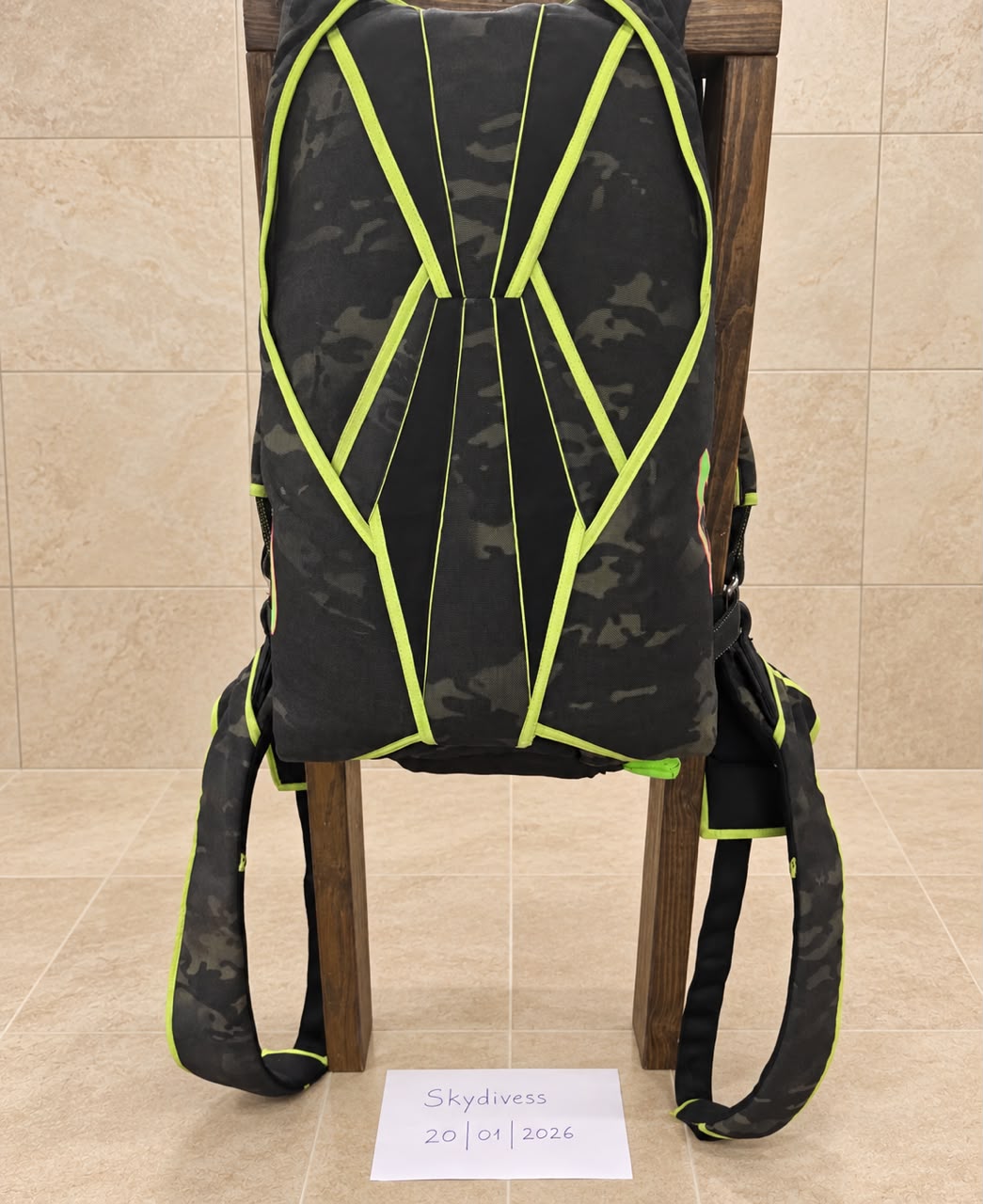
Used 2024 VSE Infinity I-44 complete skydiving rig in excellent overall condition and ready for professional inspection before use.
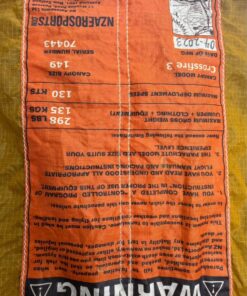
The Infinity I-44 harness/container has approximately 180 jumps, while the 2023 Crossfire 3 149 main canopy has approximately 190 jumps. The system also includes a PD Reserve 160 with 5 repacks and 0 rides, plus a Vigil Cuatro AAD with DOM 12/22.
Important details:
- 2024 VSE Infinity I-44 harness/container
- Approximately 180 jumps on the container
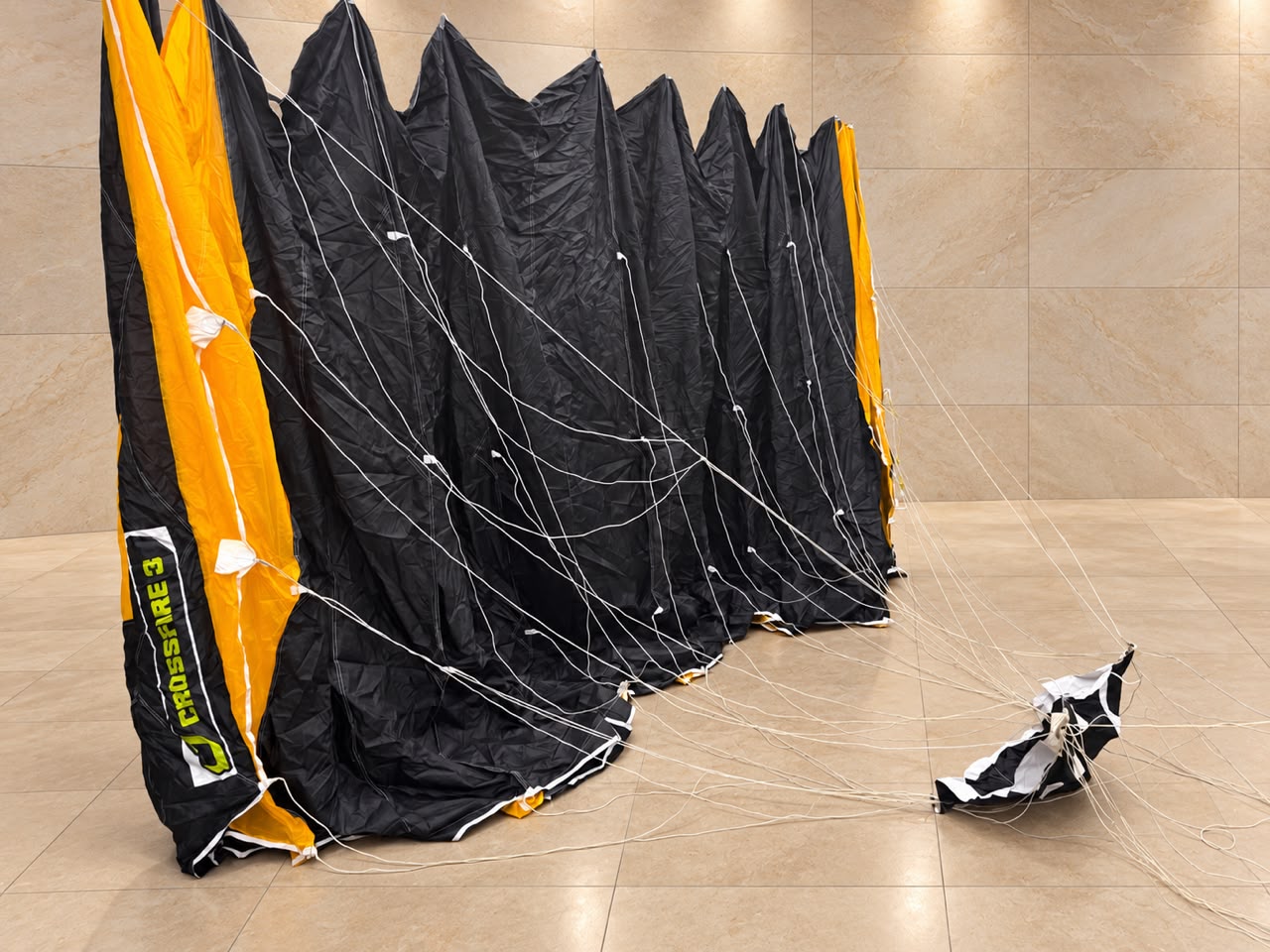
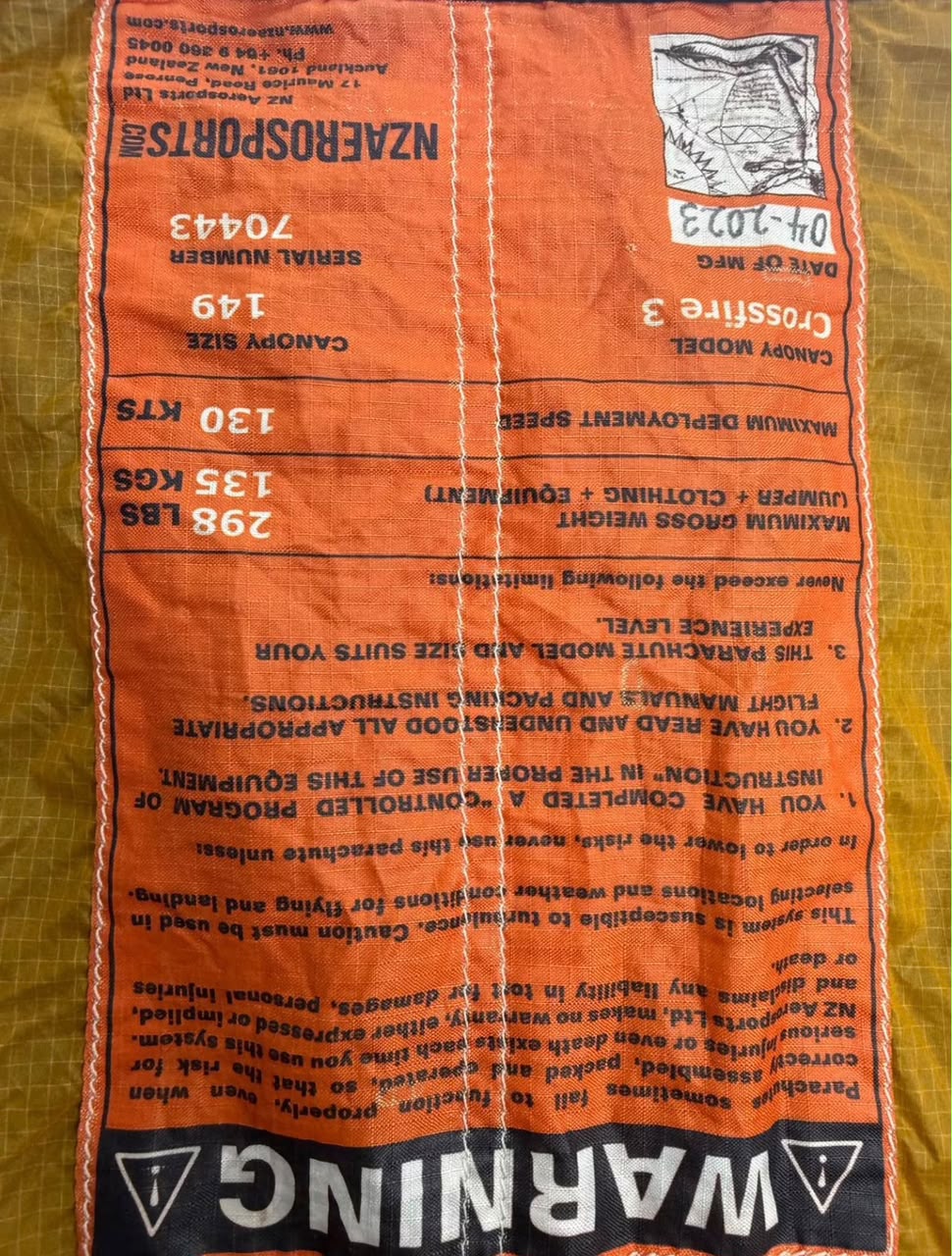
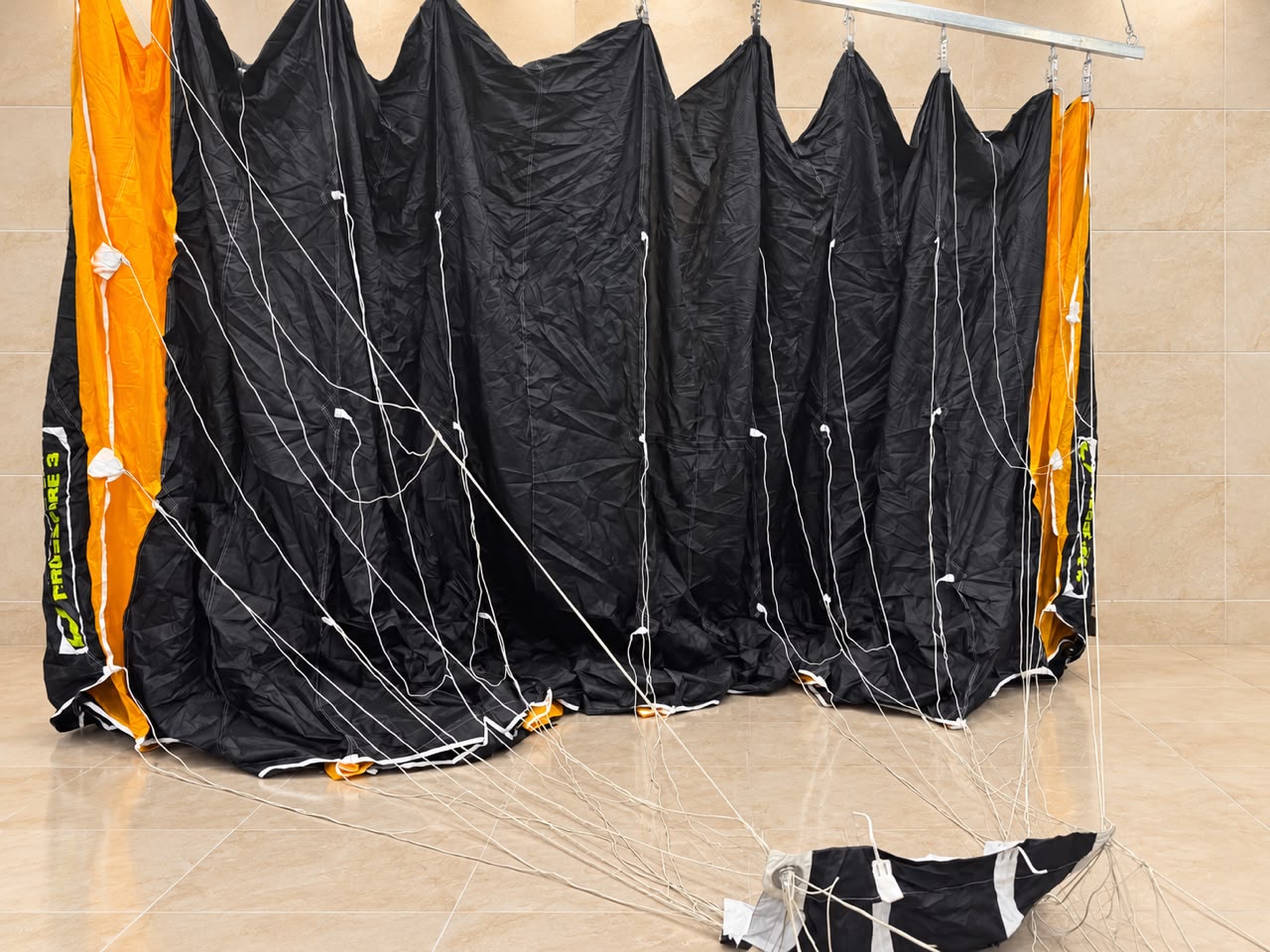
- 2023 Crossfire 3 149 main canopy
- Approximately 190 jumps on the main
- PD Reserve 160
- 5 reserve repacks
- 0 reserve rides
- Vigil Cuatro AAD
- AAD DOM: December 2022
- Harness measurements are shown in the photos
- Complete container, main, reserve, and AAD setup
- Suitable for an experienced jumper whose measurements, exit weight, and canopy progression are appropriate
- Final fit, reserve status, canopy suitability, line condition, and AAD serviceability should be confirmed by a qualified rigger before use
A strong complete setup for an experienced sport skydiver looking for a relatively recent rig with clearly stated component history and moderate jump numbers.
Used 2024 VSE Infinity I-44 Parachute – Complete Rig with Crossfire 3 149, PD Reserve 160 and Vigil Cuatro
This used 2024 VSE Infinity I-44 parachute is a complete sport skydiving system assembled around a modern Velocity Sports Equipment Infinity harness/container, a 2023 Crossfire 3 149 main canopy, a Performance Designs Reserve 160, and a Vigil Cuatro automatic activation device. The container has approximately 180 jumps, while the Crossfire 3 149 has approximately 190 jumps. The reserve has received 5 repacks and 0 rides, and the Vigil Cuatro carries a DOM of 12/22.
For anyone searching for a complete parachute rig, skydiving rig, container skydive, or practical skydiving equipment list, this setup brings the major components together in one coordinated system. However, harness fit is critical, so the measurements shown in the product photos should be reviewed carefully and confirmed with a qualified rigger before use.
2024 VSE Infinity I-44 Container – 180 Jumps
The heart of the system is the 2024 Velocity Sports Equipment Infinity I-44 harness/container.
Velocity Sports Equipment manufactures the Infinity as a custom sport skydiving harness/container system with a strong emphasis on fit, comfort, and modern reserve deployment architecture. The current Infinity compatibility chart identifies the I-44 for reserve canopies in approximately the 160–181 sq ft range and conventional 9-cell mains around 150–170 sq ft, making the supplied 160 reserve and 149 main a logical size pairing for this container family.
With only 180 jumps on the container, this example remains relatively low-use for a modern sport rig, although actual condition should always be confirmed by inspection.
The exact harness measurements are shown in the listing photos. This information is especially important because a well-maintained container may still be unsuitable if the harness dimensions do not match the intended jumper.
2023 Crossfire 3 149 Main Canopy – 190 Jumps
The main canopy is a 2023 Crossfire 3 149 with approximately 190 jumps.
The Crossfire 3 is a fully elliptical 9-cell sport canopy originally developed by NZ Aerosports, now JYRO. Manufacturer material describes it as a canopy for experienced intermediate pilots, with responsive inputs, soft openings, a longer recovery arc, and strong flare performance. Historical manufacturer guidance specifically places the Crossfire 3 in the experienced-pilot category rather than as a first canopy after student training.
That makes pilot experience, exit weight, wing loading, currency, and coaching history essential considerations.
Anyone researching canopy flight, skydiving downsizing chart, landing flight risers, smallest canopy, safire 3, or fluid wings should understand that canopy size alone does not establish suitability. A 149 sq ft fully elliptical wing can behave very differently from a more conservative canopy of similar size.
PD Reserve 160 – 5 Repacks, 0 Rides
The reserve is a Performance Designs PD Reserve 160.
The supplied history shows 5 repacks and 0 rides, meaning it has not been deployed in an emergency according to the information provided.
Performance Designs lists the PD-160R at 160 sq ft with a maximum FAA suspended weight of 254 lb and a maximum deployment speed of 150 knots under its certification data. Performance Designs also describes the PD Reserve family as known for predictable handling, good glide in brakes, and strong landing performance.
Reserve compatibility and packing must always be verified by an appropriately certificated rigger.
Vigil Cuatro AAD – DOM 12/22
The system includes a Vigil Cuatro, manufactured December 2022.
The Cuatro is a multi-mode automatic activation device with four operating modes: Pro, Student, Tandem, and Xtreme. Vigil states that current units have a 20-year service life, user-accessible jump data, a field-replaceable cutter and controller, and no scheduled maintenance requirement apart from applicable battery/service guidance.
For a unit with a 12/22 manufacture date, buyers should still confirm status, battery information, cutter condition, serial number, and current service eligibility before jumping it.
Harness Fit and Measurements
Harness fit is not optional.
The measurements provided in the photos should be compared carefully with the intended jumper’s body measurements.
A rig that is too long, too short, or incorrectly sized through the laterals or leg straps can create poor comfort and may affect stability or emergency-handle access.
A qualified rigger should therefore confirm compatibility before the system is placed into service.
Complete Skydiving Equipment Context
Buyers researching a skydiving helmet, skydive helmets, sky helmet skydiving, sky diving helmet, skydiving helmet full face, full face skydiving helmet, g35 helmet, best skydiving helmet, cookie g4 helmet, skydiver goggles, skydiving glasses, or asking can you wear glasses while skydiving are usually building a broader personal equipment package.
This listing is centered on the parachute system itself rather than head protection or eyewear.
Likewise, items such as a hook blade knife, hook knife skydiving, skydive hook knife, freefly pud handle, and gear bag skydive are separate accessories and should be selected according to compatibility and training requirements.
Freefly, Tracking and Canopy Applications
Terms such as tracking jump, crw skydiving, canopy flight, speed sky diving, skydiving speed, and jumper pilot describe different disciplines and skill areas.
Before using any rig for freefly or specialized flying, the container, closing system, handles, pilot chute, and overall configuration should be inspected for suitability.
The Infinity system should also be reviewed by a rigger if the buyer intends to use it for higher-speed disciplines.
Wingsuit Search Context
Searches for wingsuit, wingsuit sport, vector wingsuit, gliding suit wingsuit, skydiving gliding suit, fly suits, wing suits for sale, price of wingsuit, indoor wingsuit, and tandem wingsuit may appear alongside complete-rig research.
However, a wingsuit setup requires more than simply owning a container and canopy.
Canopy choice, bridle configuration, pilot chute selection, deployment characteristics, jumper experience, and formal wingsuit training all matter.
A Crossfire 3 is a performance sport canopy, so suitability for any specialized discipline should be discussed with an experienced instructor and rigger.
BASE Jumping and Other Unrelated Search Terms
Terms including base jumping, baseline jumping, base canopy, and fire parachute refer to separate equipment categories and should not be confused with this sport skydiving rig.
Likewise, cypress fire skydiving should not be interpreted as a description of the included AAD; this system contains a Vigil Cuatro, not a CYPRES.
Destination and Experience Searches
Search phrases such as parachute jump australia, skydive byron bay, cairns skydiving, skydive belize, skydiving blue hole belize, ifly colorado springs, nude parachute jump, skydiving nude, new skydive, #skydiving latest, and skydiving website relate to locations, experiences, or general skydiving content rather than the equipment specification.
Anyone traveling with the rig should check local aviation, reserve-repack, AAD, airline, and drop-zone requirements before use.
Weight Limit and Canopy Selection
A search for weight limit skydiving should never be answered by canopy size alone.
The correct decision depends on exit weight, reserve limits, wing loading, experience, currency, landing environment, and drop-zone or instructor requirements.
The PD Reserve 160 has published certification limits, while the Crossfire 3 should be selected according to pilot experience and appropriate wing loading rather than simply fitting inside the container.
Why This Complete Rig Stands Out
The strongest appeal of this system is the combination of relatively recent components and clearly stated use history.
The 2024 Infinity I-44 has approximately 180 jumps.
The 2023 Crossfire 3 149 has approximately 190 jumps.
The PD Reserve 160 has 5 repacks and 0 rides.
The Vigil Cuatro was manufactured in December 2022.
Together, these components create a complete modern sport skydiving package built around an Infinity container sized appropriately for the supplied canopy combination.
For an experienced jumper whose measurements, exit weight, skill level, and canopy progression are appropriate, this setup can offer a strong foundation for continued sport jumping.
Before purchase and use, the complete system should be inspected by a qualified rigger, the harness measurements should be confirmed, canopy suitability should be reviewed, reserve paperwork should be verified, and the AAD status should be checked.
Section 2 – Fit, Component Condition, Flight Characteristics, Inspection and Practical Ownership
A Complete System Should Be Evaluated as One Integrated Rig
A complete parachute system should never be judged by one component alone.
The container, main canopy, reserve, automatic activation device, harness measurements, deployment system, hardware, lines, risers, handles, and closing components all work together.
For that reason, the most useful way to evaluate this setup is as a complete system rather than as four separate products.
The container needs to fit the jumper correctly.
The main canopy needs to match the jumper’s experience and wing-loading history.
The reserve must remain suitable for the jumper’s exit weight.
The automatic activation device needs to be current, functional, and correctly configured.
The entire rig should also pass an independent inspection before being placed into service.
Why Harness Fit Is Critical
Harness fit affects comfort, stability, emergency access, and overall usability.
A harness that is too long may sit incorrectly on the torso.
A harness that is too short may create pressure around the shoulders and hips.
Laterals that do not match the jumper’s body dimensions can also affect how securely the container sits against the back.
Leg straps must fit correctly without excessive slack or uncomfortable pressure.
This is why the measurements shown in the photos matter so much.
The safest buying decision is made when those measurements are compared with the intended jumper’s own measurements and reviewed by a qualified rigger.
Shoulder Fit
The shoulder area should allow the rig to sit firmly without excessive movement.
The container should not feel as though it is hanging away from the body.
At the same time, the harness should not create uncomfortable compression.
A correct shoulder fit supports stable body position and helps keep emergency handles where the jumper expects them to be.
Main-Lift-Web Length
The main-lift-web dimension is one of the most important measurements on a harness.
It influences the vertical relationship between the chest strap, hip junction, container, and handles.
If this measurement is incorrect for the jumper, the entire rig can feel poorly positioned.
A correct length helps the harness sit naturally and consistently.
Lateral Fit
Laterals influence how closely the container sits against the lower back.
If they are too long, the container can move unnecessarily.
If they are too short, the rig can feel restrictive.
Correct lateral sizing contributes to comfort and stability during freefall.
Leg-Strap Fit
Leg straps should sit securely without creating unnecessary pressure.
The jumper should be able to move freely while still maintaining a secure harness position.
Improperly fitted leg straps can make the rig uncomfortable and may affect body position.
The exact fit should therefore be checked before jumping the system.
Why the Container’s Jump Count Matters
A container with approximately 180 jumps is still relatively lightly used compared with many long-service sport rigs.
However, jump count alone does not determine condition.
Storage history matters.
Handling matters.
Packing technique matters.
Exposure to dirt, moisture, sunlight, aircraft interiors, and rough surfaces also matters.
A clean lower-jump container can sometimes show more wear than a higher-jump rig that was stored and handled carefully.
What to Inspect on the Container
The complete harness/container should be checked methodically.
The webbing should be inspected.
The stitching should be inspected.
The leg straps should be inspected.
The chest strap should be inspected.
Hardware should be examined for unusual wear, deformation, or corrosion.
The closing system should be checked.
Reserve pin protection should be checked.
The main closing area should also be evaluated.
This inspection should be performed by someone with the appropriate rigging qualifications.
Webbing Condition
Harness webbing carries major loads.
It should not show severe abrasion, cuts, chemical damage, burns, or suspicious repairs.
Normal cosmetic wear can occur over time.
However, structural wear should always be evaluated professionally.
Stitching Condition
Structural stitching should remain intact.
Broken or loose stitching deserves attention.
The rigger should distinguish between cosmetic thread wear and anything that may affect the integrity of the harness.
This is one of the reasons a professional inspection is more useful than judging condition from photographs alone.
Hardware Condition
Metal hardware should operate smoothly and remain free from deformation.
Surface marks may be normal.
Significant corrosion, cracking, unusual bending, or damage is not.
Moving components should function correctly.
Main Container Condition
The main container should close properly with the intended canopy.
Flaps should align naturally.
The closing loop should remain in suitable condition.
Pin protection should be secure.
The pilot chute and bridle should be examined as part of the complete deployment system.
Reserve Container Condition
The reserve container deserves especially careful attention.
The reserve pin, closing loop, pilot chute, freebag, bridle, and reserve handle system should all be inspected during the reserve cycle.
A current and properly documented reserve pack is important before jumping the rig.
Main Canopy Jump History
The main canopy has approximately 190 jumps.
This is useful information because jump count helps provide context for the canopy’s service history.
However, canopy condition still depends on much more than jump count.
Packing surface matters.
Landing environment matters.
Exposure to dust matters.
Line wear matters.
Storage conditions matter.
The canopy should therefore be inspected directly.
Fabric Condition
The fabric should be checked for tears, burns, punctures, excessive contamination, and unusual wear.
Small marks may be cosmetic.
Damage near load-bearing seams or attachment points deserves particular attention.
Fabric porosity can also become relevant on older or heavily used canopies.
At the stated jump count, direct inspection remains the best way to establish actual condition.
Seam and Attachment-Point Inspection
Major seams should be intact.
Line-attachment points should not show abnormal wear.
Reinforcement areas should remain secure.
Damage around attachment points can become significant because these areas carry repeated load during opening and flight.
Line Condition
Lines deserve careful inspection.
Wear does not occur uniformly.
Some lines may show more abrasion than others.
The lower control lines often receive more handling.
Line trim can also change over time.
This can affect opening behavior, handling, and flare response.
Why Line Trim Matters
Even when a canopy still looks visually clean, line trim can influence how it flies.
Changes in line length can affect pitch, opening characteristics, recovery behavior, and control response.
For that reason, line condition should not be judged only by appearance.
An experienced canopy specialist or rigger can help evaluate whether the lines remain within an acceptable service condition.
Slider Inspection
The slider should be inspected for fabric wear, damage around the grommets, and general condition.
Grommets should remain smooth.
Sharp edges can damage lines.
The slider should move freely on the line groups.
Steering System Inspection
Brake lines should be checked carefully.
The lower control lines receive frequent handling and can show wear earlier than other lines.
Brake settings should be correct.
Toggles should be secure.
The guide rings should also be inspected.
Riser Condition
Risers should remain structurally sound.
Webbing should be inspected for abrasion.
Hardware should be checked.
The three-ring release system should move correctly.
The cable housings and release cables should also be inspected and maintained appropriately.
Three-Ring System Care
The three-ring release system is a critical part of the rig.
It should not be neglected simply because the rig has a relatively low jump count.
Rings should move freely.
Webbing should not be twisted.
Cables should be clean and appropriately maintained.
Periodic inspection helps preserve reliable operation.
Main Canopy Experience Level
The supplied main canopy is a performance-oriented wing.
That matters more than its age.
A jumper should not choose it simply because the size fits the container.
Experience, recent jump numbers, previous canopy size, landing consistency, and coaching history all matter.
A canopy that is appropriate for one jumper may be unsuitable for another at the same body weight.
Wing Loading
Wing loading should be calculated using exit weight rather than body weight alone.
Exit weight includes the jumper and equipment.
The resulting figure helps provide context for canopy performance.
However, a number by itself does not determine suitability.
Canopy design and jumper experience remain equally important.
Downsizing Decisions
A smaller canopy should not be selected simply because it produces a preferred wing-loading number.
Downsizing should be based on demonstrated skills.
Consistent landings matter.
Accuracy matters.
Crosswind competence matters.
Landing pattern judgment matters.
Emergency-procedure knowledge matters.
Currency also matters.
A qualified canopy coach can provide more useful guidance than a generic chart alone.
Recovery Characteristics
A performance-oriented canopy may continue flying differently after control inputs compared with a more conservative design.
The jumper should already understand recovery characteristics and normal control response before using it.
This is another reason previous canopy experience is important.
Flare Performance
A well-maintained canopy can provide strong landing performance when flown correctly.
However, flare performance depends on line condition, technique, wind, loading, timing, and canopy trim.
If the canopy feels different from expectations, line condition and overall rigging should be checked before assumptions are made.
Opening Behavior
Openings should be evaluated over multiple jumps rather than from one isolated experience.
Packing technique matters.
Body position matters.
Deployment speed matters.
Line condition matters.
Slider position matters.
Consistent packing and deployment technique help establish a reliable baseline.
Reserve Condition and Repack History
The reserve has 5 repacks and 0 rides according to the supplied history.
This is positive information, but the reserve still needs to be evaluated during the next appropriate inspection and repack cycle.
A reserve is not judged only by whether it has been deployed.
Fabric condition, lines, reinforcement, deployment components, and documentation all matter.
Why Zero Rides Is Useful Information
A reserve with zero rides has not been subjected to an emergency deployment according to the information provided.
That can be attractive to a buyer.
However, it does not remove the need for inspection.
Storage, repacking, age, humidity, and handling still affect condition.
Reserve Repack Documentation
Repack records should be reviewed.
The date of the most recent repack matters.
The person who packed it matters.
Applicable legal requirements matter.
Different countries may use different repack intervals.
The buyer should therefore confirm the requirement that applies where the rig will actually be used.
Reserve Compatibility
The reserve must remain suitable for the jumper’s weight and intended use.
A canopy that physically fits the container is not automatically the correct reserve for every person.
Certification limits should be respected.
Practical landing considerations should also be considered.
Automatic Activation Device Condition
The automatic activation device was manufactured in December 2022.
That gives the buyer a clear age reference.
However, age alone does not confirm serviceability.
The unit should be powered on and checked according to the manufacturer’s instructions.
Its display, battery status, cutter, cables, and installation should be inspected.
AAD Mode
The operating mode should match the intended use.
A buyer should not assume the current mode is automatically correct.
The rigger or experienced user should confirm configuration before jumping.
Cutter Installation
The cutter is part of the reserve deployment system.
It should be installed correctly.
The cable should be routed properly.
There should be no obvious damage.
During reserve service, the installation should be inspected as part of the complete system.
Controller and Display
The controller should function normally.
The display should be readable.
Startup should complete without error.
If an error is shown, the cause should be resolved before use.
Battery and Service Status
Battery condition should be checked.
The buyer should also verify current manufacturer guidance for service life and maintenance.
Documentation is more reliable than assumptions based on age.
Why a Complete Rigger Inspection Is Essential
A used rig can look excellent and still require attention.
Photographs cannot show every area.
Internal stitching cannot always be evaluated from pictures.
Line trim cannot be verified accurately from normal listing images.
Reserve components remain packed and hidden.
An independent inspection provides far more confidence.
Pre-Purchase Inspection
A pre-purchase inspection is one of the strongest ways to reduce uncertainty.
The buyer can ask a qualified rigger to inspect the container, harness, main canopy, risers, deployment components, reserve, and AAD.
If possible, this should happen before finalizing the purchase.
Component Serial Numbers
Serial numbers should be recorded.
Manufacture dates should be checked.
Documentation should match the actual components.
This helps prevent confusion and creates a better maintenance history for the new owner.
Packing Data Card
The reserve packing data card should remain with the rig.
Entries should be legible.
Dates should make sense.
The canopy identity should match the system.
This document is an important part of the rig’s history.
Main Deployment System
The main pilot chute, bridle, deployment bag, and closing pin should all be inspected.
These components experience repeated handling.
Condition matters.
A worn deployment component can affect reliability even when the container itself looks excellent.
Pilot Chute Condition
The pilot chute should be checked for fabric wear, mesh damage, stitching condition, and handle security.
Its attachment to the bridle should be inspected.
A heavily worn pilot chute should not be ignored.
Bridle Condition
The bridle should remain structurally sound.
Wear near attachment points and contact areas deserves attention.
Routing should also be correct when the rig is packed.
Deployment Bag
The deployment bag should fit the canopy correctly.
Stows should function as intended.
Fabric and stitching should remain in serviceable condition.
Closing Loop
The closing loop should be checked for wear.
A badly worn loop should be replaced.
Correct length matters for proper container closure.
This should be handled according to established rigging guidance rather than guesswork.
Handle Security
Main deployment and emergency handles should remain secure.
They should also be accessible to the intended jumper.
Harness fit strongly influences handle position.
This is another reason body measurements matter.
Freefall Stability and Rig Fit
A well-fitted rig tends to sit more securely on the jumper.
Excessive movement can be distracting.
A properly sized harness can improve comfort during normal freefall positions.
It also helps the jumper maintain a more consistent relationship with emergency handles.
Freefly Considerations
Higher-speed body positions place greater importance on secure pin protection, handle security, and proper container configuration.
Anyone intending to use the rig in demanding freefall disciplines should have the system evaluated for that purpose.
A container should not be assumed suitable for every discipline simply because it is modern.
Tracking Considerations
Tracking can produce significant airflow around the container.
The rig should remain secure.
The pilot chute handle should remain protected.
The closing system should also remain properly maintained.
Good body position and appropriate training remain important.
Wingsuit Considerations
Specialized flying introduces additional deployment considerations.
The jumper’s experience should be appropriate.
The canopy choice should also be evaluated carefully.
A performance-oriented main may not be the preferred choice for every specialized application.
This should be discussed with an experienced instructor and rigger.
Canopy Control Development
The quality of a rig does not replace canopy education.
A jumper should understand normal pattern planning.
Altitude awareness matters.
Traffic awareness matters.
Flare timing matters.
Crosswind judgment matters.
Accuracy matters.
Ongoing coaching can improve safety and consistency.
Currency
Currency is especially important with a more responsive canopy.
A jumper returning after a long break may not immediately perform at the same level as before.
Recent experience should therefore be considered when deciding whether the canopy remains suitable.
Landing Environment
Landing area size matters.
Elevation matters.
Wind conditions matter.
Traffic matters.
Obstacles matter.
A canopy that is comfortable at one drop zone may feel more demanding at another.
Travel Considerations
Traveling with a rig introduces practical issues.
Airline rules may vary.
Local reserve requirements may vary.
AAD policies may vary.
Drop-zone rules may vary.
The jumper should check these before traveling.
Storage
The rig should be stored in a clean and dry environment.
Excessive heat should be avoided.
Prolonged direct sunlight should be avoided.
Moisture should be avoided.
Heavy objects should not be placed on the packed system unnecessarily.
Protecting the Main Canopy
The main canopy should be kept away from chemicals, fuel, sharp objects, and unnecessary abrasion.
Packing on a clean surface helps reduce contamination.
This can contribute to longer service life.
Protecting the Reserve
The reserve should remain packed and maintained according to applicable requirements.
The reserve container should not be opened casually.
Service should be handled by an appropriately qualified person.
Cleaning
Harsh cleaning chemicals should be avoided.
If the harness/container becomes dirty, suitable manufacturer-approved cleaning guidance should be followed.
Aggressive cleaning can damage coatings, labels, webbing, or fabric.
Saltwater Exposure
Any known saltwater exposure should be disclosed and professionally evaluated.
Salt can damage metal components and affect fabrics over time.
Even when a rig appears dry, residue can remain.
Hard-Landing History
A buyer should ask whether the rig has been involved in unusually hard landings, aircraft damage, dragging, or other incidents.
Such events may affect components even when external wear appears minor.
Repairs
Any repair history should be documented where possible.
A professional repair does not automatically reduce the value of a rig.
However, the buyer should understand what was repaired, why it was repaired, and who performed the work.
Documentation Builds Confidence
Clear records make a used rig easier to evaluate.
Container information matters.
Main canopy history matters.
Reserve records matter.
AAD details matter.
Repair history matters.
The more complete the documentation, the easier it becomes to make an informed decision.
Why the Component Combination Is Attractive
The system combines a relatively recent container, a recent performance main, a reserve with no reported rides, and a modern automatic activation device.
That gives the buyer a complete package rather than requiring each major component to be sourced independently.
However, the value of that package depends on compatibility with the individual jumper.
Why Jump Numbers Are Only Part of the Story
Jump numbers provide useful context.
They do not replace inspection.
A low-jump canopy can still be damaged.
A high-jump canopy can still be in excellent condition.
Storage and care matter enormously.
This is why condition should always be verified directly.
Why the Reserve History Matters
A clear reserve history helps a buyer understand what has happened to the canopy.
Five repacks and zero rides provides useful context.
The next step is confirming its current inspection status and documentation.
Why the AAD Age Matters
The December 2022 manufacture date gives the buyer a useful service-life reference.
It also makes it easier to plan future ownership costs.
Current manufacturer guidance should still be checked before purchase.
Why the Rig Should Be Treated as a Professional System
Skydiving equipment is life-support equipment.
A complete system should therefore be treated differently from ordinary sporting gear.
Visual appearance is not enough.
Fit is not optional.
Inspection is not optional.
Documentation is not optional.
Correct training is not optional.
Who This Rig May Suit
This system may suit an experienced sport jumper whose measurements match the harness and whose canopy progression supports the supplied main.
It may also suit a buyer looking for a relatively recent complete setup with known jump counts and clearly identified components.
The final decision should still be based on professional inspection and individual suitability.
Final Practical Assessment
The strongest aspect of this setup is the way its components form a complete, modern sport parachute system.
The container has relatively moderate use.
The main canopy also has a clearly stated jump history.
The reserve has a documented repack count and no reported rides.
The automatic activation device has a known manufacture date.
These details make the system easier to evaluate than a rig with uncertain component history.
However, a good used rig is not defined by age or jump count alone.
Harness fit must be correct.
The main canopy must be suitable for the jumper.
The reserve must remain appropriate for exit weight and applicable limits.
The automatic activation device must be serviceable and correctly configured.
The entire system should be inspected by a qualified rigger.
When those requirements are satisfied, this setup can provide a strong foundation for an experienced jumper seeking a relatively recent complete rig with a clear component history and a performance-oriented main canopy.
Section 3 – Advanced Inspection, Canopy Suitability, Reserve Confidence and Long-Term Ownership
A Used Rig Should Be Evaluated as Life-Support Equipment
A complete parachute system should be approached differently from ordinary sporting equipment.
Condition matters.
Fit matters.
Component compatibility matters.
Maintenance history matters.
Current service status matters.
The quality of the listing can help a buyer understand the system, but it does not replace an independent physical inspection.
For that reason, the best long-term ownership decision begins with a qualified rigger examining the complete rig.
Why Professional Inspection Matters
Some forms of wear are easy to see.
Others are not.
A photograph may show that the container looks clean, yet it cannot fully reveal the condition of internal stitching, hidden webbing, reserve components, line trim, hardware wear, or deployment-system details.
A complete inspection helps verify whether the system is ready for continued service.
It also creates a trustworthy baseline for the new owner.
Establishing a Condition Baseline
Once the system has been inspected, the owner should establish a condition baseline.
The container condition should be documented.
The main canopy condition should be documented.
Line condition should be noted.
Reserve records should be checked.
AAD information should be recorded.
Any repairs should be identified.
This makes future changes easier to recognize.
Harness Fit Comes Before Appearance
A visually excellent rig is still unsuitable if the harness does not fit the jumper correctly.
The main-lift-web length, laterals, leg straps, chest strap position, and overall torso relationship all matter.
Poor fit can affect comfort and handle accessibility.
It can also allow unnecessary movement.
The measurements provided in the photos should therefore be treated as essential information rather than a minor detail.
Confirming Main-Lift-Web Length
The main-lift-web influences how the harness sits vertically on the body.
If it is too long, the rig can sit low.
If it is too short, the harness can feel restrictive.
Correct length helps position the handles consistently and allows the container to sit naturally.
This should be verified on the intended jumper.
Confirming Lateral Fit
Laterals help control how closely the container sits against the back.
Excessively long laterals can allow movement.
Short laterals may create compression.
Proper fit helps the rig feel secure without becoming restrictive.
Leg-Strap Position
Leg straps should sit securely and comfortably.
Their position should remain predictable.
A jumper should not need to constantly readjust them.
If the leg straps feel unusually loose or tight, the harness fit should be reviewed.
Chest-Strap Position
The chest strap should sit correctly for the jumper’s torso.
Its position is influenced by the overall harness geometry.
An incorrect harness size can make the chest strap feel unusually high or low.
Fit should always be considered as a complete system.
Evaluating Container Wear
The container has a relatively moderate jump history.
However, the condition should still be evaluated by wear rather than jump count alone.
Areas that contact aircraft interiors may show abrasion.
Packing surfaces can create wear.
Repeated opening and closing can affect flaps and closing areas.
Storage conditions can also influence fabric and hardware.
High-Wear Areas on a Container
Some areas deserve especially careful attention.
The bottom of the container can contact surfaces during packing.
Risers and covers experience repeated movement.
The pilot chute pouch is handled frequently.
Closing flaps move during every pack job.
Handle pockets experience regular use.
These areas should be checked for wear patterns.
Webbing Condition
Harness webbing should remain structurally sound.
Minor surface fuzzing may appear through normal use.
However, cuts, chemical damage, burns, significant abrasion, or questionable repairs require professional evaluation.
The distinction between cosmetic wear and structural concern should be made by someone qualified.
Stitching Condition
Stitching should remain intact throughout the harness and container.
Loose or broken threads deserve inspection.
Not every loose thread indicates structural damage, but important load-bearing stitching should be evaluated carefully.
Hardware Inspection
Metal hardware should remain free from cracks, major deformation, and significant corrosion.
Moving parts should operate smoothly.
Any unusual sharp edge should be addressed.
Hardware condition is especially important because damaged metal can also affect nearby webbing.
Three-Ring Release System
The three-ring release system should remain clean and correctly assembled.
The rings should move freely.
The webbing should not be twisted.
The release cables and housings should be inspected.
Regular maintenance helps preserve dependable operation.
Risers and Connector Links
Risers should remain structurally sound.
Webbing should be checked for wear.
Connector links and covers should remain secure.
Any evidence of deformation or unusual wear should be investigated.
Main Canopy Condition
The main canopy has a stated jump history that provides useful context.
However, the canopy itself should be inspected directly.
Fabric condition matters.
Seam condition matters.
Line condition matters.
Attachment points matter.
Slider condition matters.
Brake lines matter.
A complete evaluation is more valuable than the jump number alone.
Fabric Wear
Canopy fabric can experience wear from packing, landing environments, dirt, sunlight, and general handling.
The material should be inspected for tears, burns, punctures, stains, and areas of unusual abrasion.
A cosmetic mark may be harmless.
Damage around seams or load-bearing areas deserves greater attention.
Seam Integrity
Major seams should remain intact.
Any broken stitching or suspicious repair should be evaluated.
Seams carry repeated opening and flight loads.
For this reason, their condition matters even when the surrounding fabric looks good.
Line Attachment Points
Attachment points should remain secure.
Wear at these locations can become important because they transfer load between the lines and canopy.
Any fraying, distortion, or unusual stitching should be inspected.
Line Wear
Line condition is one of the most important parts of canopy evaluation.
Lines can wear gradually.
Some sections may show more abrasion than others.
Brake lines often receive significant handling.
The overall line set should therefore be checked carefully.
Line Trim
Line trim can change over time.
This affects canopy geometry.
A canopy may still look visually clean while its line dimensions have changed enough to influence openings, recovery characteristics, or flare response.
For that reason, line trim should be considered separately from visual wear.
Brake-Line Condition
Brake lines deserve particular attention.
They are handled regularly and pass through guide rings.
This can increase wear.
The brake setting should also remain appropriate.
A change in brake-line condition can influence control feel and flare behavior.
Slider Condition
The slider should remain free of major damage.
Fabric wear should be checked.
Grommets should be smooth.
Sharp or damaged grommets can damage lines.
The slider should move freely during normal operation.
Opening Consistency
A performance canopy should be judged by repeated opening behavior rather than one isolated opening.
Packing technique matters.
Body position matters.
Deployment speed matters.
Line condition matters.
The slider matters.
If openings change significantly, the cause should be investigated systematically.
Canopy Experience Matters More Than Size Alone
A canopy should not be selected simply because the area appears familiar.
Design matters.
Planform matters.
Recovery characteristics matter.
Control sensitivity matters.
Previous experience matters.
A pilot who is comfortable on one canopy size may not automatically be ready for another design at the same size.
Exit Weight and Wing Loading
Wing loading should be calculated using exit weight.
Exit weight includes the jumper and equipment.
This provides a more accurate picture than body weight alone.
However, the resulting number should not be treated as the only decision factor.
Pilot experience and canopy design remain essential.
Currency and Recent Experience
A jumper’s recent experience matters.
Someone returning after a long break may need to rebuild skills before using a more responsive canopy.
Previous experience remains relevant, but current skill and confidence should also be considered.
Landing Pattern Discipline
Good canopy control begins well before the flare.
Pattern planning matters.
Altitude awareness matters.
Traffic awareness matters.
Wind awareness matters.
A predictable landing pattern supports both safety and consistency.
Flare Technique
Flare performance depends on timing, technique, line condition, wind, and loading.
The jumper should understand how the canopy responds.
If landing performance feels different from expectations, the line set and brake system should be checked before assumptions are made.
Crosswind Awareness
Crosswind landings require judgment.
Wind direction can change.
Traffic may limit landing options.
The jumper should remain within personal limits.
A responsive canopy should not be used to compensate for poor planning.
High-Performance Inputs
A more responsive canopy can react strongly to control inputs.
The jumper should already understand how the wing behaves through turns and recovery.
The goal should be predictable control rather than aggressive experimentation.
Reserve Condition
The reserve has a clearly stated repack history and no reported rides.
That provides useful information.
However, reserve condition should still be confirmed during the appropriate inspection and repack cycle.
A reserve is life-support equipment and deserves the same professional attention regardless of whether it has previously been deployed.
Why Repack History Matters
Repack records provide evidence that the reserve has been inspected periodically.
They also help establish age and service continuity.
The packing data card should be reviewed carefully.
Dates should be clear.
Entries should be legible.
Why Zero Rides Is Useful
A reserve with no reported rides has not been subjected to an emergency deployment according to the supplied history.
That can be attractive to a buyer.
However, it does not guarantee perfect condition.
Storage and handling still matter.
Reserve Fabric Inspection
Reserve fabric should be checked during repack.
Seams should be inspected.
Lines should be inspected.
Attachment points should be inspected.
Any contamination or damage should be addressed.
Reserve Deployment Components
The freebag, bridle, pilot chute, closing loop, pin, and handle system all contribute to reserve deployment.
Each part should remain serviceable.
The complete system matters more than any single component.
Reserve Handle Accessibility
Harness fit influences reserve handle access.
A handle positioned correctly for one jumper may feel different on another body size.
This is another reason the rig should be tried on before use whenever possible.
Automatic Activation Device Status
The automatic activation device has a known manufacture date.
That makes ownership planning easier.
The owner should still verify service status, battery information, cutter condition, and current manufacturer guidance.
AAD Startup Check
The unit should complete its normal startup sequence.
Any error indication should be investigated.
The jumper should understand how to confirm the operating status before boarding.
Correct Operating Mode
The device should be configured for the intended type of jumping.
The current mode should never be assumed.
It should be confirmed before use.
Cutter Condition
The cutter is part of the reserve deployment system.
Its installation should be inspected during service.
The cable should be routed correctly.
Damage should not be ignored.
AAD Service Planning
A known manufacture date makes it easier to plan ownership costs.
Future service requirements can be anticipated.
Documentation should be kept with the rig.
Main Pilot Chute Condition
The main pilot chute is handled frequently.
Its fabric and mesh should be inspected.
The handle should remain secure.
The attachment to the bridle should remain sound.
Pilot Chute Pouch
The pouch should retain the pilot chute securely while still allowing proper deployment.
Excessive wear or looseness should be evaluated.
This area is especially important for higher-speed freefall.
Bridle Condition
The bridle should remain structurally sound.
Wear near attachment points deserves attention.
Routing should remain correct.
Deployment Bag Condition
The deployment bag should fit the canopy properly.
Stows should function as intended.
Fabric and stitching should remain in good condition.
Closing Loop Condition
The closing loop experiences repeated use.
Wear should be monitored.
The correct loop condition supports proper closure and pin security.
Handle Security
Main deployment and emergency handles should remain secure.
The jumper should be able to reach them consistently.
Correct harness fit plays an important role.
Freefall Stability
A properly fitted rig should remain stable on the body.
Unnecessary movement can be distracting.
The container should sit securely against the back.
This is especially important during dynamic freefall positions.
Higher-Speed Disciplines
Higher-speed flying increases airflow around the container.
Pin protection, handle security, pilot chute retention, and fit become especially important.
The system should be evaluated for the intended discipline rather than assumed to be suitable automatically.
Tracking Use
Tracking can create significant airflow over the container.
The pilot chute handle should remain protected.
The rig should fit securely.
The closing system should remain in good condition.
Wingsuit Considerations
Specialized flying introduces different deployment considerations.
The jumper should have appropriate training.
Canopy selection should be evaluated carefully.
A responsive main may not be the preferred choice for every specialized application.
Canopy Coaching
A canopy coach can provide valuable input.
The coach can assess pattern consistency, accuracy, flare technique, crosswind ability, and general canopy judgment.
This can be more useful than relying on a chart alone.
Documentation Review
A complete set of records improves buyer confidence.
Container information should be recorded.
Main canopy identification should be verified.
Reserve data should be checked.
AAD information should be documented.
Repair history should be disclosed.
Serial Numbers
Serial numbers help identify the actual components.
They should match documentation where applicable.
Recording them also helps with future service and resale.
Manufacture Dates
Manufacture dates provide useful context.
They help the owner understand component age.
Age should still be considered together with condition and service history.
Repair History
Any repair history should be disclosed when known.
Professional repairs do not automatically make a rig undesirable.
The important questions are what was repaired, why it was repaired, and whether the work was completed correctly.
Hard-Landing History
A buyer should ask whether the system has experienced unusually hard landings or other incidents.
Such events can create wear that is not immediately obvious.
Inspection becomes particularly important if unusual loading occurred.
Aircraft Damage
Rig damage can occur inside aircraft.
Sharp edges, doors, seat structures, or rough surfaces can abrade fabric.
Any known incident should be disclosed.
Water Exposure
Water exposure should also be disclosed.
Freshwater exposure may require drying and inspection.
Saltwater exposure deserves more serious attention because salt can affect hardware and materials over time.
Chemical Exposure
Fuel, solvents, oils, and other chemicals can damage parachute materials.
Any known exposure should be evaluated professionally.
Storage Environment
The rig should be stored in a clean, dry environment.
Excessive heat should be avoided.
Direct sunlight should be minimized.
Moisture should be controlled.
Heavy objects should not be placed on the rig unnecessarily.
Sunlight and UV Exposure
Ultraviolet light can weaken textile materials over time.
The rig should not be left unnecessarily in direct sunlight.
This applies to both the container and canopies.
Heat Exposure
Excessive heat can damage components.
The rig should not be stored in unusually hot locations for extended periods.
Vehicle interiors can become extremely hot.
Humidity
High humidity can affect materials and hardware.
A dry storage environment is preferable.
Any damp equipment should be properly addressed before storage.
Packing Environment
A clean packing surface helps reduce dirt and abrasion.
Rough surfaces can damage fabric.
Dust and sand can accelerate wear.
Good packing habits support long-term condition.
Cleaning
Harsh cleaners should be avoided.
Manufacturer-approved cleaning guidance should be followed.
Aggressive cleaning can damage coatings, labels, webbing, and fabric.
Gear Bag Use
A suitable gear bag can help protect the rig during transport.
It reduces unnecessary contact with dirty surfaces.
It also keeps components together.
Travel Preparation
Traveling with a rig requires planning.
Airline procedures may vary.
Security procedures may vary.
Reserve requirements may vary by country.
Local drop-zone requirements may also differ.
Reserve Repack Regulations
Repack intervals are not identical everywhere.
The jumper should confirm the requirement that applies in the jurisdiction where the rig will be used.
A rig that is current in one country may not automatically satisfy another country’s requirements.
AAD Requirements
Some drop zones have their own policies regarding automatic activation devices.
These should be checked before travel.
Customs and Documentation
International travel may require proof of ownership or equipment details.
Keeping serial numbers and component records can make the process easier.
Insurance Considerations
Some owners choose to insure expensive skydiving equipment.
Documentation, photographs, serial numbers, and receipts can simplify a future claim.
Resale Value
A rig with clear documentation is easier to resell.
Known jump counts help.
Service records help.
Reserve history helps.
AAD information helps.
Professional inspection reports can also add confidence.
Why Component Matching Matters
A complete system is most valuable when the components work together appropriately.
Container volume matters.
Main canopy size matters.
Reserve size matters.
Harness fit matters.
The AAD installation must also be correct.
Why Newer Components Are Attractive
Recent manufacture dates can be appealing because they provide more potential service life.
However, newer does not automatically mean better condition.
Inspection remains essential.
Why Moderate Jump Numbers Are Attractive
Moderate use can appeal to buyers who want equipment that has already been flown but is not heavily used.
Again, jump count should be considered together with condition.
Why the Main Canopy Is the Key Experience Question
The container, reserve, and AAD can be suitable while the main canopy may still be inappropriate for a particular jumper.
That is because canopy choice depends heavily on experience and loading.
This should be reviewed carefully.
Why Fit Can Affect Emergency Procedures
Emergency handles must remain accessible.
A poorly fitted harness can change handle location.
It can also affect comfort during emergency procedures.
Correct fit therefore supports both normal use and emergency access.
Why Independent Inspection Protects the Buyer
An independent inspection reduces reliance on listing descriptions.
It confirms condition directly.
It can identify maintenance needs.
It can also reveal whether the component combination remains suitable.
Who May Be Best Suited to This Rig
This setup may suit an experienced sport jumper whose measurements match the harness and whose canopy experience supports the main.
It may also appeal to a buyer seeking a relatively recent complete system rather than assembling individual components.
Final Advanced Assessment
The strongest aspect of this rig is the combination of a recent harness/container, a recent performance main, a reserve with a clearly stated repack history and no reported rides, and a modern automatic activation device.
The component history gives the buyer useful context.
The container has relatively moderate use.
The main canopy also has a clearly stated jump count.
The reserve history is straightforward.
The AAD manufacture date is known.
These details make the system easier to assess than a rig with uncertain history.
However, the final buying decision should never rely on age, appearance, or jump count alone.
The harness must fit Used 2024 VSE infinity I-44 parachuteUsed 2024 VSE infinity I-44 parachuteUsed 2024 VSE infinity I-44 parachuteUsed 2024 VSE infinity I-44 parachuteUsed 2024 VSE infinity I-44 parachuteUsed 2024 VSE infinity I-44 parachuteUsed 2024 VSE infinity I-44 parachuteUsed 2024 VSE infinity I-44 parachuteUsed 2024 VSE infinity I-44 parachute.
The main canopy must suit the jumper’s experience.
The reserve must remain appropriate for the jumper’s exit weight.
The AAD must be current and serviceable.
The lines, risers, deployment system, hardware, and container should all be inspected.
The reserve paperwork should be reviewed.
The complete system should be examined by a qualified rigger.
When those conditions are satisfied, this rig can offer a strong long-term platform for an experienced jumper who wants a relatively recent complete setup with clear component history, established use information, and a performance-oriented main canopy Used 2024 VSE infinity I-44 parachuteUsed 2024 VSE infinity I-44 parachuteUsed 2024 VSE infinity I-44 parachuteUsed 2024 VSE infinity I-44 parachuteUsed 2024 VSE infinity I-44 parachute.
Be the first to review “Used 2024 VSE infinity I-44 parachute”
Related products

used products

used products

Uncategorized

used products
used products

used products

used products
Reviews
There are no reviews yet.