








USED COMPLETE WINGS W-9 SKYDIVING RIG

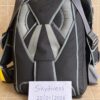
€3,300.00
Used Complete Wings W-9 Skydiving Rig
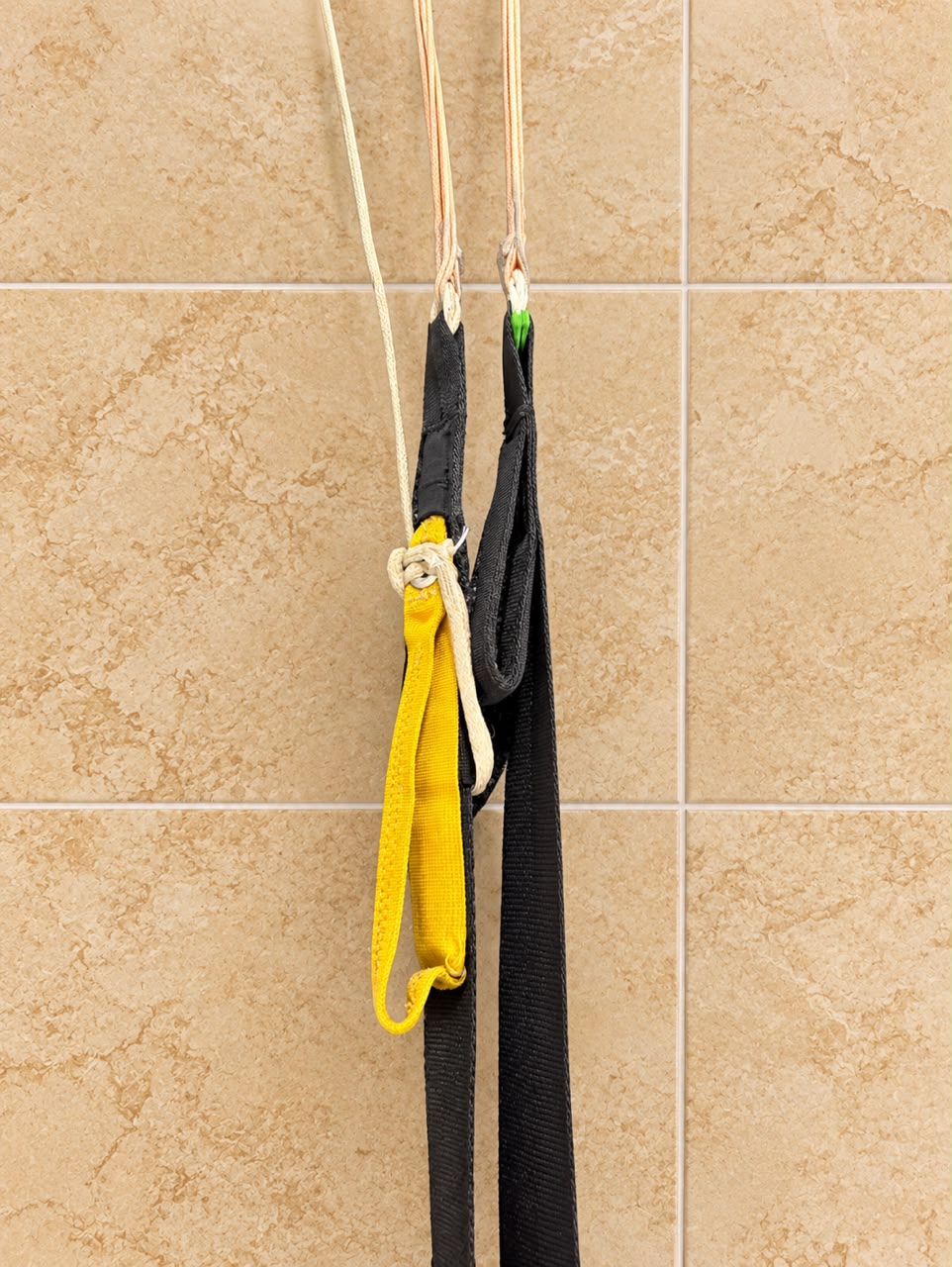
The Used Complete Wings W-9 Skydiving Rig is a previously owned parachute system comprising a Wings W-9 container, Tempo 150 reserve, and Safire 139 main canopy. The system provides a clearly identified configuration with individual manufacturing dates and documented main-canopy usage.
The Wings W-9 container has a DOM of 2000. Its condition should be professionally assessed, particularly considering its age, with attention given to the container fabric, stitching, webbing, harness, hardware, and attachment areas.
The Tempo 150 reserve has a DOM of 1998. Because the supplied information does not include its ride count, repack history, or repair history, those details should be verified before use. Current reserve condition, repack status, and compatibility should be confirmed by a qualified rigger.
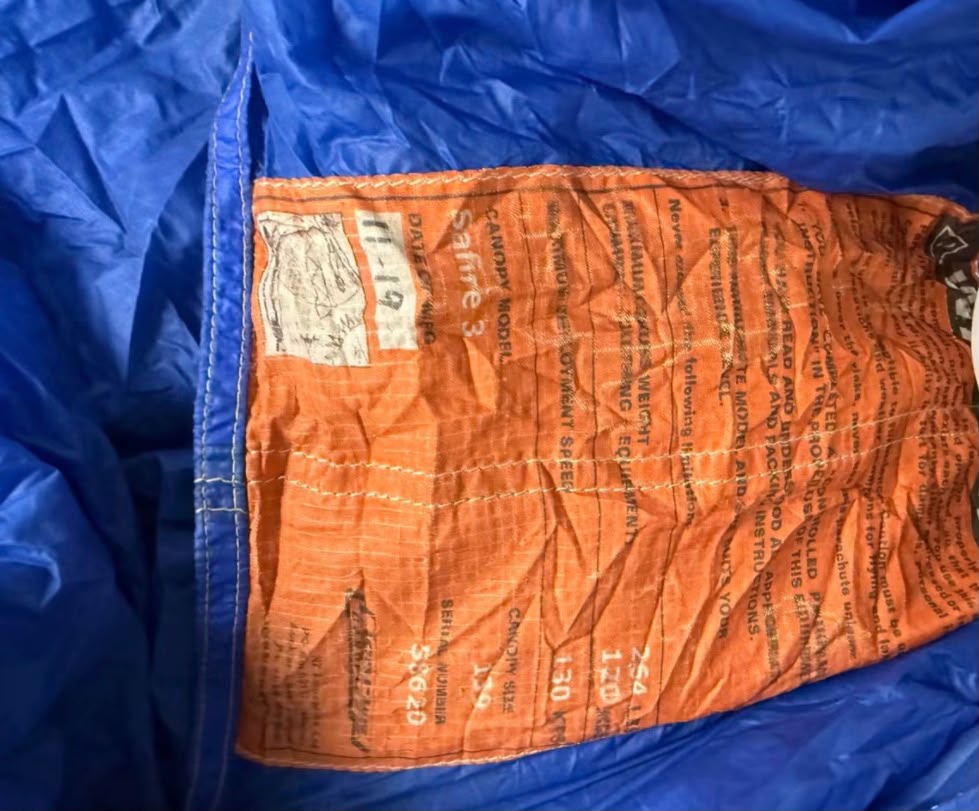
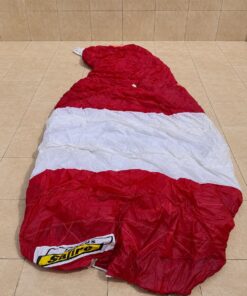
The Safire 139 main canopy has a DOM of November 2019 and approximately 200 jumps. It is reported to have no holes or patches and is described as crispy and still hard to pack. Its fabric, lines, stitching, slider, and overall condition should nevertheless be professionally inspected before operational use.
This rig is best presented as a used complete configuration requiring professional inspection and verification, rather than as equipment certified solely from its appearance or listed history.
Key Specifications:
- Wings W-9 container — DOM 2000
- Tempo 150 reserve — DOM 1998
- Safire 139 main — DOM 11/2019
- Main canopy — approximately 200 jumps
- Main condition — no reported holes or patches
- Main described as crispy and still hard to pack
- Professional rigger inspection recommended before use
- Current compatibility and service status should be verified
Complete Rig Overview and Component Specifications
What Is the Used Complete Wings W-9 Skydiving Rig?
The Used Complete Wings W-9 Skydiving Rig is a previously owned parachute configuration consisting of a Wings W-9 container, a Tempo 150 reserve, and a Safire 139 main canopy.
The system combines an older Wings container and reserve with a more recent main canopy. Because each component has its own manufacturing date and usage history, the complete system should be evaluated component by component before operational use.
The Wings W-9 has a DOM of 2000, while the Tempo 150 reserve has a DOM of 1998. The Safire 139 main was manufactured in November 2019 and has approximately 200 jumps.
Wings W-9 Container — DOM 2000
The container is a Wings W-9, manufactured in 2000.
As the central structural component of the parachute rig, its condition should be evaluated carefully. The assessment should include the fabric, webbing, stitching, hardware, harness, attachment areas, closures, and other structural components.
Because the container is an older component, its manufacturing date should be considered alongside its actual current condition and documented maintenance history.
A professional rigger should determine whether the container remains appropriate for the intended configuration and user.
Tempo 150 Reserve — DOM 1998
The reserve canopy is a Tempo 150, manufactured in 1998.
Reserve equipment is safety-critical, so its current condition, compatibility, repack status, inspection history, and documentation should be verified before use.
No ride count, repack count, or repair history has been supplied for this reserve. Those details should therefore not be assumed and should be confirmed from the available equipment records.
The age of the reserve makes professional inspection particularly important.
Safire 139 Main Canopy
The main canopy is a Safire 139, manufactured in November 2019.
It has approximately 200 jumps.
According to the supplied condition information, the canopy has no holes or patches. It is also described as crispy and still hard to pack.
These details provide useful information about the reported condition, but a professional canopy inspection should still be performed before the system is used.
The inspection should consider the fabric, lines, stitching, slider, attachment points, deployment components, and overall canopy condition.
Why the Main Canopy History Matters
A canopy’s manufacturing date and jump count provide important background information, but they do not independently establish its current service condition.
Storage conditions, environmental exposure, packing practices, previous use, and maintenance can all influence equipment condition.
Therefore, the Safire 139’s approximately 200 jumps should be considered together with its present physical condition.
The reported absence of holes or patches is an important disclosed condition, while the description that the canopy remains crispy and hard to pack provides additional information about its current characteristics.
What Is Included?
Based on the supplied information, the identified components are:
- Wings W-9 container — DOM 2000
- Tempo 150 reserve — DOM 1998
- Safire 139 main canopy — DOM November 2019
- Safire 139 jump history — approximately 200 jumps
- Main canopy condition — no reported holes or patches
- Main canopy description — crispy and still hard to pack
No AAD, helmet, goggles, hook knife, gear bag, or additional accessories have been confirmed as included.
Practical Skydiving Context
A parachute rig forms part of a wider skydiving equipment list. Associated equipment may include a skydiving helmet, full face skydiving helmet, skydiving glasses, skydiver goggles, protective equipment, deployment equipment, and other accessories.
However, these items should not be represented as included unless they are specifically supplied with the rig.
Likewise, activities such as tracking jump, wingsuit sport, CRW skydiving, and canopy flight have different equipment and experience considerations.
Terms such as parachute jump Australia, Skydive Byron Bay, Cairns skydiving, Skydive Belize, and iFly Colorado Springs describe locations or activities and do not establish that this particular rig is approved or suitable for those environments.
Why Professional Inspection Matters
The complete system should be professionally inspected before operational use.
Particular attention should be given to the 2000 Wings W-9 container and 1998 Tempo 150 reserve, while the Safire 139 should also be evaluated for current fabric, line, stitching, slider, and overall canopy condition.
A professional inspection is more informative than photographs alone because not every aspect of parachute equipment condition can be established visually.
Important Compatibility Considerations
The container, main, and reserve must be compatible as a complete configuration.
Physical installation alone should not be treated as proof of compatibility.
The intended jumper, equipment configuration, applicable manufacturer requirements, and relevant operational rules should all be considered.
A qualified rigger should confirm the suitability of the complete system before use.
Overall Product Summary
The Used Complete Wings W-9 Skydiving Rig consists of a Wings W-9 container manufactured in 2000, a Tempo 150 reserve manufactured in 1998, and a Safire 139 main manufactured in November 2019.
The main has approximately 200 jumps and is reported to have no holes or patches. It is described as crispy and still hard to pack.
This provides a clear starting point for evaluating the equipment. However, because the system contains older components, current condition, documentation, compatibility, and service status should be independently verified by an appropriately qualified professional before operational use.
Detailed Equipment Condition, Construction, Compatibility, and Ownership Considerations
A previously owned parachute system should be evaluated as an integrated configuration rather than simply as a collection of individual components. Each part has its own manufacturing history, exposure to use, storage conditions, maintenance requirements, and potential wear characteristics. Consequently, the condition of the complete system can only be understood properly when the container, reserve, main canopy, and associated components are considered separately and then evaluated together.
For this configuration, the available information identifies a Wings W-9 container manufactured in 2000, a Tempo 150 reserve manufactured in 1998, and a Safire 139 main canopy manufactured in November 2019 with approximately 200 jumps. The main is described as having no holes or patches and as remaining crispy and hard to pack. Those details provide a useful starting point, although they should not replace an independent professional inspection.
Understanding the Container
The container is the foundation around which the rest of the parachute configuration is organized. It provides the harness structure for the jumper and houses the parachute components within their intended compartments.
The Wings W-9 in this configuration has a 2000 manufacturing date. Its age means that the current physical condition is more important than the manufacturing date alone.
An inspection should consider the fabric, stitching, webbing, hardware, harness components, attachment points, closures, and other areas that experience repeated loading or handling.
The condition of older textile equipment cannot always be established from photographs. Surface appearance may remain satisfactory even when areas subjected to repeated stress deserve closer professional examination.
Fabric Condition
The container fabric should be inspected for abrasion, cuts, fraying, discoloration, contamination, or other visible changes.
Particular attention should be given to areas that experience repeated folding, contact with hardware, friction against other materials, or repeated packing.
Minor cosmetic marks do not necessarily indicate structural deterioration. Conversely, a relatively small defect in an important structural location can deserve immediate professional attention.
The location and character of a defect therefore matter as much as its visible size.
Stitching and Seams
Stitching should be examined throughout the container.
Repeated use can place stress on seams and attachment areas. Environmental exposure, contamination, and age can also influence textile materials.
The inspection should look for loose threads, separation, damaged stitching, unusual wear, or other changes.
A visual examination is useful, but a qualified rigger should make the final assessment where structural integrity is uncertain.
Harness Condition
The harness should be assessed independently from the container fabric.
Webbing, stitching, hardware, adjustment areas, and attachment points all contribute to the overall condition.
Because the harness connects the equipment to the jumper, its condition and fit are particularly important.
A container that appears clean externally should not automatically be assumed to be appropriate for another jumper.
Fit and Sizing
The supplied information does not specify a particular jumper size for this configuration.
Therefore, no specific height, weight, torso length, or harness measurement should be inferred.
A prospective owner should have the equipment professionally evaluated for fit.
Individual body proportions can vary considerably, and a container that works for one jumper may not provide an appropriate fit for another.
Hardware
Metal hardware should be examined for corrosion, deformation, unusual wear, damage, or other changes.
Hardware should remain in its intended configuration.
It should not be bent, drilled, ground, heated, or otherwise modified in an attempt to correct an issue.
If a component appears damaged or behaves differently from its expected function, professional assessment is appropriate.
Closures and Interfaces
Container closures and related interfaces experience repeated handling during packing and preparation.
They should be checked for wear, damage, contamination, and appropriate operation.
The surrounding fabric and stitching should also be considered because a closure component cannot be evaluated independently from the material to which it is attached.
Reserve Configuration
The Tempo 150 reserve has a 1998 manufacturing date.
Reserve equipment requires particular attention because it is intended for emergency use.
The available information does not provide the reserve’s number of rides, repacks, repairs, or current repack status.
Those details should therefore be established from the equipment records before the system is considered ready for use.
Reserve Age
The age of the reserve makes documentation and professional inspection particularly important.
A manufacturing date alone does not establish whether a reserve is currently suitable for use.
Storage conditions, maintenance history, inspection records, packing history, and actual material condition all contribute to the assessment.
The reserve should therefore be evaluated according to the requirements applicable to its specific model and configuration.
Reserve Fabric
Reserve fabric should be inspected for contamination, damage, deterioration, unusual discoloration, or other changes.
The inspection should also consider seams, stitching, attachment areas, lines, deployment components, and other relevant features.
Because reserve equipment is safety-critical, uncertain condition should be referred to an appropriately qualified professional.
Reserve Documentation
Documentation can be particularly valuable when evaluating an older reserve.
Relevant records may include previous inspections, repack documentation, service information, repairs, ownership history, and identification details.
If these records are incomplete, the absence of documentation should be recognized as an uncertainty rather than replaced with assumptions.
Main Canopy History
The Safire 139 was manufactured in November 2019 and has approximately 200 jumps according to the supplied information.
The main canopy is described as having no holes or patches.
It is also described as crispy and still hard to pack.
These characteristics should remain part of the product history because they provide useful information about the condition being reported.
However, the term crispy is descriptive rather than a substitute for a technical inspection.
Main Canopy Fabric
The canopy fabric should be examined systematically.
The inspection should consider visible damage, contamination, discoloration, wear, seams, stitching, attachment points, and other areas affected by repeated use.
The absence of reported holes or patches is positive information about the stated condition, but it does not establish the complete mechanical or material condition of the canopy.
A qualified professional should evaluate the canopy before operational use.
Line Condition
The canopy lines should be inspected separately from the fabric.
Repeated deployments, packing, handling, environmental exposure, and contact with other components can influence line condition.
Visible wear, unusual abrasion, contamination, or damage should be documented.
The line system should be considered together with the canopy and its attachment points.
Slider Condition
The slider should be included in the inspection.
Its fabric, stitching, attachment areas, and associated components should be checked for damage or deterioration.
The supplied information does not identify a specific slider defect, so none should be assumed.
If an inspection identifies a concern, the appropriate professional should determine its significance.
Packing Characteristics
The supplied description states that the main remains crispy and hard to pack.
Packing characteristics can provide useful practical information, but they should not be interpreted as a definitive measure of canopy condition.
Packing difficulty can have multiple causes.
The complete canopy should therefore be assessed according to appropriate inspection procedures rather than judging condition solely by how easily or difficultly it packs.
Environmental Exposure
Environmental history can influence parachute equipment over time.
Humidity, heat, sunlight, dust, contamination, and moisture can all affect different materials.
Older components can be particularly important to inspect because their total service history may span many years.
A clean and stable storage environment can help preserve equipment condition, but current condition should still be established through inspection.
Moisture
Moisture exposure should be treated carefully.
Textile materials should not be stored while damp.
If the equipment becomes wet, appropriate drying and inspection procedures should be followed.
The equipment should not simply be packed away and left unattended.
If significant moisture exposure has occurred, professional advice should be obtained.
Heat
Excessive heat should be avoided.
Enclosed vehicles can become extremely hot, particularly when exposed to direct sunlight.
Long-term storage in such conditions can expose textile and other materials to unnecessary environmental stress.
A stable indoor environment is generally more appropriate for long-term storage.
Direct Sunlight
Prolonged exposure to sunlight should be minimized.
Ultraviolet exposure can influence some textile materials and finishes over time.
The equipment should therefore be stored away from unnecessary direct sunlight.
Chemical Exposure
Fuel, oil, solvents, cleaning chemicals, and other contaminants should be kept away from parachute equipment.
If contamination occurs, the correct response depends on the substance and the affected component.
Improvised cleaning with another chemical should be avoided.
Professional guidance should be obtained when significant contamination occurs.
Transportation
Transportation should protect the equipment against unnecessary impact, abrasion, compression, heat, and moisture.
The system should be placed in suitable protective storage.
Heavy equipment should not be placed on top of the parachute system.
Sharp objects should be separated from textile materials.
Following significant impact, an additional inspection may be appropriate.
Protective Storage
The storage environment should be clean, dry, stable, and secure.
The equipment should be protected from rodents, insects, chemicals, excessive moisture, sharp objects, and unnecessary compression.
The system should also be kept away from unauthorized access.
Equipment History
Maintaining an accurate equipment history can substantially improve long-term ownership.
The container’s manufacturing date should remain recorded.
The reserve’s manufacturing date should remain recorded.
The main canopy’s manufacturing date and approximate jump count should remain recorded.
Any future inspections, repairs, repacks, or service events should also be added.
Why Documentation Matters
Documentation reduces uncertainty.
When equipment changes ownership, records allow the new owner and inspecting professional to understand what is known about the system.
Without records, important historical information can be lost.
A clear history also helps distinguish established facts from assumptions.
Independent Inspection
A professional inspection should be completed before the system is placed into operational use.
The inspection should cover the complete configuration rather than focusing exclusively on the main canopy.
The container, harness, reserve, main, lines, hardware, deployment components, and other applicable elements should be assessed.
The inspecting professional can also determine whether the components are compatible.
Compatibility
Compatibility should be established using appropriate technical information.
A container and canopy should not be considered compatible merely because they can physically be installed together.
Reserve compatibility requires particular attention.
The complete configuration should be assessed according to manufacturer information and the applicable requirements.
Intended Jumper
The equipment should be evaluated for the intended jumper.
This includes physical fit, experience level, intended activity, canopy characteristics, and other relevant considerations.
No assumption should be made that the system is appropriate for every jumper simply because the components appear complete.
Intended Activity
Different skydiving activities can impose different equipment and experience requirements.
Normal recreational jumping, tracking, freefall disciplines, canopy-focused activities, formation work, and wingsuit operations can involve different considerations.
The equipment should therefore be matched to the actual intended activity rather than relying on generic descriptions.
Responsible Use
A used parachute system should be operated only within appropriate training, organizational, manufacturer, and regulatory requirements.
The equipment should be used by an appropriately trained and qualified person.
The presence of a complete configuration does not eliminate the need for training or professional guidance.
Maintenance Philosophy
Maintenance should focus on prevention.
Regular inspection can identify developing problems.
Appropriate storage can reduce environmental deterioration.
Careful transportation can reduce physical damage.
Accurate documentation can preserve the equipment history.
Professional servicing can address issues beyond ordinary owner-level care.
When Additional Inspection Is Appropriate
Additional professional attention should be considered after a significant impact, prolonged moisture exposure, chemical contamination, questionable storage, suspected structural damage, unexplained changes, or uncertainty regarding the equipment’s history.
The same principle applies when a component behaves differently from its established condition.
What Should Not Be Assumed
Several details have not been supplied and should therefore remain unconfirmed.
The reserve ride count is unknown.
The reserve repack count is unknown.
The reserve repair history is unknown.
The container’s complete service history is not specified.
The exact harness dimensions are not supplied.
The inclusion of an AAD is not confirmed.
Additional accessories are not confirmed.
These gaps should be verified rather than filled with assumptions.
Importance of Accurate Product Information
A strong used-equipment description should distinguish confirmed specifications from information that still requires verification.
For this system, the confirmed information includes the three identified primary components and their supplied manufacturing dates.
The Safire 139 has approximately 200 jumps according to the supplied information.
The main has no reported holes or patches and is described as crispy and hard to pack.
Everything beyond those supplied facts should be independently verified.
Overall Configuration
The configuration provides a classic container platform paired with a newer main canopy.
The Wings W-9 dates from 2000.
The Tempo 150 reserve dates from 1998.
The Safire 139 dates from November 2019.
This combination makes component-specific inspection especially important because the components have substantially different manufacturing dates.
Long-Term Ownership
If the system is purchased, the new owner should establish a complete equipment file.
The file should contain component identification, manufacturing dates, inspection records, repack information, service documentation, and any future maintenance records.
The main canopy’s approximately 200-jump history should be retained.
The reported absence of holes or patches should also be documented.
Any subsequent repair or inspection should be added to the history.
Final Assessment
The supplied information presents the system as a used complete configuration centered on a Wings W-9 container, Tempo 150 reserve, and Safire 139 main.
The Safire 139 is the most recent of the three identified major components and has approximately 200 jumps. It is reported to have no holes or patches and is described as crispy and still hard to pack.
The container and reserve are considerably older and therefore deserve particular attention to current condition, documentation, compatibility, and professional inspection.
The absence of additional information about reserve repacks, rides, repairs, AAD status, and other accessories should be treated as an information gap rather than filled with assumptions.
Final Ownership Perspective
The value of a used parachute system lies not simply in having multiple components together, but in knowing exactly what those components are, how they have been used, how they have been maintained, and whether they remain appropriate for the intended configuration.
For this system, the supplied component history provides a useful foundation.
The Wings W-9 container is identified by its 2000 manufacturing date.
The Tempo 150 reserve is identified by its 1998 manufacturing date.
The Safire 139 main is identified by its November 2019 manufacturing date and approximately 200 jumps.
The main is reported to have no holes or patches and is described as crispy and hard to pack.
Before operational use, however, the complete configuration should be evaluated by an appropriately qualified professional.
That inspection should establish the current condition of the container, reserve, main, harness, lines, hardware, and applicable deployment components while also confirming compatibility and suitability for the intended jumper.
A careful approach provides the strongest foundation for responsible ownership and preserves an accurate history of the equipment throughout its remaining service life.
Detailed Condition Review, Maintenance, Storage, and Long-Term Ownership
A previously owned parachute system should be approached as safety-critical equipment whose condition is determined by its complete history rather than by appearance alone. The available specifications identify a Wings W-9 container manufactured in 2000, a Tempo 150 reserve manufactured in 1998, and a Safire 139 main canopy manufactured in November 2019 with approximately 200 jumps. The main is reported to have no holes or patches and is described as crispy and still hard to pack.
Those details provide a useful foundation for evaluating the system. However, they should be treated as supplied condition information rather than as a substitute for an independent inspection. A qualified parachute rigger should establish the current condition and suitability of the complete configuration before operational use.
Container Condition and Age
The Wings W-9 container has a 2000 manufacturing date. Consequently, its current condition should be considered independently from the condition of the newer main canopy.
The container should be examined for deterioration of its textile materials, stitching, webbing, harness components, hardware, attachment areas, closures, and other structural sections. Areas that have experienced repeated folding, friction, loading, or contact with hardware deserve particular attention.
Age alone does not establish the condition of a component. Likewise, clean external appearance does not establish that every structural area remains satisfactory.
A professional inspection provides the appropriate means of determining whether the container remains suitable for its intended configuration.
Textile Materials
Textile components can change over time as a result of use, storage, environmental exposure, contamination, and repeated handling.
Inspection should consider visible abrasion, cuts, fraying, discoloration, unusual wear, contamination, and deterioration.
The location of a defect is also important. A superficial mark in a non-critical area can have different significance from damage located near a structural attachment or load-bearing section.
For that reason, defects should not be evaluated solely according to their apparent size.
Stitching and Seams
Stitching should be inspected throughout the container and harness.
Repeated use can influence seams and attachment areas. Environmental conditions can also affect textile materials.
Loose threads, damaged stitching, unusual separation, or other abnormalities should be documented and referred to an appropriately qualified professional.
Attempts to repair structural stitching without the appropriate expertise should be avoided.
Harness and Hardware
The harness should be evaluated as an important part of the complete system.
Webbing, stitching, hardware, adjustment areas, and attachment points should all be examined.
Metal components should be checked for obvious corrosion, deformation, damage, or unusual wear.
Hardware should remain in its intended configuration. Improvised modification should not be used as a substitute for professional servicing.
Container Fit
The available information does not specify the intended jumper’s measurements for this particular system.
Therefore, no specific height, weight, torso length, or harness dimensions should be assumed.
A prospective owner should have the system assessed for individual fit by an appropriately qualified professional.
Physical compatibility between the jumper and harness is separate from compatibility between the container and parachute components.
Reserve Condition
The Tempo 150 reserve has a 1998 manufacturing date.
This is a significant part of the equipment history and should remain clearly documented.
The supplied information does not specify the reserve’s number of rides, number of repacks, previous repairs, storage history, or current repack status.
Those details should be established through available records and professional inspection.
Reserve Documentation
Documentation becomes particularly valuable when evaluating an older reserve.
Available records may include previous inspections, repack information, service records, repairs, identification information, and ownership history.
If some records are unavailable, that absence should be acknowledged rather than replaced with assumptions.
The current condition should ultimately be established by an appropriately qualified professional.
Reserve Fabric and Lines
The reserve should be assessed for the condition of its fabric, seams, stitching, lines, attachment points, and associated deployment components.
The inspection should also consider evidence of contamination, moisture exposure, unusual discoloration, or deterioration.
Because the reserve serves an emergency function, uncertainty regarding its condition should be resolved before the equipment is placed into service.
Reserve Compatibility
The reserve should be confirmed as compatible with the container and associated deployment system.
Physical installation alone does not establish complete compatibility.
Manufacturer information and professional assessment should be used to verify the configuration.
The same principle applies to any replacement or substituted component.
Main Canopy History
The Safire 139 was manufactured in November 2019 and has approximately 200 jumps according to the supplied information.
The reported condition is favorable in the sense that no holes or patches have been identified in the supplied description.
The canopy is also described as crispy and still hard to pack.
This description should remain part of the product history because it gives a prospective owner additional information about the reported physical characteristics.
Understanding the Term “Crispy”
The word “crispy” is a descriptive observation rather than a formal technical measurement.
It may be useful when describing how the fabric currently feels or behaves during packing, but it should not be used as a substitute for a professional canopy assessment.
A qualified inspector can evaluate the canopy according to appropriate procedures and determine whether the reported characteristics are consistent with acceptable condition.
Main Canopy Fabric
The Safire 139 should be examined for visible damage, contamination, wear, discoloration, seam condition, stitching, attachment points, and other relevant characteristics.
The absence of reported holes or patches is useful information, but it does not establish every aspect of material condition.
Storage history and environmental exposure can also influence the condition of canopy fabric.
Line Condition
The lines should be evaluated separately from the canopy fabric.
Repeated deployments, packing, handling, environmental exposure, and friction can influence their condition.
The inspection should consider visible wear, abrasion, contamination, damage, and other unusual characteristics.
A professional should determine whether any identified condition requires attention.
Slider and Deployment Components
The slider should form part of the overall canopy inspection.
Its fabric, stitching, attachment areas, and associated components should be examined for damage or deterioration.
No specific slider defect has been supplied for this system, so none should be assumed.
The same principle applies to other deployment components for which no condition information has been provided.
Packing History
The main is described as still hard to pack.
Packing characteristics can provide useful practical information, but they do not independently establish the condition of a parachute.
Packing behavior can be influenced by several factors, including material characteristics, configuration, handling, storage, and packing practices.
Therefore, packing difficulty should be documented as an observation rather than treated as a technical certification of condition.
Environmental Exposure
The history of environmental exposure should be considered where information is available.
Humidity, moisture, heat, sunlight, contamination, and poor storage conditions can influence parachute materials.
The effect may vary between textile, metal, and other components.
A system with an incomplete environmental history should therefore be assessed according to its current condition rather than relying on assumptions about how it was previously stored.
Moisture
Moisture should be avoided during storage.
If the equipment becomes wet, it should not simply be packed away while damp.
Appropriate drying and inspection procedures should be followed.
Significant moisture exposure may warrant professional assessment because different components can respond differently to prolonged damp conditions.
Heat and Sunlight
Long-term exposure to excessive heat should be minimized.
Enclosed vehicles can reach high temperatures, particularly under direct sunlight.
Long-term storage in such an environment is therefore unsuitable for maintaining controlled equipment conditions.
Direct sunlight should also be minimized because prolonged ultraviolet exposure can affect certain textile materials.
Chemical Contamination
Parachute equipment should be protected from fuel, oil, solvents, cleaning chemicals, and other contaminants.
If contamination occurs, the appropriate response depends on the material and substance involved.
Improvised chemical cleaning should be avoided.
Professional advice should be obtained when significant contamination occurs.
Storage
The complete system should be stored in a clean, dry, stable, and secure environment.
It should be protected from unnecessary compression, sharp objects, chemicals, rodents, insects, moisture, and excessive environmental fluctuations.
The storage location should also restrict unauthorized access.
Transportation
Transportation exposes equipment to movement, vibration, compression, abrasion, temperature changes, and potential impact.
The system should therefore be transported using appropriate protective storage.
Heavy objects should not be placed on top of the equipment.
Sharp objects should be kept away from textile materials.
Following a substantial impact, the equipment should receive appropriate professional attention before operational use.
Documentation During Ownership
A new owner should establish a complete equipment record.
The record should identify each major component and retain its manufacturing date, serial number where available, usage history, inspection information, service records, and other relevant documentation.
For this system, the principal known dates are:
The Wings W-9 container was manufactured in 2000.
The Tempo 150 reserve was manufactured in 1998.
The Safire 139 main was manufactured in November 2019.
The main has approximately 200 jumps according to the supplied information.
Why Accurate Records Matter
Accurate records reduce uncertainty.
When equipment is inspected, serviced, transferred, or eventually sold again, its history can be followed more easily.
Component-specific records are especially useful because different parts of the system have different service requirements and usage histories.
A general statement such as “complete rig” does not provide enough information to establish the history of every component.
Ownership Transfer
When a used system changes hands, all available documentation should accompany the equipment where appropriate.
Known condition observations should remain disclosed.
Unknown information should remain identified as unknown.
Service requirements should be communicated clearly.
This creates a more transparent history for the next owner and allows the inspecting professional to make a better-informed assessment.
Independent Inspection
Independent professional inspection should be completed before operational use by a new owner.
The inspection should cover the complete configuration rather than concentrating solely on the newest component.
The Wings W-9, Tempo 150, Safire 139, harness, hardware, lines, deployment-related components, and other applicable elements should be evaluated.
The professional can also determine whether the components remain compatible.
Why Photographs Are Limited
Photographs are valuable for documenting general appearance.
They can show canopy colors, visible marks, cleanliness, and obvious damage.
However, photographs cannot establish every aspect of fabric condition, line condition, stitching integrity, hardware condition, service status, or compatibility.
Consequently, photographs should support rather than replace professional inspection.
Intended User
The equipment should be evaluated for the intended jumper.
Fit, experience, training, intended activity, and configuration all influence suitability.
No assumption should be made that the system is appropriate for every jumper.
A professional fitting and equipment assessment can help establish whether the container and complete configuration are appropriate for the intended user.
Intended Activity
Different forms of skydiving can involve different equipment considerations.
A system used for ordinary recreational jumping may be evaluated differently from equipment intended for specialized disciplines.
The presence of a complete parachute configuration does not automatically establish suitability for every activity.
The intended use should therefore be communicated clearly to the inspecting professional.
Long-Term Maintenance
Long-term care should focus on prevention.
Regular inspections can identify changes before they become more significant.
Appropriate storage can reduce environmental deterioration.
Careful transportation can reduce physical damage.
Accurate records can preserve the equipment history.
Professional servicing can address conditions that exceed ordinary maintenance.
Events That Warrant Additional Assessment
Additional professional inspection should be considered following a significant impact, prolonged moisture exposure, chemical contamination, suspected structural damage, questionable storage, unexplained changes, or uncertainty about the equipment’s history.
A change in appearance or behavior should not automatically be dismissed as normal aging.
When its significance is uncertain, professional assessment provides the appropriate answer.
Information Still Requiring Verification
Several important details have not been supplied.
The number of rides on the Tempo 150 is not specified.
The number of reserve repacks is not specified.
The reserve’s repair history is not specified.
The container’s detailed service history is not specified.
The exact harness measurements are not specified.
An AAD has not been confirmed as part of the supplied configuration.
Additional accessories have not been confirmed.
These details should remain unconfirmed until supporting records are available.
Overall Equipment Assessment
The available information describes a configuration consisting of an older Wings W-9 container, an older Tempo 150 reserve, and a substantially newer Safire 139 main.
The main has approximately 200 jumps and is reported to have no holes or patches.
The description that the canopy remains crispy and hard to pack provides additional information about its reported characteristics.
The age difference between the major components makes individual component assessment especially important.
Final Perspective
The strongest way to evaluate this system is through a combination of accurate documentation, transparent condition information, professional inspection, and appropriate maintenance.
The Wings W-9 should be assessed according to its current structural and textile condition.
The Tempo 150 reserve should be assessed according to its current condition, documentation, repack status, and compatibility.
The Safire 139 should be assessed according to its fabric, lines, stitching, slider, deployment components, and overall condition.
The supplied absence of holes or patches should remain documented, as should the description that the canopy is crispy and still hard to pack USED COMPLETE WINGS W-9 SKYDIVING RIGUSED COMPLETE WINGS W-9 SKYDIVING RIGUSED COMPLETE WINGS W-9 SKYDIVING RIGUSED COMPLETE WINGS W-9 SKYDIVING RIGUSED COMPLETE WINGS W-9 SKYDIVING RIGUSED COMPLETE WINGS W-9 SKYDIVING RIGUSED COMPLETE WINGS W-9 SKYDIVING RIG USED COMPLETE WINGS W-9 SKYDIVING RIGUSED COMPLETE WINGS W-9 SKYDIVING RIGUSED COMPLETE WINGS W-9 SKYDIVING RIGUSED COMPLETE WINGS W-9 SKYDIVING RIG.
Ultimately, a used parachute system should not be considered ready for operational use merely because its components appear complete or visually clean USED COMPLETE WINGS W-9 SKYDIVING RIGUSED COMPLETE WINGS W-9 SKYDIVING RIGUSED COMPLETE WINGS W-9 SKYDIVING RIGUSED COMPLETE WINGS W-9 SKYDIVING RIGUSED COMPLETE WINGS W-9 SKYDIVING RIGUSED COMPLETE WINGS W-9 SKYDIVING RIGUSED COMPLETE WINGS W-9 SKYDIVING RIGUSED COMPLETE WINGS W-9 SKYDIVING RIG USED COMPLETE WINGS W-9 SKYDIVING RIGUSED COMPLETE WINGS W-9 SKYDIVING RIGUSED COMPLETE WINGS W-9 SKYDIVING RIG.
A qualified professional should establish the current condition and compatibility of the complete configuration before it is used USED COMPLETE WINGS W-9 SKYDIVING RIGUSED COMPLETE WINGS W-9 SKYDIVING RIGUSED COMPLETE WINGS W-9 SKYDIVING RIGUSED COMPLETE WINGS W-9 SKYDIVING RIGUSED COMPLETE WINGS W-9 SKYDIVING RIGUSED COMPLETE WINGS W-9 SKYDIVING RIGUSED COMPLETE WINGS W-9 SKYDIVING RIGUSED COMPLETE WINGS W-9 SKYDIVING RIG USED COMPLETE WINGS W-9 SKYDIVING RIGUSED COMPLETE WINGS W-9 SKYDIVING RIGUSED COMPLETE WINGS W-9 SKYDIVING RIG USED COMPLETE WINGS W-9 SKYDIVING RIG USED COMPLETE WINGS W-9 SKYDIVING RIGUSED COMPLETE WINGS W-9 SKYDIVING RIG USED COMPLETE WINGS W-9 SKYDIVING RIG USED COMPLETE WINGS W-9 SKYDIVING RIG.
Be the first to review “USED COMPLETE WINGS W-9 SKYDIVING RIG”
Related products

used products
used products

used products

used products
used products

used products
used products
Reviews
There are no reviews yet.