





used Complete rig system


€6,500.00
Used Complete Skydiving Rig System
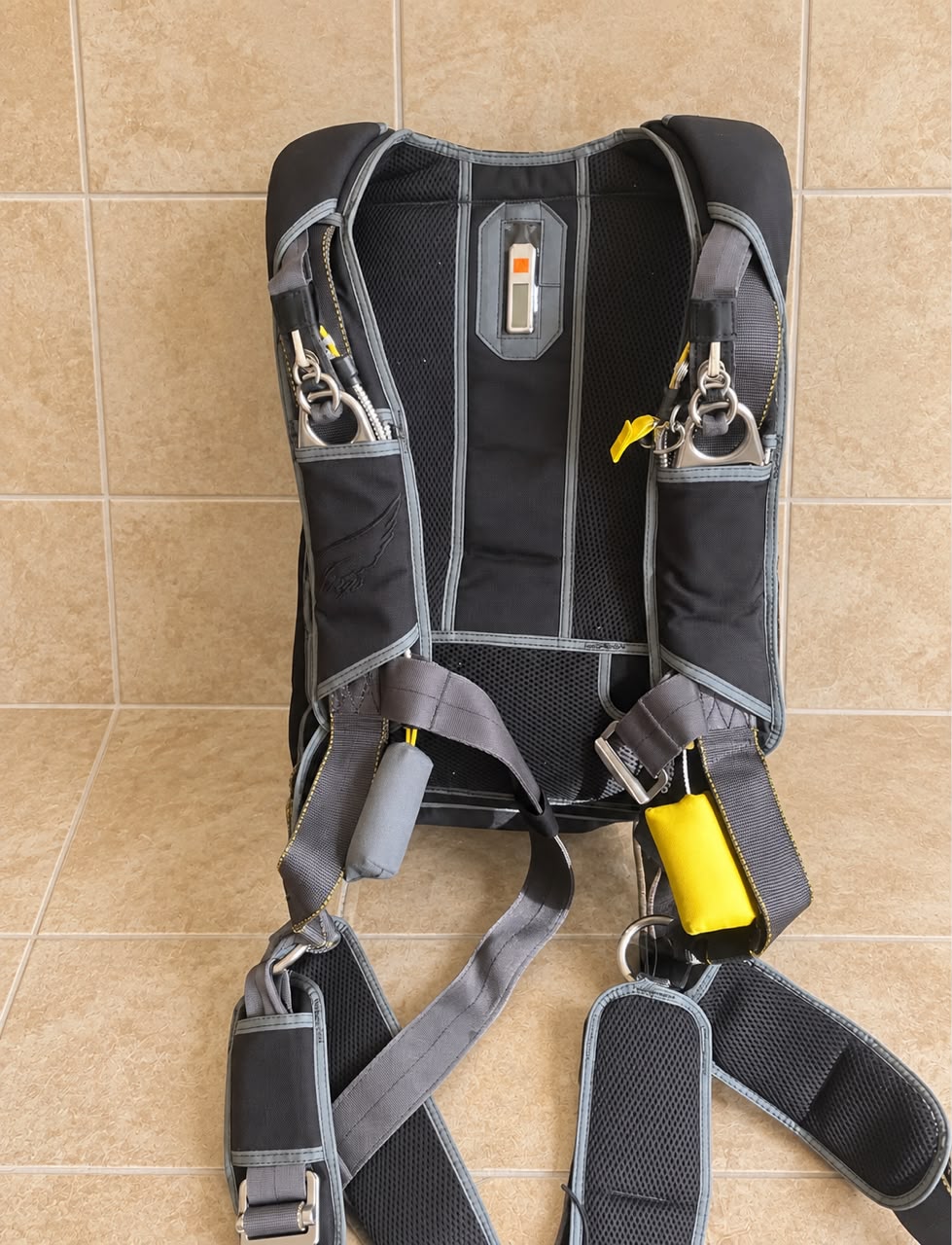
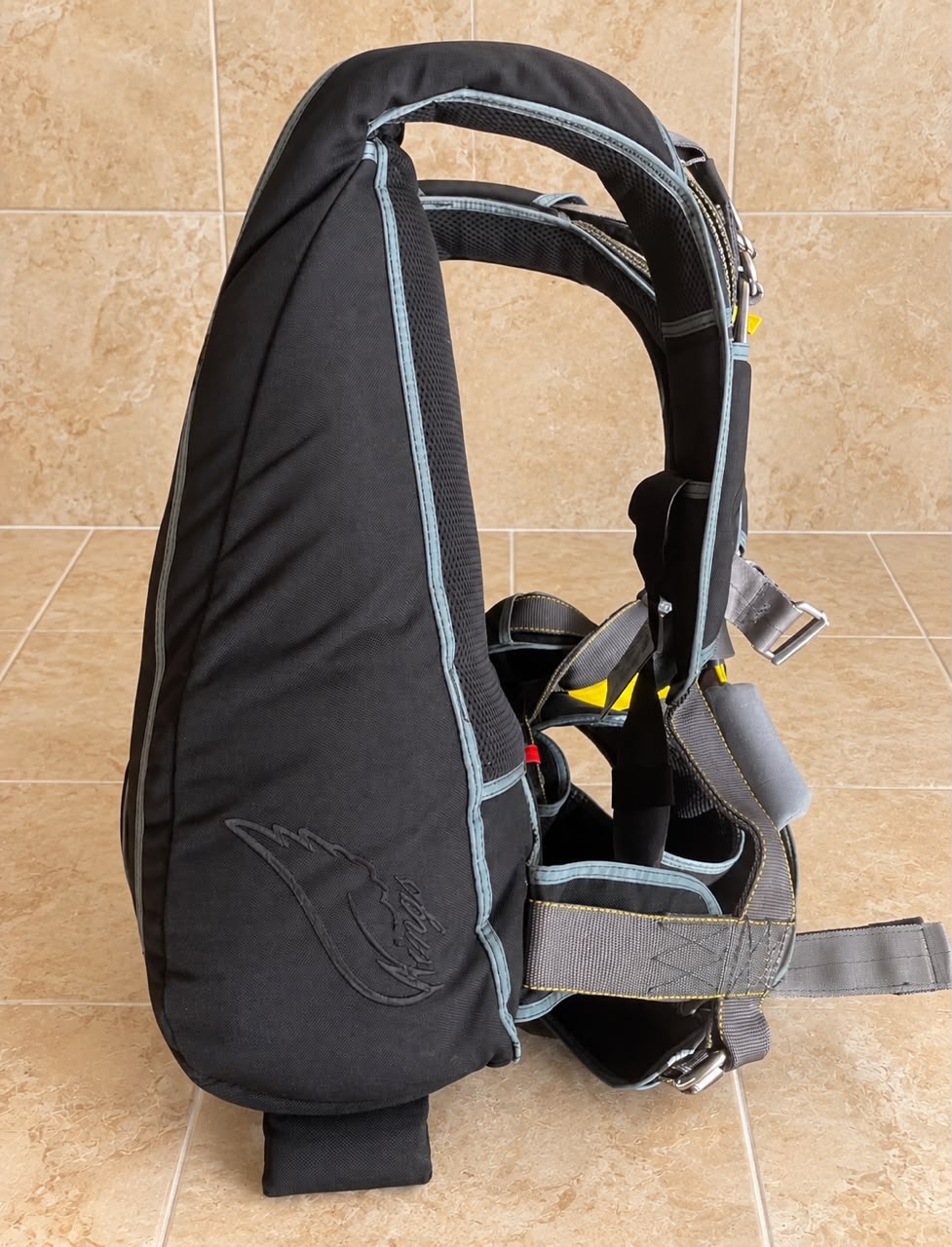
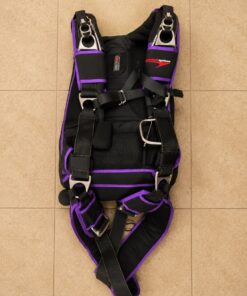
Complete used skydiving rig in very good condition, featuring a Wings W25 container, Vigil Cuatro AAD, PD PR193 reserve, and Sabre3 230 main canopy.
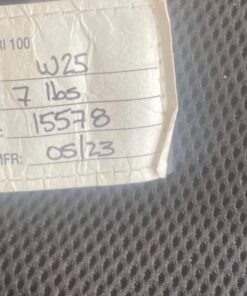
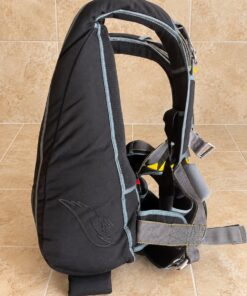
The Wings W25 was manufactured in May 2023, has approximately 200 jumps, and is configured for a jumper around 6’2″ / 220 lb. It includes a MARD system, pillow handles, and freefly pud.
The Vigil Cuatro AAD has a DOM of October 2016 and is scheduled for service in October this year. Serial number: 50222.
The PD PR193 reserve was manufactured in January 2023, with serial number 65969, and has 2 rides and 8 repacks.
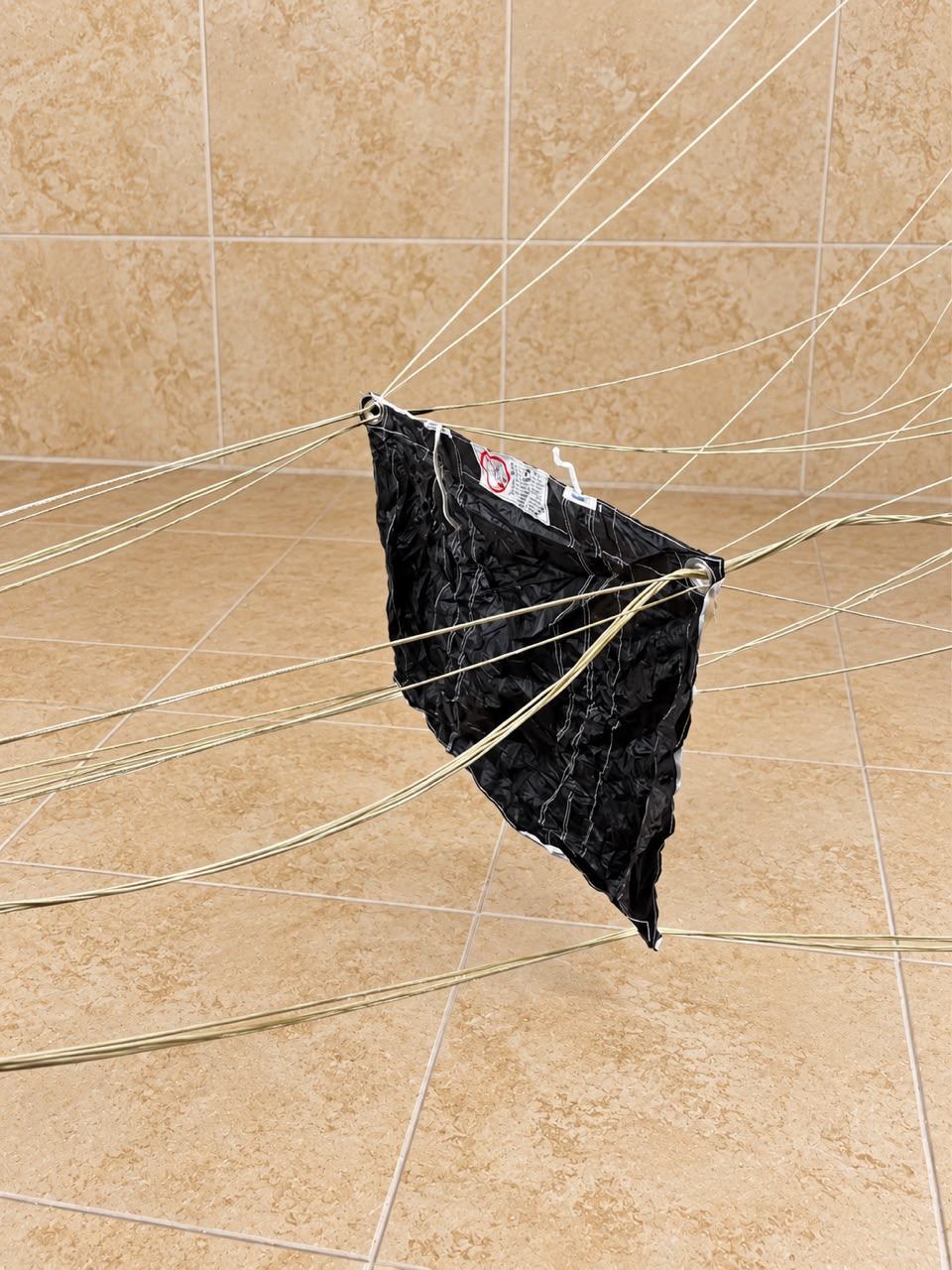
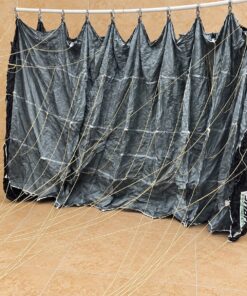
The Sabre3 230 main has a 2022 DOM and approximately 250 jumps. It is reported to be in great condition with no holes or patches, aside from small slider holes associated with the collapsible drawstrings. It features a solid black top skin and solid grey bottom skin.
Professional rigger inspection and verification of current service status, compatibility, and condition are recommended before use.
USED COMPLETE RIG SYSTEM — WINGS W25 WITH SABRE3 230
Complete System Overview and Equipment Specifications
What Is Included?
This used complete rig system is built around a Wings W25 container and is configured as a complete parachuting system comprising the container, automatic activation device, reserve canopy, and main canopy.
The equipment has been maintained as a complete configuration and is described as being in great overall condition. The container has approximately 200 jumps, while the main canopy has approximately 250 jumps. The reserve has recorded 2 rides and 8 repacks.
The system is therefore particularly suited to an experienced skydiver who is looking for an established configuration and understands the importance of professional equipment inspection before use.
Container: Wings W25
The container is a Wings W25, with a DOM of May 2023 and serial number 15578.
It was made for a jumper measuring approximately 6’2″ and 220 lb, making fit an important consideration for any prospective owner. The sizing information should not be interpreted as universal compatibility, however. Harness-container fit should always be confirmed for the individual jumper by an appropriately qualified rigger or manufacturer-approved professional.
The container has approximately 200 jumps.
It is equipped with a MARD system, pillow handles, and a freefly pud. These features make the configuration relevant to jumpers interested in contemporary skydiving disciplines, including freefly-oriented use, although the exact suitability of the complete configuration should always be professionally assessed.
Automatic Activation Device: Vigil Cuatro
An A.A.D. Vigil Cuatro is installed.
The unit has a DOM of October 2016 and serial number 50222. According to the supplied information, it is up for service in October of this year.
Because an AAD is a safety-critical electronic component, its current service status should be verified before the rig is used. The applicable manufacturer’s service requirements should take precedence over a product listing or previous service history.
Reserve: PD PR193
The reserve canopy is a PD PR193, manufactured in January 2023, with serial number 65969.
It has recorded 2 rides and 8 repacks.
Reserve equipment requires particular attention because its condition cannot be established reliably from photographs alone. The current repack status, inspection history, compatibility with the container, and applicable service requirements should therefore be confirmed by a qualified rigger before the system is placed into service.
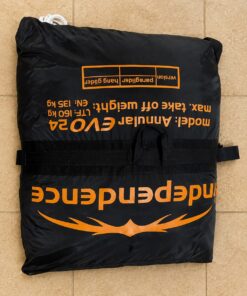
Main: Sabre3 230
The main canopy is a Sabre3 230, with a DOM of 2022 and approximately 250 jumps.
The supplied condition report describes the canopy as being in great condition, with no holes or patches reported.
A minor condition has been specifically disclosed: there are small holes on the slider associated with the collapsible drawstrings. The supplied information notes that this is fairly common on the Sabre3.
The canopy has a solid black top skin and solid grey bottom skin, giving the main a clean and distinctive appearance.
Why the Usage History Matters
Usage history is particularly important when purchasing used parachuting equipment.
The container, main canopy, reserve, and AAD each have separate histories. Consequently, the total condition of the system should not be judged from the age of the container alone.
The available information provides useful identification details for each major component, including dates of manufacture, serial numbers, jump counts, rides, and repacks.
Where and When Should It Be Used?
This system should only be used within appropriate skydiving operations and after its current condition, compatibility, and service status have been professionally verified.
Terms such as parachute jump Australia, skydive Byron Bay, Cairns skydiving, skydive Belize, skydiving website, and other location-based searches describe different skydiving environments. They should not be interpreted as confirmation that this particular system is approved or suitable for a particular drop zone.
Likewise, activities such as tracking jump, wingsuit sport, CRW skydiving, base jumping, or indoor wingsuit involve different equipment considerations and should not automatically be associated with this configuration.
Important Equipment Considerations
The broader skydiving equipment list can include a skydiving helmet, skydiving glasses, skydiver goggles, protective equipment, deployment equipment, and other accessories. These are not included in the supplied complete-system specification unless specifically stated.
Similarly, terms such as skydiving hook knife, hook blade knife, gear bag skydive, skydiving rigging, landing flight risers, linewear, parts of a parachute, and container skydive describe associated equipment or technical concepts rather than additional components confirmed to be included with this rig.
Overall Condition and Buyer Considerations
The supplied description presents this as a complete system in great condition, with the disclosed slider-related holes being the only noted canopy issue.
Nevertheless, because the system is used and includes safety-critical components, a qualified rigger should independently inspect the complete configuration before operational use.
The most important verification points are the current condition of the Wings W25 container, the service status of the Vigil Cuatro, the reserve’s repack and inspection status, the Sabre3 230’s condition, and compatibility with the intended jumper.
Overall, the system provides a clearly documented used configuration consisting of a Wings W25 container, Vigil Cuatro AAD, PD PR193 reserve, and Sabre3 230 main, with component identification and usage history supplied for each major part.
Detailed Construction, Condition, Compatibility, and Ownership Considerations
A used parachute system should be evaluated as a complete safety-critical assembly rather than as a collection of visually attractive components. Each component has its own manufacturing date, service history, usage history, inspection requirements, and compatibility considerations. Therefore, the condition of one component should not be used to establish the condition of the entire system.
This particular system consists of a container, automatic activation device, reserve canopy, and main canopy. The supplied information provides useful identification details for each component, including dates of manufacture, serial numbers, jump counts, rides, and repacks. Those details provide an important starting point for evaluation, but they do not replace an independent inspection by an appropriately qualified parachute rigger.
Understanding the Complete Configuration
The container forms the central structural and organizational part of the system. It accommodates the parachute components and associated deployment assemblies while providing the harness interface for the jumper.
The automatic activation device provides an electronic safety function within the overall system. The reserve provides an emergency parachute option, while the main provides the primary canopy used during normal operation.
Because these components interact, compatibility is important.
A component that is individually suitable does not necessarily make every possible combination suitable. The complete assembly should therefore be evaluated as a configuration rather than as four independent products.
Container Condition
The container has approximately 200 jumps and was manufactured in May 2023.
The supplied serial number is 15578.
The container was originally made for a jumper approximately 6 feet 2 inches tall and weighing approximately 220 pounds. This information is significant because harness and container fit are individual considerations.
A container that was appropriately fitted for one jumper should not automatically be assumed to fit another person simply because the second person has similar height or weight.
A qualified professional should evaluate fit before the equipment is used.
Container Materials and Stitching
The condition of the container should be assessed through a detailed inspection of its fabric, stitching, webbing, hardware, closures, and other structural areas.
Wear does not necessarily appear uniformly.
Some areas may experience greater exposure to friction, loading, contamination, or repeated handling than others.
For that reason, an inspection should consider the complete container rather than concentrating only on areas that are easily visible in photographs.
Harness and Fit
Harness fit is particularly important because the container forms the connection between the parachute system and the jumper.
A poorly fitted system can create discomfort and may affect the way the equipment sits on the body.
The supplied dimensions describe the original intended user, but they should not be treated as a universal sizing guarantee.
A professional fitting assessment is therefore appropriate for any prospective owner.
MARD System
The container is supplied with a MARD system.
A MARD is a specialized component within the reserve deployment architecture. Because it is part of a safety-critical system, its configuration and condition should be assessed by an appropriately qualified rigger.
The presence of a MARD should not be interpreted as evidence that the entire system is ready for use.
Its condition, compatibility, routing, maintenance, and relationship with the other components should all be evaluated as part of the complete system.
Pillow Handles
The container is fitted with pillow handles.
These are part of the configuration supplied with the system.
As with other handles and control interfaces, their condition should be inspected for appropriate attachment, material condition, wear, and general integrity.
Any unusual movement, damage, or deterioration should be referred to a qualified professional.
Freefly Deployment Handle
A freefly-oriented deployment handle is also included in the configuration.
Its presence indicates that the container incorporates equipment intended for the associated configuration, but it should not be taken as proof that every form of freefall activity is automatically appropriate for the system.
Equipment configuration and user training remain separate considerations.
The complete system should be inspected and approved for the intended use by an appropriately qualified person.
Automatic Activation Device
The automatic activation device is a Vigil Cuatro manufactured in October 2016.
The supplied serial number is 50222.
The information provided states that the device is due for service in October of the current year.
This is particularly important because an electronic safety device has service requirements that should be verified independently.
The device should not be treated as current merely because it powers on or appears externally clean.
The applicable manufacturer service requirements should be checked, and the device should be professionally evaluated when required.
Importance of Service Status
Service status is different from physical appearance.
An electronic component can look perfectly normal while still approaching or exceeding a manufacturer-defined service interval.
For that reason, the service date should be treated as an important part of the equipment history.
The prospective owner should obtain confirmation of the current service status and retain appropriate documentation.
Reserve Canopy
The reserve is a PD PR193 manufactured in January 2023.
Its supplied serial number is 65969.
The recorded history includes two rides and eight repacks.
This information is valuable because reserve usage is not necessarily reflected in the overall jump count of the container.
The reserve therefore needs its own history and inspection record.
Reserve Inspection
Reserve equipment requires particular attention because it is intended for emergency use.
Its fabric, lines, deployment components, attachment points, and packing history should be assessed by a qualified rigger.
The current repack status should also be verified.
A historical repack count does not establish the current condition by itself.
The reserve should remain within all applicable inspection and repack requirements.
Reserve Compatibility
The reserve must be compatible with the container and associated deployment system.
Compatibility should be established through manufacturer documentation and professional assessment.
Physical installation alone does not establish complete compatibility.
The complete configuration should therefore be evaluated before the system is placed into operational use.
Main Canopy
The main canopy is a Sabre3 230 manufactured in 2022.
The supplied usage history records approximately 250 jumps.
The reported condition is very good, with no holes or patches identified in the main canopy’s primary fabric according to the supplied description.
A separate condition has been disclosed involving small holes on the slider associated with the collapsible drawstrings.
This information should be retained as part of the equipment history rather than omitted from a future sale description.
Slider Condition
The disclosed slider condition deserves specific attention.
The supplied information describes the holes as relatively common on this model and associates them with the collapsible drawstrings.
Nevertheless, frequency alone does not establish whether a particular example is acceptable.
The actual size, location, surrounding fabric condition, stitching, and progression should be assessed by an appropriately qualified professional.
The purpose of a professional inspection is to determine the significance of the observed condition rather than relying on general descriptions.
Canopy Appearance
The main canopy has a solid black top skin and solid grey bottom skin.
This gives the canopy a simple two-tone appearance.
However, appearance should remain secondary to structural and service condition.
A visually clean canopy can still require inspection, while minor cosmetic variation does not automatically indicate a serious defect.
Canopy Fabric
Canopy fabric should be evaluated according to its actual condition.
Age, use, packing, environmental exposure, contamination, repairs, and storage can all influence material condition.
Photographs can provide useful evidence of general appearance but cannot establish all aspects of canopy condition.
Professional inspection remains important when determining whether a used canopy is suitable for continued service.
Line Condition
Lines are another important part of canopy condition.
Their condition can change through use, packing, environmental exposure, contamination, and ordinary aging.
A complete inspection should therefore consider the lines rather than concentrating only on the canopy fabric.
Any unusual wear, damage, or deterioration should be referred to an appropriately qualified professional.
Repairs and Patches
The supplied information states that the main canopy has no holes or patches apart from the disclosed small slider holes.
This should be preserved accurately in the product history.
However, a prospective buyer should still obtain an independent inspection rather than relying exclusively on the seller’s description.
Inspection documentation provides stronger evidence of current condition than a written description alone.
Jump History
The system contains several different usage figures.
The container has approximately 200 jumps.
The main canopy has approximately 250 jumps.
The reserve has recorded two rides and eight repacks.
These figures should not be combined into a single generic jump count because they describe different components.
A component-specific history provides greater technical clarity.
Why Component-Specific History Matters
A canopy can have a different number of jumps from the container.
A reserve can have a different number of rides from either canopy.
An electronic device can have a different service history altogether.
Consequently, each component should retain its own identification and maintenance history.
This approach makes future inspections and ownership transfers easier.
Manufacturing Dates
The supplied manufacturing dates are:
The container was manufactured in May 2023.
The automatic activation device was manufactured in October 2016.
The reserve was manufactured in January 2023.
The main canopy was manufactured in 2022.
These dates should remain associated with the respective components.
They should not be interpreted as a single manufacturing date for the complete system.
Storage Considerations
Used parachute equipment should be stored in a clean, dry, stable environment.
Excessive humidity should be avoided.
Direct sunlight should be minimized.
The system should be protected from contamination, chemicals, rodents, sharp objects, and unnecessary compression.
Long-term storage in environments subject to substantial temperature changes should also be avoided where practical.
Moisture Exposure
Moisture is particularly important for parachute equipment.
If the system becomes wet, it should be handled according to appropriate manufacturer and rigger guidance.
It should not simply be packed away while damp.
Moisture can affect fabric, lines, webbing, metal hardware, and electronic equipment.
The appropriate response depends on the extent and location of the exposure.
Chemical Exposure
Parachute materials should be protected from fuels, oils, solvents, cleaning chemicals, and other contaminants.
Even when contamination is not immediately visible, some substances can affect textile materials or other components.
If significant chemical exposure occurs, professional assessment should be obtained.
Transportation
Transportation should protect the complete system from unnecessary compression, abrasion, moisture, and physical impact.
A suitable equipment bag can help keep the system organized and protected.
Sharp objects should not be stored in direct contact with canopy fabric.
The system should also be protected from unnecessary heat during transportation.
Equipment Identification
Serial numbers provide important identification information.
The container serial number is 15578.
The automatic activation device serial number is 50222.
The reserve serial number is 65969.
Keeping these identifiers documented can help maintain an accurate equipment history.
They can also assist with service records and future ownership documentation.
Documentation
A used complete system should ideally be accompanied by appropriate documentation for its individual components.
Useful documentation can include original identification information, inspection records, reserve repack records, service documentation, repair history, and manufacturer information.
Missing documentation does not automatically establish that equipment is unsuitable, but it creates additional uncertainty that should be resolved before operational use.
Independent Inspection
Independent inspection is one of the most important considerations when purchasing used parachuting equipment.
The inspection should be performed by an appropriately qualified rigger who can assess the complete configuration.
The inspection should not be limited to the component that appears most important.
The container, main, reserve, deployment system, hardware, and electronic device all deserve appropriate consideration.
Why Photographs Are Not Enough
Photographs are useful for documenting cosmetic condition.
They can show canopy colors, visible marks, general cleanliness, and external appearance.
However, photographs cannot establish every aspect of fabric strength, stitching condition, line condition, service status, compatibility, or internal component condition.
Consequently, photographs should supplement rather than replace professional inspection.
Buyer Due Diligence
A prospective buyer should verify the information provided for every major component.
The serial numbers should correspond with the physical equipment and documentation.
Manufacturing dates should be confirmed.
Jump counts should be supported where records are available.
Reserve repack information should be current.
The automatic activation device should be checked against its applicable service requirements.
The complete configuration should then be professionally assessed.
Fit for the Intended Jumper
The original sizing information indicates a configuration made for someone approximately 6 feet 2 inches and 220 pounds.
This provides useful background but does not guarantee fit for another individual.
Body proportions, harness dimensions, adjustment range, and individual requirements can influence suitability.
A professional fitting assessment should therefore be completed before purchase or use.
Operational Suitability
The equipment should only be used within an appropriate skydiving environment and in accordance with the requirements of the relevant organization, drop zone, manufacturer, and jurisdiction.
The equipment should be appropriate for the jumper’s training, experience, qualifications, and intended activity.
The presence of specialized components does not automatically make the system appropriate for every discipline.
Long-Term Ownership
Long-term ownership should include regular inspection and accurate documentation.
Changes should be recorded.
Service intervals should be respected.
The equipment should be stored appropriately.
Any significant impact or unusual environmental exposure should be documented.
Where a component reaches a manufacturer-defined service requirement, the applicable procedure should be followed.
Overall Assessment
Based on the supplied information, the system presents a clearly identified configuration with a relatively recent container and reserve, a main canopy manufactured in 2022, and an automatic activation device manufactured in 2016.
The container has approximately 200 jumps.
The main has approximately 250 jumps.
The reserve has recorded two rides and eight repacks.
The supplied condition report describes the overall system as being in great condition and identifies no holes or patches in the main canopy, while separately disclosing small slider holes associated with the collapsible drawstrings.
These details should all remain part of the product description.
Final Considerations
The most important aspect of purchasing used parachute equipment is not simply whether the system looks clean.
The critical considerations are documentation, component identity, service status, compatibility, fit, condition, and independent professional inspection.
The container, automatic activation device, reserve, and main canopy each have different histories and should be evaluated individually.
For this system, particular attention should be given to the current service status of the electronic device, the reserve’s current repack and inspection status, the disclosed slider condition, the fit of the container for the intended jumper, and the overall compatibility of the complete configuration.
A qualified rigger should make the final determination regarding the system’s condition and suitability for operational use. This approach provides the clearest basis for responsible ownership while preserving an accurate and transparent history of the used equipment.
Section 3: Condition Assessment, Service History, Storage, and Long-Term Ownership
A used parachute system should be evaluated through a combination of documented history, physical condition, professional inspection, and appropriate maintenance. Appearance can provide useful information, but it cannot establish the complete condition of safety-critical equipment. Consequently, the most reliable assessment comes from combining the available records with an independent inspection of the complete configuration.
This particular system has several separately identifiable components, and each component has its own history. The container, electronic device, reserve, and main canopy should therefore continue to be documented independently throughout ownership.
Understanding the Equipment History
The supplied history provides a useful starting point for evaluating the system.
The container has approximately 200 jumps and was manufactured in May 2023. The electronic device was manufactured in October 2016. The reserve was manufactured in January 2023 and has recorded two rides and eight repacks. The main canopy was manufactured in 2022 and has approximately 250 jumps.
These figures should remain associated with their respective components.
They should not be combined into one generalized usage figure because each component experiences different types and amounts of use.
Why Component History Matters
A complete system does not age as one uniform object.
The container experiences repeated packing, handling, harness loading, transportation, and environmental exposure. The main canopy experiences deployment, inflation, flight, packing, and repeated handling. The reserve follows a different usage pattern and is maintained according to its own requirements. The electronic component has its own manufacturing and service history.
Therefore, each component deserves an individual history.
This makes future inspection easier and provides greater transparency if the equipment changes ownership.
Container Condition
The container has a documented manufacturing date of May 2023 and approximately 200 jumps.
Its reported condition should be verified through inspection of the fabric, stitching, webbing, hardware, closures, attachment areas, and other structural components.
Particular attention should be given to areas that experience repeated friction or loading.
The absence of an obvious external defect does not automatically establish that every component remains within acceptable condition.
Fabric Inspection
Textile materials can experience gradual changes through use and environmental exposure.
The inspection should consider visible abrasion, cuts, fraying, discoloration, contamination, unusual wear, and stitching condition.
The location of any defect is important.
A small cosmetic mark in one area may have considerably different significance from damage affecting a structural connection or heavily loaded area.
For that reason, defects should be assessed according to their location and nature rather than solely by size.
Stitching
Stitching should be considered separately from the surrounding fabric.
Repeated use, friction, contamination, and environmental exposure can influence stitching over time.
A visual inspection should look for loose threads, unusual separation, damaged areas, or other changes.
However, visual inspection alone may not establish the complete condition of a structural textile assembly.
Where a concern is identified, qualified professional assessment is appropriate.
Webbing
Webbing forms an important part of the structural system.
Its condition should be considered for abrasion, cuts, contamination, discoloration, and other evidence of deterioration.
The inspection should also consider areas that experience repeated folding or contact with hardware.
Any significant defect should be referred to a qualified professional rather than treated as a cosmetic issue.
Hardware
Metal hardware should be checked for obvious damage, deformation, corrosion, unusual wear, or other changes.
Hardware should remain in its intended configuration.
Improvised bending, grinding, drilling, or other modification should not be performed.
If a component appears damaged or behaves unexpectedly, professional assessment is preferable.
Closures and Attachment Areas
Closures and attachment areas should be inspected as part of the complete system.
These areas experience repeated handling and can be affected by wear.
The condition of stitching, material, hardware, and associated components should be considered together.
An apparently minor issue can warrant additional inspection when it occurs at an important interface.
Fit and Configuration
The supplied information indicates that the container was made for someone approximately 6 feet 2 inches tall and weighing approximately 220 pounds.
This is useful information for prospective owners.
However, it should not be interpreted as a universal guarantee of fit.
Individual body proportions and harness dimensions can vary substantially.
A prospective owner should therefore obtain an appropriate professional fitting assessment before operational use.
Electronic Component Service
The electronic component has a manufacturing date of October 2016 and the supplied information states that it is due for service in October of the current year.
This should be treated as an important ownership consideration.
Electronic safety equipment has manufacturer-defined maintenance and service requirements.
The fact that a device powers on or appears externally clean does not establish that its service requirements have been satisfied.
Current service status should therefore be verified through appropriate documentation and professional assessment.
Maintaining Service Records
Service documentation should be retained.
The date of service, relevant service information, and applicable documentation can become important parts of the equipment history.
A clear record helps future owners and technicians establish what has been performed and when.
It also reduces uncertainty when a service interval approaches.
Reserve History
The reserve has a manufacturing date of January 2023.
Its supplied serial number is 65969.
The recorded history includes two rides and eight repacks.
These details should remain clearly associated with the reserve rather than being incorporated into the general jump count of the system.
Reserve Inspection
The reserve should receive appropriate professional attention.
Its fabric, lines, stitching, attachment points, deployment components, and packing condition should be assessed according to applicable procedures.
The current repack status should be established.
Previous repacks provide historical information, but they do not replace the current inspection requirement.
Reserve Storage
Reserve equipment should be protected from unnecessary moisture, contamination, excessive heat, direct sunlight, and compression.
The storage environment should remain reasonably clean and stable.
The reserve should not be stored in conditions where moisture can accumulate.
If significant environmental exposure occurs, the appropriate professional should determine whether additional inspection is required.
Main Canopy History
The main canopy was manufactured in 2022 and has approximately 250 jumps according to the supplied information.
The reported condition is very good.
No holes or patches have been reported in the main canopy, apart from the separately disclosed small holes associated with the collapsible slider drawstrings.
This disclosure should remain part of the product’s documented history.
Slider Condition
The small slider holes should receive individual professional assessment.
The supplied description indicates that they are associated with the collapsible drawstrings and describes this condition as fairly common for the canopy.
Nevertheless, common occurrence does not establish that every individual example has identical significance.
The size, position, surrounding fabric, stitching, and progression should be assessed.
A qualified professional can determine whether the condition requires attention.
Why Accurate Disclosure Matters
Transparency is particularly important when used safety equipment is transferred between owners.
A prospective owner should know about both positive and negative condition information.
The absence of hidden or undisclosed defects makes professional evaluation easier and supports a more accurate equipment history.
For that reason, the disclosed slider condition should not be omitted from future descriptions of the system.
Canopy Fabric Assessment
Canopy fabric should be evaluated through an appropriate inspection process.
Factors can include age, number of jumps, storage, environmental exposure, packing history, repairs, contamination, and general material condition.
A photograph can demonstrate color and general appearance but cannot establish every relevant characteristic of the fabric.
Professional assessment therefore remains important.
Line Condition
Line condition should also be evaluated independently.
Lines can experience wear through repeated use, packing, deployment, environmental exposure, and contact with other components.
A complete inspection should consider visible abrasion, unusual wear, contamination, and other changes.
Where the condition is uncertain, professional assessment should be obtained.
Packing History
Packing history can provide useful context.
Repeated packing creates opportunities for wear, while poor environmental conditions can introduce additional concerns.
The history should therefore be considered together with the actual physical condition.
Current inspection remains more important than relying solely on historical records.
Repairs
The supplied information states that there are no holes or patches on the main canopy apart from the disclosed slider condition.
This should be distinguished from a general statement that the entire system has never required repair.
If additional historical repair documentation exists, it should be retained and provided to the inspecting professional.
Environmental Exposure
Environmental conditions can influence the service life of parachuting equipment.
Humidity can affect textile materials and metal components.
Heat can influence materials and storage conditions.
Direct sunlight can affect some fabrics and finishes.
Dust and contamination can accumulate during storage.
A controlled storage environment can reduce these risks.
Moisture
Moisture should be treated seriously.
If the equipment becomes wet, it should not simply be placed into long-term storage.
Appropriate drying procedures should be followed.
Where the extent of exposure is significant or uncertain, professional assessment should be obtained.
Moisture can affect multiple materials simultaneously, making casual visual evaluation insufficient in some circumstances.
Chemical Contamination
Fuel, oil, solvents, cleaning chemicals, and other substances can present risks to textile equipment.
If contamination occurs, the affected equipment should be assessed appropriately.
Attempting to remove an unknown chemical with another chemical can potentially make the situation worse.
Professional guidance should therefore be obtained when significant contamination occurs.
Storage Environment
The system should be stored in a clean, dry, stable environment.
It should be protected from rodents, insects, sharp objects, excessive compression, chemicals, and unnecessary environmental exposure.
The storage area should also provide appropriate security.
Long-term storage should not take place in locations where significant temperature fluctuations or moisture accumulation are expected.
Transportation
Transportation should minimize abrasion, compression, impact, and environmental exposure.
The equipment should be carried in suitable protective storage.
Heavy objects should not be placed on top of the system.
Sharp objects should be kept away from textile materials.
The equipment should also be protected from excessive heat during transportation.
Equipment Bag
A suitable equipment bag can help organize and protect the system.
The bag should remain clean and dry.
Zippers, handles, seams, and other structural areas should be checked periodically.
A damaged bag may no longer provide adequate protection.
Long-Term Storage
Before extended storage, the system should be inspected.
The equipment should be clean and dry.
The storage area should be secure and suitable.
Relevant service dates should be recorded.
After extended storage, another inspection should be completed before operational use.
Documentation Management
All available documentation should be retained.
This can include manufacturer information, identification records, service documents, inspection records, repack information, and repair documentation.
Serial numbers should be recorded accurately.
For this system, the supplied identifiers include container serial number 15578, electronic device serial number 50222, and reserve serial number 65969.
Ownership Transfer
When used equipment changes ownership, its history should transfer with it as completely as possible.
The new owner should receive available documentation.
The condition disclosure should be retained.
Service dates should be communicated.
Any known repairs or unusual conditions should be disclosed.
This approach makes future maintenance considerably easier.
Independent Inspection Before Use
A professional inspection should be considered essential before operational use by a new owner.
The inspection should cover the complete configuration rather than only the component that appears most visually significant.
The purpose is to establish current condition, compatibility, and service status.
A professional can also identify issues that may not be visible in photographs.
Why Independent Assessment Matters
The seller’s description provides useful information, but it cannot replace a professional inspection.
Used equipment may have experienced conditions that are not immediately visible.
An independent assessment gives the prospective owner an opportunity to confirm the supplied information.
It also provides an appropriate point at which questions about compatibility, fit, repairs, and service requirements can be addressed.
Overall Reliability Considerations
Reliability should be evaluated through evidence rather than appearance.
The documented manufacturing dates are useful.
The component-specific usage history is useful.
The disclosed condition information is useful.
Professional inspection adds another important layer of verification.
Together, these elements provide a more complete picture of the system.
Long-Term Maintenance Philosophy
Long-term care should emphasize prevention.
Keep the equipment clean and dry.
Store it appropriately.
Protect it during transportation.
Maintain accurate records.
Respect manufacturer service requirements.
Avoid unauthorized modification.
Seek professional assessment when significant damage or uncertainty arises.
This approach is more reliable than waiting for an obvious failure before seeking assistance.
What Should Prompt Professional Attention?
Professional attention should be considered after significant impact, substantial moisture exposure, chemical contamination, unexplained changes in condition, suspected structural damage, unusual hardware behavior, questionable service status, or uncertainty about compatibility.
The same principle applies when documentation is incomplete.
A qualified professional can determine what additional inspection is appropriate.
Final Ownership Perspective
This system has the advantage of having clearly identified major components and a reasonably detailed usage history.
The container has approximately 200 jumps.
The main has approximately 250 jumps.
The reserve has two rides and eight repacks.
The electronic device has a 2016 manufacturing date and a service requirement that should be addressed according to the supplied schedule.
The main canopy is reported to be in great condition, with no reported holes or patches apart from the disclosed small slider holes associated with its collapsible drawstrings.
These details provide a useful foundation for evaluating the equipment.
However, the final determination of suitability should be made through appropriate professional inspection.
A used parachute system should never be considered ready for operational use solely because it looks clean, has relatively recent components, or comes with a detailed description.
Final Section 3 Summary
The strongest basis for responsible ownership is a combination of accurate documentation, transparent condition disclosure, professional inspection, appropriate storage, and continued maintenance.
Each component should retain its own identity and history.
The container should be evaluated for structural and textile condition.
The electronic component should be checked against its current service requirements.
The reserve should have current inspection and repack documentation.
The main canopy should be professionally evaluated, including the disclosed slider condition.
The complete configuration should then be assessed for fit and compatibility with the intended jumper.
Through careful documentation and professional inspection, the prospective owner can establish a much clearer understanding of the system’s actual condition before deciding whether it is appropriate for continued service.
Used Complete Rig System
A used complete rig system provides a practical way for an experienced skydiver to acquire a previously assembled parachute configuration containing the major components required for a complete setup. Rather than purchasing each component separately, a used complete rig system can bring the container, main canopy, reserve canopy, and automatic activation device together as one documented equipment package.
This used complete rig system features a Wings W25 container, Vigil Cuatro automatic activation device, PD PR193 reserve, and Sabre3 230 main canopy. Each component has its own manufacturing date and usage history, allowing the equipment to be evaluated individually as well as as a complete configuration.
The Wings W25 container was manufactured in May 2023 and has approximately 200 jumps. It was made for a jumper measuring approximately 6 feet 2 inches and weighing around 220 pounds. The configuration includes a MARD system, pillow handles, and a freefly pud.
The inclusion of these components gives this used complete rig system a clearly identifiable configuration. However, the original sizing information should not be treated as a universal fit specification. Container and harness fit are individual considerations, and an appropriately qualified professional should confirm suitability for the intended jumper.
Used Complete Rig System With Documented Components
One of the most important advantages of a documented used complete rig system is that the major components can be identified separately.
The container has its own manufacturing date and jump history. The automatic activation device has its own serial number and service requirements. The reserve has its own manufacturing date, serial number, rides, and repack history. Similarly, the main canopy has its own manufacturing date, jump count, color configuration, and condition history.
This component-specific documentation makes the used complete rig system easier to evaluate than an unidentified package with limited history.
The container’s serial number is 15578. The automatic activation device has serial number 50222. The reserve has serial number 65969.
Keeping these identification details with the equipment history is important because it allows future inspections, servicing, and ownership documentation to remain organized.
Wings W25 Container
The Wings W25 forms the central part of this used complete rig system.
Manufactured in May 2023, the container has approximately 200 jumps. Its configuration includes a MARD system, pillow handles, and a freefly pud.
The container should be evaluated for its overall textile condition, stitching, webbing, hardware, closures, attachment areas, and general structural condition.
Although the supplied description reports the rig as being in great condition, used parachuting equipment should always receive appropriate professional inspection before operational use.
The container’s original sizing information is also important. It was made for someone approximately 6 feet 2 inches tall and weighing 220 pounds. A prospective owner should therefore verify the actual harness fit rather than assuming that the listed height and weight guarantee compatibility.
Vigil Cuatro Automatic Activation Device
The automatic activation device included with this used complete rig system is a Vigil Cuatro.
The unit has a manufacturing date of October 2016 and serial number 50222.
According to the supplied information, the device is due for service in October of the current year.
This is an important consideration when evaluating a used complete rig system because electronic safety equipment has specific manufacturer service requirements.
The device should be checked against current manufacturer requirements and applicable service documentation before the equipment is used.
The external appearance of an electronic device cannot establish its complete service condition. Consequently, service status should be verified through appropriate records and professional assessment.
PD PR193 Reserve
The reserve canopy is a PD PR193 manufactured in January 2023.
Its serial number is 65969.
The reserve has recorded two rides and eight repacks.
These details provide useful information about the reserve’s history, but they do not replace a current inspection or repack requirement.
The reserve should be evaluated by an appropriately qualified rigger, who can determine its current condition, compatibility, and service status.
A used complete rig system should never be considered ready for operational use solely because its reserve is relatively recent or has a limited number of rides.
Sabre3 230 Main Canopy
The main canopy is a Sabre3 230 manufactured in 2022.
The supplied usage history records approximately 250 jumps.
The main is described as being in great condition, with no holes or patches reported. One condition has been specifically disclosed: small holes on the slider associated with the collapsible drawstrings.
The supplied information describes this condition as fairly common on the Sabre3. Nevertheless, the actual condition of the individual canopy should be professionally assessed.
The size, position, surrounding fabric, stitching, and progression of the slider holes should be considered by an appropriately qualified professional.
The main canopy has a solid black top skin and solid grey bottom skin, giving the used complete rig system a distinctive two-tone appearance.
Why Component History Matters
A complete rig is not a single uniform piece of equipment.
Each component experiences different forms of use.
The container experiences packing, harness loading, handling, transportation, and environmental exposure.
The main canopy experiences deployment, inflation, flight, packing, and repeated handling.
The reserve follows a different usage pattern and has its own repack and inspection requirements.
The automatic activation device has a separate electronic service history.
For that reason, a good used complete rig system should always be described through component-specific information.
Evaluating a Used Complete Rig System
When evaluating a used complete rig system, the buyer should consider more than cosmetic appearance.
The manufacturing dates should be established.
Serial numbers should be recorded.
Jump counts should be documented where available.
Reserve rides and repacks should be identified.
Electronic service requirements should be checked.
The main canopy’s condition should be documented.
The container’s fit should be confirmed.
The compatibility of the complete configuration should be professionally assessed.
This approach creates a more reliable picture of the equipment’s actual condition.
Condition and Transparency
Transparency is particularly important when describing used parachuting equipment.
Positive information should be presented accurately, but disclosed wear should also remain visible in the product description.
For this used complete rig system, the disclosed slider condition should therefore remain part of the equipment history.
The purpose of this disclosure is not to make a technical determination about whether the condition is acceptable. Instead, it gives the prospective owner information that can be independently evaluated.
A qualified rigger should make the appropriate determination.
Storage of a Used Complete Rig System
A used complete rig system should be stored in a clean, dry, stable environment.
Excessive humidity should be avoided.
Direct sunlight should be minimized.
The equipment should be protected from chemicals, sharp objects, rodents, excessive compression, and unnecessary physical impact.
Long-term storage in locations with significant temperature fluctuations should also be avoided where practical.
The objective is to preserve the condition of the textile, mechanical, and electronic components.
Transportation
Transportation can expose a used complete rig system to vibration, compression, impact, heat, cold, and moisture.
A suitable equipment bag should be used where appropriate.
Heavy objects should not be placed on top of the equipment.
Sharp objects should not be stored in direct contact with canopy fabric.
The equipment should also be protected from excessive heat during transportation.
After significant transportation or impact, an additional inspection may be appropriate.
Professional Inspection
Professional inspection is one of the most important considerations when purchasing a used complete rig system.
A qualified rigger should inspect the complete configuration before operational use.
The inspection should include the container, main canopy, reserve, deployment-related components, hardware, and automatic activation device as appropriate.
The purpose is to establish current condition and compatibility.
Photographs and seller descriptions can provide useful information, but they cannot establish every aspect of safety-critical equipment condition.
Used Complete Rig System for Experienced Owners
A used complete rig system may be particularly relevant to an experienced skydiver who understands the importance of equipment history and professional inspection.
The buyer should understand that a previously owned configuration requires the same level of attention to documentation and compatibility as any other parachuting equipment.
The fact that a rig is described as complete does not automatically establish that it is suitable for every jumper or every activity.
The complete system should be matched to the intended user and intended application.
Understanding Fit
Fit is an important consideration for this used complete rig system because the supplied container information specifies an original intended jumper size of approximately 6 feet 2 inches and 220 pounds.
This provides useful information, but individual body proportions vary.
A professional fitting assessment can establish whether the harness configuration is appropriate for the intended owner.
The buyer should therefore avoid relying exclusively on height and weight.
Long-Term Ownership
Long-term ownership of a used complete rig system requires continuing attention.
Service dates should be monitored.
Inspection records should be maintained.
Reserve repack requirements should be respected.
The automatic activation device should remain within its applicable service requirements.
Canopy condition should be monitored.
The container should be protected from unnecessary environmental exposure.
This approach helps preserve an accurate history throughout ownership.
Documentation
A complete documentation package adds significant value to a used complete rig system.
Useful information includes manufacturing dates, serial numbers, jump counts, reserve rides, repack history, service documentation, repair records, and professional inspection records.
For this system, the available information already identifies the major components.
The container is a Wings W25 manufactured in May 2023.
The automatic activation device is a Vigil Cuatro manufactured in October 2016.
The reserve is a PD PR193 manufactured in January 2023.
The main is a Sabre3 230 manufactured in 2022.
Maintaining these details makes future servicing and ownership transfer easier.
Overall Product Description
This used complete rig system represents a clearly identified parachuting equipment configuration comprising a Wings W25 container, Vigil Cuatro automatic activation device, PD PR193 reserve, and Sabre3 230 main canopy.
The container has approximately 200 jumps.
The main has approximately 250 jumps.
The reserve has two rides and eight repacks.
The automatic activation device is scheduled for service according to the supplied information.
The main canopy is reported to be in great condition, with no holes or patches reported apart from the disclosed small slider holes associated with its collapsible drawstrings.
The system has a black-and-grey main canopy configuration and a container designed for a jumper approximately 6 feet 2 inches and 220 pounds.
Final Considerations
A used complete rig system should always be evaluated through its individual components, documented history, current condition, compatibility, and professional inspection.
The available specifications provide a strong starting point for understanding this particular configuration.
However, the final decision regarding operational suitability should be made after appropriate inspection by a qualified professional.
The system should be stored securely, maintained according to applicable manufacturer requirements, and protected from moisture, contamination, excessive heat, physical damage, and unauthorized handling used Complete rig systemused Complete rig systemused Complete rig systemused Complete rig systemused Complete rig systemused Complete rig systemused Complete rig systemvused Complete rig system.
For a prospective owner, the most important characteristics are the identifiable component history, documented manufacturing dates, usage information, reserve history, automatic activation device service status, disclosed main canopy condition, container fit, and professional inspection status used Complete rig systemused Complete rig systemused Complete rig systemused Complete rig systemused Complete rig systemused Complete rig systemused Complete rig systemused Complete rig systemused Complete rig systemused Complete rig system.
Together, these details provide a transparent foundation for evaluating a used complete rig system while keeping the equipment history organized for responsible long-term ownership used Complete rig systemused Complete rig systemused Complete rig systemused Complete rig systemused Complete rig systemused Complete rig system used Complete rig systemused Complete rig systemused Complete rig systemused Complete rig systemused Complete rig systemused Complete rig systemused Complete rig systemused Complete rig system.
Be the first to review “used Complete rig system”
Related products
used products


used products
used products

used products

used products

used products

used products

used products
Reviews
There are no reviews yet.