
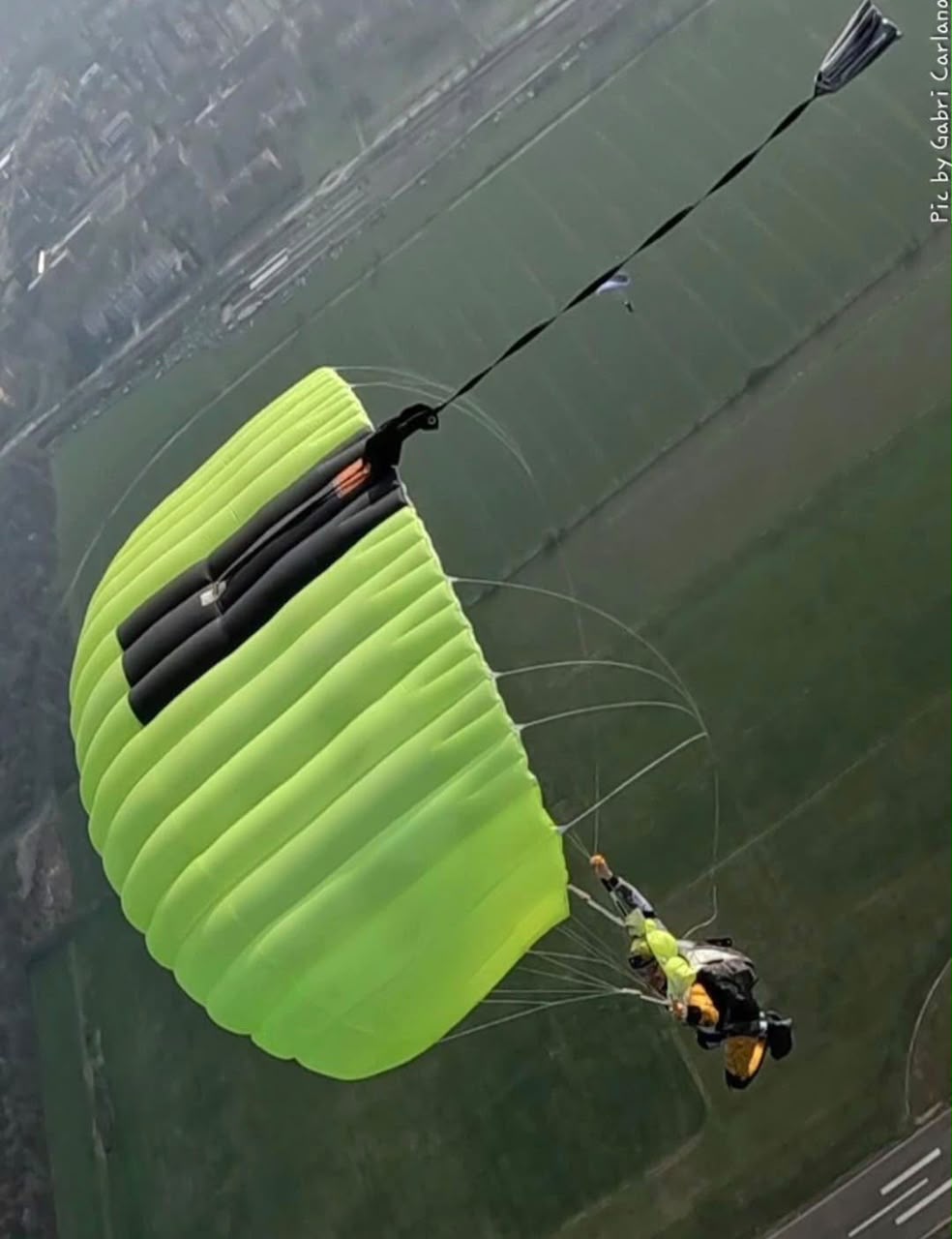






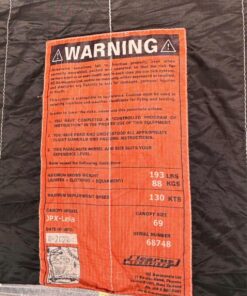
Used JYRO LEIA 69


€1,700.00
The Used JYRO LEIA 69 is a high-performance cross-braced canopy designed for experienced canopy pilots who demand exceptional precision, powerful flare characteristics, responsive handling, and impressive glide efficiency. Engineered with an advanced aerodynamic profile, the LEIA 69 delivers outstanding control while maintaining the speed, stability, and responsiveness expected from a competition-inspired design.
This used canopy should be thoroughly inspected before installation to verify the condition of the fabric, suspension lines, slider, stitching, and attachment points. Its compact size and highly responsive flight characteristics make it most suitable for knowledgeable pilots who possess the training and experience required to operate advanced equipment safely and effectively.
Whether the goal is achieving greater accuracy, improving control, or experiencing a highly refined flying platform, the Used JYRO LEIA 69 offers a combination of engineering excellence, durability, efficiency, and remarkable performance.
Used JYRO LEIA 69 Cross-Braced Canopy – Performance, Handling Characteristics, Inspection Guide, and Technical Overview
Used JYRO LEIA 69 Overview, Specifications, Flight Characteristics, and Safety Information
What Is the JYRO LEIA 69?
The Used JYRO LEIA 69 is an ultra-high-performance cross-braced canopy developed by JYRO for experienced canopy pilots seeking exceptional responsiveness, powerful flare performance, efficient glide characteristics, and precise control inputs. Unlike larger recreational canopies, the LEIA 69 is intended for highly experienced individuals who possess extensive training and advanced canopy-handling skills.
As a high-performance wing, the LEIA 69 forms one component of a complete parachute rig. It is not a reserve canopy, a training canopy, or an entire skydiving equipment list. Furthermore, this listing does not include a harness, deployment bag, reserve canopy, automatic activation device, altimeter, helmet, or accessories.
Because this particular canopy is used, its condition should always be verified carefully before installation and use.
Why the LEIA 69 Is Different
The LEIA series is recognized for its highly refined aerodynamic profile, advanced shaping techniques, efficient airfoil design, and powerful recovery characteristics. Cross-braced construction helps create structural rigidity while supporting precise flight control.
Nevertheless, this model is not designed for inexperienced jumpers. A general skydiving downsizing chart should never be treated as a substitute for professional coaching, verified experience, and disciplined decision-making.
Similarly, selecting the smallest canopy available simply because it fits a container is not always an appropriate decision.
A general weight limit skydiving search also cannot determine the proper wing loading for a specific pilot.
Flight Characteristics and Performance
The LEIA series has been developed to provide a highly responsive flight experience. Several factors influence overall performance:
- Wing loading
- Weather conditions
- Air density
- Line condition
- Body position
- Pilot experience
- Deployment technique
During canopy flight, pilots often emphasize precision, awareness, consistency, and timing.
The landing flight risers can provide additional control authority when used correctly. However, the phrase landing flight risers does not describe a separate component supplied with every canopy.
Opening Characteristics
Opening performance depends upon many factors, including equipment condition, deployment speed, line trim, body position, and packing technique.
A tracking jump may produce significantly different deployment conditions than a standard jump profile. Likewise, speed sky diving and general skydiving speed discussions should never be interpreted as approval to exceed the operational limits of the complete system.
Visible linewear should be evaluated immediately because worn lines may influence both performance and safety.
Harness and Container Compatibility
The LEIA 69 must be installed within an appropriately sized container skydive system. Compatibility depends upon pack volume, line type, deployment bag size, riser configuration, and overall system design.
The complete skydiving rig should include:
- Harness-container assembly
- Main canopy
- Reserve canopy
- Pilot chute
- Bridle
- Deployment bag
- Risers
- Closing system
- Automatic activation device
A freefly pud handle is associated with the main deployment system rather than the canopy itself.
Similarly, a gear bag skydive accessory may simplify transportation and storage, but it is not part of the deployment process.
Inspection Procedures for Used Equipment
Every used canopy should be inspected carefully before installation. Important inspection points include:
- Fabric condition
- Rib integrity
- Suspension lines
- Steering lines
- Reinforcement tapes
- Slider condition
- Stitching quality
- Attachment points
- Connector links
- Previous repairs
A qualified skydiving rigging professional should evaluate any uncertainty before the canopy is packed for use.
Wingsuit and Tracking Considerations
Although the LEIA is an advanced canopy, it is not specifically designed for every discipline. Individuals participating in the wingsuit sport should always consult experienced instructors and qualified riggers before changing equipment configurations.
Terms such as wingsuit, vector wingsuit, gliding suit wingsuit, skydiving gliding suit, fly suits, wing suits for sale, price of wingsuit, indoor wingsuit, and tandem wingsuit refer to equipment, disciplines, or training methods rather than this canopy itself.
Main Canopies and BASE Equipment
The LEIA 69 is a main parachute rather than a base canopy.
Base jumping and the phrase baseline jumping involve completely different equipment configurations, deployment methods, and operational environments.
Similarly, CRW skydiving often requires specialized equipment designed specifically for intentional canopy contact.
Helmets, Goggles, and Emergency Equipment
This listing does not include a skydiving helmet, skydive helmets, sky helmet skydiving, sky diving helmet, full face skydiving helmet, skydiving helmet full face, G35 helmet, Cookie G4 helmet, or the best skydiving helmet.
Individuals asking can you wear glasses while skydiving frequently choose specialized skydiving glasses or dedicated skydiver goggles to improve visibility and comfort.
A hook blade knife, hook knife skydiving, or skydive hook knife may be carried as emergency equipment by appropriately trained individuals.
Automatic Activation Devices and Related Equipment
The terms fire parachute and Cypress fire skydiving do not refer to LEIA specifications. Automatic activation devices represent separate components within the overall system.
These devices should never be viewed as replacements for experience, awareness, preparation, or correct procedures.
Travel Destinations and Training Locations
Searches such as parachute jump Australia, Skydive Byron Bay, Cairns skydiving, Skydive Belize, skydiving Blue Hole Belize, and iFLY Colorado Springs refer to destinations, operators, or training centers rather than specifications associated with the LEIA canopy.
Likewise, a nude parachute jump or skydiving nude event requires approval from the relevant operator.
General Search Terms and Clarifications
The phrases parts of a parachute, new skydive, skydiving website, #skydiving latest, skydiving tube, and jumper pilot represent general informational searches rather than technical LEIA characteristics.
The Safire 3 and products manufactured by Fluid Wings represent entirely different canopy designs with their own unique performance characteristics.
Final Evaluation
The Used JYRO LEIA 69 combines advanced aerodynamic design, exceptional responsiveness, efficient glide performance, and highly refined handling characteristics within a modern cross-braced platform. Nevertheless, every used canopy should undergo a complete inspection before installation.
A qualified rigger should verify the serial number, line condition, fabric integrity, repair history, compatibility, and overall airworthiness before the canopy is packed or used.
Advanced Flight Characteristics, Performance Management, and Long-Term Ownership
Understanding High-Performance Flight Dynamics
High-performance equipment demands a higher level of preparation, discipline, and situational awareness. Although modern engineering provides impressive capabilities, achieving consistent results depends upon experience, sound judgment, and a commitment to continuous learning.
Every stage of operation requires careful attention because even minor adjustments can significantly influence performance. Consequently, individuals who remain attentive to detail often develop stronger decision-making abilities and greater confidence over time.
Experience and preparation frequently work together to create reliable and predictable outcomes.
Why Consistency Is So Important
Consistency allows individuals to build confidence while reducing uncertainty. Repeated practice often helps develop habits that improve awareness and strengthen overall performance.
Several factors commonly influence consistency:
- Environmental conditions
- Preparation procedures
- Equipment condition
- Physical readiness
- Timing
- Decision-making ability
Understanding how these factors interact often contributes to improved control and better long-term results.
Glide Performance and Energy Management
Effective energy management is essential because speed, altitude, and directional control must be balanced carefully throughout every phase of operation.
Several factors frequently influence overall efficiency:
- Air density
- Wind direction
- Wind intensity
- Altitude
- Weight distribution
- Control inputs
Understanding these relationships often helps individuals adapt more effectively when conditions change unexpectedly.
The Importance of Thorough Preparation
Preparation frequently determines how effectively unexpected situations are handled. Consequently, establishing dependable routines remains extremely valuable.
Several steps are commonly included in a preparation process:
- Examining all visible components carefully.
- Verifying overall equipment condition.
- Evaluating environmental conditions.
- Reviewing operational procedures.
- Confirming that all components function correctly.
These practices frequently strengthen confidence while improving consistency.
Why Situational Awareness Matters
Situational awareness involves maintaining a complete understanding of the surrounding environment. Individuals who remain aware of changing conditions often make more effective decisions while avoiding unnecessary risks.
Several elements deserve continuous attention:
- Wind conditions
- Visibility
- Traffic patterns
- Ground conditions
- Altitude awareness
- Directional control
Awareness of these factors frequently contributes to more predictable results.
Long-Term Maintenance and Preservation
Routine maintenance remains essential because repeated use gradually influences the condition of all equipment components. Proper care often helps preserve functionality while reducing unnecessary wear.
Several maintenance practices are commonly recommended:
- Clean exposed surfaces regularly.
- Remove accumulated debris carefully.
- Inspect visible areas thoroughly.
- Confirm the integrity of attachment points.
- Protect materials from unnecessary environmental exposure.
These habits frequently contribute to long-term reliability.
Environmental Conditions and Adaptability
Adaptability remains important because environmental conditions rarely remain constant. Therefore, careful observation should always remain a priority.
Several variables frequently influence performance:
- Temperature
- Humidity
- Wind speed
- Wind direction
- Atmospheric pressure
- Surface conditions
Understanding these variables often strengthens decision-making and improves confidence.
Proper Storage Practices
Appropriate storage procedures play a significant role in preserving durability and appearance. Consequently, creating suitable storage conditions remains an important responsibility.
Several recommendations are commonly followed:
- Keep equipment clean and dry.
- Avoid excessive heat exposure.
- Minimize prolonged exposure to sunlight.
- Protect equipment from contamination.
- Conduct regular inspections.
These measures frequently support long-term preservation.
Common Challenges and Practical Solutions
Challenges frequently arise during the development process, yet careful preparation often helps minimize their effects.
Several examples include:
- Inadequate preparation
- Irregular maintenance routines
- Delayed decision-making
- Poor environmental awareness
- Inconsistent operating procedures
Recognizing these challenges early frequently helps prevent larger complications.
Frequently Asked Questions
Why is consistency important?
Consistency frequently strengthens confidence while supporting more effective decision-making.
Why should environmental conditions be monitored carefully?
Environmental conditions often influence responsiveness, efficiency, and predictability.
Why is preparation essential?
Preparation allows individuals to recognize and address potential concerns before they become more significant.
Why should maintenance be performed regularly?
Routine maintenance helps preserve reliability while reducing unnecessary deterioration.
Why are storage procedures important?
Proper storage practices help protect equipment from unnecessary environmental exposure and support long-term durability.
Final Thoughts
Long-term success frequently depends upon preparation, patience, discipline, and continuous learning. Individuals who remain committed to these principles often strengthen their knowledge, improve their skills, and maintain greater confidence throughout every stage of their development.
Precision Control, Skill Development, and Long-Term Performance
Developing Advanced Skills Through Experience
Experience remains one of the most important elements of long-term progression because repeated practice allows individuals to refine their techniques while gaining a deeper understanding of how different conditions influence performance. Although equipment design contributes significantly to overall capability, knowledge and preparation often determine how effectively that capability is used.
Every operation presents a unique combination of variables. Consequently, individuals who remain committed to learning frequently strengthen their confidence while improving consistency and adaptability.
Steady progress is usually achieved through patience, discipline, and continuous practice.
Why Precision Matters
Precision influences every stage of operation because even minor adjustments may affect speed, direction, stability, and efficiency. Therefore, maintaining concentration and developing disciplined habits remain essential responsibilities.
Several factors commonly influence precision:
- Environmental conditions
- Equipment condition
- Timing
- Experience level
- Weight distribution
- Control input
Understanding these relationships often contributes to more predictable results.
Building Confidence Through Repetition
Confidence develops gradually as experience increases. Individuals who establish consistent routines frequently become more comfortable identifying changing conditions and responding appropriately to unexpected situations.
Several advantages are commonly associated with repeated practice:
- Improved awareness
- Greater concentration
- Better adaptability
- More efficient decision-making
- Increased consistency
These qualities frequently support long-term improvement.
Understanding the Importance of Timing
Timing plays an important role because effective decisions frequently depend upon recognizing the correct moment to act. Delayed responses sometimes create additional complications, whereas thoughtful and timely actions often produce better results.
Several areas require particular attention:
- Directional adjustments
- Environmental observation
- Altitude awareness
- Landing preparation
- Pattern management
Careful observation frequently contributes to improved decision-making.
Environmental Awareness and Adaptability
Environmental conditions constantly change, which means adaptability remains one of the most valuable skills an individual can develop.
Several variables should be monitored continuously:
- Wind speed
- Wind direction
- Temperature
- Humidity
- Visibility
- Atmospheric pressure
Awareness of these factors frequently helps individuals respond more effectively when conditions change unexpectedly.
Long-Term Maintenance and Equipment Care
Routine maintenance remains essential because repeated use gradually influences overall condition and reliability. Consequently, regular inspections should become an important part of every routine.
Several procedures are commonly recommended:
- Examine visible surfaces carefully.
- Inspect attachment points thoroughly.
- Verify structural integrity.
- Remove dirt and accumulated debris.
- Confirm proper operation.
These procedures frequently support long-term durability.
Storage and Protective Measures
Storage conditions directly influence reliability and appearance. Therefore, maintaining a suitable storage environment remains extremely important.
Several recommendations are commonly followed:
- Store equipment in dry conditions.
- Protect components from prolonged sunlight exposure.
- Avoid excessive heat.
- Minimize unnecessary moisture exposure.
- Conduct routine inspections.
These habits frequently help preserve long-term functionality.
Common Challenges and Practical Solutions
Challenges frequently arise throughout the learning process. Fortunately, many of these difficulties can be minimized through preparation and disciplined habits.
Several common examples include:
- Inadequate preparation
- Irregular maintenance routines
- Insufficient environmental awareness
- Improper storage procedures
- Delayed responses to changing conditions
Recognizing these concerns early often helps prevent more serious complications.
Frequently Asked Questions
Why is precision important?
Precision frequently improves efficiency while supporting more consistent performance.
Why should environmental conditions be monitored continuously?
Environmental conditions frequently influence predictability, responsiveness, and overall control.
Why is regular maintenance necessary?
Routine maintenance helps preserve reliability while reducing unnecessary wear.
Why is experience valuable?
Experience frequently strengthens awareness, adaptability, and confidence.
Why are proper storage procedures important?
Appropriate storage practices help protect equipment from environmental exposure and premature deterioration.
Final Remarks
Long-term progress is often achieved through preparation, patience, discipline, and continuous learning. Individuals who remain dedicated to these principles frequently strengthen their abilities while preserving confidence, consistency, and reliability over many years of operation.
Equipment Management, Environmental Awareness, and Continuous Improvement
Establishing Effective Long-Term Habits
Long-term success is often the result of disciplined habits that are practiced consistently over time. Although advanced equipment is engineered to deliver exceptional performance, reliable results still depend upon careful preparation, proper maintenance, and thoughtful decision-making.
Each experience presents opportunities to strengthen knowledge and improve technique. Consequently, individuals who remain committed to continuous improvement frequently become more capable of adapting to changing conditions while maintaining a high level of confidence.
Progress is usually achieved gradually rather than immediately.
Why Detailed Inspections Remain Important
Detailed inspections play an essential role in preserving reliability because repeated use naturally affects every component. Small changes often become easier to identify when inspections are performed consistently.
Several areas deserve particular attention:
- Surface condition
- Structural integrity
- Reinforced sections
- Hardware connections
- Attachment points
- Signs of wear
Careful evaluation frequently contributes to improved reliability and long-term durability.
Understanding Efficiency and Control
Efficiency is influenced by the ability to manage speed, direction, and energy effectively. Individuals who understand the relationship between these elements often develop stronger control and greater confidence.
Several factors commonly influence efficiency:
- Wind intensity
- Air density
- Weight distribution
- Timing
- Environmental conditions
- Experience level
Recognizing these relationships frequently contributes to more predictable outcomes.
Environmental Awareness and Decision-Making
Environmental conditions frequently influence performance because atmospheric conditions are constantly changing. Therefore, awareness and adaptability remain essential throughout every stage of operation.
Several variables should be monitored carefully:
- Wind direction
- Wind speed
- Humidity
- Temperature
- Visibility
- Surface conditions
Monitoring these factors frequently supports more effective decision-making.
Why Consistency Strengthens Performance
Consistency allows individuals to build dependable habits that support better judgment and more effective responses during changing conditions.
Several benefits commonly associated with consistency include:
- Greater confidence
- Improved concentration
- Enhanced adaptability
- Stronger discipline
- Better situational awareness
These qualities frequently support long-term improvement.
Proper Cleaning and Maintenance Procedures
Routine maintenance remains essential because exposure to environmental conditions gradually influences durability and appearance.
Several maintenance practices are commonly recommended:
- Inspect visible surfaces carefully.
- Remove accumulated dirt and debris.
- Verify the condition of all attachment points.
- Protect materials from excessive environmental exposure.
- Confirm that all components function correctly.
These procedures frequently contribute to greater reliability.
Storage and Long-Term Preservation
Storage conditions directly influence longevity. Consequently, maintaining an organized and controlled environment remains extremely important.
Several recommendations are commonly followed:
- Keep equipment dry whenever possible.
- Avoid prolonged exposure to excessive heat.
- Protect components from direct sunlight.
- Minimize unnecessary moisture exposure.
- Conduct regular inspections.
These practices frequently help preserve long-term functionality.
Common Difficulties and Effective Solutions
Challenges are often encountered during long-term use, yet preparation frequently provides effective ways to manage them successfully.
Several common examples include:
- Inconsistent maintenance practices
- Insufficient preparation
- Delayed responses to changing conditions
- Improper storage methods
- Failure to conduct detailed inspections
Recognizing these situations early often helps reduce the possibility of more serious complications.
Frequently Asked Questions
Why are detailed inspections recommended?
Detailed inspections help identify wear and deterioration before more significant problems develop.
Why is consistency valuable?
Consistency supports confidence, discipline, and more effective decision-making.
Why should environmental conditions be monitored carefully?
Environmental conditions frequently influence responsiveness, efficiency, and predictability.
Why is regular maintenance important?
Routine maintenance helps preserve reliability while reducing unnecessary deterioration.
Why are storage procedures necessary?
Proper storage practices help protect equipment while supporting long-term durability.
Final Thoughts
Long-term reliability frequently develops through patience, preparation, discipline, and continuous learning. Individuals who consistently apply these principles often strengthen their skills while preserving confidence, efficiency, and dependable performance over many years of use.
Long-Term Development, Equipment Preservation, and Operational Excellence
Creating a Mindset Focused on Continuous Improvement
Long-term success is rarely determined by equipment alone. Instead, knowledge, discipline, experience, and preparation frequently shape the quality of every outcome. Individuals who remain committed to learning often develop stronger judgment, greater confidence, and more effective decision-making abilities.
Experience gradually transforms information into practical understanding. Consequently, patience becomes one of the most valuable qualities a person can possess.
Small improvements made consistently often create significant long-term results.
Why Preparation Supports Better Performance
Preparation helps reduce uncertainty while improving efficiency and consistency. Furthermore, individuals who establish dependable routines often become more capable of adapting to changing circumstances.
Several practices commonly contribute to effective preparation:
- Reviewing established procedures
- Evaluating environmental conditions
- Inspecting equipment carefully
- Maintaining organized records
- Confirming operational readiness
These habits frequently strengthen confidence and improve reliability.
Understanding the Importance of Awareness
Awareness extends beyond observing immediate surroundings. It also includes understanding how environmental conditions, personal decisions, and equipment condition interact with one another.
Several factors deserve continuous attention:
- Wind direction
- Wind intensity
- Temperature
- Humidity
- Visibility
- Terrain conditions
Awareness of these variables frequently contributes to more informed decisions and improved consistency.
Why Adaptability Matters
Adaptability allows individuals to respond effectively when conditions change unexpectedly. Circumstances may shift rapidly, which means flexibility and sound judgment remain extremely important.
Several qualities often contribute to adaptability:
- Patience
- Discipline
- Concentration
- Observation
- Confidence
- Experience
Together, these characteristics frequently support long-term development.
Maintenance Procedures and Preventive Care
Preventive maintenance remains essential because repeated use gradually influences the condition of equipment components. Consequently, regular inspections should never be neglected.
Several maintenance procedures are commonly recommended:
- Inspect visible surfaces thoroughly.
- Remove accumulated dirt and debris.
- Examine structural components carefully.
- Confirm the integrity of attachment points.
- Protect equipment from unnecessary environmental exposure.
These procedures frequently contribute to improved durability and reliability.
Storage Conditions and Equipment Protection
Appropriate storage practices play an important role in preserving functionality and appearance. Environmental exposure frequently affects materials over time, which is why protective measures remain necessary.
Several recommendations are commonly followed:
- Keep equipment clean and dry.
- Avoid prolonged exposure to excessive heat.
- Minimize direct exposure to sunlight.
- Reduce unnecessary moisture exposure.
- Conduct periodic inspections.
These practices frequently contribute to long-term preservation.
Building Discipline Through Consistent Habits
Discipline frequently creates the structure necessary for continuous improvement. Individuals who maintain dependable routines often become more capable of recognizing subtle changes before they develop into larger concerns.
Several habits frequently support long-term success:
- Performing routine inspections
- Following established procedures
- Maintaining detailed records
- Organizing equipment properly
- Evaluating previous experiences
These habits often strengthen confidence while improving consistency.
Common Challenges and Practical Solutions
Challenges are a natural part of development, yet preparation frequently provides effective methods for overcoming them.
Several examples include:
- Inadequate preparation
- Irregular maintenance practices
- Insufficient environmental awareness
- Improper storage conditions
- Delayed responses to changing circumstances
Recognizing these concerns early frequently helps prevent more significant complications.
Frequently Asked Questions
Why is preparation so important?
Preparation helps establish confidence while improving awareness, organization, and consistency.
Why is adaptability valuable Used JYRO LEIA 69?
Adaptability supports effective decision-making whenever conditions change unexpectedly.
Why should equipment be inspected regularly?
Routine inspections help identify wear, deterioration, and other concerns before they become more serious.
Why are storage procedures important?
Appropriate storage conditions help preserve durability while protecting equipment from environmental exposure.
Why does experience matter?
Experience frequently strengthens judgment, awareness, and confidence while supporting continued improvement.
Final Remarks
Long-term excellence is often achieved through preparation, discipline, patience, and continuous learning. Individuals who remain dedicated to these principles frequently develop stronger skills, greater confidence, and more dependable performance throughout every stage of their journey.
Be the first to review “Used JYRO LEIA 69”
Related products



used products


used products


used products


used products


used products
used products


Reviews
There are no reviews yet.