
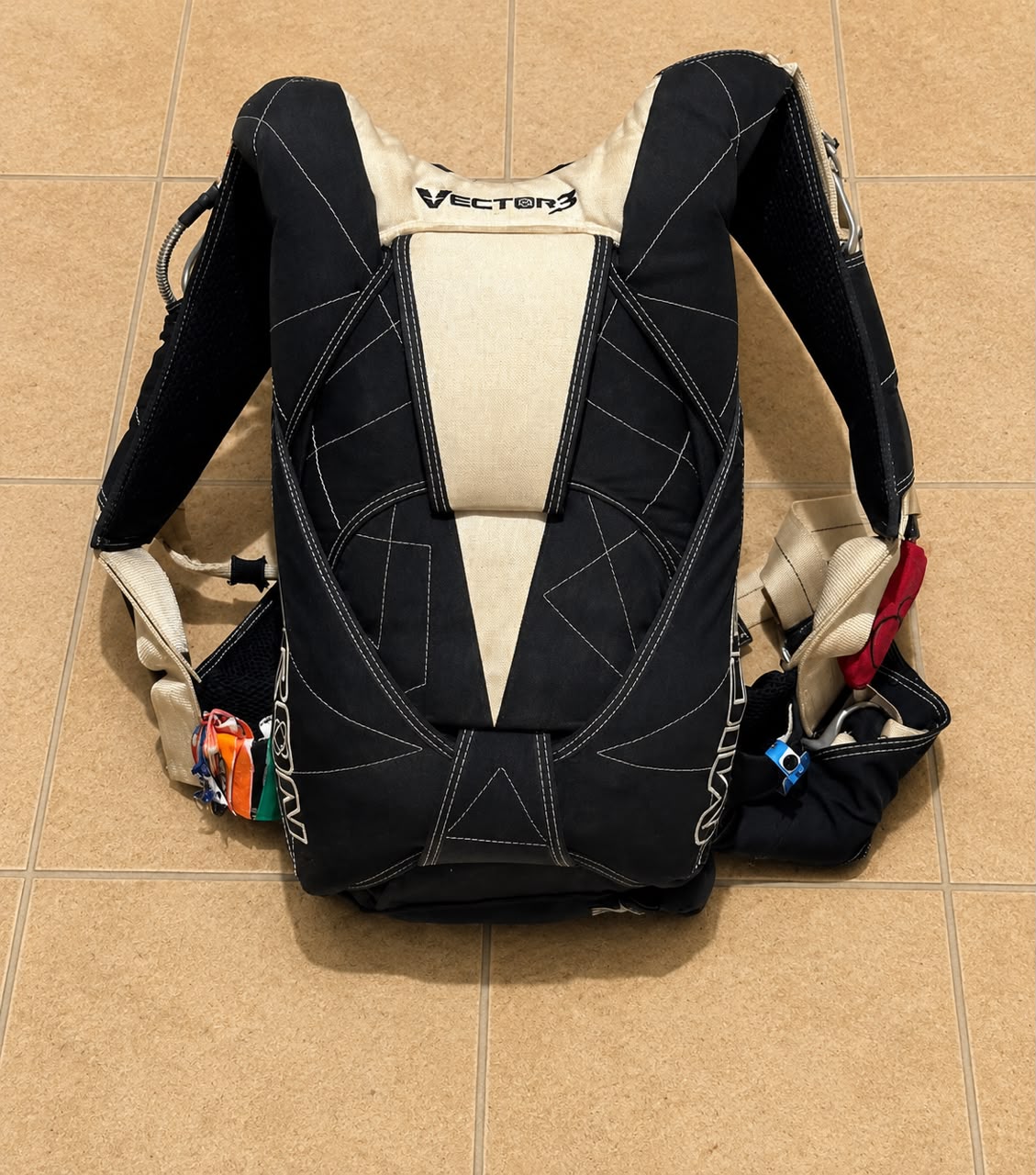



Used UPT Vector 3 Micron V304 (V3-04) Skydiving Container / Rig


€3,800.00
The Used UPT Vector 3 Micron V304 (V3-04) Skydiving Container / Rig is a compact sport skydiving harness/container manufactured by United Parachute Technologies and built around the Vector 3 Micron architecture. The Micron family is designed for smaller canopy volumes while retaining Vector 3 construction principles, deployment-system security, harness integration, and compatibility with modern skydiving safety equipment. UPT continues to support the Micron through its current manuals, sizing charts, parts information, installation guides, and sport-rigging documentation.
The current UPT sizing chart lists the V304 Micron at approximately 10 inches wide at both listed width points, 15.5 inches long, and 4.5 inches thick. Current standard-fit main examples include the Safire3 109, Sabre2 107, Spectre 107, Storm 107, Pulse 107, Horizon 120, Epicene Pro 130 and various higher-performance canopies. Standard reserve examples include the Optimum 106, PD 99, Icarus Reserve 99, Smart 99 and Techno 98. UPT specifically warns that fitting both a maximum-volume main and maximum-volume reserve can make some containers, including the V304, difficult to pack, so individual canopy compatibility should always be confirmed rather than estimated from nominal square footage alone.
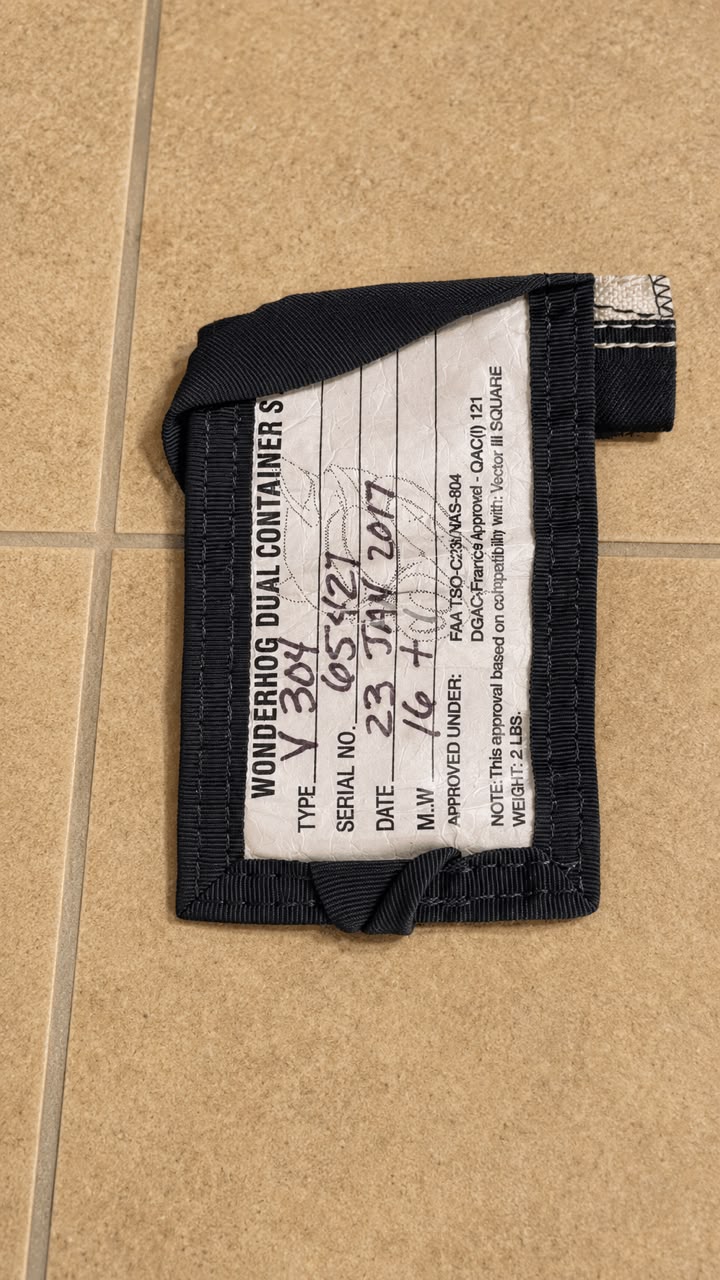
Because this is used life-support equipment, the exact serial number, date of manufacture, harness dimensions, reserve configuration, main-canopy volume, AAD installation, RSL or Skyhook configuration, repairs, alterations and current rigger inspection matter more than cosmetic appearance.
Used UPT Vector 3 Micron V304 (V3-04) Skydiving Container / Rig – Technical Harness and Container Overview
V304 Micron Architecture, Canopy Compatibility, Harness Fit, Deployment Systems, and Related Skydiving Terminology
Parachute Rig
A parachute rig is the complete wearable skydiving system, normally combining the harness/container, main canopy, reserve canopy, risers, deployment equipment and appropriate safety components. The V304 refers specifically to the harness/container size rather than automatically identifying every component installed inside it.
Skydiving Rig
A skydiving rig built around this container should be evaluated as one complete system. Main canopy volume, reserve fit, harness sizing, deployment components, AAD configuration and jumper suitability all need to work together.
Container Skydive
The phrase container skydive refers to the harness/container component that houses the main and reserve parachutes. UPT’s current sizing chart gives the V304 specific standard and full-fit canopy examples rather than relying on one universal square-foot limit.
V304 Micron Dimensions
UPT currently lists the V304 Micron at approximately 10″ × 10″ across the two width dimensions, 15.5″ long and 4.5″ thick. These measurements explain why the V304 belongs to the compact end of the Micron range.
Main Canopy Compatibility
Current standard-fit main examples include sizes such as Safire3 109, Sabre2 107, Spectre 107, Storm 107, Pulse 107, Fusion 108, Crossfire3 109 and Horizon 120. Some low-pack-volume designs can fit at larger nominal areas because construction significantly affects packed volume.
Reserve Compatibility
UPT currently identifies standard reserve examples including Optimum 106, PD 99, Icarus Reserve 99, Smart 99 and Techno 98. Full-fit examples extend to selected larger-volume reserves, although UPT specifically cautions about combining full-fit mains and reserves in compact containers.
Safire 3
A Safire 3 appears directly in UPT’s current sizing information. The V304 lists a Safire3 109 as a standard-fit example, while larger Safire sizes belong in progressively larger container configurations.
Smallest Canopy
The smallest canopy that can physically fit a container is not automatically appropriate for the jumper. Container volume, canopy type, wing loading, experience and training are separate considerations.
Skydiving Downsizing Chart
A skydiving downsizing chart can provide general progression guidance, but it should not independently determine whether someone should move to a smaller canopy. Canopy coaching, landing consistency, total exit weight and actual experience should guide downsizing decisions.
Parts of a Parachute
The parts of a parachute system include the harness, container, main canopy, reserve canopy, risers, pilot chute, bridle, deployment bag, handles, closing system and associated hardware. Some complete systems also incorporate an automatic activation device and reserve-assist system.
Skydiving Rigging
skydiving rigging is central to safe ownership of a used container. UPT currently publishes Vector reserve-packing guidance, closing instructions, pilot-chute installation information, brake-line routing procedures, AAD routing information and multiple sport-rigging instructions.
Linewear
linewear applies mainly to the installed canopy rather than the container itself. If a main canopy is included, line condition, line trim, steering lines and attachment points should be inspected independently of container condition.
Landing Flight Risers
landing flight risers connect the main canopy to the harness. Their webbing, hardware, steering components and three-ring interfaces should form part of the complete used-rig inspection.
Freefly Pud Handle
A freefly pud handle is a deployment-handle configuration designed around secure retention during freefly-oriented body positions. If fitted to a used system, compatibility and security should be verified professionally.
Tracking Jump
A tracking jump creates substantial horizontal movement during freefall. Secure deployment-handle retention, proper bridle protection and appropriate separation procedures therefore remain important.
Wingsuit
A wingsuit changes airflow and deployment conditions compared with conventional belly flight. Rig configuration should therefore be evaluated with the intended discipline in mind.
Wingsuit Sport
The wingsuit sport introduces discipline-specific concerns around bridle exposure, pilot-chute performance, deployment stability and canopy selection.
Vector Wingsuit
The phrase vector wingsuit commonly refers to Vector harness/container configurations used by wingsuit pilots. Suitability still depends on the exact deployment setup, jumper experience and canopy configuration rather than the brand name alone.
Gliding Suit Wingsuit
A gliding suit wingsuit increases horizontal travel and changes freefall aerodynamics, meaning deployment-system configuration deserves additional attention.
Skydiving Gliding Suit
The phrase skydiving gliding suit generally refers to wingsuit equipment rather than a container component.
Wing Suits for Sale
Searches for wing suits for sale concern separate garments and should not be confused with the harness/container system.
Price of Wingsuit
The price of wingsuit equipment has no direct relationship to V304 container compatibility.
Tandem Wingsuit
A tandem wingsuit is not a conventional application for this compact sport harness/container and should not be interpreted as a feature of the system.
Indoor Wingsuit
indoor wingsuit training takes place in specialized facilities without conventional parachute deployment.
Fly Suits
fly suits may refer to standard jumpsuits or wingsuits and remain separate from the harness/container.
Base Jumping
base jumping uses equipment, deployment procedures and operating environments that differ significantly from sport skydiving.
Base Canopy
A base canopy should not be treated as interchangeable with a sport main simply because its nominal area appears compatible.
Baseline Jumping
The phrase baseline jumping is commonly used incorrectly when referring to BASE jumping and has no specific connection to the V304.
CRW Skydiving
crw skydiving means canopy relative work. Discipline-specific equipment requirements should be reviewed separately from ordinary container sizing.
Canopy Flight
canopy flight depends primarily on the installed main canopy, jumper wing loading and technique rather than the container shell itself.
Skydiving Speed
skydiving speed varies significantly with discipline and body position. Deployment speeds must remain within the limits applicable to the complete harness/container and parachute configuration.
Speed Sky Diving
speed sky diving can involve much higher freefall speeds than conventional belly flight, making deployment limitations and discipline-specific equipment considerations especially important.
Weight Limit Skydiving
The phrase weight limit skydiving can refer to drop-zone policy, canopy wing loading or equipment certification. A used harness/container should be evaluated using its actual data label and current manufacturer documentation.
Skydiving Equipment List
A typical skydiving equipment list includes a harness/container, main canopy, reserve canopy, AAD where required or selected, helmet, altimeter, goggles, jumpsuit and suitable footwear.
Gear Bag Skydive
A gear bag skydive setup protects the harness/container during transportation. The system should remain dry and protected from oils, solvents, sharp objects, excessive heat and prolonged sunlight.
Skydiving Helmet
A skydiving helmet is separate personal protective equipment and should fit without obstructing visibility or interfering with emergency procedures.
Skydive Helmets
Different skydive helmets include open-face and full-face designs intended for different disciplines and preferences.
Full Face Skydiving Helmet
A full face skydiving helmet provides facial protection and wind shielding while maintaining visibility appropriate to sport jumping.
Skydiving Helmet Full Face
The phrase skydiving helmet full face describes the same general helmet category.
Sky Helmet Skydiving
sky helmet skydiving is general search terminology for protective skydiving headgear.
Sky Diving Helmet
The phrase sky diving helmet likewise refers to protective equipment separate from the rig.
G35 Helmet
A G35 helmet is a helmet-related product term and does not form part of the V304 harness/container.
Cookie G4 Helmet
The Cookie G4 helmet is another independent equipment item.
Best Skydiving Helmet
The best skydiving helmet depends on fit, discipline, visibility, communication requirements and jumper preference rather than container size.
Skydiving Glasses
skydiving glasses or goggles should fit securely and provide adequate visibility in freefall.
Skydiver Goggles
skydiver goggles are particularly common with open-face helmets.
Can You Wear Glasses While Skydiving
For can you wear glasses while skydiving, prescription glasses can often be accommodated beneath appropriate goggles or compatible full-face helmets.
Hook Blade Knife
A hook blade knife is emergency equipment carried by some trained skydivers and does not form part of the basic container structure.
Hook Knife Skydiving
A hook knife skydiving tool is intended for emergency cutting situations involving lines or webbing.
Skydive Hook Knife
The phrase skydive hook knife describes the same equipment category.
Fire Parachute
The phrase fire parachute does not describe the V304 and usually relates to unrelated emergency or specialized parachute terminology.
Cypress Fire Skydiving
The phrase cypress fire skydiving appears to be search terminology involving CYPRES equipment. UPT currently publishes specific instructions related to AAD routing and CYPRES window-cover installation for Vector systems.
AAD Integration
Modern Vector systems are designed to accommodate compatible automatic activation devices when correctly installed. UPT’s sport-rigging resources specifically include AAD control-unit routing and CYPRES-related installation instructions.
Skyhook and RSL Considerations
UPT provides current information and rigging instructions for the Skyhook and related reserve-assist systems. A used V304 should be inspected to establish exactly which reserve-assist configuration is installed and whether all components are current and correctly maintained.
Parachute Jump Australia
parachute jump australia describes a destination-based search rather than V304 engineering. Visiting jumpers should verify local licensing, equipment and reserve-repack requirements.
Skydive Byron Bay
skydive byron bay is a specific Australian skydiving location and does not define container compatibility.
Cairns Skydiving
cairns skydiving similarly refers to a destination rather than a rig specification.
Skydive Belize
skydive belize concerns destination jumping. Equipment requirements should be checked with the relevant operator before travel.
Skydiving Blue Hole Belize
skydiving blue hole belize refers to a destination experience rather than a container feature.
iFly Colorado Springs
iFly Colorado Springs relates to indoor wind-tunnel training, which does not require deployment of a sport parachute system.
New Skydive
A new skydive student should use instructor-selected equipment rather than independently choosing a compact Micron configuration based on appearance or price.
#Skydiving Latest
The phrase #skydiving latest reflects social-media discovery rather than technical rigging standards.
Skydiving Website
A reputable skydiving website can provide general information, but UPT manuals, sizing charts and professional riggers should remain primary references for safety-critical decisions.
Skydiving Tube
A skydiving tube is a specialized freefall prop and has no structural relationship to this container.
Nude Parachute Jump
A nude parachute jump is an activity-related search phrase and does not alter equipment certification or compatibility requirements.
Skydiving Nude
Likewise, skydiving nude concerns attire rather than harness/container engineering.
Jumper Pilot
The phrase jumper pilot can refer either to the skydiver or aircraft pilot depending on context and does not define any V304 technical feature.
Used V304 Condition Assessment
A used V304 should be inspected by a qualified rigger for harness webbing, leg straps, chest strap, hardware, three-ring assemblies, reserve risers, stitching, main and reserve containers, closing loops, deployment handles, pilot chute, bridle, riser covers, reserve-assist components, AAD installation and evidence of repairs or alterations.
UPT’s current Vector manual explicitly directs owners to read the current manual before using a Vector 3, even if they have previously owned or jumped one, because the manufacturer has introduced important changes over the product’s service history.
Why the V304 Size Matters
The V304 sits at the compact end of the Micron range and is designed around relatively small-pack-volume mains and reserves. UPT’s present sizing chart identifies a broad selection of suitable canopies but also emphasizes that the chart is a guide and that individual pack volume varies by design.
Why Canopy Volume Matters
A canopy’s labeled square footage does not directly equal packed volume. Fabric type, design, reinforcement, logo panels and construction can all change bulk. UPT specifically notes that canopies with logos can pack larger and recommends contacting the company when a desired configuration is not listed.
Why Harness Fit Matters
Correct container volume does not guarantee correct harness fit. Main-lift-web dimensions, lateral length, leg straps, chest strap and overall jumper proportions should be assessed independently.
Why Professional Inspection Matters
A used harness/container is life-support equipment. Cosmetic appearance cannot confirm airworthiness, correct canopy fit, service-bulletin status, harness suitability or reserve-system integrity.
Overall Technical Perspective
The Used UPT Vector 3 Micron V304 (V3-04) Skydiving Container / Rig is a compact Micron harness/container currently represented by UPT as approximately 10″ × 10″ × 15.5″ × 4.5″ and compatible with selected lower-volume sport mains and reserves. Current examples include a Safire3 109, Sabre2 107 and Spectre 107 as standard-fit mains and an Optimum 106 or PD 99 among standard-fit reserves.
For a used example, however, the most important considerations are the exact serial number, manufacturing date, harness dimensions, main and reserve combination, AAD installation, Skyhook/RSL configuration, repair history, hardware condition and qualified-rigger inspection. The sizing chart is a compatibility guide rather than a substitute for professional rigging evaluation.
Harness Construction, Container Fit, Deployment-Security Features, Comfort, Compatibility, and Practical Used-Rig Evaluation
The quality of a compact sport harness/container system depends on much more than its external dimensions. Harness geometry, container volume, webbing condition, stitching, hardware, riser protection, deployment-handle security, reserve configuration, and the fit of the installed parachutes all contribute to how the system performs in real-world use. For a previously owned example, these factors matter even more because age, jump history, repairs, environmental exposure, and prior modifications can influence current condition.
Overall Harness Construction
The harness forms the load-bearing structure of the complete system.
Its webbing, junctions, hardware, leg straps, chest strap, laterals, and main lift web all work together to distribute deployment and canopy-flight loads.
Because of this, structural inspection should always take priority over cosmetic appearance.
Main Lift Web Fit
Main lift web dimensions strongly influence how the harness sits on the jumper.
A correct fit helps position the container securely while maintaining appropriate access to emergency handles and other controls.
An otherwise excellent container may still be unsuitable if the harness measurements do not match the intended jumper.
Leg-Strap Condition
Leg straps should remain structurally sound and free from significant abrasion, cuts, chemical damage, or compromised stitching.
Hardware should move correctly without sharp edges or deformation.
Comfort and security should both be considered during fit assessment.
Chest-Strap Condition
The chest strap contributes to harness positioning and should remain in good condition.
Webbing, stitching, and hardware should be inspected as part of a complete used-rig assessment.
Any major wear deserves professional attention.
Harness Laterals
Laterals influence how the container sits against the back.
Their dimensions can affect both comfort and stability.
Incorrect length or structural deterioration can reduce the quality of the fit even when other measurements appear suitable.
Hardware Integrity
Metal hardware should remain free from substantial corrosion, deformation, cracking, or sharp damage.
Minor cosmetic marks may develop through normal use, but structural concerns should never be dismissed based on appearance alone.
Three-Ring System Condition
The main release hardware is a critical part of the harness assembly.
Its rings, cables, housings, risers, and attachment points should be inspected and maintained according to manufacturer guidance.
Any uncertainty should be handled by a qualified rigger.
Container Shape
Compact container systems are designed around specific packed volumes.
The shape should remain stable without severe distortion, unusual stretching, or structural damage.
An overpacked or poorly matched configuration can affect closing pressure and overall handling.
Main-Container Fit
The main compartment should accommodate the installed parachute without excessive compression.
A canopy that is technically within a nominal size range may still pack differently from another design of similar labeled area.
Fabric type and construction can make a substantial difference.
Reserve-Container Fit
The reserve side requires even stricter compatibility.
A reserve that is too bulky or incorrectly matched can create packing and closing difficulties.
Professional guidance should therefore determine the correct reserve combination.
Full-Fit Combinations
Compact systems can sometimes accommodate larger-volume components at the upper end of the approved range.
However, pairing a maximum-volume main with a maximum-volume reserve may create an excessively tight configuration.
Such combinations should be confirmed by the manufacturer or an appropriately qualified rigger.
Container Fabric Condition
Fabric panels should be inspected for abrasion, tears, heat damage, contamination, and damaged seams.
High-contact areas may show more wear than protected surfaces.
Cosmetic fading alone is generally less important than structural deterioration.
Riser-Cover Condition
Riser covers help maintain a clean and secure configuration during freefall.
Their condition and retention should be checked for wear, distortion, or previous modification.
Loose or compromised covers deserve professional assessment.
Main-Flap Condition
The main flap should remain structurally sound and correctly shaped.
Repeated packing and handling may create visible wear.
Damage that affects closure or deployment security should be evaluated before further use.
Reserve-Flap Condition
The reserve flap and surrounding structure deserve especially careful inspection.
Any damage, deformation, or unexplained modification should be assessed professionally because of the reserve system’s critical role.
Closing Components
Closing loops and related hardware should remain compatible with the system and be maintained according to manufacturer guidance.
These components are wear items and should not be improvised or substituted without proper technical approval.
Pilot-Chute Condition
A main deployment pilot chute should remain appropriate for the system and in serviceable condition.
Fabric, mesh, handle retention, bridle connection, and general wear should be inspected.
Replacement parts should be compatible with the exact configuration.
Bridle Condition
The bridle should remain free from excessive wear, cuts, contamination, or structural damage.
Its routing and attachment points should also be appropriate for the system.
Unknown alterations should be investigated.
Deployment-Bag Compatibility
The deployment bag should suit both the container and installed main canopy.
It should not be selected solely because the canopy can physically be packed inside it.
Correct compatibility supports reliable deployment-system geometry.
Handle Security
Deployment and emergency handles should remain securely retained in their intended locations.
A used rig may have different handle types depending on its configuration, so compatibility should be verified rather than assumed.
Freefall Security
Compact sport rigs are commonly expected to maintain secure flaps, riser covers, and deployment handles during dynamic body positions.
However, condition and correct configuration are essential.
Worn or poorly maintained retention components can reduce the intended level of security.
Comfort on the Back
Harness comfort depends heavily on individual fit.
Correctly sized webbing and laterals help position the rig securely without excessive movement.
An unsuitable harness can create pressure points or poor container positioning.
Weight Distribution
A compact container tends to keep the system relatively close to the jumper’s body.
However, overall weight still depends on the installed main, reserve, AAD, and other components.
Different canopy combinations can therefore change the feel of the complete rig.
Used-Webbing Assessment
Used harness webbing should be examined carefully for abrasion, contamination, UV exposure, damaged stitching, and unusual discoloration.
Any suspected structural deterioration should receive qualified inspection.
Stitching Integrity
Structural stitching should remain intact throughout the harness and container.
Loose cosmetic threads may be minor, but damaged load-bearing stitching is a different matter.
Professional repair standards should be followed whenever structural stitching is compromised.
Previous Repairs
A professionally repaired system can remain serviceable.
The important questions are where the repair was made, why it was required, who completed it, and whether it remains in good condition.
Unknown structural repairs deserve additional scrutiny.
Modification History
Older sport rigs may have received updates or alterations during their service life.
Changes involving harness dimensions, reserve systems, deployment components, or safety systems should be verified against manufacturer requirements.
AAD Installation
An automatic activation device, when fitted, should be installed according to the applicable manufacturer and container instructions.
Control-unit routing, cutter location, and component condition should be verified professionally.
Reserve-Assist Configuration
Some systems may include a reserve-assist feature.
The exact configuration should be identified and inspected by a qualified rigger.
Owners should understand what is installed rather than assuming a feature is present based on model name alone.
Harness Sizing for the Jumper
Height and weight provide useful starting information, but they do not fully determine harness fit.
Torso length, chest size, leg proportions, and actual harness measurements can all influence suitability.
Professional fit assessment is therefore strongly recommended.
Container Size Versus Jumper Skill
Container size and canopy size should not determine canopy progression by themselves.
A jumper should not select a smaller parachute simply because the compact container can accommodate it.
Skill level, exit weight, canopy experience, and coaching remain separate considerations.
Inspection Before Use
A previously owned system should be physically inspected before being placed into service.
Photographs and seller descriptions can help identify obvious condition, but they cannot establish complete airworthiness.
Professional Rigger Evaluation
A qualified rigger should assess webbing, stitching, hardware, reserve configuration, deployment components, canopy fit, AAD installation, repairs, and overall condition.
This is especially important when service history is incomplete.
Overall Practical Assessment
A compact used harness/container can provide a clean, comfortable, and secure sport-skydiving platform when correctly sized and maintained. Its practical value comes from the interaction of harness fit, canopy compatibility, deployment security, structural condition, and professional upkeep rather than from compact dimensions alone.
The strongest indicators of a good used example are sound load-bearing webbing, intact stitching, healthy hardware, suitable parachute volumes, secure deployment components, correct reserve and AAD configuration, and clear maintenance history. Ultimately, an appropriately qualified rigger should confirm continued serviceability, while an experienced instructor or canopy coach should help determine whether the installed parachute sizes are appropriate for the intended jumper.
Used-Rig Condition, Maintenance History, Material Preservation, Storage, Inspection, and Long-Term Serviceability
A previously owned harness/container system should be evaluated according to its complete structural and maintenance history rather than its external appearance alone. Sport parachuting equipment experiences repeated deployment loads, aircraft movement, packing cycles, transportation, environmental exposure, and ordinary handling. Consequently, even a visually clean system requires careful inspection before continued service. Harness webbing, stitching, hardware, container fabric, deployment components, reserve-related components, and previous repairs should all be considered together. Professional inspection remains particularly important when the equipment’s history is incomplete.
Overall Used Condition
The first stage of evaluating previously owned equipment is establishing its general condition.
Visible wear can provide useful information about previous use and storage. However, cosmetic appearance cannot establish structural integrity.
A complete assessment should therefore examine both exposed and less visible areas.
Harness Webbing Condition
Load-bearing webbing is among the most important structural elements.
It should remain free from significant cuts, excessive abrasion, chemical contamination, heat damage, and other deterioration.
Areas experiencing frequent movement or contact deserve particular attention.
Structural Stitching
Stitching joins important sections of the harness and container.
Broken structural stitching, damaged seams, or unexplained repairs should receive professional evaluation.
Loose cosmetic thread ends should be distinguished from actual structural deterioration.
Hardware Condition
Metal hardware should remain structurally sound.
Significant corrosion, deformation, cracks, sharp edges, or unusual wear can indicate a need for further inspection.
Hardware should not be altered merely to improve cosmetic appearance.
Container Fabric
Container fabric can develop ordinary abrasion through repeated use.
Areas contacting aircraft surfaces, packing areas, or the jumper may display more wear.
Minor fading is generally less significant than cuts, severe abrasion, damaged seams, or contamination.
Main Compartment
The main compartment should remain structurally intact and compatible with the intended configuration.
Repeated packing can gradually affect surrounding fabric and closing areas.
Any unusual deformation deserves professional assessment.
Reserve Compartment
The reserve compartment deserves especially careful evaluation.
Its condition, closing components, internal structure, and associated equipment should remain consistent with manufacturer requirements.
Reserve-related work should be performed only by appropriately qualified personnel.
Riser Protection
Protective areas surrounding the risers should remain secure and structurally sound.
Repeated use can gradually affect retention characteristics.
Unexpected looseness or visible damage should be inspected rather than ignored.
Deployment Handle Condition
The deployment handle should remain compatible with the system and securely retained.
Previously owned equipment may have received replacement components during its service history.
Therefore, correct configuration should be verified rather than assumed.
Emergency Handle Condition
Emergency handles should remain correctly configured, accessible, and secure.
Their attachment and retention areas should be inspected as part of the complete system.
Unapproved alterations should be avoided.
Closing-System Condition
Closing components experience normal wear and should be monitored accordingly.
Their suitability depends on the specific configuration.
Replacement should follow applicable technical guidance rather than improvised sizing.
Deployment Components
The deployment bag, pilot chute, bridle, and associated components should be assessed together.
Wear or incompatibility in one part can affect the complete deployment system.
A used system may contain components installed by previous owners, making verification important.
Previous Repairs
Professional repairs can form a normal part of an older system’s history.
A properly documented repair does not automatically make equipment unsuitable.
The location, reason, workmanship, and present condition of the repair provide more useful information.
Unknown Repairs
Undocumented structural work deserves additional attention.
Unusual stitching, replacement webbing, unexplained patches, or modified components should be shown to an appropriately qualified rigger.
Previous successful use does not independently prove that an unknown modification remains acceptable.
Modification History
Equipment can receive modifications or manufacturer-approved updates during its service life.
These changes should be documented whenever possible.
The current configuration should be compared with applicable technical information during professional inspection.
Manufacturing Information
Identification labels provide valuable technical information.
Model designation, manufacturing date, serial number, and other markings can help determine the equipment’s history and applicable documentation.
Labels should remain legible whenever possible.
Service Documentation
Maintenance records can substantially improve the evaluation of used equipment.
They may identify previous inspections, repairs, component replacements, or updates.
Clear records also simplify future professional servicing.
Age and Serviceability
Calendar age alone does not determine whether a harness/container remains serviceable.
Storage conditions, jump history, environmental exposure, maintenance quality, and structural condition can all influence longevity.
Nevertheless, older equipment deserves careful evaluation.
Ultraviolet Exposure
Repeated sunlight exposure can gradually affect textile materials.
Equipment should not remain unnecessarily exposed to strong sunlight between uses.
Visible fading can provide clues, although appearance alone cannot determine material strength.
Moisture Exposure
Persistent moisture should be avoided.
Equipment that becomes wet should receive appropriate care before extended storage.
Sealing damp equipment inside a bag can create undesirable long-term conditions.
Chemical Exposure
Specialized textile equipment should remain separated from fuels, solvents, acids, batteries, oils, and unidentified chemicals.
Suspected contamination requires professional evaluation.
Aggressive cleaning should not be attempted without appropriate guidance.
Heat Exposure
Extreme temperatures can create unfavorable storage conditions.
Vehicle interiors, attics, and other enclosed spaces may become exceptionally hot.
A reasonably stable indoor environment is preferable for long-term preservation.
Packing Environment
Clean packing areas can help reduce unnecessary abrasion.
Repeated exposure to sand, grit, dirt, or contaminated surfaces may gradually increase wear.
Good packing practices therefore contribute to equipment preservation.
Transportation Protection
A suitable protective bag can reduce abrasion, contamination, and accidental impacts during transportation.
Heavy equipment should not be stacked directly on top of the system.
Sharp objects and chemicals should also remain separated.
Long-Term Storage
Extended storage should emphasize cleanliness, dryness, moderate temperature, and protection from sunlight.
The equipment should remain in an environment where it is not unnecessarily compressed or exposed to damaging substances.
Periodic condition checks remain useful during long storage periods.
Returning Equipment to Service
Equipment that has remained unused for an extended period should not automatically return to service without assessment.
Storage conditions may have changed, maintenance may be due, and previously minor wear may require another inspection.
Harness Fit After Ownership Changes
A system that fitted its previous owner correctly may not fit a new owner.
Body dimensions and harness geometry should therefore be evaluated independently from equipment condition.
Structural serviceability does not automatically establish correct fit.
Component Compatibility
Every installed component should be appropriate for the specific system.
Visual similarity does not establish compatibility.
Manufacturer documentation and professional assessment provide stronger guidance than assumptions based on previous use.
Used-Rig Purchase Evaluation
Prospective buyers should request available manufacturing information, service history, repair records, configuration details, and clear photographs.
However, photographs remain a preliminary evaluation tool.
They cannot replace physical inspection.
Professional Inspection
An appropriately qualified rigger should examine the complete system before continued use when its condition or history is uncertain.
Structural webbing, stitching, hardware, container condition, deployment components, emergency-system configuration, and previous modifications all deserve attention.
Maintaining Long-Term Value
Well-documented equipment is generally easier to evaluate and maintain.
Preserving service records, manufacturer information, repair documentation, and configuration details provides valuable context for future owners and technicians.
Overall Long-Term Assessment
The serviceability of a used harness/container depends on the combined condition of its structural materials, hardware, stitching, deployment components, maintenance history, and current configuration. Cosmetic wear can provide clues about previous ownership, but it should never become the primary measure of quality.
Good storage, careful transportation, protection from chemicals and ultraviolet exposure, accurate documentation, and professional maintenance can contribute significantly to long-term preservation. Most importantly, questionable structural wear, unknown modifications, significant contamination, damaged hardware, or incomplete maintenance history should be evaluated by an appropriately qualified rigger before the system is returned to service.
Practical Ownership, Harness Fit, Container Compatibility, Travel, Storage, Documentation, and Responsible Long-Term Use
Practical ownership of a compact sport harness/container system depends on much more than appearance, age, or purchase price. The equipment must fit the intended jumper correctly, remain structurally sound, accommodate appropriate canopies, and stay within the manufacturer’s supported configuration. Because a harness/container is life-support equipment, ownership should be approached through professional inspection, accurate documentation, careful storage, and disciplined maintenance rather than assumptions based on previous successful jumps.
Overall Ownership Considerations
A used system should be understood as a complete technical assembly rather than simply a fabric container.
Harness geometry, reserve configuration, deployment components, AAD installation, closing systems, and canopy volumes all interact. Consequently, a change to one component can affect the suitability of the overall configuration.
Harness Fit for the Individual
A harness that fitted a previous owner may not fit a new jumper correctly.
Height and body weight provide useful background, but torso length, chest dimensions, leg proportions, and actual harness measurements can all influence comfort and security.
Fit should therefore be assessed professionally.
Main Lift Web
Main lift web dimensions influence how the system sits vertically on the body.
If the fit is incorrect, the container may sit too high or too low, and emergency-handle positioning may feel different from the intended geometry.
Alterations should only be performed through qualified channels.
Lateral Fit
Laterals influence how closely the container sits against the jumper’s back.
Poor lateral fit can affect comfort and movement.
This is another reason why container size and harness size should be evaluated independently.
Leg-Strap Fit
Leg straps should provide secure support without unnecessary discomfort.
Webbing and hardware must remain structurally sound, while strap geometry should suit the wearer.
A fit issue should not be solved through improvised alterations.
Chest-Strap Fit
The chest strap should remain correctly positioned and structurally serviceable.
Its condition, hardware, and routing should be evaluated together with the rest of the harness.
Comfort does not replace the need for correct configuration.
Main Canopy Compatibility
A used container should only be paired with a main canopy whose packing volume is appropriate.
Square footage alone is not enough because two canopies with identical labeled area can pack very differently.
Fabric type, construction, and canopy model all matter.
Reserve Compatibility
Reserve fit deserves even greater caution.
A reserve that physically fits tightly may not be an appropriate combination.
Manufacturer guidance and professional rigging assessment should determine the acceptable configuration.
Combined Pack Volume
Main and reserve pack volumes should be considered together.
A compact container can become excessively tight if both compartments are loaded near their maximum practical volume.
Such combinations deserve additional manufacturer or rigger verification.
Deployment Bag Fit
The deployment bag should match both the container and the installed main canopy.
A bag that is too small, too large, or otherwise mismatched can create unnecessary packing or deployment concerns.
Compatibility should be confirmed rather than improvised.
Pilot-Chute Condition
The pilot chute should remain appropriate for the system and in serviceable condition.
Fabric, mesh, handle retention, bridle attachment, and overall wear all deserve inspection.
Replacement components should match the intended configuration.
Bridle Condition
The bridle should remain free from significant wear, cuts, contamination, and unauthorized alterations.
Its routing and attachment should also follow the correct system configuration.
Any uncertainty should be resolved through professional inspection.
Main Closing System
Closing components should be maintained according to current technical guidance.
Wear, length, material, and overall condition matter.
Substitution with unsuitable parts should be avoided.
Reserve Closing System
The reserve closing system is safety-critical and should only be packed, inspected, and maintained by appropriately qualified personnel under applicable regulations.
Its condition should never be judged from photographs alone.
AAD Configuration
When an automatic activation device is installed, its mounting and routing should correspond to the container and device manufacturer’s requirements.
Service status and maintenance dates should also be checked.
The presence of an AAD does not replace correct rigging or user training.
Reserve-Assist System
If a reserve-assist system is fitted, its exact configuration should be identified and documented.
Used equipment can change hands multiple times, so assumptions based on exterior appearance are not sufficient.
Professional confirmation is appropriate.
Freefall Security
Riser covers, deployment handles, flaps, and other retention features should remain secure during normal freefall activity.
Wear or deformation can change how these components behave.
A complete inspection should consider their condition and intended retention.
Comfort During Extended Wear
Comfort matters during aircraft rides, exits, freefall, and canopy descent.
A correctly fitted system should distribute loads reasonably and remain stable on the body.
Poor fit can produce pressure points or unnecessary movement.
Weight Distribution
Installed canopies and accessories influence the total weight and balance of the rig.
Two identical containers can feel different if fitted with different mains, reserves, or accessories.
Complete-system evaluation is therefore more useful than container-only assessment.
Travel by Air
Traveling with parachuting equipment requires preparation.
Manufacturer identification, rig documentation, and any relevant device information should remain accessible.
Airline and airport requirements should be checked before travel because procedures can vary.
Vehicle Transportation
Inside a vehicle, the system should remain protected from heat, moisture, sharp objects, fuels, solvents, and uncontrolled movement.
Extended storage in a hot vehicle is undesirable.
A suitable gear bag provides additional protection.
Protective Bag Use
A good protective bag reduces abrasion and contamination.
The rig should not be crushed beneath heavy luggage or exposed to sharp edges.
The bag itself should remain dry and clean.
Storage Environment
Long-term storage should be clean, dry, temperature stable, and protected from sunlight.
The equipment should also remain separated from chemicals, batteries, oils, and solvents.
Storage conditions can influence material health even when the rig is not being jumped.
Moisture Management
A wet or damp system should not be sealed away for extended storage.
Appropriate drying and professional guidance are preferable when significant moisture exposure occurs.
Persistent dampness can affect both textiles and hardware.
Ultraviolet Protection
Synthetic materials can degrade through prolonged sunlight exposure.
The rig should not remain unnecessarily in direct sunlight between jumps or during storage.
Shade and suitable storage help preserve material condition.
Documentation
Good documentation greatly improves used-equipment ownership.
Manufacturer information, serial numbers, service records, repair history, reserve documentation, AAD information, and component changes should be retained where possible.
Service History
Professional service records help establish what has been inspected, repaired, or replaced.
This history can simplify future maintenance and provide confidence when ownership changes.
Previous Repairs
Professional repairs can be entirely acceptable.
The important factors are the location, reason, workmanship, and current condition of the repaired area.
Unknown structural repairs deserve further evaluation.
Modification History
Changes to harness dimensions, deployment components, reserve systems, or other structural areas should be documented and assessed against manufacturer requirements.
Previous use after modification does not independently prove suitability.
Pre-Purchase Evaluation
A prospective buyer should gather available information about manufacturing date, serial number, harness measurements, included components, canopy compatibility, repair history, service records, and current inspection status.
Photographs can assist but should not replace a physical inspection.
Professional Rigger Inspection
A qualified rigger should inspect the system when serviceability or configuration is uncertain.
This evaluation should include structural webbing, stitching, hardware, deployment components, reserve configuration, AAD installation, and relevant modifications.
Instructor or Coach Input
Serviceability and jumper suitability are separate questions.
A rigger can assess the equipment, while an experienced instructor or canopy coach can help determine whether the installed main canopy and wing loading suit the intended jumper.
Long-Term Value
Used-equipment value depends on condition, compatibility, documentation, service history, and originality.
A well-maintained system with clear records can be more valuable than cosmetically cleaner equipment with an unknown history.
Overall Practical Assessment
A used compact harness/container can remain an excellent sport-skydiving system when its fit, structural condition, canopy compatibility, deployment configuration, and service history are properly established. The strongest indicators of quality are sound webbing, intact stitching, healthy hardware, appropriate canopy volumes, correct reserve and AAD configuration, documented maintenance, and professional inspection.
Ultimately, continued service should be determined by an appropriately qualified rigger, while canopy size and jumper suitability should be reviewed separately with an experienced instructor or canopy coach.
Buyer Evaluation, Service History, Professional Inspection, Long-Term Value, Ownership Records, and Final Suitability
A previously owned harness/container system represents a significant equipment purchase because its value cannot be determined simply from appearance, manufacturing date, or the seller’s description. A thorough evaluation should consider structural condition, harness dimensions, maintenance history, installed components, previous repairs, storage environment, and compatibility with the intended jumper. Since the system forms part of life-support equipment, professional assessment should remain central to both purchasing and continued ownership.
Evaluating a Used System Before Purchase
A prospective buyer should begin by identifying exactly what is being offered.
Some listings include only the harness/container, while others may include deployment components, risers, an automatic activation device, reserve equipment, or additional accessories.
Knowing precisely what is included prevents misunderstandings when comparing value.
Confirming Identification Information
Manufacturer identification should be examined carefully.
Model information, manufacturing date, serial number, and other available markings help establish the exact equipment being evaluated.
These details can also help a professional locate applicable technical documentation.
Understanding Manufacturing Date
Age provides useful context, although it should never become the only measure of condition.
An older system that received appropriate care may remain in substantially better condition than newer equipment exposed to poor storage, contamination, or excessive abrasion.
Reviewing Harness Measurements
Harness measurements are especially important when equipment changes ownership.
A compact container may be mechanically compatible with the desired parachutes while the harness itself remains unsuitable for the intended jumper.
Fit and container compatibility should therefore be evaluated separately.
Assessing Main Lift Web Fit
The vertical dimensions of the harness influence how the system sits against the body.
An appropriate fit supports comfortable positioning and accessibility.
Significant sizing differences should be discussed with a qualified professional rather than corrected through informal modification.
Evaluating Leg-Strap Geometry
Leg straps should fit securely while remaining comfortable.
The buyer should also consider webbing condition, hardware integrity, stitching, and evidence of previous alterations.
Structural concerns matter considerably more than cosmetic wear.
Evaluating Laterals
Lateral dimensions affect how closely the system sits against the jumper’s back.
Incorrect sizing may produce unnecessary movement or discomfort.
A professional fitting provides more useful information than estimating suitability from height alone.
Inspecting Structural Webbing
Load-bearing webbing should receive careful attention.
Substantial abrasion, cuts, heat damage, chemical contamination, unusual discoloration, or questionable repairs require professional evaluation.
Photographs may reveal obvious problems but cannot establish complete structural integrity.
Inspecting Structural Stitching
Important stitching should remain intact and properly constructed.
Broken load-bearing stitching should not be treated as a cosmetic defect.
Questionable seams or previous structural repairs should be examined by an appropriately qualified rigger.
Checking Metal Hardware
Metal components should remain free from significant deformation, cracks, severe corrosion, or damaging sharp edges.
Ordinary surface marks may occur through use, but structural damage deserves immediate attention.
Hardware should never be modified simply to improve appearance.
Examining Container Fabric
Container fabric may show ordinary signs of use around high-contact areas.
Minor fading or superficial marks can be expected on previously owned equipment.
Deep abrasion, damaged seams, tears, heat damage, or chemical exposure deserve substantially greater concern.
Reviewing Previous Repairs
Repairs should be evaluated according to their location, extent, workmanship, and documentation.
Professionally completed repairs may form a normal part of an older system’s history.
Unknown structural work requires additional investigation.
Reviewing Modifications
Equipment may receive manufacturer-approved updates or professional alterations during its service life.
Available records should explain significant changes.
Undocumented modifications involving structural or deployment-related components should be professionally evaluated.
Establishing Service History
A clear maintenance history can add considerable practical value.
Records may document inspections, component replacements, structural repairs, reserve-related work, or other professional servicing.
Complete documentation also simplifies future maintenance.
Checking Installed Components
A used system may contain components that were replaced by previous owners.
Consequently, compatibility should not be assumed simply because everything appears to fit.
The complete configuration should be reviewed against applicable technical requirements.
Evaluating Main Compartment Compatibility
The intended main should pack appropriately within the specific compartment.
Nominal surface area does not independently establish correct fit because construction and fabric influence packed volume.
Professional confirmation is preferable when compatibility is uncertain.
Evaluating Reserve Compatibility
Reserve selection requires particular care.
The emergency parachute should be compatible with the specific container configuration and maintained according to applicable requirements.
Physical fit alone should never be treated as proof of suitability.
Reviewing Electronic Safety Equipment
When an electronic safety device is included, its model, age, maintenance status, installation, and remaining service requirements should be verified.
The device should be evaluated separately from the harness/container itself.
Checking Reserve-Assist Configuration
If a reserve-assist feature is installed, the buyer should establish exactly which configuration is present.
Component condition and installation should be checked professionally.
Assumptions based solely on exterior appearance should be avoided.
Understanding Cosmetic Condition
Cosmetic appearance can influence resale value without necessarily determining serviceability.
Fading, minor scuffs, and ordinary handling marks may primarily affect presentation.
Structural wear carries substantially greater importance.
Understanding Storage History
Storage environment can influence material condition even when equipment accumulates relatively little use.
Long-term exposure to excessive heat, moisture, sunlight, chemicals, or contamination can be detrimental.
Available storage history therefore provides useful context.
Evaluating Equipment After Long Storage
Equipment that has remained unused for an extended period deserves renewed professional assessment.
The absence of recent jumps does not automatically mean that condition has remained unchanged.
Maintenance requirements may also have become due during storage.
Maintaining Documentation
Owners should preserve identification information, inspection records, repair documentation, component information, and other relevant technical records.
Organized documentation makes future servicing and resale substantially easier.
Preparing for Future Resale
Accurate records can improve buyer confidence when equipment is eventually sold.
Future listings should clearly describe what is included, known repairs, relevant maintenance, and any uncertainties concerning history.
Transparency is particularly important with life-support equipment.
Be the first to review “Used UPT Vector 3 Micron V304 (V3-04) Skydiving Container / Rig”
Related products

used products

used products

used products

used products

used products
used products
used products

used products
Reviews
There are no reviews yet.