
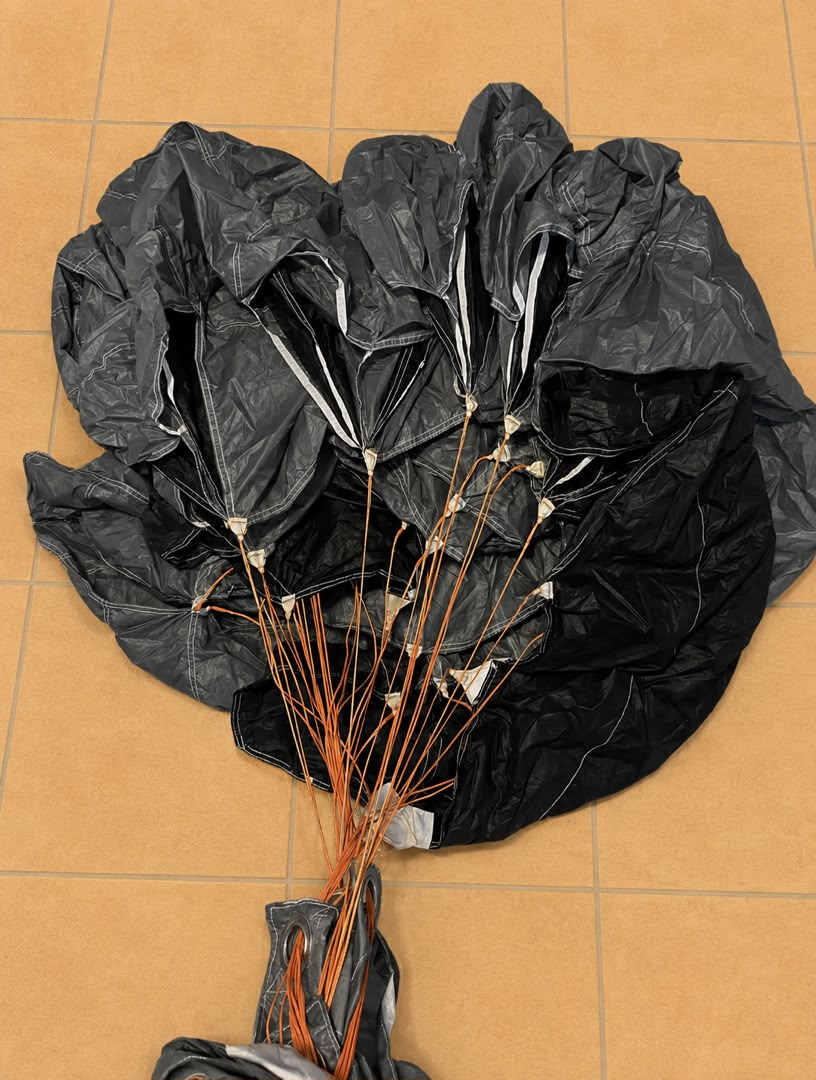
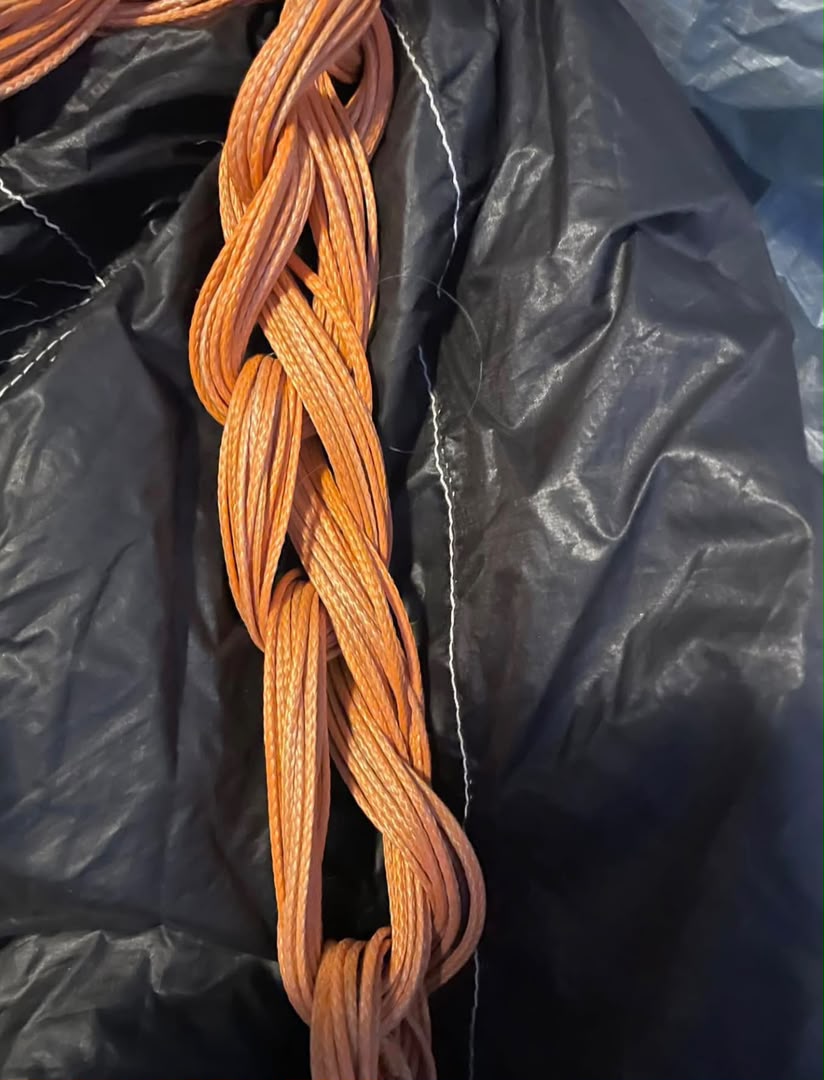
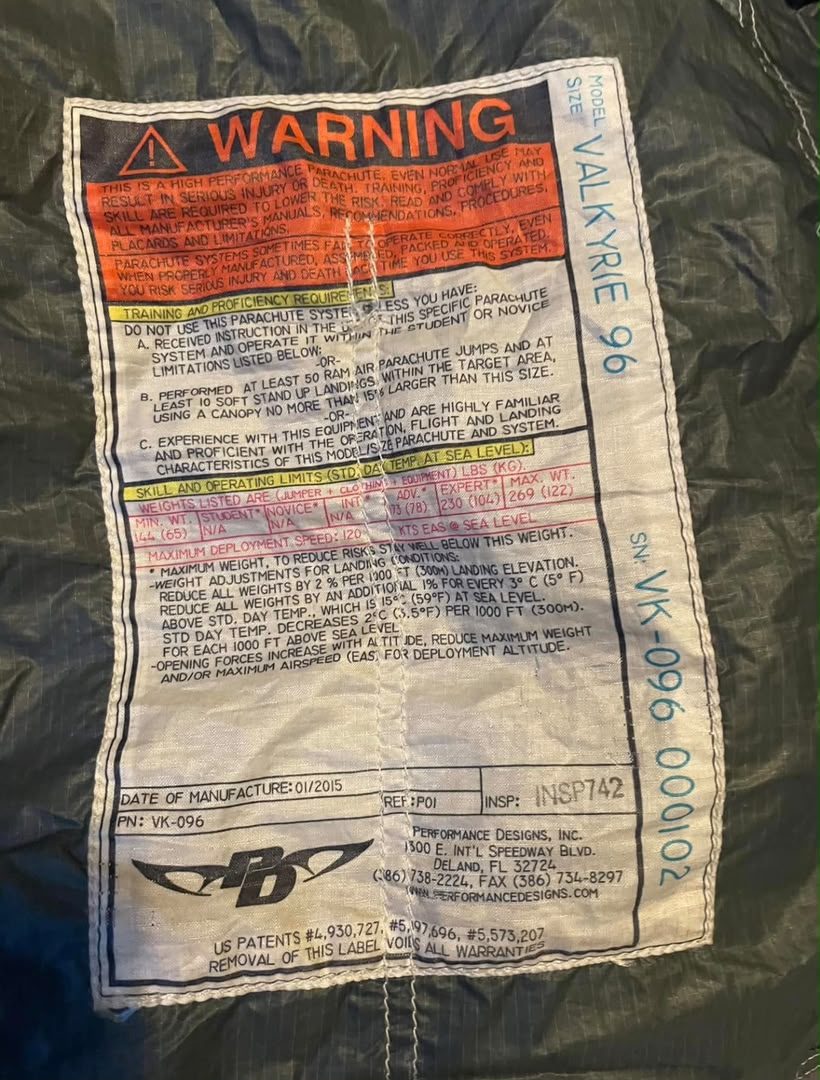
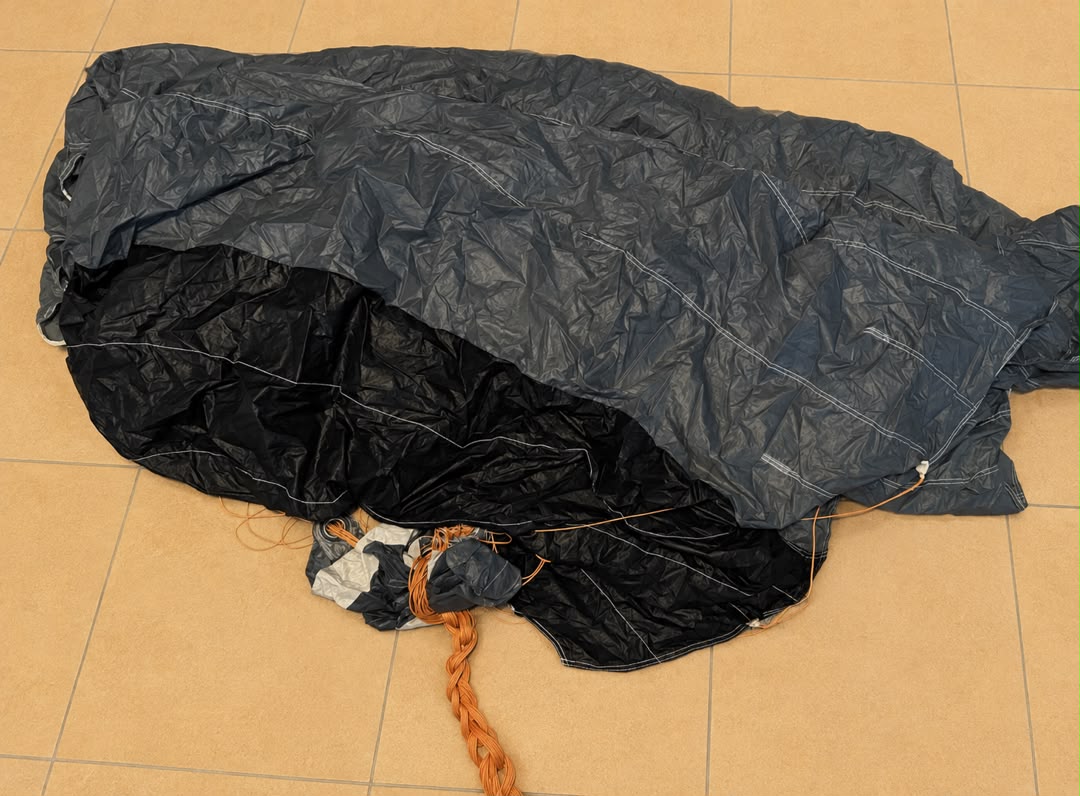
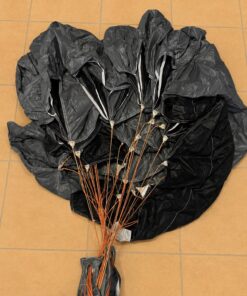


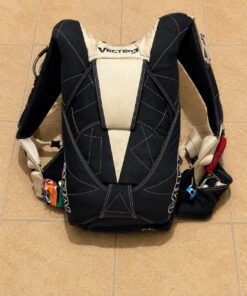
Used Valkyrie 96 canopy

€1,350.00
The Used Valkyrie 96 Canopy is a 96-square-foot high-performance main parachute from Performance Designs developed for highly experienced cross-braced canopy pilots. Performance Designs currently describes the Valkyrie as highly responsive to all inputs, strong on rear risers, capable of powerful shutdown performance, and known for smooth openings. The manufacturer specifically states that it is not intended as a first cross-braced canopy and positions it for expert pilots who have already mastered high-performance wings.
The Valkyrie uses a seven-cell cross-braced design with inflatable stabilizers/wingtips, tail ribs, zero-porosity fabric, a collapsible drawstring slider, and high-performance line options. Performance Designs currently lists Valkyrie sizes from 67 through 111 square feet, including the 96. The manufacturer’s line-trim chart also provides dedicated measurements for the 96 configuration, making professional trim verification particularly important when evaluating a used example.
For a previously owned Valkyrie 96, the condition of the canopy should be evaluated independently from its reputation or size. Fabric condition, suspension lines, line trim, steering lines, slider, cross-bracing, attachment points, previous repairs, jump history, storage environment, and any removable deployment components should all be inspected before the canopy returns to service.
Used Valkyrie 96 Canopy – High-Performance Cross-Braced Skydiving Main Canopy
Valkyrie 96 Design, Cross-Braced Performance, Canopy Flight, Line Condition, and Related Skydiving Terminology
Canopy Flight
canopy flight is central to understanding this design. Performance Designs positions the Valkyrie as an expert-level high-performance wing with very responsive inputs, strong rear-riser capability, and significant stopping power. These characteristics mean that small control inputs can produce substantial changes in flight.
Cross-Braced Construction
The Valkyrie uses cross-braced internal structure to increase rigidity and preserve the intended airfoil shape under high aerodynamic loading. This architecture differentiates it sharply from conventional recreational nine-cell mains.
Seven-Cell Design
Performance Designs identifies the Valkyrie as a seven-cell canopy with inflatable stabilizers or wingtips. Tail ribs are incorporated to reduce drag, improve lift, and support low-speed performance.
Linewear
linewear is especially important on a used high-performance canopy. Suspension lines can shrink, stretch, fray, or move out of trim over time. Performance Designs publishes a dedicated line-trim chart covering the 96 size, allowing qualified riggers to compare the actual geometry against manufacturer specifications.
Landing Flight Risers
landing flight risers influence advanced canopy control and should be inspected along with the canopy. Webbing, hardware, steering components, soft links, and attachment interfaces should remain structurally sound.
Skydiving Downsizing Chart
A skydiving downsizing chart should never be used by itself to determine whether a jumper is ready for a 96-square-foot cross-braced canopy. Performance Designs specifically recommends that experienced pilots avoid changing both canopy model and size simultaneously when transitioning to the Valkyrie.
Smallest Canopy
The smallest canopy a container can physically hold is not automatically appropriate for the jumper. Wing loading, previous cross-braced experience, coaching, landing consistency, and complete equipment compatibility should be assessed separately.
Parachute Rig
A parachute rig combines the harness/container, main, reserve, deployment components, risers, and associated safety equipment. The Valkyrie 96 is the main canopy component and must be matched to an appropriate container and jumper.
Skydiving Rig
A skydiving rig containing a high-performance 96-square-foot main should be evaluated as a complete system. Pack volume, riser configuration, deployment equipment, reserve compatibility, and harness fit all matter.
Container Skydive
The term container skydive relates to the harness/container housing the canopy. The exact packed volume should be confirmed rather than assuming that every 96-square-foot wing fits identically.
Parts of a Parachute
Important parts of a parachute include the canopy fabric, cross-braces, suspension lines, steering lines, slider, stabilizers, risers, deployment bag, pilot chute, and bridle.
Skydiving Rigging
skydiving rigging should be performed by appropriately qualified personnel. Used high-performance canopies deserve careful line-trim, structural, and deployment-system inspection before service.
Safire 3
A Safire 3 is a different main canopy with substantially different handling and progression characteristics. It should not be used as a direct substitute when estimating how demanding a Valkyrie 96 will feel.
Fluid Wings
fluid wings refers to another high-performance canopy manufacturer. Cross-brand comparisons should be made by specific model, planform, trim, and intended pilot rather than brand name alone.
CRW Skydiving
crw skydiving involves canopy relative work and may require specialized equipment configurations. A high-performance swooping-oriented main should not automatically be assumed appropriate for that discipline.
Tracking Jump
A tracking jump involves substantial horizontal freefall movement. Separation, deployment altitude, and stable body position remain important before deploying any high-performance main.
Wingsuit
A wingsuit changes freefall aerodynamics and deployment conditions. The deployment setup and canopy choice should therefore be evaluated carefully when combining a high-performance main with wingsuit flying.
Wingsuit Sport
The wingsuit sport introduces additional concerns involving horizontal separation, deployment stability, pilot-chute performance, and opening behavior.
Vector Wingsuit
The phrase vector wingsuit typically refers to another harness/container brand used in wingsuit configurations and should not be confused with the canopy itself.
Gliding Suit Wingsuit
A gliding suit wingsuit changes airflow at deployment and can produce different opening conditions from conventional belly flight.
Skydiving Gliding Suit
The phrase skydiving gliding suit refers to wingsuit equipment rather than the canopy.
Wing Suits for Sale
Searches for wing suits for sale concern separate freefall garments and do not establish suitability for a high-performance main.
Price of Wingsuit
The price of wingsuit equipment is unrelated to canopy condition, serviceability, or wing loading.
Tandem Wingsuit
A tandem wingsuit is not a conventional use case for a 96-square-foot high-performance main canopy.
Indoor Wingsuit
indoor wingsuit training occurs in specialized tunnel environments and does not involve normal sport-parachute deployment.
Fly Suits
fly suits can refer to jumpsuits or wingsuits and remain separate from the parachute system.
Base Jumping
base jumping uses substantially different deployment environments and equipment from normal sport skydiving.
Base Canopy
A base canopy should never be treated as interchangeable with a cross-braced sport main simply because nominal size is similar.
Baseline Jumping
The phrase baseline jumping is often used incorrectly in place of BASE jumping and does not define a Valkyrie application.
Skydiving Speed
skydiving speed varies with discipline and body position. Performance Designs identifies the Valkyrie as suitable for both terminal and sub-terminal deployments in its standard configurations.
Speed Sky Diving
speed sky diving can involve substantially higher freefall velocities. Deployment limits and equipment configuration should always be evaluated separately.
Weight Limit Skydiving
The phrase weight limit skydiving may refer to equipment certification or canopy wing loading. For a 96-square-foot high-performance wing, exit weight and resulting wing loading are critical factors in pilot suitability.
Jumper Pilot
The phrase jumper pilot can refer to the skydiver or aircraft pilot depending on context. For this canopy, pilot skill and high-performance canopy experience are central considerations.
Skydiving Equipment List
A typical skydiving equipment list includes the harness/container, main canopy, reserve canopy, AAD where applicable, altimeter, helmet, goggles, jumpsuit, and suitable footwear.
Gear Bag Skydive
A gear bag skydive setup protects the canopy and complete rig during transport. Equipment should remain protected from moisture, UV exposure, chemicals, sharp objects, and excessive heat.
Skydiving Helmet
A skydiving helmet is separate protective equipment and should fit securely without obstructing vision or emergency procedures.
Skydive Helmets
Different skydive helmets include open-face and full-face designs selected according to discipline and individual fit.
Full Face Skydiving Helmet
A full face skydiving helmet provides facial protection and wind shielding while maintaining visibility.
Skydiving Helmet Full Face
The phrase skydiving helmet full face describes the same general helmet category.
Sky Helmet Skydiving
sky helmet skydiving is broad search terminology for protective headgear.
Sky Diving Helmet
The phrase sky diving helmet likewise refers to equipment separate from the main canopy.
G35 Helmet
A G35 helmet is a helmet product term and does not form part of the canopy system.
Cookie G4 Helmet
The Cookie G4 helmet is another separate piece of skydiving equipment.
Best Skydiving Helmet
The best skydiving helmet depends on fit, discipline, visibility requirements, comfort, and personal preference.
Skydiving Glasses
skydiving glasses or goggles should remain secure and provide adequate vision during freefall.
Skydiver Goggles
skydiver goggles are commonly paired with open-face helmets.
Can You Wear Glasses While Skydiving
For can you wear glasses while skydiving, prescription glasses can often be accommodated with suitable goggles or compatible full-face helmets.
Hook Blade Knife
A hook blade knife is emergency equipment rather than part of the canopy.
Hook Knife Skydiving
A hook knife skydiving tool may be carried by trained jumpers for emergency line or webbing situations.
Skydive Hook Knife
The phrase skydive hook knife describes the same emergency-tool category.
Freefly Pud Handle
A freefly pud handle belongs to the deployment system rather than the canopy. Its compatibility and retention should be checked as part of the complete rig.
Fire Parachute
The phrase fire parachute does not describe the Valkyrie and generally relates to unrelated specialized parachute terminology.
Cypress Fire Skydiving
The phrase cypress fire skydiving appears to relate to Cypres-related search terminology. An automatic activation device remains separate from the main canopy.
Parachute Jump Australia
parachute jump australia describes destination skydiving rather than canopy engineering.
Skydive Byron Bay
skydive byron bay is another location-based search and does not affect canopy compatibility.
Cairns Skydiving
cairns skydiving similarly refers to a jumping location rather than canopy design.
Skydive Belize
skydive belize concerns destination jumping and local operational requirements.
Skydiving Blue Hole Belize
skydiving blue hole belize describes a destination experience rather than canopy specifications.
iFly Colorado Springs
iFly Colorado Springs refers to indoor tunnel training, which does not involve sport-parachute deployment.
New Skydive
A new skydive student should not use a Valkyrie 96 as a progression canopy. Performance Designs explicitly describes the Valkyrie as intended for expert pilots who are already highly competent on high-performance cross-braced wings.
#Skydiving Latest
The phrase #skydiving latest relates to current social-media content rather than technical canopy standards.
Skydiving Website
A reputable skydiving website can provide background, but manufacturer manuals, line-trim information, instructors, canopy coaches, and qualified riggers should remain the primary sources for safety-critical decisions.
Skydiving Tube
A skydiving tube is a specialized freefall prop and has no structural relationship to the canopy.
Nude Parachute Jump
A nude parachute jump is an activity-related search phrase rather than a canopy specification.
Skydiving Nude
Likewise, skydiving nude concerns attire rather than parachute engineering.
Used Valkyrie 96 Condition
A used Valkyrie 96 should be professionally evaluated for zero-porosity fabric condition, cross-bracing, seams, tail ribs, stabilizers, line attachment points, suspension lines, steering lines, slider components, previous repairs, and overall trim.
Performance Designs lists standard Valkyrie configurations with a collapsible drawstring slider and 500 Orange Vectran or 500 HMA, while additional options include an RDS or collapsible RDS and competition-oriented 300 Orange Vectran. PD specifically notes that 300 Orange Vectran and RDS configurations are not recommended for terminal deployment.
Overall Technical Perspective
The Used Valkyrie 96 Canopy is an expert-level 96-square-foot cross-braced main within Performance Designs’ current Valkyrie range. It combines seven-cell construction, inflatable wingtips, tail ribs, zero-porosity fabric, aggressive control response, strong rear-riser performance, powerful shutdown capability, and smooth opening characteristics.
For a used example, however, suitability depends on much more than nominal size. Fabric condition, line type, line trim, cross-bracing integrity, previous repairs, deployment configuration, jump history, pack-volume compatibility, exit weight, wing loading, and demonstrated cross-braced canopy experience should all be considered. A qualified rigger should inspect the canopy, while an experienced canopy coach should determine whether a Valkyrie 96 is appropriate for the individual pilot.
Flight Characteristics, Opening Behavior, Control Response, Landing Performance, and Practical Used-Canopy Evaluation
A 96-square-foot high-performance cross-braced main should be evaluated very differently from a conventional recreational canopy. Its compact area, aerodynamic efficiency, responsive control system, and performance-oriented construction can produce substantial speed and highly dynamic flight characteristics. Therefore, the quality of a used example cannot be judged from appearance or purchase price alone. Fabric condition, suspension-line health, trim, steering components, slider condition, previous repairs, deployment configuration, and professional inspection all contribute to its practical value and continued serviceability.
Overall Flight Character
This type of canopy is designed around highly responsive performance.
Control inputs can produce rapid changes in direction, airspeed, and descent characteristics, particularly as loading increases.
Consequently, it belongs in the hands of appropriately experienced pilots rather than jumpers selecting equipment primarily because of compact size.
Aerodynamic Efficiency
Cross-braced construction helps maintain a rigid and efficient airfoil under substantial aerodynamic loading.
That structural efficiency contributes to the canopy’s distinctive performance.
However, greater performance also means that errors can carry greater consequences.
Opening Behavior
Opening quality depends on more than canopy design.
Packing consistency, deployment conditions, body position, suspension-line condition, slider configuration, and trim can all influence the opening sequence.
A used canopy showing unexpected changes in deployment behavior should receive professional evaluation.
Opening Consistency
Consistency is particularly valuable on a high-performance wing.
However, no main canopy can guarantee identical openings on every deployment.
Environmental conditions and human factors remain part of the overall opening sequence.
Heading Performance
A controlled opening allows the pilot to establish orientation and traffic awareness efficiently.
Nevertheless, heading behavior can be affected by body position, packing symmetry, line condition, and deployment environment.
Persistent abnormalities deserve investigation.
Slider Condition
The slider is an important deployment component.
Its fabric, reinforcement, hardware, drawstring components where applicable, and overall condition should be inspected carefully.
Wear should not be dismissed simply because the canopy has continued to open successfully.
Suspension-Line Condition
Suspension lines experience repeated loading during every deployment and flight.
They can gradually wear or move away from their intended dimensions.
Because geometry strongly influences a high-performance wing, line condition deserves particular attention.
Line Trim
Correct trim helps preserve the aerodynamic relationships intended by the manufacturer.
Changes can influence openings, glide, control response, recovery characteristics, and landing performance.
Professional measurement is preferable to judging trim visually.
Steering-Line Condition
Steering components experience frequent movement and handling.
Wear can develop gradually at attachment and contact areas.
Changes in control feel should therefore be considered alongside the condition of the complete line system.
Control Response
A high-performance wing can respond quickly to relatively small inputs.
The exact response depends on loading, airspeed, trim, and pilot technique.
This responsiveness is one reason why extensive previous canopy experience is important.
Toggle Response
Toggle inputs alter the wing’s aerodynamic state and direction.
As with other controls, the response becomes more consequential on a smaller, highly loaded wing.
Smooth and appropriate handling requires advanced training.
Riser Response
Performance-oriented canopies are capable of substantial response to riser input.
These characteristics are intended for appropriately trained pilots.
Advanced techniques should be developed through qualified coaching rather than written instructions.
Harness Input
Highly responsive wings can also react noticeably to changes in body position and harness pressure.
This contributes to a connected, dynamic feeling in flight.
At the same time, unintended movement can have greater consequences than it would beneath a larger recreational canopy.
Glide Characteristics
Aerodynamic efficiency contributes to useful horizontal performance.
However, apparent glide over the ground changes significantly with wind direction and strength.
Pilots must therefore distinguish between aerodynamic performance and actual ground track.
Airspeed
A smaller performance wing can carry substantial airspeed.
Loading has a major influence on how fast and demanding the canopy feels.
Two pilots using the same nominal size may therefore experience significantly different flight characteristics.
Wing Loading
Wing loading is one of the most important considerations when assessing suitability.
It affects speed, descent, responsiveness, recovery behavior, and landing demands.
Nominal canopy area alone cannot determine whether the wing is appropriate for an individual.
Jumper Exit Weight
Total exit weight should be considered rather than body weight alone.
Equipment contributes additional weight.
An experienced canopy coach can help interpret the resulting loading in the context of the pilot’s demonstrated skills.
Advanced Pilot Suitability
A canopy in this performance category should not be selected as an introductory high-performance wing.
Previous experience on appropriately progressive equipment matters.
Competence should be demonstrated consistently rather than assumed from total jump numbers alone.
Progression Considerations
Canopy progression should be deliberate.
Changing several major variables simultaneously can make adaptation more difficult.
Professional coaching helps ensure that progression is based on demonstrated ability rather than equipment availability.
Landing Characteristics
Landing performance reflects airspeed, wing loading, trim, environmental conditions, and pilot technique.
A high-performance wing can retain substantial energy.
Consequently, landing decisions require accuracy, awareness, and experience.
Flare Performance
The final reduction of descent and conversion of available energy during landing depend on correct canopy condition and pilot technique.
Line condition can influence control geometry and overall performance.
Unexpected changes should be investigated.
Wind Conditions
Wind can substantially change ground speed and landing-pattern geometry.
Strong headwinds, tailwinds, crosswinds, and variable conditions require appropriate judgment.
A canopy’s performance does not eliminate environmental limitations.
Turbulence
Mechanical and atmospheric turbulence can produce sudden changes in canopy behavior.
Buildings, trees, terrain, and weather systems may disturb airflow.
High-performance equipment does not make turbulent conditions inherently safe.
Traffic Awareness
Landing-area traffic remains an important part of every jump.
Higher speeds can reduce available decision time.
Predictable patterns and adherence to local procedures are therefore particularly important.
Fabric Condition
Zero-porosity material should be evaluated for tears, abrasion, contamination, damaged seams, and previous repairs.
A visually clean surface does not automatically establish structural health.
Professional inspection remains the stronger measure.
Internal Structure
Cross-braced construction contains internal structural elements that contribute significantly to the wing’s shape and performance.
Damage or questionable repairs within these areas deserve professional attention.
The inspection should consider more than the visible upper and lower surfaces.
Attachment Points
Suspension-line attachment areas carry significant loads.
Their fabric, reinforcement, and stitching should remain structurally sound.
Any deterioration requires qualified assessment.
Previous Repairs
Professional repairs are not automatically problematic.
Their location, extent, workmanship, and documentation are more important than the simple fact that repairs exist.
Unknown structural work deserves additional scrutiny.
Jump History
Approximate jump count provides useful context but does not independently determine condition.
Packing environment, line replacement, storage, sunlight exposure, and maintenance can create major differences between canopies with similar jump numbers.
Deployment Configuration
A used high-performance canopy may have been configured differently during previous ownership.
Therefore, the current slider and associated deployment components should be identified and professionally evaluated rather than assumed to match the original configuration.
Container Compatibility
Pack volume should be compatible with the intended harness/container.
Physical ability to force the canopy into a compartment does not establish correct compatibility.
Manufacturer information and professional rigging guidance should be used.
Used-Canopy Value
Value depends on structural condition, line health, maintenance history, repairs, deployment components, and remaining service requirements.
A cheaper example requiring immediate maintenance may offer less practical value than a better-documented canopy in stronger condition.
Professional Inspection
A qualified rigger should inspect a previously owned high-performance canopy before it is returned to service when its history or condition is uncertain.
The inspection should address fabric, lines, trim, steering components, internal structure, attachment areas, slider, and repairs.
Overall Practical Assessment
A used 96-square-foot cross-braced main can deliver exceptionally responsive and efficient flight when maintained correctly and flown by an appropriately experienced pilot. However, its performance potential also increases the importance of correct equipment condition, appropriate loading, professional maintenance, and advanced canopy training.
The strongest used example is therefore one with healthy fabric, correct line geometry, sound internal structure, serviceable deployment components, transparent maintenance history, and professional inspection. Suitability for the individual pilot should be considered separately from equipment serviceability and reviewed with an experienced canopy coach before the canopy is placed into use.
Used-Canopy Inspection, Line Condition, Fabric Health, Maintenance History, Storage, and Long-Term Preservation
A previously owned high-performance main canopy should be assessed through structural condition, maintenance history, line geometry, fabric health, internal construction, and professional inspection. Because performance-oriented canopies operate within a demanding flight envelope, small changes in trim, line condition, slider configuration, or internal structure can materially affect handling. Cosmetic appearance is therefore only one part of the evaluation. A canopy can look exceptionally clean while still requiring maintenance, while another with ordinary cosmetic wear may remain serviceable after proper inspection.
Overall Condition Assessment
A complete inspection should consider the entire canopy rather than focusing only on the top and bottom surfaces.
Fabric panels, seams, internal structure, suspension lines, steering lines, attachment points, slider, stabilizers, and any previous repairs should all be reviewed.
Used condition should always be considered separately from suitability for the individual pilot.
Fabric Health
Zero-porosity fabric is designed to retain low permeability, but it still experiences mechanical wear through deployment, packing, transport, and environmental exposure.
The fabric should be checked for tears, abrasions, punctures, contamination, damaged coatings, and unusual discoloration.
Internal Structure
Cross-braced canopies contain internal structural elements that help maintain the wing’s rigid aerodynamic shape.
These areas may not be obvious during a quick exterior inspection.
Professional evaluation is particularly important when there is any evidence of previous damage or repair.
Structural Seams
Seams carry repeated aerodynamic and deployment loads.
Broken stitching, separation, or unusual repairs should be examined carefully.
Minor loose thread ends should be distinguished from actual structural damage.
Suspension Lines
The line set is one of the most important wear components on a performance canopy.
Lines can shrink, stretch, become fuzzy, or move out of specification over time.
Their condition directly influences canopy geometry and therefore deserves periodic professional measurement.
Line Trim
Trim refers to the designed dimensional relationship between different suspension lines.
Changes in trim can alter openings, glide, recovery characteristics, control response, and landing performance.
Visual inspection alone cannot reliably establish whether trim remains correct.
Steering-Line Condition
Steering lines receive frequent movement and handling.
Wear can develop around guide rings, attachment points, and other contact areas.
Unexpected changes in control feel may indicate that the steering system or overall line set needs inspection.
Line Attachment Points
Where the suspension lines connect to the canopy, the surrounding reinforcement and stitching should remain sound.
These areas carry substantial load during both deployment and flight.
Any damaged attachment point requires qualified evaluation.
Slider Condition
The slider should be inspected as its own component.
Fabric, reinforcement, hardware, drawstring or removable components where applicable, and overall wear should all be checked.
Rough or damaged hardware can contribute to wear elsewhere in the system.
Stabilizer Condition
Stabilizers and wingtip structures should remain free from tears, damaged stitching, or deformation.
Because they contribute to the canopy’s aerodynamic shape, structural deterioration in these areas deserves professional attention.
Previous Repairs
Professional repairs can form a normal part of a canopy’s service history.
Their presence does not automatically reduce serviceability.
Location, extent, workmanship, documentation, and current condition provide more useful information.
Undocumented Repairs
Unknown repairs deserve additional scrutiny.
Unusual patches, nonstandard stitching, or unexplained component changes should be professionally inspected.
Previous successful jumps do not independently prove that an undocumented repair remains acceptable.
Jump History
Approximate jump count is useful background information but should not be treated as a service-life formula.
Two canopies with similar jump numbers can differ substantially because of packing surfaces, sunlight exposure, line replacement, storage, and general handling.
Line Replacement History
Knowing when the current line set was installed can help establish maintenance context.
However, actual wear and dimensional condition are more important than a simple jump-count estimate.
A professional trim check provides stronger information.
Packing Environment
Regular packing on abrasive or contaminated surfaces can accelerate wear.
Sand, grit, dirt, and rough flooring can gradually affect fabric and lines.
Clean packing environments contribute to preservation.
Packing Handling
The canopy should be handled carefully during packing.
Repeated dragging, excessive pulling, or unnecessary contact with rough surfaces can increase wear.
The objective should be consistent handling while protecting materials.
Ultraviolet Exposure
Direct sunlight can gradually degrade synthetic materials.
A canopy should not remain unnecessarily exposed to strong sunlight between jumps.
Visible fading can provide clues, but material strength cannot be determined visually alone.
Moisture Exposure
Persistent moisture can create poor storage conditions.
A canopy that becomes wet should be allowed to dry appropriately before long-term storage.
It should not simply remain sealed inside a damp equipment bag.
Chemical Contamination
Fuels, solvents, acids, oils, batteries, and unidentified chemicals can damage specialized materials.
Suspected contamination should be treated seriously.
Aggressive cleaning should not be attempted without professional guidance.
Heat Exposure
Extreme heat should be avoided during transport and storage.
Vehicle interiors and enclosed areas exposed to strong sunlight can become excessively hot.
A dry, temperature-stable indoor environment is generally preferable.
Long-Term Storage
A canopy stored for an extended period should remain clean, dry, and protected from sunlight, chemicals, moisture, and sharp objects.
The storage environment should also avoid unnecessary crushing or prolonged compression.
Transportation
A suitable equipment bag helps protect against abrasion and contamination.
Heavy items should not be stacked directly on top of the canopy or complete rig.
Careful transport helps preserve both fabric and deployment components.
Returning From Extended Storage
Equipment that has remained unused for a long period should receive appropriate assessment before returning to service.
Storage conditions may have changed, and maintenance may now be due.
Extended inactivity does not automatically preserve condition.
Container Compatibility
The canopy should pack appropriately within the intended harness/container.
Physical ability to fit the canopy into a compartment does not establish correct compatibility.
Manufacturer guidance and professional rigging assessment should be used.
Deployment Configuration
A used performance canopy may have been configured differently by a previous owner.
The current slider and associated components should therefore be identified and professionally evaluated.
Unknown changes should not be assumed to match the original setup.
Maintenance Documentation
Records of repairs, line replacement, inspections, and major configuration changes can add substantial value.
Documentation allows future owners and riggers to understand the canopy’s history more accurately.
Professional Rigger Inspection
A qualified rigger should inspect the canopy whenever condition or history is uncertain.
Fabric, lines, trim, steering components, internal structure, attachment points, slider, and previous repairs all deserve appropriate evaluation.
Canopy Coach Input
Equipment serviceability and pilot suitability are separate questions.
A rigger can assess the canopy’s condition, while an experienced canopy coach can help determine whether the size and performance level are appropriate for the individual pilot.
Used-Canopy Value
Value depends on more than cosmetic condition.
A canopy with documented maintenance, healthy fabric, correct trim, and professional inspection may provide greater practical value than a cleaner-looking example with an uncertain history.
Overall Long-Term Assessment
The long-term serviceability of a used high-performance main canopy depends on structural integrity, fabric condition, line geometry, internal construction, deployment components, maintenance history, and storage quality. Cosmetic appearance can provide useful clues, but it should never become the primary measure of condition.
A well-maintained example with transparent records and professional inspection can remain valuable equipment. Conversely, questionable line trim, undocumented repairs, damaged internal structure, contamination, or uncertain deployment configuration deserve additional scrutiny before the canopy returns to service.
Practical Ownership, Performance Preservation, Packing Considerations, Transportation, Storage, Documentation, and Responsible Long-Term Use
Owning a previously used high-performance canopy requires consistent attention to condition, maintenance, storage, and professional inspection. Performance does not depend only on the original design of the wing. Suspension-line condition, fabric health, internal structure, steering components, slider condition, previous repairs, and environmental exposure can gradually influence how the canopy behaves. Consequently, responsible ownership means preserving the equipment carefully while recognizing changes that deserve professional attention.
Overall Ownership Considerations
A high-performance canopy should be treated as specialized life-support equipment rather than ordinary sporting gear.
Every deployment, packing cycle, landing, and transportation period contributes to its service history.
Good ownership therefore combines careful handling with regular professional evaluation.
Understanding Current Condition
Condition should be established when the canopy changes ownership.
Available maintenance records, approximate jump history, line replacement information, repairs, and storage history provide useful context.
However, physical inspection remains more important than seller estimates.
Establishing a Maintenance Baseline
A professional inspection near the beginning of ownership creates a useful reference point.
The owner can then better understand the condition of the fabric, lines, slider, attachment points, and other components.
Future changes become easier to recognize.
Fabric Preservation
Canopy fabric should be protected from unnecessary abrasion, contamination, moisture, and prolonged sunlight.
Packing and handling practices can influence long-term material condition.
Clean environments are preferable whenever practical.
Monitoring Fabric Wear
Small cosmetic marks should be distinguished from structural deterioration.
Tears, damaged seams, significant abrasion, unusual porosity, contamination, or questionable patches deserve professional evaluation.
Appearance alone should not determine continued serviceability.
Internal Construction
The internal structure contributes significantly to aerodynamic shape.
Because much of this structure is less visible than exterior fabric, a quick surface inspection cannot provide a complete assessment.
Suspected internal damage requires qualified inspection.
Suspension-Line Management
Lines are normal wear components.
Their condition can gradually change through repeated deployments and flight cycles.
Owners should pay attention to visible wear while relying on professional measurement when trim condition needs to be established.
Recognizing Changing Flight Characteristics
Unexpected changes in opening behavior, control response, glide, or landing feel should not automatically be attributed to pilot technique.
Equipment condition may also contribute.
Persistent changes deserve investigation before they become accepted as normal.
Steering Components
Steering lines and related components experience frequent movement.
Wear can gradually develop at high-contact locations.
Their condition should be considered together with the complete suspension system.
Slider Care
The slider should remain in serviceable condition.
Fabric, reinforcement, hardware, and any installed adjustment components should be checked periodically.
Damage should be addressed rather than ignored because previous deployments appeared normal.
Attachment Areas
Line attachment points transfer significant loads into the canopy structure.
Stitching and reinforcement around these areas should remain sound.
Any visible deterioration deserves professional assessment.
Packing Environment
A clean packing surface helps reduce unnecessary material wear.
Sand, dirt, grit, oils, and rough surfaces can gradually damage specialized textiles.
Packing areas should therefore be selected with equipment preservation in mind.
Packing Consistency
Consistent packing practices can help maintain predictable equipment handling.
However, unusual opening behavior should not be diagnosed solely through packing changes.
Professional inspection may be appropriate when behavior changes persistently.
Ground Handling
Dragging fabric across rough surfaces should be avoided.
Likewise, equipment should not remain unnecessarily exposed to dirty floors, wet grass, fuel-contaminated areas, or abrasive surfaces.
Careful ground handling supports long-term preservation.
Transportation Between Jump Locations
A protective equipment bag can reduce abrasion and contamination during transport.
The canopy or complete system should remain separated from sharp objects, chemicals, batteries, and heavy equipment capable of crushing it.
Vehicle Storage
A vehicle can provide convenient short-term transportation but is generally undesirable for prolonged storage.
Temperatures can become extremely high when vehicles remain in direct sunlight.
A stable indoor environment is preferable.
Air Travel
Travel involving specialized sporting equipment requires preparation.
Owners should check current airline, airport, and destination requirements before departure.
Documentation should be kept accessible when appropriate.
Moisture Protection
Prolonged dampness should be avoided.
If the canopy becomes significantly wet, appropriate drying and inspection considerations should be followed before long-term storage.
Damp equipment should not simply be sealed away.
Sunlight Protection
Prolonged ultraviolet exposure can contribute to deterioration of synthetic materials.
Equipment should therefore remain shaded whenever practical between uses.
Long-term storage should avoid direct sunlight.
Chemical Protection
Solvents, fuels, oils, acids, batteries, and aggressive cleaning products should remain separated from the canopy.
Suspected contamination deserves professional attention.
Unapproved cleaning techniques can potentially worsen material damage.
Temperature Management
Extremely hot storage environments should be avoided.
Attics, vehicle interiors, and poorly ventilated spaces may reach undesirable temperatures.
Moderate and reasonably stable indoor conditions are preferable.
Long-Term Storage
Extended storage should prioritize dryness, cleanliness, protection from sunlight, and separation from damaging substances.
Sharp objects should not contact the canopy.
Unnecessary compression beneath heavy equipment should also be avoided.
Returning From Storage
A long period without use does not automatically guarantee that the equipment remains unchanged.
Before returning to service, condition and maintenance status should be reconsidered.
Professional inspection may be appropriate after uncertain storage.
Container Compatibility
The canopy should remain paired with an appropriately sized compartment.
Excessively tight packing can create unnecessary difficulty and may distort the intended configuration.
Compatibility should be established through reliable technical guidance.
Component Changes
A previous owner may have changed lines, slider components, deployment equipment, or other parts.
The current configuration should therefore be identified rather than assumed to be original.
Unknown modifications deserve qualified evaluation.
Repair Documentation
Repairs should be documented whenever possible.
Records describing when and why work was performed provide valuable context for future inspections.
Professional repairs can be acceptable when correctly completed and maintained.
Maintenance Records
Owners should preserve records of inspections, repairs, line replacement, and significant configuration changes.
Good documentation makes subsequent evaluation easier and can improve confidence during future resale.
Jump-Count Records
Approximate jump numbers provide useful maintenance context.
However, jump count should not become the only measure of remaining serviceability.
Actual physical condition remains more important.
Pre-Jump Equipment Awareness
Owners should remain familiar with their equipment’s normal appearance and condition.
Recognizing changes early makes it easier to seek professional assistance before minor deterioration becomes more significant.
Environmental Conditions
Weather affects both flight and equipment handling.
Wind, turbulence, temperature, moisture, and landing-area conditions should be considered independently from the canopy’s theoretical capabilities.
High performance does not remove environmental limitations.
Pilot Currency
Advanced equipment requires more than historical experience.
Current skills, recent practice, judgment, and familiarity with the equipment all matter.
Long periods away from jumping may justify additional coaching before returning to demanding equipment.
Professional Coaching
Experienced coaching provides an important perspective when evaluating whether a performance level remains appropriate.
Equipment condition and pilot capability should be treated as separate questions.
A technically serviceable canopy is not automatically suitable for every pilot.
Professional Inspection
An appropriately qualified rigger should evaluate concerns involving fabric, lines, trim, stitching, attachment points, internal structure, slider components, or previous repairs.
Professional assessment becomes especially important when maintenance history is incomplete.
Preparing for Resale
A well-maintained canopy is easier for another buyer to evaluate.
Accurate descriptions, maintenance records, repair information, line history, and clear disclosure of known issues support transparent resale.
Long-Term Value
Practical value depends on much more than original purchase price.
Fabric condition, line health, maintenance requirements, professional repairs, documentation, and current serviceability all contribute.
A cheaper example requiring extensive immediate maintenance may offer poorer overall value.
Responsible Long-Term Ownership
Good ownership focuses on prevention rather than waiting for obvious damage.
Clean handling, appropriate transportation, suitable storage, professional maintenance, accurate documentation, and attention to changing equipment behavior can contribute significantly to preservation.
Overall Practical Assessment.
A used high-performance canopy can remain valuable equipment when its structural condition, line geometry, internal construction, deployment components, and maintenance history are properly managed. Its performance characteristics make disciplined equipment care especially important because small changes can have greater consequences than they might on more forgiving equipment.
Long-term ownership should therefore combine careful storage, clean packing environments, accurate maintenance records, appropriate professional inspection, and continued pilot training. Ultimately, equipment serviceability should be confirmed by an appropriately qualified rigger, while individual suitability should be assessed separately with an experienced canopy coach.
Be the first to review “Used Valkyrie 96 canopy”
Related products
used products

used products


used products
used products

used products

used products

used products

Reviews
There are no reviews yet.