
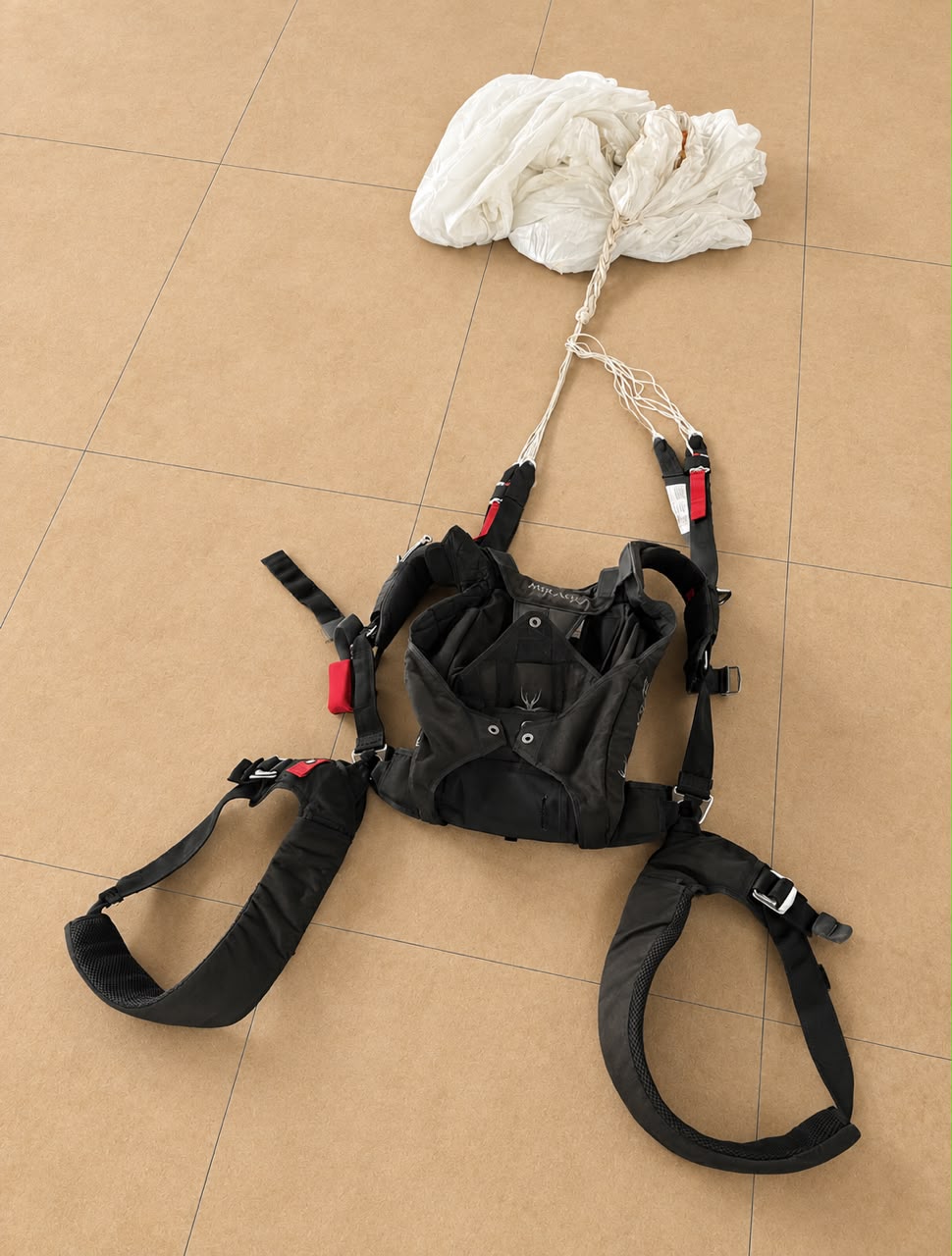


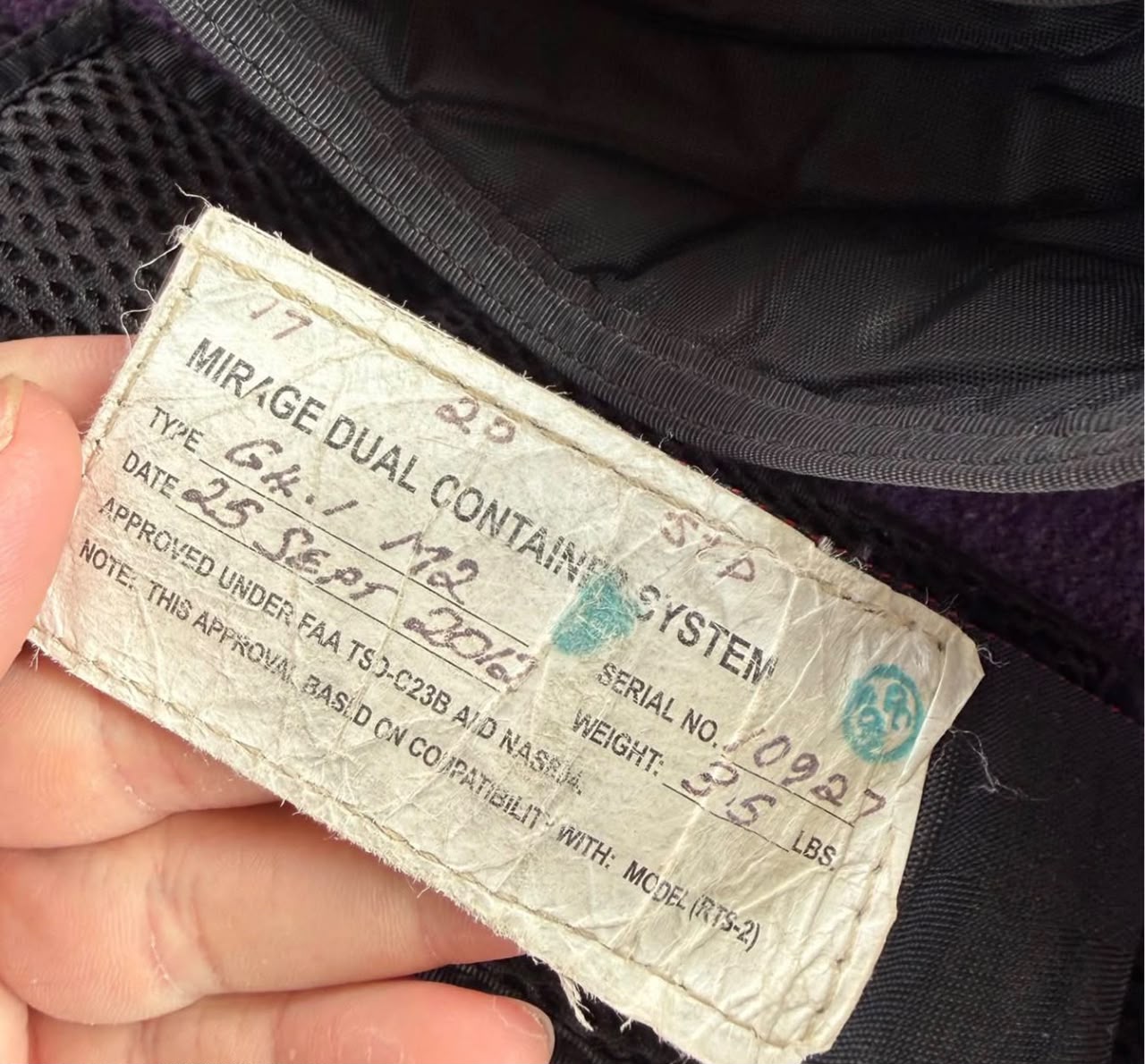

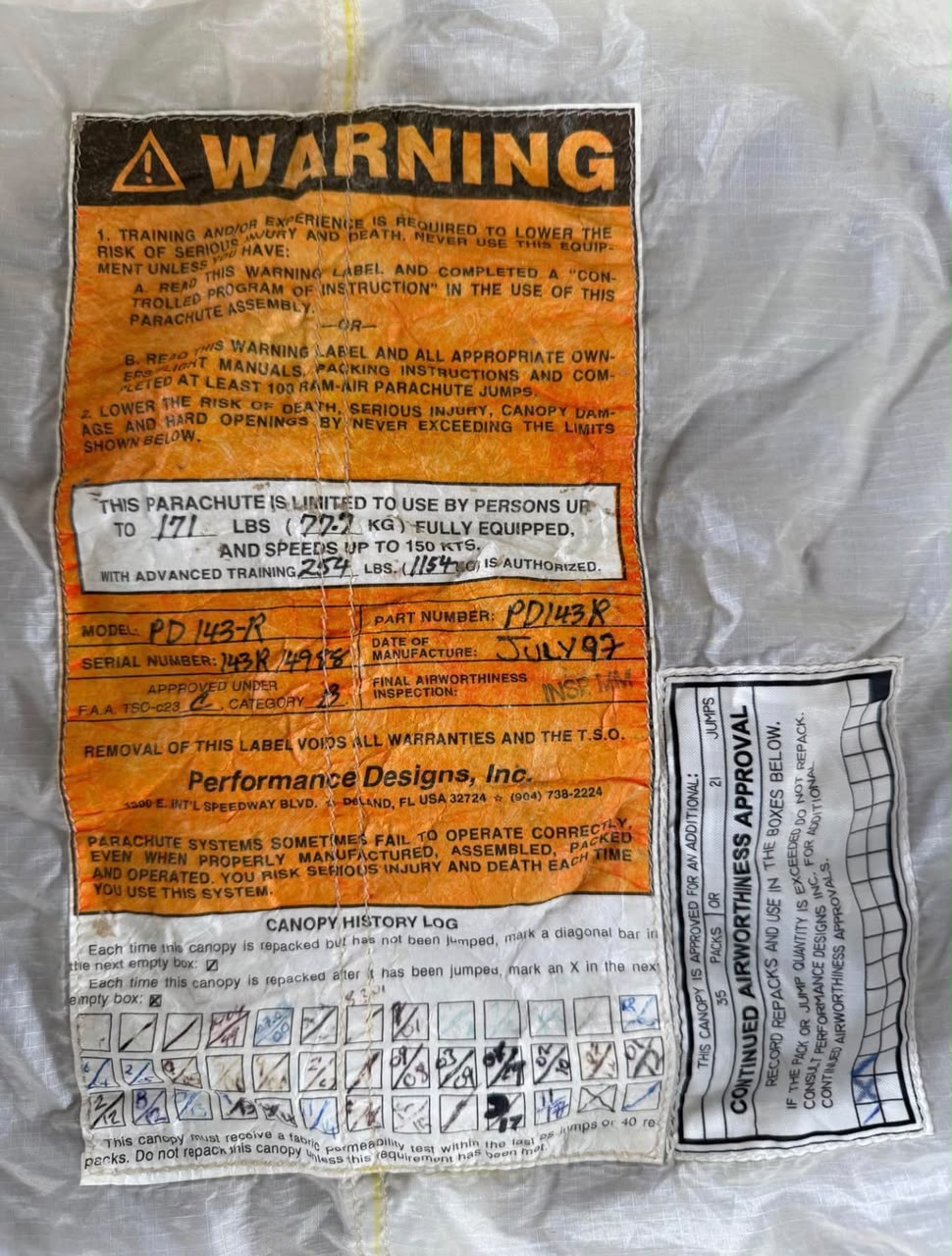
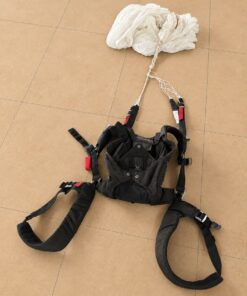
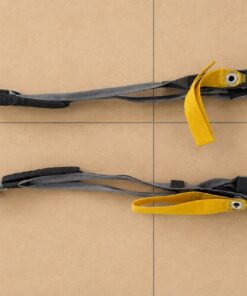
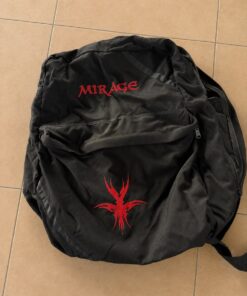


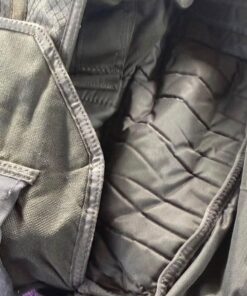
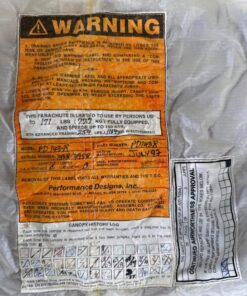
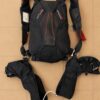
Used Mirage 4.1 M2 + PDR 143

€1,500.00
The Used Mirage G4.1 M2 Container is a harness-container system from Mirage Systems designed around the company’s G4.1 architecture and M2 container size. For the G4.1 M2, Mirage lists an approximate container size of 18 × 11 × 5 inches. Its compatibility chart shows the M2 accepting a range of main canopies around the 132–150 sq ft class depending on model and pack volume, including examples such as a 135-class performance canopy as a recommended-to-soft fit and a 150-class version as recommended-to-firm. Reserve compatibility is equally important. Mirage states that the G4.1 M2 shares its reserve-container architecture with several closely related sizes and lists approximately 250 cu in reserve volume.
For the G4.1 specifically, a 126-class standard reserve is listed as recommended, while a 143-class low-bulk reserve is listed as recommended/full.
Because this is a used harness-container, condition and fit matter as much as nominal size. Harness dimensions, webbing condition, stitching, three-ring assemblies, reserve risers, main risers, cutaway and reserve handles, closing loops, deployment bags, pilot chutes, flaps, grommets, AAD installation, RSL configuration, hardware, previous repairs, and service history should all be inspected by an appropriately qualified rigger before the system is placed into service.
Used Mirage G4.1 M2 Container – Technical Harness-Container Overview
Mirage G4.1 M2 Construction, Main and Reserve Compatibility, Harness Fit, Used Condition, and Skydiving Context
Parachute Jump Australia
The phrase parachute jump australia represents one environment where harness-container compatibility and current local equipment requirements should be confirmed before use.
Skydive Byron Bay
skydive byron bay similarly reflects a real-world drop-zone environment where equipment acceptance and jumper qualifications remain operator-specific.
Weight Limit Skydiving
The phrase weight limit skydiving is important because harness fit and equipment loading should be assessed using complete exit weight rather than body weight alone used Mirage 4.1 M2 container.
Cairns Skydiving
cairns skydiving is another operational setting where rig condition, reserve compliance, and correct harness fit remain essential.
Parachute Rig
A parachute rig combines the harness, container, main canopy, reserve canopy, deployment systems, risers, handles, and associated safety components into one integrated system.
Skydiving Rig
A skydiving rig should therefore never be evaluated only by container size. Harness dimensions, canopy pack volume, reserve compatibility, hardware condition, and professional inspection all matter.
Container Skydive
The phrase container skydive highlights the importance of correct pack volume. Mirage’s M2 compatibility chart lists several main-canopy families in roughly the 132–150 sq ft class, but actual fit varies by model and fabric construction.
Main Canopy Compatibility
For the G4.1 M2, Mirage lists examples including 135-class performance wings and 150-class recreational wings at different pack-volume ratings. A particular canopy should therefore be checked against the exact compatibility chart rather than judged by square footage alone.
Reserve Canopy Compatibility
Mirage lists the G4.1 M2 reserve container at approximately 250 cu in and identifies a 126-class standard reserve as recommended, while a 143-class low-bulk reserve is listed as recommended/full.
Used Harness Fit
A used container should fit the individual jumper rather than simply matching their preferred canopy sizes.
Main lift web length, lateral geometry, leg-strap position, chest-strap position, and overall harness configuration all influence fit.
Harness Condition
The harness webbing should be inspected for abrasion, damaged stitching, contamination, heat damage, UV exposure, and previous repairs.
Load-bearing harness areas deserve especially careful professional inspection.
Three-Ring System
The three-ring release system forms a critical part of the main cutaway system.
Ring condition, webbing, cable routing, riser loops, and housings should remain correct and undamaged.
Main Risers
Main risers should remain structurally sound and compatible with the intended canopy.
Webbing wear, ring condition, steering components, and connector areas should all be checked.
Landing Flight Risers
The phrase landing flight risers relates to riser use during canopy flight, but riser condition must always be assessed structurally before performance considerations.
Freefly PUD Handle
A freefly pud handle can form part of a main deployment configuration. Its compatibility depends on the main deployment system and container setup.
Main Deployment Bag
The main deployment bag should remain correctly sized for the container and canopy.
Fabric, grommets, attachment areas, line-stow components, and closing arrangements deserve inspection.
Main Pilot Chute
The main pilot chute should remain structurally sound.
Fabric, mesh, bridle attachment, handle configuration, and collapse system condition all contribute to deployment-system health.
Reserve Deployment Bag
Mirage specifies that the G4.1 M2 uses the G4-1,2 reserve deployment bag family and warns that substitution with an unapproved bag can void the TSO.
Reserve Pilot Chute
Mirage likewise specifies that the correct reserve pilot chute must be used.
The company explicitly prohibits substituting non-approved reserve deployment bags or pilot chutes.
Safety Stow
For the G4.1 M2 reserve deployment bag, Mirage identifies the medium safety stow as the appropriate size for the G4-1,2 bag family.
AAD Compatibility
Mirage lists several one-pin automatic activation devices as operationally compatible with G4.1 harness-container assemblies, including specified CYPRES, Vigil, and M2 models.
Cypress Fire Skydiving
The phrase cypress fire skydiving likely refers to CYPRES-related searches. CYPRES is an automatic activation device category rather than a canopy or container model.
RSL Configuration
Mirage states that an RSL is optional on the G4.1. Systems may be approved with it installed and engaged, installed but not engaged, or not installed, depending on configuration and professional guidance.
Skydiving Rigging
skydiving rigging is essential when assessing a used harness-container.
A rigger should inspect harness webbing, reserve components, grommets, closing loops, flaps, hardware, housings, risers, handles, AAD installation, RSL configuration, and previous repairs.
Parts of a Parachute
The parts of a parachute system relevant to a harness-container include the harness, main and reserve containers, risers, closing loops, pilot chutes, deployment bags, bridles, handles, three-ring assemblies, reserve ripcord, AAD components, and structural hardware.
Linewear
linewear is primarily a canopy concern, but it matters when the container is sold as part of a complete rig because riser and deployment-system condition should be assessed alongside the canopy lines.
Skydiving Downsizing Chart
A skydiving downsizing chart should not be used to determine container compatibility by itself.
A smaller main canopy may fit physically, but the harness-container system must still remain appropriately configured.
Smallest Canopy
The phrase smallest canopy should not encourage excessively loose packing.
A canopy that is substantially too small for the main tray can create its own deployment-system considerations.
Safire 3
A safire 3 is a main canopy family. Mirage lists Icarus Safire II/III 139 as an appropriate M2-class main, demonstrating why exact model and size matter.
Fluid Wings
fluid wings produces several main-canopy models. Mirage’s compatibility chart includes multiple examples from this manufacturer with different M2 fit ratings.Canopy Flight
canopy flight performance depends mainly on the installed canopy, loading, and pilot experience, while the container’s role is to provide secure and reliable deployment-system integration.
Tracking Jump
A tracking jump places importance on secure deployment-handle configuration and stable container design during high horizontal movement.
Wingsuit Sport
wingsuit sport may require particular attention to deployment systems, bridle length, pilot-chute choice, and main-canopy suitability.
Vector Wingsuit
The phrase vector wingsuit is separate from Mirage container terminology and should not be interpreted as a Mirage model designation.
Wingsuit
A wingsuit influences the freefall deployment environment but does not change the basic requirement for a correctly fitted, professionally maintained harness-container system.
Gliding Suit Wingsuit
The phrase gliding suit wingsuit likewise concerns freefall equipment rather than the M2 container specification.
Skydiving Gliding Suit
A skydiving gliding suit belongs to the freefall side of the system and should remain conceptually separate from harness-container sizing.
Wing Suits for Sale
The phrase wing suits for sale concerns another equipment category and does not determine whether the M2 container fits a particular jumper or canopy combination.
Price of Wingsuit
The price of wingsuit equipment is unrelated to harness-container airworthiness.
Tandem Wingsuit
The phrase tandem wingsuit describes a specialized activity and does not represent a normal use category for the M2 system.
Base Jumping
base jumping uses specialized harness-container equipment with different deployment requirements.
A Mirage sport-skydiving container should not automatically be used for BASE applications.
Base Canopy
A base canopy belongs to a different deployment environment from a conventional sport-skydiving main canopy.
Baseline Jumping
The phrase baseline jumping is sometimes used incorrectly for BASE activity and does not describe Mirage container architecture.
CRW Skydiving
crw skydiving involves canopy-relative work and may introduce discipline-specific equipment considerations.
Skydiving Helmet
A skydiving helmet is separate protective equipment and does not determine container compatibility.
Skydive Helmets
skydive helmets vary by coverage, fit, and discipline.
Full Face Skydiving Helmet
A full face skydiving helmet provides facial protection but should be selected independently from harness sizing.
Sky Helmet Skydiving
The phrase sky helmet skydiving relates to head protection rather than the container system.
Sky Diving Helmet
A sky diving helmet belongs to the jumper’s personal protective equipment.
Skydiving Helmet Full Face
The phrase skydiving helmet full face describes enclosed helmet designs.
G35 Helmet
The g35 helmet belongs to a separate equipment category.
Cookie G4 Helmet
The cookie g4 helmet should not be confused with the Mirage G4.1 harness-container generation.
Best Skydiving Helmet
The best skydiving helmet depends on fit, discipline, visibility, and comfort rather than rig model.
Skydiving Glasses
skydiving glasses and goggles provide eye protection during freefall.
Can You Wear Glasses While Skydiving
For can you wear glasses while skydiving, many helmet and goggle systems accommodate prescription eyewear.
Skydiver Goggles
skydiver goggles remain separate from container compatibility.
Hook Blade Knife
A hook blade knife is commonly carried as emergency equipment.
Hook Knife Skydiving
The phrase hook knife skydiving relates to emergency cutting capability rather than the harness-container sizing system.
Skydive Hook Knife
A skydive hook knife should be mounted in an accessible and secure location according to the jumper’s equipment setup.
Gear Bag Skydive
A gear bag skydive setup can help protect a used harness-container from dirt, UV exposure, moisture, and abrasion during transportation.
Skydiving Equipment List
A complete skydiving equipment list may include the harness-container, main canopy, reserve, AAD, risers, pilot chute, deployment bag, helmet, altimeter, goggles, emergency knife, and appropriate clothing.
Skydiving Speed
skydiving speed can influence deployment conditions, which is why container security and proper deployment-system configuration matter.
Speed Sky Diving
speed sky diving introduces substantially higher freefall velocities and requires discipline-specific procedures and suitable equipment.
Fly Suits
fly suits affect freefall drag and body control but remain separate from harness-container compatibility.
Skydiving Tube
A skydiving tube is a specialized freefall prop and should only be used under appropriate procedures.
Jumper Pilot
The phrase jumper pilot can refer to aircraft operations, while the container itself remains part of the jumper’s personal parachute system.
Indoor Wingsuit
indoor wingsuit training occurs without the operational deployment demands of outdoor skydiving.
Parachute Jump Australia and Skydive Belize
Whether jumping in Australia, Belize, or elsewhere, a used container should meet applicable local inspection, reserve-packing, and equipment requirements.
Skydiving Blue Hole Belize
skydiving blue hole belize reflects destination jumping where visiting jumpers should verify local gear requirements in advance.
IFly Colorado Springs
ifly colorado springs is an indoor body-flight environment and does not require operational deployment of a sport parachute rig.
Nude Parachute Jump and Skydiving Nude
The phrases nude parachute jump and skydiving nude are unrelated to the engineering or compatibility of a harness-container system.
Fire Parachute
The phrase fire parachute is not a Mirage technical designation.
New Skydive
A new skydive participant should rely on instructors and riggers when selecting a first harness-container rather than buying solely by container size.
#Skydiving Latest
The phrase #skydiving latest may relate to trends, but equipment compatibility should remain based on manufacturer documentation and professional inspection.
Why the M2 Size Matters
The M2 size is particularly useful because it accommodates a range of moderate-size mains while retaining a relatively compact reserve container. Mirage lists the G4.1 M2 at approximately 18 × 11 × 5 inches and provides model-specific fit recommendations rather than relying only on nominal canopy area.
Why Used Harness Fit Matters
Even a perfectly maintained container may be inappropriate if the harness dimensions do not fit the new jumper.
Main lift web length, laterals, leg straps, chest strap, and overall geometry should be professionally evaluated.
Why Reserve Components Matter
Mirage specifically requires the correct G4.1 reserve deployment bag and pilot chute. Using incompatible reserve deployment components can invalidate the approved system configuration
Overall Technical Perspective
The Used Mirage G4.1 M2 Container is best understood as a compact sport-skydiving harness-container designed around approximately 18 × 11 × 5-inch G4.1 M2 dimensions, a roughly 250 cu in reserve compartment, and model-specific main/reserve compatibility rather than simple square-foot sizing. Mirage lists multiple 135–150-class main canopies as appropriate depending on model and pack volume, while its G4.1 reserve chart includes a 126-class standard reserve and 143-class low-bulk option.
For a used example, the most important factors are harness fit, serial and manufacture information, webbing condition, stitching, hardware, three-ring assemblies, risers, reserve freebag and pilot chute, main deployment components, AAD compatibility, RSL configuration, closing-system condition, repairs, container wear, and professional inspection.
A properly sized and professionally approved G4.1 M2 can remain a capable and versatile harness-container, but the specific canopy combination and jumper fit should always be verified from Mirage documentation and by an appropriately qualified rigger rather than assumed from the M2 designation alone.
Harness Fit, Construction Quality, Deployment Integration, Comfort, and Used Condition
A previously owned harness-container system should be evaluated as a complete piece of life-support equipment rather than simply as a fabric shell for two canopies. Its practical value depends on structural condition, correct fit, compatible internal components, reliable deployment architecture, and documented maintenance history. Although exterior appearance can provide useful clues about previous care, the most important areas are often structural components that require a detailed professional inspection. Webbing, stitching, hardware, release components, cable housings, handles, risers, closing systems, deployment components, and internal container areas should therefore receive appropriate attention before the equipment enters service with a new owner.
Overall Construction Quality
A well-designed harness-container distributes loads through interconnected structural webbing and reinforced attachment areas.
These components work together during normal deployment and emergency procedures.
Consequently, structural condition should always take priority over cosmetic appearance.
Harness Geometry
Harness geometry determines how the system sits against the jumper’s body.
The relationship between the main lift web, laterals, leg straps, chest strap, and back-pad area influences overall fit.
A correctly sized system should provide secure support without creating unnecessary restriction.
Main Lift Web Fit
Main lift web dimensions are particularly important when purchasing previously owned equipment.
A system originally manufactured for another person may not automatically fit a new owner correctly.
Professional measurement and comparison with the system’s manufacturing information are therefore recommended.
Lateral Fit
Laterals influence how closely the container remains positioned against the jumper’s back.
Poor lateral fit can affect comfort and stability.
Body shape should therefore be considered alongside height and weight.
Leg-Strap Position
Leg straps form an important part of the load-bearing harness.
They should sit appropriately and remain comfortable when adjusted correctly.
Webbing condition, hardware, stitching, and adjustment range should all be inspected.
Chest-Strap Condition
The chest strap helps maintain appropriate harness geometry during use.
Its webbing, stitching, adjustment hardware, and routing should remain in good condition.
Excessive wear deserves professional assessment.
Harness Webbing
Load-bearing webbing deserves particularly careful inspection.
Abrasion, cuts, damaged fibers, contamination, heat damage, chemical exposure, or questionable repairs may influence structural integrity.
These concerns should not be judged from photographs alone.
Structural Stitching
Stitching connects important load-bearing components throughout the harness.
Broken threads, unusual distortion, damaged stitch patterns, or previous repair work should be professionally evaluated.
Minor exterior wear should never distract from these structurally important areas.
Hardware Condition
Metal hardware should remain structurally sound and appropriately installed.
Deformation, significant corrosion, sharp edges, excessive wear, or unusual movement can indicate that servicing is necessary.
Hardware should be inspected together with the surrounding webbing.
Release-System Components
The main release system involves several interconnected components.
Correct geometry, clean routing, structurally sound webbing, healthy loops, suitable cables, and undamaged housings all contribute to proper operation.
Routine professional inspection is therefore important.
Cable Housings
Cable housings should remain correctly routed and securely attached.
Kinks, crushing, corrosion, damaged ends, or unusual movement deserve attention.
The complete routing should be evaluated rather than only the visible sections.
Cutaway Handle
The cutaway handle should remain secure in normal use while being correctly configured for emergency operation.
Its attachment system, cables, routing, and housing relationship should remain appropriate.
Any modification requires qualified assessment.
Reserve Handle
The reserve handle and associated components form another critical emergency interface.
Condition, accessibility, cable integrity, pin condition, and correct installation should be professionally verified.
A used system should be checked carefully for nonstandard alterations.
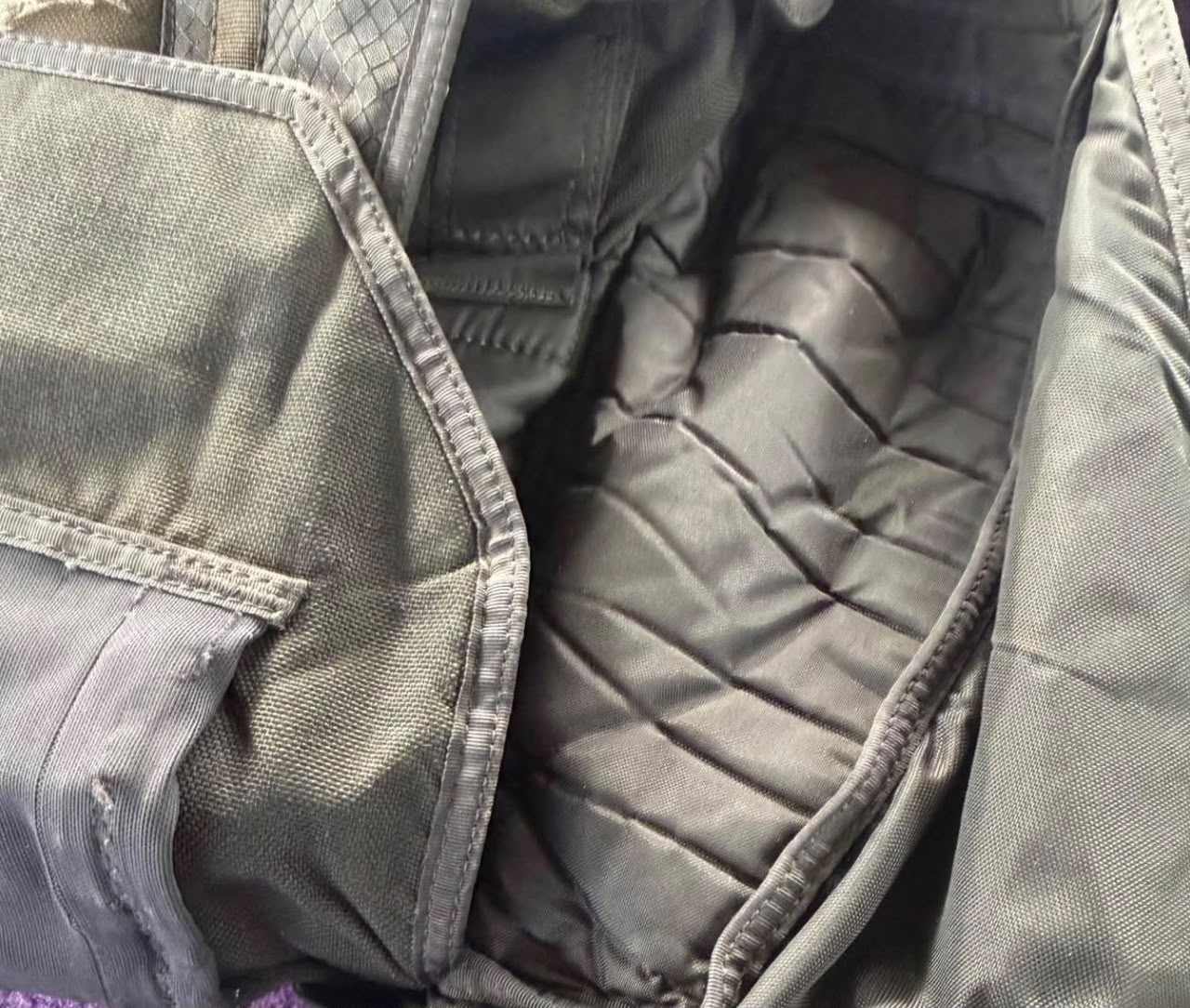
Main Container Condition
The main compartment experiences repeated packing and deployment cycles.
Fabric, flaps, stiffeners, grommets, closing-loop areas, and internal surfaces can gradually develop wear.
Regular observation can identify deterioration before it becomes substantial.
Reserve Container Condition
The reserve compartment deserves an even more conservative inspection approach.
Flaps, grommets, closing components, internal materials, stitching, and approved deployment components should remain correctly configured.
Only qualified personnel should perform reserve-system work.
Container Flaps
Flaps experience repeated bending and tension.
Their fabric, reinforcement, stiffeners, stitching, and grommet areas should remain structurally sound.
Distortion or substantial wear may require professional attention.
Grommet Condition
Grommets should remain smooth, secure, and correctly positioned used Mirage 4.1 M2 container.
Sharp edges can damage closing components.
Loose or distorted grommets should not be ignored.
Closing Loop Areas
Closing systems experience concentrated mechanical loads.
The surrounding materials should therefore be inspected for wear or distortion.
Replacement components must meet the appropriate system requirements.
Main Deployment Components
A complete main deployment system includes several components that must function together.
The pilot chute, bridle, deployment bag, closing system, handle, and risers all contribute to the deployment sequence.
Their compatibility matters as much as their individual condition.
Pilot Chute Condition
Repeated use can gradually affect pilot chute fabric, mesh, stitching, and attachment areas.
Wear may develop slowly and should be monitored.
Professional evaluation can determine whether servicing or replacement is appropriate.
Bridle Condition
The bridle experiences repeated deployment forces.
Abrasion, damaged stitching, contamination, or questionable attachment points should receive attention.
It should remain properly integrated with the rest of the system.
Deployment Bag Inspection
The deployment bag should remain structurally sound and appropriately sized.
Fabric, grommets, line-stow areas, attachment components, and stitching should be inspected.
Excessive wear can justify repair or replacement.
Reserve Deployment Components
Reserve deployment components should receive specialized professional attention.
Compatibility is essential because emergency-system components are designed to operate as an integrated assembly.
Unapproved substitutions should never be made casually.
Automatic Activation Equipment
When an electronic emergency device is installed, its cutter, control unit, processing unit, routing, and mounting should remain correctly configured.
Service status and manufacturer requirements should also be checked.
Static-Line Assistance System
An optional reserve-assistance connection may form part of the configuration.
Its routing, attachment, hardware, and operational status should be clearly understood.
The owner should know exactly how the installed system is configured.
Back-Pad Comfort
Comfort becomes increasingly important during long jump days.
Back-pad construction, harness geometry, clothing, body proportions, and adjustment all influence how the system feels.
Good fit should distribute contact rather than create concentrated pressure.
Stability During Freefall
A correctly fitted harness should remain stable against the jumper’s body.
Excessive movement can affect comfort and access to important handles.
Harness fit should therefore be assessed in realistic body positions where appropriate.
Handle Accessibility
Emergency and deployment handles should remain accessible when the harness is correctly adjusted.
Body dimensions and clothing can influence reach.
A new owner should receive appropriate instruction and professional fitting.
Used Exterior Condition
Exterior wear can provide clues about previous treatment.
Scuffing around frequently contacted areas may be expected with normal use.
However, severe abrasion, burns, chemical staining, or damaged structural materials deserve closer examination.
Previous Repairs
Repairs should be documented whenever possible.
Professional repairs may remain entirely acceptable, but their location and extent matter.
Unidentified modifications or questionable stitching require additional scrutiny.
Manufacturing Information
Identification information provides useful historical context.
Serial number, manufacture date, original configuration, and available service records should be reviewed.
Clear records make future maintenance considerably easier.
Service History
A documented maintenance history adds meaningful value to previously owned equipment.
Inspections, component replacements, modifications, repairs, and significant events can all provide useful information.
Missing history increases uncertainty and therefore increases the importance of detailed inspection.
Contamination
Technical webbing and fabrics should remain protected from harmful chemicals.
Fuel, solvents, battery fluids, oils, and aggressive cleaning agents can damage materials.
Suspected contamination should receive qualified evaluation.
Environmental Exposure
Heat, moisture, sunlight, and repeated outdoor exposure can gradually influence textile condition.
A well-stored system may age differently from one that has spent long periods in hot vehicles or damp environments.
Storage history is therefore relevant.
Professional Inspection Before Purchase
A detailed professional inspection is particularly valuable before completing a used-equipment purchase.
It allows structural components, deployment systems, hardware, repairs, and compatibility to be evaluated objectively.
Photographs cannot provide the same level of assessment.
Comfort Versus Safety
Comfort matters, but it should never override correct structural fit.
A harness may feel comfortable while still being incorrectly sized or configured.
Professional fitting provides a stronger basis for determining suitability.
Overall Used-System Assessment
A previously owned harness-container can provide excellent long-term service when its structural components remain healthy, its configuration is correct, and its dimensions suit the new owner. Exterior cleanliness is beneficial, but structural integrity and compatibility remain substantially more important.
Harness webbing, stitching, hardware, release components, cable housings, handles, main and reserve compartments, grommets, closing systems, deployment components, emergency-device installation, previous repairs, manufacturing records, and harness dimensions should all contribute to the purchasing decision.
When these areas are professionally inspected and the complete system is confirmed as correctly fitted and appropriately configured, a used harness-container can offer a strong combination of comfort, dependable integration, practical durability, and long-term ownership value.
Everyday Usability, Fit, Comfort, Durability, Maintenance, and Practical Ownership
A previously owned harness-container system can provide excellent everyday usability when its fit, structural condition, deployment components, and maintenance history have been properly evaluated. Unlike equipment selected mainly for appearance, a harness-container must work closely with the jumper’s body and with every major component installed inside it. Comfort, security, handle accessibility, canopy compatibility, deployment reliability, and structural integrity are interconnected. Therefore, the strongest ownership experience comes from selecting a system that has been professionally inspected, correctly fitted, and appropriately configured rather than choosing solely according to exterior condition or price.
Everyday Comfort
Comfort becomes increasingly important during a full day of jumping.
The system may be worn while walking around the drop zone, boarding aircraft, sitting during the climb to altitude, moving toward the exit, flying in freefall, and operating under canopy.
A properly fitted harness should provide secure support without unnecessary pressure.
Harness Fit
Harness fit should be evaluated using actual body measurements.
Height and weight provide useful background information, but they do not describe torso length, hip structure, shoulder position, or overall body proportions completely.
For this reason, professional fitting is valuable.
Main Lift Web Position
The main lift web contributes significantly to overall harness geometry.
If the dimensions are unsuitable, other areas of the harness may also sit incorrectly.
A used system should therefore be evaluated against the new owner rather than the measurements of the original owner alone.
Lateral Support
Laterals help position the container against the back.
Correct lateral dimensions contribute to stability and comfort.
An excessively loose or tight configuration can influence how naturally the system sits during different body positions.
Leg-Strap Comfort
Leg straps carry important loads and should remain properly positioned.
They should provide secure support while allowing appropriate movement.
Adjustment hardware should operate smoothly and remain structurally sound.
Chest-Strap Adjustment
The chest strap contributes to upper harness positioning.
Adjustment should remain secure and predictable.
Webbing, stitching, and hardware should be checked regularly for deterioration.
Back-Pad Support
The back pad contributes to comfort between the container and the jumper.
Its condition can influence how the equipment feels during aircraft rides and movement around the drop zone.
Compression or ordinary cosmetic wear does not necessarily indicate structural damage.
Stability During Movement
A correctly fitted system should remain reasonably stable during normal movement.
Excessive shifting can affect comfort and accessibility.
Fit should therefore be considered in realistic positions rather than only while standing upright.
Aircraft Comfort
Aircraft configurations vary considerably.
Some require sitting closely with other jumpers, while others involve benches or floor positions.
A compact and appropriately fitted system can improve comfort during these transitions.
Exit Movement
The system should remain secure as the jumper moves toward and through the aircraft exit.
Loose equipment, improperly positioned handles, or poor harness adjustment can create unnecessary complications.
A systematic equipment check remains important.
Freefall Stability
Harness-container fit influences how securely the equipment remains positioned against the body.
Good fit supports consistent access to deployment and emergency handles.
However, body-flight skill remains independent of equipment fit.
Handle Accessibility
The jumper should be able to identify and reach essential handles consistently.
Harness dimensions, clothing, body position, and equipment configuration can all influence accessibility.
Practice should be conducted according to appropriate training procedures.
Main Deployment Handle
The main deployment handle should remain secure during normal movement while being accessible when required.
Its attachment area and surrounding materials should remain in good condition.
Unexplained changes in security deserve inspection.
Emergency Handles
Emergency handles should remain correctly positioned and securely retained.
The owner should understand their location and configuration.
Any changes to the harness or clothing should be considered in relation to accessibility.
Container Security
Container flaps and closing components should remain appropriately configured.
The system experiences airflow, body movement, aircraft contact, and normal handling throughout a jump.
Correct closure and professional maintenance therefore matter.
Main Compartment Wear
Repeated packing places mechanical stress on the main compartment.
Fabric folds, grommet areas, closing-loop locations, and flap edges can gradually develop wear.
Regular observation can identify developing problems.
Reserve Compartment Protection
The reserve compartment should receive particularly careful treatment.
It should not be opened or modified unnecessarily.
Required servicing should be completed by appropriately qualified personnel.
Harness Webbing Care
Structural webbing should remain clean and protected from abrasion.
Cuts, damaged fibers, burns, chemical contamination, or questionable repairs deserve professional assessment.
Load-bearing materials should never be evaluated solely from photographs.
Stitching Inspection
Structural stitching connects important harness components.
Broken threads or distorted stitch patterns can require closer examination.
Owners should avoid attempting structural repairs themselves.
Hardware Durability
Metal hardware is designed for repeated service but still requires inspection.
Corrosion, deformation, rough surfaces, or unusual wear can develop over time.
Hardware should be assessed together with the surrounding webbing.
Release-System Maintenance
Release components require periodic inspection and appropriate maintenance.
Cables, housings, rings, loops, risers, and attachment areas must function together correctly.
Neglecting one component can compromise the condition of the overall assembly.
Cable Condition
Cables should remain clean and appropriately routed.
Kinks, corrosion, contamination, or damage deserve attention.
Maintenance should follow applicable manufacturer instructions rather than improvised procedures.
Riser Inspection
Risers experience deployment and flight loads repeatedly.
Webbing, rings, steering components, and attachment areas should remain structurally sound.
Any substantial wear deserves professional assessment.
Deployment Bag Wear
Repeated deployment cycles can gradually affect the bag.
Line-stow areas, fabric, stitching, grommets, and attachment components should remain serviceable.
The bag should also remain compatible with the installed equipment.
Pilot Chute Maintenance
The pilot chute experiences repeated exposure to airflow and deployment forces.
Fabric, mesh, stitching, bridle attachment, and associated components can gradually wear.
Condition should therefore be monitored periodically.
Bridle Condition
The bridle transfers deployment forces between components.
Abrasion or damaged stitching should not be ignored.
Areas that experience repeated contact deserve particular attention.
Closing Components
Closing components experience repeated tension during packing.
Correct dimensions and suitable condition are important.
Replacement should use appropriate materials and specifications.
Protecting Grommets
Grommets should remain smooth and securely installed.
Sharp edges can damage nearby materials.
Distortion or looseness should receive professional attention.
Clean Packing Practices
Packing on a clean surface helps protect both the container and installed canopy.
Rough surfaces can gradually abrade fabric and webbing.
Keeping equipment away from dirt and unnecessary contamination supports long-term durability.
Moisture Protection
The complete system should not remain unnecessarily damp.
Moisture can create unfavorable storage conditions.
Equipment exposed to significant moisture should receive appropriate attention before extended storage.
Chemical Protection
Technical textiles should remain separated from aggressive chemicals.
Fuel, solvents, battery fluids, oils, and unsuitable cleaning products can damage materials.
Unknown contamination should receive professional evaluation.
Heat Protection
High temperatures can affect textile equipment.
A closed vehicle exposed to strong sunlight can become extremely hot.
Controlled indoor storage generally provides better long-term protection.
Sunlight Exposure
Normal use naturally involves sunlight, but unnecessary prolonged exposure should be avoided.
Ultraviolet radiation can gradually affect textile materials.
Equipment should therefore be stored appropriately between jumping periods.
Transportation
A protective equipment bag can reduce exposure to dirt, abrasion, and accidental damage.
The packed system should not be crushed beneath heavy objects.
Careful transportation also helps preserve handles and external components.
Storage Between Jumping Periods
A clean, dry, temperature-stable indoor location is generally preferable.
The system should remain away from moisture, chemicals, excessive heat, pests, and unnecessary mechanical pressure.
Storage practices can influence long-term condition substantially.
Recording Maintenance
A simple service history can improve long-term ownership.
Repairs, inspections, component replacements, configuration changes, and other significant work should be documented.
This information becomes especially useful when the system changes ownership.
Used Equipment History
Previous ownership history provides useful context.
Frequent use does not automatically indicate poor condition, just as low use does not guarantee excellent condition.
Storage, maintenance, repairs, and environmental exposure matter equally.
Professional Inspection
Periodic professional inspection provides the strongest method of evaluating continued serviceability.
An experienced professional can assess structural areas and component relationships that may not be obvious during routine owner checks.
Avoiding Improvised Alterations
Structural components, deployment systems, and emergency equipment should not be casually modified.
Even apparently minor alterations can affect fit, component security, or system operation.
Qualified guidance should be obtained before changes are made.
Long-Term Practical Value
A quality used harness-container can provide substantial ownership value when it fits correctly and has been properly maintained. Unlike purely cosmetic equipment, its true value comes from structural condition, compatibility, service history, and professional approval.
Overall Ownership Perspective
Everyday usability depends on the complete relationship between the jumper, harness, container, deployment system, and installed canopies. Comfort matters, but it should remain connected to correct fit and structural security.
Regular inspection, careful packing, appropriate transportation, controlled storage, accurate maintenance records, protection from chemicals and excessive heat, and professional servicing can help preserve the system throughout continued ownership.
When the harness remains correctly fitted, structural webbing and stitching remain healthy, hardware and deployment components remain serviceable, and the complete configuration is professionally approved, a previously owned system can continue providing dependable comfort, secure equipment integration, practical durability, and strong long-term value.
Long-Term Reliability, Inspection, Storage, Maintenance, and Service-Life Preservation
Long-term ownership of a previously used harness-container system requires more than keeping the exterior clean. The equipment combines structural webbing, stitching, hardware, deployment components, emergency-system interfaces, closing components, and protective fabric assemblies that must continue functioning together. Each packing cycle, aircraft ride, deployment, landing, transportation period, and storage environment contributes gradually to overall wear. Therefore, preserving reliability requires routine observation, accurate documentation, controlled storage, and professional inspection whenever structural or mechanical questions arise.
Understanding Long-Term Reliability
Reliability should be evaluated across the entire system.
Strong exterior fabric alone cannot compensate for damaged structural webbing, worn hardware, questionable stitching, or deteriorated deployment components.
Every major assembly contributes to overall serviceability.
Establishing an Inspection Routine
A practical inspection routine helps owners recognize changes early.
Accessible webbing, stitching, flaps, grommets, handles, risers, closing areas, and deployment components can be visually monitored.
Any significant change should receive appropriate professional attention.
Structural Webbing Condition
Load-bearing webbing is among the most important areas of the system.
It should remain free from cuts, severe abrasion, burns, chemical contamination, or unexplained deterioration.
Questionable areas require professional assessment rather than improvised repair.
Stitching Integrity
Structural stitching transfers forces between important components.
Broken threads, pulled stitching, unusual distortion, or previous repair work should be evaluated carefully.
Minor cosmetic wear should never distract from the condition of load-bearing stitch patterns.
Hardware Inspection
Metal hardware should remain structurally sound and properly positioned.
Corrosion, deformation, sharp edges, cracks, or excessive wear can justify further inspection.
The surrounding webbing should be examined at the same time.
Leg-Strap Hardware
Leg-strap hardware experiences regular adjustment and loading.
Its movement should remain predictable, while the surrounding webbing should remain healthy.
Any unusual slipping, deformation, or damage deserves attention.
Chest-Strap Condition
The chest strap should remain structurally sound throughout its adjustment range.
Webbing edges, stitching, and hardware should be checked periodically.
Unusual wear should not be ignored simply because adjustment still appears possible.
Main Lift Web Inspection
The main lift web forms a critical structural part of the harness.
Abrasion, cuts, heat damage, contamination, or questionable repairs require careful professional evaluation.
Its condition is considerably more important than exterior cosmetic appearance.
Lateral Condition
Laterals help position the system against the body and form part of the overall harness structure.
Their webbing and stitching should remain intact.
They should also continue providing an appropriate fit for the owner.
Three-Ring Assembly Care
Release-system components require regular inspection and manufacturer-appropriate maintenance.
Rings, webbing, loops, cables, housings, and riser components should remain correctly configured.
Contamination or excessive wear can influence operation.
Cable Maintenance
Release cables should remain appropriately maintained and correctly routed.
Dirt, deformation, corrosion, or damaged housings deserve attention.
Maintenance procedures should follow applicable technical guidance.
Housing Condition
Cable housings should remain securely attached and properly routed.
Crushing, severe bending, damaged ends, or corrosion can indicate that servicing is required.
The entire routing path should be considered.
Handle Security
Deployment and emergency handles should remain securely retained during ordinary movement.
At the same time, they must remain correctly configured for their intended operation.
Any change in fit or retention should be investigated.
Main Container Wear
The main compartment experiences repeated packing cycles.
Flaps, closing areas, grommets, stitching, stiffeners, and internal surfaces can gradually show wear.
Regular inspection can identify deterioration before it becomes substantial.
Reserve Compartment Preservation
The reserve compartment should receive particularly careful treatment.
Unnecessary opening or manipulation should be avoided.
Required inspections and servicing should be completed by appropriately qualified personnel.
Flap Condition
Container flaps are repeatedly bent and placed under tension.
Fabric, reinforcement, stitching, and stiffeners should remain in acceptable condition.
Significant deformation can justify professional assessment.
Grommet Inspection
Grommets should remain smooth, secure, and correctly positioned.
Sharp edges can damage closing components and nearby materials.
Loose, distorted, or heavily worn grommets should receive attention.
Closing-System Maintenance
Closing components experience concentrated mechanical loading.
They should remain appropriately sized and in suitable condition.
Replacement materials should conform to the applicable equipment requirements.
Deployment Bag Condition
The deployment bag experiences repeated handling and deployment loads.
Fabric, attachment areas, line-stow locations, stitching, and grommets should remain structurally sound.
Excessive deterioration can require replacement.
Pilot Chute Condition
Repeated deployments gradually affect pilot chute components.
Fabric, mesh, stitching, handle attachment, and associated structures should be inspected periodically.
A visually complete component is not automatically in ideal condition.
Bridle Inspection
The bridle should remain free from severe abrasion, damaged stitching, contamination, or other deterioration.
Areas experiencing repeated contact deserve particular attention.
Any questionable damage should receive professional assessment.
Riser Condition
Risers experience substantial loading during deployment and flight.
Webbing, rings, steering components, attachment areas, and stitching should remain healthy.
Routine inspection is therefore important.
Protecting Against Abrasion
Repeated contact with rough surfaces can gradually damage exterior materials.
Clean packing areas and careful handling reduce unnecessary abrasion.
Dragging equipment across concrete or gravel should be avoided.
Protecting Against Chemicals
Technical textiles can be damaged by aggressive substances.
Fuel, battery fluids, solvents, oils, and unsuitable cleaning chemicals should remain separated from the equipment.
Suspected contamination deserves professional evaluation.
Moisture Management
Equipment should remain reasonably dry during storage.
Persistent moisture can create unfavorable conditions for textile materials and hardware.
Significant water exposure should be addressed appropriately before prolonged storage.
Heat Protection
Extreme heat can accelerate material deterioration.
Closed vehicles exposed to strong sunlight can reach particularly high temperatures.
A moderate indoor storage environment is generally preferable.
Ultraviolet Exposure
Prolonged sunlight can gradually affect textile materials.
Normal operational exposure is unavoidable, but unnecessary exposure can be minimized.
Equipment should not remain outdoors simply for storage convenience.
Storage Environment
A clean, dry, temperature-stable location provides a sensible environment for long-term storage.
The system should remain away from chemicals, pests, excessive heat, and moisture.
Heavy objects should not be stored on top of it.
Transportation Protection
A suitable protective bag helps shield the system from dirt and abrasion.
Transportation should also prevent crushing or accidental handle displacement.
Careful handling can preserve both structural and cosmetic condition.
Avoiding Unnecessary Compression
Long-term storage under heavy mechanical pressure should be avoided.
The system should remain supported without being crushed beneath unrelated equipment.
A dedicated storage location is preferable.
Maintaining Service Records
Maintenance documentation becomes increasingly valuable as equipment ages.
Inspections, repairs, component replacements, alterations, and significant events should be recorded.
These records provide important context during future professional assessments.
Recording Repairs
Repairs should be documented with as much relevant information as possible.
Location, reason, approximate date, and professional work performed can help future inspectors understand the system.
Unknown repairs create unnecessary uncertainty.
Tracking Component Replacement
Replacement components should also be documented.
Knowing when major deployment or structural components were changed provides useful service-history information.
Documentation can improve future resale transparency.
Understanding Cosmetic Wear
Normal use may produce fading, scuffs, surface marks, or other cosmetic changes.
These signs do not automatically indicate structural deterioration.
Nevertheless, every questionable area should be examined closely enough to distinguish superficial wear from meaningful damage.
Professional Inspection Before Resale
Professional inspection can be particularly valuable before transferring ownership.
The new owner benefits from a clearer understanding of condition, configuration, repairs, and maintenance requirements.
Harness fit should still be evaluated separately for the new jumper.
Re-Evaluating Fit
Body dimensions can change over time.
Additionally, the equipment may eventually be transferred to another owner.
Harness suitability should therefore be reassessed whenever fit becomes questionable.
Avoiding Unauthorized Alterations
Structural changes should not be improvised.
Harness modifications, replacement hardware, emergency-system alterations, and deployment-system changes can affect approved configuration and reliability.
Qualified professional work is essential.
Knowing When Professional Service Is Needed
Severe abrasion, damaged stitching, distorted hardware, questionable webbing, contamination, deployment-component deterioration, or unexplained modifications deserve professional attention.
Early evaluation can prevent a minor maintenance issue from becoming a larger concern.
Understanding Service Life
There is no meaningful universal number of jumps that determines the exact useful life of every harness-container.
Frequency of use, storage, environmental exposure, maintenance, repairs, packing practices, and component condition all influence longevity.
Actual condition provides the strongest basis for continued-service decisions.
Preserving Ownership Value
Good maintenance supports both practical reliability and resale value.
Clean storage, documented repairs, accurate service history, compatible components, professional inspections, and transparent disclosure help future buyers evaluate equipment confidently.
Overall Long-Term Assessment
A previously owned harness-container can remain a valuable piece of equipment when structural integrity, component compatibility, fit, and professional maintenance remain satisfactory. Exterior appearance provides useful context, but it should never become the primary measure of quality.
Long-term preservation depends on healthy structural webbing, secure stitching, sound hardware, correctly maintained release components, serviceable deployment equipment, protected container materials, appropriate storage, and accurate documentation.
Through routine observation, controlled transportation, clean packing practices, protection from moisture and chemicals, moderate storage temperatures, timely professional inspection, and properly documented maintenance, the system can retain dependable structural performance, comfortable fit, secure equipment integration, and practical long-term ownership value.
Be the first to review “Used Mirage 4.1 M2 + PDR 143”
Related products
used products
used products

used products

used products


used products
used products

used products
Reviews
There are no reviews yet.