
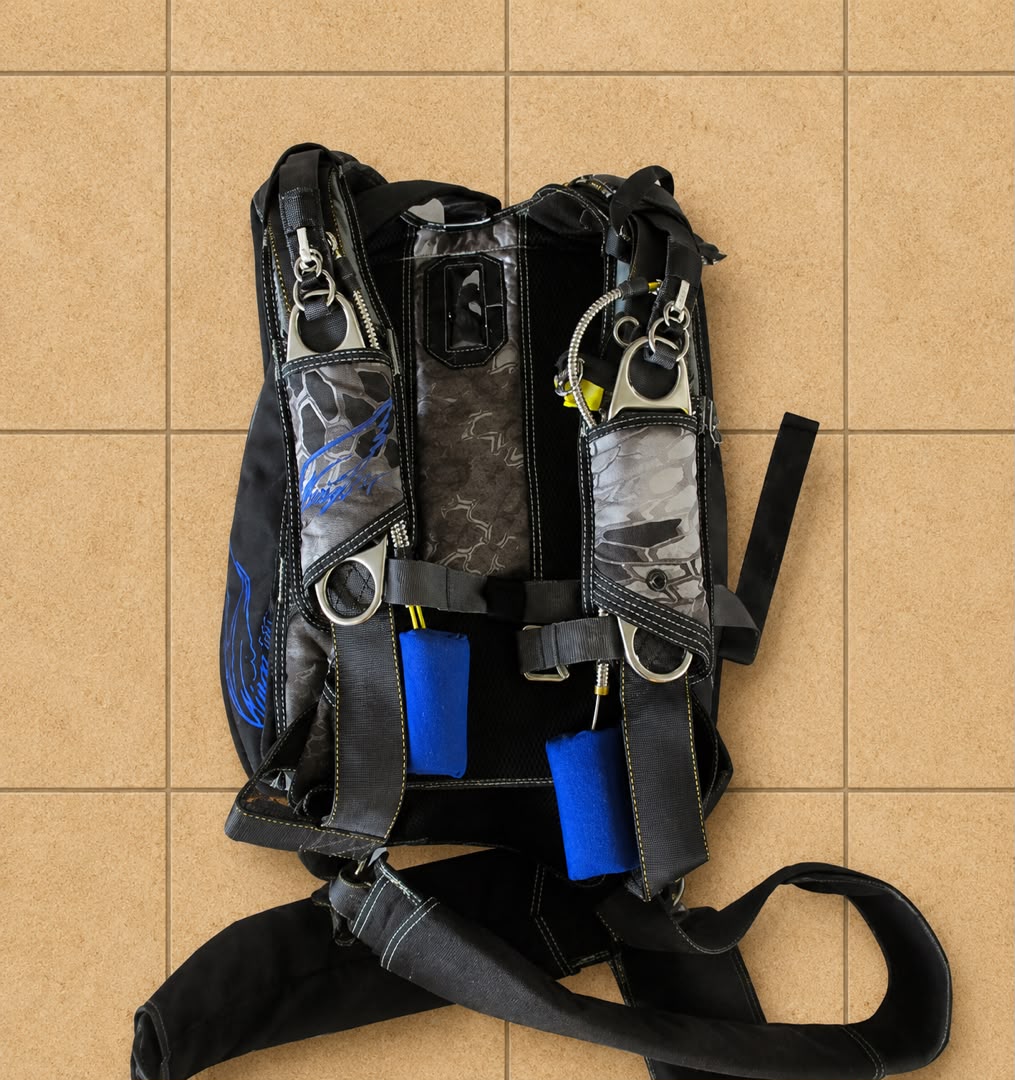
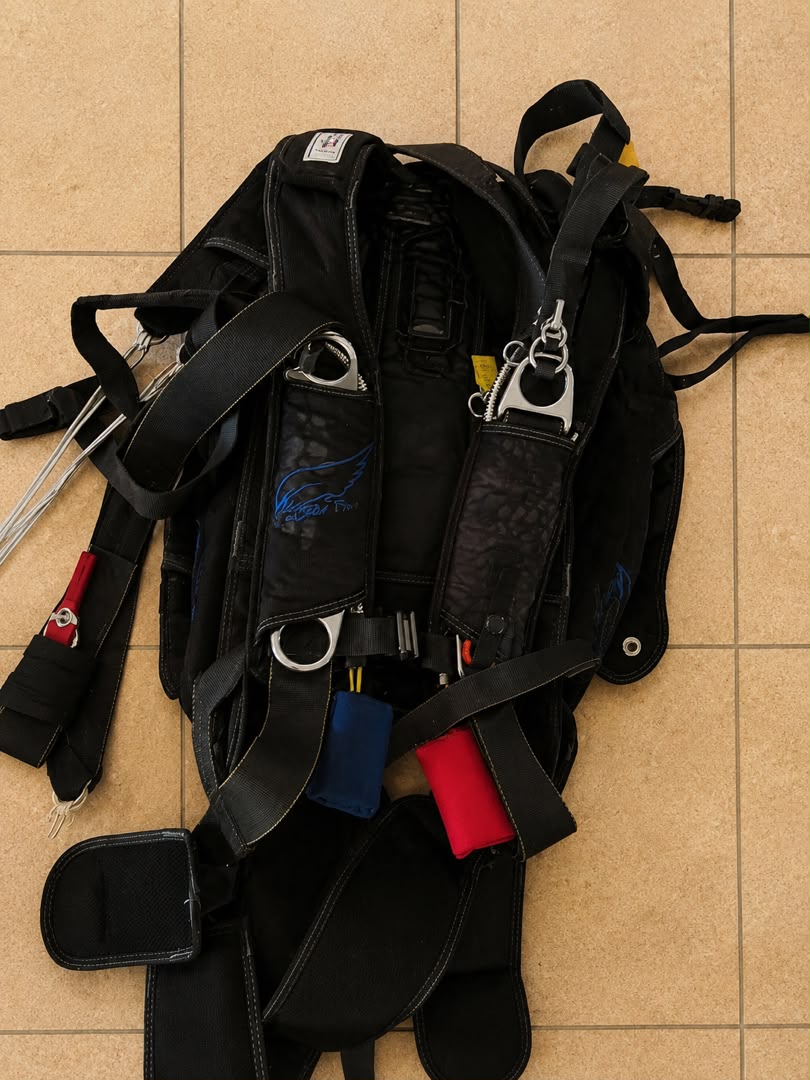



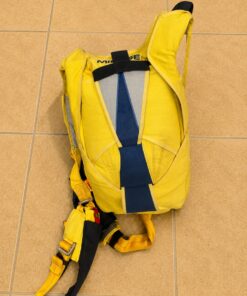
Used Wings Vision WS–2 ext

€1,950.00
Reserve boost
Freefly harness
Spacer foam
Wingsuit corners
Stainless steel
RSL
Swoop risers
Semi stowless dbag
71-76 inch (180-193 cm)
195-250 lb (89-113 kg)
Waist in (cm):33-38
Thigh in (cm): 24-27 (61-69)
15416, W5-2 ext
Main 107-120
Reserve 113-126
Used Wings Vision WS–2 EXT – Pre-Owned Skydiving Harness/Container Technical Guide
Harness/Container Engineering, Compatibility, Flight Context, and Skydiving Equipment
Parachute Rig
A parachute rig is an integrated life-support system rather than merely a backpack for two canopies. The harness, main tray, reserve tray, deployment systems, risers, handles, RSL, reserve-assistance system, and compatible canopies all need to work together correctly.
For this example, the seller identifies serial 15416 as a W5-2 EXT with 107–120 sq ft main capacity and 113–126 sq ft reserve capacity.
Skydiving Rig
A skydiving rig configured around relatively small main canopies should be evaluated independently for both container compatibility and jumper suitability.
A canopy can fit the tray correctly while still being inappropriate for a particular jumper’s experience or loading.
Container Skydive
For container skydive sizing, manufacturer information is more reliable than guessing from square footage.
Sunrise currently lists the W5-2 EXT specifically for 107–120 sq ft mains and 113–126 sq ft reserves.
Parts of a Parachute
The parts of a parachute system include the harness/container, main and reserve canopies, deployment bags, pilot chutes, bridles, risers, toggles, cutaway handle, reserve handle, closing loops, RSL components, and any installed activation device.
Each should be evaluated individually and as part of the complete system.
Skydiving Rigging
skydiving rigging is particularly important when purchasing a used container.
Sunrise publishes dedicated instructions covering canopy sizing, three-ring assembly, reserve packing, closing, Reserve Boost, reserve-loop length, cutaway-handle replacement, and RSL routing.
Linewear
linewear concerns the installed main canopy rather than the container alone.
A main within the correct size range should still have its line trim, abrasion, steering lines, attachment points, and remaining service condition inspected independently.
Landing Flight Risers
landing flight risers form part of the installed main system.
This rig is listed with swoop risers, but riser condition, three-ring hardware, steering system, webbing, and canopy compatibility should be professionally verified before use.
Skydiving Downsizing Chart
A skydiving downsizing chart can provide general progression guidance, but container capacity should never determine canopy progression.
The fact that this tray accommodates relatively small mains does not establish that a particular jumper should use one.
Smallest Canopy
The smallest canopy that fits the tray is not automatically the best or safest canopy for the individual.
Experience, exit weight, recent currency, landing accuracy, training, and canopy design remain critical considerations.
Canopy Flight
canopy flight characteristics come primarily from the installed main canopy.
This harness/container influences deployment and fit, but glide, flare, recovery arc, turn rate, and control pressure are determined mainly by the canopy, loading, trim, and pilot technique.
CRW Skydiving
crw skydiving requires discipline-specific canopy and equipment considerations.
A compact sport container should not automatically be considered configured for canopy relative work simply because it accepts an appropriate-size main.
Safire 3
safire 3 refers to a separate sport-main design. Compatibility should be based on actual packed volume and manufacturer guidance rather than nominal size alone.
Fluid Wings
fluid wings refers to another canopy manufacturer and design ecosystem.
The exact wing model should always be evaluated against the container’s pack-volume range.
Wingsuit Sport
The listing’s wingsuit corners make wingsuit sport particularly relevant to this configuration. The feature is intended to provide a less restrictive lower-container extraction path, but complete wingsuit suitability still depends on the main canopy, pilot chute, bridle, deployment bag, experience, and training.
Wingsuit
A wingsuit changes airflow and body position at deployment.
A wingsuit-oriented container feature therefore supports only one part of the overall configuration.
Vector Wingsuit
The phrase vector wingsuit refers to another harness/container ecosystem and should not be used as a substitute designation for this Wings Vision system.
Gliding Suit Wingsuit
A gliding suit wingsuit is separate freefall equipment rather than part of the harness/container.
Skydiving Gliding Suit
Likewise, a skydiving gliding suit should be chosen according to discipline and experience rather than container model alone.
Wing Suits for Sale
The phrase wing suits for sale concerns a separate equipment category.
Nothing in the seller listing indicates that a wingsuit is included with this rig.
Price of Wingsuit
The price of wingsuit has no effect on the technical condition or serviceability of the harness/container.
Tandem Wingsuit
A tandem wingsuit is unrelated to the normal sport configuration of this rig.
Indoor Wingsuit
indoor wingsuit flying uses specialist training environments and does not involve deploying this harness/container.
Fly Suits
fly suits are freefall garments and remain separate from the life-support assembly.
Tracking Jump
A tracking jump can involve higher horizontal separation speeds, making secure handles, correct pin protection, stable riser covers, and proper harness fit important.
The seller specifically describes the system as having a freefly harness.
Skydiving Speed
skydiving speed varies dramatically with discipline and body position.
At higher freefall speeds, secure container closure and handle retention become especially important.
Speed Sky Diving
speed sky diving represents a specialized discipline with very high freefall speeds; equipment suitability should be reviewed separately rather than inferred from the presence of a freefly-oriented harness.
Freefly Pud Handle
A freefly pud handle is a low-profile main deployment handle commonly considered for freefly-oriented sport systems.
If one is installed, its condition, retention, pilot-chute attachment, and compatibility should be inspected as part of the complete deployment system.
Reserve Boost
The seller lists Reserve Boost among the options. Sunrise provides specific rigging instructions for installing and packing systems with this reserve-assistance architecture.
Any used installation should be confirmed against the appropriate manual before operational service.
RSL
The rig is also listed with an RSL.
Routing, attachment, compatibility, and interaction with the reserve-assistance system should be checked by a qualified rigger.
Hook Blade Knife
A hook blade knife is emergency cutting equipment and should be considered separate from the harness/container itself.
Hook Knife Skydiving
hook knife skydiving equipment is commonly carried for emergency preparedness, but it cannot compensate for damaged lines, risers, or deployment components.
Skydive Hook Knife
A skydive hook knife should be positioned according to the jumper’s training and gear configuration.
Skydiving Helmet
A skydiving helmet is personal protective equipment rather than part of this container.
Skydive Helmets
skydive helmets range from open-face to full-face designs depending on discipline and preference.
Sky Helmet Skydiving
The phrase sky helmet skydiving refers to helmet selection rather than harness/container specifications.
Full Face Skydiving Helmet
A full face skydiving helmet can provide facial coverage and integrated eye protection.
Skydiving Helmet Full Face
The phrase skydiving helmet full face describes the same broader equipment category.
G35 Helmet
A g35 helmet is unrelated to the main and reserve sizing of this rig.
Cookie G4 Helmet
Similarly, a cookie g4 helmet is separate protective equipment.
Best Skydiving Helmet
The best skydiving helmet depends on fit, discipline, field of view, ventilation, audible-altimeter compatibility, and drop-zone requirements.
Skydiving Glasses
skydiving glasses are another eye-protection option depending on the helmet setup.
Skydiver Goggles
skydiver goggles should remain secure throughout freefall while providing adequate vision.
Can You Wear Glasses While Skydiving
For can you wear glasses while skydiving, prescription eyewear can often be accommodated with suitable goggles or helmet systems, depending on fit.
Gear Bag Skydive
A gear bag skydive setup can protect the rig from dirt, abrasion, ultraviolet exposure, and transportation damage.
The bag itself should remain clean and dry.
Skydiving Equipment List
A general skydiving equipment list can include the harness/container, compatible main and reserve, AAD where installed, risers, pilot chute, altimeter, helmet, goggles, jumpsuit, and appropriate emergency equipment.
Fire Parachute
The phrase fire parachute does not describe a verified component of this Wings Vision rig.
Cypress Fire Skydiving
The phrase cypress fire skydiving appears to refer to AAD-related searching, but no AAD is identified in the seller’s product description. An AAD should therefore not be assumed included.
Base Jumping
base jumping uses equipment and deployment architectures that differ substantially from aircraft skydiving.
This Wings Vision system should not be treated as BASE equipment.
Baseline Jumping
The phrase baseline jumping does not identify a technical feature of the system.
Base Canopy
A base canopy should not be installed or treated as equivalent to a sport main without specific manufacturer and rigging approval.
Jumper Pilot
A jumper pilot refers to aircraft operations and does not affect container sizing.
Parachute Jump Australia
parachute jump australia is location-oriented search terminology rather than a technical attribute.
Any use in Australia would depend on local rules, operator requirements, and equipment acceptance.
Skydive Byron Bay
skydive byron bay concerns a destination or drop-zone search rather than container compatibility.
Cairns Skydiving
Likewise, cairns skydiving relates to location rather than the equipment’s technical specification.
Weight Limit Skydiving
The phrase weight limit skydiving should not be answered from container dimensions alone.
The seller provides an approximate user fit range of 195–250 lb, but this should not be confused with an approved exit-weight or canopy-loading limit. Actual suitability depends on harness fit, installed main and reserve, canopy limits, experience, and operational requirements.
Skydive Belize
skydive belize is another destination-oriented search phrase.
Skydiving Blue Hole Belize
skydiving blue hole belize likewise concerns location rather than rig specifications.
iFLY Colorado Springs
ifly colorado springs is indoor body-flight training and does not involve parachute deployment.
Nude Parachute Jump
A nude parachute jump has no connection with the technical condition of this harness/container.
Skydiving Nude
Likewise, skydiving nude is unrelated to the system’s engineering.
Skydiving Website
A skydiving website can provide useful general information, but life-support equipment decisions should rely on manufacturer documentation and qualified inspection.
Sunrise maintains current sizing and rigging manuals for Wings systems.
New Skydive
The phrase new skydive is general search terminology rather than a product specification.
#Skydiving Latest
#skydiving latest content may highlight current trends, but technical rigging decisions should continue to rely on verified manufacturer information.
Skydiving Tube
A skydiving tube is specialty freefall equipment and is not part of this listed system.
Why the Exact W5-2 EXT Identification Matters
Although the retailer titles the product “Wings Vision WS–2 ext.”, its specification text identifies serial 15416 as a W5-2 EXT. That distinction matters because the model code determines main and reserve tray sizing. The seller lists main 107–120 and reserve 113–126, and Sunrise Manufacturing’s current official stock information independently shows exactly the same sizing for the W5-2 EXT.
Therefore, the safest product description is Used Wings Vision W5-2 EXT, serial 15416, while retaining “WS–2 EXT” only as the retailer’s listing title or SEO variation.
Harness Fit and Practical User Range
The seller gives a fit reference of approximately 71–76 inches tall, 195–250 lb, 33–38 inch waist, and 24–27 inch thighs.
These numbers are useful screening information, but they cannot replace an actual harness fitting. Torso length, lateral position, leg-strap geometry, shoulder placement, and personal proportions determine how securely the harness fits.
Why the Included Options Matter
The listed combination of Reserve Boost, freefly harness, spacer foam, wingsuit corners, stainless-steel hardware, RSL, swoop risers, and semi-stowless deployment bag makes this a relatively sophisticated sport configuration rather than a basic harness/container.
Reserve Boost and the RSL relate to reserve-deployment architecture; the freefly harness and riser protection support multi-orientation freefall considerations; wingsuit corners address deployment-bag extraction geometry; spacer foam improves comfort; stainless hardware provides corrosion resistance; and the semi-stowless bag changes main-line management during packing and deployment.
Overall Technical Perspective
The Used Wings Vision WS–2 EXT listing is best understood as serial 15416, W5-2 EXT, with a manufacturer-consistent capacity of approximately 107–120 sq ft for the main and 113–126 sq ft for the reserve.
Its strong option package includes Reserve Boost, freefly-oriented harness construction, spacer foam, wingsuit corners, stainless-steel hardware, RSL, swoop risers, and a semi-stowless deployment bag.
For a pre-owned system, the important next step is not simply deciding whether those features are desirable. The physical serial label, harness measurements, structural webbing, hardware, three-ring system, handles, risers, closing loops, main tray, reserve tray, deployment bag, RSL, Reserve Boost installation, and actual installed canopies should all be professionally inspected and documented before service. Sunrise’s current sizing and rigging documentation provides the appropriate technical reference for that evaluation.
Harness Construction, Fit, Reserve Integration, Deployment Security, and Practical System Evaluation
A compact sport harness/container should be evaluated as an integrated life-support system rather than as a collection of optional features. Its practical value depends on the condition and compatibility of the harness, main tray, reserve tray, deployment bag, pilot chute, risers, closing system, emergency handles, hardware, and reserve-assistance components. For pre-owned equipment, appearance alone cannot establish readiness for use. The strongest evaluation combines physical inspection, verified sizing, documented component history, and professional rigging oversight before the system is returned to service.
Harness Geometry and Structural Fit
Harness fit is one of the most important elements of the complete system.
A correct fit should allow the shoulder, torso, lateral, chest, and leg-strap areas to sit in their intended positions without excessive looseness or restriction.
Height and body weight can provide rough guidance, but torso length and individual proportions often matter just as much.
For this reason, physical fitting is more useful than relying only on seller measurements.
Load-Bearing Webbing
The structural webbing should remain free from deep cuts, burns, chemical contamination, significant abrasion, or damaged fibers.
Areas passing through metal hardware deserve particular attention because repeated adjustment can gradually create concentrated wear.
A professional inspection can distinguish harmless surface fuzzing from damage that compromises structural strength.
Harness Stitching
Structural stitching should remain intact and consistent.
Opened seams, broken threads, heavy abrasion, or previous repair work should be examined carefully.
Professionally completed repairs can remain serviceable, but undocumented or unusual stitching deserves additional scrutiny.
The load-bearing structure should never be judged only by external cosmetic condition.
Main Container Condition
The main tray should maintain its intended shape and structural integrity.
Closing flaps, reinforcement areas, pin-protection components, bridle routing areas, and deployment openings should be checked for deformation or excessive wear.
Repeated packing cycles naturally affect some surfaces more than others, so high-contact areas deserve closer examination.
Reserve Container Condition
The emergency tray should receive an even more conservative inspection.
Closing-loop condition, pin protection, pilot-chute seating, freebag position, flap alignment, and surrounding reinforcement areas should remain correct.
Any unusual distortion or excessive compression should be investigated before operational use.
Main Canopy Fit
A canopy should fit the main tray within manufacturer-supported pack-volume limits.
Nominal square footage alone does not establish compatibility.
Different canopy designs, fabric types, and line configurations can produce different packed volumes.
A container that feels excessively tight or loose should be reviewed professionally rather than accepted because the canopy technically fits inside.
Reserve Compatibility
Reserve compatibility should be verified through exact canopy identification.
Model, size, serial number, certification information, and pack volume all matter.
A reserve that can physically be packed into the tray is not automatically an approved combination.
The relevant manufacturer documentation and current rigging guidance should control the final installation decision.
Semi-Stowless Deployment Bag
A semi-stowless deployment bag changes how part of the line system is organized during packing.
Its fabric, locking-stow areas, bridle attachment, reinforcement stitching, and closure components should remain in good condition.
The bag also needs to be correctly matched to both the container and the actual main canopy.
Main Pilot Chute
The primary pilot chute should be examined for fabric condition, mesh integrity, stitching, handle attachment, and bridle connection.
Material performance can deteriorate gradually through repeated use.
A pilot chute that appears intact may still deserve professional assessment when its service history is uncertain.
Bridle Condition
The bridle should remain free from cuts, burns, excessive abrasion, damaged stitching, or questionable repairs.
Attachment areas deserve particular attention because they experience repeated deployment loading.
Any abnormal wear should be resolved before the system returns to service.
Riser Cover Security
Riser covers should remain secure during normal freefall while releasing correctly during deployment.
Weak retention can create premature exposure, while excessive retention can interfere with release.
Tuck tabs, stiffeners, magnets where applicable, and surrounding fabric should be inspected for wear.
Main Risers
Main risers should be checked for webbing deterioration, hardware condition, steering-system wear, and proper attachment.
Specialized riser configurations should be evaluated for compatibility with the installed canopy.
Visible damage, deformation, or uneven wear deserves professional attention.
Three-Ring Release System
The release system should remain correctly assembled and maintained.
Rings should be free from cracks, corrosion, deep nicks, or deformation.
Cables and housings should remain clean and move correctly.
Because the release system is critical life-support hardware, maintenance should follow manufacturer procedures rather than improvised methods.
Cutaway Handle
The cutaway handle should remain secure during normal movement while still being accessible when required.
Cable condition, housing routing, handle attachment, and retention should be inspected.
A handle that feels unusually loose or difficult to extract should be evaluated before use.
Reserve Handle
The reserve handle should also remain secure and accessible.
Cable, pin, housing, and attachment areas should be checked as part of the emergency system inspection.
Any unusual resistance or damage should be addressed professionally.
Reserve Static Line
The reserve static line should be correctly routed and attached.
Webbing, hardware, routing, and connection points should remain free from wear or interference.
Its presence does not replace appropriate emergency procedures or regular inspection.
Reserve-Assistance Components
Any reserve-assistance system should be evaluated as part of the complete emergency deployment architecture.
Connection points, routing, release sequence, and compatibility with the installed reserve system should all be confirmed.
A used rig should never be assumed correctly configured simply because the components are physically present.
Freefly-Oriented Construction
A freefly-oriented harness/container should provide secure protection for handles, pins, and risers across multiple body orientations.
However, design intent does not guarantee current serviceability.
Closing components, riser covers, handle retention, and harness fit should all be inspected to ensure the system still performs as intended.
Wingsuit-Friendly Corners
Extended lower corners can support smoother deployment-bag extraction in certain body positions.
Their structural condition should remain sound, and the fabric should not show distortion or excessive wear.
These features should be evaluated together with the actual pilot chute, bridle, deployment bag, and main canopy.
Spacer Padding
Spacer padding can improve comfort and ventilation.
Padding condition should be checked for compression, tears, or separation, although the structural harness webbing underneath remains the more important safety component.
Comfort features should never be used to judge overall structural condition.
Stainless-Steel Hardware
Corrosion-resistant hardware offers useful durability, particularly in humid environments.
Nevertheless, it still requires inspection.
Scratches, deformation, contamination, and wear should be checked, especially where metal components contact webbing.
Corrosion resistance does not make hardware maintenance-free.
Closing Loops
Closing loops are wear items and should be replaced when condition warrants.
Fraying, glazing, contamination, or incorrect length can affect closure.
Loop dimensions should follow current manufacturer and rigging guidance rather than being adjusted casually.
Main Pin Protection
The primary closing pin should remain protected from accidental movement.
Its cover flap should close securely without distortion or excessive looseness.
Pin, bridle, closing loop, and surrounding fabric should be inspected as one complete system.
Reserve Pin Protection
Emergency pin protection is equally important.
The reserve flap should remain secure while still allowing proper deployment.
Damaged stiffeners, distorted flaps, or excessive fabric wear should be corrected before use.
Canopy Sizing and Jumper Suitability
Container capacity and jumper suitability are two separate decisions.
A main canopy may fit correctly in the tray while still being inappropriate for the individual’s experience, exit weight, or current skill level.
Professional canopy guidance should therefore be considered independently from rigging compatibility.
Harness Fit With Small Canopies
A compact container may be intended for relatively small wings, but this does not mean the harness itself is suitable for every jumper who wants that canopy size.
Fit, proportions, loading, experience, and equipment history should all be assessed separately.
Professional Inspection Baseline
A thorough inspection after acquiring a used system provides a valuable baseline.
The condition of webbing, hardware, deployment components, risers, handles, emergency systems, and padding can be documented.
Future inspections can then compare known wear areas against this initial record.
Overall Practical Perspective
A feature-rich sport harness/container can provide dependable long-term service when fit, canopy compatibility, emergency-system integration, and structural condition are all verified professionally. The most important factors are not the number of options fitted but whether the harness fits correctly, the canopies match approved volume ranges, the deployment systems remain healthy, and the emergency components are installed and maintained correctly.
For a pre-owned system, the strongest approach is to confirm the physical model and serial information, establish an accurate fit, inspect every load-bearing and deployment component, verify the exact main and reserve combination, and maintain clear service records. When these fundamentals are satisfied, the system can be evaluated responsibly for continued sport use.
Maintenance, Inspection, Storage, Component Care, and Long-Term Serviceability
A pre-owned harness/container requires consistent maintenance because its reliability depends on the condition of many interconnected components. Structural webbing, stitching, hardware, deployment equipment, risers, closing components, handles, padding, and emergency-system elements can age at different rates. Consequently, the equipment should not be judged solely by its exterior appearance or reported amount of use. A systematic inspection program, careful storage, accurate documentation, and professional servicing provide a much stronger foundation for continued ownership.
Establishing a Maintenance Baseline
A comprehensive inspection should establish the starting condition of the equipment after purchase.
Existing wear, previous repairs, hardware condition, webbing condition, and component configuration can be documented at this stage.
This baseline makes future changes easier to recognize and provides useful information when maintenance decisions are required.
Structural Webbing Inspection
Load-bearing webbing should receive particular attention.
Cuts, burns, deep abrasion, chemical contamination, damaged fibers, or unusual discoloration should be investigated.
Areas that contact adjustment hardware can experience concentrated wear over time.
Minor surface fuzzing may differ significantly from structural damage, so questionable areas should be professionally assessed.
Stitching Condition
Structural stitching connects critical sections of the harness and container.
Broken threads, opened seams, heavy abrasion, or distorted stitch patterns deserve careful examination.
Previous repair work should also be reviewed.
Correctly completed repairs may remain fully serviceable, while undocumented alterations require additional evaluation.
Container Fabric Care
Repeated packing and handling naturally expose container fabric to abrasion.
Closing flaps, corners, reinforcement areas, and surfaces contacting aircraft interiors or packing floors may show gradual cosmetic wear.
Small marks do not necessarily indicate structural deterioration; however, tears or damaged reinforcement areas should never be ignored.
Hardware Condition
Metal hardware should remain smooth, correctly shaped, and securely positioned.
Deep scratches, cracks, deformation, corrosion, or sharp edges require attention.
Where hardware contacts structural webbing, both surfaces should be inspected together because rough metal can accelerate textile wear.
Release-System Maintenance
The release mechanism should receive maintenance according to applicable manufacturer procedures.
Rings, cables, housings, loops, and surrounding webbing should remain clean and correctly assembled.
Contamination or improper assembly can interfere with normal operation.
Maintenance should therefore follow approved documentation rather than improvised techniques.
Riser Inspection
Risers experience repeated loading and should be inspected periodically.
Webbing, stitching, hardware, steering components, and attachment areas all deserve attention.
Uneven wear between the two sides can indicate a developing issue.
Questionable structural damage should be evaluated before continued service.
Steering Components
Control components should remain correctly routed and attached.
Repeated movement can create friction at guide points and attachment areas.
Wear should be monitored before it progresses significantly.
Any unexpected change in configuration or condition should be investigated rather than corrected through guesswork.
Deployment Bag Care
The deployment bag should remain free from significant tears, damaged stitching, or distorted attachment areas.
Line-retention components and closure points should also remain functional.
Whenever the installed main is changed, bag compatibility should be reviewed rather than automatically assumed.
Pilot Chute Inspection
The primary pilot chute experiences repeated packing, handling, and airflow exposure.
Fabric, mesh, stitching, handle attachment, and connecting areas should remain in appropriate condition.
Material deterioration can develop gradually, making periodic assessment important even when no obvious damage is visible.
Bridle Condition
The bridle should be inspected for abrasion, burns, cuts, damaged stitching, and attachment integrity.
Areas exposed to repeated friction deserve additional attention.
Damage should be professionally evaluated before the equipment returns to operational use.
Closing Components
Closing components experience regular wear and should be monitored accordingly.
Loops, pins, surrounding fabric, and protective flaps should remain in proper condition.
Replaceable wear items should be changed when required rather than kept in service simply because they have not completely failed.
Emergency-System Inspection
Emergency components deserve the most conservative maintenance approach.
Handles, cables, closing components, deployment materials, connection points, and associated hardware should be examined during appropriate servicing.
Maintenance and repacking should follow the requirements applicable to the equipment and jurisdiction.
Reserve-Related Components
Components associated with the emergency canopy should remain correctly configured.
Alterations should not be made casually.
When ownership changes, documentation should be reviewed so that the current configuration and previous servicing can be understood accurately.
Electronic Safety Device
If an electronic safety device is installed, its maintenance requirements should be considered separately from the harness/container.
Manufacture date, battery requirements where applicable, service schedule, operational status, and manufacturer guidance should be checked.
A successful startup indication does not replace required servicing.
Padding Maintenance
Comfort padding can gradually compress or become damaged.
Although padding generally does not perform the primary load-bearing function, damaged coverings can expose underlying materials and reduce comfort.
Padding should therefore be inspected alongside the structural harness.
Inspecting Previous Repairs
Previous repairs are not automatically problematic.
However, repair location, workmanship, materials, and documentation matter.
A professional repair may remain serviceable for years, while an unidentified alteration deserves careful investigation.
Repair history should be retained whenever possible.
Protection From Moisture
The system should be kept dry whenever possible.
If it becomes wet, appropriate drying should occur before prolonged storage.
Moisture can contribute to staining, odor, material degradation, and corrosion.
Saltwater exposure or chemical contamination deserves especially careful professional assessment.
Protection From Ultraviolet Exposure
Extended sunlight exposure can gradually weaken textile materials.
The equipment should therefore remain shaded when it is not actively being used.
Exterior color alone cannot reliably indicate remaining material strength, so known storage history and inspection remain more informative.
Temperature Management
Extremely hot storage environments should be avoided.
Vehicles parked in direct sunlight can reach temperatures considerably higher than the surrounding air.
Likewise, damp basements or poorly ventilated spaces can create undesirable storage conditions.
A clean, dry, temperature-stable location is preferable.
Chemical Protection
Fuel, solvents, oils, cleaning chemicals, batteries, and other potentially harmful substances should be kept away from the equipment.
Unknown contamination should be treated cautiously because some chemicals can affect textile strength without creating immediately obvious damage.
Professional advice should be obtained when exposure is suspected.
Transportation Care
A protective carrying bag can reduce abrasion during transportation.
Heavy tools, sharp objects, and leaking containers should not be stored against the system.
Likewise, prolonged crushing beneath heavy luggage should be avoided.
Unusual impact or transportation damage should prompt inspection.
Cleaning Considerations
Cleaning should remain conservative and compatible with manufacturer recommendations.
Strong detergents, solvents, bleach, aggressive stain removers, and excessive heat can damage materials.
When significant contamination occurs, professional guidance is preferable to experimenting with household cleaning products.
Storage Between Periods of Use
During extended periods without use, the equipment should remain protected from sunlight, moisture, excessive heat, chemicals, pests, and unnecessary compression.
The storage location should remain reasonably clean and ventilated.
Before returning equipment to use after lengthy storage, an inspection is advisable.
Service Documentation
Maintenance records provide valuable information throughout the equipment’s life.
Inspections, repairs, component replacements, servicing, unusual incidents, and ownership changes can all be documented.
A clear history allows future technicians to understand what has been changed and what areas may require additional monitoring.
Monitoring Wear Over Time
Gradual wear is easier to identify when the owner understands the equipment’s normal condition.
Photographs and inspection notes can help track changes in high-contact areas.
A small worn area that remains stable differs from deterioration that progresses rapidly.
Monitoring helps establish that distinction.
When Additional Inspection Is Appropriate
Certain events justify inspection outside the normal maintenance schedule.
Significant impact, contamination, water exposure, unusual deployment behavior, damaged hardware, suspected structural abrasion, or unexplained component movement should all be taken seriously.
Operational use should stop when there is uncertainty about structural integrity.
Replacement Versus Repair
Not every worn component should automatically be repaired.
Some replaceable parts may be more appropriately replaced, while structural repairs require qualified assessment.
The decision should consider component function, manufacturer guidance, material condition, and long-term reliability rather than cost alone.
Long-Term Serviceability
Calendar age does not independently determine whether the system remains serviceable.
Usage, storage, maintenance, environmental exposure, previous repairs, and structural condition all contribute.
Each major component should therefore be assessed on its current condition rather than relying solely on manufacture date or exterior appearance.
Professional Inspection
Personal visual checks are valuable, but they do not replace qualified professional inspection.
A trained technician can evaluate structural webbing, stitching, hardware, repairs, component compatibility, and emergency-system condition more thoroughly.
This becomes particularly important when equipment is pre-owned or its complete history is unavailable.
Overall Maintenance Perspective
Long-term reliability is supported by preventive maintenance rather than waiting for obvious failure. Structural materials, hardware, deployment components, closing systems, risers, handles, emergency components, and previous repairs should all be monitored throughout ownership.
Careful transportation, dry storage, protection from heat and chemicals, accurate service records, timely replacement of worn parts, and professional inspection provide the strongest maintenance strategy. Whenever structural damage, contamination, unexplained wear, or questionable modifications are discovered, the equipment should remain out of service until it has been properly evaluated and cleared for continued use.
Pre-Purchase Evaluation, Ownership Planning, Fit Assessment, Component Verification, and Continued Service
Purchasing a pre-owned harness/container requires more than checking its appearance or asking whether the desired canopies will physically fit. The system forms part of the jumper’s life-support equipment, so structural condition, harness fit, component compatibility, maintenance history, previous repairs, and professional inspection should determine its suitability. A carefully maintained older system may offer substantial remaining service, while a visually attractive example with uncertain history may require additional work. Therefore, the best purchasing decision is based on documented condition rather than appearance alone.
Evaluating the Equipment Before Purchase
A buyer should begin by confirming exactly what is included.
The physical system should be compared with the seller’s description, photographs, identification labels, and available maintenance records.
Any discrepancy should be resolved before the purchase is finalized.
If important information cannot be confirmed, a professional inspection becomes even more valuable.
Confirming Identification Information
Model designation, serial number, manufacture date, and harness measurements should be read directly from the equipment whenever possible.
Seller descriptions sometimes contain typing errors or incomplete information.
Consequently, the permanent identification information should take priority when determining the exact configuration.
Understanding Harness Fit
Correct fit cannot be determined from body weight alone.
Height, torso length, waist dimensions, thigh dimensions, shoulder position, and individual proportions all affect how a harness sits on the body.
A prospective owner should therefore have the fit assessed while actually wearing the equipment whenever practical.
Evaluating Shoulder Position
The shoulder area should sit naturally without excessive movement or restriction.
Poor positioning can affect comfort and overall security.
Padding may make an imperfect fit feel comfortable initially, so structural harness geometry should be evaluated separately from cushioning.
Evaluating Leg-Strap Fit
Leg straps should sit correctly and allow appropriate adjustment.
Webbing should remain in good condition around adjustment hardware, where repeated movement can create wear.
The owner should also confirm that the available adjustment range suits their proportions without requiring extreme settings.
Chest-Strap Condition
The chest strap should be inspected for webbing condition, stitching, hardware, and appropriate adjustment.
Wear around frequently adjusted areas should be examined carefully.
Any damage to load-bearing material should receive professional evaluation.
Reviewing Main Compartment Condition
The primary compartment should retain its intended shape.
Closing flaps, reinforcement areas, protective components, and attachment points should remain structurally sound.
Excessive deformation may indicate prolonged overstuffing or an unsuitable previous configuration.
Reviewing Emergency Compartment Condition
The emergency compartment deserves particularly careful assessment.
Its flaps, reinforcement areas, closing components, protective structure, and surrounding materials should remain in good condition.
Any unexplained modification or damage should be reviewed professionally.
Checking Installed Components
A buyer should identify which components are included rather than assuming everything visible in photographs forms part of the sale.
Risers, deployment components, handles, emergency-assistance hardware, and electronic equipment may be sold separately in some transactions.
An accurate inventory prevents misunderstandings.
Assessing Hardware
Metal components should remain correctly shaped and free from significant damage.
Deep scratches, sharp edges, deformation, or corrosion deserve attention.
Hardware should also be examined where it contacts structural webbing because damaged metal can accelerate textile wear.
Reviewing Webbing
Structural webbing should be checked throughout accessible areas.
Cuts, burns, excessive abrasion, chemical staining, damaged fibers, and questionable previous repairs should be investigated.
Minor cosmetic wear should be distinguished from deterioration affecting load-bearing material.
Examining Stitching
Critical stitching should remain intact.
Broken threads, opened seams, unusual stitch patterns, or visible previous repairs should be documented.
Professional workmanship can remain fully serviceable, but unidentified alterations should not simply be accepted without evaluation.
Considering Previous Ownership
Usage history can provide helpful context.
Storage environment, frequency of use, exposure to water or contaminants, previous repairs, and major incidents can influence condition.
However, verbal history should complement physical inspection rather than replace it.
Reviewing Maintenance Records
Available records should be examined before purchase.
Professional inspections, repairs, component replacements, and other servicing can provide valuable evidence about how the system has been maintained.
Complete documentation also makes future servicing easier.
Checking for Environmental Damage
Long exposure to sunlight, moisture, extreme heat, salt, fuel, solvents, or other contaminants can affect textile equipment.
Signs of staining, unusual odor, corrosion, discoloration, or material deterioration deserve closer investigation.
Unknown chemical exposure should be treated conservatively.
Evaluating Included Padding
Comfort padding should remain reasonably intact and securely attached.
Compression or cosmetic wear may primarily affect comfort, while damaged coverings can expose underlying materials.
Padding condition should not be used as the primary indicator of structural condition.
Evaluating Closing Components
Frequently replaced closing components should be checked for wear and correct configuration.
Fraying, glazing, deformation, or contamination may indicate that replacement is appropriate.
Their condition should be assessed together with the surrounding closure system.
Assessing Protective Flaps
Protective flaps should maintain their intended shape and retention.
Excessive softness, distortion, damaged stiffeners, or weakened retention deserves attention.
These areas experience repeated handling and may wear differently from less exposed portions of the system.
Checking Deployment Components
Deployment components should be inspected individually.
Fabric, mesh, stitching, attachment points, and connecting materials should remain suitable for continued service.
Compatibility should also be confirmed whenever the previous owner changed the primary wing or other associated components.
Reviewing Emergency Components
Emergency-system components require the most conservative evaluation.
Identification, service history, installation, and condition should be verified by appropriately qualified personnel.
Unknown configuration or missing documentation should be resolved before the equipment is returned to operational use.
Considering Component Age
Different components can have different ages even when installed on the same system.
Some parts may have been replaced recently, while others may date from original manufacture.
Therefore, the age and condition of each major component should be considered independently.
Planning for Immediate Maintenance
A used purchase may require servicing shortly after acquisition.
Inspection, replacement of worn consumable parts, adjustment, professional fitting, or other maintenance should be included when calculating total ownership cost.
The purchase price alone does not represent the complete investment.
Avoiding Purchase Decisions Based on Appearance
Clean fabric and attractive colors can make equipment appear lightly used.
Nevertheless, appearance cannot confirm structural integrity.
Conversely, cosmetic scuffs do not automatically make equipment unsuitable.
Professional assessment provides a more meaningful evaluation than appearance alone.
Planning Long-Term Storage
After purchase, the system should be stored in a clean, dry, temperature-stable environment.
Direct sunlight, excessive heat, chemicals, moisture, and sharp objects should be avoided.
A protective carrying case can also reduce unnecessary wear during transportation.
Keeping Ownership Records
New owners should maintain a clear record from the beginning.
Inspection dates, servicing, repairs, replacements, and significant events can all be documented.
Photographs can also help track cosmetic and structural changes over time.
Recognizing Changes During Ownership
Unexpected changes in fit, component security, fabric condition, hardware movement, or general configuration should not be ignored.
Small changes can sometimes indicate developing wear.
When the cause is unclear, professional inspection is preferable to attempting an improvised correction.
Knowing When to Remove Equipment From Service
Equipment should not remain operational when significant structural damage, questionable repairs, contamination, damaged hardware, or unresolved emergency-system concerns are present.
Continued use should depend on professional assessment rather than the desire to postpone maintenance expenses.
Balancing Price and Condition
A lower purchase price is not automatically better value.
Equipment requiring extensive immediate servicing can ultimately cost more than a better-maintained alternative.
Condition, documentation, fit, included components, and anticipated maintenance should therefore be considered alongside price.
Overall Ownership Perspective
A pre-owned harness/container can represent excellent value when its history, fit, structural integrity, and complete configuration are understood. The strongest purchasing approach combines accurate identification, careful physical examination, documentation review, professional fitting, and qualified technical inspection.
Long-term ownership should follow the same principle. Clean storage, careful transportation, accurate records, timely maintenance, and immediate attention to unexplained wear help preserve serviceability. Most importantly, life-support equipment should never be placed into service simply because it appears clean or because the desired components physically fit. Verified compatibility and professional inspection provide the appropriate foundation for responsible continued use.
Be the first to review “Used Wings Vision WS–2 ext”
Related products

used products


used products

used products

used products

used products

used products
used products
Reviews
There are no reviews yet.