
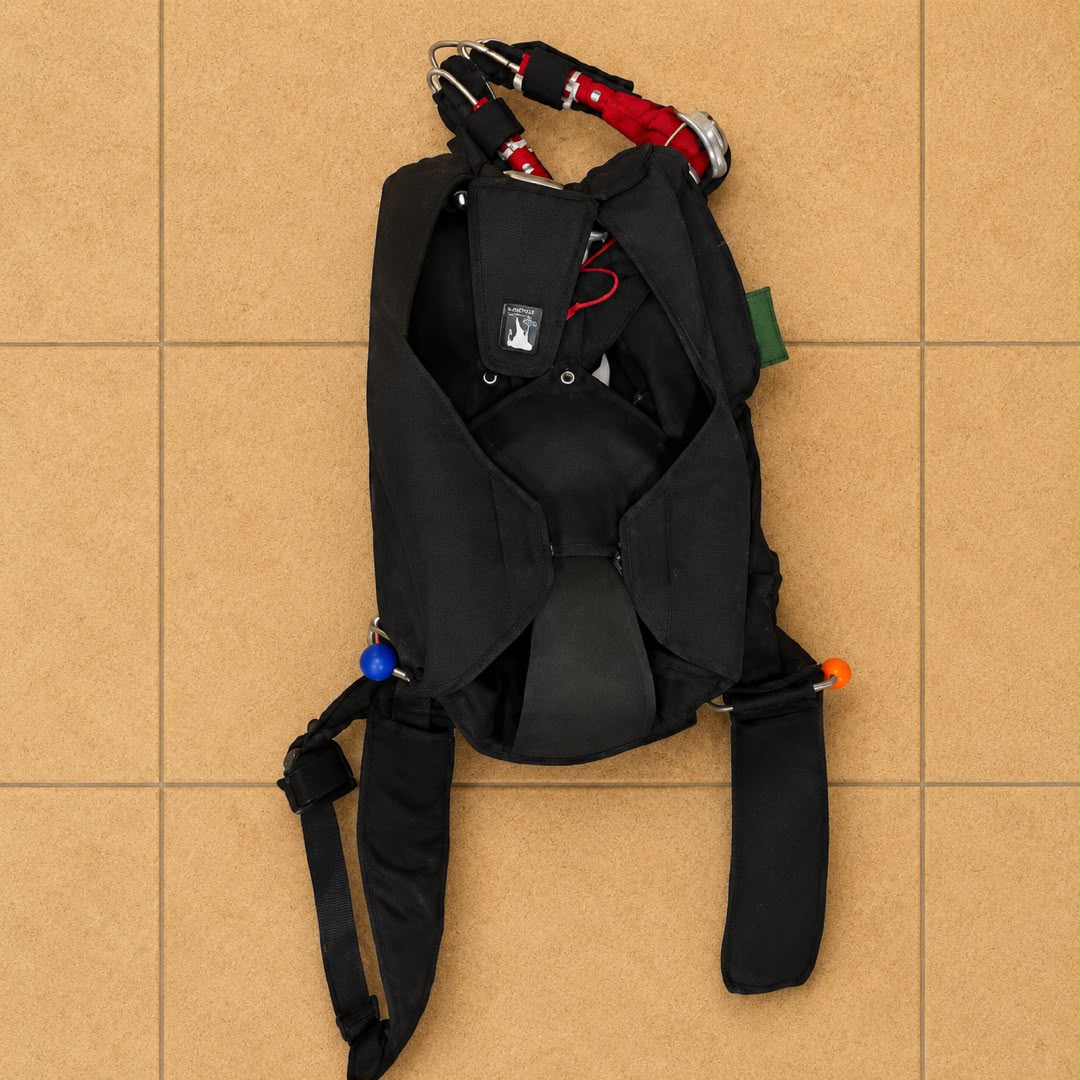

Used Micro Sigma 75315 DOM: 12/2020 with Main and Reserve


€6,000.00
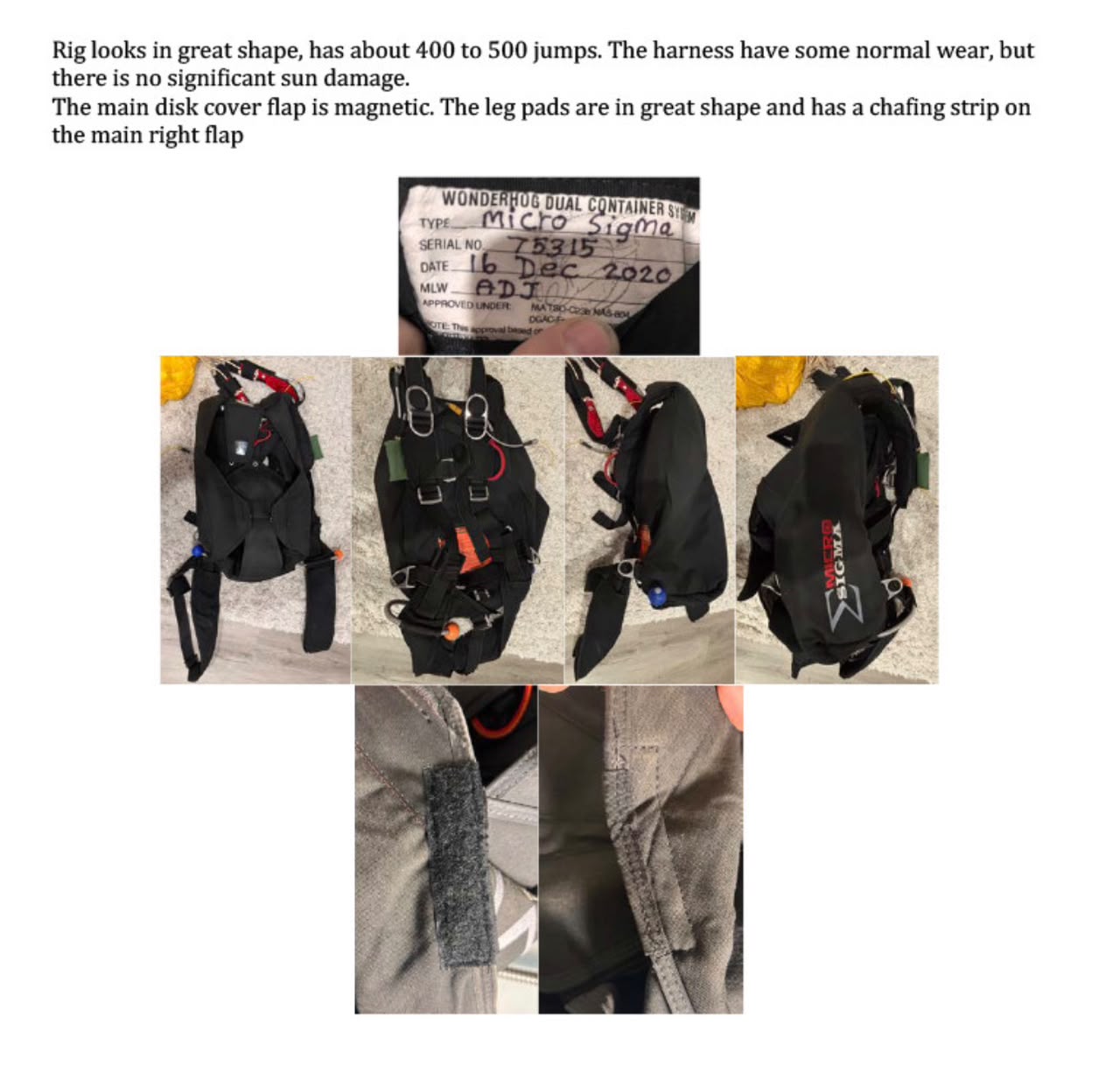
Micro Sigma 75315 DOM: 12/2020
Cypres Cmode C4540 DOM:08/16 (Serviced 2020)
Precision Reserve-350 80351581 DOM:04/13
Hop 330 Serial and DOM unreadable
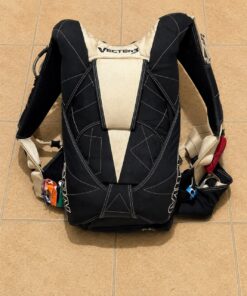
Rig looks in great shape, has about 400 to 500 jumps. The harness have some normal wear, but
there is no significant sun damage.
The main disk cover flap is magnetic. The leg pads are in great shape and has a chafing strip on
the main right flap
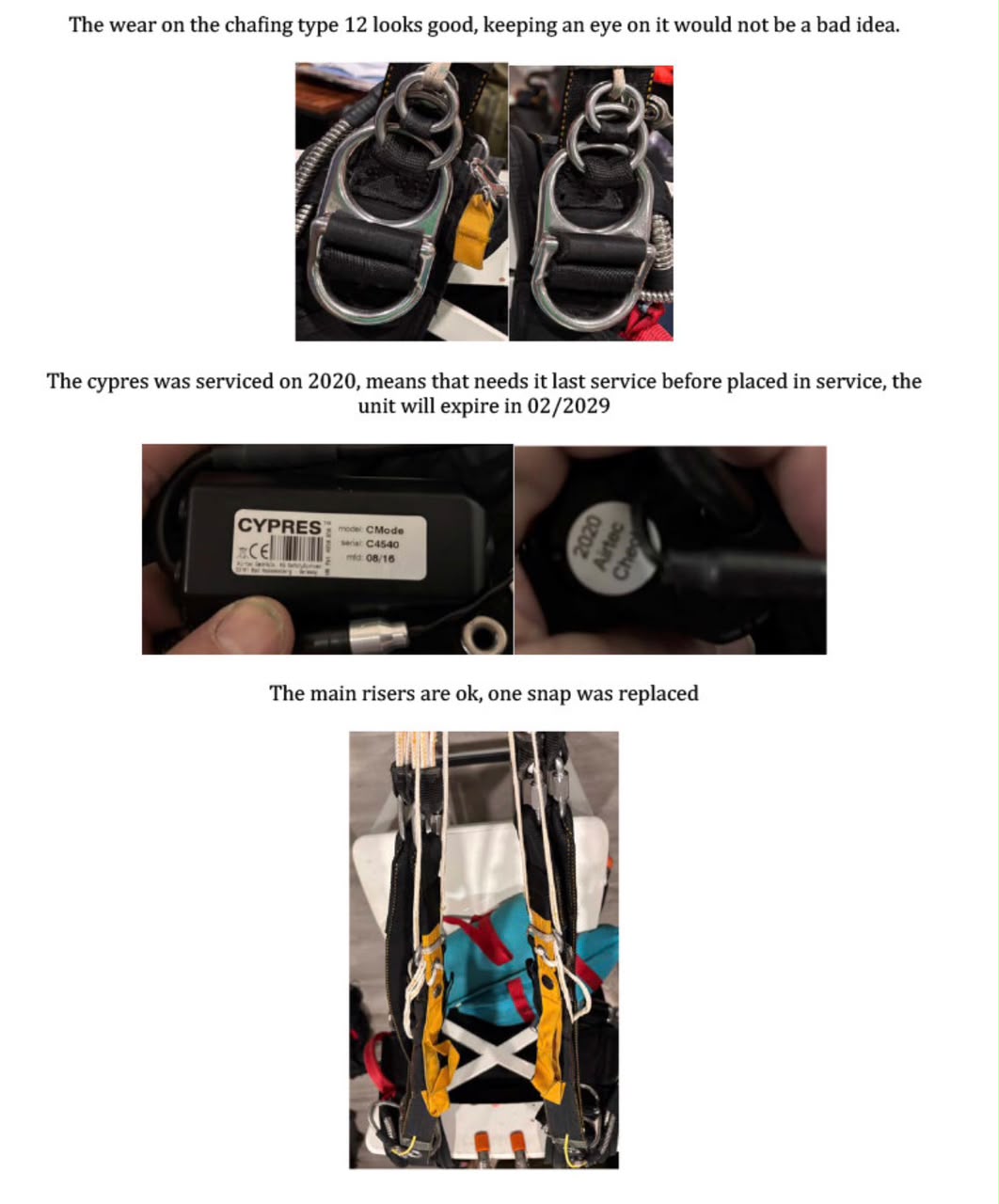
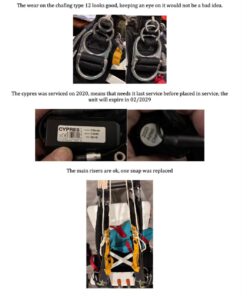
The wear on the chafing type 12 looks good, keeping an eye on it would not be a bad idea.
The cypres was serviced on 2020, means that needs it last service before placed in service, the
unit will expire in 02/2029
The main risers are ok, one snap was replaced
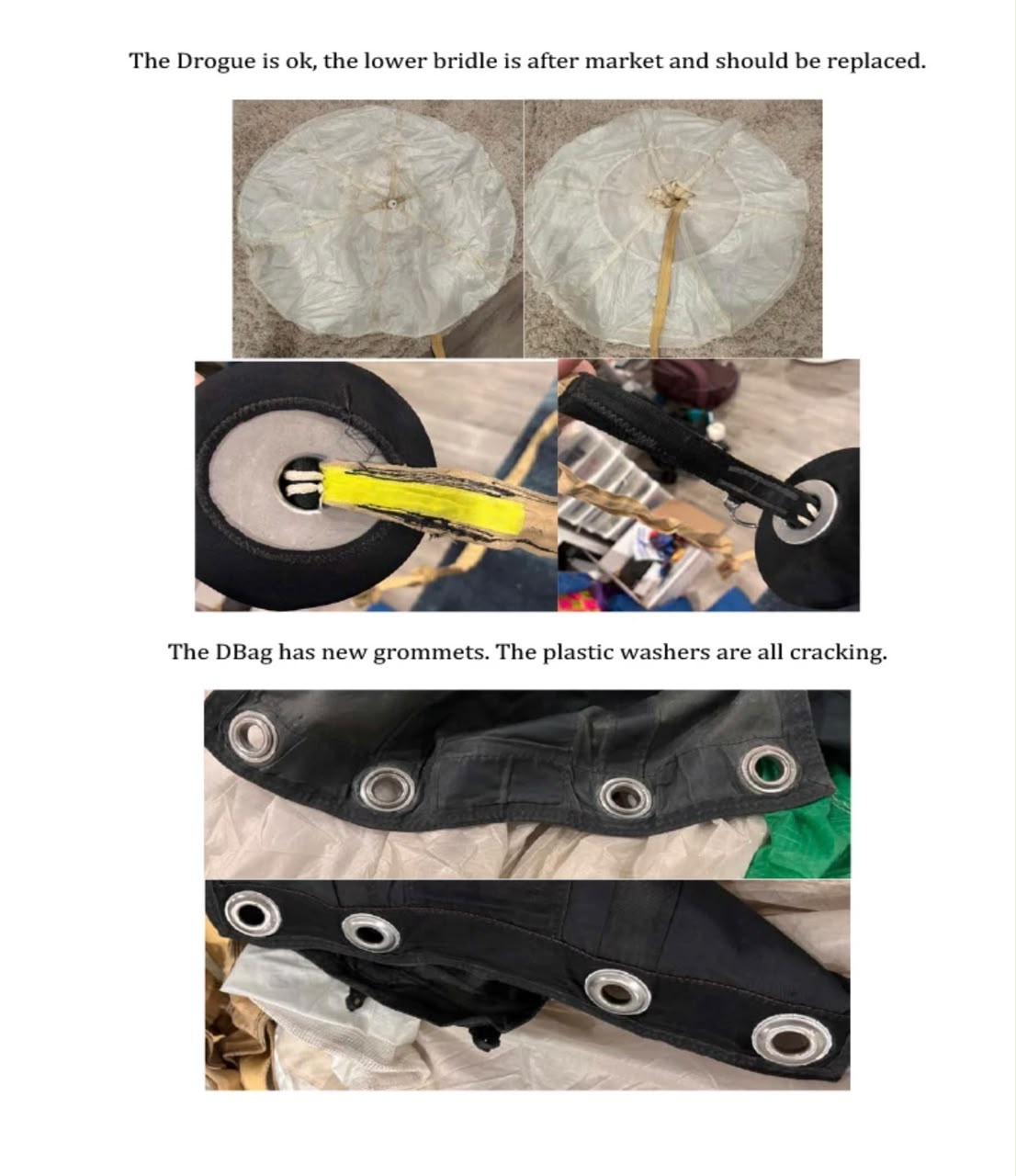
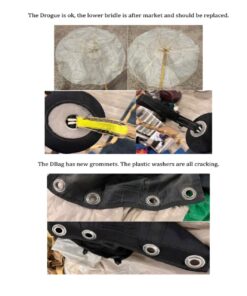
The Drogue is ok, the lower bridle is after market and should be replaced.
The DBag has new grommets. The plastic washers are all cracking.
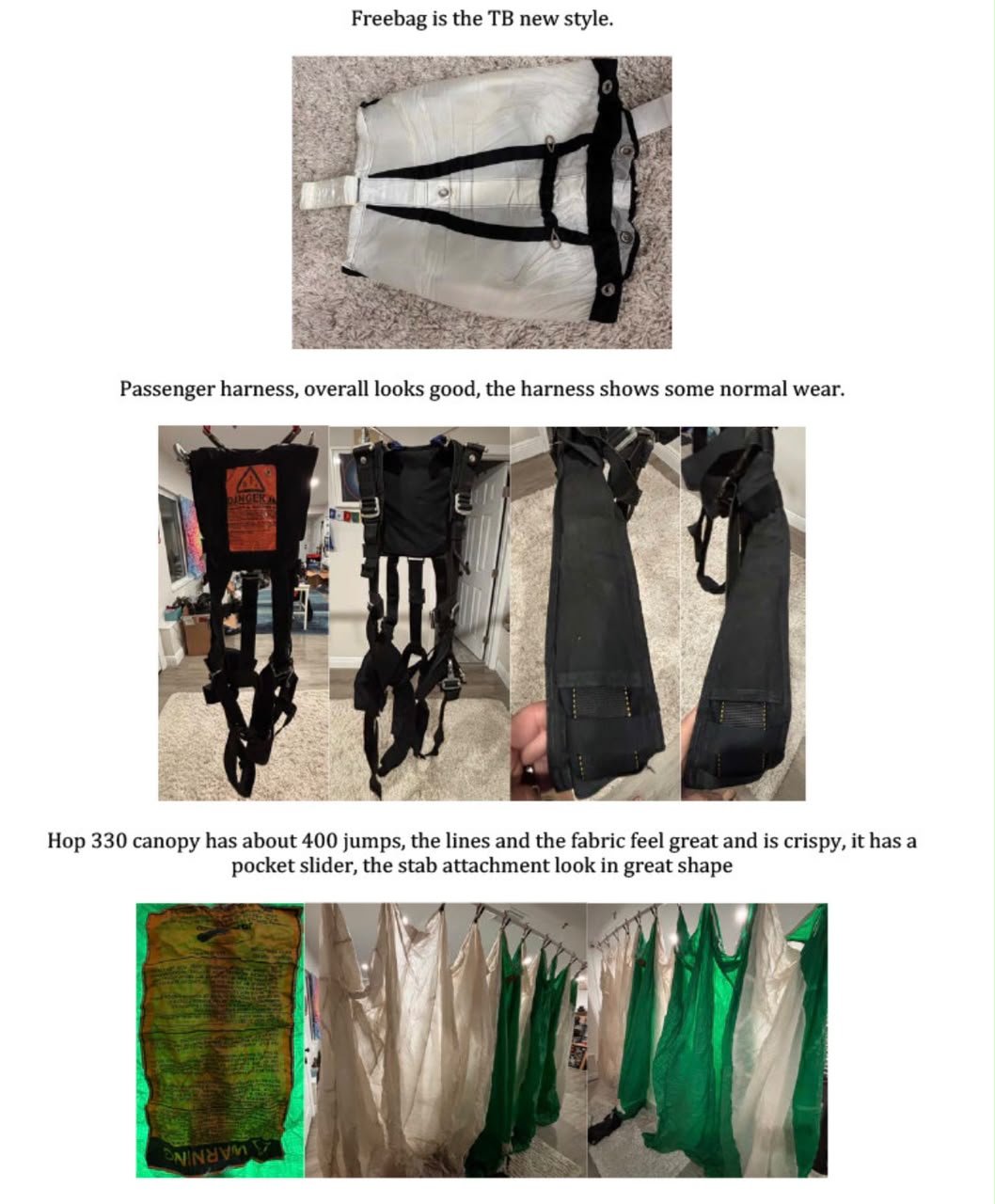
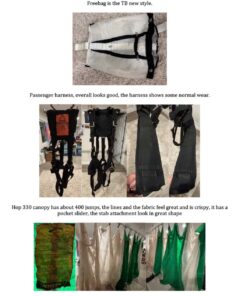
Freebag is the TB new style.
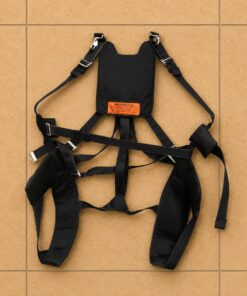
Passenger harness, overall looks good, the harness shows some normal wear.
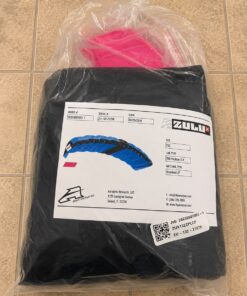
Hop 330 canopy has about 400 jumps, the lines and the fabric feel great and is crispy, it has a
pocket slider, the stab attachment look in great shape
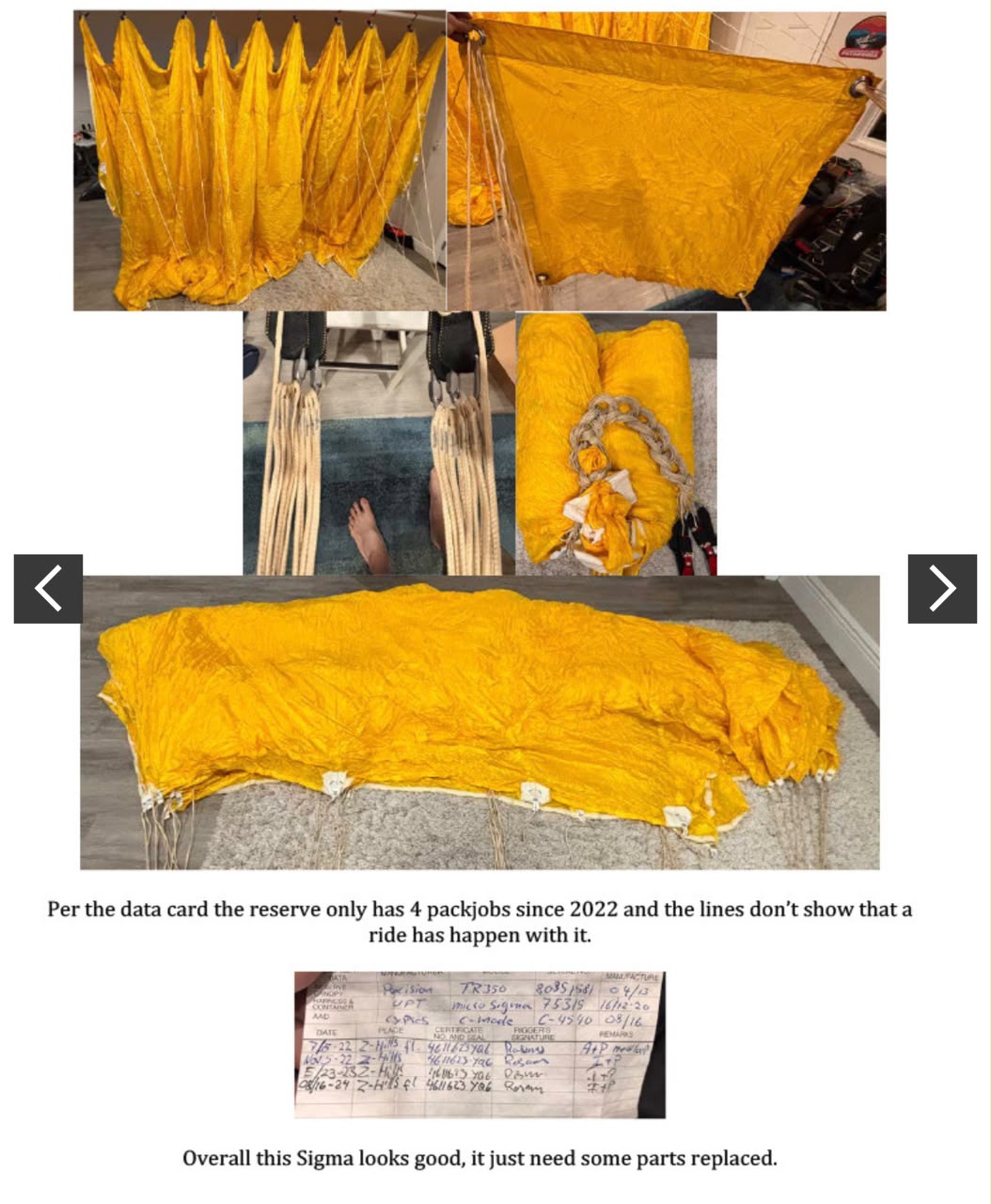
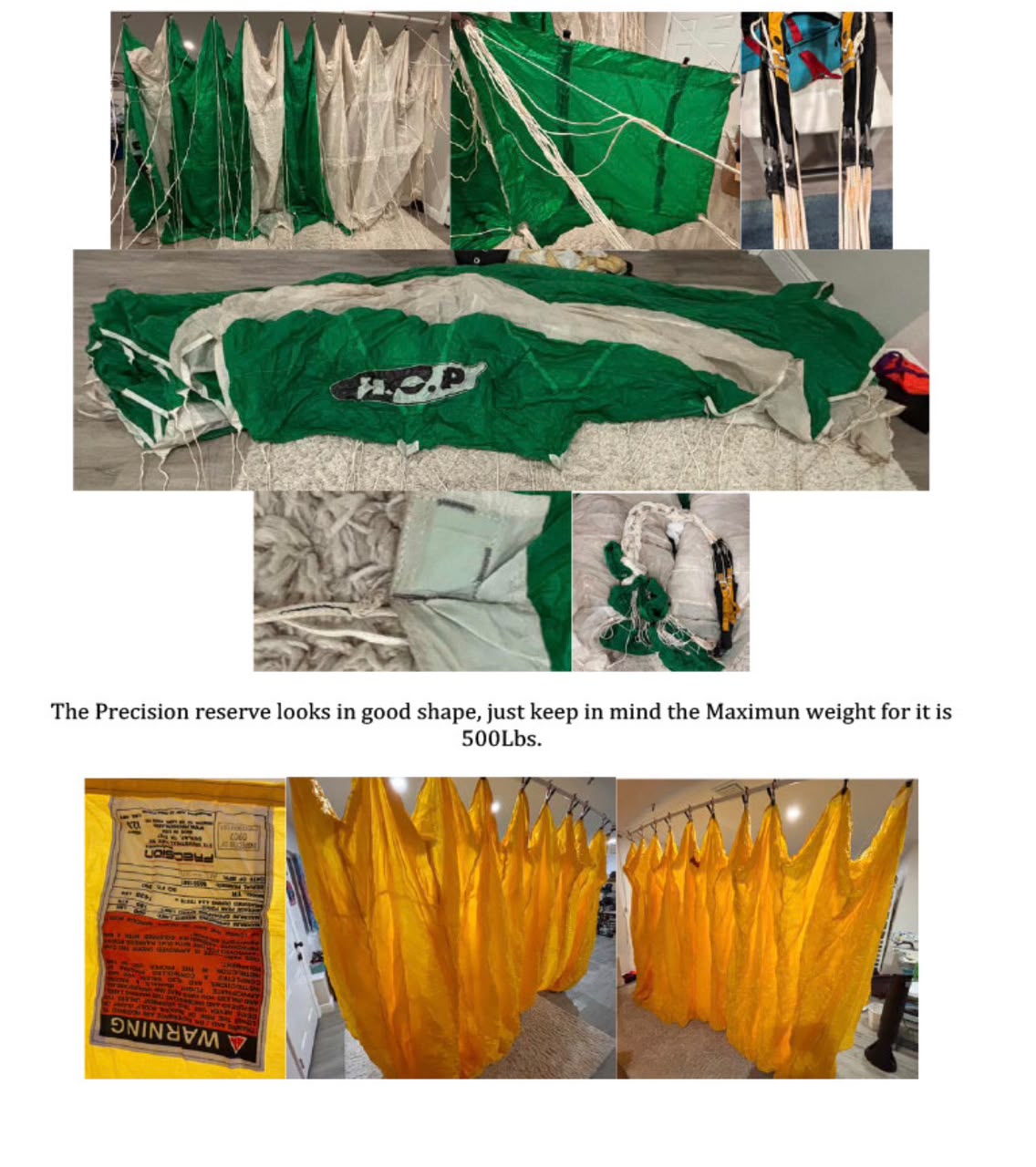
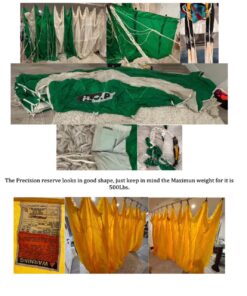
The Precision reserve looks in good shape, just keep in mind the Maximun weight for it is
500Lbs.
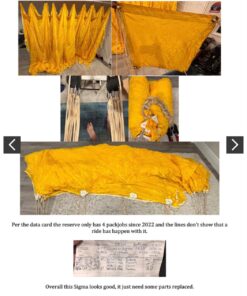
Per the data card the reserve only has 4 pack jobs since 2022 and the lines don’t show that a
ride has happen with it.
Overall this Sigma looks good, it just need some parts replaced.
Used Micro Sigma 75315 DOM 12/2020 with Main and Reserve – Technical Product Description
Micro Sigma Construction, Main and Reserve Condition, Tandem Context, and Related Skydiving Equipment
Parachute Rig and Container Skydive Design
A parachute rig intended for tandem operations must be evaluated as a complete life-support system rather than as an ordinary collection of interchangeable parts. UPT specifically treats Sigma and Micro Sigma equipment as complete tandem systems, and its current technical resources include dedicated manuals, service bulletins, trim charts, packing information, and component instructions.
For anyone researching container skydive equipment or the parts of a parachute, this system demonstrates how the harness/container, main canopy, reserve canopy, drogue system, deployment bags, risers, handles, AAD, and passenger harness work together as one certified tandem architecture.
Micro Sigma Tandem Architecture
UPT lists standard Sigma and Micro Sigma features such as an adjustable student harness, magnetic riser covers, adjustable container harness, double-wide leg pads, retractable release handles, Spectra reserve ripcord, reserve-pin window, and Skyhook RSL.
The specific used system also has a magnetic main disc cover flap and a newer-style reserve freebag according to the seller.
Main Canopy and Canopy Flight
The included Hop 330 main is reported to have approximately 400 jumps. The seller describes its fabric as crisp, its lines as feeling good, its stabilizer attachments as being in Used Micro Sigma 75315 DOM with Main and Reserve good condition, and its configuration as including a pocket slider.
For canopy flight, actual suitability depends on complete system compatibility, verified line condition, loading, instructor qualification, environmental conditions, and current manufacturer requirements. Questions about the smallest canopy or a skydiving downsizing chart should never be applied mechanically to tandem equipment; tandem systems require manufacturer-approved configurations and qualified rigging judgment.
Precision Reserve and Emergency System
The included Precision Reserve 350 has serial 80351581 and DOM 04/2013 according to the seller. The listing describes it as being in good condition and states a maximum weight of 500 lb for that particular reserve.
The reserve should still be evaluated using its actual data card, current inspection status, manufacturer limitations, local regulations, and qualified rigger assessment.
CYPRES and AAD Context
Search phrases such as cypress fire skydiving and fire parachute can appear in skydiving research, but the relevant component here is the listed CYPRES C-mode AAD. The seller identifies unit C4540 with DOM 08/2016 and reports that it was serviced in 2020.
AAD status should always be verified directly from the actual unit documentation before returning a used system to service.
Skydiving Rigging and Linewear
skydiving rigging is especially important with pre-owned tandem equipment because small structural details can have significant safety implications.
The seller specifically reports normal harness wear, satisfactory Type 12 chafing wear that should continue to be monitored, replacement of one main-riser snap, and cracking plastic washers on the deployment bag.
The keyword linewear is also relevant because line condition should be assessed professionally rather than inferred solely from jump numbers.
Hook Blade Knife and Hook Knife Skydiving
A hook blade knife, hook knife skydiving, or skydive hook knife refers to emergency cutting equipment commonly considered part of a broader skydiving equipment list. UPT’s tandem parts catalog currently includes a dedicated tandem hook knife product.
Such equipment should be carried and positioned according to operator procedures and manufacturer guidance.
Landing Flight Risers and CRW Skydiving
The duplicated term landing flight risers relates generally to canopy-control hardware, while crw skydiving refers to canopy relative work. Those disciplines should not be confused with tandem system configuration.
The main risers on this specific rig are described by the seller as being in acceptable condition, with one snap having been replaced.
Skydiving Helmet and Skydive Helmets
A skydiving helmet, skydive helmets, sky diving helmet, sky helmet skydiving, full face skydiving helmet, skydiving helmet full face, g35 helmet, cookie g4 helmet, and the broader search best skydiving helmet concern personal protective equipment rather than components of this Micro Sigma system.
Helmet choice should be based on discipline, fit, field of view, communication needs, and drop-zone requirements rather than rig model alone.
Skydiving Glasses and Skydiver Goggles
Terms such as skydiving glasses, skydiver goggles, and can you wear glasses while skydiving concern eye protection rather than the tandem container.
Eyewear requirements should be addressed separately according to the passenger, instructor, helmet configuration, and operating procedures.
Wingsuit Sport and Related Equipment
wingsuit sport, vector wingsuit, wingsuit, gliding suit wingsuit, skydiving gliding suit, fly suits, wing suits for sale, price of wingsuit, tandem wingsuit, and indoor wingsuit are related skydiving search topics but do not describe this tandem system.
A Micro Sigma is a tandem architecture; wingsuit systems have different operational and equipment considerations.
Tracking Jump and Speed Sky Diving
A tracking jump, skydiving speed, and speed sky diving relate to freefall disciplines and body-flight performance.
They should not be used to infer the operational suitability of a tandem container or reserve system.
Base Jumping and Base Canopy
The terms base jumping, baseline jumping, and base canopy concern a different parachuting discipline with different equipment architecture, training requirements, and risk profiles.
They should remain separate from the Micro Sigma tandem system.
Freefly Pud Handle
A freefly pud handle is associated with certain sport-container deployment systems rather than the Sigma tandem drogue architecture.
UPT provides specific Sigma and Micro Sigma tandem packing and drogue-related technical resources, and those manufacturer instructions should control system servicing.
Safire 3 and Fluid Wings
safire 3 and fluid wings relate to separate sport-canopy products or manufacturers.
They should not be treated as alternative names for the Hop 330 tandem main or Precision 350 reserve included with this rig.
Gear Bag Skydive
A gear bag skydive setup can help protect a tandem system during lawful transportation and storage.
However, a protective bag does not replace routine inspection, correct environmental storage, or professional rigging oversight.
Jumper Pilot
The term jumper pilot normally refers to aviation personnel involved in parachute operations rather than a rig component.
Aircraft procedures remain separate from harness/container maintenance.
Parachute Jump Australia, Skydive Byron Bay, and Cairns Skydiving
Searches for parachute jump australia, skydive byron bay, and cairns skydiving concern tandem destinations or operators.
A used system should never be assumed approved for operation at a particular drop zone simply because it is a recognized tandem model. The operator, instructor, rigger, national rules, manufacturer requirements, and system documentation determine whether it can be placed into service.
Weight Limit Skydiving
The phrase weight limit skydiving is particularly relevant to tandem systems.
However, passenger limits cannot be determined from the container alone. Main and reserve limits, harness limits, instructor requirements, total exit weight, operating procedures, and national regulations must all be considered together.
The seller specifically notes a 500 lb maximum for the included reserve, but that should be verified from the actual canopy documentation before use.
Skydive Belize and Skydiving Blue Hole Belize
skydive belize and skydiving blue hole belize are destination-oriented search terms rather than technical attributes of this equipment.
Local aviation and parachuting rules should always be verified independently.
iFLY Colorado Springs
ifly colorado springs relates to indoor body-flight training rather than parachute equipment.
Wind-tunnel skills can support freefall development, but tunnel equipment and tandem parachute equipment serve entirely different functions.
Nude Parachute Jump and Skydiving Nude
The phrases nude parachute jump and skydiving nude are unrelated to the engineering, inspection, or compatibility of this system.
Operational clothing requirements are determined by the drop zone, instructor, conditions, safety procedures, and applicable rules.
Skydiving Website, New Skydive, and #Skydiving Latest
Searches such as skydiving website, new skydive, and #skydiving latest may help users discover current industry information, but life-support equipment decisions should be based on manufacturer documentation and qualified rigging inspection rather than general web content.
UPT maintains current tandem manuals, service bulletins, modification instructions, and parts information for Sigma systems.
Skydiving Tube
A skydiving tube is generally associated with freefall displays or specialty skydiving activities rather than tandem container construction.
It has no direct connection with the specifications of this used system.
Overall Condition and Important Service Considerations
The strongest aspect of this particular used package is that its condition has been described in unusually specific terms rather than simply being advertised as “good.” The seller reports approximately 400–500 rig jumps, no significant sun damage, good leg pads, a relatively low-jump main, and no obvious indication of a reserve deployment in the reserve lines. At the same time, the listing identifies several items that require attention before service, particularly the aftermarket lower drogue bridle and cracking deployment-bag washers.
UPT’s current technical resources reinforce why these details matter: Sigma and Micro Sigma systems have dedicated manuals, service bulletins, drogue instructions, trim charts, reserve procedures, and component-specific rigging requirements.
For a used tandem system of this type, the decisive questions are therefore not simply age or appearance. Current reserve inspection status, AAD status, harness integrity, drogue and bridle condition, canopy fabric and lines, risers, deployment bags, hardware, service-bulletin compliance, and complete system compatibility should all be verified by appropriately qualified personnel before the rig is returned to operational tandem service.
Harness/Container Engineering, Canopy Integration, Fit, Operational Condition, and Practical Use
A used tandem parachute system should be evaluated as a complete life-support assembly rather than as a collection of individual parts. The harness/container, main canopy, reserve canopy, drogue system, deployment bags, risers, passenger harness, automatic activation device, and associated hardware all need to remain compatible and serviceable. Practical value depends on current condition, documented maintenance, service-bulletin compliance, inspection history, and correct component pairing. Age alone does not determine suitability, while a clean appearance does not guarantee structural integrity. For this reason, professional inspection is central to any serious evaluation.
Harness and Container Condition
The harness/container forms the structural core of the system.
Webbing, stitching, hardware attachment points, leg pads, shoulder areas, chest components, and connection zones should all be inspected carefully. Normal wear can occur through repeated use, but fraying, cut fibers, damaged stitching, contamination, or structural distortion require closer attention.
A professional rigger should determine whether visible wear remains within acceptable service limits.
Importance of DOM
A December 2020 date of manufacture provides useful context, but it should never be treated as a complete condition assessment.
Two systems of the same age can have very different service histories. Jump numbers, storage conditions, sunlight exposure, moisture, repairs, packing history, and operational environment all influence remaining serviceability.
Therefore, DOM should be considered together with inspection records and actual physical condition.
Used System Wear
Previously operated tandem equipment naturally develops cosmetic and mechanical wear.
Abrasion on external fabric, harness contact areas, riser covers, and container surfaces may be expected after hundreds of jumps.
The important question is whether the wear remains superficial or has begun affecting load-bearing components.
Structural wear should always be evaluated by qualified personnel rather than estimated visually by an inexperienced user.
Main Canopy Condition
The main canopy should be examined for fabric condition, stitching, line wear, attachment-point integrity, slider condition, and evidence of repairs.
Jump numbers can help estimate usage, but they do not independently establish remaining service life.
Environmental exposure, packing technique, landing surfaces, and maintenance practices can all accelerate or reduce wear.
A complete inspection provides much more useful information than the jump count alone.
Line Condition
Lines are particularly important because gradual wear can influence openings, trim, and handling.
Inspection should include visible abrasion, damaged fibers, uneven wear, attachment points, and general trim condition.
A line set that still looks acceptable may nevertheless have changed dimensionally through repeated use.
Qualified measurement and manufacturer reference data provide a better basis for determining serviceability.
Slider and Deployment Components
The slider, grommets, reinforcement areas, deployment bag, closing components, and associated hardware should remain in good condition.
Cracked plastic pieces, damaged grommets, distorted hardware, or excessive wear around contact areas deserve attention.
Small deployment-system defects should not be dismissed because these components experience repeated loading during normal operations.
Drogue System
The drogue system is one of the defining components of a tandem configuration.
Its bridle, attachment points, deployment components, and release system require careful inspection.
Any nonstandard or aftermarket component should be checked for current manufacturer approval and compatibility.
Where replacement has already been recommended, that service item should be completed before operational use.
Main Risers
Main risers transfer substantial loads and should be inspected for webbing wear, stitching condition, hardware integrity, and attachment components.
Previous replacement of a snap or related fitting should be documented and checked for correct installation.
Routine inspection is particularly important around high-wear areas where repeated movement can gradually affect material condition.
Reserve System
The reserve should be treated as an independent life-support component with its own service history.
Its data card, packing records, DOM, inspection status, fabric condition, lines, deployment bag, pilot chute, and associated hardware should all be verified.
A reserve that has never been deployed still requires regular inspection and packing according to applicable regulations and manufacturer requirements.
Reserve Packing History
Packing records provide useful evidence of maintenance history.
However, the number of pack jobs alone does not establish condition.
The reserve should still be inspected for contamination, damage, repairs, line condition, and compatibility with the harness/container.
Current legal repack requirements must also be satisfied before the system can be returned to operational service.
Automatic Activation Device
The installed electronic safety unit should be verified separately from the harness/container.
Important considerations include serial number, service history, remaining service life, battery status where applicable, installation configuration, and maintenance requirements.
Documentation should match the physical unit.
An expired or improperly serviced device should not be treated as operational simply because it powers on.
Passenger Harness
The passenger harness is a critical component of a complete tandem package.
Webbing, adjustment points, connectors, pads, stitching, and hardware should be inspected carefully.
Because the harness may fit passengers across a range of body sizes, adjustment components need to move correctly and retain secure positioning.
Any damaged connector or load-bearing webbing requires immediate professional evaluation.
Main and Reserve Compatibility
A main and reserve that physically fit inside a container are not automatically an approved combination.
Compatibility must consider manufacturer-approved volume ranges, canopy type, harness/container configuration, reserve certification, and operational limitations.
Qualified riggers should verify the complete pairing rather than relying on approximate canopy size alone.
System Weight and Balance
Tandem equipment carries significantly greater loads than ordinary sport equipment.
Consequently, component limits and total suspended weight matter.
The relevant limit is not just passenger body weight. Instructor weight, clothing, equipment, canopy limits, harness limits, and operational rules all contribute to the total system loading.
No single published number should be applied without considering the complete configuration.
Hardware Inspection
Metal hardware should remain free from severe corrosion, deformation, sharp edges, cracks, or abnormal wear.
Connectors should operate normally and close securely.
Saltwater exposure, humidity, improper storage, and repeated use can all affect hardware condition.
Any questionable fitting should be professionally assessed before use.
Stitching and Load-Bearing Webbing
Load-bearing stitching should remain intact and free from broken or heavily abraded threads.
Webbing should be inspected for cuts, burns, contamination, fading, chemical damage, and significant fuzzing.
Minor surface wear can be normal, but deeper structural deterioration requires attention.
High-load areas deserve especially careful examination.
Sunlight and Environmental Exposure
Ultraviolet exposure can weaken textile materials gradually.
A system with relatively little visible fading may have experienced less sunlight exposure, but visual appearance cannot quantify material strength precisely.
Storage history therefore matters.
Clean, dry, shaded storage provides a better environment than long-term exposure to heat, sunlight, moisture, or chemicals.
Storage Practices
A tandem system should be stored in a dry, temperature-stable environment away from sharp objects, chemicals, excessive heat, and direct sunlight.
Heavy objects should not compress the packed system unnecessarily.
If the rig has been exposed to moisture, it should be evaluated and dried appropriately before long-term storage.
Transportation
Transportation should protect the system from crushing, contamination, and accidental hardware damage.
A suitable gear bag can help reduce wear, but loose tools, batteries, metal objects, or liquids should not be packed directly against the harness/container.
Following airline and operator requirements is also important when traveling with life-support equipment.
Pre-Jump Inspection
Before operational use, the system should undergo the required inspections appropriate to tandem equipment.
This includes checking handles, pins, closing loops, risers, harness connections, drogue-related components, reserve status, and electronic safety equipment.
The exact procedure should follow manufacturer manuals, operator procedures, and qualified instructor/rigger requirements.
Post-Jump Inspection
Routine post-jump checks can help identify wear early.
Abrasion, damaged components, unusual deployment behavior, contamination, or hardware issues should be documented.
Early identification allows maintenance to occur before minor issues develop into more substantial problems.
Repair History
Previous repairs should be documented whenever possible.
A properly completed repair by qualified personnel can remain fully serviceable.
However, undocumented alterations, nonstandard parts, or poorly executed repairs create uncertainty.
Used tandem systems should therefore be evaluated not only for what has been repaired, but also for how and by whom.
Why Professional Inspection Matters
Tandem equipment experiences high loads and carries two people, so evaluation standards should be conservative.
A qualified tandem rigger can inspect structural components, verify compatibility, review service history, identify required maintenance, and determine whether the system is suitable for return to service.
This professional assessment is far more important than cosmetic condition or seller descriptions.
Long-Term Operational Value
A used system can retain substantial service value when it has a clear maintenance history, compatible components, acceptable textile condition, healthy hardware, current reserve status, and compliant safety equipment.
Conversely, unresolved service items can reduce practical value quickly.
The cost and complexity of required maintenance should therefore be considered alongside the apparent condition of the complete package.
Overall Engineering Perspective
A pre-owned tandem system should be viewed as an integrated life-support platform whose safety depends on the condition and compatibility of every major component. Harness webbing, container structure, main and reserve canopies, lines, risers, drogue equipment, passenger harness, electronic safety equipment, stitching, and hardware all contribute to serviceability.
The strongest evaluation combines documented history with a detailed physical inspection. DOM, jump numbers, cosmetic condition, and seller descriptions provide useful context, but they cannot replace qualified rigging assessment. When the system has been inspected professionally, required service items have been completed, and all components remain within manufacturer and regulatory requirements, it can then be evaluated responsibly for continued tandem operations.
Maintenance, Inspection, Service History, Storage, and Long-Term Reliability
The long-term value of a pre-owned tandem parachute system depends heavily on maintenance quality, documented inspections, storage conditions, and professional rigging oversight. Although external appearance provides useful information, life-support equipment cannot be evaluated through cosmetic condition alone. Webbing, stitching, hardware, deployment components, canopy fabric, lines, risers, reserve components, and electronic safety equipment can experience different forms of deterioration. Therefore, a disciplined maintenance program should combine regular visual checks with scheduled professional inspections and accurate service records.
Establishing a Maintenance Baseline
A newly acquired used system should begin with a clearly documented condition assessment.
The inspection should establish the condition of the harness/container, both canopies, lines, risers, deployment components, passenger harness, hardware, and installed electronic equipment.
Any existing repairs or replacement components should also be identified.
This baseline makes future changes easier to recognize and provides useful information for subsequent servicing.
Reviewing the Equipment Records
Documentation is especially important with pre-owned life-support equipment.
Available data cards, packing records, repair documentation, inspection entries, component serial numbers, and maintenance records should be reviewed together.
Dates should correspond with the physical components installed in the system.
Missing or contradictory information should be investigated rather than filled in through assumptions.
Harness Inspection
The harness carries substantial loads during normal operation.
Consequently, webbing should be checked for cuts, abrasion, contamination, excessive fading, damaged fibers, or unusual deformation.
Areas that repeatedly contact hardware deserve particular attention because friction can gradually affect material condition.
Any questionable load-bearing area requires professional evaluation.
Container Condition
Container fabric experiences repeated handling, packing, transportation, and environmental exposure.
Surface wear may be expected, but damaged stitching, torn fabric, distorted flaps, weakened reinforcement areas, or excessive abrasion should receive attention.
Closing areas should also remain in appropriate condition.
Cosmetic appearance should never override structural assessment.
Stitching Integrity
Stitching holds many structural components together and deserves careful inspection.
Broken threads, separation, unusual stretching, or concentrated abrasion can indicate developing problems.
Load-bearing stitching should not be repaired casually.
Where structural sewing is required, work should be completed by appropriately qualified personnel using approved materials and procedures.
Hardware Condition
Metal hardware should remain structurally sound and free from cracks, significant corrosion, deformation, sharp edges, or abnormal wear.
Connectors should operate smoothly and close correctly.
Repeated use can gradually polish or wear contact surfaces.
Therefore, hardware condition should be considered alongside the webbing that passes through or attaches to it.
Main Canopy Inspection
The primary canopy should periodically be examined for fabric condition, stitching, reinforcement areas, line attachments, slider components, and previous repairs.
Jump numbers provide useful background but do not determine condition by themselves.
A canopy exposed to harsh surfaces, excessive sunlight, moisture, or poor storage may age differently from another canopy with similar usage.
Fabric Condition
Canopy fabric should remain free from significant tears, contamination, damaged seams, or questionable repairs.
Changes in porosity and coating condition can occur gradually.
Visual inspection provides only part of the assessment.
When fabric condition becomes uncertain, appropriate professional evaluation should be used rather than relying solely on appearance.
Line Inspection
Lines experience repeated loading and friction.
They should be inspected for abrasion, broken fibers, damaged attachment areas, contamination, and uneven wear.
Trim can also change over time even when obvious damage is absent.
Consequently, professional measurements may become necessary when handling or deployment characteristics change unexpectedly.
Slider Condition
The slider should remain structurally intact.
Fabric, reinforcement tape, grommets, stitching, and surrounding contact areas should be examined for deterioration.
Damaged grommets can contribute to additional wear elsewhere.
Small defects should therefore be corrected before they develop into larger maintenance concerns.
Deployment Bag Inspection
Deployment components experience repeated packing cycles and mechanical loading.
Fabric, stitching, attachment areas, elastics where applicable, and associated hardware should remain serviceable.
Cracked, distorted, or deteriorating pieces deserve prompt attention.
A seemingly minor component should not be ignored simply because the larger canopy remains in good condition.
Drogue Assembly Condition
The drogue assembly is a critical part of tandem operation and requires careful professional inspection.
Fabric, bridle material, stitching, attachment points, handles, and related components should remain within approved specifications.
Nonstandard replacement parts or undocumented alterations require particular scrutiny.
Manufacturer-approved compatibility should always be confirmed before operational use.
Riser Inspection
Risers should be checked for webbing deterioration, damaged stitching, hardware wear, and abnormal deformation.
Areas exposed to repeated friction deserve additional attention.
Previous repairs or component replacements should be documented and inspected for correct workmanship.
If structural condition becomes uncertain, professional assessment should occur before further service.
Reserve System Care
The reserve system requires its own maintenance and inspection history.
Its canopy, lines, deployment components, pilot chute, freebag, closing system, and associated hardware should remain compliant with applicable requirements.
A reserve that has never been deployed still requires periodic inspection and repacking.
Lack of deployment does not eliminate maintenance requirements.
Reserve Data Card
The data card provides important historical information.
Packing dates, inspections, deployments, repairs, and other entries can help establish how the reserve has been maintained.
Records should remain legible and consistent with the actual equipment.
Unexplained gaps should be discussed with qualified personnel before the system returns to operational service.
Electronic Safety Equipment
Any installed electronic safety device should be treated as an independent component with its own service requirements.
Serial number, manufacture date, maintenance status, installation condition, and remaining service life should be verified.
A device should not be considered serviceable simply because its display appears functional.
Manufacturer requirements remain the controlling reference.
Passenger Harness Maintenance
The passenger harness deserves the same level of attention as the primary harness/container.
Webbing, connectors, adjustment hardware, pads, stitching, and load-bearing attachment points should be inspected regularly.
Adjustment mechanisms should move correctly while remaining secure once positioned.
Damage or abnormal wear requires professional assessment.
Moisture Management
Moisture can affect textiles, metal hardware, electronic components, and stored canopies.
Wet equipment should not remain sealed inside a gear bag for prolonged periods.
After exposure to rain, humidity, or accidental moisture, appropriate drying and inspection procedures should be followed.
Contaminated equipment may require additional professional attention.
Sunlight Protection
Prolonged ultraviolet exposure can gradually weaken textile materials.
Equipment should therefore be protected from unnecessary direct sunlight when it is not being used.
A clean appearance does not prove that ultraviolet degradation is absent, so known storage history remains valuable when assessing a pre-owned system.
Temperature and Storage Environment
Long-term storage should take place in a clean, dry, temperature-stable environment.
Excessive heat, chemicals, fuels, solvents, sharp objects, and persistent humidity should be avoided.
Heavy objects should not be placed on the packed system unnecessarily.
Storage conditions can influence long-term material preservation considerably.
Transportation Protection
A protective gear bag helps shield the system from abrasion and contamination during transportation.
Metal tools, liquids, batteries, or heavy objects should not be allowed to damage the harness/container.
When traveling by aircraft or across borders, relevant carrier and regulatory requirements should also be followed.
Contamination
Oil, fuel, solvents, battery chemicals, cleaning agents, and other substances can damage textile materials.
Questionable contamination should not simply be wiped away and forgotten.
The affected area should be professionally evaluated because some chemicals can weaken materials without producing dramatic visual changes.
Repair Documentation
Repairs should be documented whenever possible.
Records should identify what was repaired, when the work occurred, and who completed it.
Professional repairs can restore serviceability when performed correctly.
However, undocumented modifications introduce uncertainty and deserve careful investigation.
Monitoring Wear Over Time
Photographs and written inspection notes can help track gradual deterioration.
Areas that show repeated abrasion can be compared during later inspections.
This approach helps distinguish stable cosmetic wear from progressive structural deterioration.
Monitoring is particularly useful for equipment that accumulates frequent operational cycles.
Professional Inspection
Qualified rigging inspection remains the most important element of long-term care.
Professional evaluation can identify issues that are difficult to detect through casual visual inspection.
It also allows compatibility, maintenance history, service requirements, and manufacturer instructions to be considered together.
Overall Long-Term Care
A pre-owned tandem system can retain substantial operational value when maintenance is systematic and well documented. Harness condition, canopy fabric, lines, risers, deployment components, reserve equipment, passenger harness, hardware, and electronic safety equipment should all be treated as parts of one integrated life-support system.
Ultimately, responsible long-term care means identifying deterioration early rather than waiting for a component to fail. Clean and controlled storage, careful transportation, accurate records, routine inspections, timely replacement of worn components, and qualified professional servicing provide the strongest foundation for preserving structural integrity and dependable service.
Be the first to review “Used Micro Sigma 75315 DOM: 12/2020 with Main and Reserve”
Related products
used products

used products

used products


used products

used products

used products
used products

Reviews
There are no reviews yet.