

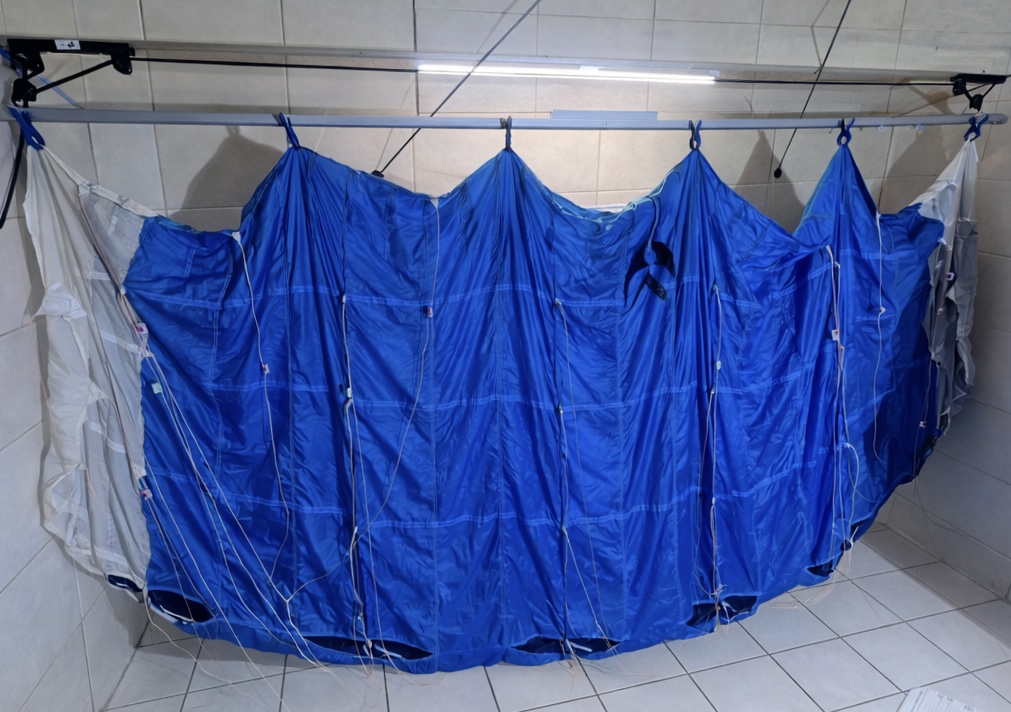


Used Valkyrie Main Parachute Canopy 79


€1,900.00
The Used Valkyrie Main Parachute Canopy 79 is a high-performance cross-braced main canopy designed for highly experienced canopy pilots who demand exceptional responsiveness, powerful flare performance, efficient glide characteristics, and precise control authority. Developed by Performance Designs, the Valkyrie series is recognized for its smooth openings, impressive rear-riser performance, long-range capability, and competition-inspired flight characteristics.
Its advanced aerodynamic profile, carefully engineered internal structure, and refined control response make it a popular choice among skilled pilots seeking accuracy, consistency, and exceptional performance. Because this is a used canopy, the condition of the fabric, suspension lines, slider, reinforcement tapes, stitching, and attachment points should be thoroughly inspected before use.
The Used Valkyrie Main Parachute Canopy 79 offers a remarkable combination of speed, precision, efficiency, and control while providing experienced pilots with a highly refined and exceptionally capable flight platform.
Used Valkyrie Main Parachute Canopy 79 – Cross-Braced Performance, Smooth Openings, Powerful Riser Control, and Inspection Guide
Used Valkyrie 79 Overview, Flight Characteristics, Compatibility, and Safety
What Is the Used Valkyrie 79?
The Used Valkyrie Main Parachute Canopy 79 is an advanced cross-braced main canopy developed by Performance Designs for highly experienced canopy pilots. The number 79 identifies its nominal size in square feet, placing it firmly within the high-performance category rather than the general recreational or student market.
Performance Designs describes the Valkyrie as a step beyond the Comp Velocity and states that it was developed for freefall use with opening performance treated as a major design priority. The manufacturer identifies smooth openings, powerful rear-riser performance, strong stopping power, high responsiveness, and useful long-spot capability among its defining characteristics.
This canopy forms only one part of a complete parachute rig. It is not a reserve, harness-container, pilot chute, helmet, automatic activation device, or complete skydiving equipment list.
Who Should Use the Valkyrie 79?
The Valkyrie is intended for expert pilots who have already mastered another cross-braced design. Performance Designs specifically states that it is not intended as a first cross-braced canopy. It is positioned for highly experienced pilots, camera flyers, competition-oriented users, terminal and sub-terminal deployments, and people who have fully developed the skills required to progress beyond their current high-performance wing.
A general skydiving downsizing chart should never be used as the sole basis for moving to this size. Likewise, a broad weight limit skydiving search cannot establish whether the canopy is suitable for an individual.
The smallest canopy that fits inside a container is not automatically an appropriate choice. Exit weight, wing loading, jump numbers, recent currency, previous cross-braced experience, coaching history, physical condition, and landing proficiency must all be evaluated.
Cross-Braced Construction and Flight Response
Cross-bracing increases internal structural rigidity, helping the wing maintain its shape during high-speed flight and aggressive maneuvering. Consequently, the Valkyrie responds strongly to harness input, riser pressure, and toggle movement.
Performance Designs lists the canopy as highly responsive to all inputs and highlights powerful rear-riser capability and strong shutdown performance. These characteristics can support efficient canopy flight, extended swoops, competition-style approaches, and recovery from distant spots when operated by a properly trained pilot.
However, responsiveness also means that mistakes may develop rapidly. Inappropriate altitude, poor timing, traffic conflicts, turbulence, or aggressive input can create severe consequences.
The phrase landing flight risers may refer to riser-based flight control, while landing flight risers appears again in many searches. Riser inputs should only be performed by pilots with suitable coaching, altitude awareness, and experience.
Opening Performance and Deployment Conditions
Performance Designs states that the Valkyrie was designed for both terminal and sub-terminal deployment and identifies smooth openings as one of its characteristics.
Nevertheless, no canopy can guarantee an ideal opening on every jump. Deployment behavior depends on:
- Packing method
- Line condition
- Slider configuration
- Body position
- Airspeed
- Pilot-chute condition
- Bridle routing
- Harness-container fit
- Environmental conditions
A tracking jump can create substantial horizontal movement and altered deployment conditions. Similarly, skydiving speed and speed sky diving activities may produce high airspeeds that require appropriate deceleration and separation before deployment.
A freefly pud handle must remain secure during dynamic flight while still being accessible when deployment is intended.
Standard and Hybrid Valkyrie Construction
Performance Designs offers both an all-zero-porosity version and a Hybrid Valkyrie with sail fabric incorporated into the ribs. The Hybrid version is described as more powerful, more responsive, and capable of longer swoops, although its sail-rib construction increases pack volume by approximately half a container size compared with the all-ZP version.
A used listing should clearly identify which construction is being offered. Pack volume, handling, maintenance history, and buyer expectations may differ between the two versions.
Line Condition, Trim, and Used-Canopy Inspection
Visible linewear must be taken seriously. Suspension lines experience abrasion, heat, dirt, loading cycles, and trim changes. USPA identifies Dacron, Spectra, Vectran, and HMA as common line materials and emphasizes that each has different wear and dimensional characteristics.
Performance Designs provides dedicated line-trim charts, measurement instructions, replacement line sets, and reline services for the Valkyrie.
A qualified skydiving rigging professional should inspect:
- Suspension and steering lines
- Cascades and attachment points
- Connector links or soft links
- Brake settings
- Slider and grommets
- Top and bottom skins
- Internal ribs
- Reinforcement tapes
- Leading edge and tail
- Pilot-chute attachment point
- Previous repairs or patches
USPA recommends inspecting used canopies for fabric deterioration, fading, impact holes, line burns, and wear around the center-cell area.
Harness and Container Compatibility
The Valkyrie 79 must be installed in an appropriately sized container skydive system. Compatibility depends on construction type, actual pack volume, deployment-bag dimensions, riser type, line bulk, pilot chute, and container manufacturer guidance.
The complete skydiving rig should include a compatible:
- Harness-container
- Reserve canopy
- Main deployment bag
- Pilot chute and bridle
- Main risers
- Closing loop and pin
- Automatic activation device where required
- Approved handles and hardware
A gear bag skydive accessory may protect the system during transport but does not form part of the deployment sequence.
Wingsuit and Specialized Discipline Considerations
The Valkyrie is not primarily positioned as a wingsuit-specific canopy. People involved in the wingsuit sport should consult a qualified instructor and rigger before combining this wing with a wingsuit configuration.
The terms wingsuit, vector wingsuit, gliding suit wingsuit, skydiving gliding suit, fly suits, wing suits for sale, price of wingsuit, indoor wingsuit, and tandem wingsuit concern suits, disciplines, or related equipment rather than verified Valkyrie specifications.
Likewise, CRW skydiving often requires discipline-specific equipment. Intentional canopy contact should not be attempted with a standard high-performance configuration unless the equipment and training are specifically appropriate.
Aircraft Skydiving Versus BASE Equipment
The Valkyrie is a freefall-deployable main canopy rather than a base canopy.
Base jumping and the misspelled phrase baseline jumping involve different deployment altitudes, containers, pilot chutes, packing techniques, and emergency options. The Valkyrie should not automatically be treated as suitable for fixed-object parachuting.
Helmets, Goggles, and Emergency Accessories
This listing does not include a skydiving helmet, skydive helmets, sky helmet skydiving, sky diving helmet, full face skydiving helmet, skydiving helmet full face, G35 helmet, Cookie G4 helmet, or the best skydiving helmet.
People asking can you wear glasses while skydiving may use secure skydiving glasses, prescription-compatible eye protection, or suitable skydiver goggles, provided clear vision is maintained throughout freefall, opening, flight, and landing.
A hook blade knife, hook knife skydiving, or skydive hook knife may be carried as an emergency cutting tool by trained jumpers. It does not replace equipment maintenance or rehearsed emergency procedures.
Automatic Activation Devices and Unrelated Terms
The expressions fire parachute and Cypress fire skydiving are not Valkyrie specifications. CYPRES refers to automatic activation equipment associated with the reserve system rather than the main canopy.
An automatic activation device does not control the Valkyrie, prevent a main-canopy malfunction, or replace altitude awareness and correct emergency decisions.
Other Main-Canopy Comparisons
The Safire 3 is a separate nine-cell sport canopy with a different performance profile. Fluid Wings also produces distinct high-performance designs with their own planforms, line configurations, sizing recommendations, and flight behavior.
Specifications, lines, sliders, or packing methods from another manufacturer should not automatically be applied to the Valkyrie.
Location, Operator, and General Search Terms
Searches such as parachute jump Australia, Skydive Byron Bay, and Cairns skydiving concern operators or destinations rather than Valkyrie specifications.
The same applies to Skydive Belize, skydiving Blue Hole Belize, and iFLY Colorado Springs. A wind tunnel can support freefall training but cannot reproduce canopy opening or landing characteristics.
A nude parachute jump or skydiving nude event requires explicit drop-zone approval because clothing affects harness comfort, abrasion protection, temperature exposure, and handle security.
The phrases parts of a parachute, new skydive, skydiving website, #skydiving latest, skydiving tube, and jumper pilot are broad informational searches rather than technical characteristics of the Valkyrie 79.
Final Used-Condition Assessment
The Used Valkyrie 79 can deliver exceptionally responsive handling, powerful riser performance, smooth openings, long-spot capability, strong flare authority, and competition-level performance when flown by a highly experienced cross-braced canopy pilot. Performance Designs explicitly positions it for experts rather than first-time cross-braced users.
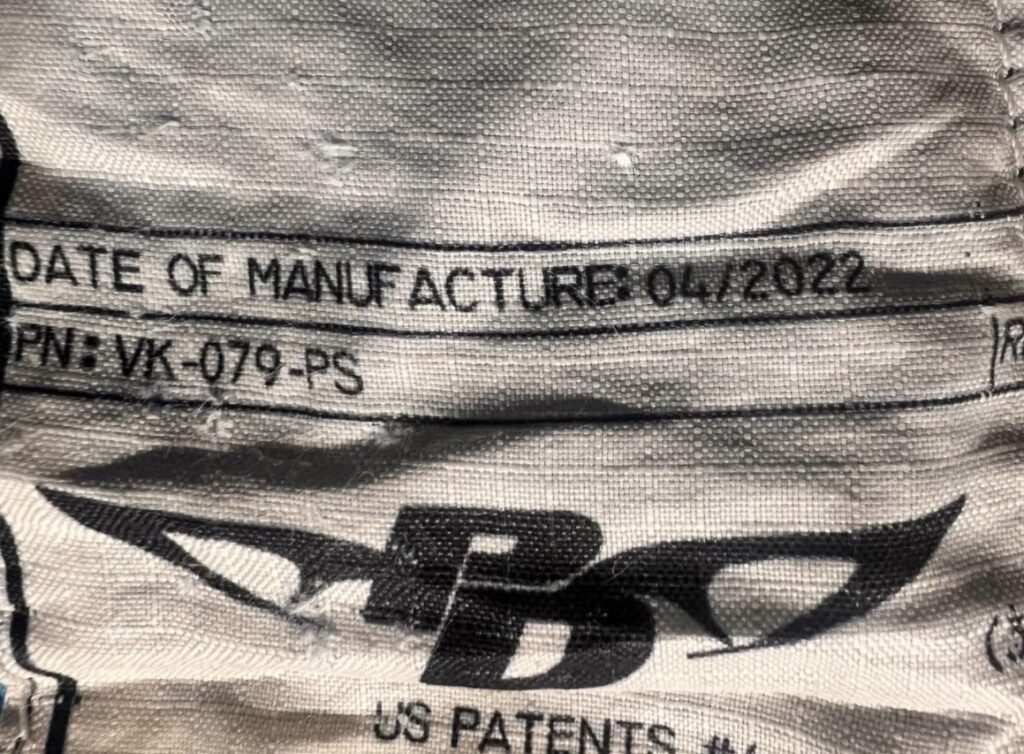
However, no used high-performance canopy should be represented as airworthy based only on photographs, age, model reputation, or seller statements. A qualified rigger should verify its serial number, manufacture date, construction type, jump history, line trim, fabric condition, repair history, slider, hardware, and compatibility before installation or use.
Flight Control, Performance Optimization, and Ownership Considerations
Understanding the Importance of Advanced Design
High-performance equipment is created to provide exceptional responsiveness, accuracy, and efficiency. Nevertheless, the advantages of sophisticated engineering can only be fully appreciated when they are combined with experience, discipline, and careful preparation.
Every movement, adjustment, and decision influences overall performance. Consequently, individuals who devote sufficient time to practice and education often gain a deeper understanding of how to maintain consistency under a wide range of conditions.
Long-term success depends upon knowledge as much as it depends upon equipment.
Why Precision Is Essential
Precision influences every phase of operation. Even the smallest adjustment can affect direction, balance, stability, speed, and energy management.
Several factors commonly influence precision:
- Environmental conditions
- Experience level
- Timing
- Equipment condition
- Weight distribution
- Physical readiness
Recognizing the relationship between these variables frequently helps individuals achieve more predictable results.
The Relationship Between Preparation and Performance
Preparation creates opportunities for better decision-making. Individuals who follow consistent routines often recognize potential concerns before they become more significant problems.
Several steps are commonly included within an effective preparation routine:
- Conducting a detailed visual inspection
- Reviewing procedures carefully
- Monitoring environmental conditions
- Confirming equipment readiness
- Maintaining complete concentration
These practices frequently support reliability while reducing uncertainty.
Developing Greater Situational Awareness
Situational awareness requires individuals to understand their surroundings continuously while adapting to changing circumstances. This skill becomes increasingly valuable as experience grows because conditions rarely remain completely predictable.
Several factors deserve constant attention:
- Wind conditions
- Visibility
- Temperature
- Humidity
- Traffic patterns
- Surface conditions
The ability to recognize subtle changes frequently contributes to improved confidence and consistency.
Understanding Energy Management
Energy management involves balancing speed, direction, efficiency, and altitude while maintaining control throughout every stage of operation.
Several elements frequently influence overall efficiency:
- Atmospheric conditions
- Timing
- Input sensitivity
- Experience level
- Equipment configuration
- Environmental awareness
Developing a clear understanding of these relationships often contributes to improved performance over time.
Why Maintenance Should Never Be Neglected
Routine maintenance remains essential because regular use gradually affects the condition of every component. Thorough inspections help identify signs of wear while supporting long-term reliability.
Several maintenance procedures are widely recommended:
- Examine all visible surfaces carefully.
- Inspect structural components thoroughly.
- Remove accumulated dirt and debris.
- Verify the integrity of all attachment points.
- Protect equipment from unnecessary environmental exposure.
These procedures frequently contribute to dependable long-term performance.
Proper Storage Procedures
Storage practices directly influence durability, appearance, and reliability. Therefore, appropriate storage conditions should always be maintained whenever possible.
Several recommendations are generally followed:
- Keep equipment clean and dry.
- Avoid prolonged exposure to direct sunlight.
- Minimize unnecessary moisture exposure.
- Protect materials from excessive heat.
- Perform routine inspections.
These habits frequently contribute to improved longevity.
Common Challenges and Practical Solutions
Every individual encounters challenges during the learning process. Fortunately, preparation and discipline frequently provide effective solutions.
Common difficulties often include:
- Insufficient preparation
- Delayed decision-making
- Inconsistent maintenance routines
- Inadequate environmental awareness
- Improper storage practices
Recognizing these issues early frequently helps prevent larger complications.
Frequently Asked Questions
Why is preparation so important?
Preparation improves awareness, strengthens confidence, and helps individuals respond effectively when conditions change unexpectedly.
Why should equipment be inspected regularly?
Routine inspections help identify wear, deterioration, and other concerns before they become more serious.
Why is environmental awareness essential?
Environmental conditions frequently influence predictability, efficiency, and overall performance.
Why are consistent routines valuable?
Consistent routines often improve confidence while supporting stronger decision-making abilities.
Why are storage procedures necessary?
Appropriate storage practices help preserve durability while protecting equipment from unnecessary environmental exposure.
Final Thoughts
Long-term success often develops through discipline, patience, preparation, and continuous learning. Individuals who remain dedicated to these principles frequently improve their knowledge, strengthen their skills, and maintain greater confidence throughout every stage of development.
Long-Term Reliability, Skill Development, and Performance Enhancement
Building Experience Through Continuous Practice
Experience is developed gradually through repetition, careful observation, and a willingness to learn from every situation. While advanced engineering contributes significantly to overall performance, experience remains the foundation upon which effective decision-making is built.
Individuals who dedicate time to improving their techniques frequently become more comfortable adapting to unfamiliar situations. As confidence increases, consistency often improves as well.
Progress is rarely achieved in a single step. Instead, it is usually the result of numerous small improvements made over an extended period.
Why Discipline Plays an Essential Role
Discipline creates structure, strengthens awareness, and helps establish effective habits. Individuals who follow dependable routines frequently develop greater confidence because they know exactly how to respond when conditions change unexpectedly.
Several qualities often associated with discipline include:
- Patience
- Concentration
- Observation
- Organization
- Adaptability
- Consistency
Together, these characteristics frequently contribute to long-term success.
Understanding the Relationship Between Control and Efficiency
Control and efficiency work together continuously. Maintaining the proper balance between the two frequently leads to improved performance while reducing unnecessary risks.
Several factors influence this relationship:
- Environmental conditions
- Timing
- Equipment configuration
- Experience level
- Physical readiness
- Situational awareness
Recognizing these connections often allows individuals to respond more effectively to changing circumstances.
Environmental Awareness and Adaptability
Conditions change continuously, which means adaptability remains one of the most valuable skills an individual can develop. Remaining aware of changing circumstances frequently supports better decision-making and greater confidence.
Several variables should be monitored carefully:
- Wind direction
- Wind intensity
- Visibility
- Atmospheric pressure
- Humidity
- Temperature
Awareness of these factors frequently contributes to more consistent outcomes.
The Importance of Thorough Inspections
Routine inspections help ensure that every component remains in satisfactory condition. Small concerns frequently become easier to address when they are identified early.
Several inspection procedures are commonly recommended:
- Examine all visible surfaces.
- Evaluate the condition of structural components.
- Inspect connection points carefully.
- Remove accumulated dirt and debris.
- Confirm overall integrity.
Performing these procedures consistently often contributes to greater reliability.
Effective Maintenance Practices
Maintenance plays an important role in preserving durability and supporting long-term functionality. Consequently, establishing a dependable maintenance routine remains extremely valuable.
Several recommendations are generally followed:
- Keep all surfaces clean.
- Protect equipment from unnecessary environmental exposure.
- Minimize prolonged exposure to moisture.
- Store equipment in an organized environment.
- Conduct regular evaluations of overall condition.
These practices frequently support long-term preservation.
Why Preparation Creates Better Outcomes
Preparation allows individuals to anticipate challenges while strengthening their ability to respond effectively. Furthermore, preparation frequently contributes to greater confidence and more consistent performance.
Several preparation strategies are commonly used:
- Reviewing established procedures
- Evaluating environmental conditions
- Confirming readiness
- Maintaining concentration
- Establishing dependable routines
These habits often help reduce uncertainty while improving efficiency.
Common Challenges and Recommended Solutions
Challenges are encountered throughout every stage of development. Fortunately, many of these concerns can be minimized through awareness, preparation, and discipline.
Common examples include:
- Inconsistent maintenance practices
- Inadequate preparation
- Delayed responses to changing conditions
- Insufficient awareness of environmental factors
- Improper storage methods
Early recognition frequently helps prevent more significant difficulties from developing.
Frequently Asked Questions
Why is continuous practice important?
Continuous practice strengthens confidence, improves consistency, and contributes to long-term development.
Why should inspections be performed regularly?
Regular inspections help identify signs of deterioration before more serious issues arise.
Why is environmental awareness valuable?
Environmental awareness supports informed decision-making and improved adaptability.
Why are maintenance routines necessary?
Maintenance procedures help preserve durability and support reliable performance.
Why is patience important?
Patience allows individuals to develop stronger skills while building confidence gradually over time.
Final Remarks
Long-term development is often supported by preparation, experience, discipline, and continuous learning. Individuals who consistently apply these principles frequently strengthen their abilities while maintaining confidence, reliability, and greater overall efficiency.
Advanced Ownership Experience, Equipment Preservation, and Operational Excellence
Understanding the Value of Continuous Improvement
Continuous improvement remains one of the most important aspects of long-term development. Although advanced engineering contributes significantly to overall performance, experience and knowledge frequently determine how effectively that performance can be used.
Individuals who dedicate themselves to learning often become more capable of recognizing subtle changes in operating conditions. Consequently, they frequently develop stronger decision-making skills and greater confidence over time.
Progress is generally achieved through patience, commitment, and consistency.
Why Attention to Detail Matters
Attention to detail influences every aspect of operation. Small observations frequently reveal important information that might otherwise be overlooked.
Several areas deserve particular attention:
- Surface condition
- Structural integrity
- Connection points
- Signs of wear
- Environmental exposure
- Storage conditions
Regular evaluation often helps preserve reliability while supporting long-term performance.
Building Confidence Through Preparation
Preparation creates a foundation for consistent results because well-established routines reduce uncertainty and improve awareness.
Several preparation practices are commonly recommended:
- Reviewing procedures thoroughly
- Confirming overall readiness
- Evaluating environmental conditions
- Organizing equipment carefully
- Maintaining concentration
These habits frequently contribute to improved reliability and efficiency.
Environmental Awareness and Changing Conditions
Environmental conditions frequently change without warning. Therefore, adaptability and awareness remain essential throughout every stage of operation.
Several factors should be observed continuously:
- Wind direction
- Wind speed
- Humidity
- Visibility
- Temperature
- Surface conditions
Understanding how these variables interact often supports more informed decisions.
The Importance of Routine Inspections
Routine inspections help ensure that equipment remains in dependable condition while reducing the possibility of unexpected problems.
Several areas should be evaluated regularly:
- Structural components
- External surfaces
- Connection points
- Reinforced areas
- Signs of deterioration
Performing these inspections consistently often contributes to greater durability and reliability.
Maintenance Practices for Long-Term Reliability
Maintenance procedures help preserve functionality while supporting dependable performance over extended periods of use.
Several maintenance practices are frequently recommended:
- Cleaning exposed surfaces carefully
- Removing dirt and debris promptly
- Protecting materials from excessive heat
- Reducing unnecessary exposure to moisture
- Conducting regular inspections
These procedures often support long-term preservation.
Effective Storage and Protection Methods
Storage conditions directly influence durability and appearance. Consequently, maintaining an appropriate environment remains extremely important.
Several recommendations are generally followed:
- Keep equipment clean and dry.
- Minimize direct exposure to sunlight.
- Avoid prolonged exposure to excessive temperatures.
- Protect components from moisture whenever possible.
- Inspect equipment periodically.
These practices frequently contribute to improved longevity.
Managing Challenges Successfully
Challenges are encountered during every stage of development. Nevertheless, preparation and discipline often provide effective ways to overcome them.
Common examples include:
- Inadequate preparation
- Irregular maintenance schedules
- Insufficient environmental awareness
- Delayed decision-making
- Improper storage conditions
Identifying these concerns early frequently helps prevent more serious difficulties.
Frequently Asked Questions
Why is attention to detail so important?
Careful observation often allows individuals to identify concerns before they become significant problems.
Why should maintenance procedures be performed regularly?
Regular maintenance helps preserve reliability while reducing unnecessary wear.
Why is environmental awareness valuable?
Environmental awareness supports adaptability and strengthens decision-making abilities.
Why are storage conditions important?
Proper storage practices help protect materials while extending operational life.
Why does experience matter?
Experience frequently strengthens confidence, awareness, and consistency.
Final Thoughts
Long-term success frequently depends upon preparation, patience, discipline, and continuous learning. Individuals who remain committed to these principles often strengthen their knowledge, improve their abilities, and maintain dependable performance throughout many years of use.
Long-Term Performance, Care, Ownership, and Operational Knowledge
Achieving Consistent Results Through Experience
Experience is one of the most valuable assets that an individual can develop over time. Although technological advancements have significantly improved modern equipment, experience continues to influence decision-making, preparation, awareness, and consistency.
Individuals who remain committed to learning frequently strengthen their understanding of changing conditions while improving their ability to react effectively. As a result, confidence often grows alongside experience.
Consistent progress is usually achieved through patience, discipline, and repetition rather than through sudden changes.
Why Knowledge Is Just as Important as Equipment
Possessing high-quality equipment is only one aspect of long-term success. Knowledge, preparation, discipline, and awareness frequently have an even greater influence on overall performance.
Several areas deserve continuous attention:
- Equipment condition
- Environmental conditions
- Personal readiness
- Timing
- Organization
- Operational awareness
Understanding these factors often contributes to more dependable and predictable outcomes.
Developing Strong Preparation Habits
Preparation remains essential because it creates opportunities to identify concerns before they become larger problems. Individuals who establish dependable routines frequently gain greater confidence in their abilities.
Several preparation methods are commonly followed:
- Reviewing all procedures carefully.
- Conducting detailed inspections.
- Monitoring environmental conditions.
- Confirming readiness before operation.
- Maintaining concentration throughout every stage.
These habits frequently contribute to improved efficiency and reliability.
The Importance of Environmental Awareness
Environmental awareness remains essential because surrounding conditions rarely remain constant. Consequently, individuals who observe changes carefully often become better prepared to adapt when circumstances shift unexpectedly.
Several variables should be monitored regularly:
- Wind direction
- Wind speed
- Atmospheric pressure
- Visibility
- Humidity
- Temperature
Understanding how these elements interact often strengthens awareness while supporting effective decision-making.
Maintenance Procedures and Long-Term Preservation
Proper maintenance plays an important role in protecting equipment from premature wear. Repeated exposure to environmental conditions gradually influences materials, which is why regular inspections remain necessary.
Several maintenance recommendations are generally followed:
- Inspect all visible surfaces thoroughly.
- Remove dirt and debris carefully.
- Examine structural components regularly.
- Verify the condition of attachment points.
- Protect equipment from unnecessary environmental exposure.
Following these procedures consistently often contributes to improved durability.
Storage Methods That Support Longevity
Appropriate storage conditions frequently help preserve both appearance and functionality. Therefore, maintaining a clean, organized, and controlled environment remains highly beneficial.
Several recommendations are commonly followed:
- Keep equipment dry.
- Minimize direct exposure to sunlight.
- Protect materials from excessive temperatures.
- Reduce unnecessary exposure to moisture.
- Conduct regular evaluations of overall condition.
These practices frequently contribute to long-term preservation.
Building Discipline Through Repetition
Discipline creates structure while encouraging consistency. Individuals who maintain dependable routines often become more capable of recognizing subtle changes and responding appropriately.
Several habits frequently support continued development:
- Conducting routine inspections
- Maintaining organized records
- Following established procedures
- Evaluating previous experiences
- Remaining attentive to changing conditions
These habits frequently strengthen confidence while supporting continued improvement.
Common Challenges and Effective Solutions
Challenges are naturally encountered throughout the learning process. Fortunately, many of these situations can be managed successfully through preparation and experience.
Common examples include:
- Insufficient preparation
- Irregular maintenance practices
- Delayed decision-making
- Inadequate environmental awareness
- Improper storage methods
Recognizing these concerns early often helps prevent more complicated difficulties from developing.
Frequently Asked Questions
Why is experience important skydiving tube?
Experience frequently strengthens awareness, confidence, adaptability, and decision-making abilities.
Why should preparation remain a priority?
Preparation helps reduce uncertainty while improving consistency and reliability.
Why is maintenance essential?
Regular maintenance helps preserve equipment condition while reducing unnecessary wear.
Why should environmental conditions be monitored?
Environmental conditions frequently influence performance and operational efficiency.
Why are storage procedures necessary?
Appropriate storage practices help protect equipment while supporting long-term durability.
Final Remarks
Long-term success frequently depends upon preparation, discipline, patience, and continuous learning. Individuals who remain committed to these principles often strengthen their abilities, improve their confidence, and maintain dependable performance throughout every stage of ownership.
Be the first to review “Used Valkyrie Main Parachute Canopy 79”
Related products


used products

used products

used products

used products

used products


used products

used products
Reviews
There are no reviews yet.