

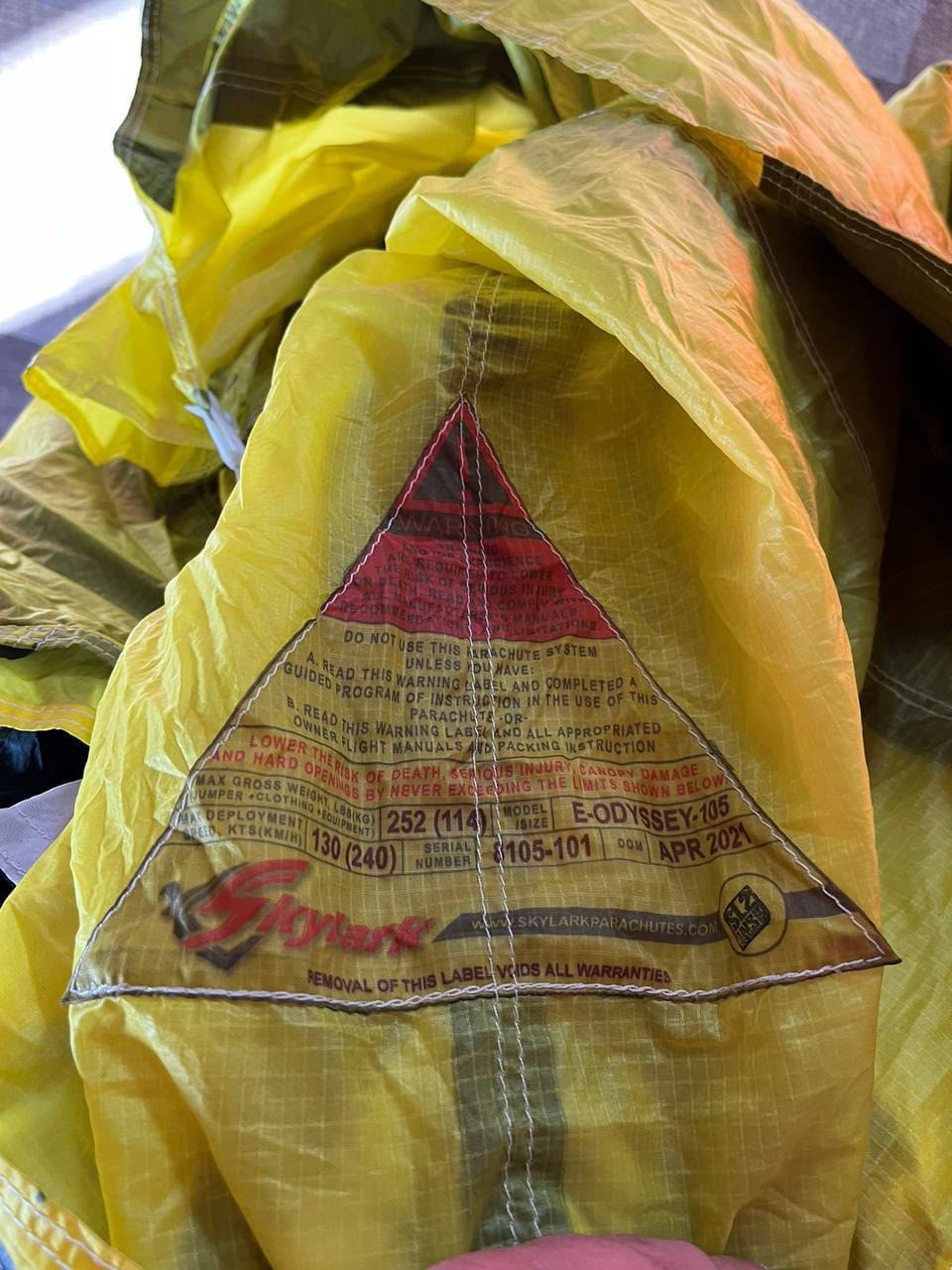



EVO Odyssey-105


€1,250.00
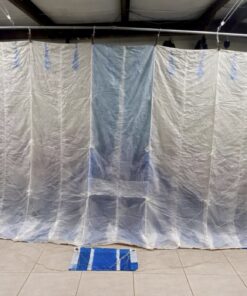
The EVO Odyssey-105 is a high-performance main parachute canopy associated with Skylark’s Odyssey family and intended for experienced canopy pilots. The current Odyssey is described by Skylark as a fully elliptical 9-cell design, with the 105 sq. ft. version forming part of a broader range of performance-oriented canopy sizes. The manufacturer emphasizes responsive control inputs, high glide performance, a long recovery arc, and a powerful, stable flare.
For the current 105 sq. ft. Odyssey specification, Skylark lists an approximate packing volume of 310 cubic inches, weight of 5.0 lb (2.3 kg), an aspect ratio of 2.7, and a recommended wing-loading range of 1.3–2.0 lb/sq. ft., with 1.5–1.8 identified as its best-performance range. These numbers should not automatically be applied to every historical EVO Odyssey-105 without checking its exact generation and documentation.
EVO Odyssey-105 High-Performance Skydiving Canopy – Technical Product Guide
Understanding the EVO Odyssey-105 and High-Performance Canopy Design
EVO Odyssey-105 Design and Engineering Philosophy
The EVO Odyssey-105 belongs to the performance-oriented end of sport parachuting equipment. Historical parachuting documentation recognizes both the Odyssey and Odyssey EVO as Skylark canopy models, while contemporary Odyssey documentation describes the design as a modern, fully elliptical nine-cell main canopy.
Unlike equipment intended primarily for early canopy progression, a 105-square-foot elliptical wing demands careful consideration of pilot experience, exit weight, previous canopy history, training, and actual wing loading. Smaller canopy area does not inherently mean “better.” Instead, reduced area combined with higher loading can substantially change speed, responsiveness, recovery characteristics, and landing demands.
Canopy Flight and Responsive Controls
Advanced canopy flight involves considerably more than simply steering toward a landing area. A performance canopy responds to changes in control input, loading, atmospheric conditions, and pilot technique.
Skylark describes the Odyssey as providing sharp toggle response with relatively little altitude loss, high glide, light front-riser pressure, responsive rear-riser control, a long recovery arc, and a strong flare. The manufacturer explicitly recommends the design only for experienced canopy pilots.
These characteristics explain why topics such as landing flight risers, a skydiving downsizing chart, smallest canopy, and advanced landing performance require qualified coaching rather than simple numerical recommendations.
Wing Loading and Weight Limit Skydiving Considerations
The phrase weight limit skydiving becomes particularly important when discussing smaller performance wings. Wing loading represents the relationship between total suspended exit weight and canopy area.
For the current Odyssey family, Skylark specifies a recommended range of 1.3–2.0 lb/sq. ft. and identifies 1.5–1.8 as its preferred performance range.
However, those figures are manufacturer specifications rather than a recommendation for any particular jumper. Selecting or downsizing a canopy requires professional evaluation of experience, currency, previous canopy size, landing consistency, training environment, and local requirements.
Construction, Linewear and Equipment Inspection
Canopy construction directly influences pack volume, durability, and flight characteristics. Skylark states that its current Odyssey uses zero-porosity fabric and Vectran suspension lines and includes a collapsible slider with stainless-steel grommets and soft links.
Consequently, linewear deserves careful attention during routine equipment inspection. Suspension lines experience repeated loading cycles, friction, packing, and environmental exposure.
Professional skydiving rigging therefore forms an essential part of long-term equipment management. A qualified rigger can assess canopy fabric, stitching, lines, attachment points, slider components, and other areas that may influence airworthiness.
Parachute Rig and Container Integration
The main canopy forms only one element of a complete parachute rig. Other parts of a parachute system include the harness-container, reserve, risers, deployment components, and associated safety equipment.
Correct container skydive compatibility should be verified using the actual canopy model and pack-volume information rather than assuming every 105-square-foot wing packs identically.
A complete skydiving equipment list may additionally include a suitable skydiving helmet, skydiving glasses, skydiver goggles, altitude-awareness equipment, and other discipline-specific accessories.
Products commonly researched by experienced jumpers include the Cookie G4 helmet, G35 helmet, full face skydiving helmet, sky diving helmet, sky helmet skydiving, and other skydive helmets. The question can you wear glasses while skydiving likewise depends partly on compatible eye and helmet protection.
Emergency Equipment and Hook-Knife Terminology
Searches for a hook blade knife, hook knife skydiving, or skydive hook knife relate to emergency equipment sometimes carried by trained parachutists. These accessories should be understood within proper training and established emergency procedures rather than as substitutes for instruction.
Similarly, terms such as fire parachute or cypress fire skydiving should not be confused with the engineering specifications of the Odyssey canopy itself.
A main canopy, reserve system, harness-container, and automatic activation device each perform different functions within a complete equipment configuration.
Tracking, Freefly and Wingsuit Sport
Modern skydiving encompasses disciplines ranging from a tracking jump and CRW skydiving to freeflying and wingsuit sport.
Wingsuit-related searches may include wingsuit, vector wingsuit, gliding suit wingsuit, skydiving gliding suit, fluid wings, fly suits, indoor wingsuit, tandem wingsuit, wing suits for sale, and price of wingsuit.
These disciplines introduce their own training and equipment requirements. A canopy should never be assumed suitable for a specialized discipline solely because of its size or performance category.
Likewise, base jumping, sometimes incorrectly searched as baseline jumping, involves a fundamentally different environment and should not be treated as equivalent to conventional aircraft skydiving. A base canopy serves different operational requirements from a high-performance sport-skydiving main canopy.
Skydiving Speed and Advanced Performance
Terms such as skydiving speed and speed sky diving describe only part of the aerodynamic picture. Performance also involves glide, recovery behavior, control response, deployment characteristics, and landing performance.
Historical commentary from experienced canopy pilots has compared an Odyssey 105 broadly with other elliptical performance designs, while emphasizing gradual progression before moving toward more demanding wings.
The Odyssey should therefore be evaluated as an advanced aerodynamic system rather than simply a small parachute.
Global Skydiving and Training Context
Skydiving communities operate worldwide, from parachute jump Australia, Skydive Byron Bay, and Cairns skydiving to Skydive Belize and searches for skydiving Blue Hole Belize. Indoor facilities such as iFLY Colorado Springs represent another form of flight training, although tunnel flying and actual canopy piloting are fundamentally different disciplines.
Other searches—including nude parachute jump, skydiving nude, new skydive, #skydiving latest, skydiving website, gear bag skydive, skydiving tube, jumper pilot, Safire 3, and freefly pud handle—reflect the enormous range of subjects surrounding the sport rather than specifications of the Odyssey itself.
Overall Technical Perspective
The EVO Odyssey-105 should be approached as an advanced main-canopy platform requiring appropriate experience, professional equipment compatibility checks, and disciplined canopy training. The Odyssey family emphasizes responsive handling, glide performance, riser response, extended recovery characteristics, and powerful flare performance.
Most importantly, canopy size alone cannot determine suitability. Exit weight, wing loading, currency, previous experience, training, equipment condition, and professional guidance must all be considered before an advanced 105-square-foot canopy is used.
Flight Behavior, Handling Characteristics, and Practical Performance
The EVO Odyssey-105 is designed around responsive canopy flight, efficient energy management, and precise control. Its relatively compact surface area and elliptical planform place greater emphasis on pilot input, loading, and technique than larger general-purpose parachutes. Because of this, understanding its practical behavior requires attention to how the canopy responds during opening, straight flight, turns, recovery, and landing rather than focusing on a single performance number.
Opening Characteristics and Initial Inflation
Deployment behavior is one of the first characteristics pilots notice when evaluating a main canopy. A well-designed opening sequence should transition from deployment to full inflation in a controlled and predictable manner.
The overall feel of an opening can be influenced by packing quality, body position, airspeed, line condition, and deployment technique. These variables mean that two openings on the same canopy may not feel identical if conditions differ significantly.
Consistent packing and equipment inspection therefore remain important. A canopy that is maintained correctly is easier to evaluate because changes in behavior are more likely to reflect flight conditions rather than mechanical problems.
Straight-Line Flight and Glide Efficiency
Once fully open, the canopy enters its normal flight phase. Glide performance is influenced by aerodynamic design, total suspended weight, air density, and control input.
A performance-oriented canopy may maintain speed efficiently while responding quickly to changes in pilot input. This makes smooth control particularly important because abrupt movements can produce larger changes in direction or energy than they would on a more forgiving canopy.
Pilots should understand that efficient glide does not mean the canopy will automatically cover every distance safely. Wind direction and strength can significantly change ground travel, so good judgment remains essential.
Control Response and Input Sensitivity
One of the defining characteristics of advanced canopy designs is responsive handling. Small changes in control position can influence pitch, heading, and speed.
This sensitivity can provide precise control for experienced pilots, but it also requires discipline. Inputs should be deliberate and consistent rather than rushed or exaggerated.
A pilot who understands the canopy’s response can make smoother corrections and maintain better awareness of altitude and position. Familiarity develops through appropriate training and repeated experience under suitable conditions.
Turn Dynamics and Energy Management
Turning performance is influenced by the canopy’s planform, loading, and pilot input. Advanced designs can retain significant energy during directional changes.
This means that turns should always be approached with careful altitude awareness. The canopy may continue recovering after input has stopped, and the amount of altitude used during this process depends on several variables.
Understanding recovery behavior is especially important because the same turn may produce different results depending on entry speed, loading, environmental conditions, and control technique.
Flare Performance and Landing Control
Landing performance depends on how effectively the canopy converts forward speed into lift during the final phase of flight.
A properly timed flare can reduce descent rate and support a controlled landing. However, the effectiveness of the flare depends on speed, timing, control range, and environmental conditions.
Advanced canopies often provide strong flare potential when flown correctly, but this does not remove the need for disciplined technique. Poor timing, low-energy approaches, or unsuitable conditions can still create difficult landings.
Wing Loading and Performance Changes
Wing loading plays a major role in canopy behavior. Increasing loading generally changes speed, responsiveness, descent characteristics, and recovery behavior.
This is why two pilots using the same canopy size may experience very different performance if their total suspended weights differ.
Loading should therefore be evaluated as part of the complete system rather than as an isolated number. Experience, currency, previous canopy history, and training all matter when determining whether a particular configuration is appropriate.
Environmental Influence on Flight
Weather conditions can significantly affect canopy behavior. Wind influences ground speed and direction, while turbulence can create changes in stability and control feel.
Temperature and altitude can also affect air density, which influences aerodynamic performance.
Experienced pilots evaluate these factors before every jump because a canopy that feels predictable in calm conditions may behave differently in stronger or more variable air.
Equipment Condition and Consistency
Canopy performance depends heavily on equipment condition. Suspension lines can change over time, and fabric condition can influence inflation and flight characteristics.
Small changes may gradually affect trim, responsiveness, or opening behavior. Regular professional inspection helps identify these issues before they become serious.
Maintaining accurate service records also helps pilots understand how the canopy has changed throughout its life.
Practical Use and Pilot Familiarity
The Odyssey-105 is best understood as a canopy that rewards familiarity and disciplined handling. Its performance characteristics are most useful when the pilot understands how the wing responds through different phases of flight.
Repeated experience allows users to recognize normal behavior and notice unusual changes more quickly.
This familiarity improves confidence, but confidence should always remain connected to realistic limits and proper training.
Overall Performance Perspective
The EVO Odyssey-105 combines responsive handling, efficient glide, dynamic turning characteristics, and strong flare potential within an advanced canopy design. These qualities can provide precise and engaging flight behavior for appropriately experienced pilots.
However, performance depends on much more than canopy design alone. Wing loading, technique, weather, equipment condition, and decision-making all influence the final result.
The most effective way to evaluate the canopy is through controlled use, professional guidance, and consistent attention to equipment condition. When these factors are managed properly, the Odyssey-105 demonstrates how modern canopy engineering can deliver a precise, responsive, and highly technical flight experience.
Construction Quality, Equipment Care, Inspection, and Long-Term Reliability
The EVO Odyssey-105 is a highly technical piece of parachuting equipment whose long-term performance depends on more than aerodynamic design alone. Fabric condition, suspension components, stitching, storage practices, packing history, and professional inspection all influence how consistently a canopy performs throughout its service life. For this reason, responsible ownership requires an ongoing approach to equipment care rather than attention only when a visible problem develops.
Understanding Canopy Construction
A modern ram-air canopy consists of multiple fabric panels assembled into a carefully calculated aerodynamic structure. These panels form cells that inflate during deployment and create the wing shape required for controlled flight.
Construction accuracy is particularly important on a performance-oriented design because relatively small dimensional differences can influence aerodynamic behavior. Seams, reinforcement areas, attachment points, and internal structural components must therefore work together correctly.
The finished canopy should be understood as a complete aerodynamic structure rather than simply a collection of fabric panels. Changes to one part of that structure can potentially influence other aspects of its behavior.
Fabric Condition and Performance
Canopy fabric performs several functions simultaneously. It creates the aerodynamic surface, withstands deployment loads, and must tolerate repeated packing cycles.
Over time, fabric can experience wear from handling, environmental exposure, contamination, and normal use. Surface condition should therefore be monitored carefully.
Unnecessary exposure to sunlight should be minimized because prolonged ultraviolet exposure can contribute to material deterioration. Moisture, chemicals, dirt, and inappropriate cleaning products can also affect technical fabrics.
Keeping equipment clean and appropriately protected contributes significantly to preserving its condition.
Suspension System Condition
The suspension system transfers forces between the canopy and the jumper. Because these components repeatedly experience loading, their condition deserves careful attention.
Gradual changes may occur through normal use. Abrasion, dimensional changes, contamination, or other forms of wear can influence the overall condition of the system.
On a responsive performance canopy, changes to suspension geometry may also influence aerodynamic characteristics. For that reason, unusual changes in flight behavior should not automatically be attributed to pilot technique or weather.
A qualified professional can determine whether inspection or servicing is appropriate.
Importance of Professional Inspection
Regular inspection provides a structured way to evaluate equipment condition. Experienced professionals understand which areas typically experience wear and how to distinguish cosmetic changes from issues requiring further attention.
Inspection may involve examining fabric, seams, reinforcement areas, suspension components, connection points, and other structural elements.
This professional evaluation becomes particularly important with used equipment because previous storage conditions and usage history may not always be immediately visible.
Documentation can provide useful context, but physical condition must still be assessed independently.
Packing and Equipment Preservation
Packing is a routine part of parachuting, yet repeated handling can influence equipment condition over time. Careful packing helps protect fabric and supporting components from unnecessary stress.
Equipment should be kept away from rough surfaces, sharp objects, liquids, and contamination during preparation.
A clean packing environment is preferable because dirt and debris can become trapped within folded material. Careful handling also reduces unnecessary abrasion.
Packing practices should follow manufacturer guidance and appropriate training rather than improvised methods.
Storage Between Periods of Use
Storage conditions can influence equipment even when it is not being jumped. A dry, temperature-controlled environment generally provides better protection than locations exposed to excessive humidity, heat, or direct sunlight.
Equipment should also be protected from substances that could affect technical materials.
Long periods without use do not eliminate the need for inspection. Aging can occur independently of jump numbers, meaning equipment condition should be considered before returning to regular activity after extended storage.
Recognizing Changes in Flight Behavior
Familiarity allows an experienced pilot to develop an understanding of normal canopy behavior. Changes in openings, control response, glide characteristics, or general handling may therefore provide useful information.
However, diagnosing the cause requires caution because environmental conditions and pilot technique can create similar differences.
A noticeable or persistent change should encourage professional evaluation rather than immediate assumptions.
Maintenance decisions should be based on appropriate inspection and manufacturer guidance.
Maintaining Accurate Equipment History
Documentation adds significant value to long-term equipment management. Useful records can include manufacturing information, ownership history, inspections, servicing, and major component work.
A documented history provides context when the equipment changes ownership or receives professional evaluation.
Records are especially useful for performance equipment because they allow technicians and owners to understand how the system has been managed throughout its life.
Responsible Transportation
Travel introduces additional opportunities for equipment damage. Bags may be exposed to rough handling, moisture, excessive heat, or contamination.
Protective storage during transportation helps reduce these risks. Equipment should be inspected after unusual incidents rather than assuming that protection prevented all possible damage.
Careful transportation is simply another part of maintaining equipment reliability.
Evaluating Long-Term Serviceability
There is no single visual feature that determines the complete condition of a performance canopy. Serviceability depends on construction integrity, material condition, suspension-system condition, maintenance history, and professional assessment.
Age and jump numbers provide useful information, but neither should be considered independently.
A relatively young canopy can experience significant wear through demanding use, while older equipment may have comparatively limited use. Condition must therefore be evaluated comprehensively.
Overall Maintenance Perspective
The EVO Odyssey-105 combines aerodynamic precision with specialized construction, meaning its performance depends on preserving the integrity of the entire system.
Responsible care includes suitable storage, careful handling, accurate records, routine observation, and professional inspection when required.
These practices do more than maintain appearance. They help preserve predictable aerodynamic behavior and allow changes to be identified before they become larger concerns.
For an advanced canopy, long-term reliability ultimately comes from the combination of sound engineering and disciplined equipment management. Proper care ensures that the design continues to perform as intended while providing experienced pilots with a better understanding of the condition and history of the equipment they rely upon.
Pilot Experience, Progression, Environmental Factors, and Operational Considerations
The EVO Odyssey-105 represents a category of parachute where pilot experience and judgment are fundamental parts of the overall performance equation. A sophisticated aerodynamic design can provide responsive handling and efficient flight characteristics, but those qualities also demand appropriate training, currency, and understanding. Therefore, evaluating this canopy requires consideration of both the equipment and the individual operating it.
The Importance of Appropriate Experience
Experience plays a major role when operating any advanced canopy. Smaller, more responsive designs generally react more quickly to control inputs and can retain significant energy throughout flight.
For this reason, canopy selection should never be based exclusively on physical size or the desire for increased performance. Previous experience, training history, landing consistency, currency, total suspended weight, and professional coaching all matter.
A pilot should understand the behavior of their existing equipment thoroughly before considering progression. Developing strong fundamentals provides a more reliable foundation than advancing primarily according to jump numbers.
Understanding Progressive Skill Development
Canopy progression is a gradual process. Pilots normally develop skills through repeated experience under different conditions while receiving appropriate instruction.
Progression involves learning much more than basic directional control. A pilot must understand traffic awareness, environmental conditions, landing-area assessment, equipment limitations, and decision-making.
Each stage should strengthen existing skills rather than simply introduce greater speed or responsiveness. This approach allows experience to develop alongside equipment capability.
Currency and Recent Experience
Total experience provides useful context, but recent experience is equally important. A pilot who has completed many jumps historically but has not been active for an extended period may require additional preparation before returning to demanding equipment.
Currency helps maintain timing, awareness, judgment, and familiarity with normal procedures.
After extended inactivity, returning gradually under professional guidance may be appropriate. The goal should be restoring consistent skills rather than immediately returning to previous performance levels.
Understanding Environmental Conditions
Weather has a direct influence on parachute flight. Wind direction, wind strength, temperature, turbulence, and atmospheric stability can change the way a canopy feels and behaves.
Higher-performance equipment can make these differences more noticeable because responsive designs translate aerodynamic changes into noticeable movement.
Pilots should therefore evaluate conditions before every jump rather than assuming that previous experience guarantees identical performance.
Environmental awareness remains one of the most important aspects of responsible canopy operation.
Wind and Ground Movement
Wind affects the relationship between airspeed and movement across the ground. A canopy may maintain similar aerodynamic characteristics while producing significantly different ground movement depending on wind conditions.
This distinction becomes particularly important when evaluating landing areas and surrounding obstacles.
Changing wind direction can also influence traffic patterns and landing decisions. Maintaining awareness throughout descent allows pilots to adapt appropriately to established procedures.
Landing Area Assessment
A suitable landing area provides sufficient space and minimizes unnecessary hazards. However, conditions can change between takeoff and landing.
Pilots should maintain awareness of obstacles, other canopy traffic, wind indicators, and alternative areas throughout the descent.
Advanced equipment does not remove the need for conservative decision-making. In fact, increased performance can make early planning even more important because higher speeds can reduce available time for correcting poor decisions.
Traffic Awareness
Parachuting frequently involves multiple canopies sharing the same airspace. Maintaining predictable behavior is therefore important for everyone involved.
Traffic awareness requires observing other pilots, understanding established landing procedures, and avoiding unexpected actions.
The ability to fly a responsive canopy does not provide priority over other users. Predictability, communication, and adherence to local procedures contribute significantly to safer operations.
Mental Preparation and Decision-Making
Technical skill represents only one part of advanced canopy operation. Good judgment is equally important.
Pilots must be willing to adapt plans when conditions change. A planned activity should never become more important than responding appropriately to the actual environment.
Mental preparation includes understanding personal limitations. Fatigue, distraction, pressure, or reduced concentration can influence decision-making even when equipment remains in excellent condition.
Recognizing these factors is part of responsible participation.
Equipment Familiarity
A pilot should understand the normal characteristics of their equipment. Familiarity develops through appropriate experience and careful observation.
Knowing how a canopy normally opens, flies, and responds makes unusual behavior easier to recognize.
However, familiarity should not create complacency. Equipment should still receive appropriate inspection, and established procedures should continue to be followed regardless of experience level.
Performance Versus Forgiveness
Advanced equipment often involves a trade-off between responsiveness and forgiveness. A highly responsive canopy can translate small control changes into significant aerodynamic responses.
For experienced pilots, this characteristic can provide precise feedback and a dynamic flight experience. However, it also means errors may have greater consequences.
Therefore, performance should not automatically be interpreted as superiority. The most appropriate canopy is the one that matches the pilot’s demonstrated skills, experience, training, and operating environment.
Long-Term Skill Development
Canopy piloting develops continuously. Even experienced pilots can benefit from professional coaching, structured practice, and periodic review of fundamental skills.
Training provides an opportunity to identify habits that may otherwise go unnoticed. It can also introduce improved techniques and reinforce sound decision-making.
The objective of long-term development should be greater understanding and consistency rather than progression for its own sake.
Overall Operational Perspective
The EVO Odyssey-105 combines advanced aerodynamic characteristics with the demands associated with a responsive performance canopy. Its capabilities must therefore be considered alongside pilot experience, currency, environmental conditions, equipment condition, and professional guidance.
Successful operation comes from the interaction between technology and disciplined decision-making. The canopy provides aerodynamic capability, while the pilot provides judgment and control.
When those elements are appropriately matched, the equipment can demonstrate the precision and responsiveness for which advanced parachute designs are developed. However, training, conservative progression, equipment familiarity, and environmental awareness remain fundamental throughout every stage of canopy piloting.
Long-Term Ownership, Reliability, Equipment Evaluation, and Performance Preservation
The EVO Odyssey-105 is a specialized parachute canopy whose long-term value depends on its physical condition, documented history, professional maintenance, and appropriate use. Because performance-oriented parachutes operate as precisely shaped aerodynamic systems, gradual changes in fabric, suspension components, or structural geometry can influence how the equipment behaves. Long-term ownership should therefore involve continuous observation and responsible management rather than relying exclusively on the canopy’s age or appearance.
Understanding Long-Term Reliability
Reliability is created through a combination of manufacturing quality and appropriate equipment care. A well-constructed canopy provides a strong foundation, but storage conditions, handling, use frequency, and maintenance practices influence how that foundation changes over time.
Repeated deployments place loads on structural components, while packing introduces regular handling and folding. Environmental exposure can also contribute to gradual material aging.
These influences are normal parts of equipment use. The objective of maintenance is to identify meaningful changes early and determine whether professional attention is necessary.
Evaluating a Used Canopy
A used performance canopy should be evaluated as a complete system. Appearance provides useful information, but cosmetic condition alone cannot establish overall serviceability.
Inspection history, approximate use, storage environment, previous repairs, and suspension-system condition can provide valuable context.
Professional evaluation becomes particularly important when the complete history is unavailable. A qualified specialist can inspect structural areas and determine whether further servicing or investigation is appropriate.
Documentation should complement physical inspection rather than replace it.
Why Manufacturing Date Matters
Manufacturing date provides useful information about equipment history, but it should not be treated as the only measurement of condition.
Two canopies manufactured during the same period can develop very different histories. One may have experienced frequent use and significant environmental exposure, while another may have spent much of its life properly stored.
Therefore, actual condition, maintenance history, and professional assessment provide a more complete picture than age alone.
Monitoring Structural Components
A parachute experiences loads across multiple interconnected components. Fabric panels, seams, reinforcement areas, attachment points, and suspension components work together to maintain the intended aerodynamic structure.
Changes in one area may influence the performance of another. Consequently, inspection should consider the complete canopy rather than concentrating only on highly visible areas.
Small signs of wear should not automatically cause concern, but they should be interpreted correctly. Professional assessment can distinguish normal service wear from conditions requiring attention.
Maintaining Consistent Performance
Performance preservation requires maintaining the geometry and condition of the aerodynamic system.
A pilot who regularly uses the same canopy may gradually become accustomed to small changes in handling. Because these changes can develop slowly, they are not always immediately noticeable.
Periodic inspection provides an independent way of evaluating equipment condition. Comparing current behavior with previous experience can also help identify significant differences.
Persistent changes should be investigated rather than automatically accepted as normal aging.
Importance of Appropriate Storage
Storage conditions influence long-term material preservation. Technical fabrics and supporting components benefit from clean, dry environments protected from unnecessary ultraviolet exposure and extreme temperatures.
Contamination should also be avoided. Chemicals, oils, moisture, and unsuitable cleaning products may affect specialized materials.
Protective storage does not eliminate natural aging, but it can reduce avoidable deterioration and help maintain equipment condition between periods of use.
Transportation and Travel Considerations
Performance equipment is often transported between different locations, creating additional opportunities for damage.
Protective bags and careful handling can reduce exposure to rough surfaces, dirt, moisture, and other environmental hazards.
After unusual transportation incidents, equipment should be checked rather than assuming that external protection prevented all possible damage.
Care during travel forms part of responsible long-term ownership.
Recognizing When Professional Attention Is Needed
Users should become familiar with the normal appearance and behavior of their equipment. Unusual changes may indicate that professional evaluation is appropriate.
Persistent differences in deployment behavior, handling characteristics, or physical condition deserve attention.
Owners should avoid attempting structural repairs without the required qualifications. Parachuting equipment depends on specialized construction techniques and materials, meaning professional servicing is essential when significant work is required.
Documentation and Ownership History
Good documentation becomes increasingly valuable as equipment ages. Records can provide information about inspections, repairs, component servicing, and ownership history.
When equipment changes owners, accurate records help the next user understand its background.
Documentation can also assist professionals during inspection because previous work and maintenance decisions provide context for the current condition.
Matching Equipment to Current Experience
Long-term ownership does not automatically mean that the same equipment will remain appropriate indefinitely. A pilot’s activity level, experience, physical circumstances, and training goals can change.
Periods away from the sport may reduce currency, while changes in operating environment can introduce different demands.
Equipment suitability should therefore be considered periodically rather than assumed simply because the canopy was appropriate at an earlier point.
Preserving Confidence Without Becoming Complacent
Familiar equipment can create confidence because the pilot understands its characteristics. However, familiarity should remain connected to disciplined preparation.
Routine inspections, appropriate professional servicing, and careful observation remain important regardless of experience.
Confidence should come from knowledge of equipment condition and demonstrated skills rather than assumption.
Overall Long-Term Assessment
The EVO Odyssey-105 represents an advanced aerodynamic platform whose long-term performance depends on preserving the integrity of its complete structure.
Responsible ownership combines careful storage, appropriate transportation, accurate documentation, regular observation, and professional inspection. These practices help maintain predictable characteristics and provide a clearer understanding of equipment condition throughout its service life.
Ultimately, performance preservation is a continuous process. Sound engineering establishes the original capability of the canopy, while disciplined ownership helps protect that capability over time. For appropriately experienced pilots, this combination of technical design, professional maintenance, and responsible management provides the strongest foundation for understanding and maintaining an advanced parachute system.
Be the first to review “EVO Odyssey-105”
Related products

used products
used products
used products

used products
used products

used products

used products

used products
Reviews
There are no reviews yet.