
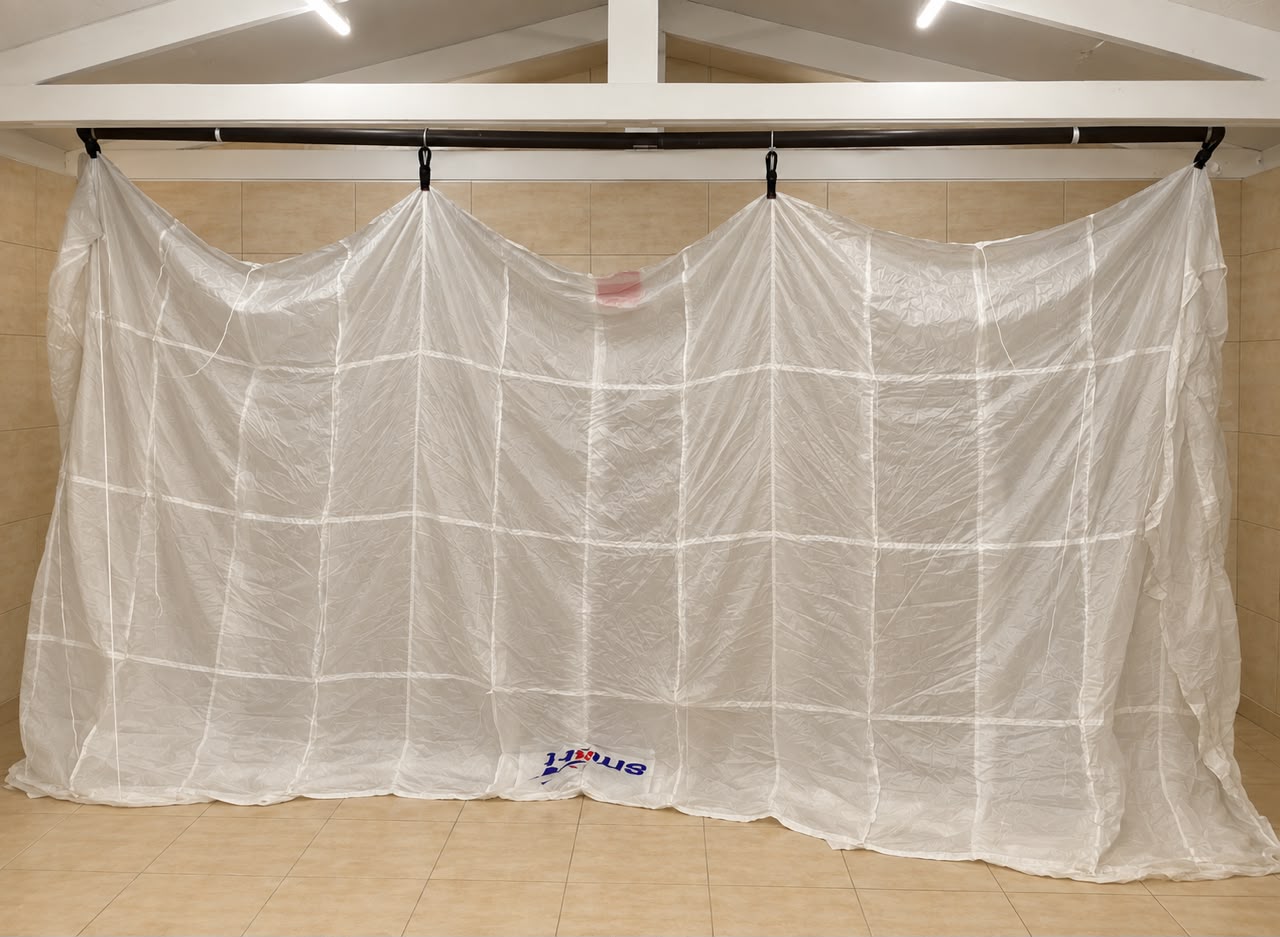

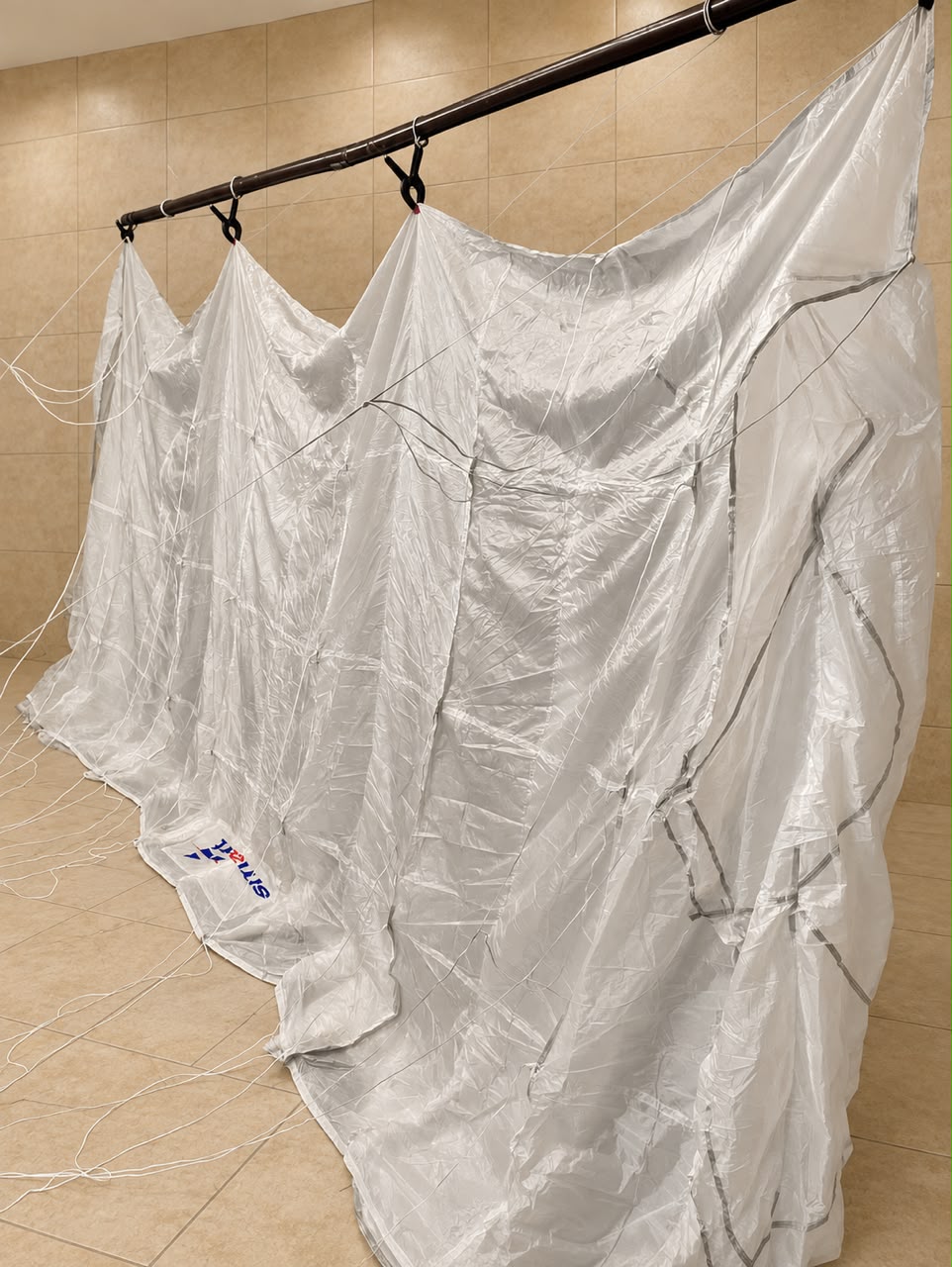
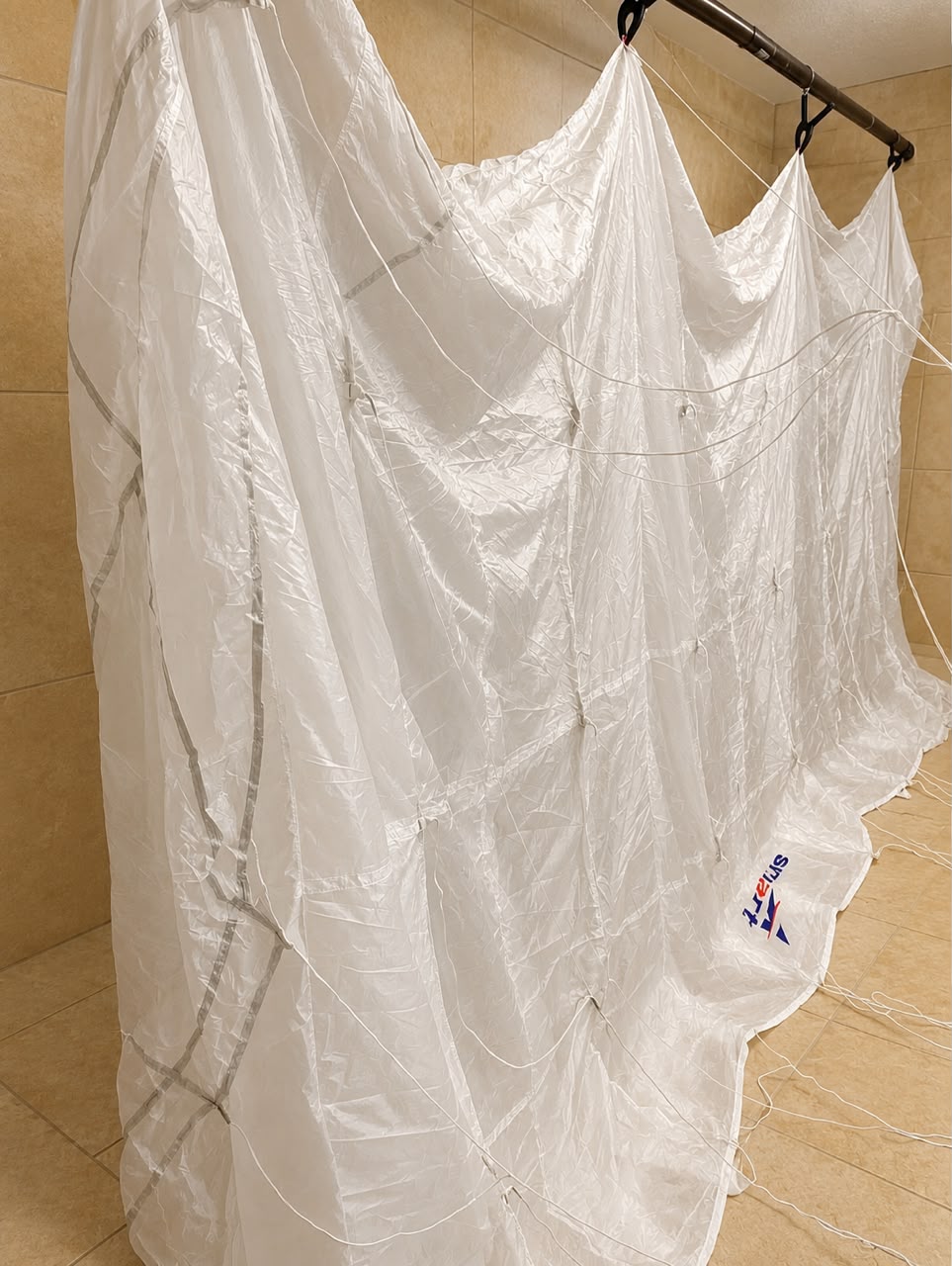
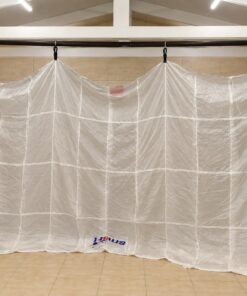

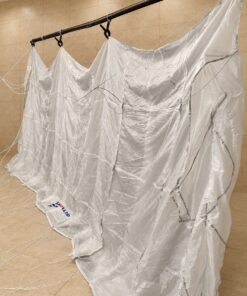
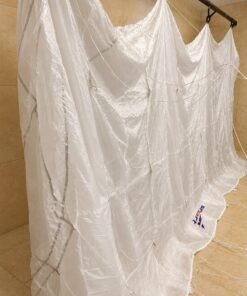

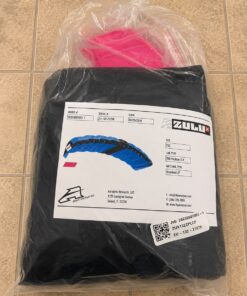
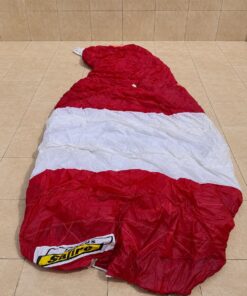
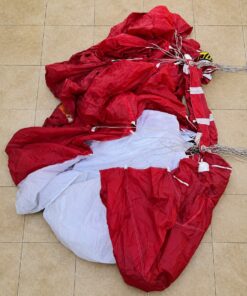
Used Aerodyne SMART 160-Square


€800.00
The used Aerodyne SMART 160 reserve canopy is a seven-cell emergency parachute designed to provide dependable deployment characteristics, predictable handling, and reliable performance when a reserve system is required. Manufactured from low-porosity fabric and equipped with durable Spectra suspension lines, the SMART 160 was developed to meet strict certification standards while delivering strength, stability, and consistent control.
This reserve canopy is designed to function as part of a complete harness-container system and should always be inspected, assembled, and packed by a qualified rigger. Important evaluation points include fabric condition, line integrity, slider wear, connector links, stitching quality, deployment history, and overall compatibility with the container system.
The SMART 160 remains a respected reserve option because of its durable construction, carefully engineered design, efficient pack volume, and dependable flight characteristics. As with any used reserve canopy, professional inspection and proper maintenance are essential before the canopy is approved for continued service.
Used Aerodyne SMART 160-Square-Foot Reserve Canopy – Certification, Technical Limits, Compatibility, Inspection, and Safety Guide
Used Aerodyne SMART 160 Reserve Canopy Overview
What Is the SMART 160 Reserve Canopy?
The Used Aerodyne SMART 160 is a seven-cell emergency reserve parachute with a nominal area of 160 square feet. It forms part of a complete parachute rig and is intended to provide a certified secondary canopy when the main parachute cannot be used safely.
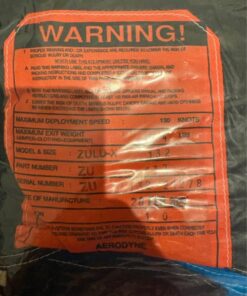
Aerodyne constructs the SMART range from high-tensile-strength, 0–3 CFM low-porosity ripstop fabric, Spectra suspension lines, reinforcement tapes, lateral load-distribution tapes, and additional reinforcement around the steering-line attachment points. The design is certified under US FAA TSO-C23d and European ETSO-C23d.
The SMART 160 is not a main canopy, base canopy, tandem parachute, helmet, automatic activation device, or complete skydiving equipment list. It must be assembled, inspected, packed, and installed by an appropriately qualified rigger.
Official SMART 160 Technical Specifications
Aerodyne’s reserve manual lists the standard SMART 160 with the following specifications:
- Nominal area: 160 square feet
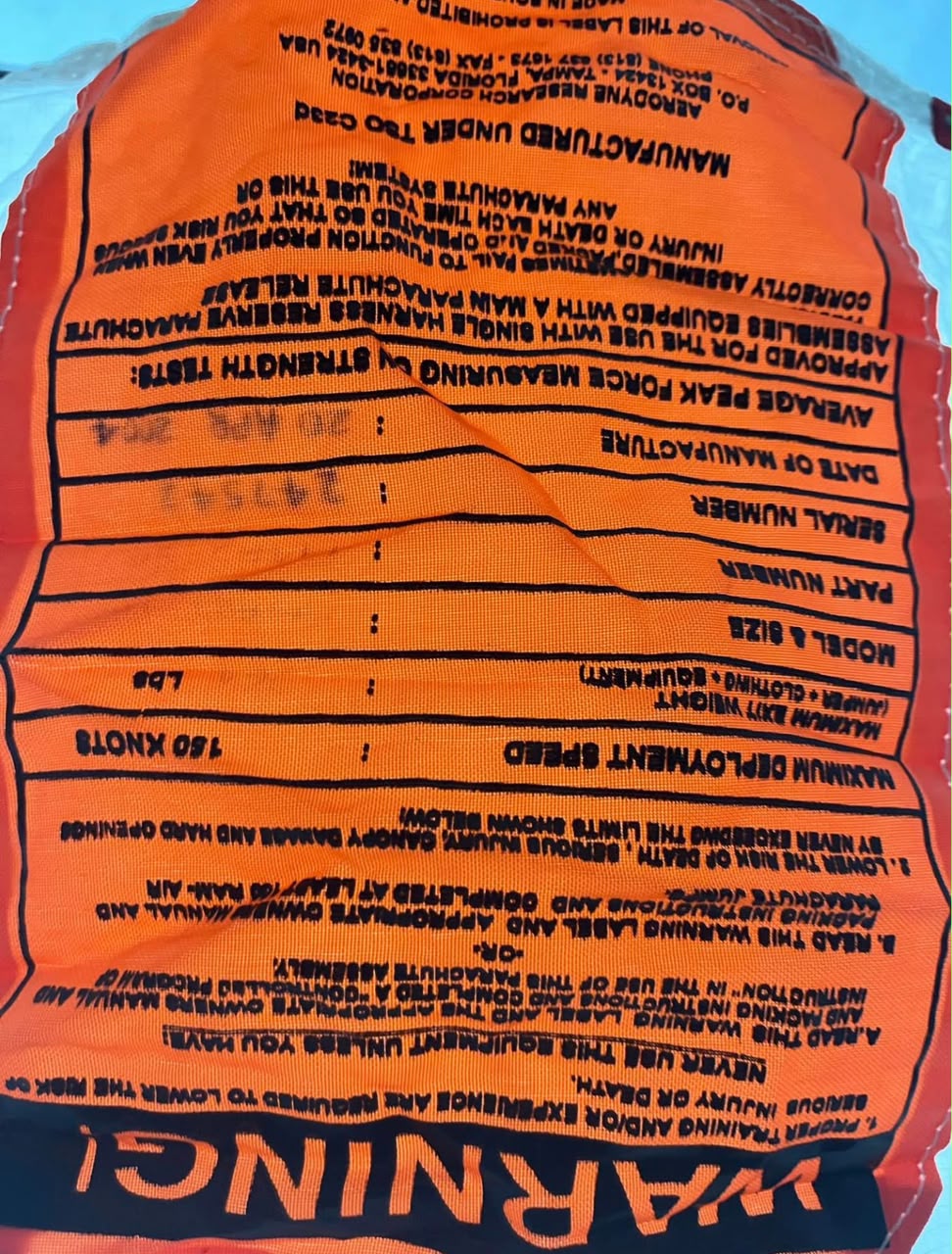
- Maximum certified speed: 150 knots
- Recommended weight: 208 pounds
- Maximum certified weight: 264 pounds
- Span: approximately 17.82 feet
- Chord: approximately 8.86 feet
- Aspect ratio: 2.0
- Pack volume: approximately 360 cubic inches
- Shipping weight: approximately 4.62 pounds
These figures apply to the standard SMART 160 rather than the lower-pack-volume SMART LPV 160, which has a listed pack volume of approximately 345 cubic inches.
A general weight limit skydiving search should never replace the certified limitations printed on the canopy data panel and stated in the manufacturer’s manual. Exit weight includes the jumper, clothing, harness-container, main canopy, reserve system, helmet, and all other carried equipment.
Why the Seven-Cell Design Matters
The SMART uses a seven-cell ram-air construction. Aerodyne describes the design as capable of handling opening loads associated with higher freefall speeds while still providing acceptable opening forces and strong glide performance for a seven-cell reserve.
After deployment, the jumper may experience different glide, turn, stall, and flare characteristics from those of the main canopy. Aerodyne warns that the reserve may not glide as far as the main, so the jumper must promptly assess traffic, identify a reachable landing area, and establish an appropriate final approach.
The SMART 160 should not be selected because it is the smallest canopy that can be physically packed into a container. A skydiving downsizing chart also cannot determine reserve suitability by itself. Certified weight, actual exit weight, container compatibility, experience, and emergency landing ability must all be considered.
Used Reserve Inspection Requirements
A used reserve requires considerably more scrutiny than an ordinary consumer product. Its manufacture date, number of deployments, repack history, storage environment, water exposure, repairs, ownership history, and service records should all be reviewed.
Aerodyne requires inspection of the upper skin, lower skin, internal and external ribs, stitching, suspension lines, slider, grommets, connector links, and reserve-system components before assembly and packing. Worn, damaged, corroded, or incorrectly rigged components must be repaired or replaced before the canopy is packed for use.
Important used-condition checks include:
- Fabric strength and porosity
- Stains, fading, burns, cuts, and contamination
- Internal and external rib condition
- Seam and reinforcement integrity
- Slider fabric and grommet condition
- Soft links or connector links
- Brake settings and steering lines
- Suspension-line continuity and trim
- Data-panel readability
- Previous repairs or deployments
Visible linewear requires professional evaluation. Spectra lines can change length with use and heat cycles, while abrasion can weaken individual fibers. USPA advises jumpers to understand their line type and monitor high-wear areas regularly.
Compatibility with the Harness and Container
The SMART 160 must fit the selected container skydive system, reserve deployment bag, freebag, pilot chute, reserve risers, and harness configuration. Aerodyne states that the canopy must be inspected for compatibility with the harness-container and deployment system before assembly.
An Icon or other certified container may accommodate the SMART range when its official sizing chart supports the specific reserve size. However, actual compatibility must be confirmed by a rigger rather than assumed from canopy area alone.
A freefly pud handle relates to the main deployment system, not the reserve canopy. Likewise, a gear bag skydive accessory may protect equipment during transportation but has no role in reserve deployment.
Main-Canopy and Reserve-Canopy Differences
The Safire 3, products from Fluid Wings, and other sport canopies are main parachutes rather than emergency reserves. Their flight characteristics, certification, packing methods, materials, and inspection requirements should not be applied to the SMART 160.
The SMART also differs from equipment used for base jumping or the misspelled phrase baseline jumping. Fixed-object parachuting often uses discipline-specific containers, pilot chutes, packing methods, and canopies. A certified aircraft reserve should not automatically be treated as a BASE system component.
Wingsuit, Tracking, and Freefall Considerations
The SMART 160 may be installed in a system used by someone participating in the wingsuit sport, but reserve suitability depends on the entire system and jumper rather than the suit alone.
Terms such as wingsuit, vector wingsuit, gliding suit wingsuit, skydiving gliding suit, fly suits, wing suits for sale, price of wingsuit, indoor wingsuit, and tandem wingsuit concern suits, training, or other products rather than this reserve.
A tracking jump or high-speed orientation may affect separation, deployment conditions, and emergency decision-making. Searches for skydiving speed or speed sky diving should not be interpreted as permission to exceed the reserve’s 150-knot certified limit.
In-Flight Use After Reserve Deployment
Aerodyne instructs the jumper not to release the brakes until line twists have been cleared. After opening, the jumper should be prepared to steer away from traffic using the rear risers or steering toggles, inspect the canopy, identify the landing area, and establish an approach that permits landing into the wind when conditions allow.
The landing flight risers may be used for appropriate trained inputs, but the phrase landing flight risers does not describe a separate product supplied with every reserve.
A reserve deployment is not the appropriate time to experiment with aggressive turns, advanced maneuvers, or unfamiliar control techniques.
Rigging, Packing, and Repack Responsibility
The SMART reserve must only be packed by a qualified parachute rigger in compliance with applicable law and manufacturer instructions. Aerodyne also states that repairs must be performed by the manufacturer or an appropriately qualified rigger.
The term skydiving rigging covers reserve assembly, inspection, packing, repair, compatibility checks, and other specialized work. Reserve packing should never be attempted from a brief online explanation.
A hook blade knife, hook knife skydiving, or skydive hook knife may serve as an emergency cutting tool in specific trained situations. It does not replace a correctly assembled reserve system or emergency-procedure training.
Automatic Activation Devices and Unrelated Terms
The terms Cypress fire skydiving and fire parachute do not describe the SMART 160. CYPRES is associated with automatic activation devices, which are separate components installed in compatible harness-container systems.
An automatic activation device does not guarantee a successful reserve deployment. Correct installation, servicing, cutter placement, reserve packing, and altitude awareness remain essential.
Helmet and Eye-Protection Searches
The reserve canopy does not include a skydiving helmet, skydive helmets, sky helmet skydiving, sky diving helmet, full face skydiving helmet, skydiving helmet full face, G35 helmet, Cookie G4 helmet, or the best skydiving helmet.
People asking can you wear glasses while skydiving may use secure skydiving glasses, over-glasses goggles, or suitable skydiver goggles, provided vision remains clear and the arrangement fits correctly.
Destination and Operator Searches
The terms parachute jump Australia, Skydive Byron Bay, and Cairns skydiving refer to Australian locations or operators rather than reserve specifications.
Similarly, Skydive Belize, skydiving Blue Hole Belize, and iFLY Colorado Springs concern destinations or training facilities. Current equipment rules, jumper qualifications, reserve-repack periods, and accepted systems should be confirmed directly with the relevant operator and aviation authority.
A nude parachute jump or skydiving nude event requires explicit operator approval because clothing affects harness comfort, abrasion protection, temperature exposure, and handle security.
General Search Terms and Clarifications
The phrases parts of a parachute, new skydive, skydiving website, #skydiving latest, skydiving tube, jumper pilot, and CRW skydiving are broad informational or discipline-related terms rather than SMART 160 specifications.
The SMART 160 may form one part of a complete system, but its safety depends on the reserve canopy, harness-container, freebag, pilot chute, risers, links, handle, closing system, and associated components functioning together correctly.
Final Used-Condition Assessment
The Used SMART 160 may provide a certified seven-cell reserve option with reinforced low-porosity construction, Spectra suspension lines, a 150-knot maximum certified speed, and a maximum certified weight of 264 pounds.
However, no used reserve should be described as airworthy based solely on photographs, seller statements, age, or model reputation. A qualified rigger must verify the serial number, date of manufacture, data panel, deployment history, fabric, lines, stitching, slider, links, repairs, compatibility, and compliance with all applicable regulations before the reserve is packed or used.
Reserve Performance, Reliability, and Long-Term Care
Understanding the Purpose of an Emergency Canopy
An emergency canopy is designed to provide a second means of descent when the primary system cannot be used safely. Consequently, reliability, predictable inflation, manageable handling, and professional maintenance remain more important than aggressive performance.
Every component must work as part of a complete assembly. Fabric, lines, slider, links, deployment components, and the harness system all influence the final result.
Because emergency equipment may remain packed for extended periods, careful inspection and correct storage are essential.
Why Predictable Openings Matter
A dependable opening helps reduce uncertainty during a high-stress situation. However, opening behavior is influenced by several conditions rather than canopy design alone.
Important factors include:
- Airspeed at deployment
- Body position
- Packing quality
- Line condition
- Slider condition
- Environmental conditions
Therefore, no reserve should be considered reliable without correct assembly and current professional inspection.
Understanding Flight and Descent Characteristics
After inflation, the pilot must quickly evaluate the canopy, surrounding traffic, altitude, wind, and available landing areas. The wing may behave differently from the main system, particularly in glide, turning response, control pressure, and flare timing.
Several factors influence handling:
- Exit weight
- Air density
- Wind strength
- Control input
- Line trim
- Fabric condition
Familiarity with general emergency procedures supports better decision-making, although real-life conditions may still require rapid adaptation.
Why Proper Sizing Is Essential
Size selection affects descent rate, control response, landing speed, and flare performance. A canopy that is technically certified for a certain load may still be unsuitable for a particular person’s experience or emergency-landing ability.
Appropriate evaluation should consider:
- Total equipped weight
- Experience level
- Currency
- Typical landing environment
- Physical condition
- Professional recommendations
Choosing equipment according to container space alone may create unnecessary risk.
Inspection and Preventive Maintenance
Regular inspection remains essential because age and storage history do not reveal every form of deterioration. Materials may be affected by moisture, contamination, heat, abrasion, improper packing, and previous deployments.
A detailed inspection generally includes:
- Examining upper and lower surfaces.
- Checking seams and reinforcement areas.
- Inspecting suspension and steering lines.
- Evaluating the slider and grommets.
- Reviewing attachment points and hardware.
- Confirming the data panel remains readable.
Any uncertainty should be resolved before repacking.
The Importance of Professional Packing
Packing emergency equipment requires specialized knowledge, approved procedures, and attention to detail. Small errors may affect deployment sequence, line organization, or component movement.
Professional packing helps ensure that:
- Lines remain correctly routed
- Control settings are correct
- Fabric is organized properly
- Closing components are compatible
- Deployment parts are installed correctly
Repack intervals must follow the rules applying in the relevant jurisdiction.
Storage and Environmental Protection
Storage conditions directly influence long-term serviceability. Heat, moisture, chemical exposure, ultraviolet light, mold, and pressure can gradually affect materials.
Recommended practices include:
- Keep the system dry.
- Avoid excessive heat.
- Protect it from direct sunlight.
- Prevent contact with oils and chemicals.
- Store it in a clean environment.
- Arrange periodic professional inspections.
A vehicle trunk, damp room, or exposed storage area may create unsuitable long-term conditions.
Understanding Used-Equipment History
A used emergency canopy should be accompanied by as much verified history as possible. Missing information does not automatically make the item unusable, but it increases the importance of a thorough inspection.
Useful records may include:
- Date of manufacture
- Serial number
- Repack history
- Deployment history
- Repair documentation
- Previous inspection notes
- Storage history
Photographs alone cannot establish airworthiness.
Compatibility with the Complete System
Compatibility depends on more than surface area. The packed volume, deployment bag, pilot chute, closing system, risers, and container dimensions must work together correctly.
A system that is too tight may be difficult to pack or deploy, while one that is too loose may not provide appropriate component security. Therefore, compatibility should always be confirmed by a qualified professional familiar with the exact configuration.
Frequently Asked Questions
Why is a professional inspection necessary?
A professional inspection can identify hidden wear, improper repairs, damaged lines, and compatibility concerns that may not be visible in ordinary photographs.
Does age alone determine condition?
No. Age provides context, but storage, deployments, packing history, contamination, and maintenance may have a greater influence on actual condition.
Can a used canopy be installed immediately?
It should not be installed or packed for use until its condition, identity, and compatibility have been confirmed.
Why does total equipped weight matter?
Total weight affects descent rate, maneuverability, control pressure, and landing performance.
How should the system be stored?
It should be kept clean, dry, protected from heat and sunlight, and inspected according to applicable requirements.
Final Thoughts
Emergency equipment should always be evaluated conservatively. Reliable performance depends on correct sizing, verified condition, professional packing, suitable storage, compatible components, and disciplined maintenance. A used reserve may remain serviceable for years, but only a qualified inspection can determine whether it is appropriate for continued use.
Emergency Preparedness, Handling Characteristics, and Operational Awareness
Developing a Thorough Understanding of Emergency Procedures
Emergency preparation is one of the most important aspects of long-term equipment ownership because the ability to react quickly often depends upon habits developed through repetition and training. Although equipment design contributes significantly to reliability, knowledge and preparation frequently determine how effectively that equipment performs in demanding situations.
Every procedure should be practiced carefully and reviewed regularly. Consequently, individuals who maintain consistent routines often develop greater confidence and stronger situational awareness.
Preparation creates valuable time, and valuable time often leads to better decisions.
Why Familiarity With Equipment Matters
Familiarity allows individuals to recognize changes in performance more quickly. Furthermore, understanding how individual components interact frequently helps reduce uncertainty during unexpected situations.
Several factors contribute to greater familiarity:
- Consistent practice
- Routine inspections
- Organized maintenance procedures
- Environmental awareness
- Regular equipment reviews
- Careful observation
These practices often improve confidence while supporting more consistent decision-making.
Understanding Descent Management
Managing altitude and direction remains essential throughout every stage of operation. Wind conditions, terrain features, and landing-area characteristics can all influence the final approach.
Several factors should always be considered:
- Wind direction
- Wind speed
- Ground conditions
- Visibility
- Traffic patterns
- Available landing space
Each of these variables influences decision-making in a different way.
The Importance of Controlled Inputs
Control inputs should always be deliberate, measured, and appropriate for the situation. Abrupt movements frequently create unnecessary complications, whereas smooth and controlled actions often improve efficiency and predictability.
Several elements influence control response:
- Air density
- Weight distribution
- Environmental conditions
- Equipment condition
- Descent rate
- Timing
Understanding the relationship between these variables often supports better performance.
Why Inspection Procedures Should Never Be Ignored
Regular inspections help identify wear, contamination, loose components, and other conditions that may influence reliability. Consequently, a disciplined inspection routine remains extremely important.
A thorough evaluation commonly includes:
- Examining visible fabric surfaces.
- Inspecting seams and reinforcement areas.
- Evaluating line condition.
- Reviewing hardware connections.
- Confirming proper assembly.
Careful inspection often helps identify concerns before they become more significant.
Long-Term Preservation and Storage Practices
Proper storage conditions directly influence durability and long-term performance. Environmental exposure may gradually affect materials, which is why preventive care remains essential.
Several recommendations are commonly followed:
- Maintain a clean storage environment.
- Minimize exposure to excessive heat.
- Reduce contact with moisture.
- Protect surfaces from prolonged sunlight exposure.
- Perform periodic inspections.
These measures frequently contribute to long-term preservation.
Environmental Awareness and Adaptability
Environmental conditions are rarely constant. Consequently, adaptability remains an essential skill because even small changes can influence overall performance.
Several variables should always be monitored carefully:
- Temperature
- Wind conditions
- Atmospheric pressure
- Humidity
- Visibility
- Surface conditions
Awareness of these factors frequently supports better judgment and stronger decision-making.
Common Errors and Practical Solutions
Mistakes frequently occur when preparation is incomplete or important details are overlooked. Fortunately, many of these challenges can be reduced through careful planning and disciplined routines.
Several common examples include:
- Inadequate preparation
- Failure to follow established procedures
- Inconsistent maintenance practices
- Improper storage conditions
- Insufficient environmental awareness
Recognizing these situations early often prevents more serious complications.
Why Consistency Produces Better Results
Consistency remains important because repeated practice frequently strengthens confidence, improves awareness, and develops better decision-making skills.
Several benefits are commonly associated with consistent habits:
- Improved concentration
- Greater confidence
- Better adaptability
- Increased efficiency
- Stronger discipline
These qualities often support continued development over long periods of time.
Frequently Asked Questions
Why is preparation so important?
Preparation helps reduce uncertainty while supporting quicker and more effective responses.
Why are routine inspections recommended?
Routine inspections help identify potential concerns before they become more serious.
Why should environmental conditions be monitored continuously?
Environmental conditions frequently influence efficiency, reliability, and overall predictability.
Why is consistency valuable?
Consistency strengthens habits while improving confidence and decision-making abilities.
Why are storage conditions important?
Appropriate storage procedures help preserve reliability while protecting equipment from unnecessary deterioration.
Final Remarks
Long-term reliability is often achieved through preparation, discipline, patience, and continuous learning. Individuals who remain committed to these principles frequently improve their knowledge while maintaining confidence, efficiency, and dependable performance throughout every stage of operation.
Long-Term Reliability, Performance Evaluation, and Equipment Management
Building Confidence Through Preparation and Experience
Confidence develops gradually through experience, careful observation, and disciplined preparation. Although modern equipment is designed to meet demanding standards, long-term reliability still depends upon regular inspections, proper handling procedures, and continuous learning.
Each experience provides an opportunity to improve knowledge and strengthen awareness. Consequently, individuals who maintain consistent habits often become more capable of recognizing subtle changes in performance and responding appropriately when conditions change unexpectedly.
Patience and discipline frequently create the strongest foundation for long-term success.
Why Performance Evaluation Is Important
Performance should be evaluated regularly because even minor changes may influence handling characteristics and overall responsiveness. Furthermore, identifying concerns early often prevents larger problems from developing over time.
Several factors commonly influence overall performance:
- Environmental conditions
- Material condition
- Weight distribution
- Maintenance practices
- Equipment age
- Frequency of use
Understanding these variables frequently contributes to more informed decision-making.
The Importance of Detailed Inspections
Detailed inspections remain one of the most effective methods of preserving reliability and ensuring continued serviceability. Because some forms of wear develop gradually, careful examination should become part of every routine.
Important inspection areas commonly include:
- External surfaces
- Internal structural components
- Reinforcement areas
- Seams and stitching
- Lines and connectors
- Hardware attachment points
A consistent inspection process often improves both reliability and confidence.
Environmental Factors That Influence Performance
Environmental conditions continuously influence equipment behavior. Therefore, awareness of changing conditions remains essential throughout every stage of operation.
Several factors deserve careful attention:
- Wind direction
- Wind intensity
- Humidity levels
- Temperature changes
- Visibility conditions
- Atmospheric pressure
These variables frequently influence efficiency, responsiveness, and overall predictability.
Why Organization Improves Efficiency
Organization frequently simplifies preparation while reducing the likelihood of unnecessary mistakes. Individuals who maintain structured routines often complete inspections more effectively and identify potential concerns more quickly.
Several practices commonly contribute to improved organization:
- Maintaining accurate records.
- Conducting regular inspections.
- Cleaning equipment thoroughly.
- Reviewing procedures periodically.
- Verifying proper storage conditions.
These practices often contribute to greater consistency and long-term reliability.
Proper Cleaning and Preventive Care
Preventive maintenance remains important because environmental exposure gradually influences the condition of materials and components. Consequently, routine care should always be performed carefully.
Several maintenance recommendations are commonly followed:
- Remove dirt and debris regularly.
- Keep equipment dry whenever possible.
- Protect materials from excessive heat.
- Avoid unnecessary exposure to sunlight.
- Schedule periodic professional inspections.
These measures frequently support long-term preservation.
Understanding the Value of Adaptability
Adaptability remains one of the most valuable skills because changing circumstances frequently require thoughtful responses and quick decisions. Individuals who develop strong observational skills often become more comfortable adapting to unfamiliar situations.
Several qualities commonly contribute to adaptability:
- Patience
- Discipline
- Observation
- Concentration
- Confidence
- Consistency
Together, these qualities frequently strengthen long-term performance.
Common Challenges and Effective Solutions
Challenges are inevitable, yet many of them can be managed successfully through preparation and experience.
Several examples include:
- Incomplete inspections
- Poor storage practices
- Insufficient environmental awareness
- Inconsistent maintenance routines
- Failure to review procedures regularly
Recognizing these situations early often reduces the likelihood of more serious complications.
Frequently Asked Questions
Why should equipment be inspected regularly?
Regular inspections help identify wear, contamination, damage, and other concerns before they become more serious.
Why is environmental awareness important?
Environmental conditions frequently influence performance, reliability, and predictability.
Why should maintenance routines be followed consistently?
Consistent maintenance practices help preserve reliability while minimizing unnecessary wear.
Why does organization matter?
Organization simplifies preparation, strengthens discipline, and improves efficiency.
Why is adaptability valuable?
Adaptability allows individuals to respond more effectively to changing conditions and unexpected situations.
Final Thoughts
Long-term reliability is often the result of careful preparation, disciplined maintenance, continuous learning, and consistent attention to detail. Individuals who remain committed to these principles frequently strengthen their knowledge while preserving confidence, efficiency, and dependable performance over many years of use skydiving tube.
Be the first to review “Used Aerodyne SMART 160-Square”
Related products


used products

used products

used products
used products

used products
used products
used products

used products
Reviews
There are no reviews yet.