


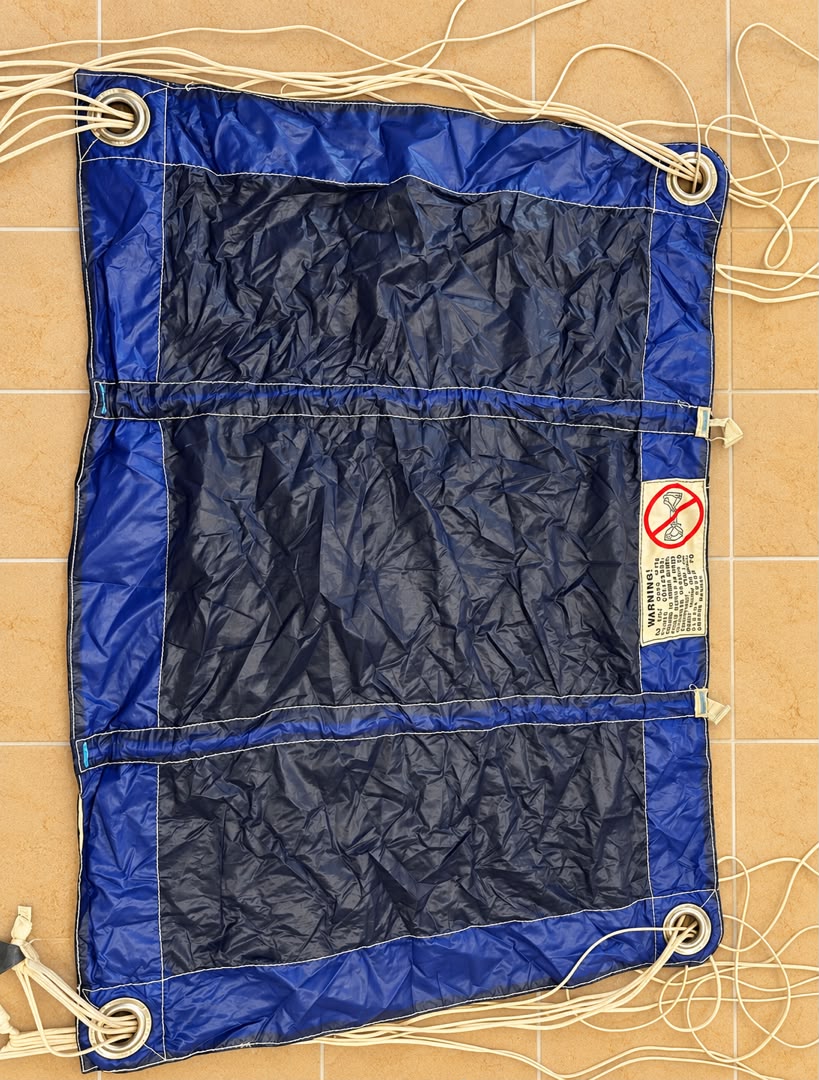






Used RSK1 & PD VELOCITY 90


€1,400.00
Used RSK1 & PD Velocity 90 Skydiving Rig
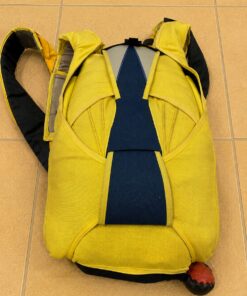
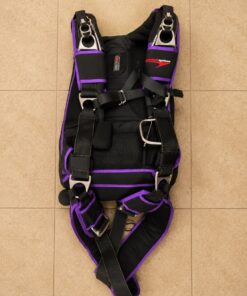
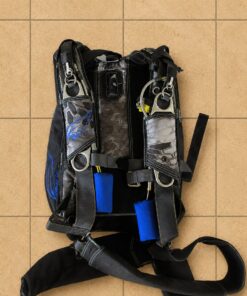
The Used RSK1 & PD Velocity 90 combines a Sun Path Javelin Odyssey RSK-1 C18 container and harness with a Performance Designs Velocity 90 main canopy. The rig is offered as a specialized used configuration for licensed skydivers and experienced canopy pilots.
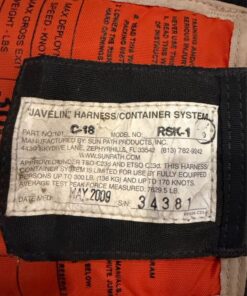
The Javelin Odyssey RSK-1 was manufactured in May 2009 and has approximately 600 jumps. The container is reported to be in clean, well-looked-after condition and has been stored indoors. The previous and only owner was approximately 5’10” and 80 kg, while the rig was also reportedly fitted successfully on someone around 6’1″ and 95 kg. Final fit should be professionally confirmed.
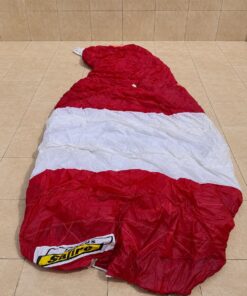
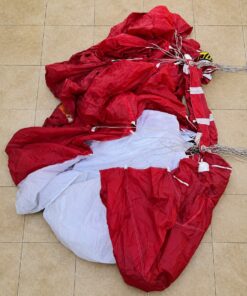
The main canopy is a Performance Designs Velocity 90, manufactured in June 2004, with approximately 600 jumps. It is a high-performance cross-braced canopy, with its lines reportedly changed at approximately 400 jumps. The canopy is described as remaining crispy, with no holes or patches reported.
The pilot chute, deployment bag, and associated components are included. However, an important purchasing detail is that the reserve and AAD are not included. The rig is sold as shown, so buyers should verify the exact components supplied before purchase.
Key Specifications
- Container: Sun Path Javelin Odyssey RSK-1
- Container size: C18
- Container DOM: May 2009
- Container jumps: Approximately 600
- Main canopy: Performance Designs Velocity 90
- Main DOM: June 2004
- Main jumps: Approximately 600
- Main type: High-performance cross-braced canopy
- Lines: Changed at approximately 400 jumps
- Main condition: Crispy; no reported holes or patches
- Pilot chute: Included
- Deployment bag: Included
- Associated components: Included
- Reserve: Not included
- AAD: Not included
- Storage: Always stored indoors according to the supplied history
- Intended users: Licensed skydivers and experienced canopy pilots
Because the Velocity 90 is described as a high-performance cross-braced canopy, the configuration should be professionally inspected and evaluated for the intended pilot before use. The container, harness, canopy, deployment components, and any separately acquired reserve and AAD should all be confirmed for condition, fit, compatibility, and current service requirements.
USED RSK1 & PD VELOCITY 90 SKYDIVING RIG
Complete Configuration and Equipment Overview
Used Sun Path Javelin Odyssey RSK-1
This Used RSK1 & PD Velocity 90 configuration combines a Sun Path Javelin Odyssey RSK-1 container and harness with a Performance Designs Velocity 90 main canopy. The system has been maintained as a dedicated setup for experienced skydivers and is supplied with the principal deployment components described below.
The container was manufactured in May 2009 and is identified as a C18 size. It has been used by a previous and only owner who was approximately 5’10” and around 80 kg. The supplied information also states that the container was tried on a person approximately 6’1″ and 95 kg, where it reportedly fitted well. It is nevertheless recommended that the final harness fit be professionally confirmed before use.
Container Condition
The Javelin Odyssey RSK-1 is described as being in clean, well-looked-after condition.
The supplied history states that the rig has been stored indoors, which provides useful background regarding its storage environment. Nevertheless, age and usage remain important considerations because the container dates from 2009 and has approximately 600 jumps.
The harness, webbing, stitching, hardware, container fabric, attachment areas, and deployment components should therefore be professionally inspected before operational use.
Main Canopy: Performance Designs Velocity 90
The main canopy is a Performance Designs Velocity 90, manufactured in June 2004.
The Velocity 90 is identified in the supplied specification as a high-performance cross-braced canopy. It has approximately 600 jumps, with the lines having been changed at approximately 400 jumps.
The canopy is reported to remain pretty crispy, with no holes or patches reported.
These condition details provide useful information for prospective buyers, but they should not replace a current inspection by an appropriately qualified parachute professional.
Line History
The main canopy’s lines were reportedly changed at approximately 400 jumps.
This is an important maintenance detail and should be retained as part of the canopy’s history. Current line condition should nevertheless be assessed independently, including the lines, attachment points, stitching, canopy fabric, and related components.
Included Deployment Components
The supplied configuration includes the pilot chute, deployment bag, and associated components.
These components should be checked for condition and compatibility with the container and main canopy before operational use.
The rig is sold as shown, and prospective buyers should confirm the exact contents before purchase.
Important: Reserve and AAD Not Included
A critical purchasing detail is that the reserve and AAD are not included.
Therefore, this should not be represented as a ready-to-jump complete system containing all emergency equipment.
The buyer would need to establish an appropriate reserve and automatic activation device configuration separately, with compatibility and installation verified by an appropriately qualified professional.
Intended User
The supplied information specifically identifies the equipment as being intended for licensed skydivers and experienced canopy pilots.
That distinction is important because the Velocity 90 is described as a high-performance cross-braced canopy. Its suitability should be assessed according to the prospective pilot’s qualifications, experience, training, canopy history, and applicable local requirements.
This configuration should not be presented as a general-purpose beginner setup.
Fit Considerations
The C18 container was previously used by someone approximately 5’10” and 80 kg. It was also reportedly tried on someone approximately 6’1″ and 95 kg and fitted well.
However, height and weight alone cannot establish correct harness fit. Body proportions and individual harness geometry can vary considerably.
Consequently, professional fitting should be completed before operational use.
Overall Configuration
The configuration consists of:
- Sun Path Javelin Odyssey RSK-1
- Container size: C18
- Container DOM: May 2009
- Container jumps: Approximately 600
- Performance Designs Velocity 90
- Main DOM: June 2004
- Main jumps: Approximately 600
- Line replacement: Approximately 400 jumps
- Main condition: Reported crispy, with no holes or patches
- Pilot chute: Included
- Deployment bag: Included
- Associated deployment components: Included
- Reserve: Not included
- AAD: Not included
- Storage: Reported indoors
- Intended users: Licensed skydivers and experienced canopy pilots
Professional Inspection
Because this is used skydiving equipment, the reported condition should be treated as descriptive rather than as certification of operational readiness.
A qualified parachute rigger should inspect the container, harness, main canopy, lines, stitching, hardware, deployment components, and compatibility of the intended reserve and AAD configuration.
The combination of a 2009 container and 2004 high-performance canopy also makes careful inspection particularly important.
This equipment may be relevant to experienced participants researching a skydiving rig, parachute rig, canopy flight equipment, or specialized canopy systems. However, terms such as skydiving helmet, skydiving glasses, hook blade knife, gear bag, wingsuit, base canopy, and other accessories should not be interpreted as included unless specifically listed.
Overall, the Used RSK1 & PD Velocity 90 offers a clearly documented configuration centered around a Javelin Odyssey RSK-1 and Performance Designs Velocity 90. Its reported condition, indoor storage history, approximately 600 jumps, and previous line replacement provide useful purchasing information, while the absence of the reserve and AAD should be considered an essential part of the configuration before purchase.
Section 2: Detailed Condition, Component History, Fit, Maintenance, and Purchase Considerations
A previously owned parachute system should be evaluated through its complete history rather than through appearance alone. Age, jump history, storage conditions, previous maintenance, component compatibility, and the qualifications of the intended user all contribute to the overall assessment. For this configuration, the available information provides a useful starting point because the principal components, approximate usage, manufacturing dates, storage conditions, and included equipment have been identified.
The container and harness were manufactured in May 2009, while the main canopy was manufactured in June 2004. Approximately 600 jumps are reported on the container and approximately 600 jumps on the main. The main lines were changed at around 400 jumps, and the canopy is described as remaining relatively crisp with no reported holes or patches. The system has reportedly been stored indoors and maintained in clean, well-looked-after condition.
Those details should remain part of the equipment history. At the same time, they should not be interpreted as a substitute for a current professional inspection.
Container and Harness Condition
The container and harness form the structural portion of the system and therefore deserve careful examination.
The supplied description identifies the container as a C18 size manufactured in May 2009. It has approximately 600 jumps and has reportedly been kept indoors. Its previous owner was approximately 5’10” and around 80 kg, while the equipment was also reportedly tried on someone approximately 6’1″ and 95 kg and fitted well.
The supplied condition is described as clean and well looked after.
A professional inspection should nevertheless examine the complete assembly. Fabric, webbing, stitching, hardware, attachment points, closures, harness components, and areas exposed to repeated friction should all be evaluated.
A clean external appearance can provide useful information, but it cannot establish the condition of every structural component.
Age and Material Condition
The manufacturing date is important when evaluating previously owned equipment.
The container dates from May 2009. Consequently, its age should be considered independently from its jump count. A lower usage figure would not automatically eliminate age-related considerations, just as a higher usage figure does not automatically indicate unacceptable condition.
Textile equipment can experience changes through storage, handling, environmental exposure, repeated packing, and ordinary use.
For that reason, the present condition should always be established through inspection rather than inferred exclusively from the manufacturing date.
Reported Storage History
The equipment has reportedly been stored indoors.
Indoor storage can reduce unnecessary exposure to rain, excessive sunlight, dirt, and other environmental factors. It is therefore useful information when considering the history of the equipment.
However, indoor storage does not provide a complete condition assessment.
The actual storage environment, temperature fluctuations, humidity, proximity to chemicals, handling practices, and duration of storage may all influence condition.
The supplied indoor-storage history should therefore be retained as a positive historical detail while the equipment itself remains subject to professional inspection.
Harness Fit
The supplied information gives two useful reference points for fit.
The previous and only owner was approximately 5’10” and around 80 kg.
The system was also reportedly tried on someone approximately 6’1″ and 95 kg and fitted well.
These observations can help a prospective owner understand the approximate range in which the system has previously been used. However, they should not be treated as a universal guarantee of fit.
Human body dimensions vary significantly even when two people have similar height and weight.
Torso length, shoulder width, leg length, hip position, and other proportions can influence harness fit.
A prospective owner should therefore have the equipment professionally fitted before relying on it for operational use.
Main Canopy History
The main canopy is a Performance Designs Velocity 90 manufactured in June 2004.
The supplied information describes it as a high-performance cross-braced canopy with approximately 600 jumps.
The canopy’s lines were changed at approximately 400 jumps.
The canopy is described as still being relatively crisp and having no holes or patches.
This history gives a prospective buyer useful information about the canopy’s previous use and maintenance. Nevertheless, the present condition of the canopy must be assessed independently.
Canopy Fabric
The reported absence of holes and patches is an important condition detail.
Nevertheless, canopy fabric should be assessed throughout the complete assembly.
The inspection should consider visible damage, abrasion, discoloration, contamination, seam condition, stitching, and other changes that may not be apparent from a basic visual inspection.
Fabric condition can also vary between different portions of a canopy depending on their exposure to repeated packing, deployment, handling, and environmental conditions.
A professional inspection therefore remains important.
Line History
The main lines were reportedly changed at approximately 400 jumps.
This is useful maintenance information and should remain documented.
A line replacement does not establish the condition of every other component of the canopy, however.
The current lines should be examined for wear, abrasion, contamination, damage, attachment condition, and other relevant characteristics.
The line attachment areas should also be considered because the condition of a line cannot be evaluated independently from the areas to which it is attached.
Deployment Components
The supplied configuration includes the pilot chute and deployment bag, together with associated components.
These items should be considered part of the equipment history and should be inspected for compatibility and condition.
The pilot chute, deployment bag, associated attachment points, fabric, stitching, and hardware should be assessed by an appropriately qualified professional.
Because the equipment is being sold as shown, the exact contents should be confirmed before purchase.
What Is Not Included
The absence of certain components is particularly important.
The reserve is not included.
The automatic activation device is not included.
Therefore, the system should not be represented as a fully equipped operational configuration containing all emergency components.
A buyer would need to establish an appropriate reserve and automatic activation device arrangement separately.
Compatibility should be confirmed before those components are installed.
Reserve Considerations
Because the reserve is not included, the buyer should not assume that any particular reserve model or size will automatically be suitable.
The appropriate reserve configuration depends on the container, intended configuration, applicable manufacturer requirements, and other technical considerations.
A qualified professional should determine compatibility before installation.
The reserve should also have appropriate service and inspection documentation.
Automatic Activation Device Considerations
The automatic activation device is also not included.
Consequently, no particular device should be assumed to be part of the sale.
If an automatic activation device is to be installed, the appropriate model and configuration should be established professionally.
Its status, service requirements, installation, and compatibility should all be verified.
Intended User Profile
The supplied information states that the equipment is intended for licensed skydivers and experienced canopy pilots.
That is particularly relevant because the main is described as a high-performance cross-braced canopy.
A high-performance canopy should not be treated as general-purpose beginner equipment.
The intended pilot’s experience, training, qualifications, canopy history, and current proficiency should be considered independently.
A buyer should make sure that the equipment is appropriate for their own level of experience and training rather than relying on the fact that a previous owner operated it successfully.
High-Performance Canopy Considerations
The main canopy is specifically identified as a high-performance cross-braced design.
This means that prospective buyers should approach the system with appropriate respect for its characteristics.
Canopy selection is not simply a matter of choosing a numerical size.
Pilot experience, loading, training, intended environment, landing area, currency, and previous experience with comparable equipment can all influence whether a particular configuration is appropriate.
The product should therefore be presented specifically for experienced and appropriately qualified users.
Jump History
Approximately 600 jumps are reported for the main canopy.
Approximately 600 jumps are also reported for the container.
These figures should be treated as approximate unless supporting records establish exact totals.
Jump history is useful because repeated packing, deployment, handling, and use contribute to equipment history.
However, jump count should not be used as the sole measure of condition.
Storage, environmental exposure, packing practices, maintenance, and the nature of previous use can all influence the current state of equipment.
Maintenance History
The main lines were changed at approximately 400 jumps.
This is the principal specific maintenance event supplied for the main canopy.
No holes or patches are reported.
The equipment has reportedly been stored indoors.
The container and harness are described as being in clean, well-looked-after condition.
These details should be retained as part of the equipment’s history and disclosed accurately to prospective buyers.
Inspection of the Main
A professional inspection should assess the complete main canopy.
The fabric should be examined.
The seams should be assessed.
The stitching should be checked.
The lines should be inspected.
The attachment points should be evaluated.
The deployment components should be checked.
The pilot chute and deployment bag should also be assessed.
The objective is to determine the current condition rather than simply confirm that the canopy matches its historical description.
Inspection of the Container
The container should similarly receive a complete assessment.
The fabric should be checked for deterioration, abrasion, contamination, and other changes.
The harness should be assessed.
Stitching should be inspected.
Hardware should be examined.
Closures and attachment areas should be evaluated.
The condition of the deployment system should also be confirmed.
The reported indoor storage and clean appearance provide useful background but do not eliminate the need for inspection.
Hardware
Hardware should be inspected for corrosion, deformation, damage, and unusual wear.
Any component that appears damaged or questionable should be assessed professionally.
Improvised alteration of structural hardware should not be undertaken.
The equipment should retain its intended configuration unless modifications are specifically approved through appropriate professional and manufacturer channels.
Stitching and Webbing
Stitching and webbing are important areas of assessment because they contribute to the structural integrity of the system.
Wear can occur through repeated packing, movement, friction, and handling.
The inspection should therefore consider both visible condition and location.
A small mark in a non-critical area may have a different significance from damage located near a structural attachment point.
This is why professional assessment remains more reliable than judging condition from photographs alone.
Environmental Considerations
Equipment that has been stored indoors may still have experienced environmental exposure during transportation, use, packing, and temporary storage.
Moisture, heat, ultraviolet exposure, dirt, and chemicals should all be considered.
The equipment should remain protected from unnecessary environmental exposure throughout future ownership.
Moisture
The equipment should be kept dry.
If it becomes wet, it should not simply be packed and placed into long-term storage.
Appropriate drying procedures should be followed, and significant moisture exposure should be disclosed during subsequent inspection.
The presence of moisture can have consequences that are not immediately obvious.
Heat
Excessive heat should be avoided.
Leaving textile equipment inside a vehicle under direct sunlight can expose it to elevated temperatures.
Long-term storage should instead take place in a clean, stable environment.
Ultraviolet Exposure
Unnecessary direct sunlight should be avoided during storage.
Extended ultraviolet exposure can affect textile materials over time.
A protected indoor environment is therefore preferable for long-term storage.
Chemical Exposure
The equipment should be kept away from fuel, oils, solvents, cleaning chemicals, and other potentially damaging substances.
If contamination occurs, the correct response should depend on the specific substance and affected material.
Unapproved cleaning methods should not be used to attempt to remove contamination.
Professional guidance should be obtained when contamination is suspected.
Transportation
The equipment should be transported in a manner that minimizes unnecessary compression, abrasion, impact, heat, and moisture exposure.
Sharp objects should not be placed against the canopy or container.
Heavy objects should not be stacked on top of the equipment.
Any significant impact or unusual event during transportation should be disclosed before the equipment is returned to operational service.
Documentation
The equipment’s documentation should identify each major component.
The container should be recorded as a C18 model manufactured in May 2009.
The main should be recorded as a Performance Designs Velocity 90 manufactured in June 2004.
The main should be recorded with approximately 600 jumps and a line change at approximately 400 jumps.
The inclusion of the pilot chute and deployment bag should also be documented.
The absence of the reserve and automatic activation device should be clearly stated.
Ownership Transfer
A new owner should receive accurate information about the known history.
The container’s approximate jump count should be disclosed.
The main canopy’s approximate jump count should be disclosed.
The line replacement should remain documented.
The indoor storage history should remain available.
The reported absence of holes and patches should remain identified as a supplied condition statement.
Any unknown information should remain identified as unknown rather than being estimated.
Compatibility Assessment
Before the system is used by another owner, the complete configuration should be assessed for compatibility.
This includes the container, harness, main canopy, deployment components, reserve, and automatic activation device that the buyer intends to add.
The fact that the container previously carried the stated canopy does not by itself establish that every future configuration will be appropriate.
Professional compatibility verification should therefore be completed before any new configuration is relied upon.
Why Professional Inspection Matters
A professional inspection can identify issues that are difficult to see without specialized knowledge.
A canopy can look clean while still requiring attention to stitching, lines, seams, or attachment areas.
A container can look well maintained while still requiring detailed assessment of structural components.
A recent or historical line replacement does not establish the condition of every other component.
Professional inspection provides a more reliable basis for determining the current condition.
Purchase Evaluation
A prospective buyer should evaluate the equipment based on its actual documented configuration.
The container is a 2009 C18-size system with approximately 600 jumps.
The main is a 2004 Velocity 90 with approximately 600 jumps.
The lines were changed at approximately 400 jumps.
The canopy is reported to remain crisp and has no reported holes or patches.
The pilot chute and deployment bag are included.
The reserve and automatic activation device are not included.
The system has reportedly been stored indoors.
These details should form the foundation of any purchase assessment.
Long-Term Ownership
Once purchased, the equipment history should continue to be maintained.
Future inspections should be recorded.
Canopy usage should be tracked.
Any maintenance or repair should be documented.
The status of separately acquired emergency components should also be recorded.
Storage conditions should remain appropriate.
This creates a continuous record that can be useful for future inspections and eventual ownership transfer.
Condition Versus Appearance
The clean appearance described by the seller is useful, but appearance should not be confused with certification.
The words “clean,” “well looked after,” and “crispy” describe the reported condition.
They do not independently establish structural integrity or operational suitability.
The same principle applies to the absence of visible holes and patches.
A professional assessment remains necessary to determine current condition.
Final Assessment of the Configuration
This is a specialized used configuration centered on an older container and a high-performance main canopy.
The Sun Path container was manufactured in May 2009 and has approximately 600 jumps.
The Performance Designs Velocity 90 was manufactured in June 2004 and has approximately 600 jumps, with its lines reportedly changed at approximately 400 jumps.
The canopy is described as relatively crisp and free of reported holes or patches.
The pilot chute, deployment bag, and associated components are included.
The reserve and automatic activation device are specifically excluded.
The equipment has reportedly been stored indoors and maintained in clean, well-looked-after condition.
The intended users are licensed skydivers and experienced canopy pilots.
For that reason, the most important next step for any prospective owner is not to rely solely on the supplied description. The complete configuration should be inspected by an appropriately qualified professional, and the buyer’s fit, experience, intended use, and separately sourced emergency components should all be evaluated before operational use.
This approach preserves the useful information supplied with the equipment while keeping current condition and suitability dependent on proper professional assessment.
Section 3: Practical Ownership, Maintenance, Storage, Inspection, and Configuration Considerations
Owning previously used parachuting equipment requires careful attention to its history, present condition, configuration, and intended use. The equipment described here combines a Sun Path Javelin Odyssey RSK-1 container and harness manufactured in May 2009 with a Performance Designs Velocity 90 main canopy manufactured in June 2004. Approximately 600 jumps are reported on the container, while approximately 600 jumps are also reported on the main canopy. The main lines were changed at approximately 400 jumps.
The supplied condition description states that the equipment has been stored indoors and kept in clean, well-looked-after condition. The container has been used by a previous and only owner, while the main canopy is described as still relatively crisp, with no holes or patches reported. A pilot chute, deployment bag, and associated components are included.
The reserve and automatic activation device are specifically not included. This distinction is important because the configuration cannot be treated as a complete operational system until an appropriate reserve and compatible automatic activation device have been separately established and professionally installed where applicable.
Understanding the Container’s Role
The container and harness provide the structural platform around which the rest of the configuration is organized.
The Javelin Odyssey RSK-1 dates from May 2009 and is identified as a C18 size. Approximately 600 jumps are reported.
The condition has been described as clean and well looked after, with indoor storage reported throughout ownership.
Nevertheless, current condition should always be established independently. Textile equipment can change through repeated use, folding, packing, handling, environmental exposure, and age.
A professional examination should therefore consider the complete container and harness rather than relying solely on the supplied appearance description.
Container Fabric
The container fabric should be examined for cuts, abrasion, fraying, discoloration, contamination, unusual wear, and other changes.
Particular attention should be given to areas that repeatedly experience contact with the ground, packing surfaces, hardware, other equipment, or the jumper’s body.
The reported practice of packing indoors on suitable surfaces can reduce unnecessary exposure to dirt and moisture, but it does not eliminate normal wear associated with approximately 600 jumps.
The current physical condition should therefore be established through appropriate inspection.
Harness and Webbing
The harness should be inspected separately from the container fabric.
Webbing should be checked for abrasion, cuts, contamination, discoloration, unusual stiffness, or other abnormalities.
Stitching should also be examined, especially around structural attachment points and areas exposed to repeated loading.
The supplied description states that the harness and container are in good condition. That remains useful historical information, but a professional should determine whether the current condition is appropriate for continued use.
Hardware
The hardware should be checked for corrosion, deformation, unusual wear, contamination, or other damage.
Components should remain in their intended configuration.
Improvised modifications should not be used to address questionable hardware.
If a component appears damaged, altered, or otherwise unusual, it should be referred to an appropriately qualified professional.
Container Size and Fit
The container is identified as a C18 size.
The previous and only owner was approximately 5’10” and around 80 kg. The system was also reportedly tried on someone approximately 6’1″ and 95 kg and fitted well.
These details provide useful reference information for a prospective buyer.
However, height and weight do not establish harness fit by themselves.
Two individuals with similar measurements can have different proportions, and those differences can affect the way a harness sits and distributes load.
A prospective owner should therefore obtain an appropriate fitting assessment before relying on the configuration.
Main Canopy Characteristics
The main is a Performance Designs Velocity 90 manufactured in June 2004.
It is described as a high-performance cross-braced canopy and has approximately 600 jumps according to the supplied information.
Its lines were changed at approximately 400 jumps.
The canopy is described as still relatively crisp, with no holes or patches reported.
These details should remain clearly documented because they provide useful information about the canopy’s history.
At the same time, the current condition should be established by appropriate inspection.
Importance of the Main Canopy’s Age
The canopy was manufactured in 2004.
Manufacturing date is one part of the equipment history, but it does not independently determine whether the canopy is suitable for continued use.
Actual condition, storage, use, maintenance, environmental exposure, line history, and inspection findings are all relevant.
The age of the canopy should therefore be considered carefully without making assumptions about its present condition.
Main Canopy Fabric Inspection
The fabric should be inspected throughout the canopy.
The supplied description reports no holes or patches.
The inspection should nevertheless consider the fabric for abrasion, contamination, discoloration, damage, seam condition, stitching, and other changes.
Areas exposed to repeated packing and deployment deserve particular attention.
A canopy that appears clean externally can still require detailed assessment of its individual components.
Line Replacement History
The main lines were changed at approximately 400 jumps.
This is an important maintenance detail.
A line replacement should remain documented with the canopy’s history whenever supporting records are available.
The current lines should still be examined for wear, abrasion, contamination, damage, and attachment condition.
The fact that lines were replaced previously does not establish that they remain in a particular condition today.
Deployment Components
The pilot chute and deployment bag are included with the configuration.
Associated components are also stated to be included.
These items should be inspected together with the main and container.
Fabric, stitching, attachment points, hardware, and other relevant areas should be evaluated.
Compatibility should also be confirmed before the equipment is used.
The exact contents should be verified at the time of purchase because the system is being sold as shown.
Reserve Not Included
One of the most important purchasing considerations is that the reserve is not included.
A reserve must therefore be sourced separately if the buyer intends to build an operational configuration around this container.
The appropriate reserve should not be selected solely by numerical size.
Container compatibility, reserve specifications, pack volume, applicable manufacturer information, and professional assessment should all be considered.
Automatic Activation Device Not Included
The automatic activation device is also not included.
The buyer would therefore need to establish whether and which compatible device is appropriate for the intended configuration.
The device should be selected and installed according to applicable manufacturer requirements.
Its current service status should also be verified before operational use.
Building the Configuration
Because two safety-critical components are excluded, the buyer should treat the listed equipment as a partial configuration rather than as a ready-to-use complete system.
The existing container, harness, main canopy, pilot chute, deployment bag, and associated components form the supplied package.
The reserve and automatic activation device must be addressed separately.
A qualified professional should evaluate the complete intended configuration once those components have been identified.
Intended User
The supplied information states that the equipment is intended for licensed skydivers and experienced canopy pilots.
This is particularly relevant because the main is described as a high-performance cross-braced canopy.
A prospective owner should have appropriate training and experience for the equipment being considered.
The fact that a previous owner used the configuration does not establish that it is appropriate for another individual.
Experience and Canopy Selection
Canopy selection should be based on the individual pilot rather than on size alone.
Experience, training, current proficiency, landing environment, canopy history, and other factors should be considered.
The main’s numerical size should not be treated as a recommendation for a particular person.
A qualified instructor or other appropriate professional should be consulted when the prospective owner’s experience or suitability is uncertain.
Storage Practices
The reported storage history is that the equipment has always been stored indoors.
That is useful information and should be preserved in the equipment record.
Future storage should continue to protect the equipment from unnecessary exposure to heat, sunlight, moisture, chemicals, dust, pests, and sharp objects.
The storage environment should be clean, dry, stable, and secure.
Moisture
Moisture should be avoided.
If the equipment becomes wet, it should not simply be packed away while damp.
Appropriate drying procedures should be followed.
Significant moisture exposure should be disclosed during subsequent inspection because different materials can respond differently to prolonged moisture.
Heat
Excessive heat should be avoided.
A closed vehicle exposed to direct sunlight can reach high temperatures, making it unsuitable for long-term equipment storage.
The system should instead be kept in a controlled environment whenever practical.
Sunlight
Direct sunlight should be minimized during storage.
Extended ultraviolet exposure can affect certain textile materials.
The equipment should therefore remain protected when it is not being used.
Chemical Exposure
Fuel, oil, solvents, cleaning products, and other chemicals should be kept away from the equipment.
If contamination occurs, the appropriate response depends on the substance involved and the material affected.
Improvised cleaning should be avoided.
Professional guidance should be sought when significant contamination is suspected.
Transportation
Transportation should minimize unnecessary impact, abrasion, compression, heat, and moisture exposure.
The equipment should be protected from sharp objects.
Heavy objects should not be placed on top of the container or canopy.
If significant impact occurs during transportation, the equipment should be professionally assessed before further use.
Packing Environment
The supplied history indicates that the equipment has been packed indoors.
Future packing should take place in an environment that is clean and free from sharp debris, excessive dirt, moisture, and unnecessary contaminants.
A suitable packing surface also makes it easier to identify foreign objects or visible equipment damage.
Maintaining the Equipment Record
A detailed equipment record should be retained throughout ownership.
The record should identify the Javelin Odyssey RSK-1, its May 2009 manufacturing date, C18 size, and approximately 600-jump history.
The Velocity 90 should be recorded with its June 2004 manufacturing date, approximately 600-jump history, and line replacement at approximately 400 jumps.
The pilot chute and deployment bag should also be recorded as included components.
The reserve and automatic activation device should be clearly recorded as excluded.
Future Maintenance
Any future inspection, repair, line replacement, or other maintenance should be added to the equipment record.
The canopy’s jump count should be updated where appropriate.
Any replacement components should be identified.
Service documentation should be retained.
This creates a continuous history that can be useful for future inspections and eventual ownership transfer.
Ownership Transfer
When the equipment is eventually sold or transferred, the next owner should receive accurate information about its history.
The container’s manufacturing date and approximate jump count should remain documented.
The main canopy’s manufacturing date and approximate jump count should remain documented.
The previous line replacement should remain disclosed.
The reported absence of holes and patches should remain identified as a supplied condition statement.
The absence of the reserve and automatic activation device should remain prominently disclosed.
Professional Inspection
A qualified parachute professional should inspect the complete intended configuration before operational use.
The inspection should cover the container, harness, main canopy, lines, deployment components, hardware, and the separately acquired emergency components once they are selected.
The objective is to establish current condition and compatibility.
This is especially important when equipment is transferred to a new owner.
Photographs and Visual Assessment
Photographs can help document general appearance.
They can show visible marks, cleanliness, colors, and obvious defects.
However, photographs cannot establish every aspect of structural integrity, fabric condition, line condition, stitching, hardware condition, or compatibility.
The supplied description should therefore be used as historical product information rather than as a substitute for professional inspection.
Important Unknowns
Some details have not been supplied.
The container serial number is not listed.
The exact line replacement documentation is not provided.
The reserve model and serial number are not applicable because the reserve is not included.
The automatic activation device model is not included.
The complete repair history is not specified.
The exact packing history is not provided beyond the statement that the equipment was stored indoors.
These details should remain unknown until supporting documentation is available.
Practical Purchase Considerations
A prospective buyer should consider the configuration as supplied rather than assuming additional components are included.
The container and harness are supplied.
The Velocity 90 main is supplied.
The pilot chute and deployment bag are supplied.
Associated components are supplied as described.
The reserve is not supplied.
The automatic activation device is not supplied.
This distinction is important when calculating the actual cost and work required to establish a complete operational configuration.
Why Verification Matters
Used equipment can have different histories even when two examples share the same model and manufacturing year.
Actual condition depends on how equipment was used, packed, transported, stored, inspected, and maintained.
For this reason, the supplied history should be preserved accurately without adding unsupported assumptions.
The current condition should be determined by inspection.
Overall Condition Perspective
The equipment is reported to be clean and well looked after.
The container and harness are reported to be in good condition.
The main is reported to remain relatively crisp.
No holes or patches are reported on the main.
The lines were changed at approximately 400 jumps.
The equipment has reportedly been stored indoors.
These details provide a useful condition history, but they should not be interpreted as an independent technical approval.
Final Assessment
The Used RSK1 & PD Velocity 90 configuration provides an established container and main-canopy combination intended for experienced, appropriately qualified users.
The Sun Path Javelin Odyssey RSK-1 was manufactured in May 2009 and is a C18-size container with approximately 600 jumps.
The Performance Designs Velocity 90 was manufactured in June 2004 and has approximately 600 jumps. Its lines were reportedly changed at approximately 400 jumps, and the canopy is described as remaining relatively crisp with no reported holes or patches.
The pilot chute, deployment bag, and associated components are included.
The reserve and automatic activation device are not included and must therefore be addressed separately if the buyer intends to establish an operational configuration.
The reported indoor storage and clean, well-looked-after condition provide useful background information. Nevertheless, the equipment should be professionally inspected before use.
The intended jumper should also be appropriately qualified and experienced for the main canopy Used RSK1 & PD VELOCITY 90Used RSK1 & PD VELOCITY 90Used RSK1 & PD VELOCITY 90Used RSK1 & PD VELOCITY 90Used RSK1 & PD VELOCITY 90Used RSK1 & PD VELOCITY 90Used RSK1 & PD VELOCITY 90Used RSK1 & PD VELOCITY 90Used RSK1 & PD VELOCITY 90Used RSK1 & PD VELOCITY 90vUsed RSK1 & PD VELOCITY 90Used RSK1 & PD VELOCITY 90Used RSK1 & PD VELOCITY 90Used RSK1 & PD VELOCITY 90vUsed RSK1 & PD VELOCITY 90.
The most reliable ownership approach is therefore to preserve the supplied history, verify the condition of every component, confirm the fit of the harness, establish compatibility with any separately acquired emergency components, and maintain complete records throughout future ownership Used RSK1 & PD VELOCITY 90 Used RSK1 & PD VELOCITY 90Used RSK1 & PD VELOCITY 90Used RSK1 & PD VELOCITY 90 Used RSK1 & PD VELOCITY 90 Used RSK1 & PD VELOCITY 90Used RSK1 & PD VELOCITY 90Used RSK1 & PD VELOCITY 90Used RSK1 & PD VELOCITY 90Used RSK1 & PD VELOCITY 90Used RSK1 & PD VELOCITY 90Used RSK1 & PD VELOCITY 90Used RSK1 & PD VELOCITY 90Used RSK1 & PD VELOCITY 90Used RSK1 & PD VELOCITY 90
Be the first to review “Used RSK1 & PD VELOCITY 90”
Related products

used products
used products

used products

used products

used products
used products
used products
Reviews
There are no reviews yet.