
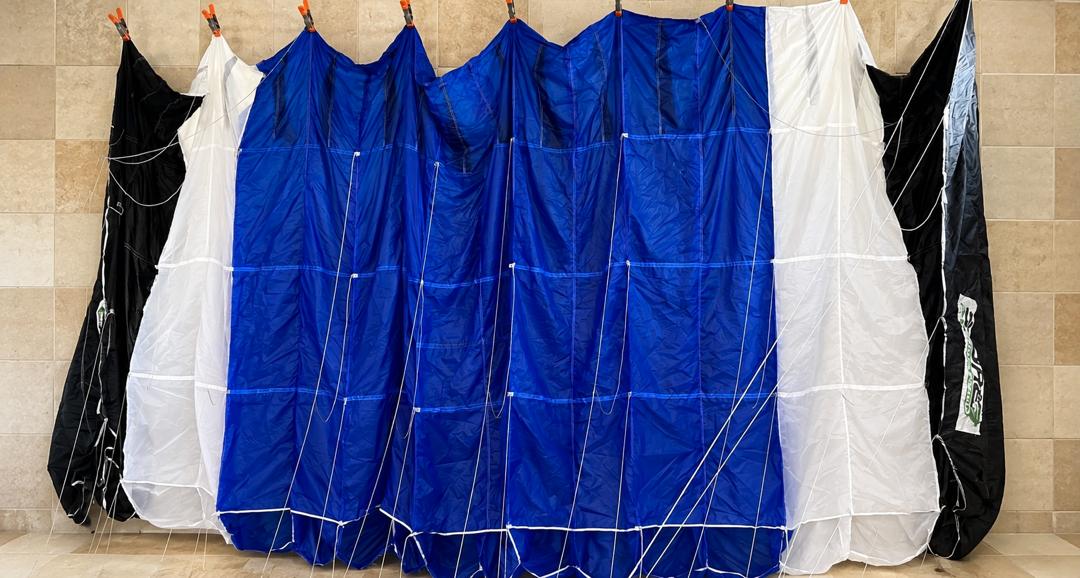

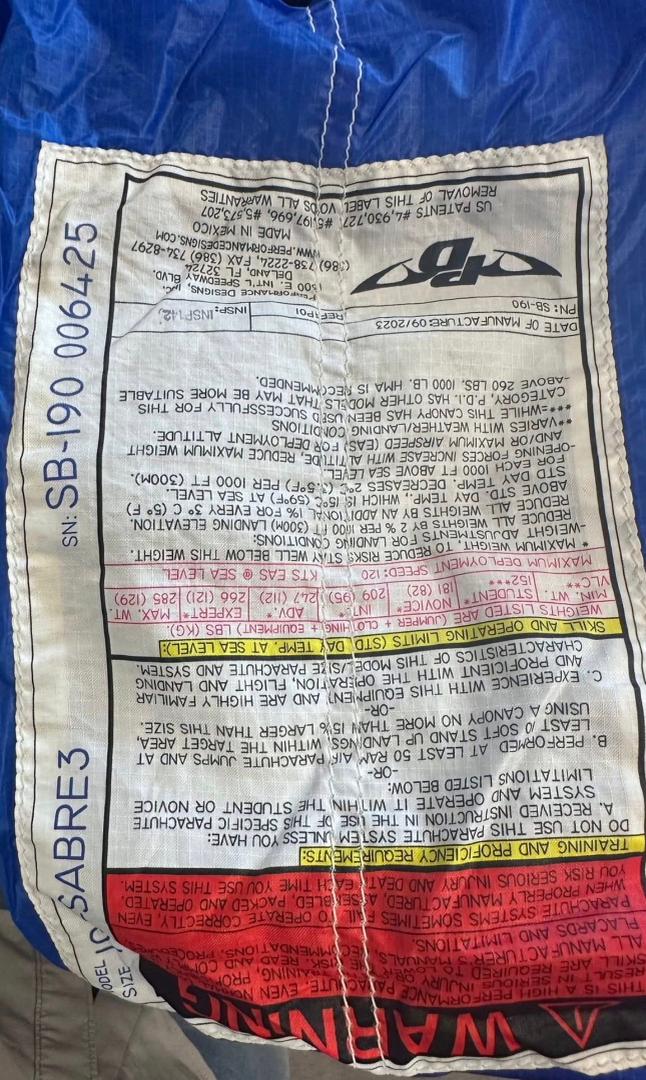
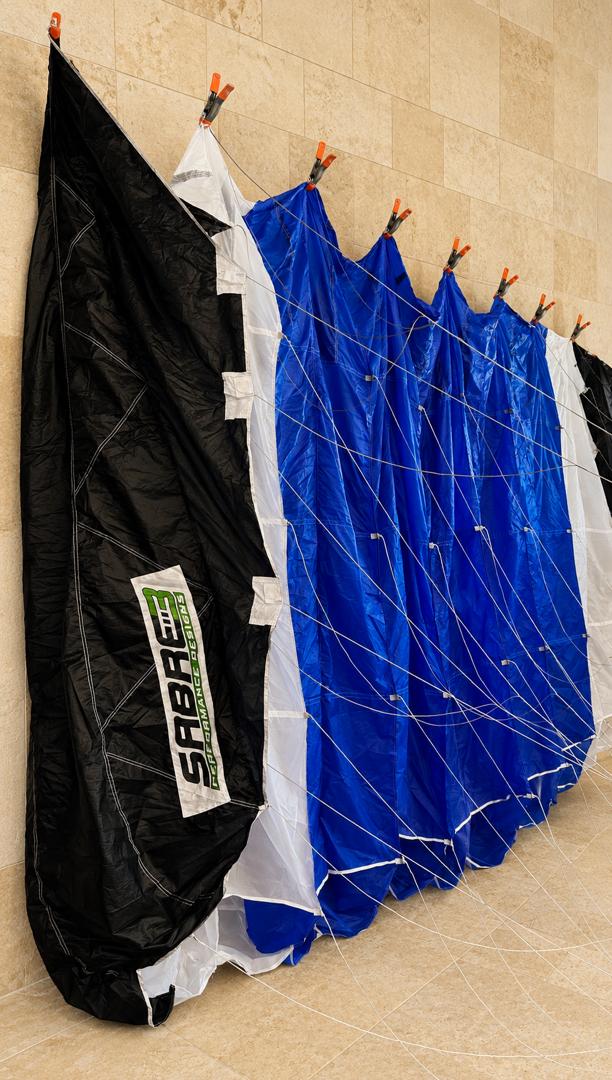

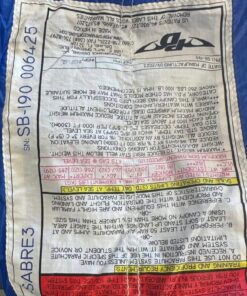
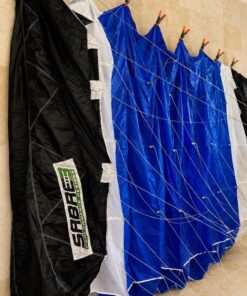
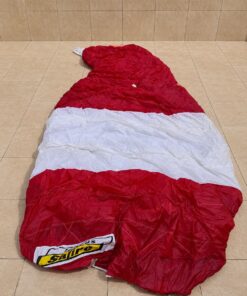
Used Sabre 3 190 DOM:09/2023

€1,850.00
Used Sabre3 190 main canopy, DOM 09/2023, offering responsive handling, refined openings, strong rear-riser performance, and powerful flare characteristics. A versatile 9-cell design suited to appropriately experienced and current skydivers. Used condition should be professionally inspected for fabric, lines, slider, repairs, and overall airworthiness before use.
Used Sabre3 190 DOM 09/2023 – Performance Designs Main Canopy with Dynamic Flight and Powerful Flare
The Used Sabre3 190 DOM 09/2023 is a 190-square-foot main parachute canopy manufactured by Performance Designs. With a date of manufacture of September 2023, this example belongs to the current Sabre3 generation, which was developed as a versatile 9-cell wing capable of serving a wide spectrum of qualified skydivers when appropriately sized and loaded.
Performance Designs describes the Sabre3 as suitable for novice-to-intermediate jumpers at moderate wing loadings and advanced-to-expert pilots at moderate or heavier loadings. Its defining characteristics include a long recovery arc, progressive front-riser pressure, a relatively steep glide, strong rear-riser performance, powerful bottom-end flare, and redesigned openings.
Because this is a used canopy, its actual condition cannot be determined from the DOM alone. Jump count, line condition, fabric porosity, slider condition, attachment points, repairs, patches Used Sabre 3 190, contamination, and storage history should be checked before purchase and again by a qualified parachute rigger before use.
Why Choose a Sabre3 190?
The 190 size can provide a useful combination of responsive flight characteristics and conservative sizing for appropriately qualified jumpers. However, canopy suitability depends on exit weight, experience, currency, training, landing environment, and instructor guidance rather than square footage alone.
Performance Designs specifically advises jumpers to consider physical size, experience level, currency, and preferred skydiving style when selecting canopy and container combinations.
Therefore, a skydiving downsizing chart should never replace professional canopy coaching or individual assessment.
Opening Characteristics and Flight Performance
The Sabre3 was redesigned to provide refined, predictable openings while retaining the lively flight personality associated with the Sabre family.
Performance Designs describes the wing as responding immediately and predictably to control inputs. Its tail-rib design contributes to increased power across multiple flight modes and improved efficiency.
For the 190 and 210 sizes, the manufacturer specifies a dome-shaped collapsible drawstring slider.
That detail is important when inspecting a used example because the slider, grommets, tapes, drawstring components, and associated fabric should all be examined as part of normal skydiving rigging inspection.
Lines, Linewear, and Used-Canopy Inspection
Linewear deserves particular attention on any pre-owned canopy.
The manufacturer currently offers a dedicated Sabre3 190 replacement line set using 750 Vectran, which confirms that line condition is a normal service consideration during ownership.
A qualified rigger should inspect line trim, wear, attachment points, stitching, steering lines, links or soft links, and general symmetry.
This is especially important because DOM 09/2023 tells you when the canopy was manufactured, but it does not reveal how many tracking jump flights, formation jumps, freefly jumps, or ordinary descents have been made on it.
Parachute Rig Compatibility
A parachute rig should be matched to the canopy using the container manufacturer’s sizing guidance.
Performance Designs specifically warns that pack-volume compatibility should be confirmed through the container manufacturer because container sizes vary widely between manufacturers.
Therefore, a 190 should not be assumed to fit every container simply because another 190-square-foot wing fits.
The exact combination of main canopy, reserve, deployment bag, and container must be checked.
Everest Skydive and High-Altitude Search Interest
Keywords including everest skydive, mount everest skydiving, mount everest skydive, skydiving from mount everest, skydiving in nepa, skydiving in nepal, nepal skydiving, and everest parachute jump describe specialized high-altitude experiences rather than ordinary applications for this canopy.
Likewise, gunung everest, mt everest kathmandu, paragliding mount everest, highest skydiving place in the world, highest skydiving in the world, top 10 highest skydive in the world for public, and sky diving in world relate to destinations or altitude records rather than product specifications.
Anyone asking what altitude do you skydive from should follow the operating procedures of the specific drop zone and training organization because altitude, oxygen requirements, aircraft, and regulations differ considerably.
Nepal and Pokhara Skydiving Searches
Searches for skydiving in nepal pokhara price relate to travel and jump-operator pricing rather than canopy value.
A personal main canopy should only be used in an environment for which the jumper, equipment, aircraft procedures, and drop zone requirements are appropriate.
The same principle applies whether the location is Nepal, Australia, Europe, or the United States.
United States Skydiving Searches
Terms such as iskydive miami, iskydive new york city, iskydive los angeles, iskydive dallas fort worth, iskydive nyc, iskydive dallas, homestead skydiving, skydiving in la california, skydiving new york state, skydive america california, parachute jump ny, skydiving charleston sc, and skydiving ventura describe destination or operator searches.
Likewise, wishlist skydiving and safest skydiving in the world reflect experience-oriented search intent.
They do not indicate features of the canopy itself.
Australia Skydiving Searches
Search terms such as skydive australia, skydive aus, skydiving australia, sky diving australia, skydive australia airlie beach, skydive airlie beach, parachute jump melbourne, parachute jump australia, skydive byron bay, and cairns skydiving refer to Australian jump locations and experiences.
Before taking personally owned equipment to another country, jumpers should confirm local equipment requirements, documentation, reserve repack rules, licensing recognition, and drop-zone policies.
Weight Limit and Wing Loading
The phrase weight limit skydiving is especially relevant when evaluating a 190-square-foot canopy.
However, there is no useful universal answer based solely on body weight.
Exit weight, equipment weight, wing loading, experience, canopy training, currency, field elevation, landing area, and environmental conditions all matter.
Performance Designs publishes model-specific wing-loading guidance and encourages jumpers to make canopy choices with qualified professionals.
Helmets, Eye Protection, and Supporting Equipment
A skydiving helmet, skydive helmets, sky helmet skydiving, full face skydiving helmet, sky diving helmet, skydiving helmet full face, and skydiving glasses are separate pieces of personal equipment.
Their inclusion in search results does not mean they are supplied with this canopy.
Similarly, a hook blade knife, hook knife skydiving, or skydive hook knife is emergency equipment that should be selected, positioned, and used according to proper training.
Wingsuits, BASE, and Specialized Disciplines
Searches for wingsuit sport, vector wingsuit, base jumping, and baseline jumping concern specialized disciplines.
A main canopy that performs well for conventional skydiving should not automatically be assumed suitable for every discipline.
Equipment selection for wingsuit or fixed-object jumping requires discipline-specific training and guidance.
The same applies to unusual search phrases such as fire parachute, cypress fire skydiving, and nude parachute jump, which do not describe characteristics of this product.
Riser Control and Landing Performance
The Sabre3 is particularly notable for its rear-riser performance and powerful bottom-end flare. Performance Designs also describes its front-riser response as progressive and manageable.
Searches involving landing flight risers relate to canopy-piloting techniques that should be learned under qualified instruction.
Because the wing has a long recovery arc and can become highly dynamic when flown aggressively, advanced inputs should not be attempted simply because the canopy is capable of them.
Why DOM 09/2023 Matters
The September 2023 manufacture date makes this a relatively recent example, but age alone cannot establish condition.
A heavily used 2023 canopy may have more wear than an older canopy with fewer jumps and excellent storage history.
Consequently, buyers should request the total estimated jump count, line-set history, repair history, ownership history, storage conditions, and current inspection status.
Important Information Before Purchase
The most important characteristics of this Used Sabre3 190 are its 190-square-foot size, September 2023 date of manufacture, modern 9-cell design, long recovery arc, progressive front-riser characteristics, strong rear-riser performance, steep glide, powerful flare, and refined opening behavior.
Before installation, the canopy should be inspected by a qualified rigger and matched carefully to the jumper’s experience, exit weight, currency, container size, and intended discipline.
When appropriately selected and flown within the pilot’s training level, the Sabre3 provides a broad performance envelope that can remain enjoyable through substantial skill progression while retaining the responsive flight characteristics that define the design.
Flight Characteristics, Opening Behavior, Handling, Landing Performance, and Used-Canopy Evaluation
Predictable Opening Behavior
A modern nine-cell main canopy should provide openings that are sufficiently controlled to support consistent deployment while still remaining responsive once fully inflated. Opening quality depends on several factors, including packing technique, body position, deployment airspeed, slider condition, line trim, pilot chute performance, and the condition of the canopy itself.
With a used canopy, these factors become even more important.
A canopy that has been maintained properly should generally show symmetrical inflation, stable slider descent, and consistent heading performance under normal deployment conditions.
However, occasional variations can still occur because no deployment is perfectly identical.
For this reason, opening behavior should be evaluated over several jumps rather than judged from one isolated experience.
Why Line Condition Matters
Line condition has a major influence on how a canopy flies and opens.
Over time, lines can shrink, stretch, wear, or lose their original trim.
Even relatively small changes can affect opening characteristics, turn response, flare timing, and overall flight behavior.
A used canopy should therefore be checked carefully for visible wear, fuzzing, discoloration, damaged stitching, uneven trim, or unusual tension differences.
A qualified rigger can measure line trim and compare it against the manufacturer’s specifications.
This provides a much more reliable assessment than appearance alone.
Fabric Condition and Porosity
The fabric should also be evaluated carefully.
Modern zero-porosity fabric is designed to retain air efficiently, helping the canopy maintain its intended shape and internal pressure.
As a canopy accumulates jumps, exposure to sunlight, dust, moisture, sweat, and repeated packing can gradually affect the material.
A visual inspection should check for abrasion, pinholes, staining, repairs, damaged seams, and worn reinforcement areas.
The fabric should also feel consistent across the canopy.
A canopy with good fabric condition generally maintains more predictable pressurization and flight characteristics.
Slider and Grommet Inspection
The slider is a critical part of the deployment system.
Its fabric, tapes, grommets, and drawstring components should all be inspected for wear or damage.
Grommets should remain smooth and free from sharp edges that could damage the suspension lines.
The slider fabric should not show excessive tearing, distortion, or weakened stitching.
A properly functioning slider contributes to controlled inflation.
If the slider descends unusually quickly, hangs up, or behaves inconsistently, the cause should be investigated before continued use.
Harness Input and Turn Response
A responsive canopy reacts not only to toggle input but also to weight shift and harness movement.
This can make the canopy feel more connected to the pilot.
However, responsive handling also means that inconsistent body position may influence heading or turn behavior.
A pilot should therefore use smooth and deliberate inputs.
Abrupt control movements can produce more aggressive responses than expected.
For this reason, transition to a more responsive canopy should always be guided by experience, training, and currency.
Front-Riser Characteristics
Front-riser input changes the canopy’s angle of attack and increases descent rate.
On a performance-oriented wing, riser pressure may build progressively as the input is maintained.
This can provide strong control during advanced canopy flight, but it also requires proper training.
Riser techniques should never be treated as something to experiment with casually.
The pilot should first understand normal full-flight behavior, braking characteristics, recovery, and flare timing.
Advanced inputs should only be introduced under qualified coaching.
Rear-Riser Control
Rear-riser input can provide useful control during certain phases of flight.
It may allow heading corrections while preserving more airspeed than deeper toggle input.
However, the effectiveness of rear-riser control depends on airspeed, loading, altitude, and canopy configuration.
It should therefore be practiced at a safe altitude before being relied upon closer to the ground.
Pilots should also understand the transition from rear risers to toggles.
Poor timing or aggressive movement can reduce stability and complicate the landing pattern.
Full-Flight Glide
A canopy’s glide characteristics determine how much horizontal distance can be covered relative to altitude loss.
Wind has a major influence on this.
A strong headwind can reduce ground distance significantly, while a tailwind may extend the ground track.
Pilots should therefore avoid judging glide solely by one jump.
Wind direction, upper-level conditions, field elevation, temperature, and loading all influence the practical result.
Learning how the canopy behaves in different conditions helps improve pattern planning and landing accuracy.
Braked Flight
Braked flight is an important part of canopy control.
It allows the pilot to reduce forward speed and descent rate in certain situations.
However, excessive braking can reduce airspeed too much.
For this reason, the pilot should learn the canopy’s control range gradually and at sufficient altitude.
Understanding the difference between light brakes, deeper brakes, and the approach to stall behavior is essential.
These characteristics should be explored only in a controlled training environment.
Flare Performance
A strong flare depends on available airspeed, timing, and smooth control input.
The flare should convert forward speed into lift and reduce vertical descent before touchdown.
If the flare begins too early, lift may be used before the pilot reaches the ground.
If it begins too late, there may not be enough time to complete the movement.
Consistent practice helps the pilot understand the correct timing.
Landing performance should therefore be developed progressively rather than rushed.
Wing Loading Considerations
Wing loading has a major influence on canopy behavior.
Higher loading generally increases forward speed, descent rate, responsiveness, and landing energy.
Lower loading may provide more forgiving handling, although other factors still matter.
Exit weight should be calculated accurately and should include the pilot, clothing, rig, and carried equipment.
Canopy size alone does not determine suitability.
Experience, currency, landing environment, local conditions, and coaching history should all be considered together.
Used-Canopy Inspection Before Purchase
A used canopy should be evaluated beyond its appearance.
Important questions include estimated jump count, number of owners, line-set history, repairs, water exposure, storage conditions, and whether the canopy has experienced unusual incidents.
The seller’s information is useful, but an independent inspection provides greater confidence.
A qualified rigger can examine the fabric, seams, lines, attachment points, slider, reinforcement areas, and general condition.
This inspection helps identify problems that may not be obvious in photographs.
Compatibility With the Container
Pack volume must be considered before installation.
Two canopies with the same stated area may not pack exactly the same because fabric type, design, age, and construction can influence volume.
The container manufacturer’s sizing guidance should therefore be used.
An excessively tight fit can make packing difficult and may affect deployment behavior.
A fit that is too loose can also create problems.
Compatibility should be confirmed before the canopy is placed into regular service.
Long-Term Practical Value
A well-maintained used canopy can provide strong value when its size, condition, and flight characteristics match the pilot appropriately.
Its usefulness depends far more on condition and suitability than on age alone.
A relatively recent canopy with heavy wear may require more attention than an older example that has been carefully maintained.
Ultimately, the best ownership experience comes from combining a professional inspection, correct container compatibility, appropriate loading, disciplined canopy training, careful packing, and regular maintenance.
When these factors are managed correctly, the canopy can deliver predictable openings, responsive control, confident pattern planning, and consistent landing performance over many future jumps.
Accuracy Development, Canopy Control, Flight Planning, Landing Technique, and Consistent Performance
Developing Consistent Flight Control
Consistent canopy control develops through repetition, observation, and disciplined decision-making. The wing itself provides the aerodynamic foundation, but the pilot still determines how effectively that performance is used through body position, control input, pattern planning, awareness, and flare timing.
The goal should be predictable behavior rather than aggressive maneuvering.
Every flight provides information about glide, descent rate, turning response, braking characteristics, and landing performance. Over time, these observations help the pilot understand how the canopy responds in different situations.
However, changes should be introduced gradually. Large differences in technique, loading, or environmental conditions can make comparisons difficult.
Understanding Full-Flight Behavior
Full flight establishes the baseline for understanding the wing.
Before experimenting with more advanced techniques, the pilot should become familiar with normal forward speed, descent rate, control pressure, and glide characteristics.
This knowledge provides an important reference point.
If the canopy suddenly feels slower, turns differently, or requires unusual control pressure, the pilot is more likely to notice the change.
Full-flight familiarity also improves pattern planning because the pilot develops a better understanding of how much horizontal distance can normally be covered from a given altitude.
Smooth Toggle Inputs
Control inputs should be smooth and deliberate.
Abrupt movements can create unnecessarily aggressive turns or rapid changes in pitch.
Progressive input allows the pilot to feel how the canopy is responding before adding more control pressure.
This is particularly important when learning a responsive wing.
The objective is not to discover the maximum possible turn rate.
Instead, the pilot should develop predictable control throughout the normal operating range.
Smooth input also helps preserve heading awareness and reduces unnecessary loss of altitude.
Harness Control
Weight shift can influence heading and turn initiation.
Because this input can occur without moving the toggles significantly, pilots should become aware of how their body position affects the wing.
Uneven pressure through the harness can sometimes create small heading changes.
Therefore, relaxed and balanced body positioning contributes to consistent flight.
Harness control should first be explored at sufficient altitude and under qualified instruction.
As familiarity improves, the pilot develops a clearer understanding of how body movement interacts with other control methods.
Developing Pattern Discipline
A consistent landing pattern is one of the most valuable habits a pilot can develop.
Using repeatable entry points and predictable turns makes it easier to understand how wind and altitude affect the final approach.
However, the pattern should never be treated as completely fixed.
Other traffic, changing wind, obstacles, and landing-area conditions may require adjustment.
The priority is always safe separation and a clear approach.
A pilot who understands the wing well can make small corrections without abandoning overall pattern discipline.
Wind Awareness
Wind changes how the canopy travels across the ground.
A headwind reduces ground speed and may shorten the distance covered.
A tailwind increases ground speed and can extend the ground track considerably.
Crosswinds can push the canopy sideways relative to the intended approach.
For this reason, wind direction and strength should be considered before every flight.
Ground observations should also be compared with conditions at altitude because the wind can vary significantly throughout the descent.
Braked Flight Familiarity
Controlled braking allows the pilot to explore how the canopy behaves at reduced airspeed.
Light and moderate braking can be useful for understanding glide changes and control response.
However, deeper input approaches the lower end of the flight envelope.
This area should only be explored at safe altitude with appropriate training.
The pilot should understand how the canopy feels as airspeed decreases and how smoothly it recovers when the controls are returned upward.
Abrupt recovery inputs should be avoided.
Turn Management
Turns consume altitude.
The amount depends on input type, duration, airspeed, loading, and canopy characteristics.
This makes altitude awareness essential.
A turn that feels routine at high altitude can become dangerous when initiated too low.
For that reason, advanced turning techniques should never be introduced close to the ground without structured coaching and appropriate experience.
A conservative approach provides more time to evaluate heading, traffic, and landing options.
Rear Control Familiarity
Alternative control methods can provide useful heading correction and glide management.
However, they should be practiced progressively.
The pilot should first understand how much input produces a gentle response and how additional pressure changes the wing’s behavior.
Control pressure can vary considerably between canopies.
Therefore, experience on another wing should not automatically be transferred without testing.
Practice should occur at sufficient altitude where mistakes can be corrected safely.
Flare Timing
Landing performance depends heavily on flare timing.
The objective is to convert available forward speed into lift while reducing descent near the ground.
Starting too early may use the available lift before touchdown.
Starting too late may leave insufficient time to complete the movement.
The flare should generally be smooth and progressive rather than abrupt.
Repeated practice helps develop better timing.
Environmental conditions, loading, and approach speed can all influence how the flare feels on a particular jump.
Straight-In Approaches
Straight-in approaches provide one of the best environments for understanding landing behavior.
They reduce unnecessary variables and allow the pilot to focus on heading control, visual assessment, and flare timing.
For a pilot becoming familiar with a different canopy, conservative approaches provide more useful information than aggressive maneuvers.
This allows the pilot to build confidence through repeatability.
Once baseline behavior is clearly understood, more advanced skills can be introduced through structured coaching.
Evaluating Opening Consistency
Opening performance should be assessed across many deployments rather than one isolated event.
Body position, packing method, deployment speed, line condition, slider behavior, and environmental factors can all influence inflation.
Patterns matter more than occasional variation.
If headings consistently shift in one direction or inflation repeatedly becomes unusually fast or uneven, inspection may be appropriate.
A recent change in opening behavior deserves attention because it may indicate developing wear or altered trim.
Monitoring Flight Changes
Changes in handling can provide useful maintenance clues.
A canopy that begins turning unexpectedly, flaring differently, or requiring unusual control pressure should be investigated.
The cause may be related to trim, control-line length, fabric condition, or another component.
The pilot should avoid compensating indefinitely for a mechanical change through technique.
Instead, unusual behavior should be documented and evaluated by a qualified specialist.
Managing Fatigue and Currency
Pilot performance can decline when concentration is reduced.
Fatigue may affect visual judgment, control timing, pattern decisions, and awareness of surrounding traffic.
Long periods without jumping can also reduce familiarity.
After a break, conservative flying is generally more appropriate while normal timing and awareness are rebuilt.
Currency should therefore be treated as an important part of safe canopy progression.
Experience accumulated years earlier does not completely replace recent practice.
Keeping Useful Flight Notes
Simple records can improve long-term understanding.
Useful details include estimated exit weight, weather conditions, landing direction, opening behavior, control feel, and flare performance.
These notes can reveal patterns that may not be obvious from memory alone.
They can also help when discussing progression with an instructor or equipment specialist.
A consistent record is especially valuable when evaluating a recently acquired used canopy.
Developing Long-Term Familiarity
Familiarity develops gradually.
Over time, the pilot learns how the wing responds to different control pressures, how quickly it recovers from turns, how wind affects ground track, and how much flare authority is available.
This knowledge improves confidence because decisions are based on experience rather than guesswork.
Ultimately, consistent performance comes from conservative progression, smooth control inputs, disciplined pattern planning, environmental awareness, regular inspection, and appropriate coaching.
When these habits are maintained, the canopy becomes easier to understand, easier to manage, and more predictable across a wide range of normal operating conditions.
Reliability, Inspection, Maintenance, Storage, Safety, and Long-Term Ownership
Long-Term Reliability
A modern nine-cell main canopy can remain dependable for many years when it is inspected regularly, packed correctly, stored properly, and used within an appropriate experience and loading range. Long-term reliability depends on the condition of the fabric, suspension lines, slider, reinforcement tapes, attachment points, steering system, stitching, and deployment components.
Age alone does not determine serviceability.
A relatively recent canopy may show substantial wear if it has accumulated many jumps, while an older example may remain in excellent condition if it has been used lightly and stored carefully.
For that reason, overall condition should always be evaluated directly rather than estimated from manufacture date alone.
Why Preventive Inspection Matters
Preventive inspection helps identify developing problems before they affect opening or flight behavior.
Small areas of abrasion, damaged stitching, worn line attachments, shrinking lines, or slider wear may not immediately prevent normal operation, but they can become more significant over time.
The canopy should therefore be observed during packing as well as during formal inspections.
Packing provides an excellent opportunity to examine fabric panels, seams, lines, slider components, and attachment areas.
Anything unusual should be investigated rather than ignored.
Fabric Condition
The fabric should remain free from significant tears, burns, holes, excessive abrasion, and chemical contamination.
Minor cosmetic marks may not affect airworthiness, but structural damage requires proper evaluation.
Repeated exposure to ultraviolet light can gradually weaken fabric.
Likewise, dirt, sand, oils, fuel, and harsh chemicals can negatively affect material condition.
The canopy should not be stored in direct sunlight for extended periods.
If contamination occurs, cleaning or repair decisions should be made according to manufacturer guidance and professional rigging advice.
Line Condition
Suspension lines experience wear every time the canopy is packed, deployed, flown, and landed.
They can gradually become fuzzy, discolored, uneven, or altered in length.
Trim changes can affect heading performance, opening characteristics, glide, control pressure, and flare timing.
For this reason, visual inspection alone is not always enough.
A line set may still appear usable while being significantly out of trim.
Periodic measurement by a qualified specialist provides a better understanding of actual condition.
If flight behavior changes unexpectedly, line trim should be considered as one possible cause.
Steering Line Inspection
Steering lines and lower control sections often experience significant wear because they move repeatedly through guide rings and are handled frequently during packing.
They should be checked for glazing, fraying, excessive fuzzing, damaged stitching, or unusual length differences.
Control-line condition can directly influence flare performance and handling.
If one side differs noticeably from the other, the canopy may respond unevenly.
Any questionable steering line should be professionally inspected before continued use.
Slider Condition
The slider plays a major role in controlling inflation.
Its fabric, reinforcement tapes, grommets, seams, and any collapsible components should remain in good condition.
Grommets should feel smooth and should not have sharp edges capable of damaging suspension lines.
The slider fabric should not show excessive wear or tearing.
If slider descent changes significantly, opening behavior may also change.
Unusual inflation speed, asymmetric openings, or inconsistent slider movement should be investigated rather than simply accepted as normal.
Attachment Points and Reinforcement
Line attachment areas carry significant loads during deployment and flight.
These points should be checked carefully for damaged stitching, distortion, abrasion, or fabric separation.
Reinforcement tapes should remain intact.
Even small changes deserve attention because attachment points are structurally important.
Likewise, load-bearing seams should not show broken or missing stitches.
Professional repair is required whenever structural stitching becomes questionable.
Temporary or improvised repairs are not appropriate for load-bearing equipment.
Packing and Handling
Correct packing helps preserve both opening consistency and material condition.
The canopy should be handled carefully on clean surfaces whenever possible.
Dragging fabric across concrete, gravel, or rough flooring can create unnecessary abrasion.
Lines should remain organized and free from twists during packing.
The slider should be positioned correctly according to the manufacturer’s recommended procedure.
Packing habits should remain consistent.
If deployment characteristics change after major changes in packing technique, the difference should be evaluated carefully.
Storage Conditions
Proper storage is essential for preserving long-term material quality.
The canopy should be kept in a cool, dry environment away from direct sunlight, excessive heat, moisture, fuel, oils, solvents, and other chemicals.
Long-term storage inside a hot vehicle should be avoided.
Heat can negatively affect fabrics, elastics, and other components.
If equipment becomes wet, it should be dried correctly before extended storage.
Damp equipment left packed for long periods can develop odor, staining, or material degradation.
Transport Protection
During transport, the packed system should be protected from impact, sharp objects, contamination, and excessive heat.
A suitable gear bag provides useful protection.
The equipment should not be placed underneath heavy objects that may crush or distort components.
Care should also be taken around vehicle fluids, fuel containers, batteries, and cleaning chemicals.
A small amount of chemical contamination can be more serious than ordinary cosmetic dirt.
Repair History
A used canopy should have its repair history reviewed whenever possible.
Professional patches or other approved repairs may be completely acceptable when completed correctly.
However, buyers should understand where repairs were made and why.
Unknown modifications deserve additional investigation.
Any structural repair should conform to accepted rigging practices and manufacturer recommendations.
Documentation can be useful because it gives future owners a clearer picture of how the canopy has been maintained.
Professional Inspection
A qualified rigger should inspect any used canopy before it is placed into regular service.
The inspection should consider fabric, seams, lines, attachment points, slider condition, control system, previous repairs, and general airworthiness.
This is especially important when the equipment has changed owners.
Photographs and seller descriptions can provide useful information, but they cannot replace a physical inspection.
A professional assessment provides a stronger basis for deciding whether maintenance or replacement components are needed.
Container Compatibility
The canopy should fit the intended container correctly.
Pack volume varies between designs even when the stated surface area is similar.
Fabric age, construction, and line type can also affect packed volume.
A fit that is too tight may make packing difficult and can affect deployment characteristics.
A fit that is excessively loose can also create problems.
Container sizing should therefore be confirmed using manufacturer guidance and professional advice rather than assumption.
Safe Ownership and Currency
Equipment reliability and pilot currency should be considered together.
A technically serviceable canopy can still be unsuitable for someone whose experience, recent jump history, or landing skills do not match its performance.
Long breaks from jumping can reduce timing, traffic awareness, and flare judgment.
After extended inactivity, conservative flying and structured coaching may be appropriate.
Equipment should support the pilot’s current ability rather than simply reflect previous experience.
Monitoring Changes Over Time
Changes in opening direction, turn response, glide, control pressure, or flare performance should be documented.
One unusual jump does not necessarily indicate a problem.
Repeated changes are more significant.
Keeping simple notes can help identify whether behavior is becoming progressively different.
If a pattern develops, professional inspection should occur before the issue is compensated for through technique.
Mechanical changes should be corrected rather than normalized.
Building a Strong Ownership Routine
A good ownership routine includes regular visual inspection, careful packing, proper storage, appropriate transport, professional servicing, and honest assessment of pilot currency.
Before each jumping day, the equipment can be checked for obvious damage or unusual wear.
During use, changes in opening or flight behavior should be noticed.
Afterward, the canopy should be protected from moisture, dirt, heat, and unnecessary sunlight.
Ultimately, dependable long-term ownership comes from combining responsible inspection, professional maintenance, correct storage, suitable container compatibility, disciplined flying, and appropriate training.
When these habits remain consistent, a well-maintained used canopy can continue providing predictable openings, reliable flight characteristics, and confident landing performance across many future jumps.
Be the first to review “Used Sabre 3 190 DOM:09/2023”
Related products

used products

used products

used products

used products
used products

used products
used products
Reviews
There are no reviews yet.