
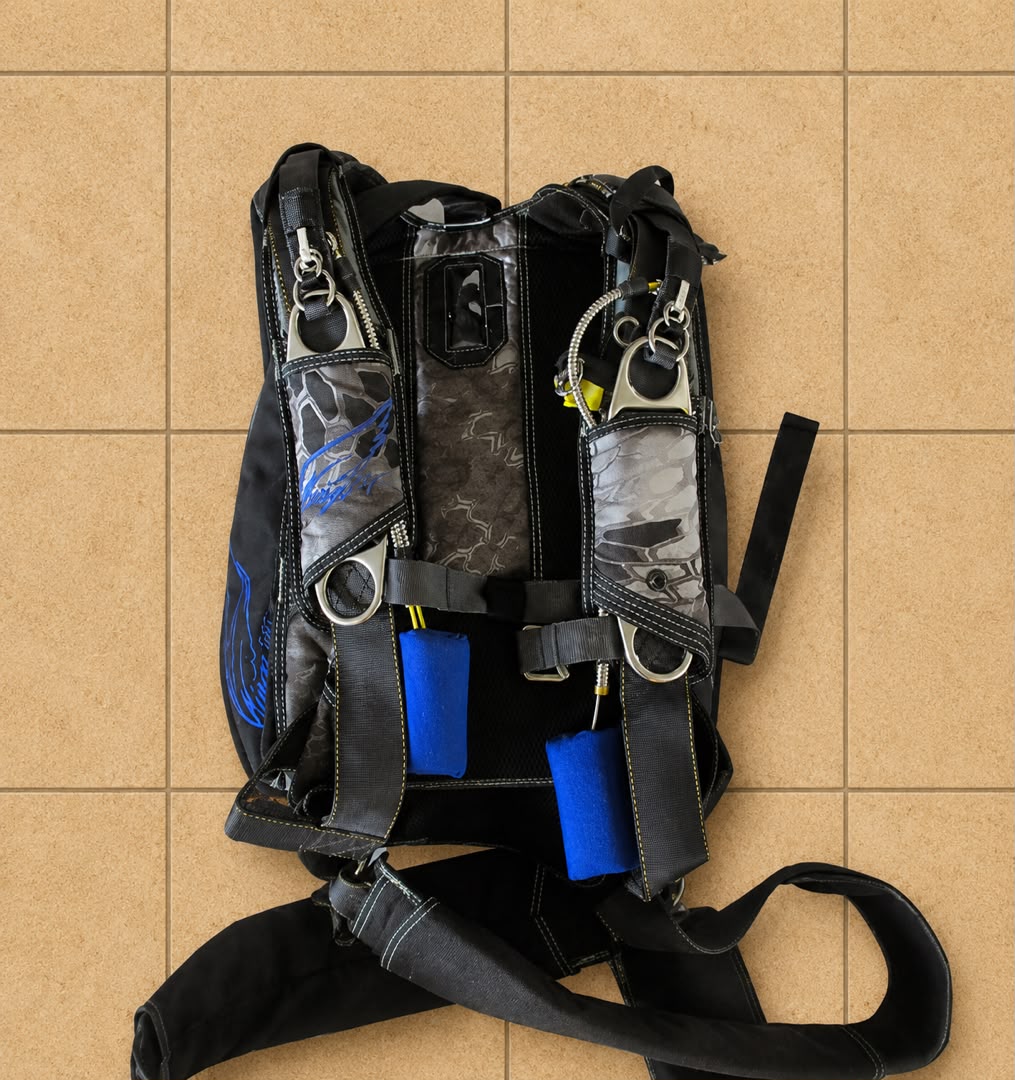
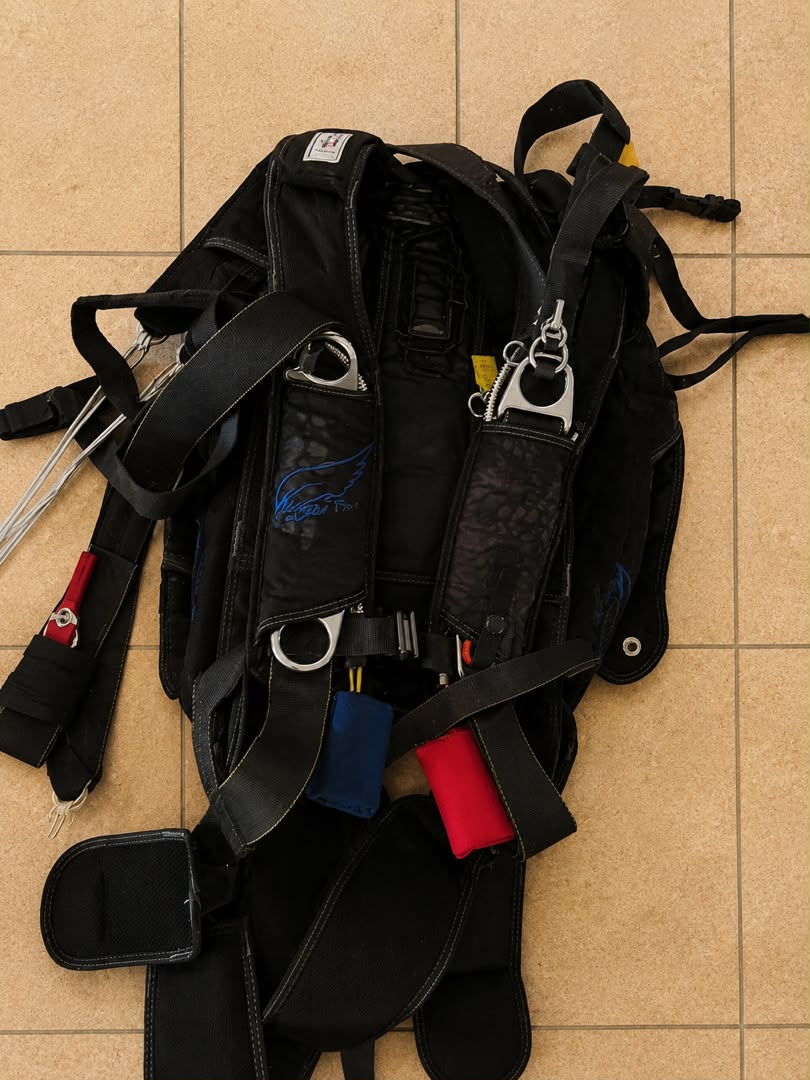
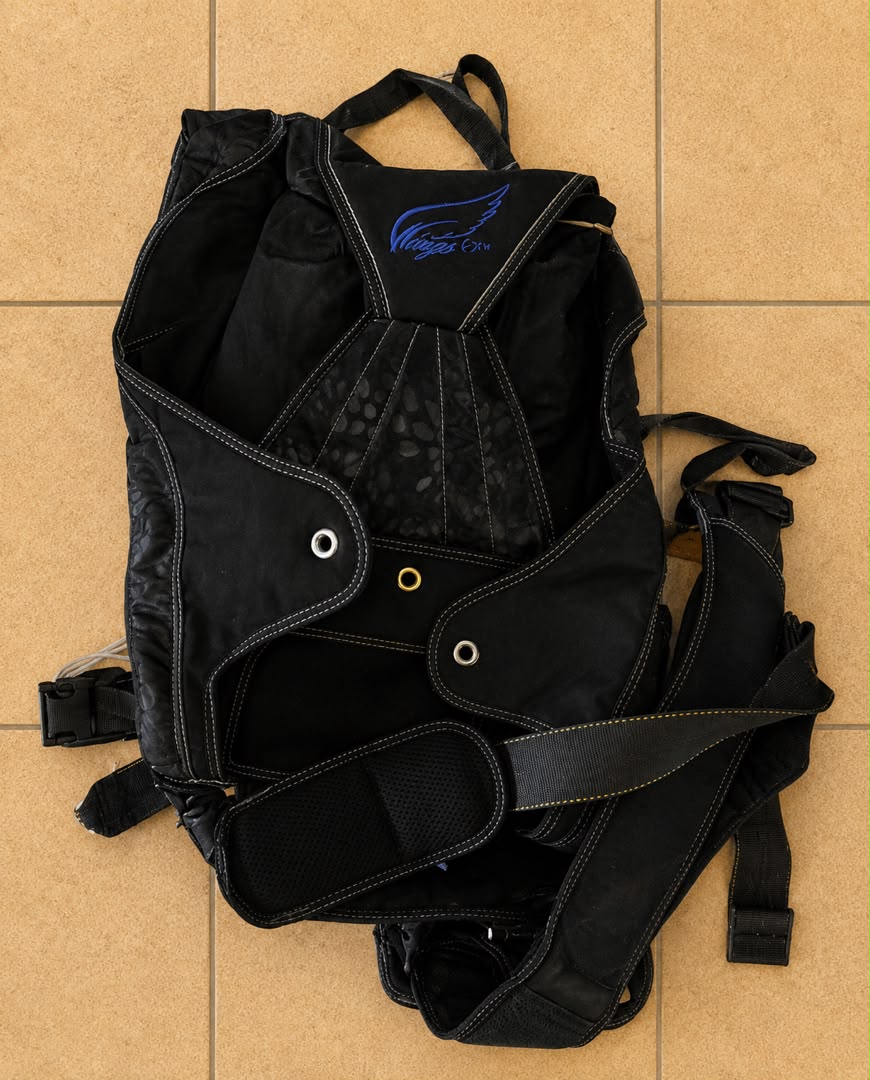




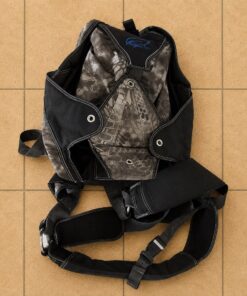

Used Wings Vision W5-2 ext with OPT 126


€2,500.00
Product Description
Wings Vision
15541
W8-2 ext
Main 107-120
Reserve 126-143
Options for both:
Wings Vision
Reserve boost
Freefly harness
Spacer foam
Wingsuit corners
Stainless steel
RSL
Swoop risers
Semi stowless dbag
Used Wings Vision W5-2 EXT with OPT 126 – Technical Skydiving Rig Guide
Wings Vision Engineering, Harness/Container Design, Reserve Compatibility, and Skydiving Equipment Context
Parachute Rig
A parachute rig should be evaluated as a complete life-support assembly rather than simply by container size or appearance. The harness/container, main deployment system, reserve tray, risers, reserve static line, handles, deployment bag, and actual installed canopies all need to remain compatible.
For this used Wings Vision system, the listed options indicate a relatively feature-rich configuration, including a freefly-oriented harness, Reserve Boost, spacer foam, stainless-steel hardware, RSL, swoop risers, wingsuit corners, and a semi-stowless deployment bag.
Skydiving Rig
The broader term skydiving rig accurately describes the complete harness/container once a compatible main, reserve, risers, deployment components, and other required equipment are installed.
A used system should always receive a detailed inspection before service because webbing condition, hardware, reserve tray integrity, closing loops, pin protection, and previous modifications may not be obvious from listing photos.
Container Skydive
For container skydive compatibility, nominal canopy area is only one consideration.
The listing indicates a main range around 107–120, while the reserve range differs depending on whether the physical container is actually W5-2 EXT or W8-2 EXT. One listing associates W5-2 EXT with reserves 113–126, while the disputed product page associates W8-2 EXT with reserves 126–143.
That is exactly why the data label should be checked before final configuration.
OPT 126 Reserve
The OPT 126 reference strongly suggests a reserve in the 126-square-foot class.
However, the exact reserve model, serial number, DOM, repack status, deployment history, and compatibility should be verified from the reserve data card and container documentation rather than inferred solely from the product title.
A reserve that physically fits is not automatically an approved installation.
Skydiving Rigging
skydiving rigging is central to evaluating this system because the current online listing contains conflicting container information.
A qualified rigger should verify serial number, harness size, reserve tray designation, main tray range, riser compatibility, reserve installation, RSL configuration, and deployment-bag compatibility before operational use.
Parts of a Parachute
The parts of a parachute system relevant here include the harness/container, main and reserve deployment bags, main risers, reserve risers, main pilot chute, reserve pilot chute, main and reserve closing systems, handles, RSL components, and installed canopies.
The listing’s semi-stowless deployment bag and swoop risers are useful details, but they should still be inspected for condition and correct installation.
Reserve Boost
Reserve Boost is listed as one of the system options.
Any reserve-assistance component should be treated as part of the emergency deployment architecture and checked against the exact rig configuration by a qualified rigger.
Freefly Harness
The listed freefly harness option indicates a configuration intended to improve security during multi-orientation freefall.
This should not be confused with a guarantee that the entire used rig is suitable for unrestricted freeflying. Handle security, riser covers, pin protection, fit, and overall condition still matter.
Spacer Foam
Spacer foam is another listed option.
Its purpose is primarily comfort and ventilation around the back and harness-contact areas.
Comfort features can improve fit, but structural webbing condition remains more important than padding condition.
Wingsuit Corners
The listing includes wingsuit corners, which are container design features intended to provide more flexibility in the main deployment-bag extraction path during wingsuit deployments.
Their presence does not automatically make every canopy or pilot-chute configuration appropriate for wingsuit flying.
Wingsuit Sport
The broader phrase wingsuit sport concerns a specialized freefall discipline with additional deployment considerations.
A used container with wingsuit-oriented features should still be paired with a suitable canopy and deployment configuration under qualified guidance.
Wingsuit
A wingsuit changes body position, deployment airflow, and potential burble characteristics.
For that reason, harness/container features alone should never determine whether a complete system is suitable for wingsuit use.
Vector Wingsuit
The phrase vector wingsuit normally refers to wingsuit-oriented configurations involving another harness/container family.
It should not be used as an alternative product name for this Wings Vision system.
Gliding Suit Wingsuit
A gliding suit wingsuit is a freefall garment and remains separate from the harness/container.
Skydiving Gliding Suit
Likewise, a skydiving gliding suit is not part of the container specification.
Wing Suits for Sale
The phrase wing suits for sale represents a separate equipment category and should not be treated as part of this used rig package unless explicitly included.
Price of Wingsuit
The price of wingsuit has no direct relevance to the container’s condition or airworthiness.
Tandem Wingsuit
A tandem wingsuit is not a standard use case for this sport harness/container.
Indoor Wingsuit
Indoor wingsuit flying uses specialized tunnel facilities and does not involve the deployment system described here.
Fly Suits
Fly suits are freefall clothing rather than components of the harness/container.
RSL
The listing states that the system includes an RSL.
An RSL forms part of the reserve-deployment architecture and should be inspected for correct routing, attachment, wear, and compatibility with the installed reserve system.
Swoop Risers
The seller lists swoop risers among the options.
Their webbing, hardware, steering system, and attachment areas should be professionally inspected before service.
Riser type alone does not determine whether a particular high-performance canopy is suitable for the jumper.
Landing Flight Risers
The phrase landing flight risers broadly relates to riser control during canopy flight.
Any riser use should remain within the jumper’s training, experience, and canopy-piloting skill level.
Semi-Stowless Deployment Bag
A semi-stowless deployment bag is included according to the listing.
Its condition, locking-stow arrangement, bridle attachment, fabric integrity, and compatibility with the actual main canopy should be checked during rigging inspection.
Linewear
linewear is primarily a canopy and riser issue rather than a container specification.
If a main canopy is included with the rig, its line-set jump count, trim, abrasion, and attachment points should be evaluated independently.
No main-canopy line condition should be inferred from the container listing alone.
Skydiving Downsizing Chart
A skydiving downsizing chart can provide general educational guidance, but it should never be used as an automatic justification for installing a 107, 113, or 120-square-foot main.
Canopy choice depends on exit weight, current experience, currency, landing history, coaching, and design characteristics.
Smallest Canopy
The smallest canopy that physically fits the main tray is not necessarily the safest or most appropriate canopy.
Container compatibility and jumper suitability are two separate decisions.
Canopy Flight
canopy flight performance comes primarily from the actual main canopy installed, its loading, line trim, condition, and the pilot’s training.
The container supports deployment and retention but does not determine the flight characteristics of the wing.
CRW Skydiving
crw skydiving involves canopy relative work and has discipline-specific equipment considerations.
This used Wings Vision system should not automatically be considered configured for that discipline without appropriate canopy, riser, and operational review.
Safire 3
safire 3 is a separate main-canopy design.
A particular size may potentially fall within the physical pack-volume range of some containers, but compatibility should be confirmed rather than assumed from nominal square footage.
Fluid Wings
fluid wings refers to a separate canopy manufacturer and product line.
Base Jumping
base jumping uses a fundamentally different deployment and equipment philosophy.
A sport harness/container intended for aircraft skydiving should not be represented as BASE equipment.
Baseline Jumping
The phrase baseline jumping is often associated with BASE-related searches but does not describe this harness/container.
Base Canopy
A base canopy is not a direct substitute for a sport main simply because the nominal area appears compatible.
Tracking Jump
A tracking jump is a freefall discipline.
For freefly or tracking use, handle security, container closure, riser-cover integrity, and proper fit all remain important.
Freefly Pud Handle
A freefly pud handle refers to a low-profile pilot-chute handle often used on sport rigs.
If fitted, its condition, security, and compatibility should be verified during inspection.
Skydiving Speed
skydiving speed varies with body position and discipline.
Higher-speed freefall environments place greater importance on secure pin protection, handles, riser covers, and fit.
Speed Sky Diving
speed sky diving is a specialized discipline with very high freefall speeds and should not be assumed appropriate for any used container without specific technical evaluation.
Skydiving Helmet
A skydiving helmet is separate personal protective equipment.
Skydive Helmets
skydive helmets vary in coverage, visibility, ventilation, and communication compatibility.
Sky Helmet Skydiving
The phrase sky helmet skydiving relates to head protection rather than harness/container engineering.
Full Face Skydiving Helmet
A full face skydiving helmet provides facial and eye coverage but does not affect container compatibility.
Skydiving Helmet Full Face
The phrase skydiving helmet full face describes the same separate equipment category.
G35 Helmet
A g35 helmet is not part of the listed Wings Vision system.
Cookie G4 Helmet
Likewise, cookie g4 helmet is a separate helmet product.
Best Skydiving Helmet
The best skydiving helmet depends on fit, discipline, visibility, comfort, and drop-zone requirements rather than the container model.
Skydiving Glasses
skydiving glasses can be used as eye protection depending on helmet and individual requirements.
Skydiver Goggles
skydiver goggles are another form of personal eye protection.
Can You Wear Glasses While Skydiving
For can you wear glasses while skydiving, many jumpers use suitable goggles or compatible helmet configurations over prescription eyewear.
Hook Blade Knife
A hook blade knife is emergency cutting equipment rather than a container component.
Hook Knife Skydiving
hook knife skydiving equipment can be carried as part of emergency preparedness.
Skydive Hook Knife
A skydive hook knife should remain accessible but should never be treated as compensation for defective risers, lines, or deployment components.
Fire Parachute
The term fire parachute does not correspond to a verified feature of this rig.
Cypress Fire Skydiving
The phrase cypress fire skydiving appears to mix AAD terminology.
The current seller listing does not identify an AAD model or status for this system, so no AAD should be assumed included.
Gear Bag Skydive
A gear bag skydive setup can help protect the harness/container during travel and storage.
However, proper storage should also keep the equipment dry and away from excessive heat, ultraviolet exposure, chemicals, and sharp objects.
Skydiving Equipment List
A typical skydiving equipment list may include a harness/container, compatible main, reserve, AAD where required or installed, risers, pilot chute, helmet, altimeter, eye protection, and other discipline-specific equipment.
Exact requirements depend on jurisdiction, training level, and drop-zone procedures.
Jumper Pilot
A jumper pilot refers to aircraft operations rather than this harness/container.
Parachute Jump Australia
parachute jump australia is location-oriented search terminology.
Use of this rig in Australia would depend on local regulations, drop-zone requirements, equipment inspection, and jumper qualifications.
Skydive Byron Bay
skydive byron bay is a destination or operator search and does not establish compatibility with this system.
Cairns Skydiving
Likewise, cairns skydiving concerns a location rather than a technical rig specification.
Weight Limit Skydiving
The phrase weight limit skydiving should not be answered from the harness/container listing alone.
The relevant considerations include harness fit, reserve and main limitations, exit weight, canopy loading, manufacturer requirements, and drop-zone rules.
Skydive Belize
skydive belize is another destination-related search.
Skydiving Blue Hole Belize
skydiving blue hole belize likewise concerns a location and does not determine whether this system is appropriate.
iFLY Colorado Springs
ifly colorado springs concerns indoor body-flight training rather than parachute equipment.
Nude Parachute Jump
A nude parachute jump is unrelated to harness/container engineering.
Skydiving Nude
Likewise, skydiving nude has no technical relevance to this system.
Skydiving Website
A skydiving website can provide general information, but actual life-support equipment decisions should rely on manufacturer documentation, physical data labels, reserve cards, and qualified rigger inspection.
This is particularly important here because the current listing title and description disagree about whether the container is W5-2 EXT or W8-2 EXT.
New Skydive
The phrase new skydive is general discovery terminology rather than an equipment specification.
#Skydiving Latest
#skydiving latest content may be useful for industry updates but should not replace technical documentation.
Skydiving Tube
A skydiving tube is specialty freefall equipment and is not part of the listed system.
Why the W5-2 EXT / W8-2 EXT Discrepancy Matters
The largest technical issue in the listing is the conflicting model identification. The product title says W5-2 EXT with OPT 126, but the seller’s description states serial 15541, W8-2 EXT, main 107–120, reserve 126–143. A separate listing identifies serial 15416, W5-2 EXT, with main 107–120 and reserve 113–126.
That difference matters because reserve tray sizing is life-support information. The physical container label and documentation should therefore control the final description.
Why the Listed Options Matter
The system is listed with a strong set of features: Reserve Boost, freefly harness, spacer foam, wingsuit corners, stainless-steel hardware, RSL, swoop risers, and a semi-stowless deployment bag.
These features suggest a versatile sport configuration oriented toward freefly, wingsuit-friendly deployment considerations, comfort, corrosion resistance, and modern deployment convenience.
However, every feature still requires condition inspection on a pre-owned system.
Overall Technical Perspective
The Used Wings Vision W5-2 EXT with OPT 126 appears to be a compact, feature-rich sport harness/container intended around mains in the approximately 107–120 size class and a reserve around the 126 class. The current seller listing includes Reserve Boost, freefly harness construction, spacer foam, wingsuit corners, stainless-steel hardware, RSL, swoop risers, and a semi-stowless deployment bag.
The most important issue is the seller’s inconsistent container designation. Because the product title and description disagree between W5-2 EXT and W8-2 EXT, the actual data label, serial number, main tray, reserve tray, reserve model, and harness fit should be verified by a qualified rigger before the equipment is put into service or definitive sizing information is published.
Once those points are confirmed, the system can be evaluated properly for harness fit, main and reserve compatibility, closing-system condition, riser integrity, RSL configuration, deployment-bag condition, and overall serviceability.
Harness/Container Construction, Fit, Reserve Integration, Deployment System, and Practical Evaluation
A pre-owned sport harness/container should be evaluated as a complete life-support platform rather than simply as a shell that holds two canopies. The harness, main tray, reserve tray, risers, closing system, deployment bag, pilot chute, handles, reserve-assistance components, hardware, and padding all work together. Because this system has several specialized features, its practical value depends on verified sizing, correct component compatibility, structural integrity, and professional inspection. Cosmetic condition is useful information, but it should never replace confirmation of the physical data label, serial number, harness dimensions, and approved canopy ranges.
Harness Construction
The harness forms the structural framework that carries the jumper.
Load-bearing webbing should remain free from cuts, burns, contamination, deep abrasion, or damaged stitching. Areas passing through metal hardware deserve particular attention because repeated movement can create concentrated wear.
A professional inspection should determine whether visible wear remains cosmetic or has begun to affect structural integrity.
Container Structure
The container supports both the primary and emergency deployment systems.
Its closing flaps, reinforcement panels, stitching, pin-protection areas, riser covers, and deployment openings should retain their intended shape and condition.
Repeated packing cycles can gradually wear fabric and reinforcement zones, so an older or heavily used system should be inspected carefully even when the exterior still looks clean.
Confirming the Exact Model
Before evaluating compatibility, the exact container designation should be confirmed directly from the equipment.
Model code, serial number, DOM, and manufacturer label should agree with the documentation.
This is especially important when online descriptions contain conflicting information.
The physical data label and manufacturer records should always take priority over seller shorthand.
Harness Fit
A harness should fit the individual jumper correctly rather than simply being “close enough.”
Torso length, lateral position, leg-strap geometry, chest-strap placement, and shoulder fit all influence comfort and security.
A container that holds the desired canopies may still be unsuitable if the harness dimensions do not match the user.
Fit should therefore be evaluated independently from canopy sizing.
Main Tray Compatibility
Main-canopy compatibility depends on pack volume, design, fabric type, and manufacturer guidance.
Two canopies of the same nominal square footage can pack differently.
A tray that is too tight may create difficult packing and deployment concerns, while an excessively loose installation may also be inappropriate.
Qualified rigging guidance should determine the correct combination.
Reserve Tray Compatibility
Reserve sizing deserves even greater care.
The exact reserve model, size, certification, pack volume, and container approval should all be verified.
A reserve should never be selected solely because its nominal size appears to match the tray designation.
The reserve data card and manufacturer information provide the correct basis for compatibility.
Reserve Pack Volume
Pack volume is affected by canopy construction and material, not just square footage.
Consequently, one reserve may fit differently from another of similar area.
A properly matched reserve should allow the system to close within manufacturer expectations without excessive compression or looseness.
This should be confirmed professionally rather than by trial and error.
Reserve Deployment Architecture
Emergency deployment components should remain correctly installed and unobstructed.
The reserve pilot chute, freebag, bridle, closing loop, pin, ripcord, and any reserve-assistance system should all be inspected as one integrated assembly.
Improper routing or incompatible components can create serious concerns even when individual parts appear undamaged.
RSL Configuration
A reserve static line forms part of the emergency system and should be checked for correct routing, attachment, wear, and hardware condition.
Its presence does not replace proper emergency procedures or professional inspection.
Any modification or unusual routing should be compared against manufacturer documentation before the system returns to service.
Reserve-Assistance System
Any reserve-assistance feature should be treated as a technical part of the emergency deployment architecture.
Its connection points, bridle routing, release behavior, and compatibility with the installed reserve system should all be verified by a qualified rigger.
A used system should not be assumed correctly configured merely because all components are present.
Main Deployment Bag
A semi-stowless deployment bag can reduce the number of conventional line stows while retaining organized line management.
Its fabric, locking-stow areas, attachment points, bridle connection, and closing system should remain structurally sound.
The bag must also be compatible with both the container and actual main canopy installed.
Pilot Chute and Bridle
The main pilot chute and bridle are essential deployment components.
Fabric, mesh, handle attachment, bridle stitching, and connection points should be inspected for wear.
A pilot chute that has lost significant fabric performance or a bridle showing damage should be serviced before use.
The correct size and configuration should follow manufacturer guidance.
Freefly-Oriented Features
A freefly-focused harness/container should provide secure handle placement, pin protection, riser containment, and stable harness fit across multiple body orientations.
However, the presence of freefly-oriented construction does not automatically establish readiness for every discipline.
The condition and security of each protective feature still need to be verified.
Wingsuit-Friendly Corners
Extended or modified lower corners can support smoother deployment-bag extraction in certain body positions.
Their condition should be checked for structural integrity, distortion, and wear.
They should also be evaluated together with the actual deployment bag and pilot chute rather than as an isolated feature.
Riser Covers
Riser covers should remain secure during normal freefall while releasing properly during deployment.
Worn stiffeners, damaged tuck tabs, distorted covers, or weak retention can affect performance.
Because these areas are repeatedly opened during packing, gradual deterioration is possible even when other portions of the container remain in good condition.
Main Risers
Risers should be inspected for webbing wear, hardware condition, steering-system integrity, and attachment points.
Any specialized riser configuration should remain compatible with the main canopy and harness/container.
Damaged hardware or webbing should be professionally evaluated before continued use.
Three-Ring System
The release system should remain correctly assembled, clean, and free from deformation.
Rings should not show deep nicks, cracks, corrosion, or unusual wear.
Cables and housings should remain in appropriate condition.
Maintenance should follow manufacturer procedures because incorrect assembly can affect release function.
Cutaway Handle
The cutaway handle should remain secure, accessible, and correctly attached.
Cable condition, housing routing, and handle retention should be checked during routine inspection.
The handle should neither dislodge too easily nor become difficult to extract.
Reserve Handle
The reserve handle should also remain accessible and properly seated.
Cable, pin, housing, and attachment points should be inspected.
Any unusual friction or damaged hardware deserves attention before operational use.
Spacer Padding
Spacer padding can improve comfort and ventilation, particularly during longer wear periods.
However, padding should not be confused with structural webbing.
Even if the padding appears excellent, the underlying harness should still be inspected independently.
Damaged or compressed padding may affect comfort without necessarily affecting structural integrity.
Stainless Hardware
Corrosion-resistant hardware can be advantageous in humid environments, but it still requires inspection.
Scratches, deformation, contaminated surfaces, and wear should not be ignored simply because the material resists rust better than conventional alternatives.
Hardware condition should always be evaluated together with surrounding webbing.
Closing Loops
Closing loops are wear components.
They should remain within the correct length and condition for the installed configuration.
Fraying, glazing, contamination, or excessive wear should prompt replacement.
Loop dimensions should follow manufacturer and rigger guidance rather than being adjusted casually.
Main Pin Protection
The main closing pin should remain protected from unintended movement.
Its cover flap and surrounding structure should hold securely without excessive looseness.
Pin, bridle, and closing-loop condition should be inspected together because they operate as one system.
Reserve Pin Protection
Reserve-pin protection is equally important.
The reserve flap should remain secure while still allowing correct emergency deployment.
Damage, distortion, or improper closure should be corrected before use.
Fit With Small Main Canopies
A compact main tray may be intended for relatively small sport canopies, but size alone does not determine suitability for the jumper.
Canopy experience, exit weight, recent currency, design type, and training all matter.
The harness/container should be selected for compatibility, while canopy suitability should be assessed separately.
Professional Rigger Inspection
A qualified rigger should inspect the complete system before it enters service after purchase.
This evaluation should include the harness, container, main tray, reserve tray, risers, deployment components, emergency system, handles, hardware, and documentation.
Any mismatch between the physical rig and the seller description should be resolved at this stage.
Overall Practical Perspective
A compact, feature-rich sport harness/container can provide excellent long-term service when its fit, canopy compatibility, emergency system, and structural condition are all verified. The most important considerations are not cosmetic appearance or the number of optional features, but correct sizing, secure harness geometry, approved canopy combinations, healthy deployment components, sound hardware, and professional maintenance.
For a pre-owned system, the strongest approach is to confirm the exact model from the physical data label, identify every installed component, verify the actual reserve and main compatibility, and establish a professional inspection baseline. Once those points are confirmed, the system can be evaluated responsibly for continued sport use.
Maintenance, Inspection, Storage, Component Care, and Long-Term Reliability
A pre-owned harness/container system should receive consistent maintenance throughout its service life because structural reliability depends on much more than exterior appearance. Webbing, stitching, hardware, closing components, deployment equipment, risers, handles, padding, and emergency-system components can experience different forms of wear. Consequently, regular observation should be combined with scheduled professional inspection. This approach makes it easier to identify gradual deterioration, document changes, and resolve questionable components before the equipment returns to service.
Establishing an Inspection Baseline
A complete inspection after acquiring used equipment provides a valuable starting point.
The condition of major components can be recorded through written notes and photographs. Areas with existing cosmetic wear can also be documented so that future changes are easier to identify.
Most importantly, the initial evaluation should be completed by appropriately qualified personnel before operational use.
Harness Webbing Condition
Load-bearing webbing deserves careful attention because it forms the structural foundation of the system.
Inspectors should look for cuts, burns, excessive abrasion, damaged fibers, chemical contamination, and unusual discoloration.
Areas that repeatedly contact adjustment hardware may develop more wear than protected sections. Any questionable structural damage should be professionally evaluated rather than repaired informally.
Structural Stitching
Stitching distributes loads between different sections of the harness.
Broken threads, opened seams, excessive abrasion, or distorted stitch patterns should therefore be examined carefully.
Previous repairs should also be reviewed whenever visible.
A properly completed repair may remain fully serviceable, while undocumented or unusual workmanship requires additional investigation.
Container Fabric
Container fabric experiences repeated packing, aircraft movement, ground handling, and transportation.
Closing flaps, reinforcement areas, corners, and exposed surfaces should be checked periodically for abrasion or tearing.
Minor cosmetic marks may develop normally, but structural deterioration should never be dismissed simply because the remainder of the container looks clean.
Main Closing Components
The primary closing system should remain in good condition.
Loops, pins, flaps, bridle sections, and surrounding reinforcement areas experience regular movement.
Wear can develop gradually, particularly on replaceable components.
Inspection should focus on both individual parts and how they interact when the container is properly closed.
Reserve Closing Area
The emergency closing area deserves an especially conservative approach.
Flaps should retain their intended shape, while pin protection and surrounding materials should remain undamaged.
Closing components should be maintained according to applicable technical requirements.
Any unusual deformation or unexplained wear should be assessed during professional servicing.
Hardware Inspection
Metal hardware should remain smooth, correctly shaped, and free from significant corrosion.
Deep scratches, cracks, sharp edges, or deformation deserve immediate attention.
Hardware that contacts webbing should be examined together with the surrounding textile because damage to one surface can accelerate wear on the other.
Release-System Maintenance
The release mechanism requires periodic maintenance according to manufacturer instructions.
Rings, cables, housings, webbing attachments, and related components should remain clean and correctly assembled.
Dirt or contamination should not be allowed to accumulate around moving components.
Any uncertainty about assembly should be resolved professionally before use.
Main Riser Condition
Risers experience repeated deployment loads and control inputs.
Webbing, stitching, rings, steering components, and hardware should therefore be inspected regularly.
Uneven wear between the left and right sides deserves attention.
Any damaged structural component should remain out of service until professionally evaluated.
Steering-System Inspection
Control lines, guide rings, toggles, attachment points, and retaining components should remain correctly configured.
Repeated friction can gradually affect these areas.
Changes in control feel should not automatically be attributed to the canopy because riser and steering components may also contribute.
Deployment Bag Condition
The deployment bag should be examined for fabric damage, weakened stitching, distorted attachment areas, and excessive wear.
Closing and line-retention components should function as designed.
Because the bag works directly with the installed main, its compatibility should be confirmed whenever the canopy configuration changes.
Pilot Chute Condition
The primary pilot chute experiences repeated exposure to airflow, packing, and handling.
Fabric, mesh, stitching, handle attachment, and bridle connections should remain structurally sound.
Material deterioration can occur gradually, so condition should be assessed periodically rather than waiting for an obvious failure.
Bridle Inspection
The bridle should remain free from cuts, burns, significant abrasion, or damaged stitching.
Attachment areas deserve particular attention because they repeatedly experience deployment loading.
Any unusual damage should be investigated before the equipment returns to operational use.
Emergency Deployment Components
Emergency-system components should be maintained according to the applicable inspection and repacking requirements.
The pilot chute, deployment bag, bridle, closing components, handle, cable, and associated hardware should be examined as an integrated system.
Service history should be documented accurately.
Electronic Safety Equipment
If an electronic safety device is installed, it should be treated as an independently maintained component.
Manufacture information, service requirements, battery status where applicable, and approved service life should be verified from the relevant documentation.
A successful startup indication alone should not replace required servicing.
Padding and Comfort Materials
Padding can gradually compress with repeated use.
This usually affects comfort before structural integrity, although damaged covers may expose underlying materials to additional wear.
Padding should therefore be inspected alongside the harness while remembering that the structural webbing remains the critical load-bearing element.
Previous Repairs
Any previous repair should be documented whenever possible.
The location, materials, date, and person responsible for the work provide useful maintenance history.
Professionally completed repairs can remain serviceable, but questionable modifications or unidentified stitching should be examined before continued operation.
Protecting Against Moisture
The equipment should remain dry during storage.
If it becomes wet, appropriate drying should occur before prolonged packing or enclosure.
Persistent moisture can contribute to material deterioration, staining, corrosion, and unpleasant odors.
Saltwater or chemical exposure requires particularly careful professional evaluation.
Limiting Sun Exposure sky diving helmet
Prolonged ultraviolet exposure can gradually affect textile materials.
Equipment should therefore remain shaded when it is not actively being used.
External color condition can provide clues about environmental history, but visual appearance alone cannot establish remaining material strength.
Temperature and Storage
A clean, dry, temperature-stable storage environment is preferable.
Long periods inside extremely hot vehicles or damp storage spaces should be avoided.
Fuel, solvents, batteries, cleaning chemicals, and other potentially damaging substances should remain separated from life-support equipment.
Transportation Care
A protective carrying bag can reduce abrasion and contamination during transportation.
Heavy tools and sharp objects should not be packed directly against the system.
Likewise, unnecessary crushing beneath luggage or other equipment should be avoided.
After significant impact or unusual handling, an additional inspection may be appropriate.
Maintaining Service Records
Accurate records become increasingly valuable as equipment ages.
Inspections, repairs, component replacements, unusual events, and professional servicing should be documented.
This creates a traceable history and helps future owners or technicians understand what work has already been completed.
Periodic Professional Inspection
Routine personal observation remains useful, but professional inspection should provide the technical foundation for serviceability decisions.
Qualified personnel can identify structural deterioration, evaluate repairs, confirm component compatibility, and review applicable manufacturer requirements.
Used equipment with uncertain history deserves particularly careful examination.
Long-Term Ownership Planning
Maintenance costs should be considered part of ownership.
Replaceable components will eventually wear, while older parts may require additional inspection or retirement.
Planning for these expenses encourages timely maintenance rather than delaying necessary work simply to reduce short-term costs.
Overall Maintenance Perspective
Long-term reliability depends on preventive care rather than waiting for obvious problems. Structural webbing, stitching, hardware, closing components, risers, deployment equipment, emergency components, and previous repairs should all be monitored throughout ownership.
Clean storage, careful transportation, accurate service records, timely replacement of worn components, and qualified professional inspection provide the strongest maintenance foundation. Whenever significant damage, unexplained wear, contamination, or questionable modification is discovered, operational use should stop until the issue has been properly assessed and resolved.
Ownership Evaluation, Fit, Compatibility, Operational Readiness, and Continued Service
A pre-owned harness/container system should be evaluated with the same care as any other piece of life-support equipment. Its practical value depends on more than exterior condition, optional features, or compatibility claims. Harness fit, main and reserve sizing, deployment-system condition, emergency-system configuration, hardware integrity, maintenance history, and current inspection status all matter. For that reason, the strongest ownership approach combines professional evaluation with accurate documentation and conservative decision-making before the system is placed into regular use.
Confirming the Exact Configuration
The first step is confirming the system’s actual model, serial number, manufacture information, and harness size from the physical data label.
Online listings can contain mistakes or shorthand descriptions, so the equipment itself should provide the controlling information.
Once the exact configuration is confirmed, the appropriate manufacturer documentation can be used to verify tray capacities, harness dimensions, and compatible components.
Harness Fit Evaluation
Correct harness fit is essential.
A harness that is too long, too short, too narrow, or otherwise mismatched can affect comfort and stability.
Torso length, lateral positioning, leg-strap geometry, chest-strap location, and shoulder contact all influence how the system sits on the body.
Fit should be checked with qualified guidance rather than estimated from height and weight alone.
Comfort During Wear
Spacer padding and ergonomic harness construction can improve comfort during aircraft rides and extended wear.
However, comfort features should never be confused with structural fit.
A system can feel comfortable while still being incorrectly sized.
Therefore, structural harness geometry should always take priority over padding or cosmetic condition.
Main-Canopy Compatibility
The main tray should be paired with a canopy that falls within the manufacturer’s approved volume range.
Nominal square footage alone does not determine compatibility because different canopy designs pack differently.
Fabric type, line bulk, construction, and age can all influence packed volume.
Professional packing evaluation is therefore useful when changing main canopies.
Reserve Compatibility
Reserve compatibility deserves an even more conservative approach.
The exact reserve model, size, certification, pack volume, and service history should match the container’s approved range.
The emergency canopy should not be selected solely because it can physically be closed inside the reserve tray.
Manufacturer data and professional rigging judgment should control the final decision.
Reserve Pack Condition
Once packed, the reserve container should close correctly without excessive compression, distortion, or looseness.
Flap alignment, closing-loop condition, pin position, pilot-chute seating, and bridle routing should all remain correct.
Any unusual bulging or difficulty closing the system should be investigated rather than normalized.
Main Deployment System
The primary deployment system should function as one coordinated assembly.
Pilot chute, bridle, deployment bag, closing loop, pin, risers, and main canopy all influence deployment.
A change to one component can affect the rest of the system.
That is why component swaps should be reviewed for compatibility rather than treated as isolated modifications.
Semi-Stowless Bag Evaluation
A semi-stowless deployment bag can provide organized line management with fewer conventional stows.
Its locking points, fabric, stitching, attachment hardware, and line-retention system should remain in good condition.
The bag should also be appropriately sized for the installed canopy and container.
Riser Compatibility
Risers should match the harness/container and main canopy configuration.
Webbing width, hardware, steering arrangement, connector condition, and brake setup all matter.
Specialized risers should not automatically be considered appropriate for every canopy or jumper simply because they physically attach correctly.
Release-System Condition
The release system should remain correctly assembled and maintained.
Rings should sit properly, cables should move freely through clean housings, and attachment loops should remain in good condition.
Any corrosion, deformation, deep scratches, or unusual resistance deserves attention.
Emergency Handle Accessibility
The reserve and cutaway handles should remain easy to identify and access while the system is worn.
Harness fit, clothing, body position, and padding can influence accessibility.
The handles should remain secure during normal movement while still being reachable when required.
Pin Protection
Both the main and reserve pins should remain protected from accidental displacement.
Cover flaps should close securely and maintain their intended shape.
Weak retention, damaged stiffeners, distorted flaps, or excessive wear can compromise protection.
These areas should be inspected carefully on pre-owned equipment.
Riser-Cover Security
Riser covers should remain closed during normal freefall while releasing correctly during deployment.
Retention that is too weak or too strong can create concerns.
Wear around tuck tabs, magnets, stiffeners, or surrounding fabric should therefore be monitored.
Freefall Orientation Considerations
A sport harness/container intended for multiple freefall orientations should maintain secure handles, pins, and riser covers during normal use.
However, optional design features do not remove the need for appropriate experience.
Suitability for a specific discipline depends on both equipment configuration and the jumper’s training.
Wingsuit-Oriented Features
Modified lower corners or other deployment-friendly features can support certain body-flight configurations.
Nevertheless, complete suitability depends on the pilot chute, bridle, deployment bag, main canopy, jumper experience, and current manufacturer guidance.
One specialized feature should never be evaluated in isolation.
Canopy Progression
Container capacity should not drive canopy progression decisions.
A harness/container capable of holding a smaller main does not mean the user should automatically transition to that size.
Canopy selection should remain based on recent experience, exit weight, landing consistency, coaching, and local training standards.
Loading Considerations
The same main canopy can behave very differently depending on loading.
Higher loading generally increases speed and responsiveness.
Therefore, suitability should be assessed independently of container size.
Equipment compatibility answers whether the canopy fits the system; training and experience determine whether the canopy fits the jumper.
Reserve-to-Main Relationship
The relationship between main and reserve sizes deserves consideration.
A very large difference between the two can create different flight characteristics during an emergency.
This does not automatically make a combination unsuitable, but it should be reviewed carefully with qualified personnel before finalizing the system.
Used-Equipment Inspection
A pre-owned system should receive a comprehensive inspection before use.
The evaluation should include structural webbing, stitching, container fabric, hardware, risers, closing systems, deployment components, handles, padding, and any previous repairs or modifications.
This inspection creates a reliable baseline for future maintenance.
Checking Previous Modifications
Any modification should be identified and compared with applicable technical documentation.
Approved upgrades can remain fully serviceable when correctly installed.
However, undocumented or unusual modifications introduce uncertainty.
Questionable components should be reviewed by qualified personnel before continued operation.
Repair History
A clear repair history improves transparency.
Records should ideally identify what was repaired, when the work occurred, and who completed it.
Even professionally completed repairs deserve inspection over time because surrounding materials may continue to age.
Storage Between Uses
The system should be stored in a clean, dry, temperature-stable environment.
Direct sunlight, excessive heat, fuel, solvents, batteries, and sharp objects should be avoided.
Heavy items should not remain stacked on top of the rig for extended periods.
Travel and Transportation
A padded equipment bag can reduce unnecessary abrasion and impact damage.
During travel, the rig should be protected from crushing, liquids, sharp objects, and heavy equipment.
After unusual handling or significant impact, an inspection may be appropriate before the next use.
Service Documentation
Accurate documentation becomes increasingly valuable as ownership continues.
Reserve packs, repairs, component replacements, inspections, and modifications should all be recorded.
This history supports future maintenance and helps qualified personnel understand how the configuration has evolved.
Recognizing When Service Is Needed
Unexpected deployment behavior, damaged fabric, loose hardware, worn closing components, questionable risers, altered handle security, or unexplained wear should prompt inspection.
Minor issues are easier to correct before they develop into more significant problems.
Continuing operation without understanding a change can make diagnosis more difficult later.
Evaluating Long-Term Value
The practical value of a used harness/container depends on condition, fit, canopy compatibility, included components, and expected maintenance.
A feature-rich system may still require substantial servicing, while a simpler rig in excellent condition can provide better long-term value.
Inspection findings should therefore influence ownership decisions more than optional features alone.
Overall Ownership Perspective
A pre-owned sport harness/container can provide dependable long-term service when its exact configuration, fit, compatibility, and structural condition are verified professionally. The main and reserve trays, deployment systems, risers, hardware, handles, emergency components, and harness geometry should all be treated as parts of one integrated life-support platform.
The strongest ownership strategy is conservative and documented: confirm the physical model, establish proper harness fit, verify canopy combinations, inspect all deployment and emergency components, maintain accurate records, and resolve questionable wear before use. When those fundamentals are consistently followed, the system can be evaluated responsibly for continued service over time.
Be the first to review “Used Wings Vision W5-2 ext with OPT 126”
Related products


used products

used products

used products

used products
used products

used products

used products
Reviews
There are no reviews yet.