


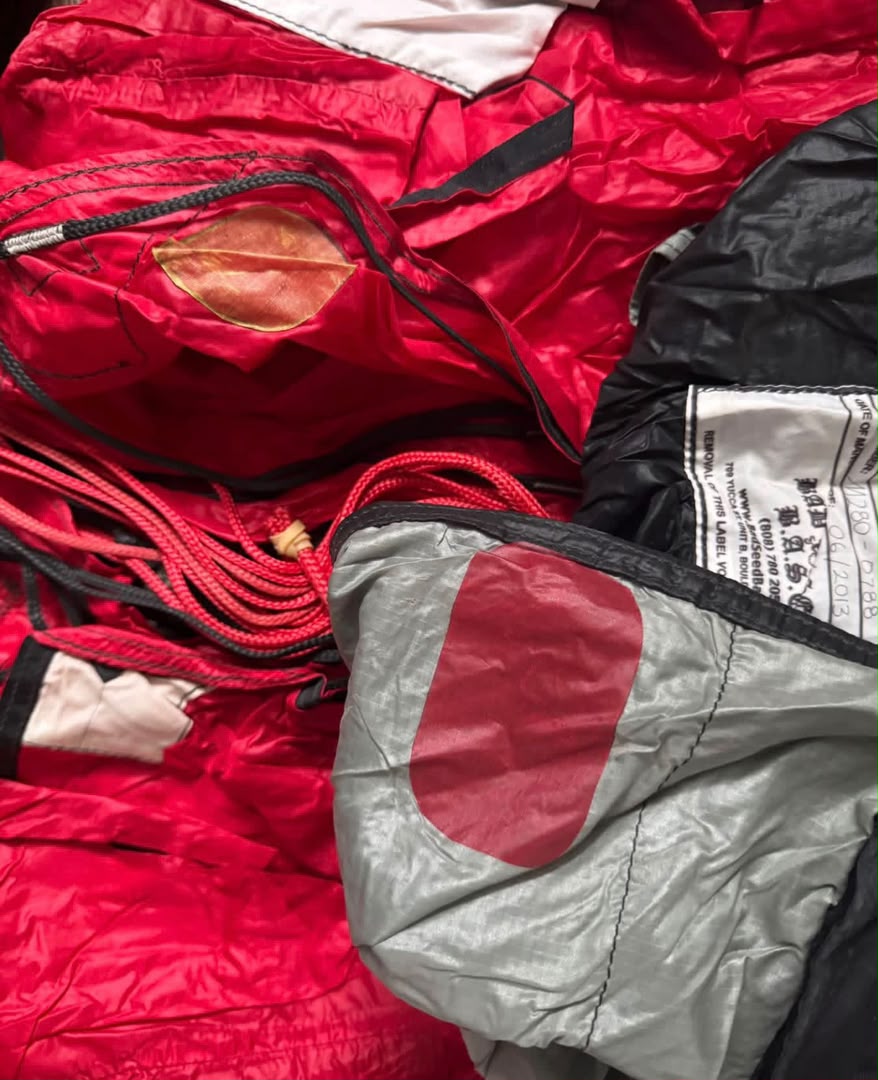
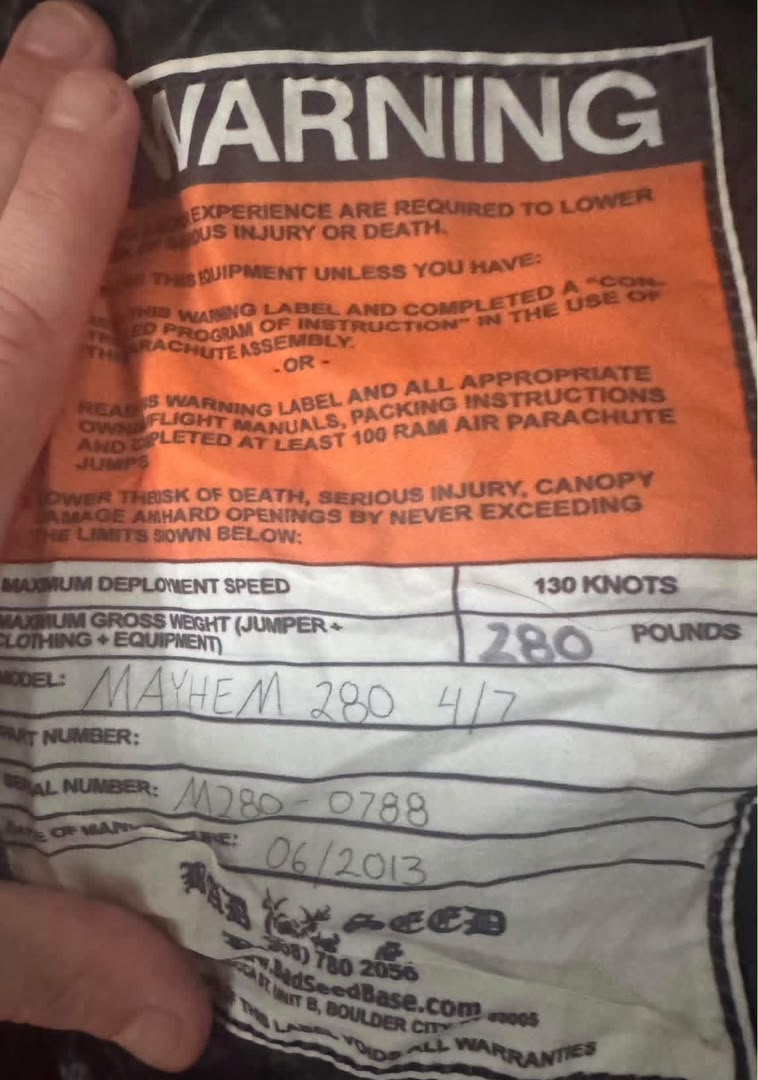



Used Full BadSeed rig with Mayhem 280 Canopy


€900.00
Used Full BadSeed Rig with Mayhem 280 Canopy
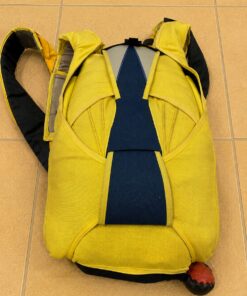
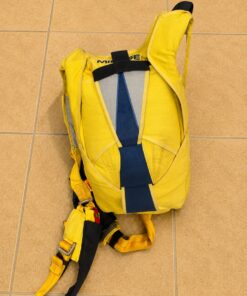
This Used Full BadSeed Rig with Mayhem 280 Canopy is a practical complete setup built around a lightly used container and an established large seven-cell canopy.
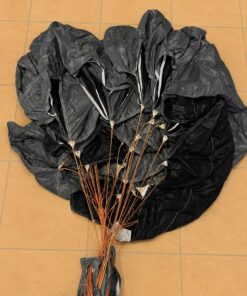
The BadSeed container has approximately 25 jumps, so it has seen relatively limited use. The installed Mayhem 280 canopy is made from F-111 fabric and has approximately 300 jumps. In addition, the brake lines were replaced about 50 jumps ago, giving the canopy a useful recent maintenance update.
The setup is being sold simply because the owner needs to reduce excess gear, rather than because of a stated functional issue.
Key Information
- Container: BadSeed
- Container condition: Almost new
- Container jumps: Approximately 25
- Main canopy: Mayhem 280
- Canopy fabric: F-111
- Canopy jumps: Approximately 300
- Brake lines: Replaced approximately 50 jumps ago
- Overall condition: Used, with a very low-jump container and moderate-use canopy
Because this is specialized parachuting equipment, prospective buyers should verify the container fit, canopy condition, line condition, risers, pilot chute, bridle, hardware, stitching, repair history, and complete configuration before use.
A professional inspection has already checked and its good for use.
This setup can be a solid option for an appropriately trained and experienced jumper looking for a large Mayhem 280 canopy paired with a lightly used BadSeed container, especially with the added benefit of the more recently replaced brake lines.
Used Full BadSeed Rig with Mayhem 280 Canopy – Low-Jump Container with F-111 Main
Used Full BadSeed Rig with Mayhem 280 Canopy Overview
The Used Full BadSeed Rig with Mayhem 280 Canopy combines an almost-new BadSeed container with an established large seven-cell Mayhem 280 canopy. According to the supplied ownership history, the container has only approximately 25 jumps, while the canopy has approximately 300 jumps. In addition, the brake lines were replaced roughly 50 jumps ago, giving prospective buyers an important maintenance reference when evaluating the overall condition.
The canopy is reported to use F-111 fabric, a traditional low-porosity parachute material widely associated with classic BASE canopy construction. Historical technical references describe the BadSeed Mayhem as a seven-cell BASE canopy offered in classic F-111 construction, with some versions also produced with vent and zero-porosity options.
Importantly, the Mayhem is associated with BASE-specific equipment, not a conventional dual-parachute sport skydiving system. A complete professional inspection of the container, canopy, line set, brake system, risers, pilot chute, bridle, attachment points, hardware, and configuration should therefore be completed by someone appropriately experienced with this equipment category before use.
Almost-New BadSeed Container – Approximately 25 Jumps
One of the strongest condition points is the relatively low jump count on the container. With approximately 25 jumps, it has seen considerably less use than the canopy. Nevertheless, webbing, stitching, closing components, pin protection, attachment points, risers, and hardware should still be inspected carefully.
Mayhem 280 Canopy
The installed Mayhem 280 is a large seven-cell canopy associated with BadSeed’s BASE equipment. Historical discussion of the model describes it as being available in several configurations, including all-F-111 construction and optional vent arrangements.
F-111 Canopy Construction
The canopy is reported to be constructed from F-111 fabric. Fabric condition should be evaluated according to actual porosity, seam integrity, reinforcement condition, previous repairs, contamination, storage history, and overall wear rather than jump count alone.
Approximately 300 Jumps on the Canopy
Approximately 300 jumps are reported on the wing. Consequently, buyers should carefully review the fabric, attachment points, center cell, tail, nose, stabilizers, control system, seams, and line condition.
Brake Lines Replaced Approximately 50 Jumps Ago
The brake lines were reportedly replaced around 50 jumps ago. This is an important maintenance detail because brake lines experience frequent handling and wear. However, the remaining suspension lines and attachment points should still be inspected separately.
parachute jump australia
A parachute jump australia search may involve conventional skydiving or other parachuting disciplines. This particular equipment should be evaluated according to its intended fixed-object use rather than assumed appropriate for ordinary sport jumping.
skydive byron bay
People researching skydive byron bay should recognize that conventional drop-zone equipment differs fundamentally from a single-parachute BASE configuration.
weight limit skydiving
The phrase weight limit skydiving highlights the importance of matching total jumper weight, canopy size, equipment limitations, and experience.
cairns skydiving
A cairns skydiving search relates primarily to conventional aircraft skydiving and should not be confused with the intended application of this setup.
skydiving helmet
A skydiving helmet remains an important protective accessory but is not listed as included with this package.
skydive helmets
Different skydive helmets support different disciplines, although helmet choice does not determine parachute compatibility.
hook blade knife
A hook blade knife may form part of an experienced jumper’s emergency equipment depending on discipline and procedures.
tracking jump
A tracking jump requires appropriate training, planning, separation awareness, and equipment suited to the specific environment.
parachute rig
A parachute rig should always be treated as life-support equipment whose condition must be determined through proper inspection rather than cosmetic appearance alone.
linewear
linewear is especially important when evaluating a canopy with several hundred jumps. Even with relatively newer brake lines, the remainder of the suspension system requires inspection.
base jumping
base jumping is the discipline most closely associated with the Mayhem canopy and BadSeed equipment discussed here. It uses specialized single-parachute equipment and requires dedicated training.
sky helmet skydiving
A sky helmet skydiving search concerns head protection rather than the structural condition of the parachute system.
wingsuit sport
The wingsuit sport includes several disciplines, but compatibility between wingsuit use and parachute equipment must be evaluated specifically rather than assumed.
vector wingsuit
A vector wingsuit search relates to different equipment families and should not be confused with this BadSeed configuration.
full face skydiving helmet
A full face skydiving helmet can provide facial and wind protection during conventional freefall activities.
skydiving downsizing chart
A skydiving downsizing chart applies to sport-canopy progression and should not be used as a substitute for discipline-specific instruction or canopy selection guidance.
landing flight risers
landing flight risers and associated hardware should always be inspected for abrasion, stitching condition, deformation, and correct installation.
fire parachute
The phrase fire parachute does not describe the intended purpose of this equipment.
cypress fire skydiving
The phrase cypress fire skydiving should not be confused with this setup. No automatic activation device has been stated as part of the package.
skydiving rigging
Professional skydiving rigging knowledge is valuable, but BASE-specific equipment should be evaluated by a person familiar with its particular construction and operating requirements.
baseline jumping
baseline jumping is sometimes used informally when discussing fixed-object parachuting. Correct terminology, training, and equipment identification remain important.
sky diving helmet
A sky diving helmet should fit correctly without interfering with visibility or other equipment.
hook knife skydiving
A hook knife skydiving accessory can support emergency preparedness when used within established training.
skydiving glasses
skydiving glasses or goggles can provide eye protection in appropriate disciplines.
nude parachute jump
A nude parachute jump has no relationship to the structural condition, inspection requirements, or suitability of this equipment.
ifly colorado springs
ifly colorado springs is associated with indoor body-flight training, where conventional parachute deployment equipment is not used.
skydive hook knife
A skydive hook knife is a separate emergency accessory rather than a component that determines canopy condition.
skydiving helmet full face
A skydiving helmet full face design provides greater facial coverage than an open-face configuration.
skydiving blue hole belize
A skydiving blue hole belize search concerns a specialized aircraft-skydiving destination and should not be confused with fixed-object equipment requirements.
smallest canopy
The smallest canopy is never automatically the most appropriate. Canopy choice must match discipline, jumper weight, training, environment, and experience.
skydiving speed
skydiving speed varies substantially with body position, equipment, and discipline.
wing suits for sale
People searching wing suits for sale should evaluate suit choice and parachute compatibility separately.
skydiving nude
skydiving nude does not affect parachute inspection, compatibility, or airworthiness considerations.
parts of a parachute
Important parts of a parachute include the canopy fabric, suspension lines, control lines, risers, pilot chute, bridle, deployment components, container, and associated hardware.
container skydive
A container skydive search usually refers to conventional sport equipment, whereas this package belongs to a different equipment category.
g35 helmet
A g35 helmet is a separate piece of personal equipment and is not listed as part of this sale.
best skydiving helmet
The best skydiving helmet depends on discipline, fit, visibility, comfort, protection, and personal requirements.
skydive belize
A skydive belize search concerns conventional parachuting destinations and does not establish suitability for this equipment.
freefly pud handle
A freefly pud handle is commonly associated with certain sport-skydiving container systems. Its presence should not be assumed on this setup without physical verification.
gliding suit wingsuit
A gliding suit wingsuit requires specialized training and equipment compatibility.
jumper pilot
The phrase jumper pilot can refer to different aviation roles depending on context; pilot and jumper responsibilities remain distinct.
crw skydiving
crw skydiving involves canopy-relative work and specialized sport parachuting techniques distinct from the intended equipment category here.
gear bag skydive
A quality gear bag skydive solution can protect the canopy, container, pilot chute, risers, and other components during transportation.
skydiving equipment list
A conventional skydiving equipment list can include a dual-parachute rig, reserve, automatic activation device, helmet, altimeter, jumpsuit, and goggles. This package should not be represented as that type of conventional system.
indoor wingsuit
Indoor wingsuit training takes place in specialized facilities without normal outdoor parachute deployment.
can you wear glasses while skydiving
For those asking can you wear glasses while skydiving, properly fitted goggles or suitable helmets can often accommodate corrective eyewear.
wingsuit
A wingsuit requires discipline-specific training and compatible equipment.
skydiving website
A reputable skydiving website or specialist parachuting seller should clearly disclose jump counts, fabric type, maintenance history, repairs, line condition, and known equipment limitations.
cookie g4 helmet
A cookie g4 helmet is a separate full-face sport helmet and is not listed as included with this package.
base canopy
A base canopy accurately describes the general equipment class of the Mayhem. It is a specialized seven-cell parachute intended for a fundamentally different deployment environment from conventional sport mains.
new skydive
Anyone preparing for a new skydive should use equipment appropriate to their training rather than selecting specialized equipment without qualified instruction.
#skydiving latest
The phrase #skydiving latest reflects broader interest in current parachuting equipment, training, safety practices, and technology.
canopy flight
Canopy flight characteristics depend on wing design, fabric condition, loading, line trim, control configuration, weather, and pilot experience.
skydiver goggles
skydiver goggles provide eye protection but remain separate from the parachute system.
speed sky diving
speed sky diving is a specialized aircraft-skydiving discipline that differs from the intended application of this equipment.
fly suits
fly suits can include traditional jumpsuits, tracking suits, and other discipline-specific clothing.
skydiving rig
A conventional skydiving rig generally incorporates both main and reserve systems. Buyers should understand that specialized fixed-object equipment follows a different architecture.
safire 3
A safire 3 is a sport-skydiving canopy from an entirely different equipment class and should not be confused with the installed seven-cell wing.
skydiving gliding suit
A skydiving gliding suit changes freefall performance but does not eliminate the need for correctly matched parachute equipment.
fluid wings
fluid wings represents another parachute-manufacturing ecosystem and is unrelated to the installed BadSeed canopy.
price of wingsuit
The price of wingsuit equipment varies according to brand, model, condition, size, and generation and is independent of this complete setup.
tandem wingsuit
A tandem wingsuit is not a standard application for this equipment.
skydiving tube
A skydiving tube is generally a freefall visual accessory rather than a structural parachute component.
Why Consider This Setup?
The principal attraction is the combination of a very lightly used container with approximately 25 jumps and an established 280-square-foot F-111 canopy with roughly 300 jumps.
Additionally, the reported brake-line replacement approximately 50 jumps ago provides useful maintenance history.
How Good Is the Overall Condition?
The container’s low jump count suggests limited use, but condition should still be confirmed through inspection.
Likewise, the canopy’s approximately 300 jumps should be evaluated based on fabric porosity, seams, line condition, attachment points, control system, repairs, storage history, and overall structural integrity.
How Is Precision Important?
Precision matters in line trim, control-line configuration, riser installation, pilot-chute selection, bridle routing, closing configuration, canopy packing, and jumper-equipment matching.
Specialized parachute equipment should never be configured solely from general assumptions.
Where Is This Setup Appropriate?
This equipment belongs in the hands of an appropriately trained and experienced user operating within the intended discipline and applicable local rules.
When Should It Be Inspected?
Inspection is especially important before purchase, following prolonged storage, after unusual openings or equipment stress, whenever components are replaced, and when maintenance history is incomplete.
Important Information for Buyers
The supplied condition information is:
- Full BadSeed rig
- Mayhem 280 canopy
- F-111 canopy construction
- Approximately 25 jumps on the container
- Approximately 300 jumps on the canopy
- Brake lines replaced approximately 50 jumps ago
- Seller describes it as a great rig and is selling to reduce excess gear
- Reserve and automatic activation device are not stated and should not be assumed included
- Professional inspection is strongly recommended before use
Overall Engineering Character
This package combines a lightly used BadSeed container with a larger seven-cell F-111 Mayhem canopy that has a moderate reported jump history and relatively recently replaced brake lines.
Historical technical material identifies the Mayhem as specialized BASE equipment and describes available versions using classic fabric, Dacron lines, selectable venting, and optional zero-porosity leading-edge or upper-surface construction.
For a prospective buyer, the most important considerations are not cosmetic appearance alone but container condition, canopy fabric health, remaining suspension-line condition, brake-line installation, riser and hardware integrity, pilot-chute and bridle condition, documented repair history, proper equipment configuration, and professional inspection before use.
Condition Assessment, Fabric Integrity, Line System Care, Container Inspection, and Long-Term Serviceability
Overall Condition Evaluation
A used parachute system should be judged by its actual structural condition, maintenance history, storage environment, and component compatibility rather than by age or appearance alone. In this setup, the container has seen relatively little use, while the canopy has a more established jump history. Therefore, each component should be inspected separately before the system is considered ready for continued use.
A qualified specialist familiar with this equipment category should evaluate the complete assembly.
Container Fabric Condition
The container should be checked for abrasion, cuts, loose stitching, contamination, damaged binding tape, and wear around closing areas.
Even with a low jump count, damage can still occur through transport, storage, rough handling, or exposure to unsuitable environments.
A clean appearance is positive, but structural inspection remains more important.
Webbing Inspection
Harness webbing should remain free from cuts, fraying, burns, chemical contamination, or unusual stiffness.
Areas around attachment points and load-bearing junctions deserve particular attention.
Any questionable webbing should be evaluated professionally before use.
Stitching Integrity
Structural stitching should remain intact and evenly tensioned.
Broken threads, pulled seams, or separation around reinforced areas should not be ignored.
Stitching condition can provide useful information about how the equipment has been handled.
Closing System Condition
Closing loops, flaps, grommets, and associated components should remain secure and properly aligned.
Excessive wear around these areas can affect consistent closure.
Worn components should be replaced according to appropriate rigging standards.
Canopy Fabric Evaluation
The canopy has a moderate reported jump history, so fabric condition should be checked carefully.
Inspection should include the top skin, bottom skin, ribs, seams, tail, nose, stabilizers, reinforcement areas, and attachment points.
Porosity and fabric strength should be considered alongside the visual condition.
Traditional Fabric Characteristics
Low-porosity woven fabric can gradually become more permeable with age and use.
Therefore, the canopy should not be judged only by whether the material looks clean.
Actual fabric condition, air permeability, and overall handling history provide a more useful picture.
Line System Condition
The suspension lines should be inspected for abrasion, discoloration, glazing, damaged fibers, uneven wear, and changes in trim.
A canopy with several hundred jumps may still have serviceable lines, but their condition should be verified rather than assumed.
Line condition can influence both deployment and flight behavior.
Brake Line History
The brake lines were replaced more recently than the rest of the canopy.
That is a positive maintenance detail, but it does not automatically confirm the condition of the remaining line set.
The replacement lines should also be checked for installation quality, routing, attachment, and wear.
Brake Setting Inspection
Control lines should remain correctly routed and properly attached.
Wear around attachment points, guide rings, and toggle areas should be reviewed.
Incorrect routing or uneven wear should be addressed before use.
Line Attachment Points
Attachment points on the canopy should remain structurally sound.
Stitching, reinforcing tape, and fabric around these areas should show no unusual stress or distortion.
Because these points carry substantial loads, even minor damage deserves professional attention.
Slider Inspection
The slider should remain free from tears, damaged reinforcement, worn grommets, or distorted fabric.
Grommet surfaces should be smooth and free from sharp edges.
Any roughness can accelerate line wear.
Riser Condition
Risers should remain structurally sound and free from cuts, burns, fraying, contamination, or damaged stitching.
Hardware should be inspected for deformation, corrosion, and sharp edges.
Any questionable component should be removed from service until evaluated.
Toggle Condition
Toggles should remain securely attached and free from excessive wear.
Attachment points, retaining systems, and control-line interfaces should be inspected carefully.
Loose or worn toggles can create unnecessary handling problems.
Pilot Chute Condition
The pilot chute should remain in good structural condition.
Mesh, fabric, seams, bridle attachment, and handle components should be checked for damage.
Its condition should match the intended configuration and deployment system.
Bridle Inspection
The bridle should remain free from cuts, abrasion, burns, contamination, or damaged stitching.
Attachment points should remain secure.
Any unusual wear should be investigated before continued use.
Deployment Components
All deployment-related components should be inspected as one integrated system.
A healthy canopy alone does not guarantee reliable deployment if supporting components are worn or incorrectly configured.
Compatibility matters just as much as individual condition.
Hardware Condition
Metal hardware should be checked for corrosion, cracks, deformation, excessive wear, or sharp edges.
Moving components should function smoothly.
Damaged hardware should never be ignored.
Handle Security
Deployment and release handles should remain secure in their intended positions.
Pockets, attachments, and retaining systems should show no signs of excessive wear.
Unexpected looseness should be investigated.
Harness Fit
Correct fit is essential.
The harness should sit securely on the intended jumper without excessive looseness or restriction.
A system that fits poorly should not be accepted simply because the container itself is in good condition.
Leg Strap Condition
Leg straps should remain structurally sound and comfortable.
Webbing, stitching, adjustment hardware, and attachment points should be inspected.
Any slipping or unusual hardware movement should receive attention.
Chest Strap Condition
The chest strap should remain properly routed and structurally sound.
Hardware should hold its position without slipping.
Frayed or damaged webbing requires professional evaluation.
Storage History
Storage conditions can significantly affect parachute equipment.
Prolonged exposure to heat, moisture, ultraviolet light, chemicals, or contaminated surfaces can damage fabric and hardware even when jump numbers are low.
Dry, temperature-stable storage is preferable.
Moisture Exposure
The system should always be dried thoroughly after exposure to damp conditions.
Trapped moisture can promote mildew, corrosion, and fabric deterioration.
A closed gear bag should not be used for long-term storage if any component is still wet.
Sunlight Exposure
Ultraviolet exposure can gradually weaken parachute fabric and webbing.
Equipment should therefore be protected from prolonged direct sunlight when not in use.
Repeated unnecessary exposure can shorten service life.
Dirt and Sand Contamination
Sand, dirt, and fine debris can accelerate wear on lines, fabric, hardware, and stitching.
Packing areas should remain as clean as practical.
Contamination should be removed carefully rather than allowed to accumulate.
Packing Surface
A smooth, clean packing surface helps protect the canopy and lines.
Sharp objects, gravel, oil, and dirty floors should be avoided.
Repeated packing on rough surfaces can create unnecessary abrasion.
Transport Protection
A suitable gear bag can protect the system during transportation.
The container, canopy, pilot chute, bridle, handles, and hardware should be shielded from impact and contamination.
Heavy objects should not be stacked on the packed equipment.
Post-Use Inspection
After each session, obvious damage should be checked before storage.
Special attention should be given to fabric, lines, brake components, risers, closing areas, and hardware.
Early detection makes developing problems easier to address.
Repair History
Any previous repairs should be documented clearly.
Professional repairs can remain serviceable for many years, but buyers should understand what was repaired and why.
Unknown modifications should receive additional scrutiny.
Evaluating Jump Numbers
Jump count alone does not determine remaining service life.
A canopy with several hundred jumps may remain in good condition if it has been maintained and stored properly, while poorly treated equipment can deteriorate much sooner.
Actual inspection remains more important than the number.
Pre-Purchase Inspection
Before changing ownership, a complete inspection is strongly recommended.
The specialist should evaluate the canopy fabric, line system, brake lines, risers, deployment components, container, webbing, stitching, hardware, and overall configuration.
Long-Term Serviceability
Long-term serviceability depends on fabric strength, correct line condition, sound stitching, secure hardware, compatible deployment components, proper storage, and appropriate maintenance.
The lightly used container and more recently replaced brake lines are useful condition points, but they should be considered together with the canopy’s overall history.
When the entire system is inspected carefully and maintained correctly, its actual suitability can be assessed far more accurately than by appearance or jump count alone.
Practical Fit, Deployment Components, Canopy Condition, Handling Characteristics, and Everyday Ownership
Practical Equipment Character
A lightly used container paired with a more experienced canopy creates a setup that should be evaluated component by component. The container may show minimal wear because of its low jump count, while the canopy, lines, risers, and control system naturally deserve closer attention because they have seen more service.
For that reason, overall condition should never be judged from the container alone.
Harness Fit
The harness should fit the intended user securely without excessive looseness, restriction, or uncomfortable pressure points.
Main lift web length, laterals, leg straps, chest strap position, and overall torso fit should all be evaluated carefully.
Correct fit also supports reliable access to handles and helps the system remain stable during movement.
Leg Strap Position
Leg straps should sit comfortably and remain secure.
They should not twist, slip, or create concentrated pressure during normal movement.
Adjustment hardware should hold its position once correctly set.
Chest Strap Position
The chest strap should route correctly and move smoothly through its hardware.
It should remain free from fraying, cuts, or deformation.
A secure chest strap contributes to overall harness stability.
Main Lift Web Alignment
The main lift web should follow the jumper’s torso naturally.
Unexpected twisting, asymmetry, or unusual spacing can indicate poor fit or adjustment.
Because this area carries significant load, both fit and structural condition matter.
Container Stability
The container should sit firmly against the back without excessive movement.
A low-jump container may retain a clean and firm structure, but its flaps, binding tape, closing areas, and attachment points still require inspection.
Stable positioning helps maintain comfort and predictable movement.
Deployment Handle Security
The deployment handle should remain firmly retained while still being accessible.
The pocket or attachment system should show no excessive wear.
Unexpected looseness should be investigated before the system is used.
Pilot Chute Condition
The pilot chute should be examined for fabric damage, stretched mesh, worn seams, and secure attachment.
Its condition is important because it initiates deployment.
A component that looks acceptable externally may still have hidden wear around stitching and reinforcement areas.
Bridle Condition
The bridle should remain free from cuts, abrasion, heat damage, or contamination.
Attachment points should remain secure.
Wear around high-contact areas should be monitored closely.
Closing System
The closing system should operate consistently and remain free from damaged loops, grommets, or flap distortion.
Closing components should never be improvised.
Correct configuration should always be maintained according to appropriate specialist guidance.
Canopy Fabric Condition
A canopy with several hundred jumps should receive careful fabric inspection.
The top surface, underside, ribs, seams, leading edge, tail, stabilizers, and reinforcement areas should all be reviewed.
Porosity and fabric strength are particularly important for older low-porosity materials.
Surface Wear
Repeated packing, deployment, and landing can create abrasion over time.
Minor cosmetic marks are not always structural, but any thinning, tearing, or seam separation should be examined professionally.
Areas near attachment points deserve particular attention.
Line Condition
The suspension lines should remain evenly tensioned and free from visible damage.
Discoloration, glazing, fraying, or uneven wear can indicate developing problems.
The entire line system should be evaluated rather than focusing only on recently replaced components.
Brake Line Condition
The more recently replaced brake lines are an important maintenance advantage.
However, their routing, length, attachment, and wear should still be checked.
Replacement alone does not guarantee correct installation or continued serviceability.
Control System Inspection
Control lines should move smoothly through their guides.
Attachment points, toggles, and retaining components should remain secure.
Any asymmetry or unusual resistance should be investigated.
Toggle Security
Toggles should remain firmly attached and correctly positioned.
Worn attachment points or loose retaining systems can affect control reliability.
Routine inspection helps prevent small issues from becoming significant.
Riser Condition
Risers should remain free from cuts, fraying, burns, chemical contamination, or damaged stitching.
Hardware should remain smooth and undistorted.
These components experience substantial load and should be inspected carefully.
Hardware Inspection
Metal hardware should be checked for corrosion, cracks, sharp edges, or deformation.
Adjustment hardware should move correctly without slipping unexpectedly.
Damaged hardware should be evaluated before continued use.
Stitching Condition
Structural stitching should remain intact throughout the harness, container, risers, and canopy attachment areas.
Broken or pulled threads should never be ignored.
Stitching carries load through the system and deserves close inspection.
Packing Characteristics
Older low-porosity fabric may pack differently from newer materials.
The canopy should be packed carefully using techniques appropriate to its construction and condition.
Unusual resistance or poor container closure can indicate compatibility or packing-volume issues.
Clean Packing Environment
Packing should take place on a clean surface whenever possible.
Sand, gravel, oil, moisture, and sharp debris can accelerate wear on fabric and lines.
A clean environment supports longer equipment life.
Deployment Consistency
Deployment behavior should remain predictable.
Unexpected changes in opening speed, line behavior, slider movement, or canopy inflation can indicate equipment wear or packing variation.
Any recurring change should be investigated rather than dismissed.
Hard Opening Awareness
An unusually hard opening can place extra stress on fabric, lines, risers, stitching, and harness components.
After significant stress, the system should be inspected before further use.
Structural damage is not always immediately visible.
Canopy Handling Character
A large seven-cell canopy generally prioritizes predictable inflation and straightforward control characteristics within its intended discipline.
However, actual handling depends on fabric condition, line trim, loading, brake settings, and environmental conditions.
Suitability should always match the user’s training and experience.
Line Trim Monitoring
Line trim can change with use.
Even when brake lines are relatively fresh, the remaining line set may have different wear characteristics.
Trim changes can influence deployment and flight behavior.
Brake Setting Verification
Brake settings should remain correct for the canopy configuration.
Improper settings can alter handling and deployment behavior.
Verification should be completed by someone familiar with the equipment.
Landing Surface Wear
Rough landing areas can increase abrasion on fabric, lines, risers, and exposed hardware.
Dirt and debris can also enter deployment components.
Post-use inspection becomes especially important after contact with abrasive surfaces.
Post-Use Inspection
After each session, the system should be checked for obvious damage before storage.
Fabric, lines, risers, hardware, bridle, pilot chute, and container areas should all receive attention.
Small problems are easier to address when identified early.
Storage Between Uses
The complete system should remain dry, clean, and protected from prolonged sunlight.
High heat, chemical exposure, damp storage, and direct ultraviolet light can accelerate material deterioration.
A cool, stable environment is preferable.
Gear Bag Protection
A dedicated bag can help protect the system during transportation and storage.
Handles, hardware, and deployment components should remain protected from snagging or crushing.
Heavy objects should not be placed on top of the packed system.
Moisture Management
If the equipment becomes wet, it should be dried properly before being stored.
Moisture trapped inside fabric or webbing can contribute to mildew, corrosion, and long-term material damage.
Closed storage should only occur once everything is fully dry.
Travel Inspection
After transport, external components should be checked before use.
Handles, closing areas, risers, hardware, and visible stitching can shift or suffer damage during handling.
A quick inspection helps identify issues early.
Maintenance Records
Jump counts, line replacement history, repairs, inspections, and significant events should be documented clearly.
Accurate records make future maintenance decisions easier and improve transparency when ownership changes.
Professional Evaluation
A complete specialist inspection remains the best way to determine whether the system is ready for continued use.
The container, canopy, lines, risers, control system, deployment components, hardware, and harness should all be reviewed together.
Overall Everyday Ownership
Reliable ownership depends on correct fit, sound fabric, healthy lines, secure brake components, stable risers, intact hardware, proper packing, clean storage, and consistent inspection.
Because different parts of the setup have very different jump histories, maintenance should be based on the actual condition of each component.
When inspections remain consistent and repairs are documented properly, the system becomes easier to evaluate, easier to maintain, and more predictable throughout responsible continued use.
Preventive Maintenance, Storage, Structural Care, Inspection, and Long-Term Reliability
Preventive Maintenance Routine
A used parachute system with mixed component ages and jump histories benefits from consistent inspection rather than attention only after a fault becomes obvious. Preventive care should focus on canopy fabric, line condition, brake components, risers, pilot chute, bridle, container fabric, webbing, structural stitching, handles, closing components, and hardware.
Regular maintenance helps identify gradual wear before it develops into a more serious serviceability issue.
Container Surface Care
The container should remain clean, dry, and protected from unnecessary abrasion.
Dust, sand, oils, and rough surfaces can gradually damage fabric and binding tape.
A soft brush or appropriate cleaning method should be used rather than aggressive chemicals.
Harness Webbing Inspection
Webbing should remain free from cuts, fraying, burns, chemical contamination, and unusual stiffness.
High-load junctions deserve particular attention.
Any questionable area should be inspected professionally before continued use.
Structural Stitching Checks
Load-bearing stitching should remain intact and evenly tensioned.
Pulled threads, seam separation, or broken stitching should never be ignored.
Small defects can become more significant under repeated loading.
Closing Component Condition
Closing loops, flaps, grommets, and retaining systems should remain in good condition.
Worn loops or damaged grommets can affect secure closure.
Replacement should follow established rigging standards.
Canopy Fabric Inspection
The canopy should be checked for porosity changes, thinning fabric, abrasion, tears, contamination, seam damage, and previous repairs.
Fabric condition matters more than cosmetic appearance alone.
A canopy with several hundred jumps can still be serviceable, but actual condition must be confirmed.
Leading Edge Inspection
The leading edge experiences repeated airflow and deployment stress.
Panels, seams, reinforcement areas, and attachment points should remain structurally sound.
Any unusual distortion should receive closer inspection.
Tail and Control Area
The tail area should remain free from excessive wear or damaged stitching.
Control-line attachment points deserve particular attention because they experience repeated loading.
Small defects should be addressed early.
Suspension Line Condition
All suspension lines should be inspected for fraying, glazing, discoloration, uneven wear, and trim changes.
Even if some lines were replaced recently, the rest of the set may have a different wear level.
Each section should therefore be evaluated independently.
Brake Line Monitoring
Recently replaced brake lines should still be checked regularly.
Routing, attachment, length, wear, and interaction with guide rings should remain correct.
Replacement history should be documented clearly.
Toggle Inspection
Toggles should remain securely attached and easy to identify.
Retaining systems should hold them reliably during normal use.
Worn or damaged toggle areas require attention.
Riser Condition
Risers should remain structurally sound and free from cuts, burns, abrasion, or damaged stitching.
Hardware should remain smooth and undistorted.
Any questionable wear should be evaluated before further use.
Metal Hardware Care
Metal components should be inspected for corrosion, cracks, deformation, sharp edges, and unusual wear.
Moving hardware should operate smoothly.
Contaminated hardware should be cleaned appropriately without introducing damaging chemicals.
Pilot Chute Condition
The pilot chute should remain structurally intact.
Fabric, mesh, seams, attachment points, and handle components should be inspected regularly.
Unexpected deformation or damage can affect deployment reliability.
Bridle Inspection
The bridle should remain free from cuts, burns, abrasion, contamination, and loose stitching.
Attachment points should remain secure.
High-wear areas should be monitored closely.
Handle Security
Deployment and release handles should remain in their intended positions.
Pockets and retaining systems should not become stretched or damaged.
Any unexpected looseness should be investigated.
Flap Condition
Container flaps should maintain their intended shape.
Damaged stiffeners, worn edges, distorted fabric, or loose stitching can affect closure.
Repeated overstuffing or rough handling can accelerate wear.
Grommet Inspection
Grommets should remain smooth, secure, and free from sharp edges.
Damaged grommets can wear closing loops or nearby fabric.
Routine inspection helps prevent avoidable damage.
Line Attachment Points
Attachment points should remain free from distortion, broken stitching, or fabric stress.
These areas transfer substantial loads into the canopy.
Any irregularity should receive professional evaluation.
Slider Condition
The slider should be checked for fabric wear, torn reinforcement, damaged grommets, and distorted shape.
Grommet surfaces should remain smooth.
Sharp edges can accelerate line wear.
Fabric Porosity Awareness
Traditional low-porosity fabric can become more air-permeable with age and use.
Porosity changes may not always be obvious visually.
Professional evaluation can provide a more accurate assessment when performance changes are suspected.
Packing Surface Care
Packing should take place on a clean, smooth surface whenever possible.
Gravel, dirt, oil, sand, and sharp debris can damage fabric and lines.
Good packing habits support longer equipment life.
Avoiding Unnecessary Dragging
The container and canopy should not be dragged across rough surfaces.
Abrasion can damage fabric, webbing, lines, and hardware.
Lifting and carrying the system is preferable.
Post-Use Inspection
After use, obvious damage should be checked before repacking or storage.
Fabric, lines, risers, pilot chute, bridle, handles, and container areas should all receive attention.
Early detection makes maintenance easier.
Hard-Opening Inspection
Any unusually forceful deployment should be followed by a careful inspection.
Canopy fabric, lines, slider, risers, stitching, webbing, and hardware may all experience increased stress.
Damage is not always immediately visible.
Dirt and Sand Removal
Fine debris can accumulate in fabric folds, line groups, and hardware.
Sand is particularly abrasive.
Contamination should be removed carefully before long-term storage.
Moisture Protection
Wet equipment should never be stored for extended periods.
Moisture can contribute to mildew, corrosion, odor, and material degradation.
The system should be dried thoroughly before being placed into a closed bag.
Sunlight Protection
Ultraviolet exposure can gradually weaken fabric and webbing.
The system should not be left unnecessarily in direct sunlight.
Shade or indoor storage is preferable when the equipment is not being used.
Temperature Management
Extreme heat can damage fabric coatings, elastic materials, and other components.
Hot vehicles and enclosed spaces exposed to direct sunlight should be avoided.
Stable indoor temperatures are generally better.
Chemical Exposure
Fuel, oils, solvents, batteries, cleaning chemicals, and other contaminants should be kept away from the system.
Some chemicals can weaken synthetic fibers without producing obvious immediate damage.
Suspected contamination should receive professional evaluation.
Gear Bag Maintenance
The storage bag should remain clean and dry.
Sand, moisture, and sharp objects inside a bag can damage the equipment during transportation.
The bag should be inspected periodically.
Transport Protection
During transport, the system should be protected from crushing, dragging, snagging, and contamination.
Heavy luggage should not be placed directly on top of it.
External handles and hardware should remain protected.
Long-Term Storage
For extended storage, the system should remain dry, clean, loosely protected, and away from direct sunlight.
Extreme temperatures and chemical vapors should be avoided.
Storage should not place unnecessary pressure on the container.
Periodic Storage Inspection
Equipment that remains unused for long periods should still be checked occasionally.
Fabric, webbing, lines, hardware, closing components, and handles should all be reviewed.
Small issues are easier to manage when discovered early.
Maintenance Records
Jump numbers, repairs, line changes, inspections, component replacements, and unusual events should be documented accurately.
Good records improve maintenance decisions and help future owners understand the system’s history.
Repair Documentation
Any professional repair should be recorded.
The location, type of repair, date, and person or facility performing the work should be documented where possible.
Clear repair history improves transparency.
Evaluating Wear Over Time
Wear should be monitored progressively rather than judged only during occasional inspections.
Changes in fabric feel, line condition, closure behavior, handle security, or hardware movement can provide useful warning signs.
Pre-Sale Preparation
Before ownership changes, the system should receive a complete inspection.
The buyer should be informed clearly about jump history, brake-line replacement, known repairs, fabric condition, and any other maintenance details.
Transparency helps both parties make a better decision.
Professional Inspection
A qualified person familiar with this equipment category should evaluate the complete system before continued use.
The inspection should cover fabric, lines, risers, control system, deployment components, webbing, stitching, hardware, handles, and overall compatibility.
Long-Term Reliability
Long-term reliability depends on sound fabric, healthy lines, secure brake components, strong stitching, clean hardware, proper storage, correct packing, and timely professional maintenance.
The low-use container and more recently replaced brake lines are positive maintenance details, but they should always be considered together with the canopy’s greater jump history.
When preventive care remains consistent and all major components are inspected properly, the setup becomes easier to maintain, easier to evaluate, and more dependable throughout responsible continued use.
Be the first to review “Used Full BadSeed rig with Mayhem 280 Canopy”
Related products

used products
used products
used products
used products

used products

used products

used products
Reviews
There are no reviews yet.