
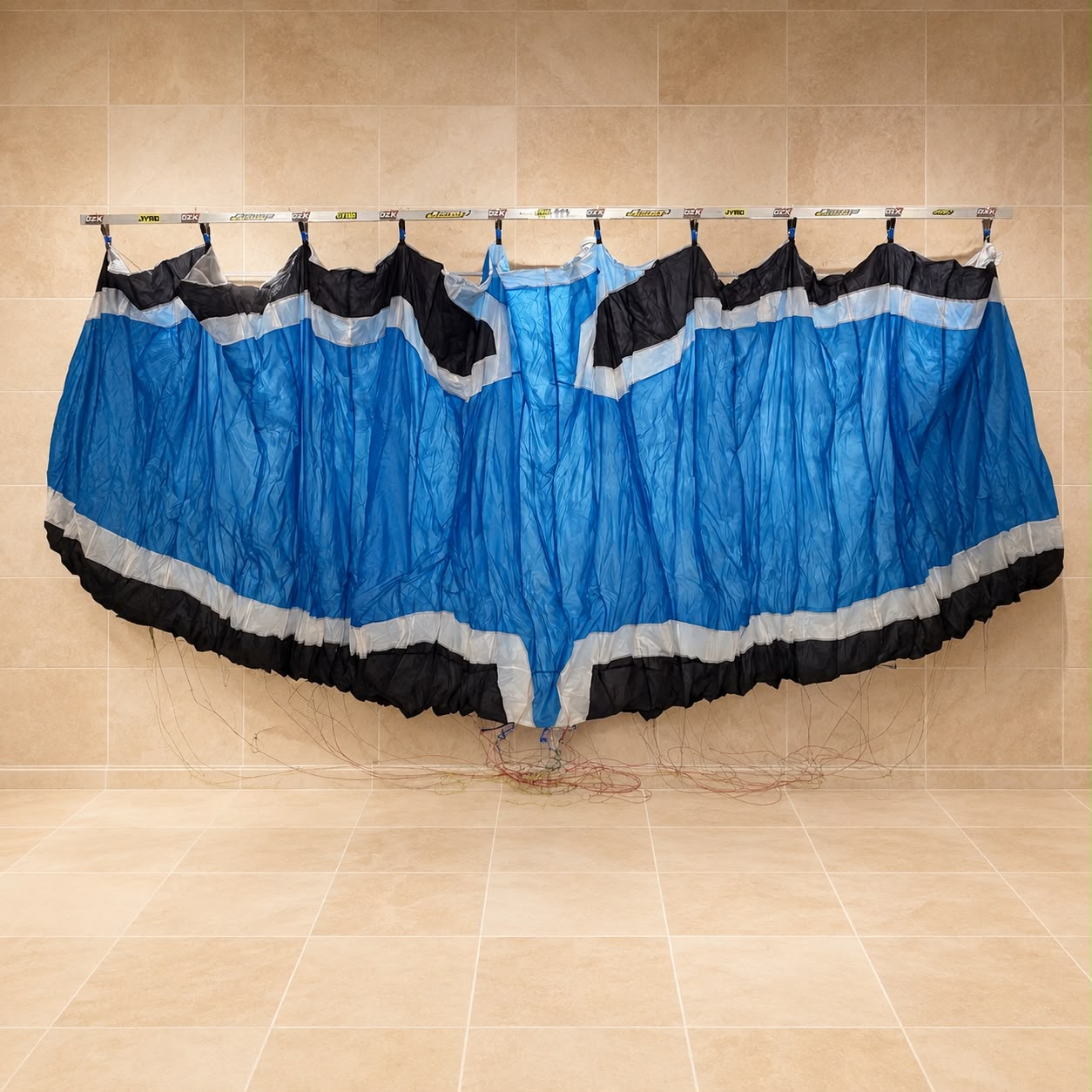
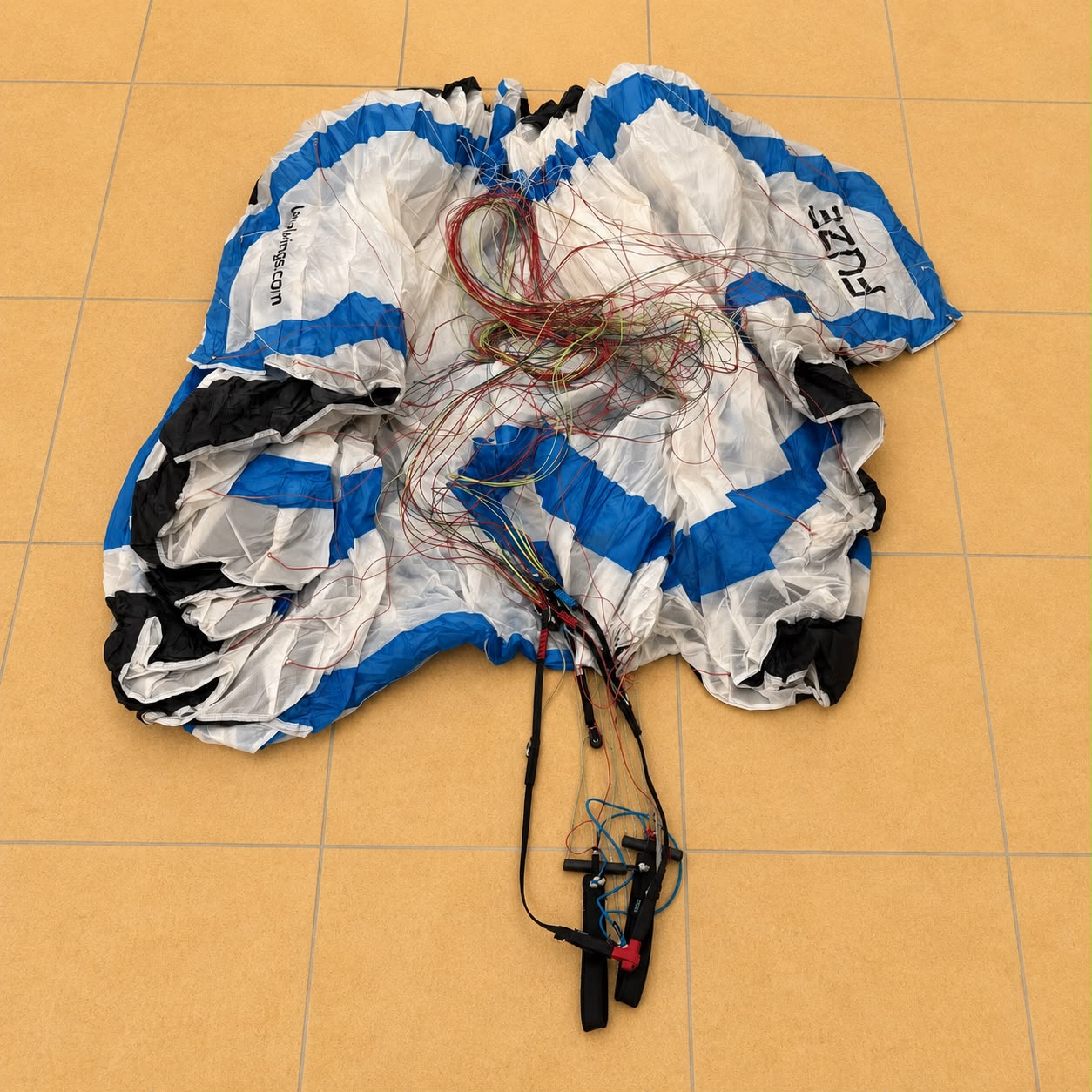
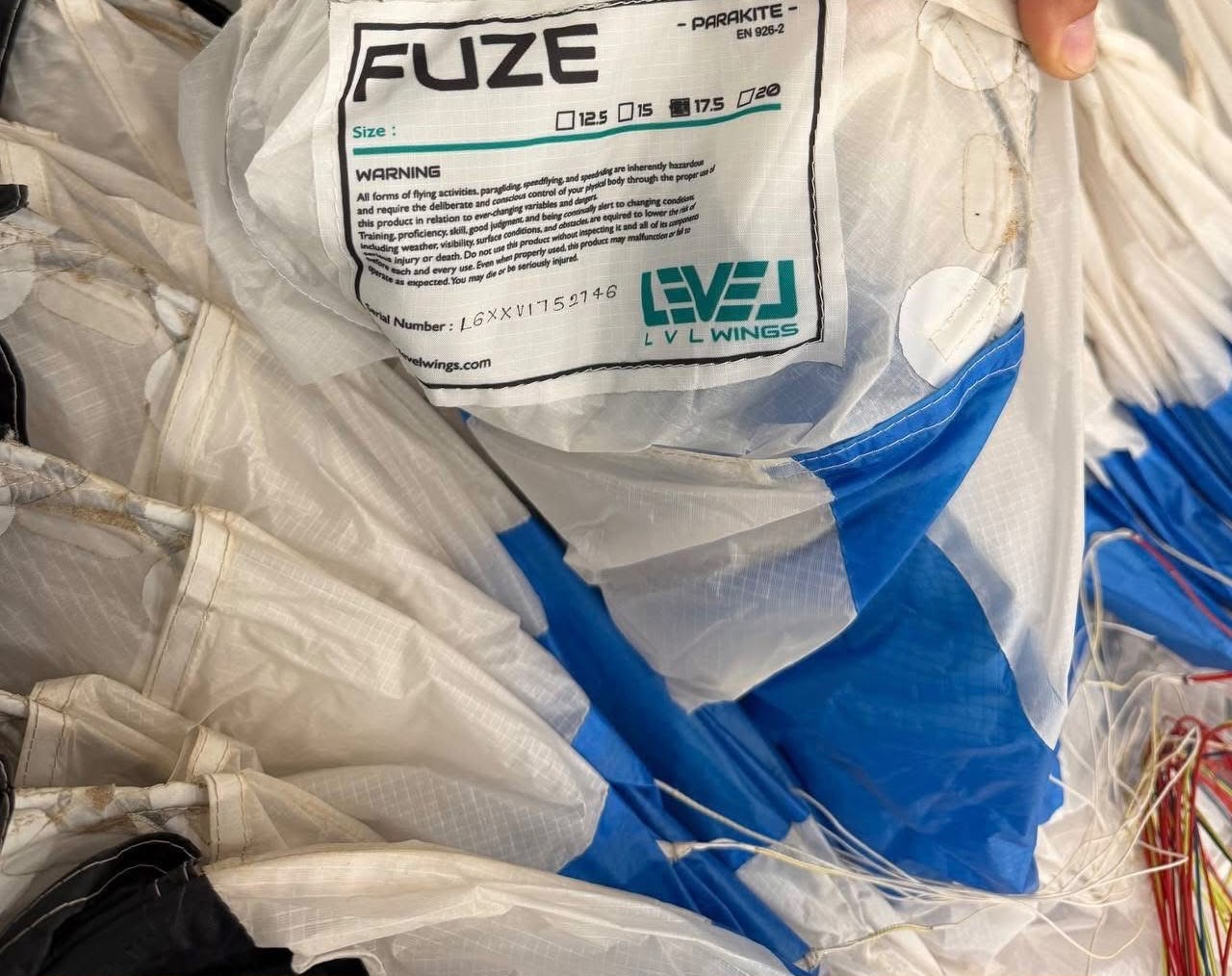
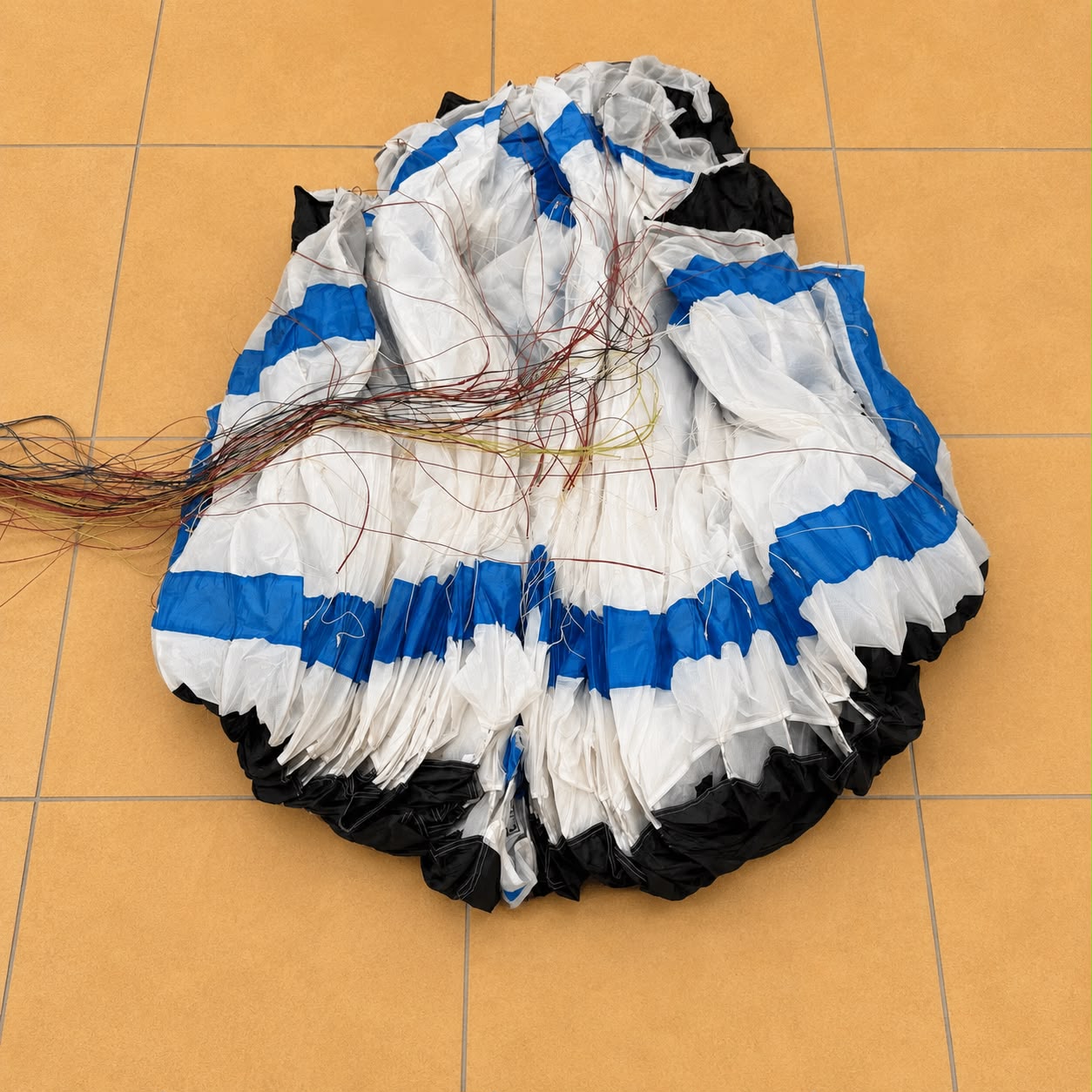
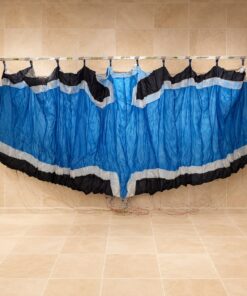
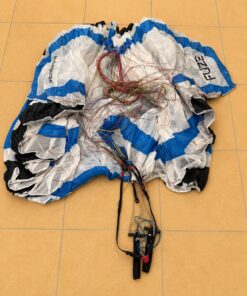
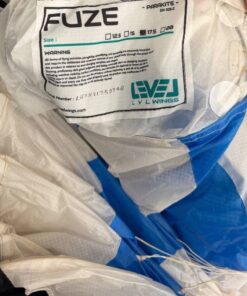
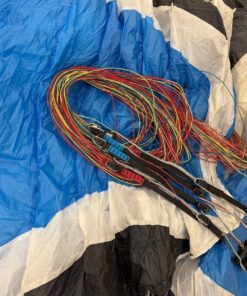
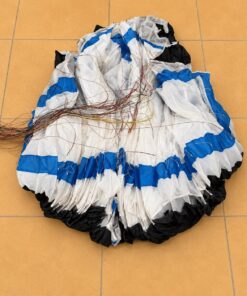
Used Levelwings Fuze 17.5 parakite
€2,500.00
The Used Levelwings Fuze 17.5 Parakite is a 17.5 m² reflex-profile wing developed by Level Wings for parakite soaring and related high-energy flying disciplines. Level Wings currently categorizes the Fuze as a Parakite | EN 926-1 | Solo wing and offers it in sizes ranging from 10 to 22.5 m². The 17.5 version uses 51 cells, 17.5 m² flat area, 14.55 m² projected area, a 9.70 m flat span, 7.60 m projected span, 5.40 flat aspect ratio, 4.00 projected aspect ratio, a 2.20 m root chord, and an approximate wing weight of 3.90 kg.
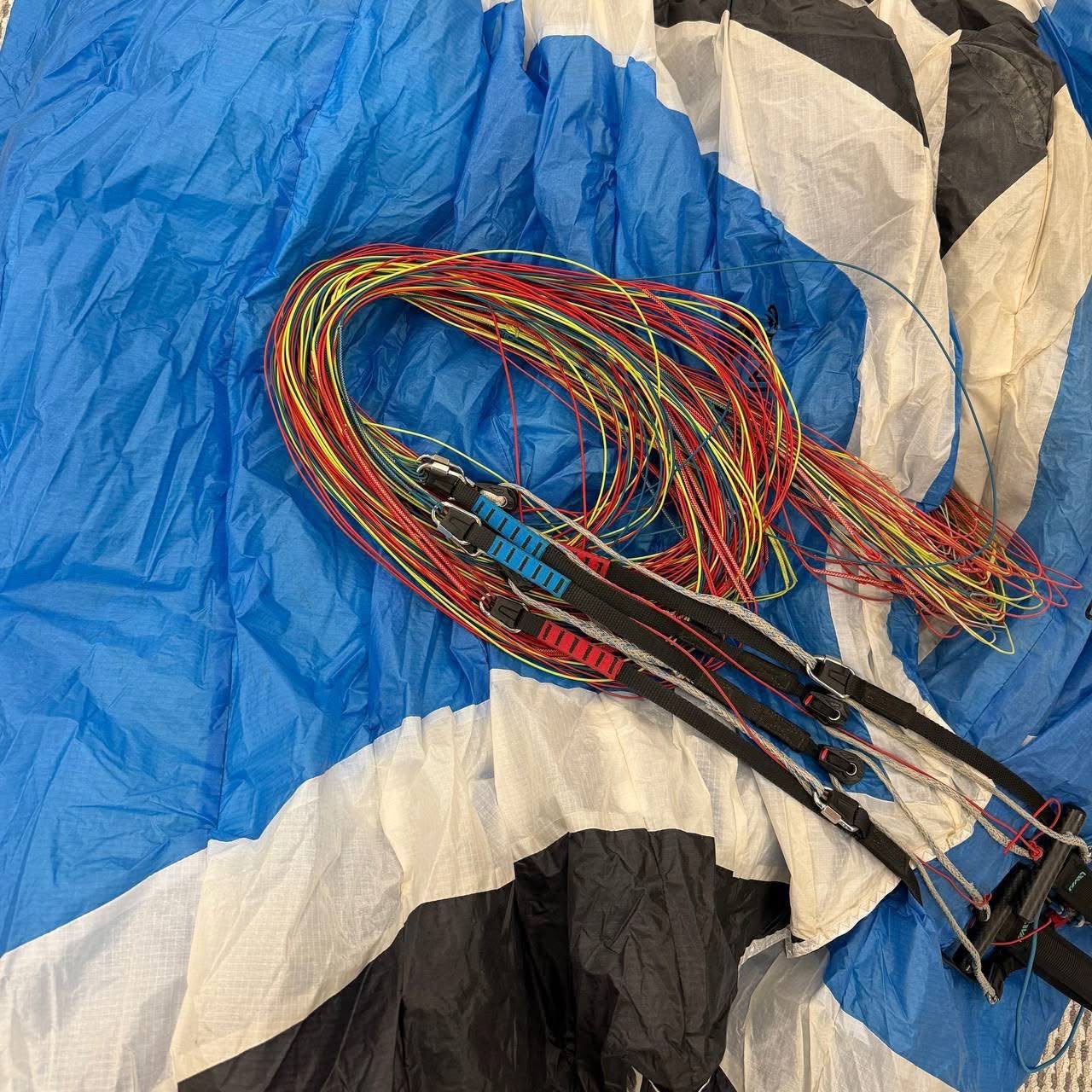
The manufacturer describes the Fuze as having a noticeably faster and steeper profile than conventional parakites, with progressive brake pressure and a predictable stall point intended to provide clear control feedback. Its construction uses durable Skytex materials, reinforced leading-edge and wingtip areas, 13 mm riser webbing with replaceable Dyneema sections, and an ABC kite-riser system with integrated Dive Blockers. Level Wings lists appropriate disciplines as soaring, proximity flying, speedflying, speedriding, and snowkiting. Importantly, the manufacturer specifically warns against strong turbulent conditions and thermal flying because the reflex profile can behave differently during collapses.
For a used Fuze 17.5, the condition of the canopy, lines, risers, brake system, Dive Blocker magnets, stitching, reinforcement areas, and previous repairs should be professionally assessed before continued flight.
Used Levelwings Fuze 17.5 Parakite – Technical Parakite and Speedflying Wing Overview
Fuze 17.5 Construction, Parakite Architecture, Handling, Condition, and Related Flight Terminology
Parakite Design
The Fuze combines design elements from paragliding and kite-style wings. Level Wings describes the concept as an integrated approach intended to produce faster flight, strong roll response, adjustable glide characteristics, and stable handling.
17.5 m² Wing Area
The 17.5 model provides 17.5 m² flat area and 14.55 m² projected area. Its dimensions place it near the middle of the Fuze range, between the 15 and 20 m² versions.
51-Cell Construction
The wing contains 51 cells, giving the canopy a relatively refined aerodynamic structure. Consistent cell shape, intact ribs, sound stitching, and clean leading-edge openings matter significantly when evaluating a used example.
Reflex Profile
The reflex profile contributes to the Fuze’s faster and steeper flight character. However, Level Wings specifically cautions that collapse behavior differs from conventional paragliders, making active and responsible piloting essential.
ABC Kite Risers
The wing uses ABC kite risers, allowing control over angle of attack and glide characteristics. The risers incorporate replaceable Dyneema components intended to support durability and maintainability.
Integrated Dive Blocker
The manufacturer’s Dive Blocker is a magnetic locking system designed to reduce unwanted diving tendencies by securing the handles and allowing a near-flat glide configuration when appropriate. Condition and correct function should therefore be checked carefully on a used wing.
Brake Pressure
The brake system is designed around gradually increasing pressure through the control range.
This progressive feedback can help an experienced pilot understand how the wing is responding.
Any major asymmetry or unusual friction on a used example deserves inspection.
Linewear
linewear remains an important used-wing consideration. The Fuze uses multiple Liros line types, including TSL and PPSL/DC components. Lines should be checked for abrasion, dimensional changes, damage, contamination, or questionable repairs.
Leading-Edge Reinforcement
Level Wings specifically reinforces the leading edge and wingtips.
These regions deserve careful inspection because they encounter repeated inflation forces, ground contact, packing stress, and potential abrasion.
Canopy Flight
canopy flight with the Fuze is based around rapid response, progressive brake feedback, and a distinctive roll response that Level Wings calls the “Level Touch.”
Speed Sky Diving
speed sky diving is not the same discipline as parakite flying. The Fuze is designed for ground-launched soaring, speedflying, speedriding, proximity flying, and snowkiting rather than aircraft-deployed skydiving.
Skydiving Speed
The phrase skydiving speed relates to freefall speed in parachuting. It should not be confused with the airspeed or glide characteristics of a reflex-profile parakite.
Weight Limit Skydiving
weight limit skydiving relates to parachuting or tandem operational limits. For a parakite, the more relevant consideration is the manufacturer-supported loading for the specific wing size and training environment.
Parachute Rig
A parachute rig normally refers to an aircraft-deployed harness/container with main and reserve parachutes. The Fuze is instead a ground-launched wing and should not be treated as a conventional sport-parachute main.
Skydiving Rig
A skydiving rig is therefore a different equipment category from this parakite system.
Container Skydive
The phrase container skydive refers to parachute harness/container equipment rather than a parakite wing.
Parts of a Parachute
The parts of a parachute differ significantly from this wing’s component architecture. The Fuze instead relies on its canopy, suspension lines, ABC risers, brake handles, Dive Blocker components, and compatible harness system.
Landing Flight Risers
The phrase landing flight risers is more commonly associated with skydiving-riser systems. The Fuze’s riser architecture instead uses an adjustable ABC kite-riser arrangement.
Skydiving Rigging
skydiving rigging is distinct from parakite wing servicing. Line replacement, riser work, structural repairs, and inspections should instead follow Level Wings technical information and appropriately qualified paragliding/parakite service procedures.
Skydiving Downsizing Chart
A skydiving downsizing chart should not be used to select a Fuze size. Wing loading, training, discipline, terrain, wind, pilot experience, and manufacturer guidance are the more relevant factors.
Smallest Canopy
The smallest canopy available is not automatically appropriate simply because a pilot seeks faster performance.
Wing sizing should remain training- and loading-based.
Tracking Jump
A tracking jump is a freefall skydiving discipline and should not be confused with ground-launched parakite flight.
Base Jumping
base jumping also involves different equipment, launch methods, deployment systems, and risk management.
Base Canopy
A base canopy is an aircraft- or fixed-object deployment parachute architecture rather than a reflex parakite.
Baseline Jumping
The phrase baseline jumping is often used incorrectly when referring to BASE jumping and is unrelated to this wing.
Wingsuit
A wingsuit is a wearable freefall garment rather than a parakite.
Wingsuit Sport
The wingsuit sport involves aircraft or fixed-object freefall rather than ground-launched soaring.
Vector Wingsuit
The term vector wingsuit generally refers to wingsuit configurations involving other skydiving equipment and is unrelated to the Fuze wing architecture.
Gliding Suit Wingsuit
A gliding suit wingsuit creates aerodynamic lift through the jumper’s body-mounted suit rather than through a suspended wing.
Skydiving Gliding Suit
The phrase skydiving gliding suit is another wingsuit-related term and does not describe the Fuze.
Wing Suits for Sale
Searches for wing suits for sale concern a different type of flight equipment.
Price of Wingsuit
The price of wingsuit equipment should not be used as a comparison for a parakite. Level Wings’ 2025 pricing document listed the new Fuze 17.5 at €3,450 including tax, although used-wing value depends strongly on age and condition.
Tandem Wingsuit
A tandem wingsuit is not a standard application for this wing.
Indoor Wingsuit
indoor wingsuit training occurs in specialized tunnel environments and has no direct relationship to parakite operation.
Fly Suits
fly suits refer broadly to wearable flight garments and should not be confused with a suspended textile wing.
CRW Skydiving
crw skydiving is canopy-relative work performed under parachutes and uses a completely different equipment environment.
Freefly Pud Handle
A freefly pud handle belongs to a skydiving deployment system rather than parakite equipment.
Fire Parachute
The phrase fire parachute does not describe the Fuze.
Cypress Fire Skydiving
cypress fire skydiving appears to involve Cypres automatic-activation-device terminology and is unrelated to this wing.
Hook Blade Knife
A hook blade knife can be emergency equipment in some aerial sports, but carrying or using one should follow discipline-specific training.
Hook Knife Skydiving
hook knife skydiving refers specifically to emergency skydiving equipment rather than a feature of the wing.
Skydive Hook Knife
The phrase skydive hook knife likewise belongs to parachuting terminology.
Skydiving Helmet
A skydiving helmet is separate protective equipment.
For parakiting and speedflying, appropriate certified head protection should be selected according to the intended discipline.
Skydive Helmets
skydive helmets vary widely in protection, visibility, and intended use, and should not automatically be treated as ideal parakite helmets.
Full Face Skydiving Helmet
A full face skydiving helmet provides additional facial coverage but may differ from helmets designed specifically for paragliding, speedflying, or snow sports.
Skydiving Helmet Full Face
The phrase skydiving helmet full face describes the same general equipment category.
Sky Helmet Skydiving
sky helmet skydiving is broad protective-equipment terminology rather than a Fuze specification.
Sky Diving Helmet
The phrase sky diving helmet likewise refers to a separate equipment category.
G35 Helmet
A G35 helmet is helmet-related equipment and is independent from the Fuze wing system.
Cookie G4 Helmet
The Cookie G4 helmet is also a separate piece of skydiving equipment rather than part of the parakite.
Best Skydiving Helmet
The best skydiving helmet depends on the discipline. A parakite pilot should prioritize equipment appropriate for ground-launched flight and the actual operating environment.
Skydiving Glasses
skydiving glasses or protective eyewear can help manage wind exposure, but equipment suitability should be considered for the specific discipline.
Skydiver Goggles
skydiver goggles serve a similar purpose but are separate from the wing.
Can You Wear Glasses While Skydiving
For can you wear glasses while skydiving, appropriate goggles or helmets can often accommodate prescription eyewear. That question remains separate from wing selection.
Skydiving Equipment List
A skydiving equipment list differs from a parakite setup. A complete parakite system generally centers on the wing, compatible harness, helmet, appropriate protection, and discipline-specific safety equipment.
Gear Bag Skydive
A gear bag skydive setup provides transportation protection. The Fuze is supplied new with a FIT compression bag and other accessories, while a used wing should still be stored dry and protected from heat, chemicals, and UV exposure.
Parachute Jump Australia
parachute jump australia is destination-skydiving terminology and does not describe parakiting.
Skydive Byron Bay
skydive byron bay likewise concerns aircraft-based skydiving rather than a ground-launched wing.
Cairns Skydiving
cairns skydiving is another destination-based skydiving term.
Skydive Belize
skydive belize refers to destination parachuting rather than parakite soaring.
Skydiving Blue Hole Belize
skydiving blue hole belize is likewise unrelated to the Fuze’s technical design.
iFly Colorado Springs
iFly Colorado Springs concerns indoor wind-tunnel training rather than ground-launched parakite flight.
New Skydive
A new skydive participant should not assume skydiving experience alone transfers directly to parakite handling.
Level Wings states that the Fuze can span beginner through professional use depending on loading, but specifically requires specialized instructor training.
#Skydiving Latest
The phrase #skydiving latest relates to social-media discovery rather than technical parakite information.
Skydiving Website
A reputable skydiving website can provide general aerial-sports information, but Level Wings documentation and qualified parakite instructors should remain primary references for this wing.
Skydiving Tube
A skydiving tube is a freefall prop and has no structural relationship to a parakite.
Nude Parachute Jump
A nude parachute jump is an activity-related search phrase rather than a technical wing specification.
Skydiving Nude
Likewise, skydiving nude concerns attire rather than wing engineering.
Used Fuze 17.5 Condition
A used Fuze 17.5 should be inspected for canopy porosity and damage, cell integrity, leading-edge reinforcement, wingtip reinforcement, line condition, line symmetry, riser condition, brake-line integrity, Dive Blocker function, previous repairs, and signs of UV or chemical exposure.
The manufacturer specifies Porcher Skytex 32 on the upper surface, Skytex 32/STA 15 on the lower surface, Skytex 40 HF and 32 HF internally, 13 mm riser webbing with replaceable Dyneema parts, and multiple Liros line types.
Why the 17.5 Size Matters
At 17.5 m², the wing sits in the middle of the Fuze range and weighs approximately 3.90 kg. Its actual suitability depends on the pilot’s loading, skill, intended discipline, terrain, and training rather than surface area alone.
Why Training Matters
Level Wings describes the Fuze as suitable from beginner to professional only when weight loading and specialized instructor training are taken into account. That qualification is important: beginner classification should not be interpreted as unrestricted suitability for inexperienced self-training.
Why Weather Limitations Matter
The manufacturer explicitly warns that the Fuze should not be flown in strong turbulent conditions or used for thermal flying. The reflex profile can respond differently to collapses, making active piloting and appropriate weather judgment essential.
Overall Technical Perspective
The Used Levelwings Fuze 17.5 Parakite is a specialized 17.5 m², 51-cell reflex-profile wing built around a 5.40 flat aspect ratio, reinforced Skytex construction, ABC kite risers, replaceable Dyneema riser sections, progressive brake pressure, and the integrated magnetic Dive Blocker system. Level Wings identifies its primary uses as soaring, proximity flying, speedflying, speedriding, and snowkiting.
For a used example, actual suitability depends on fabric condition, internal structure, line health, riser integrity, brake symmetry, Dive Blocker function, repair history, UV exposure, pilot loading, terrain, intended discipline, and specialized training. A qualified parakite/paragliding inspection should confirm wing serviceability, while an appropriately trained instructor should determine whether the 17.5 size and loading are suitable for the individual pilot.
Flight Character, Handling Response, Launch Behavior, Glide Control, Landing Characteristics, and Practical Used-Wing Evaluation
A 17.5-square-meter reflex-profile wing should be evaluated as specialized flight equipment rather than simply as a compact recreational glider. Its design emphasizes dynamic handling, adjustable flight characteristics, and responsive control, so both equipment condition and pilot preparation are important. For a previously owned example, the fabric, internal structure, suspension lines, risers, brake system, reinforcement areas, control components, and previous repairs should all be considered before continued use. Cosmetic appearance can provide useful clues, but structural condition and professional assessment remain substantially more important.
Overall Flight Character
The wing is intended to deliver an energetic and responsive flying experience.
Its compact dimensions allow relatively immediate responses to pilot input, while its aerodynamic profile supports a faster character than a conventional recreational design.
Consequently, pilots should understand the increased demands associated with responsive equipment.
Aerodynamic Profile
The profile has been developed to maintain efficient forward flight while allowing the pilot to manage glide characteristics through the control system.
This creates considerable versatility across suitable flying environments.
However, aerodynamic performance should never be confused with immunity to poor conditions.
Launch Characteristics
A successful launch depends on appropriate weather, terrain, wing preparation, and pilot technique.
Before every flight, the canopy should be laid out carefully and checked for twisted or tangled components.
Any abnormal inflation behavior deserves attention.
Inflation Behavior
During inflation, the canopy should develop its intended shape without obvious structural irregularities.
Asymmetry can have several causes, including setup, airflow, line condition, or equipment issues.
Repeated abnormalities should be professionally investigated.
Ground Handling
Ground handling provides valuable feedback about control response and canopy behavior.
However, training should occur under appropriate supervision and conditions.
A pilot should become familiar with the equipment progressively rather than attempting to discover its limits through uncontrolled experimentation.
Control Response
The control system is designed to provide clear feedback.
Progressively changing pressure allows an experienced pilot to interpret the wing’s aerodynamic state.
Any sudden difference between the left and right sides should be investigated before normal flight continues.
Brake Feel
Brake pressure contributes to communication between the wing and pilot.
Consistent pressure can make changes easier to recognize.
Excessive friction, unusually light movement, or asymmetrical response can indicate that inspection is required.
Roll Response
Responsive roll behavior contributes to the dynamic character of the wing.
This can provide precise directional control when used appropriately.
At the same time, rapid response means that smooth and deliberate inputs remain important.
Pitch Behavior
Pitch describes movement around the lateral axis.
A performance-oriented wing can react noticeably to changes in control position, airflow, and pilot input.
Understanding this behavior should form part of structured instruction.
Glide Characteristics
Glide performance depends on the wing’s aerodynamic state as well as atmospheric conditions.
Wind direction and strength can significantly change actual movement over the ground.
Therefore, apparent ground performance should not be confused with aerodynamic glide efficiency.
Speed Range
A specialized wing can offer a broad and dynamic usable flight range.
However, speed also reduces available reaction time.
The pilot should maintain adequate terrain clearance and make decisions appropriate to training and current conditions.
Loading Considerations
Loading influences speed, responsiveness, descent characteristics, and overall handling.
Two pilots using the same size may therefore experience significantly different behavior.
Selection should be based on appropriate technical guidance rather than size preference alone.
Pilot Experience
Previous aerial-sport experience can be useful, but experience in one discipline does not automatically establish proficiency in another.
Ground-launched flight involves its own techniques, environmental judgment, and equipment-management requirements.
Specific instruction remains important.
Training Requirements
Structured training helps pilots understand launching, control response, weather assessment, terrain management, and landing judgment.
Advanced equipment should not be approached through trial and error.
Instruction should match the intended discipline and operating environment.
Weather Assessment
Weather is a fundamental part of every flight decision.
Wind strength, direction, gusts, turbulence, terrain effects, and changing conditions can all influence safety.
A capable wing cannot compensate for unsuitable weather.
Turbulence
Disturbed airflow can produce unpredictable canopy movement.
Buildings, trees, ridges, cliffs, and terrain features can create mechanical turbulence.
Atmospheric instability may add further disturbance.
Terrain Awareness
Terrain should be considered throughout the flight rather than only during launch and landing.
Changes in elevation, obstacles, rotor zones, and available landing areas can affect decision-making.
Adequate margins remain important.
Soaring Conditions
Suitable soaring conditions can allow extended flight along appropriate terrain.
However, conditions should remain within the wing’s intended operating environment and the pilot’s demonstrated ability.
Local knowledge and qualified instruction are particularly valuable at unfamiliar sites.
Speed-Oriented Flight
Faster flight increases the importance of planning.
Terrain can approach quickly, while changing wind can alter the available margin.
Pilots should avoid treating speed as the primary measure of performance quality.
Snow Operations
Snow-based operation introduces additional considerations involving surface conditions, temperature, visibility, equipment, and terrain.
Components should be kept reasonably clean and dry.
Moisture management becomes particularly important after use.
Landing Characteristics
Landing performance depends on approach planning, wind, terrain, loading, equipment condition, and pilot technique.
A predictable setup is preferable to unnecessary last-second corrections.
Suitable landing areas should be identified before they are urgently needed.
Fabric Condition
The canopy fabric should be examined for abrasion, tears, punctures, contamination, damaged seams, and unusual discoloration.
High-wear regions deserve particular attention.
A visually clean wing is not automatically a structurally healthy wing.
Leading-Edge Condition
The leading edge experiences repeated inflation and potential ground contact.
Reinforcement, stitching, and surrounding fabric should therefore remain sound.
Damage in this area deserves professional assessment.
Wingtip Condition
Wingtips can encounter abrasion during launching, landing, and ground handling.
Their fabric and structural reinforcement should be inspected periodically.
Repeated dragging should be avoided.
Internal Structure
Internal ribs and reinforcement maintain the intended aerodynamic shape.
Damage inside the canopy may not be immediately visible from the exterior.
Professional inspection is appropriate when structural concerns exist.
Suspension-Line Health
Lines experience repeated tension and environmental exposure.
Abrasion, contamination, dimensional changes, damaged sheathing, or unusual knots can affect condition.
They should be evaluated as part of the complete wing rather than individually in isolation.
Riser Condition
Risers should remain free from structural damage and questionable modifications.
Webbing, connection points, and associated components deserve inspection.
Any replacement components should be appropriate for the system.
Control Components
Handles and related control parts should function consistently.
Unexpected resistance, poor retention, or asymmetry deserves attention.
Used equipment should be checked carefully when the previous configuration is uncertain.
Previous Repairs
Professional repairs are not automatically undesirable.
The location, extent, workmanship, and present condition of each repair are more meaningful.
Undocumented structural modifications should receive additional scrutiny.
Storage History
Long-term condition can be influenced by sunlight, heat, moisture, chemicals, and mechanical abrasion.
Equipment stored carefully may age differently from equipment exposed regularly to harsh environments.
Storage history therefore adds useful context.
Used-Wing Value
Purchase price should be considered alongside maintenance requirements.
A lower-priced wing needing immediate professional work may offer poorer practical value than a better-maintained example with transparent history.
Professional Inspection
When buying previously owned specialized flight equipment, professional inspection provides important reassurance about structural condition.
The evaluation should consider fabric, stitching, internal construction, lines, risers, controls, reinforcement areas, and previous repairs.
Overall Practical Assessment
A well-maintained 17.5-square-meter performance wing can provide responsive handling, efficient flight, and considerable versatility across appropriate ground-launched disciplines. Its quality, however, depends on more than aerodynamic design. Fabric integrity, line condition, structural health, control-system function, appropriate loading, suitable weather, and pilot training all contribute to real-world performance.
For a used example, transparent maintenance history and professional inspection are particularly valuable. The equipment should be confirmed serviceable independently from the question of whether it is appropriate for a particular pilot. Individual suitability should then be determined through qualified instruction based on experience, loading, intended terrain, current skills, and the specific type of flying planned.
Performance Character, Handling Quality, Launch Behavior, Control Feel, Practical Ownership, and Used-Wing Assessment
A previously owned performance wing should be considered according to its complete condition, handling qualities, maintenance background, and intended environment. Although cosmetic appearance is naturally important to a buyer, the most meaningful characteristics are found in the fabric, internal structure, suspension system, control components, reinforcement areas, and general quality of previous care. When these elements remain in appropriate condition, the wing can continue to provide the responsive and engaging flight experience expected from specialized equipment.
Overall Performance Character
The design provides a lively and connected flying experience. Control inputs translate clearly into changes in direction and aerodynamic behavior, giving the pilot a strong sense of connection with the wing.
This character can be particularly enjoyable for appropriately trained pilots who value responsive equipment.
Responsive Handling
Handling is one of the most noticeable aspects of a compact performance design.
The wing reacts relatively quickly to deliberate input, allowing precise directional management when operated correctly.
However, responsiveness also requires smooth technique and appropriate judgment.
Control Feel
Good control feedback helps the pilot understand how the wing is behaving.
Pressure should feel reasonably consistent during normal operation, while the left and right sides should behave predictably.
Unusual differences deserve inspection before further use.
Progressive Response
Rather than relying on abrupt control characteristics, a well-maintained system should provide understandable feedback as input changes.
This progression helps an experienced pilot recognize changes in the aerodynamic state.
Equipment condition can influence how consistent that feedback feels.
Launch Preparation
A successful flight begins before leaving the ground.
The canopy should be positioned carefully, while lines and control components should be checked for tangles, twists, or visible damage.
A rushed preparation can introduce unnecessary complications.
Inflation Quality
During inflation, the wing should develop its intended shape without obvious irregularities.
Environmental conditions naturally influence inflation behavior.
However, repeated asymmetry or unusual behavior should not automatically be considered normal.
Ground Handling Characteristics
Ground handling allows the pilot to become familiar with control pressure and wing movement in an appropriate training environment.
It can also reveal obvious inconsistencies that deserve closer inspection.
Training should remain structured and suited to the pilot’s experience.
Directional Response
A responsive design can provide accurate directional changes when input is applied appropriately.
The wing’s behavior will also vary according to loading, airflow, terrain, and current conditions.
Therefore, handling should always be interpreted within the complete operating environment.
Roll Characteristics
Roll response contributes strongly to the energetic feeling associated with this category of equipment.
Smooth pilot input can produce controlled directional changes.
Abrupt or unnecessary movements can create more demanding reactions.
Pitch Characteristics
Pitch behavior changes as the aerodynamic state and control position change.
A trained pilot should understand these movements through practical instruction.
Written descriptions cannot substitute for supervised familiarization with specialized equipment.
Glide Performance
Efficient aerodynamic construction can provide useful horizontal travel under suitable conditions.
Actual movement over the ground, however, depends heavily on wind.
A strong headwind or tailwind can substantially alter the apparent glide observed by the pilot.
Speed Characteristics
Performance-oriented wings can generate considerable speed relative to more relaxed recreational equipment.
That capability can be enjoyable in the correct environment.
Nevertheless, increased speed also reduces the time available for decisions.
Loading
Loading influences several important handling characteristics.
Speed, descent, responsiveness, and general flight feel can all change as loading changes.
Consequently, wing size should never be selected purely according to a desire for greater performance.
Pilot Preparation
Appropriate preparation involves more than previous flight experience.
A pilot should understand the particular discipline, equipment configuration, environmental considerations, and emergency procedures relevant to the intended activity.
Specialized instruction remains valuable even for experienced participants transitioning from another discipline.
Pilot Currency
Recent experience matters alongside total experience.
Someone returning after a long period away may not have the same level of familiarity or reaction speed they previously possessed.
A progressive return with professional guidance can therefore be appropriate.
Weather Considerations
Weather plays a major role in determining whether conditions are suitable.
Wind strength, direction, gust variation, atmospheric instability, and local terrain effects should all be considered before flight.
Performance capability should never be used to justify unsuitable conditions.
Terrain Considerations
Terrain can significantly influence airflow.
Ridges, buildings, trees, cliffs, and other obstacles may create disturbed air.
Understanding the local site is therefore an important part of responsible operation.
Launch-Site Selection
The launch area should provide sufficient space and suitable conditions for controlled preparation.
Obstacles and surface hazards deserve attention.
Pilots unfamiliar with a location should seek appropriate local guidance.
Landing-Area Planning
Landing options should be considered early.
Suitable areas should provide enough space and remain reasonably free from obstacles.
Planning before takeoff provides greater flexibility if conditions change.
Landing Behavior
Landing characteristics depend on wind, loading, terrain, equipment condition, and pilot technique.
Predictable approaches generally provide better margins than unnecessary last-second changes.
The pilot should remain prepared for changing environmental conditions.
Fabric Condition
Fabric quality is central to the assessment of a used wing.
The material should be checked for tears, abrasion, punctures, contamination, damaged stitching, and unusual discoloration.
Cosmetic cleanliness alone cannot establish structural condition.
Leading-Edge Inspection
The leading portion of the wing experiences repeated inflation and potential ground contact.
Its fabric, reinforcement, openings, and seams should remain in appropriate condition.
Visible damage deserves professional evaluation.
Wingtip Inspection
Wingtips can encounter additional abrasion during ground handling.
Their fabric and reinforcement should therefore be checked carefully.
Repeated dragging across rough surfaces should be avoided.
Internal Construction
Internal components maintain the aerodynamic profile.
Because they are less visible than the exterior surfaces, problems may not be immediately obvious.
Suspected internal damage should receive professional attention.
Line Condition
Suspension components experience repeated loading and environmental exposure.
Visible abrasion, contamination, unusual knots, dimensional differences, or damage should not be ignored.
The entire system should be evaluated together.
Control-System Condition
Control components should operate consistently and without unexplained resistance.
Left-to-right symmetry is particularly important.
A noticeable change in control behavior can justify inspection.
Riser Condition
Risers and their connection areas should remain structurally sound.
Webbing, stitching, attachment points, and replaceable components should be checked periodically.
Unknown modifications deserve additional attention.
Previous Repairs
A previous professional repair does not automatically make equipment unsuitable.
The location, workmanship, extent, and current condition of the repair matter considerably more.
Documentation can make assessment easier.
Storage History
Storage can strongly influence long-term condition.
Excessive heat, moisture, chemicals, prolonged sunlight, and poor handling can gradually affect specialized materials.
A clean and dry storage history is therefore desirable.
Transportation
A protective equipment bag can help reduce contamination and abrasion.
Sharp objects, chemicals, heavy equipment, and excessive heat should be kept away from the wing during transportation.
Good transportation practices support long-term preservation.
Used-Wing Purchase Evaluation
A buyer should consider structural condition alongside price.
Maintenance history, approximate use, repairs, included components, storage conditions, and professional inspection all contribute to practical value.
A visually attractive wing with an uncertain history may require additional assessment.
Long-Term Value
Well-maintained specialized equipment can retain useful value.
Transparent records and appropriate professional care can also make future resale easier.
Maintenance requirements should therefore be considered part of the ownership cost.
Professional Assessment
A qualified professional should evaluate used equipment when condition or history is uncertain.
Fabric, internal structure, suspension components, controls, risers, reinforcement areas, and previous repairs should all receive appropriate attention.
Overall Assessment
A well-maintained performance wing can provide responsive handling, efficient aerodynamic behavior, and an engaging experience for an appropriately trained pilot. Its practical quality depends not only on the original engineering but also on how carefully it has been used, transported, stored, inspected, and maintained.
For a previously owned example, the strongest purchase is one supported by sound structural condition, healthy components, transparent history, and professional evaluation. Equipment serviceability and pilot suitability should remain separate decisions: a professional can assess whether the wing remains serviceable, while qualified instruction should determine whether its performance level, loading, and intended environment are appropriate for the individual pilot.
Long-Term Ownership, Equipment Care, Storage, Maintenance, Transportation, Inspection, and Used-Wing Value
A previously owned performance wing requires thoughtful care throughout its remaining service life. While aerodynamic design determines the original flight characteristics, long-term quality depends heavily on how the equipment is handled, packed, transported, stored, inspected, and maintained. Specialized lightweight materials can provide excellent performance, but unnecessary abrasion, excessive ultraviolet exposure, moisture, contamination, or inappropriate storage can gradually reduce their condition. Therefore, responsible ownership should focus on preserving the complete system rather than concentrating only on visible appearance.
Establishing Current Condition
When purchasing previously owned equipment, the first objective should be establishing its present condition.
Approximate usage, maintenance history, previous repairs, component replacements, and storage conditions provide useful background.
However, these records should support rather than replace physical inspection.
Initial Professional Assessment
A professional inspection can provide a useful starting point for future ownership.
Fabric, internal structures, suspension components, risers, control elements, reinforcement areas, stitching, and previous repairs can all be examined.
This creates a clearer maintenance baseline.
Fabric Preservation
Fabric should be protected from avoidable abrasion.
Repeated contact with rough surfaces can gradually damage lightweight material even when no single incident appears serious.
Careful handling can therefore make a meaningful difference over time.
Surface Monitoring
Owners should become familiar with the normal appearance of the wing.
New abrasion, punctures, unusual discoloration, damaged stitching, or deformation can then be recognized more easily.
Early identification allows concerns to be evaluated before they become more significant.
Leading-Edge Care
The front portion of the wing experiences frequent contact during inflation and ground handling.
Consequently, it deserves regular observation.
Fabric, seams, reinforcement, and openings should remain in appropriate condition.
Wingtip Care
Wingtips can experience abrasion during inflation, deflation, and ground handling.
Dragging them across rough terrain should be avoided whenever practical.
Repeated minor abrasion can accumulate over time.
Internal Structural Condition
Internal ribs and reinforcement help maintain the intended aerodynamic profile.
Because these structures are not as easily visible as the outer surfaces, external appearance cannot provide a complete assessment.
Professional inspection is valuable when internal damage is suspected.
Suspension-System Care
Suspension components should remain clean and free from unnecessary abrasion.
Repeated loading and environmental exposure can gradually affect their condition.
Visible differences between sections should not be ignored.
Avoiding Line Damage
Lines should not be repeatedly stepped on, dragged across rough surfaces, or exposed unnecessarily to sharp objects.
They should also remain protected from contamination.
Good ground-handling habits can reduce avoidable wear.
Control-System Condition
Control components should operate consistently.
Unexpected resistance, asymmetrical movement, damaged attachment areas, or excessive wear should receive attention.
Small changes can provide useful early indications that inspection is needed.
Riser Care
Risers and associated connection points should remain structurally sound.
Webbing, stitching, connection areas, and replaceable components should be checked periodically.
Unknown modifications should receive professional assessment.
Hardware Inspection
Any installed hardware should remain smooth, correctly positioned, and free from significant deformation.
Rough surfaces or damaged components may create additional wear on surrounding materials.
Questionable hardware should not simply be ignored.
Ground Handling
Good equipment care begins on the ground.
The wing should be gathered and moved carefully rather than dragged.
Extra attention is worthwhile on rocky, sandy, muddy, or abrasive surfaces.
Packing Environment
A clean packing area helps protect lightweight materials.
Small stones, sand, grit, oils, and sharp debris can create unnecessary wear.
Whenever practical, the wing should be packed on a suitable clean surface.
Packing After Use
Before packing, obvious contamination and excessive moisture should be considered.
The equipment should not simply be compressed and forgotten after exposure to unusual conditions.
Appropriate care helps prevent avoidable long-term deterioration.
Moisture Management
Persistent moisture is undesirable for storage.
If the wing becomes significantly wet, it should receive appropriate drying and inspection before extended storage.
Damp equipment should not remain sealed unnecessarily inside a closed bag.
Rain Exposure
Unexpected rain can occur during outdoor activities.
After significant exposure, the equipment should be handled according to appropriate manufacturer or professional guidance.
Aggressive drying methods should be avoided unless specifically approved.
Ultraviolet Exposure
Prolonged sunlight can gradually affect synthetic materials.
The wing should therefore remain shaded when it is not being prepared or actively used.
Leaving it spread out unnecessarily in strong sunlight should be avoided.
Heat Protection
Extremely hot environments are undesirable for specialized textile equipment.
A closed vehicle exposed to direct sunlight can become particularly hot.
Long-term indoor storage is generally preferable.
Chemical Protection
Fuels, oils, solvents, acids, batteries, and aggressive cleaning agents should remain separated from the wing.
Suspected chemical contamination deserves professional evaluation.
Improvised cleaning can potentially create additional damage.
Cleaning Considerations
Routine cleanliness is useful, but unnecessary washing should not become part of ordinary cosmetic maintenance.
Specialized fabrics may require specific care.
Manufacturer-approved procedures or professional guidance should be followed when significant cleaning is necessary.
Transportation
A suitable protective bag helps reduce abrasion and contamination.
During transportation, the equipment should remain separated from sharp objects, leaking containers, batteries, and heavy items.
Careful packing can prevent accidental damage.
Vehicle Transportation
The equipment should be secured so that it cannot move repeatedly against rough objects.
Short-term transportation should also be distinguished from long-term vehicle storage.
Leaving specialized equipment in extreme heat should be avoided.
Air Travel
Travel requirements can vary between airlines, airports, and countries.
Owners should check applicable requirements before departure.
Relevant equipment information can be carried when necessary.
Long-Term Storage
Extended storage should prioritize cleanliness, dryness, moderate temperature, and protection from direct sunlight.
The wing should remain away from chemicals and sharp objects.
Unnecessary compression beneath heavy equipment should also be avoided.
Storage Location
A clean indoor environment is generally preferable to garages, vehicle interiors, damp rooms, or locations with significant temperature variation.
The storage area should remain reasonably accessible so equipment condition can be checked occasionally.
Returning After Storage
A long period without use does not guarantee unchanged condition.
Before returning to flying, the equipment should be checked and its maintenance status reconsidered.
Professional inspection may be appropriate after uncertain storage.
Repair History
Professional repairs can form a normal part of an equipment history.
Their location, extent, workmanship, and present condition matter more than their existence alone.
Available documentation should be retained.
Undocumented Repairs
Unknown modifications or unusual stitching deserve additional attention.
A previous owner’s successful flights do not independently establish that every repair remains appropriate.
Professional evaluation provides stronger assurance.
Maintenance Records
Owners should retain records of significant inspections, repairs, and component replacements.
Good documentation helps professionals understand the equipment’s history.
It can also make future resale considerably easier.
Recording Usage
Approximate usage records provide helpful context.
However, usage numbers should not become the sole measure of condition.
Actual material health and professional inspection remain more meaningful.
Pre-Use Checks
Before use, the pilot should be familiar with the equipment’s normal configuration and appearance.
Obvious tangles, damage, contamination, or unusual component positioning should be recognized before launch preparation continues.
Environmental Awareness
Weather and terrain remain important regardless of equipment quality.
Wind direction, gusts, turbulence, visibility, surface conditions, and obstacles can change the operating environment significantly.
Performance capability should never replace conservative judgment.
Pilot Currency
Current skills matter as much as historical experience.
Long periods away from the activity may justify additional instruction before returning to demanding equipment.
A progressive return can provide an opportunity to rebuild familiarity.
Professional Instruction
Specialized training helps pilots understand the particular control system, environmental limitations, launch requirements, and handling characteristics of performance-oriented equipment.
Previous experience in another aerial discipline should not automatically be considered equivalent.
Used-Wing Purchase Value
A buyer should evaluate price alongside expected maintenance.
A cheaper example requiring immediate professional work may ultimately cost more than equipment with stronger documentation and better condition.
Purchase decisions should therefore consider total ownership value.
Preparing for Future Resale
Transparent information helps future buyers.
Maintenance records, known repair history, approximate usage, included components, and honest disclosure of condition can make evaluation easier.
Accurate descriptions also reduce uncertainty.
Long-Term Value
Well-maintained equipment generally offers stronger practical value than equipment judged only by cosmetic appearance.
Structural condition, suspension-system health, control integrity, repair quality, storage history, and documentation should all contribute to valuation.
Responsible Long-Term Ownership
Responsible ownership emphasizes prevention.
Clean ground handling, careful transportation, appropriate storage, protection from excessive sunlight and heat, professional maintenance, and accurate documentation can reduce avoidable deterioration.
Overall Ownership Assessment
A used performance wing can continue providing valuable service when its fabric, internal structure, suspension components, controls, risers, reinforcement areas, and associated parts remain in suitable condition. Careful ownership helps preserve these characteristics while making developing maintenance needs easier to recognize.
Ultimately, structural serviceability and pilot suitability should remain separate considerations. Appropriate professional inspection can establish whether the equipment remains fit for continued service, while qualified instruction can determine whether the wing’s performance level, loading, intended environment, and handling characteristics are appropriate for the individual pilot.
Be the first to review “Used Levelwings Fuze 17.5 parakite”
Related products

used products

used products

used products
used products

used products

used products

used products
used products
Reviews
There are no reviews yet.