


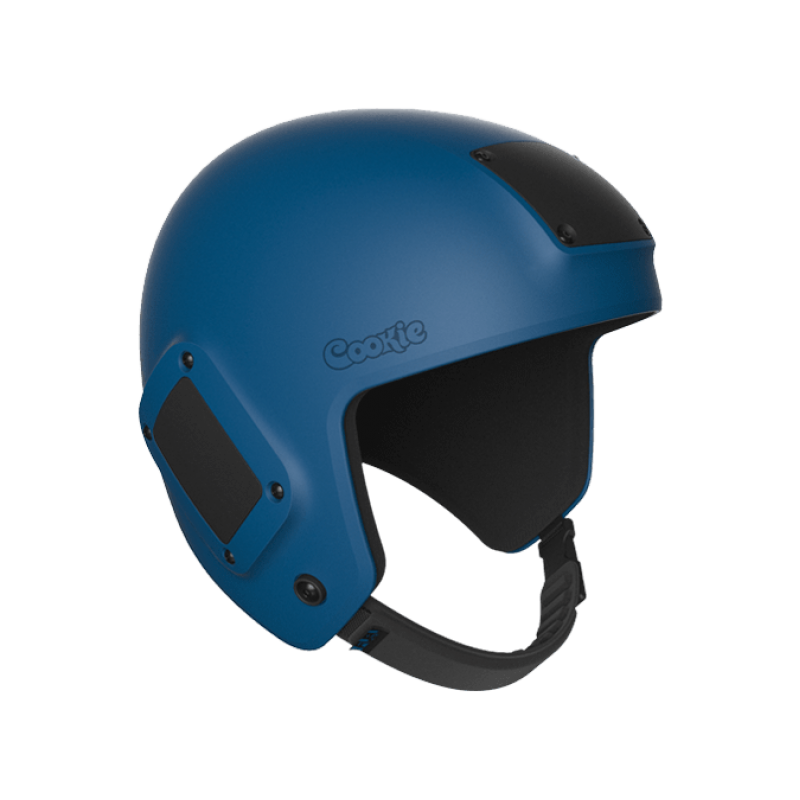




Cookie Fuel Skydiving Helmet

€200.00
The Cookie Fuel Skydiving Helmet is a lightweight, modular open-face helmet designed for experienced skydivers who want comfort, visibility, and flexible accessory mounting. Its adaptable design supports camera mounts, audible devices, and optional retention upgrades while maintaining a clean, secure fit. With excellent peripheral vision, practical airflow, and a customizable setup, the Fuel is well suited to recreational jumping, camera flying, freefall training, and other advanced skydiving disciplines.
Cookie Fuel Skydiving Helmet – Modular Open-Face Performance for Modern Skydivers
Cookie Fuel Skydiving Helmet Overview
The Cookie Fuel Skydiving Helmet is designed for skydivers who want an adaptable open-face platform rather than a fixed-purpose helmet. Its modular construction allows different components to be changed as a jumper’s needs develop, making it suitable for everything from straightforward recreational jumps to camera-focused setups. Cookie provides integrated options for audible altimeters, camera mounting, a cutaway-capable chin cup, and dual top mounting, while the helmet is offered in six sizes from XS through XXL.
The shell is described by current specialist retailers as a high-impact ABS/polycarbonate blend, while Cookie’s own system emphasizes customization instead of locking the user into one configuration.
For anyone comparing a skydiving helmet, skydive helmets, sky helmet skydiving, sky diving helmet, or best skydiving helmet, the Fuel stands out primarily because accessories can be integrated into a relatively clean open-face layout.
Why Choose the Cookie Fuel?
The main reason to choose the Fuel is versatility. A jumper can begin with a relatively simple configuration and later add camera or audible-altimeter components as their experience and disciplines evolve.
That flexibility can be useful whether someone is researching parachute jump australia, skydive byron bay, cairns skydiving, skydive belize, skydiving blue hole belize, ifly colorado springs, or a new skydive location and wants equipment that can adapt to different environments.
It is also important to distinguish the Fuel from a full face skydiving helmet or skydiving helmet full face design. The Fuel is an open-face model, so users who specifically want an enclosed visor system should compare other helmet types.
How Good Is the Cookie Fuel for Real-World Skydiving?
The Fuel’s strength is not based on one isolated feature. Instead, its modular architecture, audible compatibility, camera-mount options, and optional chin cup create a flexible platform for multiple disciplines.
This can appeal to jumpers involved in a tracking jump, base jumping, baseline jumping, crw skydiving, canopy flight, or general freefall training. Equipment requirements differ considerably between disciplines, however, so jumpers should select accessories according to training, drop-zone rules, and instructor guidance.
The helmet can also be relevant to people researching wingsuit sport, vector wingsuit, wingsuit, gliding suit wingsuit, skydiving gliding suit, fly suits, indoor wingsuit, wing suits for sale, price of wingsuit, or tandem wingsuit equipment.
How Does the Modular Design Work?
Cookie developed the Fuel around replaceable mounting components. Audible-altimeter windows and side-mount options allow common instruments to be positioned conveniently, while top-mount systems support compatible action-camera configurations. Cookie’s dedicated roller mount is designed to reduce snag potential and provides approximately 75 degrees of camera-angle adjustment.
For camera flyers, this modularity can be especially valuable. The available top plate can support two GoPro-style mounts, while Cookie’s dual-top system is designed for applications such as tandem video work.
Therefore, users comparing a g35 helmet or cookie g4 helmet with an open-face camera platform should first determine whether visor coverage or modular mounting is the greater priority.
Where Can the Cookie Fuel Be Used?
The Fuel is designed for skydiving environments rather than ordinary road or recreational transportation. Cookie specifically states that its helmets are not intended for motorized or non-motorized transport use.
Within skydiving, it can form part of a broader skydiving equipment list alongside a parachute rig, skydiving rig, container skydive, gear bag skydive, skydiver goggles, skydiving glasses, and suitable clothing.
Questions such as can you wear glasses while skydiving should be resolved according to the helmet, eyewear, and instructor requirements of the specific jump.
When Should You Choose an Open-Face Helmet?
An open-face helmet is particularly attractive when unrestricted facial airflow, communication, modular camera installation, or easy access to equipment matters more than full facial enclosure.
However, it should not be treated as a substitute for properly selected protective equipment. Cookie expressly warns that its helmets are not safety helmets and do not guarantee protection from injury or death.
This distinction is especially important when people compare skydiving speed, speed sky diving, freeflying, camera jumping, or higher-performance disciplines.
Why Fit and Stability Matter
Correct sizing is essential. Cookie recommends measuring head circumference and provides six size ranges between approximately 51 and 61 cm.
A stable fit helps reduce unwanted movement during freefall. For additional security, Cookie offers a cutaway chin cup featuring a breathable Coolmax pad and a low-profile cutaway handle. The system can also be converted to a fixed arrangement without tools.
This is particularly relevant when additional equipment is attached to the helmet.
Important Information About Skydiving Equipment
The helmet is only one element within the wider equipment system. Buyers may also research hook blade knife, hook knife skydiving, skydive hook knife, freefly pud handle, parts of a parachute, skydiving rigging, linewear, landing flight risers, landing flight risers, base canopy, smallest canopy, skydiving downsizing chart, safire 3, and fluid wings when learning how complete systems are assembled and maintained.
Likewise, terms such as jumper pilot, fire parachute, cypress fire skydiving, skydiving tube, and parachute rig belong to wider discussions about equipment, procedures, or disciplines rather than the helmet itself.
A hook blade knife or emergency cutting tool should only be carried and positioned according to established training and drop-zone procedures.
Understanding Different Skydiving Searches
Some online searches reflect lifestyle, travel, or media interest rather than equipment requirements. Examples include nude parachute jump, skydiving nude, skydiving website, and #skydiving latest. Those phrases should not be confused with equipment specifications or safety guidance.
Ultimately, the Cookie Fuel is best understood as a customizable open-face helmet platform. It offers modular camera mounting, audible-altimeter integration, numerous accessory combinations, multiple sizes, and optional retention upgrades. For experienced jumpers who want equipment that can evolve as their disciplines change, that modularity is the central reason the Fuel continues to attract attention.
Fit, Comfort, Visibility, Airflow, Camera Use, and Everyday Jump Performance
The Cookie Fuel Skydiving Helmet is designed for jumpers who want a lightweight, open-face platform that remains comfortable during repeated use while still supporting a modular equipment setup. Although appearance and accessory options are important, the real value of a helmet becomes clear during actual jump preparation, aircraft loading, climb to altitude, exit, freefall, canopy flight, and post-landing handling. A good helmet should remain secure, predictable, and comfortable throughout each stage of that process.
Fit and Head Stability
Correct fit is one of the most important aspects of helmet performance. The helmet should feel secure around the head without creating painful pressure points or excessive movement.
A loose helmet can shift during freefall, particularly when the head is turned into the airflow. That movement can become distracting and may also affect the position of mounted equipment.
The ideal fit should remain stable when the jumper moves the head from side to side or looks upward and downward.
At the same time, the interior should not feel excessively tight. A helmet that creates constant pressure can become uncomfortable during long aircraft rides or multiple-jump days.
Because head shape varies between individuals, proper sizing should always be treated as part of the buying decision rather than simply choosing a familiar clothing size.
Comfort During Long Jump Days
Skydiving equipment may be worn repeatedly throughout an entire day.
For that reason, comfort matters beyond the few minutes spent in freefall.
A well-fitting helmet should remain comfortable while waiting in the loading area, sitting inside the aircraft, completing gear checks, and walking back from the landing area.
Pressure points can become more noticeable after several hours of use.
The interior should also allow enough airflow to reduce unnecessary heat buildup.
On warm days, this becomes particularly important because aircraft cabins and packing areas can become uncomfortable.
A balanced helmet that does not feel excessively heavy can also reduce fatigue around the neck and shoulders.
Open-Face Visibility
One of the strongest practical advantages of an open-face design is unrestricted forward and peripheral visibility.
The jumper can see the surrounding environment without looking through a visor.
This can feel natural during aircraft boarding, exit preparation, freefall, and canopy flight.
Clear peripheral awareness is especially useful when maintaining visual contact with other jumpers.
The open design also allows easier communication before exit because the face remains unobstructed.
However, eye protection should still be selected carefully because airflow at freefall speeds can make unprotected vision uncomfortable or impractical.
Airflow and Freefall Experience
An open-face helmet allows significantly more airflow around the face than an enclosed design.
Some jumpers prefer this because it creates a direct and natural freefall experience.
Others may prefer greater isolation from wind.
The best choice depends on individual preference, discipline, weather conditions, and the type of equipment being used.
The Fuel’s structure is designed to sit securely while leaving the face exposed.
Because air moves around the helmet continuously during freefall, anything attached to the exterior should be positioned carefully.
Equipment should not create unnecessary instability or interfere with the jumper’s normal head movement.
Camera Configuration and Balance
One of the major reasons jumpers choose a modular helmet is the ability to install camera equipment.
However, adding equipment changes the weight and balance of the helmet.
A configuration that feels light without accessories may feel noticeably different once a camera, mount, or additional equipment is installed.
For this reason, every setup should be evaluated as a complete system.
The camera should be positioned securely and should not interfere with the jumper’s ability to move the head naturally.
Mounting hardware should also be checked before use.
Loose equipment can create a serious problem during a jump.
A clean, low-profile installation generally helps reduce unnecessary snag points and keeps the helmet easier to manage.
Audible Device Placement
Audible devices can provide useful altitude information when used as part of proper training and standard altitude awareness.
A helmet designed to accommodate them allows these devices to be positioned close enough to the ear for clear alerts.
However, electronic devices should never replace visual altitude awareness or established procedures.
Before each jump, the jumper should confirm that the device is correctly installed, powered, configured, and functioning.
Battery condition should also be monitored.
A device that has been forgotten or incorrectly configured cannot provide reliable information.
Retention and Chin Support
The retention system plays an important role in keeping the helmet stable throughout the jump.
It should be secured correctly before boarding the aircraft and checked during gear preparation.
A secure chin arrangement prevents the helmet from lifting or shifting under airflow.
The system should also be adjusted so that it remains comfortable without being excessively loose.
If a release mechanism is part of the setup, the jumper should understand how it operates before use.
Emergency features are most useful when they are familiar and accessible.
Equipment should never be added without understanding how it may affect emergency procedures.
Pre-Jump Inspection
A short inspection before every jump can identify problems early.
The jumper should check the shell for visible damage and make sure the interior remains secure.
Mounting hardware should be inspected for looseness.
Any electronic equipment should be tested.
The retention system should also be examined before the helmet is worn.
If anything feels different from normal, the cause should be investigated rather than ignored.
Small issues are easier to address on the ground than after boarding the aircraft.
Cleaning and Interior Care
Regular cleaning helps maintain comfort and extends the useful life of the helmet.
The interior can accumulate sweat, dust, and general dirt over time.
Cleaning should be performed with materials suitable for the helmet’s construction.
Strong solvents or aggressive chemicals should be avoided unless specifically approved.
Exterior surfaces should also be wiped clean after heavy use.
If the helmet becomes wet, it should be allowed to dry properly before being stored.
Placing damp equipment directly into a closed gear bag can encourage odor and moisture buildup.
Storage and Transportation
A helmet should be protected during transport because repeated impacts inside a gear bag or vehicle can damage accessories or alter mounted equipment.
A dedicated protective bag can help reduce unnecessary wear.
Heavy objects should not be placed directly on top of the helmet.
Storage should also take place away from excessive heat and prolonged direct sunlight.
Electronic accessories should be checked periodically, particularly if the helmet has been stored for a long period.
Real-World Ownership Experience
The Fuel works best when the jumper treats it as part of a complete equipment system rather than simply as something worn on the head.
Correct sizing improves stability.
A thoughtful accessory setup improves balance.
Regular inspection supports reliability.
Proper cleaning maintains comfort.
Careful storage protects the helmet between jump days.
Over time, the jumper becomes familiar with how the helmet should feel, how the retention system should sit, and how mounted equipment should be positioned.
That familiarity is valuable because unusual movement or discomfort can then be noticed immediately.
Ultimately, the strongest advantage of the design is its adaptability. It can remain relatively simple or become more specialized as the jumper’s needs change, while still maintaining the open visibility and practical handling that define its everyday use.
Durability, Camera Configuration, Gear Integration, Maintenance, and Long-Term Use
The Cookie Fuel Skydiving Helmet is designed to remain practical over repeated jump days, but long-term performance depends on more than the shell alone. Retention hardware, mounted accessories, interior components, fasteners, electronic devices, and storage habits all influence how dependable the helmet feels over time. For that reason, ownership should include regular inspection, thoughtful configuration, and careful maintenance rather than treating the helmet as a piece of equipment that never needs attention.
Durability During Repeated Use
A skydiving helmet can experience regular handling, transport, aircraft movement, packing-area contact, and environmental exposure. Even when no major impact occurs, small signs of wear may gradually appear.
The shell should therefore be inspected periodically for cracks, unusual deformation, or deep damage. Cosmetic marks may not necessarily affect function, but anything that appears structural deserves closer attention.
Fasteners and mounting areas should also be checked because repeated installation and removal of accessories can place stress on attachment points.
A helmet that is used frequently should be treated as working equipment rather than as an accessory that only needs occasional cleaning.
Managing Camera Equipment Correctly
Camera equipment can change the way a helmet behaves in freefall.
Adding a camera increases weight and may alter balance, especially when the device is positioned high or far from the center of the helmet.
For that reason, the setup should remain as compact and secure as possible.
Mounting hardware should be checked before every jump day and again if the camera has been removed or repositioned.
Loose screws, worn mounting surfaces, or poorly seated attachments can create unnecessary risk.
The jumper should also consider whether the camera setup interferes with head movement, emergency procedures, or other equipment.
Avoiding Excessive Helmet Weight
A modular helmet can encourage users to add more equipment over time.
However, more equipment does not always improve the setup.
Extra weight can increase neck fatigue during long jump days and may make the helmet feel less stable in airflow.
A cleaner configuration is often more practical.
Only equipment that serves a clear purpose should be added.
If two accessories perform similar functions, the lighter or simpler option may be preferable.
The goal should be to maintain the helmet’s balance rather than turning it into an unnecessarily heavy platform.
Checking Retention Hardware
The retention system should be examined regularly.
Straps, adjustment points, buckles, and release components should move correctly and show no obvious damage.
The helmet should remain secure without requiring excessive tightening.
If adjustment gradually changes during normal use, the cause should be investigated.
A retention system that loosens unexpectedly can affect helmet stability.
The jumper should also become familiar with how the system feels when correctly adjusted.
This makes unusual movement easier to notice before boarding the aircraft.
Managing Electronic Accessories
Electronic accessories should be treated as separate pieces of equipment that require their own maintenance.
Battery levels should be checked before use.
Settings should also be confirmed because a device that powers on correctly may still be configured incorrectly.
If the helmet contains more than one electronic unit, each device should be tested individually.
Moisture exposure should be avoided wherever possible.
After a wet jump day, electronic components should be inspected before storage.
A simple pre-jump routine can help reduce the chance of discovering a dead battery or incorrect setting at altitude.
Maintaining Interior Comfort
The interior naturally collects sweat and body oils during repeated use.
Over time, this can create odor or make the helmet less comfortable.
Regular cleaning helps maintain a more pleasant fit.
Interior components should be cleaned according to suitable care instructions and allowed to dry completely before the helmet is packed away.
If padding becomes compressed or damaged, the fit may change.
A helmet that once felt secure may begin to move more if the interior wears significantly.
Fit should therefore be reassessed periodically rather than assumed to remain unchanged forever.
Cleaning the Exterior
The exterior should be cleaned gently.
Dust, dirt, fingerprints, and light residue can usually be removed with a soft cloth and appropriate cleaning method.
Aggressive solvents should be avoided because they may damage finishes, adhesives, plastics, or mounted components.
Camera lenses should be cleaned separately using suitable materials.
A clear lens is important for image quality, while scratched or dirty surfaces can reduce footage quality.
Cleaning should be part of routine preparation rather than something done only when the helmet becomes visibly dirty.
Transport Protection
Transport is one of the easiest times for equipment to become damaged.
A helmet placed loosely in a vehicle may be struck by other gear or pushed against hard surfaces.
A protective gear bag or dedicated helmet compartment can reduce this wear.
Mounted cameras may be especially vulnerable.
When practical, sensitive accessories can be removed before transport.
The helmet should never be used as a container for heavy objects or packed underneath equipment that may crush or distort its components.
Storage Between Jump Days
Storage conditions affect long-term equipment quality.
The helmet should be kept in a dry environment away from excessive heat and direct sunlight.
A damp helmet should not be sealed immediately inside a closed bag.
Instead, it should be allowed to dry naturally.
Heat sources should also be avoided because excessive temperatures can affect plastics, adhesives, padding, and electronic components.
A stable indoor storage area is generally preferable to leaving the helmet in a vehicle for extended periods.
Rechecking Fit Over Time
Fit can change because of interior wear, hairstyle changes, replacement padding, or accessory installation.
For that reason, the helmet should occasionally be reassessed.
The jumper should be able to move the head naturally without the helmet shifting independently.
At the same time, the fit should not cause painful pressure.
Any major change in comfort or stability should be investigated before the next jump.
Correct fit remains one of the most important parts of the overall setup.
Building a Reliable Pre-Jump Routine
A consistent equipment routine can make helmet use simpler and more dependable.
Before boarding, the jumper can check the retention system, mounted equipment, electronic devices, and overall fit.
This process does not need to be complicated.
The value comes from performing the same checks every time.
Routine inspection helps small problems become visible before they turn into larger ones.
It also creates familiarity with how the helmet should normally feel and operate.
Long-Term Ownership Value
The Cookie Fuel becomes more useful when its modular design is managed carefully rather than constantly changed without purpose.
A well-planned setup can remain lightweight, comfortable, and easy to inspect.
Regular cleaning preserves the interior.
Careful storage protects the shell and accessories.
Periodic fit checks help maintain stability.
Thoughtful camera installation keeps the overall configuration balanced.
Over time, these habits contribute to a more predictable ownership experience.
The helmet’s value comes from adaptability, but that flexibility works best when combined with discipline. With regular inspection, careful configuration, proper maintenance, and responsible use, the Fuel can remain a practical and dependable part of a jumper’s equipment system across many jump days.
Freefall Stability, Communication, Weather Conditions, Camera Awareness, and Practical Jump Preparation
The Cookie Fuel Skydiving Helmet is designed to support a clear, open, and adaptable experience during actual jump operations. While comfort and modularity are important on the ground, the helmet must also remain stable and predictable during aircraft movement, exit, freefall, canopy flight, and landing. The way a helmet behaves in airflow can influence comfort, awareness, and confidence, especially when accessories are attached.
Stability During Freefall
A secure fit is essential once the jumper reaches freefall speed. Airflow can place noticeable pressure around the helmet, particularly when the head is turned or tilted.
The helmet should stay firmly in position without rotating or lifting.
If movement occurs, the jumper may become distracted or may need to adjust head position unnecessarily. This is why correct sizing and retention adjustment are so important before the jump begins.
A stable helmet allows the jumper to focus on body position, altitude awareness, formation references, and surrounding traffic rather than thinking about equipment movement.
Head Position and Airflow
Head position affects how air moves around the helmet.
When the jumper looks directly into the relative wind, the helmet experiences airflow differently from when the head is turned sideways or upward.
Because the design leaves the face open, the jumper can feel these changes directly.
This can help some users develop better awareness of body orientation.
However, strong airflow can also become uncomfortable if eye protection is poorly fitted.
For this reason, all equipment worn around the face should be tested carefully before relying on it during repeated jumps.
Communication Before Exit
An open-face design can make communication easier during aircraft loading and climb.
The jumper can speak directly without opening a visor or changing helmet configuration.
This is useful when receiving final instructions, coordinating exit order, or confirming a jump plan.
However, aircraft noise can still be significant.
Clear communication should therefore rely on established signals and procedures rather than assuming everyone can hear spoken instructions.
Once the door opens, noise levels may increase dramatically, so preparation should already be complete.
Awareness During Aircraft Climb
The helmet should remain comfortable throughout the climb to altitude.
Pressure points that seem minor on the ground may become irritating during a long ride.
Mounted accessories should also be positioned so they do not interfere with aircraft walls, seats, or nearby jumpers.
The jumper should remain aware of how much additional height or width is added by cameras or mounts.
A clean setup reduces the chance of striking equipment during boarding, movement inside the aircraft, or exit preparation.
Camera Awareness Before the Jump
Camera use requires additional attention.
The jumper should confirm that the camera is secured, powered, and configured before boarding whenever possible.
Repeatedly adjusting equipment inside the aircraft can create unnecessary distraction.
The camera should not interfere with the retention system or normal head movement.
The jumper should also understand how mounted equipment may affect emergency procedures.
A camera should never become more important than altitude awareness, body control, traffic awareness, or established jump priorities.
Managing Cold Conditions
Altitude can be significantly colder than ground level.
An open-face design exposes more skin to wind and temperature, so cold conditions should be considered when choosing eyewear, clothing, and face protection.
Cold air can also increase discomfort during freefall.
Jumpers who are sensitive to low temperatures may need additional protection that does not interfere with helmet fit.
Any added layer should be tested beforehand.
Changing the thickness of headwear underneath a helmet can alter fit and stability, so modifications should never be made casually.
Hot-Weather Performance
Warm-weather jumping creates a different set of challenges.
Heat can build during aircraft loading, waiting periods, and long climbs.
An open design can feel more ventilated than a fully enclosed system, particularly before and after exit.
However, sweat can affect comfort and interior cleanliness.
Regular drying and cleaning become especially important during frequent summer jumping.
The helmet should also be kept out of excessive direct heat when not in use.
Long periods inside a hot vehicle are not ideal for equipment longevity.
Rain and Moisture Exposure
Jumping operations are generally weather dependent, but equipment can still encounter moisture from light rain, humidity, sweat, or damp ground conditions.
If the helmet becomes wet, it should be dried thoroughly before storage.
Electronic accessories deserve particular attention.
Moisture around batteries, contacts, or device housings can create reliability issues.
After exposure, the jumper should inspect the equipment carefully rather than immediately packing everything into a sealed bag.
Good drying habits help prevent odor, corrosion, and unnecessary wear.
Canopy Flight Awareness
Once the canopy is open, unrestricted visibility becomes valuable.
The jumper needs to observe surrounding traffic, identify the landing area, and maintain awareness throughout the descent.
A helmet should not obstruct these visual tasks.
The open-face format allows a broad field of view, which can support traffic scanning and head movement.
However, the jumper should still turn the head deliberately and maintain disciplined visual awareness.
Equipment should never create a false sense of security.
Preparing for Landing
Before landing, the helmet should remain secure and free from loose accessories.
The jumper should not need to adjust the helmet during final approach.
Any equipment issue should ideally have been resolved much earlier.
A stable helmet allows full attention to remain on canopy control, traffic, wind direction, and landing priorities.
After touchdown, the jumper should inspect the helmet if it contacted the ground or other equipment.
Even minor impacts are worth checking.
Post-Jump Inspection
A short inspection after landing can reveal problems before the next load.
The jumper should check mounted hardware, retention components, and electronic devices.
If the camera mount has shifted or a fastener has loosened, the issue should be corrected before another jump.
The helmet should also be checked for dirt, moisture, or visible damage.
This habit is especially useful during high-volume jump days when equipment is used repeatedly with limited time between loads.
Managing Gear Changes Carefully
One of the benefits of a modular helmet is the ability to change configuration.
However, every modification should be deliberate.
When accessories are added or removed, the jumper should check balance, fit, retention, and clearance again.
A previously stable setup may behave differently after a camera or mount is repositioned.
Testing changes on the ground first is always preferable to discovering problems in freefall.
Practical Confidence Through Preparation
The strongest performance comes from preparation rather than last-minute adjustments.
A properly fitted helmet, secure retention system, correctly mounted accessories, functioning electronics, and clean eyewear create a more predictable experience.
This allows the jumper to focus on the jump itself.
The Cookie Fuel works best when its flexibility is matched with disciplined equipment habits.
Its open design supports visibility and communication, while its modular construction allows the setup to evolve over time.
With careful preparation, regular inspection, and thoughtful accessory management, the helmet can remain comfortable, stable, and practical across a wide range of jump conditions.
Comfort Over Long Jump Days, Equipment Discipline, Fit Retention, Maintenance Habits, and Long-Term Reliability
The Cookie Fuel Skydiving Helmet becomes more valuable over time when the jumper develops a consistent routine around fit, inspection, cleaning, storage, and accessory management. A helmet used regularly is exposed to sweat, movement, repeated handling, aircraft interiors, gear bags, weather changes, and occasional knocks. Because of this, long-term reliability depends on careful ownership rather than simply relying on the helmet’s original condition.
Maintaining Comfort During Multiple Jumps
Comfort can change throughout a busy jump day.
A helmet that feels ideal during the first load may begin to create pressure points after several hours if it is too tight, poorly positioned, or combined with unsuitable accessories.
For this reason, the jumper should pay attention to how the helmet feels during the entire day rather than only when first putting it on.
If discomfort develops repeatedly in the same area, the cause should be investigated.
Padding position, retention adjustment, eyewear, headwear, or mounted equipment may influence fit.
A comfortable setup helps the jumper maintain concentration and reduces unnecessary distraction.
Keeping the Fit Consistent
The fit should remain stable every time the helmet is worn.
The helmet should sit in the same position on the head, and the retention system should be adjusted consistently.
If the helmet suddenly feels looser than usual, interior wear or compression may be responsible.
Changes in hairstyle, added headwear, or replacement padding can also alter the fit.
For that reason, fit should be rechecked whenever the setup changes.
A stable fit improves comfort and reduces movement during airflow.
Managing Interior Wear
Interior components naturally experience wear over time.
Sweat, repeated compression, and regular removal can gradually affect cushioning and shape.
The jumper should inspect the inside of the helmet periodically.
Loose padding, damaged stitching, unusual compression, or changes in comfort should not be ignored.
If the interior no longer supports a secure fit, maintenance or replacement may be necessary.
Good interior condition contributes directly to stability.
Cleaning After Heavy Use
Regular cleaning helps preserve both comfort and equipment condition.
After a long day, sweat and dirt should not be left trapped inside the helmet.
The interior should be allowed to dry properly before storage.
Cleaning should be gentle and compatible with the materials used.
Strong chemicals may damage padding, adhesives, plastics, or finishes.
A soft cloth and suitable cleaning method are often enough for routine care.
Consistent cleaning is usually better than waiting until the helmet becomes heavily soiled.
Protecting Mounted Equipment
Mounted accessories deserve their own inspection routine.
Cameras, brackets, screws, and electronic devices can experience vibration and repeated movement during use.
Even when everything appears secure, fasteners should be checked regularly.
A loose accessory can become distracting or unsafe.
The jumper should also make sure cables, housings, or brackets do not interfere with the retention system.
Keeping the setup simple generally makes inspection easier.
Avoiding Unnecessary Modifications
Modularity is useful, but constant modification can introduce problems.
Each new accessory changes weight, balance, and external shape.
For this reason, accessories should only be added when they serve a clear purpose.
A lighter and simpler setup is often easier to maintain.
The jumper should avoid drilling, cutting, or modifying the helmet unless the manufacturer specifically supports the change.
Improvised modifications may weaken components or create new snag points.
Battery and Electronics Management
Electronic equipment should be checked before every jump day.
Batteries should have adequate charge, and device settings should be confirmed.
A device that worked correctly during the previous session may still need attention before the next use.
Temperature can also influence battery performance.
Cold conditions may reduce battery life more quickly than expected.
For this reason, regular charging and inspection are important.
Spare batteries or charging equipment may also be useful during high-volume jump days.
Transporting the Helmet Carefully
Transport can cause more damage than many users expect.
A helmet packed loosely with heavy gear can be scratched, compressed, or struck repeatedly.
A dedicated compartment or protective bag can reduce this risk.
Mounted accessories should be protected from direct impact.
If the helmet contains sensitive electronics, these should not be pressed against hard objects.
Careful packing also makes it easier to find and inspect equipment when arriving at the drop zone.
Storage Between Jump Sessions
Storage conditions matter just as much as transport.
The helmet should be kept in a dry, temperature-controlled location where possible.
Direct sunlight and extreme heat should be avoided.
A vehicle is not an ideal long-term storage environment because temperatures can become very high.
The helmet should also be allowed to dry before being sealed inside a bag.
Good storage helps preserve the shell, interior, adhesives, and electronic components.
Inspecting After Hard Contact
If the helmet is dropped or struck against a hard surface, it should be inspected before the next jump.
The shell should be checked for visible cracks, deformation, or unusual marks.
Mounting hardware should also be examined.
Even if no damage is immediately visible, the jumper should pay attention to changes in fit or structure.
Equipment that has experienced a significant impact may require professional or manufacturer guidance.
Ignoring damage simply because the helmet still looks usable is not a good habit.
Developing a Pre-Jump Checklist
A simple checklist can make preparation more consistent.
The jumper can confirm fit, retention, camera security, electronic operation, eyewear, and general condition before boarding.
This process does not need to be complicated.
The value comes from repeating it every time.
Routine checks reduce the chance of overlooking small problems during busy periods.
They also create familiarity with the normal condition of the helmet.
Post-Jump Care
After landing, the helmet should not automatically be thrown into a gear bag.
A brief inspection can help identify loose hardware or dirt before the next load.
If the helmet is wet or sweaty, airflow can help it dry.
Mounted accessories should also be checked if they contacted the ground during landing.
These small habits can extend equipment life significantly.
Long-Term Reliability Through Good Ownership
The Cookie Fuel Skydiving Helmet is most dependable when its modular design is supported by disciplined maintenance.
Correct fit keeps the helmet stable.
Regular cleaning maintains comfort.
Careful transport protects the shell and accessories.
Routine inspection helps identify wear early.
Thoughtful accessory choices preserve balance and reduce unnecessary complexity.
Over time, these habits help the jumper understand exactly how the helmet should feel and operate.
That familiarity makes unusual movement, loose hardware, worn padding, or electronic problems easier to notice.
Ultimately, long-term reliability does not come from ignoring equipment after purchase.
It comes from regular attention, sensible setup choices, and consistent care throughout the life of the helmet.
Visibility, Situational Awareness, Freefall Comfort, Accessory Balance, and Practical Jump Performance
The Cookie Fuel Skydiving Helmet is most effective when it supports awareness rather than becoming a distraction. During a normal jump cycle, a skydiver may need to move quickly from aircraft preparation to exit, freefall, canopy flight, landing, and post-jump checks. Throughout that process, the helmet should remain comfortable, stable, and easy to manage. Its open-face format can support a broad field of view and direct airflow, but the overall experience still depends on fit, accessory placement, weather conditions, and disciplined equipment use.
Maintaining a Clear Field of View
Visibility is one of the most important practical factors during skydiving.
A helmet should allow the jumper to scan the environment naturally without requiring unusual head movement. The open-face layout helps preserve peripheral vision because there is no fixed front visor surrounding the visual field.
This can be particularly useful during aircraft exit, group separation, canopy checks, and traffic awareness.
However, the jumper should still turn the head deliberately rather than relying entirely on peripheral vision.
Good visual habits remain essential regardless of helmet design.
Eye Protection and Comfort
Because the face remains exposed, suitable eye protection becomes an important part of the setup.
Eyewear should remain stable during airflow and should not create painful pressure around the temples or sides of the head.
If the arms of the eyewear are too thick, they may affect comfort inside the helmet.
Fogging, poor lens clarity, and loose fit can also create unnecessary distraction.
For this reason, eye protection should be tested before a jump day rather than selected at the last minute.
A secure and comfortable combination helps the jumper maintain clear vision throughout the flight.
Situational Awareness in Freefall
Freefall awareness involves more than simply looking at the planned formation.
The jumper should remain conscious of altitude, surrounding traffic, body orientation, planned separation, and the location of other participants.
A comfortable helmet helps because it reduces the temptation to adjust equipment during the jump.
The retention system should be secure enough that the helmet does not shift when the head is turned into the relative wind.
If the jumper repeatedly feels the need to reposition the helmet, the fit or configuration should be reassessed.
Managing Head Movement
Smooth head movement can influence both comfort and body stability.
Sudden or exaggerated movement may change how airflow acts on the helmet.
A well-fitted setup should allow the jumper to look around naturally without the shell moving independently.
Camera equipment can affect this balance.
The more weight positioned above or away from the center of the head, the more noticeable the effect can become.
This is one reason why low-profile mounting and careful accessory selection are important.
Balancing Camera Equipment
A camera setup should be evaluated for balance, not just attachment security.
A device mounted too far forward, backward, or to one side can create uneven weight distribution.
That imbalance may not be obvious on the ground but can become more noticeable during repeated use.
The jumper should wear the complete configuration before the jump and move the head through a normal range of motion.
If the helmet feels awkward or unusually heavy, the setup may need to be simplified.
A balanced configuration can reduce neck fatigue and improve comfort.
Avoiding Unnecessary Snag Points
Any external accessory can potentially change the shape of the helmet.
Protruding equipment, exposed hardware, or poorly arranged components may create areas that can catch on other objects.
For this reason, accessories should be mounted as cleanly and compactly as possible.
Loose straps, cables, or attachments should be avoided.
The jumper should also understand how the helmet configuration relates to emergency procedures.
A clean setup is generally easier to inspect and manage.
Comfort During Aircraft Operations
The helmet is worn for much longer than the freefall portion of a jump.
Aircraft loading, climb to altitude, and exit preparation may represent most of the time the helmet is actually on the head.
Comfort during these stages matters.
The jumper should be able to sit naturally without mounted equipment hitting the aircraft interior or interfering with nearby participants.
If a camera extends significantly above the helmet, extra awareness may be needed while moving inside a confined cabin.
Heat Management
Warm conditions can make any helmet less comfortable.
The open-face format allows direct airflow around the face, but interior areas can still collect heat and moisture.
During high-volume jump days, the helmet should be allowed to air out between loads when practical.
Sweat should not be allowed to remain trapped inside for long periods.
Regular drying can help preserve comfort and reduce odor.
Hydration and sensible rest periods also contribute to better concentration during hot weather.
Cold-Weather Considerations
Cold conditions create different challenges.
At altitude, exposed facial areas may feel significantly colder than they did on the ground.
Any additional clothing or thin head covering used with the helmet should not interfere with fit.
Adding material beneath the helmet can change pressure distribution and retention.
For this reason, cold-weather configurations should be tested carefully.
The jumper should still be able to move the head freely and secure the retention system correctly.
Managing Noise and Communication
Aircraft noise and freefall airflow can make communication difficult.
An open-face helmet allows direct speech on the ground and in quieter moments, but it does not eliminate background noise.
Jumpers should therefore rely on established communication procedures and clear visual signals where appropriate.
Any electronic audio device should remain secondary to normal altitude awareness and training.
Communication equipment should not block important environmental sounds or interfere with other gear.
Post-Opening Awareness
After canopy deployment, the jumper must quickly transition from freefall awareness to canopy awareness.
The helmet should remain stable while the jumper checks the canopy and scans for nearby traffic.
A broad visual field can help with this transition.
However, awareness still depends on deliberate observation.
The jumper should look around actively and maintain separation from other participants.
The helmet is only one part of that process.
Landing and Ground Movement
During landing, the helmet should remain secure without requiring adjustment.
Attention should remain on traffic, wind direction, landing pattern, and safe touchdown.
After landing, the jumper should avoid removing equipment in a way that creates unnecessary distraction while still near active traffic.
Once clear of the landing area, the helmet can be inspected for movement, loose accessories, or dirt.
This is especially useful after an unusual landing or any contact with the ground weight limit skydiving.
Building a Predictable Setup
A reliable helmet configuration should feel the same each time it is worn.
The retention system should sit in the same position.
Mounted equipment should remain secure.
Eye protection should fit comfortably.
The interior should feel stable without excessive pressure.
When these conditions are repeated consistently, the jumper can detect changes more easily.
A setup that suddenly feels different deserves attention before the next jump.
Practical Performance Through Simplicity
The Cookie Fuel performs best when its flexibility is used thoughtfully.
Modularity allows the helmet to adapt, but constant additions can reduce comfort and balance.
A simple setup with only necessary accessories is generally easier to inspect and maintain.
Good fit, clean mounting, clear visibility, regular inspection, and disciplined equipment habits contribute more to practical performance than unnecessary complexity.
When these elements are managed carefully, the helmet can remain comfortable, stable, and predictable from boarding through landing, allowing the jumper to focus attention where it belongs: on the jump itself.
Be the first to review “Cookie Fuel Skydiving Helmet”
Related products



Helmet

Helmet

Helmet


Helmet
Reviews
There are no reviews yet.