





Used JAVELIN ODYSSEY COMPLETE RIG


€6,500.00
Used Javelin Odyssey Complete Rig with only approximately 60 jumps.
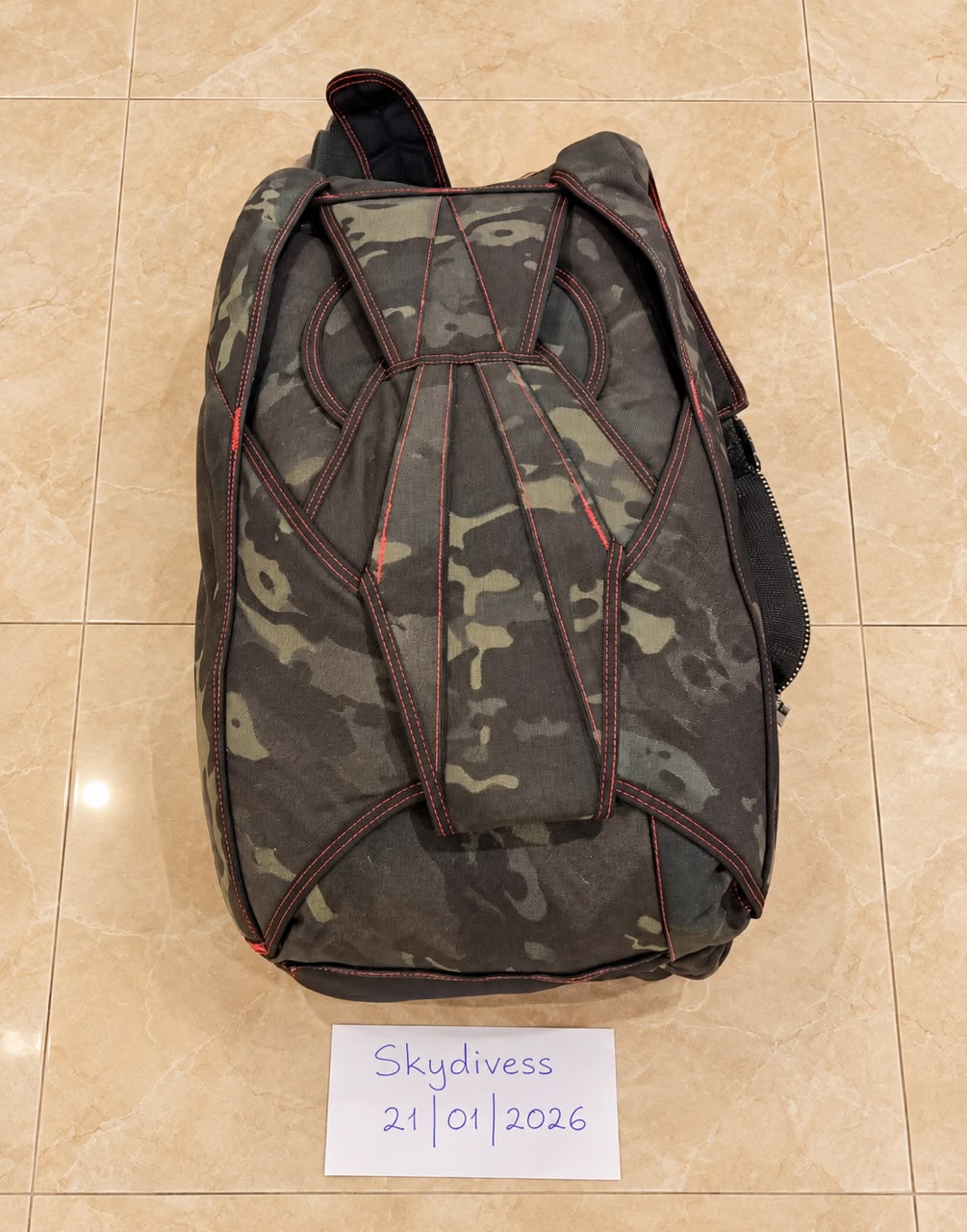
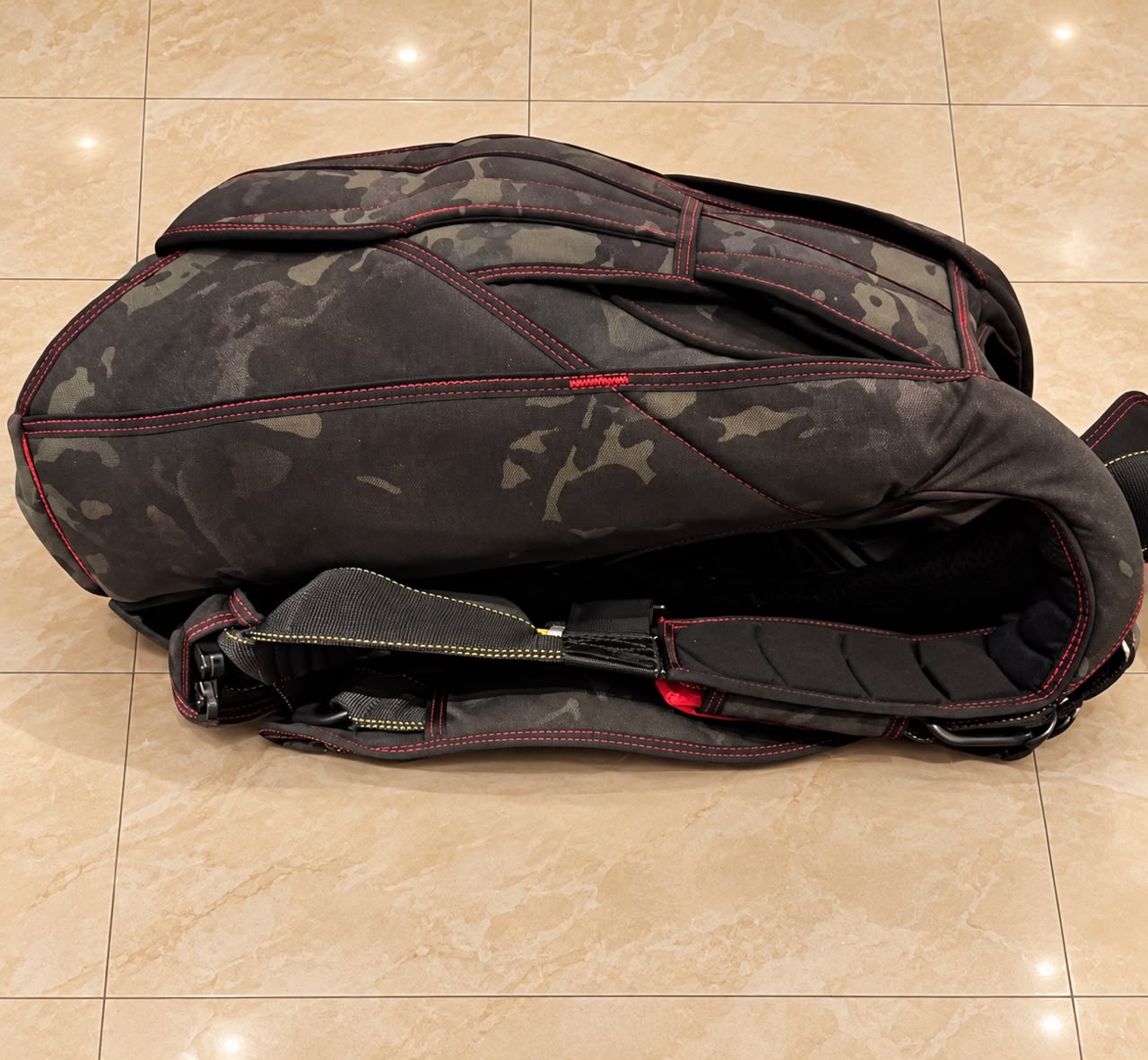
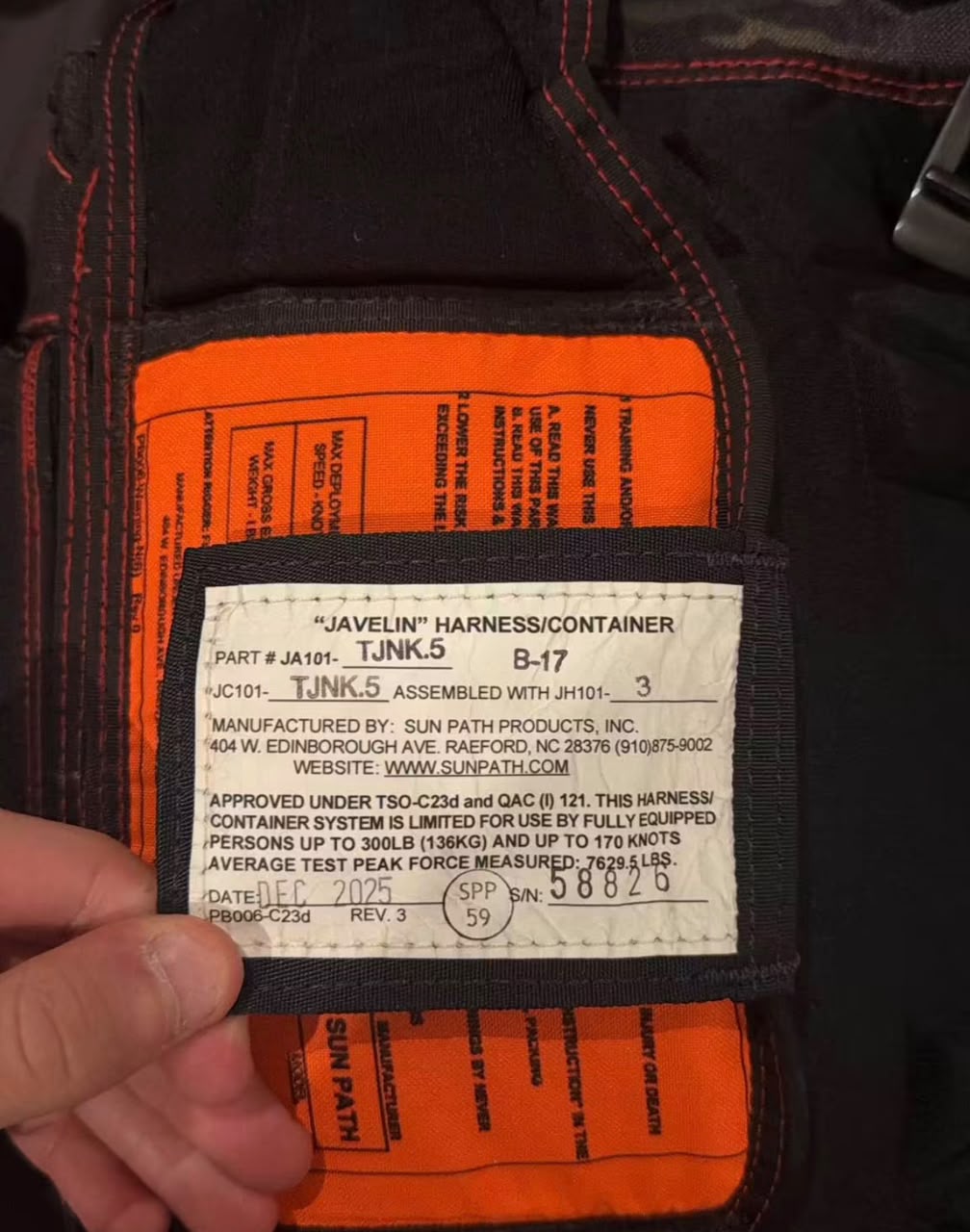
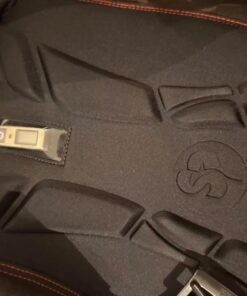
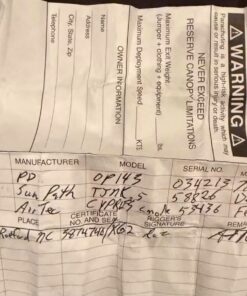
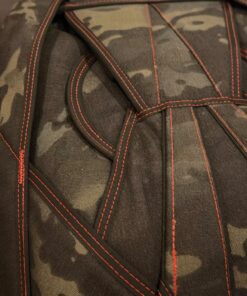
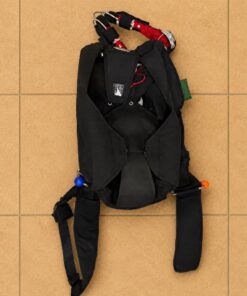
Sun Path Javelin Odyssey TJNK.5 container, DOM 02/2025, serial 58826, finished in Black Camo with Red Stitching.
Includes:
- JYRO Crossfire 3 139 main canopy, approximately 60 jumps
- Performance Designs Optimum 143 reserve, never deployed per owner
- Airtec Expert CYPRES AAD
A qualified rigger has checked and confirmed it’s ready for use.
Used Javelin Odyssey Complete Rig – 2025 Low-Jump System with Crossfire 3 139, Optimum 143 and Expert CYPRES
This Used Javelin Odyssey Complete Rig offers an unusually recent, low-jump complete sport-skydiving setup built around respected components from Sun Path, JYRO, Performance Designs and Airtec.
The system is stated to have only approximately 60 jumps in total and was originally sold by Nirvana Skydiving Shop before being offered for resale by its original owner.
At the center of the system is a Sun Path Javelin Odyssey, model TJNK.5, with a DOM of February 2025 and serial number 58826. The container is finished in Black Camo with Red Stitching, giving it a distinctive appearance while retaining the practical architecture of Sun Path’s flagship sport-skydiving platform.
The main canopy is a JYRO Crossfire 3 139, finished in black and also stated to have approximately 60 jumps.
The reserve is a Performance Designs Optimum 143, which is stated by the owner to have never been deployed.
An Airtec Expert CYPRES AAD completes the listed system.
Because the rig is offered as a complete low-jump package, it may appeal to an appropriately experienced jumper who wants to avoid sourcing a container, main, reserve and AAD separately.
However, all parachute equipment is life-support equipment. Harness fit, reserve suitability, main-canopy suitability, component compatibility and current service status should therefore be verified by a qualified rigger before purchase or use.
2025 Javelin Odyssey Container
The Javelin Odyssey is Sun Path’s flagship sport container.
Current manufacturer information lists cut-in laterals, stainless steel hardware, an AAD-ready reserve system, RSL configuration, anti-twist main risers and multiple handle and deployment options among the platform’s standard or configurable features.
This particular used rig is stated to be model TJNK.5 with a February 2025 manufacture date.
Model TJNK.5
The stated container model is TJNK.5.
Container sizing matters because main and reserve compatibility depends on actual pack volume rather than canopy area alone.
The installed combination should therefore be evaluated as a complete system rather than by nominal square footage only.
DOM February 2025
The harness/container was manufactured in February 2025.
That recent manufacture date is one of the strongest selling points of the package.
Age alone does not determine condition, but a recent DOM combined with a low stated jump count can make a system especially attractive on the used market.
Serial Number 58826
The stated container serial number is 58826.
A prospective buyer should verify that this number matches the manufacturer label and equipment records.
Black Camo with Red Stitching
The Black Camo with Red Stitching configuration gives the rig a distinctive modern appearance.
The contrast stitching adds definition without changing the primary function of the harness/container.
Only About 60 Jumps
The entire system is stated to have only around 60 jumps.
That is a very low amount of use compared with many complete used rigs.
Nevertheless, jump count should never substitute for a professional physical inspection.
JYRO Crossfire 3 139 Main
The installed main is a Crossfire 3 139.
JYRO describes the Crossfire 3 as a fully elliptical 9-cell sport canopy designed for experienced pilots seeking responsive flight, long recovery characteristics and more performance than a basic recreational canopy.
This is therefore not a beginner main canopy.
Crossfire 3 Recommended Loading
JYRO currently publishes a recommended wing-loading range of approximately 1.3 to 2.0 for the Crossfire 3.
That published range does not automatically establish suitability for a particular jumper.
Jump numbers, currency, canopy background, landing consistency and coaching history remain critical.
Why the 139 Size Matters
A 139 sq ft canopy can produce very different flight characteristics depending on total suspended weight.
For that reason, no buyer should select this rig solely because the main physically fits the container.
The main must also fit the jumper’s experience and current canopy progression.
Crossfire 3 Flight Character
The Crossfire 3 is designed to provide responsive handling.
JYRO describes it as a performance-oriented 9-cell fully elliptical canopy with longer recovery characteristics and strong swoop potential.
That makes disciplined canopy control especially important.
Optimum 143 Reserve
The reserve is a Performance Designs Optimum 143.
Performance Designs describes the Optimum as a low-bulk, low-permeability, seven-cell reserve designed to provide predictable flight and strong flare performance.
Reserve Has Never Been Deployed
The owner states that the reserve has never been deployed.
That is useful history, although it does not replace inspection, current repack status or verification of the reserve packing data card.
Optimum 143 Size and Limits
Performance Designs lists the OP143 at 143 sq ft.
Its published maximum FAA suspended-weight limit is 254 lb.
However, the maximum placarded limit should never be treated as a recommended operating weight.
Jumper experience, landing ability and reserve wing loading must still be considered carefully.
Airtec Expert CYPRES
The rig includes an Airtec Expert CYPRES AAD.
Airtec’s current Expert CYPRES 2 specifications list an activation speed of approximately 35 m/s and a service life of 15.5 years for units produced from 2017 onward.
The actual unit’s manufacturing date and status should be confirmed directly from the device and records.
Why the AAD Adds Value
Including the AAD means the buyer does not necessarily need to source a separate activation device.
However, proper installation, cutter condition, display operation and service status should all be checked.
Originally Sold by Nirvana Skydiving Shop
The listing states that the system was originally sold by Nirvana Skydiving Shop.
That provides a useful ownership-history detail.
Original Owner Resale
The rig is now offered for resale by its original owner.
A one-owner history can simplify questions about previous use, maintenance and storage.
Performance Designs Dealer Since 1999
The supplied listing includes the statement Performance Designs Dealer Since 1999.
This appears to relate to the seller or original retail source rather than to the physical rig itself.
Why a Complete Rig Can Be Attractive
A complete rig saves the buyer from separately sourcing:
Harness/container
Main canopy
Reserve canopy
AAD
Compatible component combinations
The main advantage is convenience.
However, the complete system must still be suitable for the buyer.
Why Fit Comes First
Harness fit affects comfort, handle location, container positioning and overall security.
A low-jump rig is not a good purchase if the harness does not fit correctly.
Why Main-Canopy Suitability Comes First
The Crossfire 3 139 is the most skill-sensitive component in this package.
Its performance-oriented design means buyer experience should be evaluated carefully.
Why Reserve Suitability Matters
Reserve wing loading should also be assessed separately from the main.
An emergency canopy should not simply be accepted because it physically fits the container.
Why Component Compatibility Matters
The main, reserve, AAD and harness/container must operate together as a complete life-support system.
A qualified rigger should inspect the assembled configuration.
parachute jump australia
parachute jump australia searches commonly concern drop zones and training in Australia. A personally owned rig should still satisfy local operational requirements and be suitable for the jumper.
skydive byron bay
skydive byron bay relates primarily to a destination and skydiving operation. Personal equipment requirements should always be confirmed with the relevant drop zone.
weight limit skydiving
weight limit skydiving is especially important for this complete rig because both the main and reserve must be evaluated using the jumper’s total suspended weight.
cairns skydiving
cairns skydiving is a destination-oriented search rather than a specification of this equipment.
skydiving helmet
A skydiving helmet is separate personal equipment and is not listed as included with this complete rig.
skydive helmets
skydive helmets vary by discipline, fit and protection style.
Helmet choice should be made independently of the harness/container.
hook blade knife
A hook blade knife is an emergency cutting tool.
No hook knife should be assumed included unless specifically confirmed with the seller.
tracking jump
A tracking jump requires proper separation, planning and altitude awareness.
The rig does not replace discipline-specific training.
parachute rig
A parachute rig should be treated as a complete life-support system.
This package includes the primary components needed for a sport setup, subject to professional inspection and jumper suitability.
linewear
linewear is particularly important on the Crossfire 3 main.
Although only around 60 jumps are stated, the line set should still be examined for trim, wear and damage.
base jumping
base jumping uses specialized equipment and procedures.
This Javelin Odyssey complete rig is a sport-skydiving system and should not be represented as a BASE rig.
sky helmet skydiving
A sky helmet skydiving search concerns head protection rather than the harness/container or canopies.
wingsuit sport
The wingsuit sport creates specialized deployment considerations.
A Crossfire 3 is not marketed as a wingsuit-specific canopy, so anyone planning wingsuit use should seek qualified advice.
vector wingsuit
vector wingsuit searches often combine wingsuit and container topics.
This system uses a Javelin Odyssey rather than a Vector container.
full face skydiving helmet
A full face skydiving helmet is separate equipment and is not listed as included.
skydiving downsizing chart
A skydiving downsizing chart should never replace canopy coaching.
The installed 139 sq ft fully elliptical main requires careful experience-based evaluation.
landing flight risers
landing flight risers and advanced riser inputs should be practiced only with appropriate training.
fire parachute
The phrase fire parachute does not describe this system.
It is a conventional sport-skydiving rig.
cypress fire skydiving
cypress fire skydiving may be an imprecise search phrase.
This rig includes an Airtec Expert CYPRES AAD.
skydiving rigging
skydiving rigging is critical when purchasing any complete used setup.
A qualified rigger should inspect harness, container, main, reserve and AAD installation.
baseline jumping
baseline jumping may be associated with fixed-object parachuting, but this complete system is intended for sport skydiving.
sky diving helmet
A sky diving helmet is separate from this rig and should be selected according to fit and intended discipline.
hook knife skydiving
A hook knife skydiving tool can be useful emergency equipment but should not be assumed included unless verified.
landing flight risers
The repeated phrase landing flight risers relates to canopy-control technique rather than the condition of the rig itself.
skydiving glasses
skydiving glasses or goggles are separate eye-protection equipment.
nude parachute jump
A nude parachute jump is unrelated to the technical specifications of this rig.
Normal equipment, safety and drop-zone rules still apply.
ifly colorado springs
ifly colorado springs relates to indoor bodyflight training.
Tunnel experience does not replace parachute-system or canopy-flight training.
skydive hook knife
A skydive hook knife is a separate emergency tool and is not listed among the supplied components.
skydiving helmet full face
A skydiving helmet full face configuration should be selected separately according to fit and discipline.
skydiving blue hole belize
skydiving blue hole belize is a destination-oriented search.
Travel jumps may involve additional documentation and equipment requirements.
smallest canopy
The smallest canopy appropriate for a jumper cannot be determined from container size alone.
The installed 139 main should only be used by a jumper with the appropriate experience and wing loading.
skydiving speed
skydiving speed varies with freefall discipline and body position.
Deployment procedures should always match the discipline and equipment.
wing suits for sale
wing suits for sale refers to separate flight garments rather than this complete rig.
skydiving nude
skydiving nude is unrelated to the performance or condition of this system.
parts of a parachute
The main parts of a parachute system include the harness/container, main canopy, reserve canopy, deployment components, risers and emergency equipment.
This rig includes the major primary components as a complete system.
container skydive
A container skydive setup must properly match the pack volume of both main and reserve canopies.
The current configuration should therefore be inspected as a complete assembled system.
g35 helmet
The G35 helmet is separate personal equipment and is not listed with this rig.
best skydiving helmet
The best skydiving helmet depends on fit, discipline and personal requirements rather than the rig model.
skydive belize
skydive belize is a location-related search rather than an equipment specification.
freefly pud handle
A freefly pud handle is a deployment-handle configuration available on some containers.
The actual deployment handle fitted to this Javelin should be confirmed directly from the rig.
gliding suit wingsuit
A gliding suit wingsuit changes the freefall and deployment environment.
Anyone intending to combine a wingsuit with this system should seek instructor and rigger advice.
jumper pilot
A jumper pilot search may concern aircraft operations or canopy piloting.
In this context, the most relevant pilot is the jumper controlling the Crossfire 3 after deployment.
crw skydiving
crw skydiving involves specialized canopy-relative work.
The suitability of the installed main for any specialized discipline should be confirmed with experienced instructors.
gear bag skydive
A gear bag skydive accessory can protect the rig during storage and transport.
No gear bag is listed as included.
skydiving equipment list
A typical skydiving equipment list may include the complete rig, helmet, altimeter, eye protection, jumpsuit and discipline-specific accessories.
indoor wingsuit
indoor wingsuit training uses specialized tunnel environments and does not involve actual parachute deployment.
can you wear glasses while skydiving
For can you wear glasses while skydiving, suitable goggles or helmet systems can often accommodate corrective eyewear.
This is separate from rig selection.
wingsuit
A wingsuit requires specialized instruction and careful deployment-system compatibility.
skydiving website
A reputable skydiving website can provide manufacturer manuals, service bulletins and maintenance information.
Physical inspection still remains essential for used equipment.
cookie g4 helmet
The Cookie G4 helmet is separate protective equipment and is not listed with this package.
base canopy
A base canopy is designed for a different parachuting environment.
Neither the Crossfire 3 nor Optimum reserve should be presented as dedicated BASE equipment.
new skydive
A new skydive student or recently licensed jumper should obtain instructor guidance before considering a high-performance complete rig.
#skydiving latest
The phrase #skydiving latest may surface current gear and sport discussions, but equipment decisions should rely on manufacturer information and qualified professionals.
canopy flight
canopy flight is particularly important with the Crossfire 3.
Its responsive fully elliptical design requires disciplined control and appropriate experience.
skydiver goggles
skydiver goggles provide eye protection and are separate from the complete rig.
speed sky diving
speed sky diving involves specialized high-speed freefall and should only be performed with appropriate training and equipment configuration.
fly suits
fly suits include conventional jumpsuits and specialized freefall garments.
They are not listed as included.
skydiving rig
A skydiving rig is most valuable when every component matches both the container and the jumper.
This package combines a modern harness/container, main, reserve and AAD into one integrated used system.
safire 3
The Safire 3 is another sport main canopy.
It is generally more conservative than a Crossfire 3 and should not be treated as having identical flight characteristics.
skydiving gliding suit
A skydiving gliding suit is separate equipment that may influence freefall and deployment technique.
fluid wings
Fluid Wings is another canopy manufacturer.
The main fitted here is manufactured by JYRO rather than Fluid Wings.
price of wingsuit
The price of wingsuit equipment is unrelated to the valuation of this complete rig.
tandem wingsuit
A tandem wingsuit search does not describe this equipment.
The Javelin package is a personal sport rig.
skydiving tube
A skydiving tube is typically a freefall prop and is not part of this complete setup.
Why the Javelin Odyssey Matters
The container is the structural foundation of the system.
Sun Path describes the Odyssey as its flagship sport-skydiving rig and currently highlights features such as cut-in laterals, stainless hardware, RSL configuration, AAD readiness and multiple deployment-handle choices.
That makes the platform well established for everyday sport use.
Why the Crossfire 3 Matters
The main canopy is the most performance-sensitive component in this package.
JYRO identifies the Crossfire 3 as a fully elliptical 9-cell wing intended for experienced pilots.
Its responsive character and longer recovery arc demand appropriate skill.
Why the Optimum 143 Matters
The reserve is intended to provide predictable emergency flight.
Performance Designs uses low-bulk fabric to allow more canopy area within a given pack volume while retaining strong structural reinforcement and dependable flight characteristics.
Why the CYPRES Matters
The Expert CYPRES provides an additional emergency layer.
It should never replace altitude awareness or emergency procedures, but correct installation and current service status can add substantial value to a complete system.
How Good Is This Complete Rig?
Based on the supplied history, several factors are highly attractive:
February 2025 container DOM
Only about 60 jumps
Original-owner resale
Crossfire 3 139 main included
Optimum 143 reserve included
No stated reserve deployments
Expert CYPRES included
Black Camo with Red Stitching
Complete assembled system
The main limitation is not condition but suitability.
This is not a package that should automatically be recommended to every skydiver.
The Crossfire 3 139 is a performance canopy, and the complete rig should be matched to an experienced, current jumper.
Precision of System Matching
In skydiving, “precision” is better understood as correct system matching and predictable operation rather than mechanical accuracy.
The main should fit the container properly.
The reserve should fit the reserve tray correctly.
The harness should fit the jumper.
The AAD should be approved and correctly installed.
The main canopy should match the jumper’s skill.
When these relationships are correct, the entire system works as intended.
Important Harness Information
Before purchase, verify:
Main lift web fit
Lateral fit
Leg-strap fit
Chest-strap position
Handle access
Container position
Harness webbing condition
Hardware condition
Important Main-Canopy Information
Before use, verify:
Fabric condition
Line condition
Slider condition
Brake settings
Attachment points
Serial number
DOM
Pack compatibility
Wing loading
Pilot suitability
Important Reserve Information
Verify:
Reserve serial number
Reserve DOM
Packing data card
Current repack status
Fabric condition
Line condition
Deployment history
Maximum placarded limits
Suitability for the jumper
Important AAD Information
Verify:
Exact model
DOM
Service status
Display operation
Cutter configuration
Installation
Current manufacturer instructions
Professional Inspection Before Use
Even a 60-jump system should be professionally inspected.
Low use reduces wear potential but does not guarantee correct assembly, fit or service status.
Final Section 1 Assessment
This Used Javelin Odyssey Complete Rig is a compelling low-jump package for a suitably experienced skydiver seeking a relatively recent, fully equipped personal system.
The stated harness/container is a Sun Path Javelin Odyssey TJNK.5, manufactured in February 2025, serial number 58826, and finished in Black Camo with Red Stitching.
The installed main is a black JYRO Crossfire 3 139 with approximately 60 jumps. JYRO classifies the Crossfire 3 as a fully elliptical 9-cell performance sport canopy with a published recommended wing-loading range of about 1.3–2.0, reinforcing the importance of experience and professional canopy guidance.
The reserve is a Performance Designs Optimum 143, stated by the owner to have never been deployed. Performance Designs lists the OP143 at 143 sq ft with a published maximum FAA suspended-weight limit of 254 lb, although that limit is not a recommended operating weight and jumper suitability must be evaluated separately.
An Airtec Expert CYPRES AAD completes the major listed components.
The complete system is stated to have only around 60 jumps, making the low-use history one of its strongest advantages.
Its original-owner resale history and stated connection to Nirvana Skydiving Shop add useful context, while the supplied listing also references Performance Designs dealer experience dating to 1999.
For the right jumper, this system combines a respected modern container, responsive performance main, low-bulk reserve and established AAD into one convenient complete package.
However, the Crossfire 3 139 makes pilot suitability especially important.
Before purchase or jumping, the complete rig should be inspected by a qualified rigger, the harness should be fitted to the buyer, the reserve documentation and repack status should be verified, the AAD status should be confirmed, and the buyer’s current canopy experience should be reviewed.
When those checks are satisfied, this low-jump 2025 Javelin Odyssey setup can offer a highly appealing combination of modern equipment, limited use, complete system integration and performance-oriented canopy flight.
Real-World Fit, Canopy Compatibility, Reserve and AAD Considerations, Inspection, Maintenance and Ownership
Overall Character of the Complete System
This Used Javelin Odyssey Complete Rig is a comparatively recent, low-jump sport-skydiving system built around a well-established harness/container, a performance-oriented main canopy, a low-bulk reserve and an automatic activation device.
The entire setup is stated to have approximately 60 jumps, which makes the system especially interesting to buyers who want something newer than the heavily used complete rigs often seen on the second-hand market.
The container was manufactured in February 2025.
The main is a Crossfire 3 139.
The reserve is an Optimum 143.
The AAD is an Expert CYPRES.
Taken together, these components create a complete personal system that can offer considerable convenience because the buyer does not need to source each primary component separately.
However, complete does not automatically mean suitable.
Harness fit, main-canopy experience, reserve wing loading, component compatibility, AAD status and current inspection records should all be verified before use.
Why Low Jump Numbers Matter
Approximately 60 jumps is a low amount of use for a complete sport system.
That can reduce the amount of routine wear expected on fabric, webbing, lines, hardware and closing components.
Why Jump Count Is Only Part of the Picture
A low jump number should not replace a physical inspection.
Equipment can still be affected by:
Poor storage
Heat
Moisture
Chemical exposure
Incorrect assembly
Abrasion
Hard openings
Impact damage
Condition Should Be Evaluated Directly
The strongest buying decision comes from combining the stated jump history with a qualified inspection.
Harness Fit
Harness fit is one of the most important considerations when buying a complete rig.
A container can be mechanically excellent but still be unsuitable if the harness does not match the jumper.
Why Fit Matters
Harness fit influences:
Handle location
Leg-strap comfort
Chest-strap position
Container position
Movement in freefall
Comfort under canopy
Main Lift Web Position
The main lift web should place the system correctly on the torso.
Why This Matters
If the harness sits too high or too low, emergency handles and container position can be affected.
Lateral Fit
Laterals influence how closely the container sits against the jumper’s back.
Why Poor Lateral Fit Is Unhelpful
A loose fit can allow unnecessary movement.
A very tight fit can reduce comfort.
Leg-Strap Fit
Leg straps should be secure without creating excessive pressure.
Why Leg-Strap Position Matters
The jumper’s body is supported through the harness during deployment and canopy flight.
Chest-Strap Position
The chest strap should sit correctly without riding too high or too low.
Why Trying the Rig On Helps
Body proportions vary even between people of similar height and weight.
Whenever possible, the prospective buyer should wear the rig before purchase.
Professional Fit Confirmation
A qualified rigger or experienced equipment specialist can identify fit issues that may not be obvious to the buyer.
Container Condition
The Javelin Odyssey container should be inspected thoroughly despite the low jump count.
Areas to Inspect
Check:
Main closing flaps
Reserve flaps
Riser covers
BOC area
Harness webbing
Hardware
Stitching
Handle pockets
Closing loops
Why Flap Condition Matters
Closing flaps protect deployment components and help keep the system secure during freefall.
Main Pin Protection
The main pin should remain properly protected.
Why Protection Matters
Accidental pin movement can create deployment problems.
Reserve Pin Protection
The reserve pin area should remain secure and protected.
Why Reserve Security Is Critical
The reserve system must remain closed until activation is required.
Riser Covers
Riser covers should remain secure during normal freefall.
Why Loose Covers Can Be a Problem
Premature riser exposure can increase the chance of unintended movement.
BOC Condition
The bottom-of-container deployment pocket should hold the deployment handle securely.
Check For
Stretching
Fabric wear
Loose stitching
Damage
Poor retention
Why BOC Retention Matters
A worn pocket can affect handle security.
Main Canopy Character
The Crossfire 3 139 is the most performance-sensitive component in the package.
It should be treated with more caution than a beginner-oriented main.
Why Experience Matters
The canopy is designed for responsive flight.
That means the pilot should already have strong landing and canopy-control skills.
Why Square Footage Alone Is Not Enough
A 139 sq ft canopy can be very different in practical behavior depending on the jumper’s exit weight.
Wing Loading
Wing loading should be calculated using total suspended weight.
Why Higher Loading Changes Behavior
Higher loading can increase:
Forward speed
Descent rate
Turn response
Landing energy
Recovery characteristics
Currency Matters
A jumper who has historical experience but little recent activity may need a more conservative transition.
Why Recent Skill Matters More Than Old Jump Numbers
Canopy timing, traffic awareness and landing judgment can degrade during long breaks.
Landing Consistency
The buyer should honestly assess current landing performance.
Useful Questions
Can landings be performed consistently?
Can patterns be flown predictably?
Can crosswind conditions be handled appropriately?
Can flare timing be repeated reliably?
Why Instructor Input Helps
A canopy coach or experienced instructor can help determine whether the main is appropriate.
Main Line Condition
Even with only around 60 jumps, the line set should be inspected.
Check For
Fraying
Fuzzing
Uneven wear
Contamination
Damaged stitching
Trim changes
Why Trim Matters
Line trim influences:
Opening behavior
Glide
Turn response
Flare timing
Recovery characteristics
Steering Lines
Brake lines often experience more handling wear than upper suspension lines.
Check For
Wear near guide rings
Damaged finger traps
Uneven lengths
Brake-setting damage
Slider Condition
The slider should remain in good condition.
Why the Slider Matters
It helps control the opening sequence.
Slider Inspection
Check:
Fabric
Grommets
Tapes
Stitching
Symmetry
Why Grommet Condition Matters
Damaged grommets can accelerate line wear.
Main Canopy Fabric
The fabric should be inspected for:
Holes
Tears
Abrasion
Stains
Burns
Repairs
Why Fabric Condition Matters
The canopy depends on healthy fabric to maintain its aerodynamic shape.
Main Canopy Attachment Points
Line attachment points should remain secure.
Why These Areas Matter
They carry structural loads during opening and flight.
Main Canopy Label
The data label should be checked to confirm:
Model
Size
Serial number
DOM
Manufacturer
Why Verification Matters
It ensures the physical canopy matches the sale description.
Container Compatibility
The main should fit the container correctly.
Why Pack Volume Matters
Canopies with similar square footage can pack differently.
What Influences Pack Volume
Fabric
Design
Line type
Age
Condition
Packing method
Too Tight
An overstuffed container can create unnecessary closing tension.
Too Loose
A canopy that packs too small can reduce container security.
Professional Pack-Volume Check
A rigger should confirm that the current main fits the container appropriately.
Reserve Condition
The Optimum 143 is an important part of the system.
Why Reserve History Matters
The owner states that the reserve has never been deployed.
That is useful information, but it does not replace inspection and current packing documentation.
Reserve Packing Data Card
The packing card should be reviewed.
Why Documentation Matters
It can show:
Pack dates
Rigger information
Inspection history
Service details
Reserve Repack Status
The reserve must remain within the applicable repack interval.
Why Local Rules Matter
Repack requirements can vary between jurisdictions.
Reserve Fabric
The reserve should be inspected by a qualified rigger during scheduled servicing.
Areas of Interest
Fabric condition
Lines
Slider
Links
Freebag
Pilot chute
Packing components
Reserve Suitability
The reserve must also suit the jumper’s exit weight and experience.
Why Maximum Limits Are Not Targets
Placarded maximum weight should not be treated as a recommended operating weight.
Emergency Landing Considerations
A reserve may be flown in stressful circumstances or unfamiliar terrain.
Why Conservative Reserve Loading Can Be Valuable
A more manageable reserve can provide additional margin during an emergency.
AAD Condition
The Expert CYPRES should be checked carefully.
Verify
Exact model
Manufacture date
Service status
Display operation
Cutter condition
Installation
Why AAD Status Matters
An AAD provides an additional emergency layer, but only if it is installed and functioning correctly.
Why an AAD Does Not Replace Training
It does not replace:
Altitude awareness
Emergency procedures
Deployment decisions
Good judgment
Cutter Routing
The cutter should be installed correctly.
Why Routing Matters
Improper installation can compromise device function.
Battery and Service Status
Current manufacturer guidance should be followed.
Why Old Assumptions Are Risky
AAD maintenance requirements can vary by generation and model.
Complete-System Integration
The harness/container, main, reserve and AAD should be treated as one integrated system.
Why Component Matching Matters
Each part depends on the others being correctly installed.
Risers
The main risers should be inspected.
Check For
Webbing wear
Stitching damage
Hardware wear
Three-ring condition
Brake setup
Three-Ring System
The three-ring release system requires regular inspection.
Why Clean Routing Matters
The release system depends on correct assembly and freedom of movement.
Cutaway Cables
Cables should be maintained according to manufacturer guidance.
Why Contamination Matters
Dirt can increase extraction force.
Housings
Cable housings should remain secure and undamaged.
Reserve Handle
The reserve handle should remain accessible.
Why Handle Position Depends on Fit
Harness fit can change the location of the handle relative to the jumper.
Cutaway Handle
The cutaway handle should also remain easy to reach.
Why Emergency Procedure Practice Matters
The jumper should rehearse emergency procedures in the actual rig.
Muscle Memory
Practicing on the real equipment helps reinforce handle location and sequence.
Deployment Handle
The main deployment handle should remain secure.
Why Handle Retention Matters
Dynamic freefall can expose the deployment area to airflow from different directions.
Pilot Chute
The pilot chute should be inspected.
Check
Fabric
Mesh
Handle attachment
Kill line where applicable
Bridle attachment
Bridle
The bridle should remain free from significant wear.
Deployment Bag
The main deployment bag should be appropriate for the container and canopy.
Why Improvised Components Are Undesirable
Mismatched parts can compromise system behavior.
Opening Performance
Main-canopy openings depend on more than the canopy model.
Important Factors
Packing
Body position
Deployment speed
Pilot-chute condition
Line trim
Slider position
Container configuration
Why Stable Body Position Helps
Symmetry during deployment can support more predictable inflation.
Packing Consistency
Consistent packing can help produce consistent openings.
Why Rough Packing Surfaces Should Be Avoided
Repeated abrasion can damage fabric over time.
Storage
The rig should be stored in a clean, dry environment.
Good Storage Conditions
Keep it:
Cool
Dry
Away from sunlight
Away from chemicals
Protected from pests
UV Exposure
Sunlight can weaken parachute textiles over time.
Why Long-Term Direct Sunlight Is Undesirable
Repeated UV exposure can degrade fabric and webbing.
Heat Exposure
Excessive heat should be avoided.
Why Hot Vehicles Are a Problem
Interior temperatures can become extreme.
Chemical Exposure
Keep the rig away from:
Fuel
Solvents
Oil
Bleach
Strong cleaners
Why Chemicals Matter
Some substances can damage fibers without obvious immediate signs.
Moisture
Persistent moisture should be avoided.
Why Damp Storage Is Risky
It can affect textiles, hardware and electronics.
Transport
A protective gear bag is recommended.
Why Transport Damage Happens
Equipment can be exposed to:
Sharp objects
Heavy luggage
Vehicle heat
Moisture
Dirty surfaces
Air Travel
The rig should be protected from rough handling.
Why Documentation Helps During Travel
Equipment identification and manufacturer information can help if questions arise.
Routine Pre-Jump Check
The system should be checked according to training and manufacturer procedures.
Important Areas
Main pin
Reserve pin
Riser covers
Handles
Leg straps
Chest strap
Three-ring system
Pilot chute
AAD display
Why Routine Checks Matter
Small issues are easier to address before boarding than after exit.
Harness Webbing
Load-bearing webbing should be inspected.
Look For
Cuts
Fraying
Burns
Abrasion
Contamination
Damaged stitching
Hardware
Metal hardware should be checked for:
Corrosion
Sharp edges
Distortion
Wear
Why Hardware Condition Matters
Damaged hardware can affect load distribution and harness integrity.
Structural Stitching
Load-bearing seams should remain intact.
Why Decorative Appearance Is Secondary
The Black Camo and Red Stitching are visually attractive, but structural condition matters more.
Cosmetic Wear
Minor cosmetic wear may not affect airworthiness.
Why Structural Wear Is More Important
A light scuff is less significant than damaged webbing or stitching.
Original Owner History
The one-owner history can be useful.
Why This Helps
It may make it easier to obtain accurate information about:
Storage
Jump history
Repairs
Hard openings
Maintenance
Ask About Hard Openings
Even a low-jump canopy can have experienced a hard deployment.
Why This Matters
Hard openings can stress:
Lines
Attachment points
Harness webbing
Risers
Container structure
Ask About Repairs
Professional repairs are not automatically negative.
What Matters
Quality
Location
Documentation
Extent
Ask About Water Exposure
Water history can matter.
Why Saltwater Is More Concerning
Salt residue can accelerate corrosion and damage materials.
Cleaning
Cleaning should be conservative.
Why Aggressive Washing Is Inappropriate
Parachute materials can be damaged by unsuitable chemicals or methods.
If Contamination Occurs
Consult a rigger or manufacturer guidance.
Main Canopy Transition
A buyer moving onto a Crossfire 3 should plan the transition carefully.
Why Same Size Does Not Mean Same Flight
Two canopies of equal area can differ significantly in:
Planform
Recovery arc
Toggle response
Harness response
Flare timing
First Jumps
Initial jumps should ideally be made in familiar conditions.
Why Calm Conditions Help
They allow the jumper to focus on learning the canopy rather than environmental challenges.
High-Altitude Familiarization
Canopy-control exercises should be performed with appropriate altitude and coaching.
Useful Skills to Explore
Braked flight
Harness response
Toggle response
Rear-riser feel
Flare range
Recovery behavior
Why Low-Altitude Experimentation Is Dangerous
Performance canopies require margin.
Landing Pattern Discipline
A predictable pattern helps reduce traffic conflicts.
Why Traffic Awareness Matters
Canopy collisions are a serious risk in busy landing areas.
Final Approach
The final approach should remain stable.
Why Aggressive Low Turns Are Risky
Low-altitude speed increases consequences quickly.
Flare Technique
Flare timing should be learned for the specific canopy.
Why Timing Can Feel Different
Performance canopies may carry speed differently from more conservative wings.
Density Altitude
Higher or hotter conditions can change landing performance.
Why This Matters
The canopy can feel faster and require more precise flare timing.
Wind Conditions
Wind affects ground speed and pattern planning.
Why Tailwinds Increase Risk
A tailwind can significantly increase landing speed.
Canopy Coaching
Professional coaching can accelerate safe learning.
Useful Areas of Coaching
Pattern planning
Accuracy
Braked approaches
Rear-riser control
Flare technique
Emergency landing planning
Why Coaching Is Valuable With This Main
The installed main is performance-oriented.
Reserve Familiarity
The jumper should understand the reserve’s expected behavior before an emergency occurs.
Why This Matters
Reserve flight may feel different from the main.
Emergency Procedure Practice
Practice cutaway and reserve procedures regularly.
Why Practice Should Use the Actual Rig
Handle positions and harness feel differ between systems.
Documentation
Keep records of:
Container DOM
Container serial number
Main DOM
Main serial number
Reserve DOM
Reserve serial number
AAD DOM
AAD serial number
Reserve packing history
Repairs
Inspections
Why Records Preserve Value
Future buyers can evaluate equipment more easily when history is clear.
Professional Inspection Before Purchase
A qualified rigger should inspect the entire system.
What the Inspection Should Cover
Harness
Container
Main
Reserve
AAD installation
Risers
Handles
Three-ring system
Deployment components
Why Seller Claims Are Not Enough
Low jump numbers and good appearance are encouraging, but life-support equipment deserves independent evaluation.
Professional Inspection Before First Jump
After purchase, the final assembled configuration should be checked again.
Why This Is Important
A different owner introduces a new harness-fit question even if no equipment changes are made.
Who May Find This Rig Suitable
This system may suit a jumper who:
Has appropriate canopy experience
Fits the harness correctly
Wants a complete low-jump setup
Is comfortable with a performance main
Values a recent container and reserve
Who May Need a More Conservative System
Another setup may be more appropriate for:
Recent students
Low-jump jumpers
Jumpers returning after long breaks
Pilots without experience on elliptical canopies
Why Price Should Not Be the Main Decision
A complete low-jump system can be financially attractive, but suitability is more important than purchase price.
Why Main-Canopy Experience Is Critical
The Crossfire 3 is not simply a piece of equipment that can be grown into casually.
Why Reserve Suitability Is Equally Important
Emergency equipment should be manageable under stress.
Why Harness Fit Cannot Be Compromised
An uncomfortable or poorly fitting harness can affect handle access and stability.
Long-Term Ownership Costs
Potential costs include:
Reserve repacks
AAD servicing
Line replacement
Riser replacement
Closing loops
Pilot-chute maintenance
Rigger inspections
Repairs
Why Low-Jump Gear Still Needs Maintenance
Age and environment continue to affect equipment even when jump numbers remain low.
Future Line Replacement
The main line set will eventually require replacement.
Why Lines Are Consumable
Repeated loading and friction gradually change line condition and trim.
Future Reserve Maintenance
The reserve must continue to receive scheduled inspection and repacking.
Future AAD Maintenance
Current manufacturer guidance should be followed throughout the device’s service life.
Resale Value
Good maintenance can preserve future value.
What Helps
Clear records
Low use
Professional service
Clean storage
Known ownership history
No undocumented repairs
Why Complete Systems Can Be Easier to Resell
A correctly matched rig can appeal to buyers who want an integrated package.
Why Specialist Components Narrow the Buyer Pool
A performance main means the next buyer must also have suitable experience.
Cosmetic Appeal
The Black Camo and Red Stitching give the rig a distinctive identity.
Why Appearance Can Matter
A visually appealing rig can be more enjoyable to own.
Why Appearance Should Never Override Condition
Life-support equipment should always be selected primarily for fit and mechanical integrity.
Final Section 2 Assessment
This Used Javelin Odyssey Complete Rig offers a highly attractive combination of recent manufacture, low use and established component brands.
The system is stated to have only around 60 jumps.
The Javelin Odyssey container was manufactured in February 2025.
The Crossfire 3 139 main has a similarly low stated jump count.
The Optimum 143 reserve has no stated deployments.
An Expert CYPRES AAD completes the primary system.
The biggest strength of the package is convenience.
The buyer receives a complete integrated setup rather than needing to source the major components individually.
However, the biggest consideration is suitability.
The Crossfire 3 139 is performance-oriented and should only be flown by a jumper with the appropriate experience, currency and wing loading.
The reserve should be evaluated independently for emergency landing suitability.
The harness must fit the buyer correctly.
The AAD should be checked for current status and proper installation.
The complete system should be inspected by a qualified rigger before use.
Long-term care should focus on correct storage, routine pre-jump checks, line condition, reserve servicing, AAD status, harness wear, deployment components and careful documentation.
When those requirements are satisfied, this low-jump 2025 complete rig can provide a compelling combination of modern equipment, limited use, premium system integration and performance-oriented canopy flight for an appropriately trained skydiver.
Be the first to review “Used JAVELIN ODYSSEY COMPLETE RIG”
Related products
used products

used products

used products

used products

used products

used products

used products
Reviews
There are no reviews yet.