




Used Spectre 170


€955.00
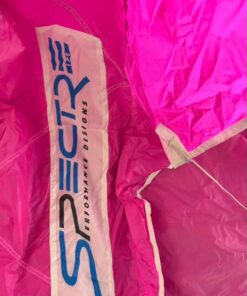
Used Performance Designs Spectre 170 with a DOM of 1998 and approximately 350 jumps. The current line set has fewer than 100 jumps.
The canopy has not been jumped for some time, so a professional rigger has inspected it and has confirmed it’s good to go. A solid option for someone looking for a classic 7-cell 170 sq ft main with relatively low line-set use.
Used Spectre 170 – Classic Performance Designs 7-Cell Main Canopy
This Used Spectre 170 is a classic Performance Designs main canopy with a stated date of manufacture of 1998, approximately 350 jumps on the canopy, and fewer than 100 jumps on the current line set.
The canopy has reportedly not been jumped for some time, which makes professional inspection especially important before it is returned to active service.
The Spectre has remained one of Performance Designs’ longest-running main-canopy designs. PD describes it as a slightly tapered, zero-porosity seven-cell wing with predictable flight characteristics, soft openings, a relatively long snivel, a flat glide and a short recovery arc.
For decades, the design has been used by a broad range of jumpers, although suitability still depends heavily on wing loading, currency, experience and the individual canopy’s current condition.
Because this particular example dates from 1998, age deserves at least as much attention as the stated jump count.
A canopy with moderate use but long calendar age should be inspected for fabric condition, seams, line attachment points, slider condition, line trim, steering lines, labels and any signs of storage-related deterioration.
Spectre 170
The Spectre 170 is a 170 sq ft version of Performance Designs’ long-established seven-cell sport canopy.
The 170 size offers a larger wing area than many modern downsized sport canopies, although appropriateness still depends on total suspended weight and pilot experience.
DOM 1998
The stated date of manufacture is 1998.
That means this canopy has substantial calendar age even though its jump count is not unusually high.
A qualified rigger should therefore evaluate condition rather than relying only on the number of jumps.
Approximately 350 Jumps
The canopy is stated to have approximately 350 jumps.
For a canopy of this age, that is not an exceptionally high jump count.
However, condition depends on much more than total use.
Less Than 100 Jumps on the Line Set
The current lines are stated to have fewer than 100 jumps.
That is a useful ownership detail because line wear and line trim can significantly influence opening and flight behavior.
Not Used for a While
The canopy has reportedly not been jumped for some time.
Long-term inactivity is not automatically harmful, but storage conditions become especially important.
Why Storage History Matters
A canopy stored in a dry, cool, dark environment can age very differently from one exposed to humidity, heat, sunlight or chemicals.
Before purchase, ask how and where it was stored.
Why the Spectre Has Remained Popular
Performance Designs has kept the Spectre in its product line for decades because the wing offers predictable handling and especially comfortable opening characteristics.
PD currently highlights:
Soft openings
Long snivel
Flat glide
Short recovery arc
Progressive toggle response
Broad discipline suitability
Seven-Cell Design
The Spectre uses seven cells rather than the nine cells found on many other sport mains.
Why Seven Cells Matter
Seven-cell designs generally have different inflation, glide and handling characteristics compared with nine-cell sport canopies.
The Spectre was designed to balance those characteristics with everyday usability.
Zero-Porosity Construction
PD describes the Spectre as a zero-porosity canopy.
Why ZP Fabric Matters
Zero-porosity fabric retains air efficiently and is widely used in modern main parachutes.
However, age, use and storage still influence fabric condition.
Soft Opening Character
The Spectre is well known for its long, comfortable opening sequence.
Performance Designs specifically describes the canopy as having a relatively long snivel and slow inflation.
Why Opening Behavior Matters
A comfortable opening can reduce abrupt loading on the jumper and equipment.
However, actual openings still depend on:
Packing
Body position
Deployment speed
Slider position
Pilot-chute setup
Line trim
Flat Glide
The Spectre is also known for a comparatively flat glide.
Why Flat Glide Can Be Useful
A flatter glide can help preserve horizontal range after deployment.
That can be useful when returning from a longer spot.
Short Recovery Arc
The Spectre is described as having a short recovery arc.
This generally gives it a different landing and turning character from longer-recovery performance canopies.
Progressive Toggle Response
PD describes the Spectre’s toggle response as smooth and progressive.
That can make the canopy feel predictable when inputs are made gradually.
Why Condition Matters More Than Age Alone
A 1998 canopy is not automatically unsuitable simply because of its age.
However, age increases the importance of professional inspection.
Important Areas to Inspect
A rigger should evaluate:
Top skin
Bottom skin
Ribs
Seams
Line attachment points
Suspension lines
Steering lines
Slider
Connector links or soft links
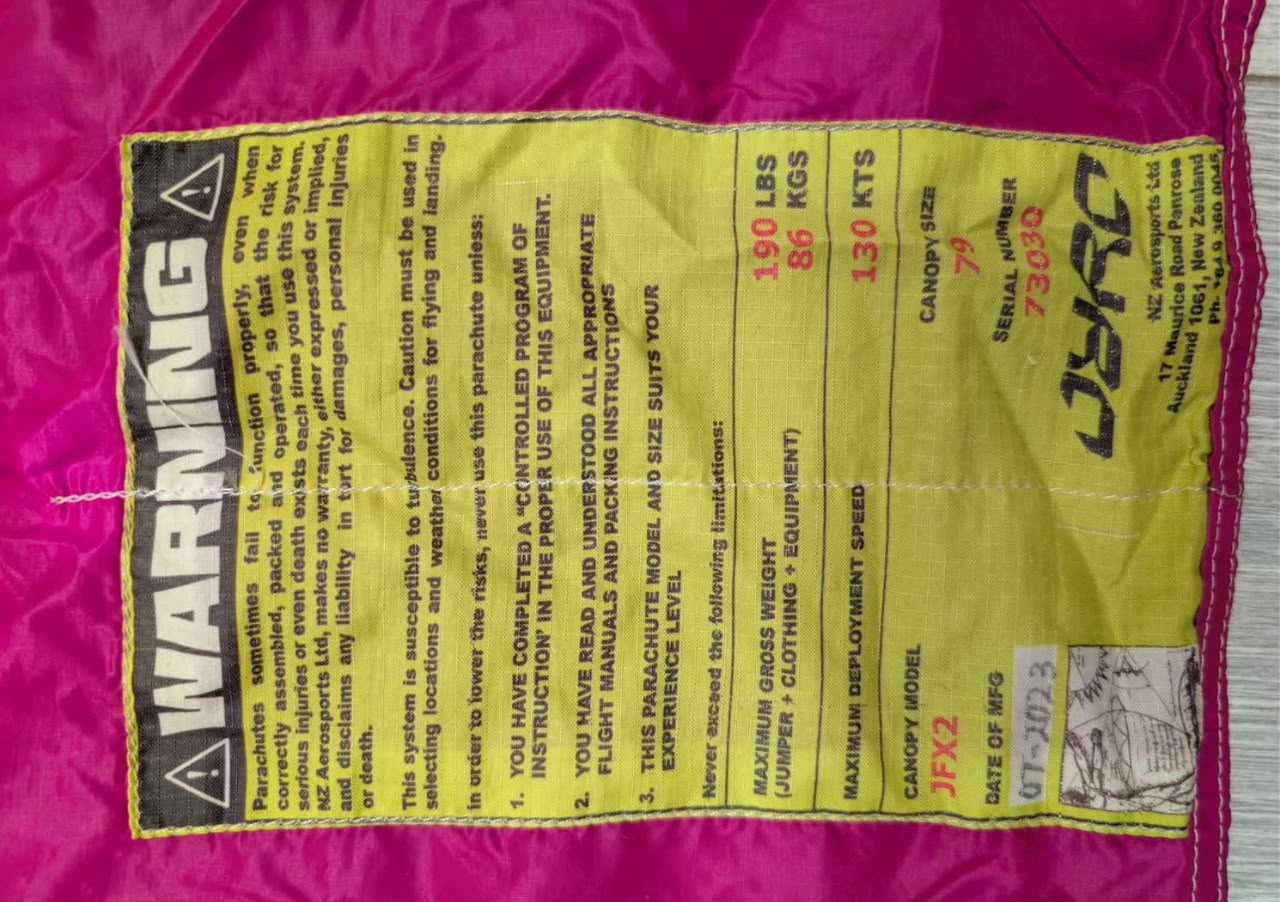
Identification label
Any repair areas
Why the Line Set Matters
Lines help determine canopy trim and shape.
Even with fewer than 100 jumps, they should be checked for actual condition and trim.
Line Trim
Line length can change over time and through use.
Why Trim Changes Matter
Trim can affect:
Opening behavior
Glide
Flare
Turn response
Recovery characteristics
Steering Lines
Steering lines should be checked carefully.
They experience regular friction and handling.
Slider Condition
The slider should also be inspected before returning the canopy to use.
Look at:
Fabric
Grommets
Reinforcing tapes
Stitching
Symmetry
parachute jump australia
parachute jump australia searches commonly relate to Australian drop zones and recreational jumping. Any older personal canopy should be professionally inspected before being accepted for use.
skydive byron bay
skydive byron bay relates to a destination and drop-zone operation rather than the technical specifications of this canopy.
weight limit skydiving
weight limit skydiving relates to exit weight, equipment limitations and wing loading.
A 170 sq ft canopy should be evaluated according to the jumper’s complete exit weight.
cairns skydiving
cairns skydiving is another location-oriented search rather than a canopy specification.
skydiving helmet
A skydiving helmet is separate personal equipment and is not part of this canopy sale.
skydive helmets
skydive helmets vary by protection style, visibility and discipline.
They should be selected independently.
hook blade knife
A hook blade knife is an emergency cutting tool and is not part of the Spectre canopy itself.
tracking jump
A tracking jump requires proper separation and deployment procedures.
Main-canopy choice does not replace freefall training.
parachute rig
A parachute rig combines the harness/container, main, reserve and other deployment components.
The Spectre 170 is the main-canopy portion of that complete system.
linewear
linewear should be checked carefully on any used canopy.
Even with a relatively low-jump line set, visual inspection and trim verification can be useful.
base jumping
base jumping uses specialized equipment and procedures.
The Spectre 170 is a conventional sport-skydiving main.
sky helmet skydiving
A sky helmet skydiving search concerns head protection rather than canopy equipment.
wingsuit sport
The wingsuit sport introduces specialized deployment considerations.
The Spectre has historically been popular with wingsuit jumpers because of its soft openings and forgiving heading behavior, but suitability should still be confirmed for the individual jumper and suit.
vector wingsuit
vector wingsuit searches may combine harness/container and wingsuit topics.
The Spectre itself is a main canopy.
full face skydiving helmet
A full face skydiving helmet is separate protective equipment.
skydiving downsizing chart
A skydiving downsizing chart should not replace canopy coaching or instructor guidance.
A 170 may be conservative for one jumper and aggressive for another depending on exit weight and experience.
landing flight risers
landing flight risers relates to canopy-control technique.
Any riser input should be learned progressively under appropriate coaching.
fire parachute
The phrase fire parachute does not describe this canopy.
The Spectre is a sport-skydiving main.
cypress fire skydiving
cypress fire skydiving does not describe the Spectre.
Automatic activation devices are separate components installed in compatible rigs.
skydiving rigging
skydiving rigging is especially important with older equipment.
A qualified rigger should inspect this canopy before it is put back into service.
baseline jumping
baseline jumping can be associated with fixed-object parachuting topics, but this canopy is designed for sport skydiving.
sky diving helmet
A sky diving helmet is separate personal equipment.
hook knife skydiving
A hook knife skydiving tool is separate emergency equipment and not part of the canopy.
landing flight risers
The repeated phrase landing flight risers concerns flight technique rather than canopy condition.
skydiving glasses
skydiving glasses or goggles provide eye protection and are not included with this canopy.
nude parachute jump
A nude parachute jump is unrelated to the canopy’s specifications, age or condition.
ifly colorado springs
ifly colorado springs relates to indoor bodyflight training rather than canopy flight.
skydive hook knife
A skydive hook knife is a separate emergency tool.
skydiving helmet full face
A skydiving helmet full face configuration should be selected separately.
skydiving blue hole belize
skydiving blue hole belize is a destination-oriented search and does not change canopy requirements.
smallest canopy
The smallest canopy appropriate for any jumper cannot be determined from container capacity alone.
Experience, wing loading and landing skill must be considered.
skydiving speed
skydiving speed can influence deployment characteristics.
A good body position and reasonable deployment airspeed remain important.
wing suits for sale
wing suits for sale refers to separate flight garments.
skydiving nude
skydiving nude is unrelated to this canopy’s technical performance.
parts of a parachute
The major parts of a parachute system include the main canopy, reserve, harness/container, risers and deployment equipment.
The Spectre 170 is the main canopy component.
container skydive
A container skydive system must have appropriate pack volume for the main canopy.
A rigger should confirm that the Spectre 170 fits the intended container.
g35 helmet
The G35 helmet is separate equipment and is not included.
best skydiving helmet
The best skydiving helmet depends on fit and intended use rather than canopy choice.
skydive belize
skydive belize is a travel-oriented search and does not affect the canopy’s technical characteristics.
freefly pud handle
A freefly pud handle is part of the deployment system of a harness/container rather than the main canopy.
gliding suit wingsuit
A gliding suit wingsuit changes deployment conditions.
Canopy suitability should be discussed with a qualified instructor.
jumper pilot
A jumper pilot may refer to aircraft or canopy-piloting contexts.
The Spectre becomes relevant after deployment when the skydiver becomes the canopy pilot.
crw skydiving
crw skydiving involves specialized canopy-relative work.
Suitability of an older Spectre for specialized disciplines should be professionally evaluated.
gear bag skydive
A gear bag skydive accessory can help protect equipment during storage and transportation.
skydiving equipment list
A typical skydiving equipment list can include a complete rig, helmet, altimeter, eye protection, jumpsuit and other discipline-specific equipment.
indoor wingsuit
indoor wingsuit training is separate from actual parachute-canopy flight.
can you wear glasses while skydiving
For can you wear glasses while skydiving, many jumpers use suitable goggles or helmet systems over corrective eyewear.
This does not change the canopy specification.
wingsuit
A wingsuit requires specialized instruction and appropriate deployment procedures.
The Spectre has historically been used by wingsuit jumpers, but individual suitability should still be evaluated carefully.
skydiving website
A reputable skydiving website can provide manuals, line-trim information and service guidance.
Performance Designs continues to publish Spectre technical information and maintenance resources.
cookie g4 helmet
The Cookie G4 helmet is separate personal equipment and is not included.
base canopy
A base canopy is designed for a different operating environment.
The Spectre should not be represented as dedicated BASE equipment.
new skydive
A new skydive student or newly licensed jumper should seek instructor advice before purchasing an older canopy.
#skydiving latest
The phrase #skydiving latest may surface current sport trends, but equipment decisions should be based on inspection, manufacturer documentation and professional advice.
canopy flight
canopy flight is where the Spectre’s predictable handling, flat glide and progressive controls become most relevant.
skydiver goggles
skydiver goggles are separate eye-protection equipment.
speed sky diving
speed sky diving involves specialized high-speed freefall.
Deployment equipment and procedures should match the discipline.
fly suits
fly suits cover conventional jumpsuits and specialized flight garments.
They are separate from the canopy.
skydiving rig
A skydiving rig should be treated as an integrated life-support system.
The Spectre 170 must be installed in a compatible harness/container.
safire 3
The Safire 3 is another sport main canopy and should not be confused with the Spectre.
Comparisons should account for design, handling and wing loading.
skydiving gliding suit
A skydiving gliding suit is separate equipment that may influence deployment conditions.
fluid wings
Fluid Wings is another canopy manufacturer.
The Spectre is manufactured by Performance Designs.
price of wingsuit
The price of wingsuit equipment is unrelated to the value of this used canopy.
tandem wingsuit
A tandem wingsuit search does not describe the Spectre 170.
skydiving tube
A skydiving tube is generally a freefall prop rather than a canopy component.
Why the Spectre 170 Can Still Be Attractive
The Spectre’s design has remained relevant because it offers predictable general-purpose handling.
A 170 may appeal to a jumper who values:
Soft openings
Flat glide
Progressive control response
Seven-cell behavior
Short recovery characteristics
Broad everyday usability
How Good Are Spectre Openings?
Performance Designs specifically describes the Spectre as having a relatively long snivel and slow inflation.
The manufacturer also notes that it tends to be forgiving of variations in packing technique, body position and deployment speed.
Why the Long Snivel Matters
A longer inflation process can produce more comfortable deceleration.
However, actual deployment performance still depends on rig setup and packing.
How Good Is the Glide?
The Spectre is known for a relatively flat glide.
That can provide useful horizontal range after deployment.
How Good Is the Flare?
Flare performance depends strongly on canopy condition, line trim, wing loading and pilot technique.
A properly trimmed and airworthy Spectre can offer dependable landing performance when flown appropriately.
Why the Current Lines Matter
The stated fewer-than-100-jump line set is potentially a major positive.
However, because the canopy has not been used for a while, trim should still be checked before return to service.
Why Age Matters
A 1998 canopy has decades of calendar age.
That does not automatically make it unusable.
However, the inspection should focus carefully on:
Fabric strength
Porosity
Stitching
Line attachment areas
Slider condition
Labels
Previous repairs
Storage effects
Where the Spectre Fits Best
Depending on wing loading and pilot experience, the Spectre can suit:
General sport skydiving
Recreational canopy flight
Camera flying
Wingsuit operations
Demonstration-type applications where appropriate
Everyday jumping
When This Used Canopy Makes Sense
This particular canopy may make sense for a buyer who wants a larger seven-cell main and is comfortable purchasing older equipment after professional inspection.
Why Professional Inspection Is Essential
The canopy has not been actively jumped for some time.
Before return to service, a rigger should confirm:
Fabric condition
Line condition
Trim
Slider condition
Attachment points
Steering lines
Links
Repairs
Identification data
Storage Questions to Ask
Ask the seller whether it was stored:
Packed or unpacked
In a climate-controlled room
Away from sunlight
Away from moisture
Away from fuels or chemicals
Why UV Exposure Matters
Ultraviolet light can degrade nylon over time.
Why Heat Matters
Long-term high temperatures can also affect materials.
Why Chemicals Matter
Fuel, solvents, bleach and other substances can damage parachute textiles.
Container Compatibility
A rigger should confirm that the 170 fits the intended container.
Pack volume should not be assumed from square footage alone.
Wing Loading
Suitability should be evaluated using total suspended weight.
The same Spectre 170 can feel very different under different jumpers.
Professional Transition Guidance
Even if the canopy is conservative for a particular jumper, first jumps after a long storage period should only happen after inspection and correct assembly.
Long-Term Ownership
Performance Designs continues to support Spectre 170 replacement line sets, which is valuable for maintaining an older canopy.
Final Section 1 Assessment
This Used Spectre 170 offers a classic Performance Designs seven-cell platform with a relatively moderate stated jump count and a significantly newer line set than the canopy itself.
The stated history includes:
DOM 1998
Approximately 350 jumps on the canopy
Fewer than 100 jumps on the current line set
A period of inactivity before sale
Performance Designs still describes the Spectre as a slightly tapered, zero-porosity seven-cell main with soft, long-sniveled openings, a flat glide, progressive controls and a short recovery arc. The manufacturer continues to support the Spectre with current technical resources and replacement line sets.
Its age is the primary issue that should be investigated carefully.
A 1998 manufacture date means calendar condition and storage history are especially important.
Before the canopy is returned to service, a qualified rigger should inspect the fabric, seams, line attachment points, line condition, line trim, slider, steering system, links and any previous repairs.
The fact that fewer than 100 jumps are stated on the line set is encouraging, but line age and trim still need verification after a prolonged period without use.
For the right jumper, and only after a satisfactory professional inspection, this Spectre 170 can remain an appealing larger seven-cell canopy with the predictable opening and flight characteristics that have kept the design in Performance Designs’ lineup for decades.
Section 2 – Real-World Flight Character, Storage History, Line Condition, Inspection, Maintenance and Ownership
Overall Character of the Canopy
This Used Spectre 170 is best understood as an older, established seven-cell sport canopy with a comparatively moderate stated jump count and a much newer line set than the canopy itself.
The canopy was manufactured in 1998 and is stated to have approximately 350 jumps. Fewer than 100 jumps are reported on the current line set. It has also not been actively jumped for some time.
That combination makes condition and storage history especially important.
A canopy with relatively modest jump numbers can still require careful evaluation if it has spent many years in storage. Fabric, stitching, line trim, slider condition, attachment points and overall porosity should therefore be examined rather than assuming that low jump count alone guarantees suitability.
Why Calendar Age Matters
Calendar age and jump count affect a canopy in different ways.
Jump count reflects repeated openings, packing cycles, landings and handling.
Calendar age reflects long-term material exposure and storage history.
Why Both Should Be Considered
A canopy can accumulate very few jumps and still experience:
Heat exposure
Humidity
Ultraviolet exposure
Chemical contamination
Improper storage
Repeated compression
Why Professional Inspection Is Essential
The best way to assess an older canopy is through direct physical inspection by a qualified rigger.
Important Areas to Evaluate
A proper inspection should include:
Top skin
Bottom skin
Ribs
Seams
Attachment points
Suspension lines
Steering lines
Slider
Links
Label
Repair history
Fabric Condition
The canopy fabric should be examined carefully.
Look For
Holes
Tears
Abrasion
Burns
Stains
Weak areas
Repairs
Why Fabric Condition Matters
The wing depends on fabric that can maintain aerodynamic pressure.
As fabric ages or wears, air retention can change.
Porosity
Porosity is one of the important indicators of fabric condition.
Why Porosity Matters
More porous fabric allows air to pass through more easily.
That can influence inflation, flight and flare characteristics.
Why Visual Appearance Is Not Enough
Fabric can appear clean while still having changed materially over time.
That is why age and feel should be evaluated professionally.
Storage History
Because the canopy has not been used for a while, storage history becomes especially relevant.
Good Storage Conditions
Ideally, it should have been stored:
Dry
Cool
Dark
Away from chemicals
Away from pests
Away from excessive compression
Why Dry Storage Matters
Persistent moisture can affect fabrics, lines and hardware.
Why Heat Matters
Long-term exposure to high temperatures can accelerate material aging.
Why Sunlight Matters
Ultraviolet exposure can degrade nylon.
Why Chemical Exposure Matters
Fuel, solvents, bleach and other substances can damage parachute materials.
Ask the Seller
Useful questions include:
Was the canopy stored packed or unpacked?
Was it kept indoors?
Was it stored in a garage?
Was it exposed to moisture?
Was it near fuel or chemicals?
Was it exposed to direct sunlight?
Line Set History
The current line set is stated to have fewer than 100 jumps.
That is potentially a strong positive.
Why Line Age Still Matters
Lines can change with both use and time.
Even if the jump count is low, long storage can still make inspection worthwhile.
Line Wear
A rigger should inspect for:
Fraying
Fuzzing
Discoloration
Hard spots
Damaged stitching
Contamination
Line Trim
Line trim affects the canopy’s aerodynamic shape.
Why Trim Matters
Changes in trim can affect:
Openings
Glide
Turn response
Flare feel
Recovery characteristics
Steering Lines
Steering lines deserve specific attention.
Why They Often Wear Faster
They experience repeated movement through guide rings and frequent handling.
Check For
Wear
Uneven length
Damage near brake settings
Fraying
Stiff areas
Brake Settings
Brake settings should be checked before return to service.
Why Proper Brake Settings Matter
Incorrect brake setup can affect both opening and flight behavior.
Line Attachment Points
Attachment points should remain secure and free from damage.
Why These Areas Matter
They transfer the line loads into the canopy structure.
Slider Condition
The slider should be examined carefully.
Check
Fabric
Grommets
Reinforcing tapes
Stitching
Symmetry
Why Grommets Matter
Rough or damaged grommets can accelerate line wear.
Why Slider Fabric Matters
A damaged slider can affect deployment performance.
Opening Character
The Spectre is known for comfortable, relatively long openings.
Why This Can Be Appealing
A slower inflation sequence can reduce abrupt deceleration.
Why Actual Openings Vary
Opening behavior depends on more than canopy design.
Important factors include:
Packing
Body position
Deployment speed
Pilot-chute condition
Slider position
Line trim
Container setup
Stable Deployment Position
Good body position helps maintain symmetry during deployment.
Why Symmetry Matters
Uneven body position can contribute to off-heading or asymmetrical inflation.
Packing Technique
Consistent packing can support consistent deployment.
Why an Older Canopy Should Be Packed Carefully
Fabric feel and line condition may differ from a newer example.
Pilot Chute Compatibility
The pilot chute belongs to the complete rig rather than the canopy alone.
Why It Still Matters
Pilot-chute condition can influence deployment sequence.
Bridle Condition
The bridle should remain in good condition.
Deployment Bag
The canopy should be packed in a compatible deployment bag.
Container Compatibility
The 170 must fit the intended harness/container correctly.
Why Square Footage Alone Is Not Enough
Pack volume can vary according to:
Fabric age
Canopy design
Line type
Packing method
Condition
Why a Tight Fit Is Undesirable
An overstuffed container can create unnecessary closing pressure.
Why a Loose Fit Is Also Undesirable
A canopy that packs too small may reduce container security.
Professional Fit Check
A rigger should confirm pack-volume compatibility before use.
Seven-Cell Flight Character
The Spectre’s seven-cell layout gives it a different feel from many nine-cell sport canopies.
Why This Matters
Seven-cell wings often provide:
Different glide characteristics
Different opening behavior
Different recovery characteristics
Different flare feel
Flat Glide
The Spectre is known for a relatively flat glide.
Why Flat Glide Can Be Useful
A flatter glide can provide useful horizontal range.
Why Glide Still Depends on Loading
The same canopy can behave differently depending on suspended weight.
Short Recovery Character
The Spectre has a shorter recovery character than many performance-oriented elliptical designs.
Why This Can Feel Predictable
The canopy tends to recover from turns more quickly than long-recovery performance wings.
Why This Does Not Eliminate Risk
Any canopy can become dangerous if aggressively turned low to the ground.
Toggle Response
The Spectre is known for progressive control response.
Why Progressive Inputs Matter
Smooth inputs make it easier to control turns deliberately.
Harness Input
Harness movement may also influence the canopy.
Why Subtle Movement Matters
Different wing loading and pilot size can change how noticeable harness response feels.
Wing Loading
The 170 sq ft size should be evaluated against total suspended weight.
Why Wing Loading Is Important
Higher loading can increase:
Forward speed
Descent rate
Turn response
Landing energy
Why Historical Experience Is Not Enough
A jumper returning after a long break should consider current currency.
Currency
Current recent experience can be more important than older logbook totals.
Why Skills Fade
Landing timing, traffic awareness and emergency judgment can degrade without practice.
Transition Planning
A jumper returning to this canopy after time away should transition conservatively.
First Jumps
Initial jumps should ideally be performed:
In familiar conditions
At a familiar drop zone
With comfortable winds
With a clear landing area
Why Conservative Conditions Help
They allow attention to remain on canopy feel rather than environmental challenges.
High-Altitude Familiarization
Control response should be explored with adequate altitude.
Useful Areas to Evaluate
Toggle response
Braked flight
Rear-riser feel
Harness response
Flare range
Recovery behavior
Why Low-Altitude Experimentation Is Dangerous
Altitude provides recovery margin.
Landing Pattern Discipline
A predictable landing pattern is essential.
Why Traffic Awareness Matters
Other jumpers rely on predictable movement.
Final Approach
The final approach should remain stable.
Why Last-Second Corrections Are Risky
Rapid low-altitude inputs can increase descent or speed unexpectedly.
Flare Technique
Flare timing should be learned for the individual canopy.
Why Flare Timing Can Change Over Time
Line trim, loading and fabric condition can influence feel.
Why Storage Can Affect Perception
A canopy that has not been used for years may feel different when returned to service, even if no major fault exists.
Density Altitude
Hot or high conditions can affect landing performance.
Why This Matters
The canopy may feel faster and require different flare timing.
Wind Conditions
Wind changes ground speed and pattern planning.
Why Tailwinds Matter
Landing with a tailwind can significantly increase ground speed.
Crosswind Considerations
Crosswind conditions may require different pattern planning.
Canopy Coaching
Professional canopy coaching can be useful even on a familiar design.
Useful Coaching Areas
Accuracy
Pattern planning
Braked approaches
Rear-riser use
Flare timing
Emergency landing planning
Why Coaching Is Valuable After a Break
It can help rebuild judgment and timing.
Riser Inputs
Riser use should be approached within the jumper’s training.
Why Aggressive Inputs Should Be Avoided
Even a relatively forgiving canopy can build speed.
Front-Riser Pressure
Front-riser feel can change with trim and loading.
Rear-Riser Control
Rear risers can provide useful control when appropriately trained.
Why Technique Matters
Incorrect inputs can reduce margin.
Emergency Procedures
A jumper should remain familiar with emergency procedures before returning to active jumping.
Why Main Canopy Reliability Is Only One Part of Safety
A complete rig includes reserve and harness/container systems that must also be current.
Pre-Jump Inspection
Before every jump, the complete rig should be inspected according to training and manufacturer procedures.
Why the Main Still Needs Attention
The main canopy’s condition can change between jumps.
Look For
Line twists
Damaged fabric
Brake issues
Improper packing
Slider position
Packing Surface
A clean packing area helps reduce abrasion.
Why Rough Surfaces Matter
Repeated dragging across concrete or gravel can wear fabric.
Packing Indoors
Indoor packing can be helpful when the area is clean and dry.
Moisture
The canopy should not be packed wet.
Why Drying Matters
Trapped moisture can create long-term problems.
Water Exposure
If the canopy has ever been exposed to water, history should be disclosed.
Saltwater Exposure
Saltwater deserves special attention.
Why Salt Is More Concerning
Salt can remain in materials and contribute to deterioration.
Cleaning
Routine cleaning should be minimal.
Why Washing Is Not Casual Maintenance
Incorrect detergents or methods can damage fabric.
If Contaminated
Consult a rigger or manufacturer guidance.
Repair History
Ask whether the canopy has any repairs.
Why Repairs Are Not Automatically Negative
Professional repairs can be acceptable.
What Matters
Quality
Location
Extent
Documentation
Small Patches
A small professional patch may have little practical effect.
Larger Repairs
More extensive work should be evaluated carefully.
Age and Repair Interaction
Older fabric can respond differently around repair areas.
Label Verification
The identification label should be checked.
Confirm
Model
Size
Serial number
DOM
Manufacturer
Why Label Verification Matters
It confirms the physical canopy matches the listing.
Previous Relines
The current line set reportedly has fewer than 100 jumps.
Why Reline Documentation Helps
Records can confirm when and by whom the work was done.
Why Line Type Matters
Different line materials have different wear characteristics.
Line Replacement
The line set will eventually require replacement again.
Why Lines Are Consumable
Repeated loading and friction change their condition and trim.
Long-Term Ownership Cost
Potential future expenses may include:
Rigger inspections
Line replacement
Brake-line replacement
Slider work
Repairs
Professional evaluation
Why Used Canopies Still Require Budgeting
Purchase price is only part of long-term ownership.
Storage Between Jumps
The canopy should be stored in suitable environmental conditions.
Avoid
Hot vehicles
Direct sunlight
Damp rooms
Chemical storage areas
Why Climate Control Helps
Stable conditions reduce unnecessary material stress.
Storage Packed Versus Unpacked
Either can be acceptable depending on duration and environment.
Why Environment Matters More
Heat, moisture and chemical exposure are greater concerns than simply whether the canopy is folded.
Travel
Protect the rig during transport.
Why Gear Bags Help
They reduce exposure to dirt, abrasion and sharp objects.
Air Travel
The complete rig should be handled carefully.
Why Documentation Can Help
Manufacturer information can be useful when travelling.
Older Equipment and Airline Handling
An older canopy should not be treated casually just because it is packed inside a rig.
Periodic Inspection
Even when not actively jumped, periodic inspection can be beneficial.
Why Inactivity Can Hide Problems
Storage-related issues may develop without jump wear.
Long-Term Fabric Evaluation
As the canopy ages, periodic professional review becomes increasingly important.
Why Age Requires More Attention
Materials do not remain unchanged indefinitely.
When Retirement May Be Appropriate
A rigger may recommend retirement if condition no longer supports safe continued use.
Why Retirement Is Not Based on a Single Number
There is no universal jump-count cutoff for every canopy.
Condition matters.
Buyer Evaluation
A prospective buyer should evaluate:
Age
Jump count
Line age
Storage history
Repairs
Fabric condition
Slider condition
Container compatibility
Wing loading
Why Price Should Not Be the Main Factor
A cheaper canopy can become expensive if it requires immediate repairs or a new line set.
Why Condition Comes First
Life-support equipment should be selected for suitability and airworthiness.
Who May Appreciate This Canopy
This canopy may appeal to a jumper who wants:
A larger seven-cell wing
Soft opening characteristics
Flat glide
Predictable handling
A relatively recent line set
A traditional recreational main
Who May Need a Newer Canopy
A newer canopy may be more attractive for someone who prefers less uncertainty around age and storage history.
Who May Need a Different Design
A jumper wanting high-performance swooping characteristics may prefer a different canopy type.
Why the Spectre Remains Relevant
The Spectre has remained in use for decades because it provides practical everyday characteristics.
Why Longevity of the Design Matters
Long manufacturer support can make maintenance easier.
Replacement Lines
Performance Designs continues to support Spectre line sets.
Why Parts Support Matters
It helps keep older canopies serviceable when the fabric remains suitable.
Resale Value
Resale value depends on:
Condition
Age
Line status
Repair history
Storage history
Documentation
Why Documentation Helps
A clear history makes the canopy easier to evaluate.
Questions to Ask Before Purchase
Ask:
How long has it been stored?
Where was it stored?
Has it ever been wet?
Has it been repaired?
When was it relined?
Who installed the lines?
Has the fabric been professionally evaluated?
Why Seller History Matters
It adds context to the physical inspection.
First Inspection After Purchase
A professional baseline inspection should be completed.
Why This Helps
The buyer begins ownership with known condition.
First Pack Job
The canopy should be packed by or with someone familiar with the system if there is any uncertainty.
Why Packing Familiarity Helps
Older canopies can have different handling characteristics on the packing mat.
First Jump Back in Service
The first return-to-service jump should be conservative.
Why This Is Important
It allows opening and flight behavior to be observed without unnecessary complexity.
Monitor Opening
Pay attention to:
Inflation symmetry
Heading
Snivel duration
Line twists
Slider descent
Monitor Flight
Evaluate:
Glide
Toggle pressure
Turn response
Flare
Brake feel
Why Any Unexpected Change Should Be Investigated
Unusual behavior can indicate trim or condition issues.
Do Not Diagnose Serious Issues by Guessing
A qualified rigger should evaluate any concern.
Canopy Condition Over Time
Continued ownership should include regular observation.
Signs Worth Investigating
Changed openings
Reduced flare
Uneven flight
New line wear
Unusual slider behavior
Why Early Detection Helps
Small maintenance issues are easier to correct before they become larger problems.
Final Section 2 Assessment
This Used Spectre 170 can still represent a practical sport-canopy option for the right jumper, but its age makes inspection and storage history especially important.
The canopy is stated to have been manufactured in 1998 and to have approximately 350 jumps.
The current line set is reported to have fewer than 100 jumps, which is an encouraging detail.
However, the canopy has also not been jumped for some time.
That means condition should be established through direct professional evaluation before return to service.
The fabric should be checked carefully.
The line set should be inspected for wear and trim.
The slider should be examined.
Steering lines and brake settings should be verified.
Attachment points and stitching should be reviewed.
The identification label should be confirmed.
Any repair history should be disclosed and inspected.
Storage history should also be considered because long-term heat, moisture, UV exposure or chemical contact can matter even when jump count remains low.
From a flight perspective, the Spectre remains known for soft openings, a relatively flat glide, progressive handling and short recovery characteristics.
That can make the design appealing for general recreational use when properly loaded and flown by a suitably trained jumper.
The 170 size should still be selected according to total suspended weight, experience and current currency.
A physically compatible container does not automatically make the canopy appropriate for the pilot.
With a satisfactory inspection, appropriate wing loading, professional installation and careful return-to-service planning, this older Spectre 170 can still offer a familiar seven-cell flight character with a newer line set and a comparatively moderate jump history.
Be the first to review “Used Spectre 170”
Related products

used products
used products
used products

used products
used products

used products


used products

used products
Reviews
There are no reviews yet.