
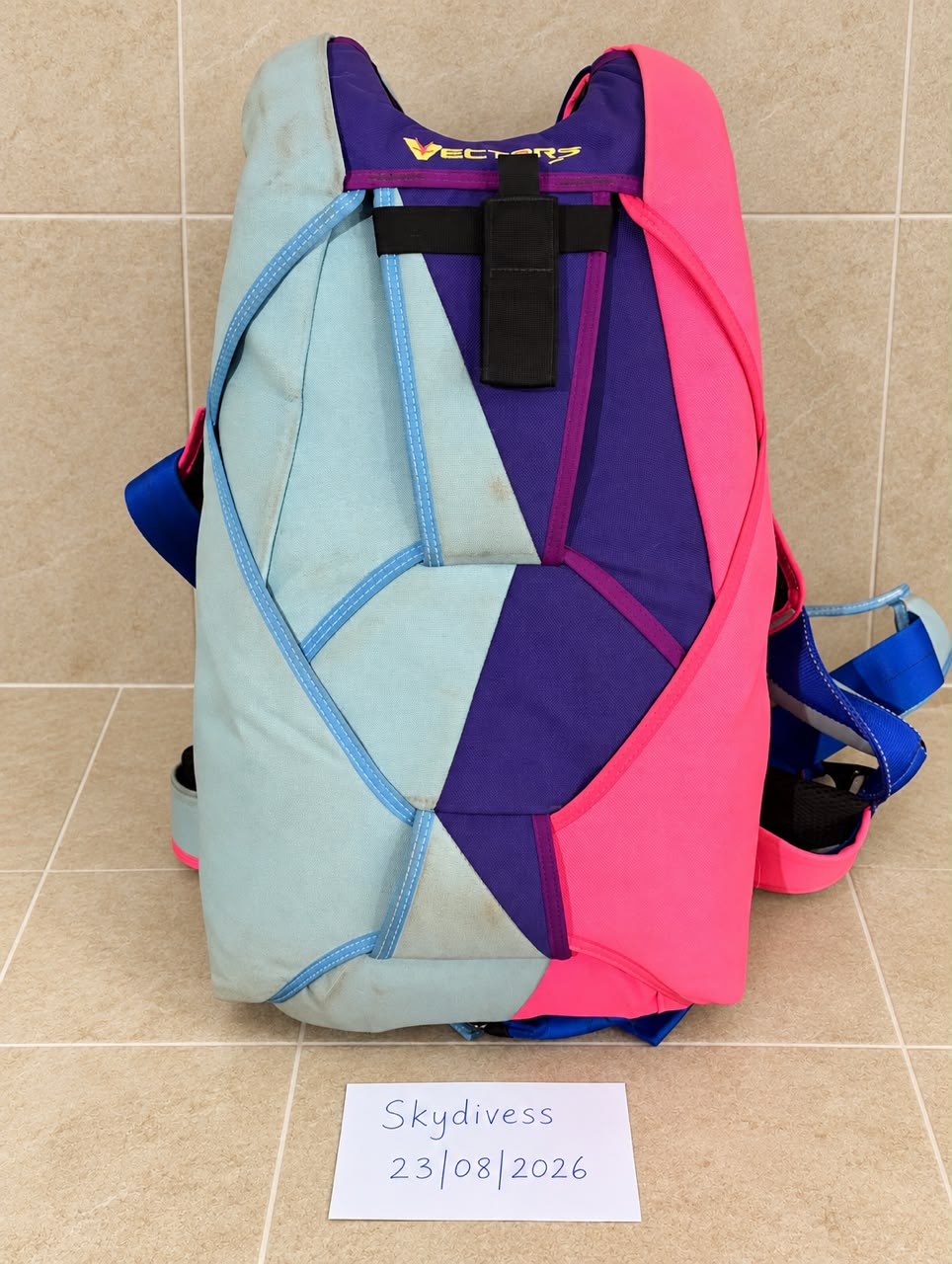
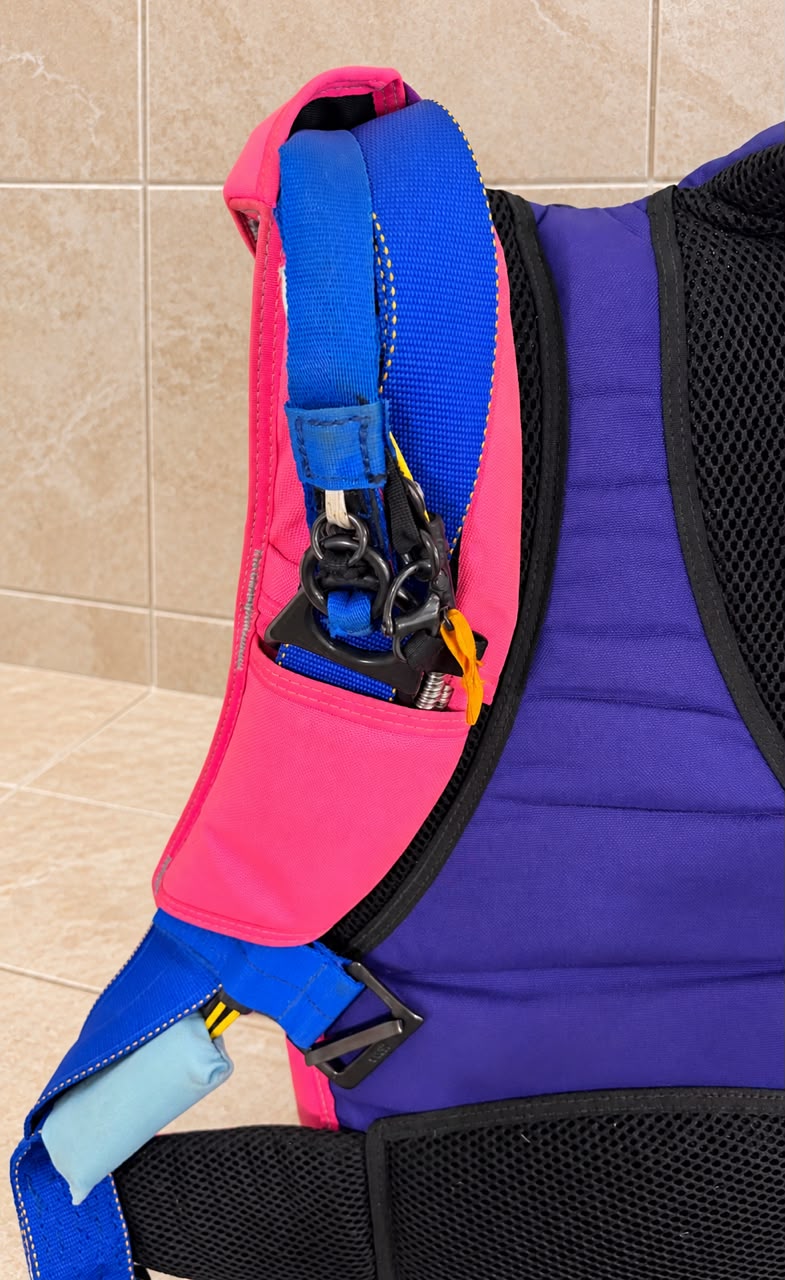

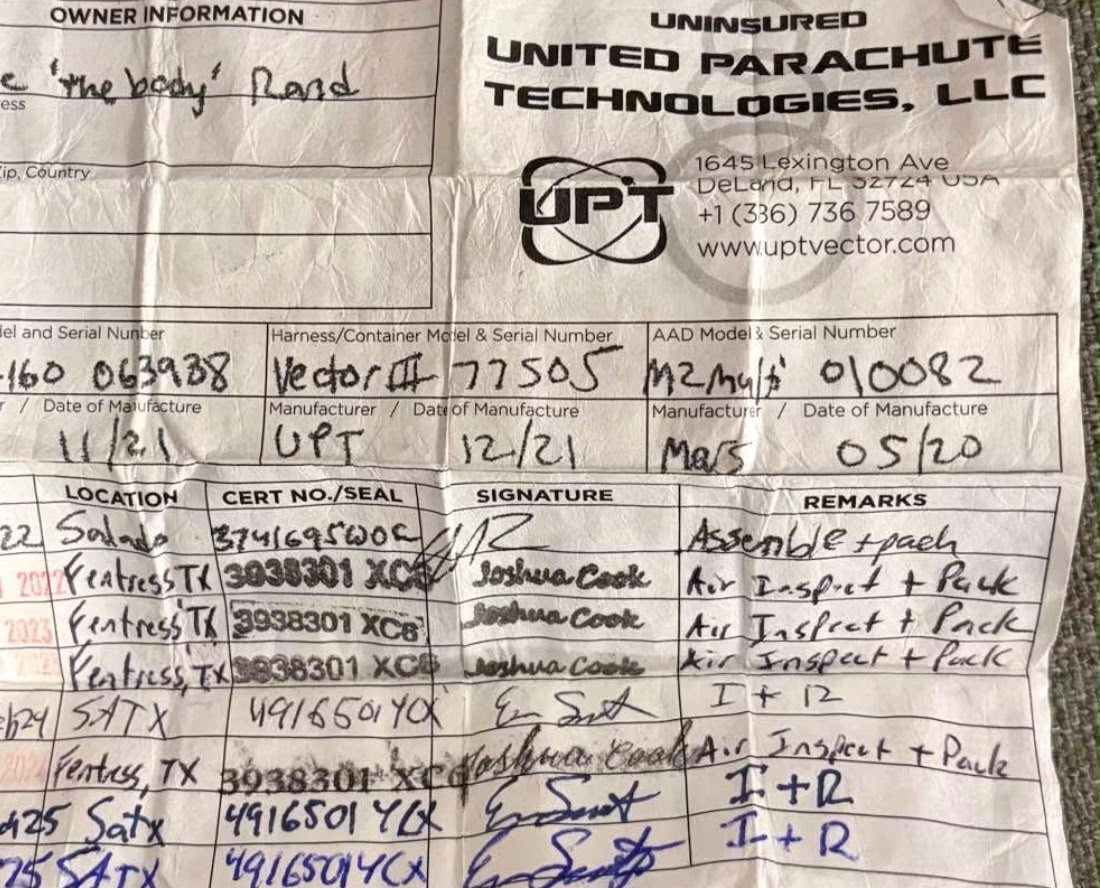


Used Vector V348

€4,000.00
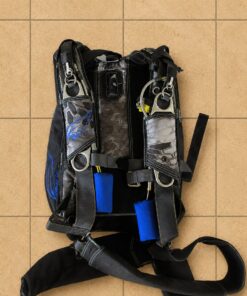
Used Vector V348 complete rig with approximately 100 jumps on the container.
Includes a Performance Designs Sabre2 150 main, PD Reserve 160 with zero rides, and Mars M2 AAD dated 05/2020. The previous owner measured approximately 5’9″ and 190 lb.
Sold as a complete package. Professional rigger inspection has been confirmation are recommended for use.
Used Vector V348 Complete Skydiving Rig – Sabre2 150, PD Reserve 160 and Mars M2 AAD
This Used Vector V348 is being offered as a complete personal skydiving package combining a United Parachute Technologies Vector harness/container, a Performance Designs Sabre2 150 main canopy, a Performance Designs PD 160 reserve, and a Mars M2 AAD dated 05/2020.
The container is stated to have approximately 100 jumps, making it a relatively low-use harness/container compared with many complete systems found on the second-hand market.
The reserve is stated to have zero rides, meaning it has reportedly never been deployed in an emergency.
The previous owner was approximately 5’9″ and 190 lb at the time of measurement. Those measurements provide useful fit context, but they should not be interpreted as a guaranteed fit for another jumper. Torso length, inseam, waist, chest dimensions, harness geometry, lateral length and individual body proportions all affect actual fit.
The entire system is being sold as a complete package, which can simplify the buying process for a suitably experienced jumper who wants a matched container, main, reserve and AAD rather than sourcing each component separately.
Current UPT sizing information lists the V348 as a container designed around a standard-main range of approximately 145–175 sq ft, with the Sabre2 150 specifically listed as an example fit. The V348 reserve tray is also listed for standard reserves around 140–165 sq ft, with the PD 160 specifically included in UPT’s detailed sizing chart.
That makes the stated Sabre2 150 and PD 160 configuration consistent with UPT’s current published fitment guidance.
Used Vector V348
The Vector V348 is part of United Parachute Technologies’ established Vector container family.
It is a sport-skydiving harness/container intended to integrate the main canopy, reserve canopy, risers, deployment system and emergency components into one compact system.
The V348 occupies a useful sizing range for jumpers using mains around the mid-100-square-foot range.
Approximately 100 Jumps on the Container
The container is stated to have roughly 100 jumps.
That is comparatively modest use for a sport harness/container.
Nevertheless, jump count alone should never determine condition.
Before purchase, the system should be inspected for:
Harness-webbing wear
Container-fabric wear
Stitching condition
Riser-cover security
Main-pin protection
Reserve-pin protection
BOC condition
Handle security
Hardware condition
Three-ring condition
Sabre2 150 Main
The installed main canopy is a Performance Designs Sabre2 150.
Performance Designs describes the Sabre2 as a powerful semi-elliptical nine-cell canopy with a wide speed range, comfortable openings, a comparatively long recovery arc and a strong bottom-end flare.
It has historically been used by a broad range of jumpers depending on wing loading and experience.
The 150 sq ft size should still be evaluated against the buyer’s complete exit weight.
Why the Sabre2 150 Is Significant
The Sabre2 is not simply a basic rectangular beginner canopy.
Its tapered design and responsive handling can provide considerably more performance when loaded more heavily.
At lighter loadings it can be comparatively manageable, while greater loading increases speed, responsiveness and landing energy.
Sabre2 Opening Character
The Sabre2 is known for comfortable inflation when correctly packed and deployed.
Actual opening behavior depends on:
Packing technique
Body position
Deployment speed
Line condition
Slider position
Pilot-chute condition
Container setup
Sabre2 Flare Performance
One of the better-known features of the Sabre2 is its strong flare.
A well-trimmed canopy flown with sufficient airspeed can provide substantial bottom-end lift.
However, effective flare performance still depends heavily on pilot technique and line condition.
Sabre2 Line Condition
The line set should be inspected before purchase.
Check:
Suspension-line wear
Brake-line wear
Trim
Stitching
Connector links or soft links
Line attachment points
PD Reserve 160
The reserve is a Performance Designs PD 160.
Performance Designs lists the PD-160R at 160 sq ft.
It is part of the company’s long-established conventional reserve range.
Zero Reserve Rides
The owner states that the reserve has zero rides.
In other words, no emergency deployment is reported.
That is useful ownership history.
However, the reserve must still receive normal inspection and repacking regardless of whether it has been deployed.
Why Zero Rides Matters
A reserve that has never been deployed has not been subjected to an actual emergency opening and landing.
Nevertheless, routine packing cycles, age and storage history still matter.
PD 160 Published Weight Limit
Performance Designs publishes a 254 lb maximum FAA suspended-weight limit for the PD-160R.
This is a maximum certification limit, not a recommended operating target.
Reserve suitability should still be evaluated using the jumper’s exit weight, experience and likely emergency landing conditions.
Mars M2 AAD 05/2020
The system includes a Mars M2 AAD dated 05/2020.
If May 2020 represents the unit’s manufacturing date, the device falls within Mars’ stated 15-year total service-life framework.
Current device condition and remaining service life should still be confirmed from the actual unit, serial information and manufacturer documentation.
Why the Mars M2 Matters
An AAD adds an additional emergency layer to the parachute system.
It should never replace:
Altitude awareness
Emergency procedures
Deployment decisions
Training
Good judgment
Owner 5’9″ and 190 lb
The previous owner was approximately 5 feet 9 inches tall and 190 lb when measured.
These measurements are useful only as approximate fit context.
Two people with the same height and weight can have very different torso and leg dimensions.
Why Harness Fit Must Be Verified
Correct harness fit affects:
Container position
Leg-strap position
Chest-strap position
Cutaway-handle access
Reserve-handle access
Comfort
Freefall stability
Canopy comfort
A prospective buyer should try the rig on or have the harness dimensions evaluated by an experienced rigger.
Selling as a Complete Package
The system is being offered as a complete package.
That means the buyer can receive the primary equipment together rather than sourcing a container, main, reserve and AAD separately.
Why a Complete Package Can Be Attractive
Buying a complete matched system can reduce:
Compatibility uncertainty
Additional component sourcing
Extra shipping
Repeated rigging work
Setup delays
However, the buyer must still confirm that every component suits their body size, experience and exit weight.
Why Container Compatibility Matters
The V348 is particularly relevant here because UPT currently lists the Sabre2 150 among the standard main examples associated with the V348.
The PD 160 reserve is also specifically listed for the V348 reserve tray.
That makes the stated canopy combination consistent with the manufacturer’s sizing information.
Why Main-Canopy Experience Matters
The Sabre2 is responsive enough that wing loading and pilot skill remain significant.
A person should not choose the system simply because the canopy physically fits the container.
Why Reserve Suitability Matters
Emergency canopy choice deserves the same care as main-canopy selection.
A reserve may need to be flown:
Under stress
Into an unfamiliar landing area
With limited planning time
In unusual wind conditions
For that reason, manageable reserve loading can be valuable.
Why the AAD Should Be Verified
AAD ownership history should include confirmation of:
Exact manufacture date
Serial number
Battery status
Device status
Cutter age
Correct installation
Manufacturer service-life limits
parachute jump australia
parachute jump australia searches commonly relate to Australian skydiving operations and personal equipment requirements.
A privately owned complete rig should be inspected and accepted according to local operational requirements before use.
skydive byron bay
skydive byron bay is primarily a destination-related search.
A jumper travelling with this system should confirm local equipment requirements.
weight limit skydiving
weight limit skydiving is directly relevant because total suspended weight influences both main and reserve canopy loading.
The buyer’s full exit weight should be used rather than body weight alone.
cairns skydiving
cairns skydiving concerns a destination and operation rather than a technical specification of this rig.
skydiving helmet
A skydiving helmet is separate personal equipment and is not listed as part of this package.
skydive helmets
skydive helmets should be selected according to fit, discipline and visibility requirements.
hook blade knife
A hook blade knife is separate emergency equipment.
It should not be assumed included unless specifically listed with the system.
tracking jump
A tracking jump requires appropriate separation, altitude awareness and deployment procedures.
The complete rig does not replace discipline-specific training.
parachute rig
A parachute rig combines a harness/container, main, reserve and associated deployment and emergency components.
This V348 is being sold as a complete system.
linewear
linewear is important on the Sabre2 150.
Line condition and trim can influence openings, flight characteristics and flare performance.
base jumping
base jumping uses specialized parachute equipment and procedures.
The Vector V348 complete package described here is a sport-skydiving rig.
sky helmet skydiving
A sky helmet skydiving search concerns head protection rather than the rig itself.
wingsuit sport
The wingsuit sport introduces specialized deployment considerations.
Any intended wingsuit use should be discussed with appropriately qualified instructors and riggers.
vector wingsuit
vector wingsuit can describe the use of a Vector container in wingsuit disciplines.
However, suitability depends on configuration, experience and instructor guidance rather than the container name alone.
full face skydiving helmet
A full face skydiving helmet is separate equipment and is not listed with this package.
skydiving downsizing chart
A skydiving downsizing chart can provide general guidance, but it should never replace coaching.
A Sabre2 150 may be appropriate for one jumper and inappropriate for another.
landing flight risers
landing flight risers relates to canopy-control techniques.
Riser inputs should only be used within the jumper’s training and experience.
fire parachute
The phrase fire parachute does not describe this system.
It is a conventional sport-skydiving rig.
cypress fire skydiving
cypress fire skydiving is not a specification of this package.
This system includes a Mars M2 rather than a CYPRES AAD.
skydiving rigging
skydiving rigging is essential when purchasing a complete used system.
The container, main, reserve and AAD should all be inspected.
baseline jumping
baseline jumping is associated with fixed-object parachuting terminology and should not be confused with conventional sport skydiving.
sky diving helmet
A sky diving helmet is separate from the Vector container.
hook knife skydiving
A hook knife skydiving tool is a separate emergency accessory.
landing flight risers
The repeated phrase landing flight risers relates to canopy-flight technique rather than the physical condition of the V348.
skydiving glasses
skydiving glasses or goggles provide eye protection and are separate from this complete rig.
nude parachute jump
A nude parachute jump is unrelated to the technical configuration or condition of this system.
ifly colorado springs
ifly colorado springs relates to indoor bodyflight rather than parachute-canopy use.
skydive hook knife
A skydive hook knife is separate emergency equipment and is not listed as included.
skydiving helmet full face
A skydiving helmet full face setup should be selected separately.
skydiving blue hole belize
skydiving blue hole belize is a destination-oriented search and does not affect the specifications of the rig.
smallest canopy
The smallest canopy appropriate for a jumper cannot be determined from container capacity alone.
Experience and wing loading matter considerably more.
skydiving speed
skydiving speed can influence deployment loads and opening behavior.
Good body position and appropriate deployment technique remain important.
wing suits for sale
wing suits for sale concerns separate flight garments.
skydiving nude
skydiving nude has no relation to the equipment specifications of this package.
parts of a parachute
The primary parts of a parachute system include:
Harness
Container
Main canopy
Reserve canopy
Risers
Deployment components
Emergency handles
AAD where fitted
This package includes the principal complete-system components.
container skydive
A container skydive system must match the pack volumes of the installed canopies.
The V348 is listed by UPT for the Sabre2 150 and PD 160 size combination.
g35 helmet
The G35 helmet is separate personal equipment and is not part of this package.
best skydiving helmet
The best skydiving helmet depends on fit, discipline and personal preference rather than the container model.
skydive belize
skydive belize is a location-related search rather than an equipment specification.
freefly pud handle
A freefly pud handle is one possible deployment-handle arrangement.
The actual deployment-handle configuration installed on this V348 should be confirmed visually.
gliding suit wingsuit
A gliding suit wingsuit changes deployment conditions and requires additional training.
jumper pilot
A jumper pilot in the canopy context is responsible for controlling the main after deployment.
The Sabre2’s responsive handling rewards deliberate control.
crw skydiving
crw skydiving involves specialized canopy-relative work.
Suitability of this configuration for specialized disciplines should be evaluated by experienced instructors.
gear bag skydive
A gear bag skydive accessory can help protect the rig during transport and storage.
No gear bag is specifically listed as included.
skydiving equipment list
A typical skydiving equipment list may include:
Complete rig
Helmet
Altimeter
Eye protection
Jumpsuit
Discipline-specific accessories
indoor wingsuit
indoor wingsuit training takes place in specialized facilities and is separate from actual parachute deployment.
can you wear glasses while skydiving
For can you wear glasses while skydiving, suitable goggles or helmet systems can often accommodate corrective glasses.
This does not alter the rig specifications.
wingsuit
A wingsuit requires specialized instruction and an appropriately configured deployment system.
skydiving website
A reputable skydiving website can provide manuals, fitment charts and manufacturer documentation.
For this system, UPT, Performance Designs and Mars documentation should take priority.
cookie g4 helmet
The Cookie G4 helmet is separate personal equipment and is not included in the stated package.
base canopy
A base canopy is designed for a different operating environment.
The Sabre2 should not be presented as dedicated BASE equipment.
new skydive
A new skydive student or newly licensed jumper should seek professional advice before selecting a complete personal rig.
#skydiving latest
The phrase #skydiving latest may surface current equipment trends, but gear decisions should be based on manufacturer guidance and professional inspection.
canopy flight
canopy flight is where the Sabre2 150 becomes the most important component in the system.
Its handling, recovery and flare should match the jumper’s actual skill.
skydiver goggles
skydiver goggles provide eye protection and are separate from this complete rig.
speed sky diving
speed sky diving is a specialized discipline involving high freefall speeds.
Deployment systems should be configured appropriately for the intended discipline.
fly suits
fly suits and jumpsuits are separate from the rig.
skydiving rig
A skydiving rig should be treated as a complete life-support system rather than a collection of unrelated parts.
safire 3
The Safire 3 is a different sport main canopy.
It should not be confused with the Sabre2 installed in this V348.
skydiving gliding suit
A skydiving gliding suit is separate equipment that may influence deployment conditions.
fluid wings
Fluid Wings is another parachute-canopy manufacturer.
The installed main and reserve here are from Performance Designs.
price of wingsuit
The price of wingsuit equipment is unrelated to the value of this complete package.
tandem wingsuit
A tandem wingsuit search does not describe this V348 configuration.
skydiving tube
A skydiving tube is generally a freefall prop and is not part of this complete rig.
Why the Vector V348 Can Be a Strong Complete-Rig Option
The strongest feature of this package is that the major components are already assembled around a known container size.
The V348 is currently listed by UPT as suitable for the installed 150 main and 160 reserve sizes.
That reduces one major area of uncertainty when evaluating a used system.
How Good Is the Sabre2 150?
The Sabre2 has earned a long-standing reputation as an all-around sport canopy.
Its defining characteristics include:
Responsive handling
Powerful flare
Wide speed range
Comfortable openings
Longer recovery character than conservative seven-cell designs
Its suitability still depends heavily on loading.
How Good Is the PD 160 Reserve?
The PD 160 is a conventional Performance Designs reserve with a long-established certification history.
Its role is emergency reliability rather than recreational performance.
The fact that the owner reports zero rides is useful, but current inspection and repack status remain more important than deployment count alone.
Why the Mars M2 Adds Value
Including an AAD eliminates the immediate need to source another unit if the existing device is still within its approved service life and operating correctly.
If the listed 05/2020 date is its manufacturing date, the unit should be evaluated against Mars’ 15-year total lifetime limit.
Precision of System Matching
For a complete parachute system, precision means correct compatibility between components.
The main should fit the main tray.
The reserve should fit the reserve tray.
The harness should fit the jumper.
The AAD should be correctly installed.
The main and reserve should both be appropriate for the jumper’s exit weight and experience.
Important Harness Information
The previous owner’s 5’9″, 190 lb measurements provide useful context but cannot guarantee fit.
Before use, confirm:
Torso fit
Laterals
Leg straps
Chest strap
Container position
Emergency-handle reach
Important Main-Canopy Information
Before use, inspect:
Top and bottom skins
Lines
Line trim
Slider
Brake lines
Attachment points
Links
Repairs
Serial and data labels
Important Reserve Information
Verify:
Reserve serial number
DOM
Packing card
Latest repack
No-ride history
Fabric condition
Line condition
Compatibility
Jumper loading
Important AAD Information
Verify:
Exact unit model
Manufacture date
Serial number
Battery status
Cutter date
Installation
Remaining lifetime
Operational status
Why Professional Inspection Matters
A complete rig should be independently inspected even when the stated jump count is low.
Approximately 100 jumps can indicate limited use, but it does not confirm:
Correct storage
Correct assembly
No hidden damage
Current reserve status
Current AAD status
Proper harness fit
When This Package Makes Sense
This setup may make sense for a jumper who:
Fits the Vector harness correctly
Has suitable experience for a Sabre2 150
Wants a complete package
Prefers a PD 160 reserve
Wants an AAD already installed
Values a relatively low-jump container
Where This Rig Fits Best
The system is intended for conventional sport skydiving.
Its actual discipline suitability should be evaluated according to configuration and training.
Why Fit Comes Before Appearance
A rig can look excellent and still be unsuitable if the harness dimensions are wrong.
Fit should always be prioritized over color, styling or convenience.
Why Wing Loading Comes Before Canopy Size
The number “150” does not tell the whole story.
A 150 sq ft canopy loaded lightly can behave very differently from the same canopy loaded heavily.
Why Reserve Loading Should Also Be Calculated
Main and reserve loading should both be considered.
Reserve handling may occur under stressful circumstances, so manageable performance matters.
Professional Inspection Before First Use
Before this complete package is jumped by a new owner, a qualified rigger should inspect:
Harness and container
Main canopy
Reserve
Risers
Three-ring system
Deployment bag
Pilot chute
Bridle
AAD installation
Emergency handles
Reserve documentation
Final Section 1 Assessment
This Used Vector V348 Complete Rig combines a respected UPT harness/container with a Performance Designs Sabre2 150 main, PD 160 reserve and Mars M2 AAD.
The container is stated to have only approximately 100 jumps, providing a comparatively low-use foundation for the complete package.
UPT’s current V348 sizing information specifically lists the Sabre2 150 among its standard main examples and the PD 160 among its compatible reserve options, making the stated configuration consistent with manufacturer fitment guidance.
The Sabre2 150 offers the responsive handling, strong flare and broad speed range for which the design is known.
The PD 160 reserve is stated to have zero rides, while Performance Designs publishes a maximum FAA suspended-weight limit of 254 lb for this reserve size. That maximum should never be treated as an ideal operating weight.
The Mars M2 AAD is listed with a date of 05/2020. If this is the device’s manufacture date, its remaining life should be determined using Mars’ published 15-year service-life limit along with the status of its cutter and actual operating condition.
The previous owner measured approximately 5’9″ and 190 lb, but those measurements alone cannot guarantee fit for another person. Harness fit must be checked directly.
For an appropriately trained jumper who fits the harness and is suited to the Sabre2 150 and PD 160 combination, this complete package can offer a convenient and technically coherent route into a personal system.
Before use, the entire setup should be inspected by a qualified rigger, the reserve documentation should be confirmed, the AAD status should be verified and the harness fit should be assessed on the new owner.
Harness Fit, Main and Reserve Compatibility, AAD Status, Inspection, Maintenance and Long-Term Ownership
Overall Character of the Complete System
This Used Vector V348 complete rig offers a balanced combination of a relatively low-jump harness/container, a well-established Performance Designs main canopy, a conventional Performance Designs reserve and a Mars automatic activation device.
The container is stated to have approximately 100 jumps, which is a comparatively modest amount of use for a sport-skydiving harness/container. That can be appealing to buyers who want a complete system without the wear that may be associated with heavily used rental or long-term personal equipment.
The installed main is a Sabre2 150.
The reserve is a PD 160 with zero reported rides.
The automatic activation device is a Mars M2 dated 05/2020.
The previous owner was approximately 5 feet 9 inches tall and 190 lb at the time of measurement.
Because the system is being sold as a complete package, the buyer can potentially avoid sourcing the major components individually.
However, complete does not automatically mean appropriate.
Every part of the system should match the buyer’s body measurements, experience level, exit weight, currency and intended use.
Why Harness Fit Matters
Harness fit is one of the most important parts of evaluating a used complete rig.
Even when the container size and installed canopies are appropriate, the system may still be unsuitable if the harness does not fit the new owner correctly.
Height and Weight Are Only Starting Points
The previous owner’s stated measurements provide useful context.
However, two people who are both 5 feet 9 inches and 190 lb can have noticeably different body proportions.
One person may have:
A longer torso
Shorter legs
A wider waist
Broader shoulders
Different hip proportions
Why Torso Length Matters
The harness must position the container correctly on the back.
If the harness is too long, the rig may sit too low.
If it is too short, the system may sit excessively high.
Why Container Position Matters
Correct positioning affects:
Comfort
Stability
Deployment-handle access
Cutaway-handle access
Reserve-handle access
Leg-strap geometry
Lateral Fit
The laterals connect the main harness structure to the container.
Their dimensions influence how closely the container sits against the jumper.
Why Loose Laterals Can Be Undesirable
Excessive movement can reduce comfort and stability.
Why Overly Tight Laterals Can Also Be Undesirable
Too little room can create pressure and restrict movement.
Leg-Strap Fit
Leg straps should support the jumper securely without creating excessive discomfort.
Why Leg-Strap Geometry Matters
The harness carries significant loads during opening.
Correct positioning therefore matters for both comfort and security.
Chest-Strap Position
The chest strap should sit in an appropriate location across the torso.
Why Fit Should Be Evaluated With the Rig On
Measurements alone cannot fully reveal how a harness feels.
A buyer should ideally wear the system while an experienced rigger evaluates the fit.
Emergency Handle Access
The cutaway and reserve handles should be easy to locate and reach.
Why Body Shape Affects Handle Position
A harness that fits one person correctly may position the handles differently on another body.
Practice Matters
A new owner should become familiar with handle locations before jumping the system.
Container Condition
The Vector V348 should be inspected thoroughly despite the stated low jump count.
Main Areas to Check
A professional inspection should include:
Harness webbing
Main closing flaps
Reserve flaps
Main pin area
Reserve pin area
Riser covers
Bottom-of-container pocket
Deployment handle
Emergency handles
Hardware
Stitching
Three-ring assemblies
Why Closing-Flap Condition Matters
The flaps help maintain the security and organization of the deployment system.
Main Pin Protection
The main closing pin should remain properly protected during normal movement and freefall.
Why Pin Protection Is Important
Unwanted pin movement can affect deployment security.
Reserve Pin Protection
The reserve closing system deserves equal attention.
Why Reserve Integrity Is Critical
The reserve must remain secured until intentionally or automatically activated.
Riser Covers
Riser covers should remain properly closed and secure.
Why Loose Riser Covers Matter
Unexpected riser exposure can create unnecessary deployment-system concerns.
Bottom-of-Container Pocket
The deployment pocket should be inspected for retention and wear.
Check For
Stretching
Loose stitching
Fabric wear
Poor elasticity
Damage
Why Deployment-Handle Retention Matters
The handle should remain secure throughout normal freefall.
Harness Webbing
Load-bearing webbing should be examined closely.
Look For
Cuts
Fraying
Abrasion
Burns
Contamination
Damaged stitching
Hardware Condition
Metal hardware should remain free from severe corrosion, distortion or sharp edges.
Why Hardware Matters
Buckles and rings are structural components of the harness system.
Structural Stitching
Load-bearing stitching should remain intact and consistent.
Why Cosmetic Wear Is Different
Minor cosmetic marks may have little effect on airworthiness.
Structural wear is much more important.
Main Canopy Overview
The installed Sabre2 150 is a sport canopy with responsive handling and a strong flare.
It should be matched carefully to the jumper.
Why Canopy Experience Matters
The same canopy can feel very different under different wing loadings.
Wing Loading
Wing loading is based on complete suspended weight rather than body weight alone.
Why Exit Weight Is Important
Total exit weight can include:
Body weight
Clothing
Rig
Helmet
Accessories
Additional equipment
Why Higher Wing Loading Changes Performance
Higher loading can increase:
Forward speed
Descent rate
Turn response
Landing energy
Why Square Footage Alone Is Not Enough
The number 150 does not automatically indicate whether the canopy is conservative or aggressive for a particular jumper.
Currency
Recent jumping experience should also be considered.
Why Old Experience Can Be Misleading
A jumper may have many historical jumps but limited recent canopy practice.
Landing Consistency
Before moving onto a new rig, the buyer should be confident in current canopy-control skills.
Useful Questions to Consider
Can you fly consistent landing patterns?
Can you manage moderate crosswinds?
Can you perform accurate approaches?
Can you flare consistently?
Can you handle traffic safely?
Why Coaching Can Help
An instructor or canopy coach can provide a more objective assessment.
Sabre2 Line Condition
The main line set should be inspected.
Check For
Fraying
Fuzzing
Uneven wear
Hard spots
Contamination
Damaged stitching
Trim changes
Why Trim Matters
Line length influences the canopy’s aerodynamic shape.
Trim Can Affect
Opening behavior
Glide
Turn response
Flare
Recovery
Steering Lines
Brake lines deserve particular attention.
Why Brake Lines Wear
They move through guide rings repeatedly and are handled on every jump.
Check Brake Settings
Correct brake settings support proper opening and flight characteristics.
Slider Condition
The main slider should be inspected.
Check
Fabric
Tapes
Grommets
Stitching
Symmetry
Why Grommets Matter
Damaged grommets can accelerate line wear.
Main Canopy Fabric
The canopy should be examined for:
Holes
Tears
Abrasion
Burns
Repairs
Stains
Why Fabric Condition Matters
Healthy fabric supports predictable inflation and aerodynamic performance.
Line Attachment Points
Attachment areas should remain intact.
Why These Areas Matter
They transfer suspension-line loads into the canopy structure.
Main Canopy Label
The identification label should be checked for:
Model
Size
Serial number
DOM
Manufacturer
Why Documentation Matters
It confirms that the physical canopy matches the sales description.
Reserve Overview
The PD 160 is the system’s emergency canopy.
The owner states that it has zero rides.
Why Zero Rides Is Useful Information
A reserve that has never been deployed has not experienced an emergency opening and landing.
Why Zero Rides Does Not Eliminate Maintenance
Reserve systems still require regular inspection and repacking.
Reserve Packing Data Card
The reserve data card should be reviewed carefully.
Check
Repack dates
Rigger information
Inspection history
Repair entries
Reserve identification
Why the Data Card Matters
It provides a documented maintenance history.
Current Repack Status
The buyer should confirm whether the reserve is currently within the applicable legal repack interval.
Why Rules Can Vary
Repack requirements depend on jurisdiction and governing regulations.
Reserve Fabric and Lines
A qualified rigger should inspect:
Fabric
Lines
Slider
Links
Pilot chute
Freebag
Deployment components
Reserve Loading
The reserve should be evaluated separately from the main.
Why Emergency Wing Loading Matters
An emergency landing may occur:
Under stress
In unfamiliar terrain
With limited planning time
In changing winds
Why Maximum Limits Should Not Be Treated as Targets
Certification limits are not the same as recommended operating weights.
Reserve Manageability
A reserve should be realistically manageable by the jumper expected to use it.
AAD Overview
The system includes a Mars M2 dated 05/2020.
Why the Date Matters
If the listed date is the manufacturing date, the buyer can estimate remaining service life under current manufacturer guidance.
What Should Be Verified
Exact model
Manufacture date
Serial number
Operational status
Battery condition
Cutter condition
Installation
Why the Actual Device Must Be Checked
A listing date alone is not enough to determine status.
AAD Installation
The device should be installed according to manufacturer and container requirements.
Why Correct Installation Matters
The cutter, control unit and processing unit must be positioned correctly.
Why an AAD Is an Additional Layer
It does not replace:
Altitude awareness
Deployment decisions
Emergency procedures
Training
Three-Ring Release System
The three-ring system should receive regular attention.
Why It Matters
It provides the mechanical release between the main risers and harness.
Check
Ring alignment
Loop condition
Cable routing
Housing security
Webbing condition
Cutaway Cables
The cables should be maintained according to manufacturer instructions.
Why Dirt Can Matter
Contamination can increase extraction force.
Reserve Handle
The reserve handle should remain secure yet accessible.
Cutaway Handle
The cutaway handle should also remain properly retained.
Why Emergency Procedure Practice Matters
A new rig owner should repeatedly rehearse handle location and sequence while wearing the actual system.
Main Deployment Components
The deployment system should also be inspected.
Pilot Chute
Check:
Fabric
Mesh
Handle
Bridle attachment
Kill line if fitted
Bridle
The bridle should remain free from excessive wear.
Deployment Bag
The bag should match the container and canopy.
Why System Compatibility Matters
A main canopy does not deploy independently from the container system.
Container Pack Volume
The main and reserve must both fit their respective trays correctly.
Why Correct Pack Volume Matters
A system that is too tight can create unnecessary closing pressure.
A system that is too loose may affect security and deployment configuration.
Professional Pack-Volume Confirmation
A qualified rigger should verify the fit.
Opening Behavior
The Sabre2 is often appreciated for comfortable openings, but actual opening behavior depends on the full system.
Factors Include
Packing
Body position
Deployment speed
Line condition
Slider position
Pilot chute
Container setup
Stable Body Position
A stable deployment position helps reduce asymmetry.
Why Body Position Matters
Uneven body position can influence heading and inflation.
Packing Consistency
Repeatable packing can support predictable deployment.
Why Packing on Clean Surfaces Matters
Repeated contact with rough surfaces can accelerate fabric wear.
Canopy Flight
The main canopy should be learned progressively.
Why First Jumps Matter
A new owner should avoid treating the first jump on unfamiliar equipment as a routine jump.
Better Conditions for Early Jumps
Familiar drop zone
Comfortable winds
Good visibility
Large landing area
Lower traffic
Why Conservative Conditions Help
They reduce unnecessary variables.
High-Altitude Familiarization
Control inputs should be explored with generous altitude.
Useful Areas to Evaluate
Toggle response
Braked flight
Harness input
Rear-riser feel
Flare range
Recovery behavior
Why Low-Altitude Experimentation Is Dangerous
Altitude provides room for recovery from unexpected behavior.
Landing Pattern
A predictable pattern supports safer traffic management.
Why Traffic Awareness Matters
Landing areas can become crowded quickly.
Final Approach
A stable final approach is preferable.
Why Aggressive Low Turns Are Dangerous
Low-altitude turns can rapidly increase descent and speed.
Flare Timing
The flare should be learned for the individual main.
Why Timing Changes Between Canopies
Different wings carry speed and lift differently.
Wind Conditions
Wind influences ground speed and pattern planning.
Why Tailwinds Increase Landing Speed
The airspeed may remain similar while ground speed increases substantially.
Density Altitude
Hot or high conditions can also change landing feel.
Why This Matters
The canopy may carry more ground speed and require more precise timing.
Canopy Coaching
Professional coaching can improve transition quality.
Useful Training Areas
Patterns
Accuracy
Braked approaches
Rear-riser control
Flare technique
Emergency landing planning
Harness Comfort Under Canopy
The harness should remain comfortable during suspended flight.
Why This Matters
A rig may feel acceptable on the ground but different after opening.
Leg-Strap Pressure
Improper fit can create unnecessary discomfort.
Main Lift Web Position
The rig should remain correctly positioned after deployment.
Storage
The entire system should be stored carefully.
Ideal Environment
Cool
Dry
Dark
Clean
Away from chemicals
Away from pests
Why UV Exposure Matters
Sunlight can degrade parachute fabrics and webbing over time.
Heat Exposure
Avoid prolonged storage in hot vehicles.
Why Heat Matters
Extreme temperatures can affect textiles and electronics.
Moisture
The rig should remain dry.
Why Damp Storage Is Undesirable
Persistent moisture can affect textiles, hardware and electronic components.
Chemicals
Avoid exposure to:
Fuel
Oil
Solvents
Bleach
Strong cleaners
Why Chemical Contamination Is Serious
Some substances can weaken materials without obvious immediate damage.
Transport
Use a protective gear bag when possible.
Why Protection Helps
It reduces exposure to:
Dirt
Abrasion
Sharp objects
Moisture
Vehicle contaminants
Travel
Additional care should be taken during air travel.
Why Documentation Can Be Useful
Manufacturer documentation can help when security personnel ask about the system.
Cleaning
Cleaning should be conservative.
Why Aggressive Washing Is Inappropriate
Unsuitable detergents or cleaning methods can damage parachute materials.
If Contamination Occurs
Consult a rigger or manufacturer guidance.
Repair History
Ask whether any component has been repaired.
Why Repairs Are Not Automatically a Problem
Professional repairs can be acceptable.
What Matters
Repair location
Extent
Work quality
Documentation
Hard Opening History
Ask whether the system has experienced any unusually hard deployments.
Why This Matters
Hard openings can stress:
Harness webbing
Risers
Canopy attachment points
Lines
Container structure
Water Exposure
Ask whether any component has been exposed to water.
Saltwater
Saltwater deserves particular attention.
Why Salt Exposure Matters
Residue can affect both textiles and hardware.
Routine Pre-Jump Checks
The complete system should be checked before every jump.
Areas to Review
Main pin
Reserve pin
Riser covers
Handles
Three-ring system
Leg straps
Chest strap
Pilot chute
AAD display
Why Small Problems Are Better Found Early
An issue discovered before boarding can usually be addressed calmly.
Long-Term Main Maintenance
The main canopy will eventually require routine wear-item maintenance.
Likely Future Needs
Line replacement
Brake-line replacement
Slider inspection
Minor repairs
Why Lines Are Consumable
Repeated loading and friction gradually alter them.
Long-Term Reserve Maintenance
The reserve requires scheduled inspection and packing.
Why No-Ride History Does Not Change This
Emergency equipment still ages and must remain documented.
Long-Term AAD Ownership
The device should remain within manufacturer service-life requirements.
Why Calendar Time Matters
AAD service life is based partly on manufacturing date.
Record Keeping
Keep documentation for:
Container
Main
Reserve
AAD
Repacks
Repairs
Inspections
Why Records Preserve Value
Clear history makes future resale easier.
One Complete Package
Buying the system together can reduce the complexity of assembling a rig.
Why This Is Convenient
The buyer does not immediately need to locate:
A separate container
A main canopy
A reserve canopy
An AAD
Why Convenience Should Not Override Suitability
The package only makes sense if the components are appropriate for the buyer.
Who May Find This System Suitable
This system may suit someone who:
Fits the harness correctly
Has appropriate experience for the main
Has a suitable exit weight
Wants a complete setup
Values a relatively low-jump container
Who May Need a Different Main
A more conservative canopy may be appropriate for someone with:
Low recent currency
Limited canopy experience
Inconsistent landings
A lower total jump count
Who May Need a Different Harness
Even a perfect canopy combination is unsuitable if the harness does not fit.
Why Main and Reserve Should Be Evaluated Separately
The main is flown intentionally.
The reserve may be flown under stress.
Both should be manageable.
Why Appearance Comes Later
Color and cosmetic appearance can be attractive, but function and fit matter more.
Resale Considerations
Future resale value can be supported by:
Clean maintenance records
Documented reserve packs
Known AAD history
Professional repairs
Good storage
Low additional wear
Long-Term Ownership Cost
Potential expenses can include:
Reserve repacks
AAD replacement
Main line replacement
Closing loops
Pilot-chute maintenance
Rigger inspections
Repairs
Why Budgeting Matters
Even a complete used package will continue to require maintenance.
Professional Inspection Before Purchase
A qualified rigger should inspect the full system.
The Inspection Should Cover
Harness fit
Webbing
Container
Main canopy
Reserve
AAD
Risers
Three-ring system
Deployment components
Handles
Why Independent Inspection Matters
The seller’s description is useful but should not replace professional evaluation.
Professional Inspection Before the First Jump
Final setup should also be checked before the new owner jumps it.
Why Ownership Change Matters
A different body introduces a new harness-fit question.
First Jump Planning
The first jump should be simple and conservative.
Why Familiar Conditions Are Better
They reduce workload.
After the First Jump
Recheck:
Harness comfort
Main opening behavior
Handle position
Canopy response
Landing feel
Why Early Feedback Matters
Small compatibility issues are easier to address early.
Final Section 2 Assessment
This Used Vector V348 complete rig offers a practical combination of relatively low container use, a proven Performance Designs main, a no-ride reserve and an included Mars M2 AAD.
The approximately 100-jump container history is attractive, but the most important buying factors remain fit, compatibility and current condition.
The previous owner’s stated height and weight provide a useful starting reference, but they do not guarantee fit for another jumper.
The harness should be tried on and evaluated professionally.
The Sabre2 150 should be matched to the buyer’s experience, exit weight and current landing ability.
The PD 160 reserve should be evaluated independently for emergency landing suitability.
The Mars M2 dated 05/2020 should be checked for exact manufacture information, installation and remaining service life.
The complete system should also be inspected for harness wear, container condition, line condition, slider condition, reserve documentation, deployment components and AAD status.
Long-term ownership should include careful storage, routine inspections, reserve repacks, line monitoring, AAD tracking and clear maintenance records.
When those requirements are met, this V348 package can provide a convenient and coherent complete system for a suitably experienced jumper who fits the harness and is appropriately matched to both the main and reserve canopies.
Be the first to review “Used Vector V348”
Related products

used products

used products
used products
used products

used products
used products

used products
used products
Reviews
There are no reviews yet.