








Used Sabre 3 170 complete rig

€5,000.00
Used Sabre 3 170 Complete Rig
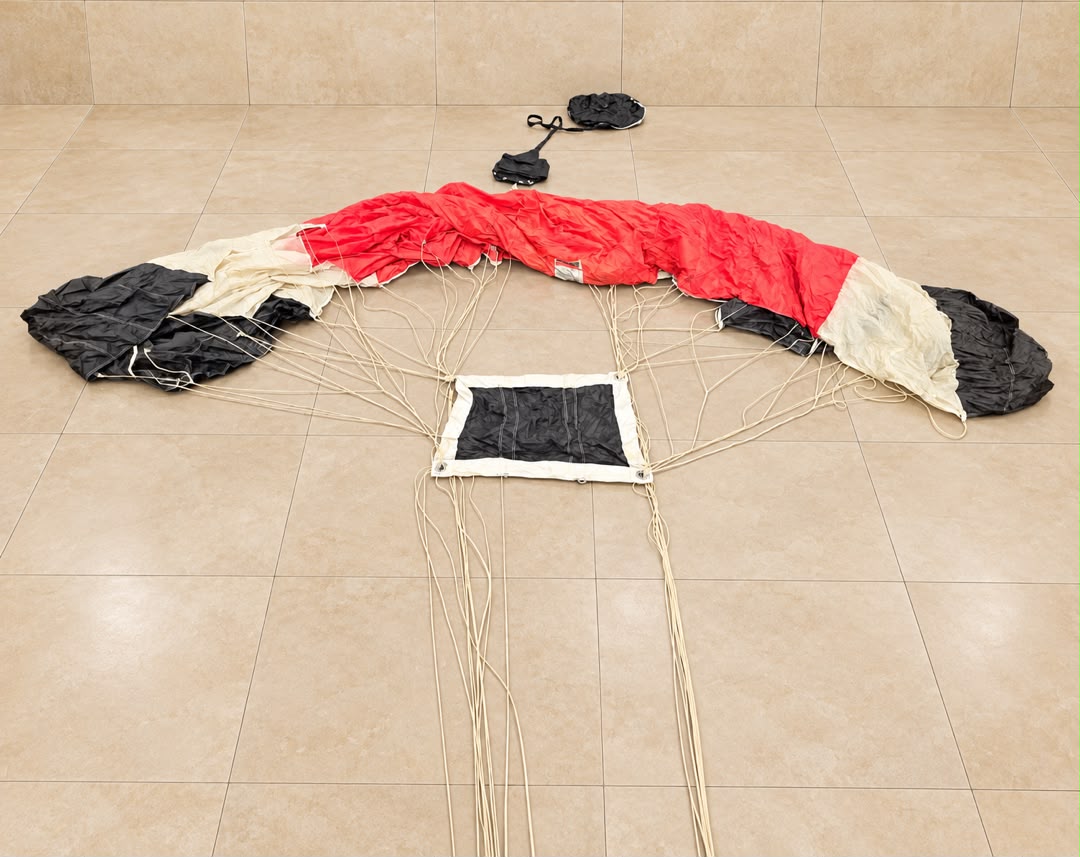
Complete used skydiving rig with approximately 300 jumps on the overall system, built around a Performance Designs Sabre3 170 main canopy, DOM 2021, paired with an Optimum 176 reserve, DOM 2015, with one reported reserve ride.
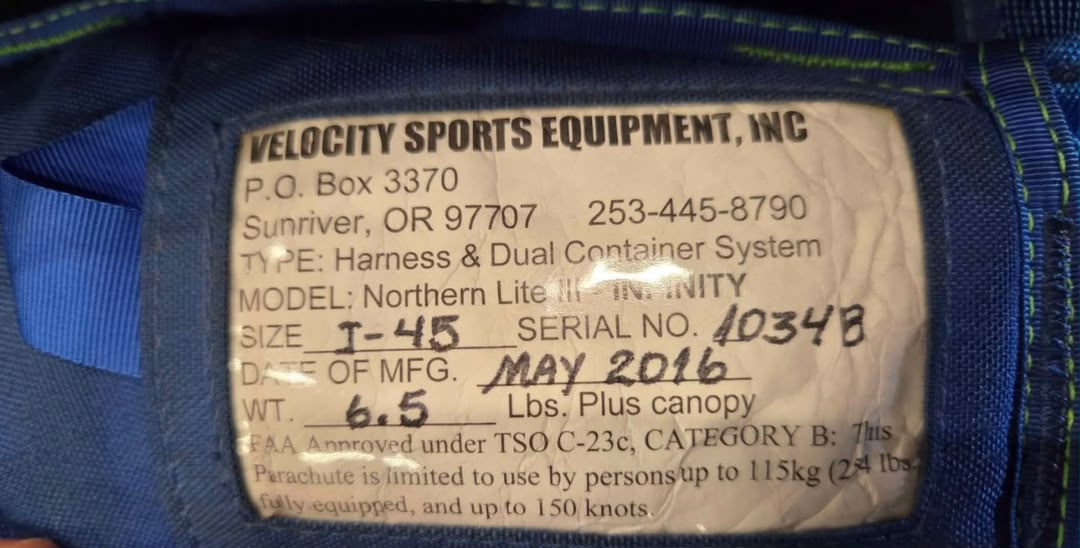
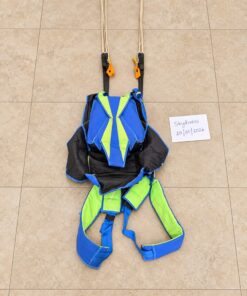
The system includes a Velocity Infinity harness/container, DOM 2016, along with a CYPRES C-MODE AAD. The harness was originally built for a previous owner approximately 5’10” and 79 kg, with some adjustment range above or below that fit depending on individual body proportions.
Important included upgrades and components:
- Sabre3 170 main canopy – DOM 2021
- Optimum 176 reserve – DOM 2015
- One reported reserve deployment
- Velocity Infinity container – DOM 2016
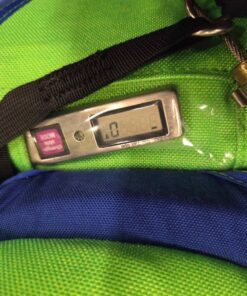
- CYPRES C-MODE AAD
- Approximately 300 jumps on the system
- Double-wide leg straps
- Brand-new semi-stowless deployment bag
- Brand-new pilot chute
- Brand-new risers
- Full reserve spares kit
The combination provides a well-equipped sport-skydiving setup with a responsive modern main canopy, low-bulk reserve, established Infinity container and several newly replaced deployment components.
Because this is used life-support equipment, final harness fit, canopy suitability, reserve condition, AAD status and component compatibility has been verified by a qualified rigger and ready for use.
Used Sabre 3 170 Complete Rig – Complete Skydiving System With Optimum 176, Infinity Container and CYPRES
This Used Sabre 3 170 complete rig brings together a Performance Designs Sabre3 170 main canopy, Performance Designs Optimum 176 reserve, Velocity Infinity harness/container and a CYPRES automatic activation device in one established sport-skydiving system.
According to the supplied ownership information, approximately 300 jumps have been placed on the overall system. The Sabre3 170 main has a 2021 date of manufacture, while the Optimum 176 reserve carries a 2015 date of manufacture and is reported to have had one reserve ride. The Velocity Infinity container is stated as DOM 2016.
The supplied equipment information also describes a CYPRES C-MODE unit, double-wide leg straps, a brand-new semi-stowless deployment bag that has never been jumped, a brand-new pilot chute, brand-new risers and a full reserve spares kit.
Those components make the package especially interesting for a buyer who wants an already assembled system rather than sourcing a main canopy, reserve, container and supporting components individually.
Nevertheless, skydiving equipment is life-support equipment. Used status, jump numbers or visual appearance alone cannot establish airworthiness. The entire assembly should therefore be inspected by an appropriately qualified parachute rigger before use.
Seller-Stated System Overview
The supplied specification includes:
- Approximately 300 jumps on the overall system
- Sabre3 170 main canopy
- Main DOM 2021
- Optimum 176 reserve
- Reserve DOM 2015
- One reported reserve deployment
- Velocity Infinity container
- Container DOM 2016
- CYPRES C-MODE AAD
- Double-wide leg straps
- New semi-stowless deployment bag
- New pilot chute
- New risers
- Full reserve spares kit
Sabre3 170 Main Canopy
The Sabre3 170 forms the main flight component of this package.
Performance Designs developed the Sabre3 as a modern, responsive sport canopy with refined openings, predictable control response and a powerful flare.
At a suitable wing loading and for an appropriately experienced jumper, the 170-size platform can provide an engaging balance between everyday sport jumping and continued canopy-skill development.
However, canopy suitability should never be determined from square footage alone.
Exit weight, currency, previous canopy experience, local conditions, instructor recommendations and personal canopy-piloting skill all matter.
Approximately 300 Jumps
The complete system is described as having approximately 300 jumps.
That number provides useful ownership context, but it should not replace inspection.
Different components wear at different rates.
The condition of lines, webbing, closing loops, hardware, pilot chute, risers and fabric should therefore be evaluated individually.
Sabre3 170 DOM 2021
The main canopy is stated to have been manufactured in 2021.
A relatively recent manufacturing date can be attractive to a used-gear buyer, but physical condition and service history remain more important than the date alone.
Main Canopy Flight Character
The Sabre3 is designed to respond clearly to pilot input.
Its factory-described characteristics include:
- Refined opening behavior
- Crisp control response
- Progressive front-riser pressure
- Strong rear-riser performance
- Long recovery arc
- Powerful bottom-end flare
These characteristics make correct sizing and training especially important.
Main Canopy Line Condition
Line condition should be assessed before use.
Important inspection areas include:
- General line wear
- Trim changes
- Damage
- Fraying
- Attachment points
- Brake lines
A rigger or experienced canopy professional should determine whether the line set remains serviceable.
Optimum 176 Reserve
The reserve is a Performance Designs Optimum 176.
The Optimum series uses low-bulk fabric and was engineered to provide reduced pack volume while maintaining reserve performance and structural capability.
The larger Optimum sizes, including the 176, were developed as part of the expanded reserve range.
Optimum Reserve DOM 2015
The reserve is stated to have a 2015 manufacturing date.
Reserve age should be evaluated together with:
- Packing records
- Inspection history
- Deployment history
- Fabric condition
- Line condition
- Manufacturer guidance
- Local regulatory requirements
One Reported Reserve Ride
The Optimum 176 is reported to have experienced one reserve deployment.
A reserve having been used does not automatically make it unsuitable for continued service.
However, that history makes professional inspection especially important.
The reserve should be checked for any signs of deployment-related damage, contamination, line damage or repair.
Reserve Packing Record
The data card should be reviewed carefully.
Important information may include:
- Reserve repack dates
- Rigger information
- Previous repairs
- AAD entries
- Component changes
The written history can provide information that appearance alone cannot.
Velocity Infinity Container
The harness/container is a Velocity Infinity with a stated 2016 date of manufacture.
The Infinity is a custom-built sport harness/container system.
Container sizing must be matched to appropriate main and reserve pack volumes, so the data label should be checked against the actual canopies installed.
Harness Fit
The system was reportedly built for a previous owner approximately 5 ft 10 in tall and 79 kg.
The current owner also reports being approximately 5 ft 10 in, and states that it remained snug but not uncomfortable at approximately 92 kg.
Those observations provide useful context but do not guarantee fit for another jumper.
Harness fit depends on more than height and weight.
Relevant measurements include:
- Torso length
- Chest
- Waist
- Hips
- Inseam
- Thigh circumference
- Body proportions
A rigger or suitable gear professional should confirm fit before use.
Double-Wide Leg Straps
The system includes double-wide leg straps.
This option increases the available padded contact area around the legs.
For some jumpers, this can contribute to comfort under canopy and during extended wear.
Correct adjustment and harness fit remain essential.
Brand-New Semi-Stowless Deployment Bag
A brand-new semi-stowless deployment bag is included and is described as never jumped.
Semi-stowless systems can simplify portions of line management during packing while retaining designated line stows.
Installation and packing should follow the container and deployment-bag manufacturer’s instructions.
Brand-New Pilot Chute
A brand-new pilot chute is supplied.
This is a useful replacement component, although compatibility with the specific container, bridle and deployment configuration should still be confirmed.
Brand-New Risers
The package also includes brand-new risers.
Risers form the structural connection between the main canopy suspension system and the harness/container.
Correct type, length, hardware, toggles and compatibility should therefore be verified during assembly.
Full Reserve Spares Kit
A full reserve spares kit is reported to be included.
The exact contents should be inventoried before purchase.
Reserve-specific components should always be identified and installed by qualified personnel.
CYPRES C-MODE
The supplied description identifies the AAD as a CYPRES C-MODE unit.
Changeable-MODE CYPRES 2 systems can be configured to supported operating modes.
Before use, the exact model, serial number, manufacturing date, maintenance status, selected mode and installation should be verified.
An AAD is an additional emergency layer and does not replace correct deployment procedures, altitude awareness or emergency training.
parachute jump australia
parachute jump australia searches commonly relate to Australian drop zones, training and sport skydiving.
Anyone considering taking this complete system to Australia should first confirm local operational requirements, reserve requirements and equipment acceptance with the intended drop zone.
skydive byron bay
skydive byron bay is associated with skydiving activity in the Byron Bay area.
Personal equipment use should always be approved by the individual drop zone and checked against local requirements.
weight limit skydiving
weight limit skydiving is important when evaluating a complete rig.
Body weight alone does not determine suitability because exit weight also includes clothing and equipment.
Canopy loading and harness fit should be calculated and evaluated separately.
cairns skydiving
cairns skydiving searches usually concern jumping opportunities in the Cairns region.
Local drop-zone rules should be confirmed before arriving with personal equipment.
skydiving helmet
A skydiving helmet is separate from the rig but remains an important part of a jumper’s personal equipment.
skydive helmets
skydive helmets are available in open-face and full-face configurations.
Helmet choice should match discipline, comfort and communication requirements.
hook blade knife
A hook blade knife can form part of a jumper’s emergency equipment.
Many experienced jumpers carry an appropriate hook knife in an accessible position.
tracking jump
A tracking jump requires awareness of group separation, deployment areas and horizontal movement.
Canopy selection alone does not determine suitability for tracking disciplines.
parachute rig
A parachute rig is the integrated system combining the harness/container, main canopy, reserve canopy and associated deployment components.
This package brings those principal components together.
linewear
linewear should be evaluated carefully when inspecting any used main canopy.
Visible wear, trim changes and condition at cascades or attachment areas should be included in the inspection.
base jumping
base jumping uses equipment and procedures that differ substantially from conventional aircraft skydiving.
This complete sport rig should not be represented as dedicated BASE equipment.
sky helmet skydiving
A sky helmet skydiving search generally relates to protective headgear intended for freefall use.
Helmet fit should be evaluated separately from harness fit.
wingsuit sport
wingsuit sport requires specialized training, experience and equipment configuration.
A complete conventional rig should not automatically be assumed suitable for wingsuit flight.
vector wingsuit
vector wingsuit searches may refer to harness/container configurations associated with wingsuit use.
This package uses a Velocity Infinity rather than a Vector container.
full face skydiving helmet
A full face skydiving helmet can provide wind protection and an integrated visor.
It remains separate from the complete rig described here.
skydiving downsizing chart
A skydiving downsizing chart can be useful as a general reference, but canopy selection should not be based on a chart alone.
Instruction, currency, exit weight and demonstrated canopy skills should guide the decision.
landing flight risers
landing flight risers relate to the riser system used to connect and control the canopy.
The supplied package includes brand-new risers, but the exact configuration should be verified before assembly.
fire parachute
A fire parachute may refer to products or terminology unrelated to this sport system.
The installed reserve here is specifically stated to be a Performance Designs Optimum 176.
cypress fire skydiving
The phrase cypress fire skydiving appears to combine AAD terminology with unrelated wording.
The supplied device is described as CYPRES C-MODE, and its exact operating status should be verified directly from the unit.
skydiving rigging
skydiving rigging is particularly important when purchasing used equipment.
Reserve packing, compatibility checks, repairs and life-support equipment inspection should be performed by appropriately qualified personnel.
baseline jumping
baseline jumping should not be treated as equivalent to ordinary sport skydiving.
Specialized disciplines require discipline-specific instruction and equipment.
sky diving helmet
A sky diving helmet helps protect the head during routine skydiving activities and should fit securely without interfering with handles or visibility.
hook knife skydiving
A hook knife skydiving setup should place the tool where it can be reached reliably without obstructing other equipment.
landing flight risers
The repeated phrase landing flight risers again highlights the importance of riser condition and compatibility.
The new risers included with this system should be checked during final rig assembly.
skydiving glasses
skydiving glasses or suitable goggles can protect the eyes during freefall when an open-face helmet is used.
nude parachute jump
A nude parachute jump is unrelated to the mechanical specification of the system.
Any unusual jump should still comply with drop-zone rules, safety requirements and equipment procedures.
ifly colorado springs
ifly colorado springs relates to indoor bodyflight rather than parachute deployment.
Tunnel training can help freefall skills, but it does not replace canopy training.
skydive hook knife
A skydive hook knife is a compact emergency cutting tool that may be carried as part of a jumper’s equipment setup.
skydiving helmet full face
A skydiving helmet full face provides enclosed facial coverage and should be chosen based on fit, visibility and discipline.
skydiving blue hole belize
skydiving blue hole belize refers to specialized destination jumping.
Anyone travelling with this equipment should check airline, drop-zone and local equipment requirements beforehand.
smallest canopy
The smallest canopy is not automatically the most desirable.
Smaller canopies generally create higher wing loading and more demanding flight characteristics for the same jumper.
Appropriate progression matters far more than minimum square footage.
skydiving speed
skydiving speed varies with body position, discipline and equipment.
Canopy suitability should not be inferred from freefall speed alone.
wing suits for sale
wing suits for sale concern a separate equipment category.
Wingsuit selection and rig configuration require specialized guidance.
skydiving nude
skydiving nude has no direct relationship to the performance or condition of this complete system.
Drop-zone policies and general safety requirements still apply.
parts of a parachute
The parts of a parachute system include the main canopy, reserve, harness/container, risers, deployment bag, pilot chute, bridle, handles and other supporting components.
This package includes many of those major elements.
container skydive
A container skydive system secures both the main and reserve assemblies to the harness.
Here, that function is provided by the Velocity Infinity.
g35 helmet
The g35 helmet belongs to the separate skydiving helmet category and is not included in the stated rig configuration.
best skydiving helmet
The best skydiving helmet depends on fit, discipline, field of view, comfort and personal requirements.
No helmet should be assumed included unless specifically listed.
skydive belize
skydive belize refers to destination skydiving rather than a specific equipment specification.
Personal gear should be cleared with the operator before travel.
freefly pud handle
A freefly pud handle is a deployment-handle configuration designed to remain secure during freefly movement.
The exact deployment handle fitted to this rig should be inspected and identified rather than assumed.
gliding suit wingsuit
A gliding suit wingsuit substantially increases horizontal travel and changes deployment considerations.
Wingsuit compatibility should be separately evaluated by appropriately experienced personnel.
jumper pilot
A jumper pilot can refer to a skydiver operating a parachute canopy after deployment.
Under canopy, disciplined traffic awareness and predictable patterns remain essential.
crw skydiving
crw skydiving involves canopy-relative work and requires specialized equipment knowledge and training.
A Sabre3 system should not automatically be assumed appropriate for CRW.
gear bag skydive
A gear bag skydive setup helps protect the complete system during storage and transport.
A suitable gear bag can reduce unnecessary abrasion and contamination.
skydiving equipment list
A typical skydiving equipment list may include:
- Harness/container
- Main canopy
- Reserve canopy
- AAD
- Helmet
- Altimeter
- Goggles
- Jumpsuit
- Hook knife
- Gear bag
Several of the most expensive core components are already represented in this package.
indoor wingsuit
indoor wingsuit activities involve specialized training facilities and do not involve ordinary parachute deployment during tunnel flight.
can you wear glasses while skydiving
For can you wear glasses while skydiving, many jumpers use suitable goggles or helmet systems that accommodate prescription eyewear.
Fit should be checked before jumping.
wingsuit
A wingsuit changes bodyflight, horizontal movement and deployment considerations.
Suitability of the container and deployment configuration should be discussed with experienced wingsuit instructors and rigging professionals.
skydiving website
A reputable skydiving website can provide manufacturer manuals, service information and technical documentation.
For life-support equipment, manufacturer documentation should take priority over informal online advice.
cookie g4 helmet
The cookie g4 helmet is a separate full-face skydiving helmet product and is not part of the stated complete rig unless specifically included by the seller.
base canopy
A base canopy is designed for a different parachuting discipline.
The Sabre3 170 is a sport-skydiving main canopy rather than a dedicated BASE canopy.
new skydive
A new skydive participant should not select equipment purely from online dimensions.
Qualified instruction and progression guidance are essential.
#skydiving latest
The phrase #skydiving latest is generally associated with current skydiving content and social media rather than equipment specification.
Technical decisions should still rely on manufacturer information and qualified rigging guidance.
canopy flight
canopy flight is one of the most important stages of every skydive.
The Sabre3 is known for responsive handling and substantial flare capability, but these characteristics must be matched to the jumper’s experience and wing loading.
skydiver goggles
skydiver goggles provide eye protection during freefall and should remain secure throughout the jump.
speed sky diving
speed sky diving involves high freefall speeds and specialized training.
Equipment configuration should be evaluated specifically for the discipline.
fly suits
fly suits include conventional jumpsuits and more specialized bodyflight clothing.
They remain separate from the harness/container system.
skydiving rig
A skydiving rig combines multiple life-support systems rather than functioning as a single component.
This package includes the principal main, reserve, harness/container and AAD elements described by the seller.
safire 3
The safire 3 is another sport main canopy design and should not be confused with the installed Sabre3 170.
skydiving gliding suit
A skydiving gliding suit generally refers to wingsuit-type equipment that increases horizontal flight.
Its use requires separate training and gear compatibility assessment.
fluid wings
fluid wings is associated with another manufacturer of sport parachute canopies.
The main canopy in this package is produced by Performance Designs.
price of wingsuit
The price of wingsuit equipment is separate from the value of this complete rig because no wingsuit is stated as included.
tandem wingsuit
A tandem wingsuit is not part of the equipment specification presented here and should not be confused with ordinary tandem or experienced-skydiver equipment.
skydiving tube
A skydiving tube can refer to specialized freefall equipment used for particular aerial activities.
It is unrelated to the core life-support components supplied with this rig.
Why the Sabre3 170 Matters
The main canopy is one of the strongest attractions of the package.
The Sabre3 was developed to provide a broad performance range.
Its handling can remain manageable when sized conservatively, while experienced pilots can access considerably more dynamic performance.
That range is precisely why correct wing loading matters.
The fact that a canopy is 170 square feet does not automatically make it suitable for a particular jumper.
Why Wing Loading Must Be Calculated
Wing loading is based on total exit weight rather than body weight alone.
Equipment, clothing and accessories add weight.
Consequently, a jumper who weighs 79 kg and one who weighs 92 kg will experience meaningfully different loading on the same 170-square-foot canopy.
The correct decision should be made with an instructor or canopy coach familiar with the jumper’s experience.
Why the Optimum 176 Matters
A reserve should provide an appropriately matched emergency canopy for the jumper and system.
The Optimum 176 combines a relatively large reserve area with PD’s low-bulk construction.
However, reserve suitability still depends on total suspended weight, container compatibility and manufacturer limitations.
Its one reported ride also means the deployment history should be fully reviewed.
Why the Infinity Container Matters
The Infinity is built as a custom harness/container.
That makes fit especially important.
The seller’s stated 5 ft 10 in / 79 kg build information gives potential buyers a reference point, while the reported 92 kg fit experience provides additional context.
Neither measurement should be treated as a guarantee.
A complete harness fit check should be performed before jumping.
Why Double-Wide Leg Straps Matter
Double-wide leg straps can distribute pressure across a broader area than narrower configurations.
For some jumpers, this can improve comfort during canopy flight and prolonged harness wear.
The straps should still be adjusted correctly and inspected for webbing and hardware condition.
Why the New Deployment Bag Matters
A brand-new semi-stowless deployment bag means one high-wear deployment component has not accumulated jumps according to the supplied description.
The exact bag size and compatibility should nevertheless be verified.
Why the New Pilot Chute Matters
A new pilot chute can be an attractive inclusion because pilot-chute fabric, mesh, kill-line systems and attachment areas are all subject to use-related wear.
Again, correct compatibility should be confirmed during assembly.
Why the New Risers Matter
The included new risers reduce wear concerns associated with an older riser set.
However, ring configuration, riser length, brake setup and compatibility still require professional confirmation.
Why the AAD Matters
An AAD is intended as an additional emergency layer.
It should never be presented as a replacement for:
Altitude awareness
Emergency procedures
Correct deployment decisions
Appropriate training
The exact CYPRES model, selected mode, service status and installation should be confirmed before the system is placed into service.
Why a Complete System Can Be Attractive
Buying individual components separately can require considerable compatibility research.
A complete package already brings together:
Main canopy
Reserve
Harness/container
AAD
Deployment components
Risers
However, “complete” should not be interpreted as automatically “ready to jump.”
Professional inspection and compatibility verification remain essential.
Why Condition Matters More Than Cosmetic Appearance
Skydiving equipment is life-support equipment.
The most important factors include:
Structural condition
Webbing condition
Canopy fabric
Line condition
Hardware
Deployment components
Reserve records
AAD status
Compatibility
A visually clean rig can still require servicing.
Likewise, normal cosmetic wear does not necessarily mean that a system is unserviceable.
Why the Reserve Ride Must Be Disclosed
A previous reserve deployment is important ownership history.
Disclosure gives the rigger and buyer a reason to examine the reserve carefully and review its packing records.
The deployment itself should neither be hidden nor automatically treated as disqualifying.
Why DOM Information Matters
Manufacturing dates provide useful context for every component.
They help a buyer understand the age relationship between:
Main canopy
Reserve
Container
AAD
However, age does not substitute for condition.
Why the New Components Add Value
The semi-stowless bag, pilot chute and risers are all described as new.
These inclusions can reduce the amount of immediate replacement equipment a buyer may need.
They still need correct assembly and inspection.
Precision in Skydiving Equipment
For parachute systems, “precision” means more than accurate landings.
It also means:
Correct component matching
Correct assembly
Correct packing
Accurate harness fit
Proper AAD setup
Predictable canopy control
Disciplined inspection
The entire system should function together as designed.
Where This System May Fit Best
This package may appeal to an appropriately trained sport skydiver seeking a 170-class main and 176-class reserve in a complete personal system.
Actual suitability depends on experience, currency, wing loading and harness measurements.
When This Rig Makes Sense
It may make sense when:
The Sabre3 170 is appropriate for the buyer’s current progression
The Optimum 176 is suitable for the buyer’s exit weight
The Infinity harness fits correctly
The reserve is inspected and accepted
The AAD status is verified
The complete system passes rigger inspection
Important Pre-Purchase Checks
Before purchase or use, the buyer should verify:
- Main canopy serial number and data panel
- Main line condition and trim
- Reserve data panel
- Reserve deployment and repair history
- Reserve packing data card
- Infinity container serial number and data label
- Harness measurements
- Main and reserve container compatibility
- CYPRES model and serial number
- CYPRES manufacturing and service status
- Current AAD mode
- New pilot chute compatibility
- Semi-stowless bag compatibility
- Riser specification and installation
- Reserve spare-kit contents
Why Rigger Inspection Is Essential
A qualified rigger can evaluate areas that cannot be reliably judged from an online description.
The inspection can confirm whether the actual physical system agrees with the seller’s description and whether any maintenance or replacement is needed.
Final Section 1 Assessment
This Used Sabre 3 170 complete rig presents a compelling combination of a 2021 Sabre3 170 main, 2015 Optimum 176 reserve, 2016 Velocity Infinity container and seller-described CYPRES C-MODE AAD.
The approximately 300-jump history provides useful context, while the addition of a new semi-stowless bag, new pilot chute and new risers strengthens the overall package.
Performance Designs positions the Sabre3 as a versatile but genuinely dynamic canopy. It offers refined openings, crisp handling, a long recovery arc and powerful flare performance, so its suitability must be matched carefully to the individual jumper rather than judged from its 170-square-foot size alone.
The reserve is also a significant component. Performance Designs developed the Optimum around low-bulk reserve fabric and strong flight and landing characteristics. The seller reports one previous reserve ride, which should be treated as important inspection history rather than either ignored or automatically considered a defect.
Meanwhile, the Infinity harness/container is a custom sport system. Velocity specifically instructs owners to check the container data tag to establish the compatible reserve size, and its current documentation emphasizes regular inspection for wear or damage. Therefore, the installed canopy combination and harness fit should be verified from the actual rig rather than assumed from the model names alone.
The stated fit information—originally built around a 5 ft 10 in, 79 kg owner and reportedly still wearable at 5 ft 10 in and approximately 92 kg—offers a useful starting reference. It does not establish correct fit for another buyer because torso, thigh, hip and other body dimensions materially affect harness geometry.
Finally, the CYPRES deserves its own verification. AIRTEC confirms that Changeable-MODE CYPRES 2 units can operate using selectable sport configurations, but the actual installed mode, serial number, service status and correct installation should be checked directly before use.
For an appropriately experienced jumper whose wing loading, harness measurements and progression are compatible with the equipment, this package can provide a strong foundation for a complete personal skydiving system.
Before any jump, however, the complete assembly should be inspected by an appropriately qualified rigger, the reserve records and AAD status should be verified, and canopy suitability should be confirmed with an instructor or canopy coach. A used complete rig should be considered potentially serviceable equipment pending professional inspection—not automatically jump-ready simply because all major components are present.
Real-World Use, Harness Fit, Canopy Characteristics, Reserve Readiness, AAD Checks, Packing, Inspection and Ownership
Overall Character of the Complete System
This complete skydiving system combines a modern sport main canopy, a low-bulk reserve, an established harness/container platform, an automatic activation device and several recently replaced deployment components.
According to the supplied information, the whole system has approximately 300 jumps.
The main canopy is a Sabre3 170 manufactured in 2021.
The reserve is an Optimum 176 manufactured in 2015 and is reported to have had one reserve ride.
The harness/container is a Velocity Infinity manufactured in 2016.
The package is also described as including a CYPRES unit in changeable mode, double-wide leg straps, a new semi-stowless deployment bag, a new pilot chute, new risers and a full reserve spares kit.
On paper, this creates a well-equipped package.
However, the practical value of a used complete rig depends on much more than the presence of all major components.
Condition, fit, compatibility, service history, packing records, AAD status and canopy suitability all matter.
For that reason, the system should be treated as used life-support equipment that requires professional inspection before use.
Why Complete-System Compatibility Matters
A harness/container, main canopy, reserve canopy, risers, deployment bag, pilot chute and AAD are not independent items once assembled.
They must work together correctly.
A good main canopy does not automatically make a good rig.
A suitable reserve does not automatically fit every reserve tray.
A new pilot chute does not automatically match every deployment configuration.
Likewise, new risers still need to be the correct type and dimensions for the container and canopy setup.
What Should Be Verified
Before use, a qualified rigger should verify:
Main canopy compatibility
Reserve compatibility
Deployment-bag compatibility
Pilot-chute compatibility
Riser compatibility
AAD installation
Reserve packing condition
Harness fit
Why This Matters
Small compatibility errors can affect deployment, fit or emergency procedures.
Sabre3 170 Main Canopy
The main canopy is one of the most valuable components in the system.
It is described as having a 2021 date of manufacture.
That gives the canopy a relatively recent manufacturing date compared with the reserve and harness/container.
Why the Main Canopy Matters Most During Normal Use
The main canopy is flown on every ordinary jump.
Its opening characteristics, control response, flare performance and general condition therefore influence the jumper’s experience on every deployment.
Why Size Alone Is Not Enough
A 170-square-foot main should not be selected simply because the jumper wants that size.
Suitability depends on:
Exit weight
Current experience
Previous canopy size
Recent jump numbers
Landing consistency
Local conditions
Coaching history
Why Wing Loading Matters
Wing loading strongly influences canopy behavior.
The same 170-square-foot canopy can feel very different under two jumpers of different total exit weights.
Exit Weight
Exit weight includes more than body weight.
It can include:
Rig
Helmet
Clothing
Altimeter
Accessories
Other equipment
Why This Matters
Canopy selection should be based on actual exit weight rather than body weight alone.
Canopy Progression
A jumper should not move to a smaller or more responsive canopy simply because a complete rig becomes available.
Why Progression Should Remain Conservative
Experience gained on a larger canopy does not automatically transfer perfectly to a smaller or more dynamic one.
Instructor or Coach Input
A canopy coach, instructor or experienced professional familiar with the jumper’s recent performance should be involved in the decision.
Why This Helps
They can assess the person rather than only the equipment.
Opening Behavior
The main canopy is designed for sport use and is known for controlled but responsive flight characteristics.
Why Opening Quality Matters
A predictable opening helps reduce unnecessary workload after deployment.
Why Packing Still Matters
Even a well-designed canopy depends on:
Correct packing
Line management
Slider positioning
Deployment system condition
Why a New Deployment Bag Does Not Eliminate Packing Responsibility
A new semi-stowless bag can improve component freshness, but the packing sequence still has to be correct.
Semi-Stowless Deployment Bag
The supplied deployment bag is described as brand new and never jumped.
Why This Is Valuable
A new bag has no accumulated wear from deployment cycles.
Why It Still Needs Inspection
The rigger should confirm:
Correct size
Correct attachment
Correct bridle compatibility
Correct line-stow arrangement
Correct relationship with the container
Pilot Chute
The pilot chute is also described as brand new.
Why Pilot-Chute Condition Matters
The pilot chute initiates the main deployment sequence.
Areas to Verify
Fabric condition
Mesh
Bridle connection
Handle attachment
Kill-line system if applicable
Compatibility
Why New Does Not Automatically Mean Installed Correctly
Correct installation and compatibility remain essential.
Risers
The package includes brand-new risers.
Why Risers Matter
Risers connect the main canopy suspension lines to the harness/container.
They also carry several control functions.
Areas to Check
Riser length
Three-ring configuration
Brake setup
Toggle compatibility
Hardware
Stitching
Why Correct Riser Length Matters
Changes in riser length can affect body position, control reach and compatibility.
Main Line Condition
The canopy lines should be inspected carefully.
Why Lines Matter
Lines influence:
Canopy trim
Opening behavior
Control input
Flight symmetry
Signs That Deserve Attention
Fraying
Glazing
Uneven wear
Damaged cascades
Trim changes
Brake-line wear
Why Line Trim Matters
As lines change length over time, canopy flight characteristics can change.
Why Visual Inspection Alone Is Not Always Enough
A line set can appear intact while still being out of trim.
Professional Assessment
A rigger or canopy specialist can help determine whether the line set remains serviceable.
Main Canopy Fabric
Fabric condition should also be inspected.
Check For
Tears
Repairs
Contamination
Unusual porosity
Damage near attachment points
Why Fabric Condition Matters
The canopy depends on its fabric and internal structure to maintain shape and pressure.
Stitching
Seam condition should be reviewed.
Why Stitching Matters
Load-bearing seams should remain intact.
Slider Condition
The slider should be inspected.
Check
Grommets
Fabric
Tape
Stitching
Why Slider Condition Matters
The slider plays an important role during opening.
Brake System
Brake lines and toggles should be inspected.
Why This Matters
Control reliability depends on correct brake setup.
Steering Toggle Condition
Look for:
Wear
Damage
Loose attachment
Why Control Components Matter
Canopy control begins immediately after deployment.
Flare Performance
The canopy’s flare capability is one of its important characteristics.
Why Flare Skill Matters
Good flare performance still depends on correct timing and technique.
Why Canopy Choice Cannot Compensate for Poor Technique
A capable canopy does not eliminate the need for training.
Front-Riser Input
The canopy is designed to respond to front-riser input.
Why This Demands Respect
Responsive controls can increase performance but also increase workload.
Why Advanced Inputs Require Coaching
Higher-performance canopy maneuvers should only be practiced within appropriate training and progression.
Rear-Riser Input
Rear-riser response can be useful during canopy flight.
Why Familiarity Matters
The jumper should understand the canopy’s control range under proper instruction.
Recovery Characteristics
The canopy has a comparatively dynamic recovery profile.
Why This Matters
Aggressive or poorly timed inputs can create more altitude loss than a jumper expects.
Why Conservative Flight Is Important
Landing approaches should remain within the jumper’s demonstrated skill level.
Reserve Canopy
The Optimum 176 serves as the reserve component.
Why Reserve Condition Is Critical
The reserve is intended for emergency use.
Its condition should therefore receive the highest level of attention.
Reported Reserve Ride
The reserve is described as having one prior deployment.
Why This History Matters
A reserve deployment can expose the canopy to:
Opening loads
Landing loads
Contamination
Dragging
Environmental exposure
Why One Ride Does Not Automatically Mean Damage
Many reserves remain serviceable after use when properly inspected.
Why Inspection Is Essential
The canopy should be evaluated for any damage associated with the previous deployment.
Reserve Fabric
Inspect for:
Tears
Contamination
Stains
Heat damage
Repairs
Reserve Lines
Check:
Line condition
Attachment points
Continuity
Damage
Reserve Data Panel
The data panel should be verified.
Why This Matters
It helps confirm the model, size, manufacturing date and serial information.
Packing Data Card
The reserve packing card should be reviewed.
Why This Is Important
It may document:
Pack jobs
Rigger information
Repairs
AAD entries
Component changes
Reserve Compatibility
The reserve must be appropriate for the container.
Why Container Volume Matters
Reserve trays are designed around specific pack-volume ranges.
Why Low-Bulk Fabric Helps
A low-bulk reserve can allow useful sizing combinations, but fit must still be confirmed.
Why Larger Does Not Automatically Mean Compatible
Container geometry and reserve pack volume must remain within approved limits.
Reserve Suitability for the Jumper
The reserve should also be appropriate for total suspended weight.
Why This Matters
Emergency canopy loading deserves conservative consideration.
Harness/Container Condition
The Infinity harness/container should be inspected structurally.
Check
Main lift web
Leg straps
Chest strap
Three-ring areas
Hardware
Stitching
Reserve pin cover
Main pin cover
Flaps
Handle pockets
Why Structural Webbing Matters
The harness carries the jumper during deployment and canopy flight.
Why Stitching Deserves Attention
Load-bearing stitch patterns should remain intact.
Hardware
Metal components should be inspected for:
Corrosion
Damage
Deformation
Sharp edges
Why Hardware Condition Matters
Damaged hardware can affect harness function or webbing life.
Container DOM 2016
The container is described as having a 2016 date of manufacture.
Why Age Alone Is Not a Verdict
A properly maintained older container can remain serviceable.
Why Condition Matters More
Wear, repairs, jump history and storage are more important than appearance alone.
Harness Fit
The system was reportedly built for a previous owner approximately 5 feet 10 inches tall and 79 kg.
It was also reportedly worn by someone of the same height at approximately 92 kg and described as snug but not uncomfortable.
Why This Information Helps
It gives potential buyers a rough reference.
Why It Is Not Enough
Harness fit depends on:
Torso length
Chest
Waist
Hips
Inseam
Thigh circumference
Body proportions
Why Height and Weight Alone Can Mislead
Two people of identical height and body weight can have very different proportions.
Fit Check
A proper fit check should include:
Main lift web placement
Leg-strap position
Chest-strap position
Handle access
Three-ring position
Reserve handle access
Cutaway handle access
Why Handle Access Matters
Emergency handles must remain reachable in normal body positions.
Double-Wide Leg Straps
The rig includes double-wide leg straps.
Why They Can Improve Comfort
The wider contact area can spread pressure more evenly.
Why Adjustment Still Matters
Poorly adjusted wide straps can still be uncomfortable.
Why Fit Under Canopy Matters
Harness comfort should be evaluated while suspended if possible.
Main Lift Web
The main lift web should fit the torso correctly.
Why This Matters
Incorrect length can change handle position and overall harness geometry.
Chest Strap
The chest strap should fit comfortably and allow proper adjustment.
Why This Matters
It contributes to harness security without replacing correct leg-strap fit.
Emergency Handle Position
Both handles should be accessible.
Why This Must Be Checked on the Actual Jumper
A harness that fits one person well may position handles poorly for another.
AAD Verification
The system includes a seller-described CYPRES changeable-mode AAD.
Why Exact Identification Matters
The physical unit should be checked for:
Model
Serial number
Manufacturing date
Service history
Mode
Installation
Why Selected Mode Matters
Different operational modes are designed for different use cases.
Why the Correct Mode Must Be Confirmed
An incorrectly selected mode could affect activation parameters.
Why the AAD Is Only a Backup
The device is an additional emergency layer.
It Does Not Replace
Altitude awareness
Deployment discipline
Emergency procedures
Correct training
AAD Installation
The cutter, control unit and processing unit should be installed correctly.
Why Installation Matters
Incorrect routing or placement can affect function.
Service Status
The device’s service requirements should be checked using the manufacturer’s current guidance.
Why Date Information Matters
Electronic life-support equipment should not be assumed serviceable based only on appearance.
Reserve Repack
The reserve should be within the legally required repack interval before use.
Why Repack Rules Matter
Intervals vary by jurisdiction and operating environment.
Why a Fresh Inspection Is Valuable
A repack provides an opportunity to inspect the reserve and internal container components.
Reserve Spares Kit
A full reserve spares kit is reported to be included.
Why This Can Add Value
Model-specific spares can be useful when servicing is required.
Why Contents Must Be Confirmed
The phrase “full kit” should be verified item by item.
Possible Contents
Depending on configuration, a kit may include:
Closing components
Loops
Pins
Hardware
Other reserve-related spares
Why Only Qualified Personnel Should Install Reserve Components
Reserve systems are life-support equipment.
Packing the Main
Main-canopy packing should follow manufacturer and container guidance.
Why Packing Quality Matters
Packing affects:
Opening sequence
Line control
Slider position
Deployment consistency
Why Shortcuts Are Unhelpful
Fast packing is not more important than correct packing.
Semi-Stowless Packing
The new bag changes part of the line-management method.
Why Familiarity Matters
The packer should understand how the specific bag is intended to be used.
Why Assumptions Are Risky
Semi-stowless bags differ in design.
Pilot-Chute Packing
The pilot chute should be packed correctly into the deployment system.
Why This Matters
Deployment begins with pilot-chute extraction and inflation.
Closing Loop
The main closing loop should be inspected.
Why Loop Condition Matters
Excessively worn loops should not remain in service.
Main Closing Sequence
Flaps should close in the correct order.
Why This Matters
Container geometry is designed around a specific closure sequence.
Pin Condition
The main pin should be smooth and undamaged.
Why This Matters
The pin must remain secure while still allowing proper deployment.
Bridle Condition
The bridle should be inspected.
Check
Wear
Stitching
Attachment
Damage
Why Bridle Condition Matters
It transmits pilot-chute extraction force to the deployment bag.
Three-Ring System
The three-ring release should be inspected and maintained correctly.
Why This Matters
It forms the main canopy release system.
Maintenance
Inspection should include:
Correct routing
Clean cables
Condition of loops
Ring alignment
Why Improvised Modifications Are Unhelpful
Release-system components should remain within approved configuration.
Cutaway Handle
The cutaway handle should remain secure but accessible.
Why This Matters
Emergency procedures rely on predictable handle access.
Reserve Handle
The reserve handle should also be secure and accessible.
Why Handle Retention Matters
It should remain in place during normal freefall.
Why Accessibility Matters
It must still be reachable when required.
RSL or MARD Configuration
If the rig is equipped with an RSL or MARD-type system, its exact configuration should be verified.
Why This Matters
These systems depend on correct routing and assembly.
Why Training Still Matters
Additional emergency systems do not replace knowing standard emergency procedures.
Pre-Jump Gear Check
A complete check should be performed before boarding.
Typical Areas
Pins
Handles
Leg straps
Chest strap
Three-ring assemblies
Pilot chute
AAD indication
Why Repetition Matters
Consistent checks reduce the chance of missing something important.
Buddy Checks
A second trained person can help verify the system.
Why This Is Useful
Another person may notice something the wearer overlooks.
Boarding and Aircraft Use
The rig should be protected inside the aircraft.
Why Handle Protection Matters
Crowded aircraft can create opportunities for unintended contact.
Why Awareness Matters
The jumper should know where handles and pins are relative to benches, doors and other people.
Freefall Use
The system should remain stable on the jumper.
Why Harness Fit Matters Here
Poor fit can allow excessive movement.
Deployment
Deployment should occur at an appropriate altitude according to training and local rules.
Why This Matters
A functioning system still requires correct user decisions.
Canopy Check
After opening, the jumper should assess the canopy according to training.
Why Fast Decision-Making Matters
Altitude should not be wasted troubleshooting an unmanageable situation.
Emergency Procedures
Emergency procedures should be practiced regularly.
Why Practice Matters
Real emergencies develop quickly.
Why Written Product Information Is Not Enough
Emergency training should come from qualified instruction rather than a sales description.
Landing
The jumper should fly a predictable pattern appropriate for conditions.
Why Predictability Matters
Traffic management affects everyone in the landing area.
Why High-Performance Maneuvers Require Training
Dynamic canopy flight increases risk and should be learned progressively.
Gear Storage
The rig should be stored in a clean, dry environment.
Avoid
Direct sunlight
Extreme heat
Moisture
Chemical contamination
Rodents
Sharp objects
Why Ultraviolet Exposure Matters
Long-term UV exposure can degrade some textile materials.
Why Moisture Matters
Damp storage can encourage contamination and hardware corrosion.
Gear Bag
A suitable gear bag can help protect the system.
Why Protection Matters
The rig should not be dragged unnecessarily across abrasive surfaces.
Transport
The rig should be transported securely.
Why Travel Requires Planning
Airlines, security authorities and destination drop zones can have different procedures.
Documentation
It is useful to travel with relevant equipment documentation.
Why This Helps
Serial numbers and equipment information can assist when questions arise.
Used-Gear Inspection
A buyer should examine the system beyond cosmetic appearance.
Main Canopy Questions
Ask:
How many jumps are on the line set?
Has the canopy been repaired?
Has it been relined?
Has it been exposed to water or contamination?
Reserve Questions
Ask:
When was the last repack?
What happened during the reported reserve ride?
Were any repairs required?
Container Questions
Ask:
Has the harness been resized?
Has the container been repaired?
Has any webbing been replaced?
AAD Questions
Ask:
What is the serial number?
What is the manufacturing date?
What is the current mode?
What service history exists?
Why Documentation Matters
Good records make inspection and ownership easier.
Seller-Stated Information Versus Verified Information
Approximate jump counts, body-fit comments and component condition are useful seller statements.
Why These Should Be Confirmed
Used gear can change over time.
Why Independent Inspection Protects Both Buyer and Seller
A rigger provides a more objective assessment of condition and compatibility.
Buying for Progression
A buyer should think beyond whether the rig physically fits.
Ask
Is the main canopy appropriate?
Is the reserve large enough?
Is the harness comfortable?
Can emergency handles be reached?
Is the AAD suitable?
Why Buying Too Aggressively Can Be Expensive
A rig that does not suit the jumper may need to be replaced sooner than expected.
Why Conservative Sizing Can Have Value
A well-matched canopy can provide more useful training time.
Resale Considerations
Resale value is influenced by:
Condition
Documentation
Component age
Canopy line condition
Container fit range
AAD status
Why Documentation Helps Resale
Future buyers will want the same information.
Maintenance Records
Keep records of:
Reserve repacks
Repairs
AAD service
Canopy reline
Component replacement
Why This Creates Better Ownership History
Future troubleshooting becomes easier.
Long-Term Ownership Costs
Potential future expenses include:
Reserve repacks
Main reline
AAD service or replacement
Pilot-chute replacement
Riser replacement
Container repairs
Rigger inspections
Why a Complete Rig Is Not Cost-Free After Purchase
Life-support equipment requires ongoing maintenance.
Why the New Components Help
The new pilot chute, risers and deployment bag may reduce immediate wear concerns in those specific areas.
Why They Do Not Remove Other Costs
Older components still require normal inspection and maintenance.
Practical Strengths of the Package
The package offers several appealing features:
Modern 170 main canopy
176 reserve
Established harness/container
AAD included
Approximately 300-jump overall history
Double-wide leg straps
New deployment bag
New pilot chute
New risers
Reserve spares kit
Practical Limitations
Potential considerations include:
Harness may not fit every jumper
Main canopy may not suit every experience level
Reserve has one reported ride
Reserve and container are older than the main
AAD status needs verification
Line condition must be checked
Why These Are Normal Used-Gear Considerations
Used complete systems should always be evaluated component by component.
Who May Appreciate This Rig Most
The system may appeal to a sport jumper who:
Has appropriate experience for the main canopy
Fits the harness properly
Is comfortable with the reserve size
Wants a complete personal system
Values several recently replaced deployment components
Who May Need a Different Setup
A different system may be better for someone who:
Needs a larger main canopy
Needs a larger reserve
Does not fit the harness
Requires a different discipline-specific setup
Why Fit Should Come Before Appearance
Color, cosmetic condition and styling matter far less than proper harness geometry.
Why Canopy Suitability Comes Before Price
An attractive price cannot make an unsuitable canopy appropriate.
Why Professional Inspection Comes Before First Use
This remains the most important point in the entire ownership process.
The system should not be assumed jump-ready simply because it is complete.
Recommended Pre-Use Review
Before any jump, have an appropriately qualified rigger verify:
Harness/container condition
Main compatibility
Reserve compatibility
Reserve records
AAD status
Three-ring system
Risers
Deployment bag
Pilot chute
Handles
Closing system
Canopy Consultation
The buyer should separately discuss the main canopy with an instructor or canopy coach.
Why This Matters
Rigging compatibility and pilot suitability are different questions.
Final Section 2 Assessment
This complete system offers a strong combination of a relatively recent sport main canopy, low-bulk reserve, established harness/container platform and several newly replaced deployment components.
The Sabre3 170 is an important strength, but its 170-square-foot size should never be treated as a universal recommendation. Exit weight, canopy experience, currency and landing proficiency all affect whether it is appropriate for a particular jumper.
The Optimum 176 reserve adds a substantial emergency canopy to the system. Its reported one reserve ride should be fully disclosed and professionally evaluated, with the packing card and any repair history reviewed before use.
Harness fit deserves equal attention.
The seller-provided information that the system was built around a 5-foot-10-inch, 79 kg owner and was reportedly wearable at roughly 92 kg provides a useful reference, but it does not guarantee fit. Torso length, thigh dimensions, body proportions and handle access should all be checked directly.
The newer deployment components are valuable additions.
A brand-new pilot chute, new risers and unused semi-stowless deployment bag reduce wear concerns in those particular areas, but all three still need compatibility and installation verification.
The AAD also requires direct confirmation of model, age, current mode, service status and installation.
Finally, the whole rig should be viewed as life-support equipment rather than simply a used sporting-goods package.
Its true value depends on condition, documentation, correct fit and professional acceptance.
For a jumper whose experience, exit weight and body measurements match the system, it may offer a practical route into complete personal ownership.
Before any jump, however, the rig should receive a qualified rigger inspection, the reserve and AAD status should be confirmed, and main-canopy suitability should be reviewed with an instructor or canopy coach.
Be the first to review “Used Sabre 3 170 complete rig”
Related products
used products
used products

used products

used products

used products
used products

used products
Reviews
There are no reviews yet.