




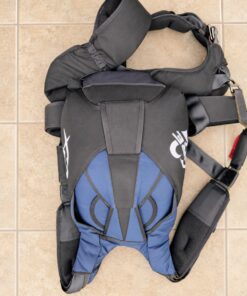
Used RIG SWS SFIRE 2

€3,200.00
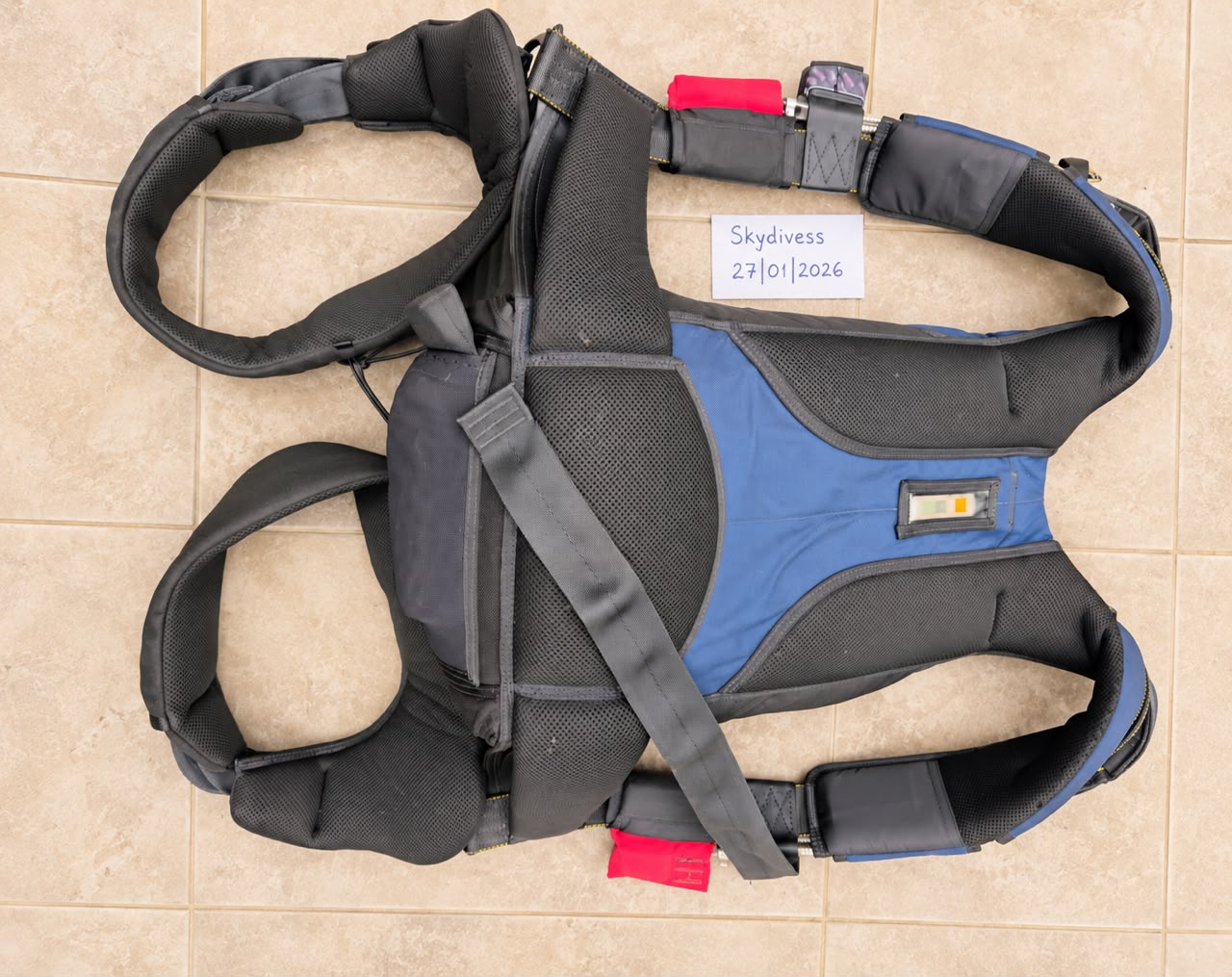
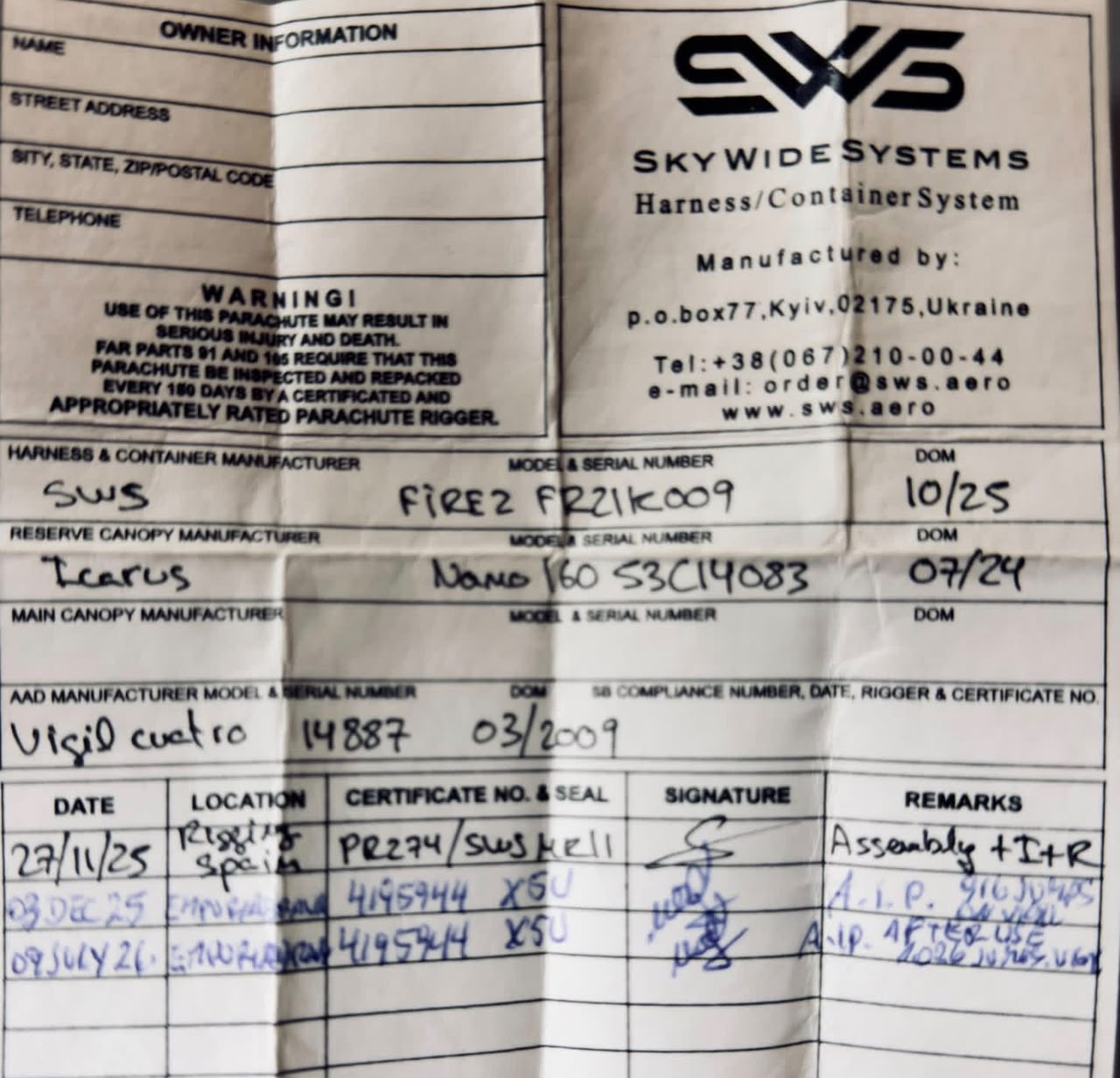
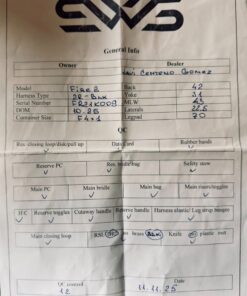
This Used SWS Fire 2 skydiving rig is a modern, low-jump setup manufactured in October 2025 with approximately 150 jumps. It features an SWS SkyWideSystems Fire 2 harness/container, size F4+1, with a 2R-BLK harness and a clean black, grey and blue colour scheme. Harness measurements include MLW 43, Back 42, Yoke 31, Laterals 22.5 and Leg Pads 70, making the sizing information clear for buyers who want to compare the rig with their own body measurements.
The system includes an Icarus Nano 160 reserve canopy, manufactured in July 2024, giving the setup a relatively recent reserve with a compact pack-volume design. A Vigil Cuatro AAD is also included, with a recorded date of 03/2009. Because AAD serviceability depends on manufacture date, battery history, cutter condition and maintenance records, the unit should be checked and confirmed by a qualified rigger before use.
Overall, this is a strong used rig option for an appropriately sized jumper looking for a recent harness/container with comparatively low use and a modern reserve setup. The rig should receive a complete professional inspection before jumping, including checks of the harness webbing, stitching, hardware, three-ring system, reserve system, AAD installation and overall component compatibility. A main canopy has not been specified as included, so any main should be selected separately according to experience level, exit weight, container compatibility and rigger guidance.
Used SWS Fire 2 Skydiving Rig – Low-Jump Harness/Container with Icarus Nano 160 Reserve and Vigil AAD
This Used SWS Fire 2 skydiving rig offers a modern harness-and-container platform with relatively low use, a recent October 2025 manufacture date, an Icarus Nano 160 reserve, and a Vigil automatic activation device.
The container has approximately 150 jumps, making it a comparatively recent used setup for a jumper searching for modern equipment without necessarily purchasing every component new Used RIG SWS SFIRE 2.
The Fire 2 was developed as a redesigned successor to the original Fire system. The manufacturer’s documented design direction includes improved harness stability, reinforced lateral integration, a slimmer container profile, and magnetic riser covers. These features were developed to improve stability across contemporary skydiving disciplines while keeping the system comfortable and streamlined.
Harness and Container Specifications
Manufacturer: SWS – SkyWideSystems
Model: Fire 2
Date of Manufacture: October 2025
Approximate Jumps: 150
Container Size: F4+1
Harness Type: 2R-BLK
Main Lift Web: 43
Back: 42
Yoke: 31
Laterals: 22.5
Leg Pads: 70
Colour: Black, grey and blue
These measurements should be compared carefully with the buyer’s body measurements rather than assuming that container size alone determines correct fit.
Harness fit is safety-critical.
Therefore, prospective buyers should have the measurements reviewed by an experienced dealer, instructor, or qualified parachute rigger before considering the system suitable.
Icarus Nano 160 Reserve Canopy
The reserve included with this setup is an Icarus Nano 160 manufactured in July 2024.
The Nano is designed as a low-pack-volume reserve.
Icarus describes the Nano as a rectangular 7-cell reserve constructed from low-porosity, low-pack-volume fabric with Spectra lines and a fully open nose. The manufacturer states that its low-volume construction can reduce pack volume compared with its standard reserve design.
Reserve canopy suitability must still be determined according to jumper exit weight, experience, container compatibility, local requirements and qualified rigger assessment.
Vigil Automatic Activation Device
The system is listed with a Vigil Cuatro AAD, with 03/2009 recorded.
That date deserves particular verification before the rig is advertised as ready to jump.
Vigil currently gives its electronic components and cutter a maximum service life of 20 years from the date of manufacture. However, units manufactured before October 2018 were supplied under earlier battery-life requirements, and battery replacement history can materially affect current serviceability.
Therefore, the final listing should state the date exactly as recorded and avoid implying current AAD serviceability until the label, battery history, cutter and system have been checked by a qualified rigger.
Important Pre-Purchase Inspection Information
Because this is life-support equipment, every used component should be professionally inspected before use.
Important checks include:
Harness webbing condition.
Container stitching.
Three-ring assemblies.
Risers.
Closing loops.
Reserve pin and cable system.
Main and reserve deployment components.
Leg straps.
Hardware.
Riser covers.
AAD installation.
Reserve packing records.
Reserve canopy fabric and lines.
Any repair or modification history.
The fact that a rig has relatively few jumps does not replace a professional inspection.
Why Consider This Used Rig
One of the strongest reasons to consider this setup is the relatively recent Fire 2 container manufacture date.
October 2025 makes the harness/container significantly newer than many complete systems circulating on the used market.
Approximately 150 jumps also suggests comparatively moderate use, although actual condition should always be verified visually and by a rigger.
The Nano 160 reserve also provides a modern low-pack-volume reserve configuration.
Consequently, the setup may appeal to a buyer who already understands the harness dimensions and reserve sizing required for their experience level.
How Good Is the Fire 2 Design
The Fire 2 was developed specifically as a major redesign rather than simply a cosmetic update.
Documented changes include revised harness geometry, improved lateral integration, reduced container bulk, magnetic riser covers, and a cleaner central panel design.
Those characteristics can make it attractive to jumpers involved in modern sport skydiving disciplines where container stability is important.
Why Correct Harness Fit Is Critical
A parachute harness should not be purchased based only on height or body weight.
Main lift web, yoke, back length, lateral measurements and leg-pad dimensions all influence fit.
A properly fitted harness should remain secure through deployment and under canopy while allowing comfortable movement during freefall.
An incorrectly sized harness can compromise both comfort and safety.
Therefore, the supplied dimensions should be treated as essential technical information rather than optional listing details.
Where This Rig Can Be Used
The equipment is intended for sport skydiving where approved by the relevant dropzone, national aviation authority, rigging rules and training organization.
Actual suitability depends on:
Jumper licence level.
Experience.
Exit weight.
Main canopy choice.
Reserve wing loading.
AAD configuration.
Dropzone requirements.
Harness fit.
Rigger approval.
When This Rig Makes Sense
This setup makes the most sense for a jumper who already has enough experience to understand container sizing, reserve sizing and canopy compatibility.
A first-time equipment buyer should have an instructor or qualified rigger involved before making a final decision.
Why Professional Inspection Matters
Skydiving equipment is life-support equipment.
Even excellent-looking gear can contain hidden wear.
Therefore, appearance alone should never determine airworthiness.
A qualified rigger should inspect the complete system before purchase, packing or jumping.
parachute jump australia
The phrase parachute jump australia usually relates to Australian skydiving locations and operations.
A privately owned sport rig should meet the rules of the country and dropzone where it will actually be jumped.
skydive byron bay
skydive byron bay commonly relates to Australian commercial skydiving.
Personal equipment requirements can differ from tandem equipment provided by a commercial operator.
weight limit skydiving
weight limit skydiving is particularly relevant when choosing personal equipment.
Exit weight affects harness suitability, reserve loading and main-canopy loading.
This should be calculated before purchasing the system.
cairns skydiving
cairns skydiving is associated with Australian jumping locations.
Local operating requirements should always be checked before bringing privately owned equipment to a dropzone.
skydiving helmet
A skydiving helmet is another important item in a complete personal equipment setup, although no helmet is included in this rig unless specifically stated.
skydive helmets
skydive helmets are available in open-face and full-face configurations.
Helmet selection is separate from harness and container sizing.
hook blade knife
A hook blade knife can be carried as an emergency cutting tool by experienced skydivers.
It is not listed as included with this system.
tracking jump
A tracking jump places particular importance on secure container design and equipment discipline because the jumper may experience substantial relative airflow.
parachute rig
This parachute rig consists primarily of the harness/container, reserve canopy and AAD components described in the listing.
The main canopy has not been specified in the supplied information and should therefore not be implied as included.
linewear
linewear should be inspected on every canopy.
For this listing, reserve line condition should be confirmed during professional inspection.
base jumping
base jumping uses specialized equipment and procedures.
This sport skydiving container should not automatically be represented as BASE equipment.
sky helmet skydiving
A sky helmet skydiving search normally relates to head protection and camera-compatible skydiving helmets rather than the parachute system itself.
wingsuit sport
wingsuit sport places specific requirements on equipment configuration, experience and deployment technique.
Compatibility should be discussed with qualified instructors and riggers.
vector wingsuit
The phrase vector wingsuit may relate to rigs or configurations used for wingsuit flying.
It is separate from the SWS platform listed here.
full face skydiving helmet
A full face skydiving helmet provides facial coverage and is commonly used in sport jumping.
It is not part of the supplied equipment unless listed separately.
skydiving downsizing chart
A skydiving downsizing chart should not be used as the sole basis for selecting a main or reserve.
Experience, currency, exit weight and professional instruction should all influence canopy selection.
landing flight risers
landing flight risers and riser controls form part of canopy flight.
Any risers included with a future main should be checked for condition and compatibility.
fire parachute
The phrase fire parachute may relate to the SWS Fire family of harness/container systems.
This listing specifically concerns the newer Fire 2 sport container.
cypress fire skydiving
The phrase cypress fire skydiving may combine AAD and container search terminology.
This particular setup is listed with a Vigil rather than a CYPRES unit.
skydiving rigging
skydiving rigging is critical to safe equipment ownership.
Reserve installation, AAD installation, inspections and repacks should be performed according to applicable regulations by qualified personnel.
baseline jumping
The phrase baseline jumping may sometimes be used incorrectly for BASE jumping.
Sport skydiving and BASE jumping use different equipment systems and operating environments.
sky diving helmet
A sky diving helmet should fit securely without interfering with handles, visibility or emergency procedures.
hook knife skydiving
A hook knife skydiving accessory is an emergency cutting tool.
Experienced jumpers may choose to carry one according to training and local practice.
landing flight risers
Correct riser condition and control integrity remain important parts of canopy flight.
These should be checked whenever a main canopy is installed.
skydiving glasses
skydiving glasses or goggles protect the eyes during freefall.
They are separate personal accessories and are not listed as part of this rig.
nude parachute jump
A nude parachute jump is unrelated to the technical specification of this equipment.
Regardless of jump theme, approved safety equipment and dropzone procedures remain necessary.
ifly colorado springs
ifly colorado springs relates to indoor bodyflight rather than parachute deployment.
Tunnel flying does not require this parachute system.
skydive hook knife
A skydive hook knife is an optional emergency accessory and is not listed as included here.
skydiving helmet full face
A skydiving helmet full face configuration can provide additional wind and facial protection during sport jumps.
skydiving blue hole belize
skydiving blue hole belize relates to destination jumping.
Travelling with personal gear requires checking airline, customs, dropzone and local regulatory requirements.
smallest canopy
The smallest canopy is not automatically the most desirable choice.
Canopy selection should match skill, currency, weight and training.
skydiving speed
skydiving speed varies according to body position, discipline and formation.
Secure container and harness fit become particularly important in high-speed orientations.
wing suits for sale
wing suits for sale relates to separate flight equipment.
A wingsuit should be selected according to experience and instructor recommendations.
skydiving nude
skydiving nude is unrelated to the mechanical specifications of this rig.
Equipment and procedural requirements remain unchanged.
parts of a parachute
Important parts of a parachute system can include:
Harness.
Container.
Main canopy.
Reserve canopy.
Deployment bag.
Pilot chute.
Bridle.
Risers.
AAD.
Reserve deployment components.
This particular listing identifies the harness/container, reserve and AAD, but does not provide details of a main canopy.
container skydive
A container skydive search normally refers to the harness/container portion of a personal rig.
Here, that component is the October 2025 SWS Fire 2.
g35 helmet
A G35 helmet is a separate piece of personal protective equipment and is not listed with this package.
best skydiving helmet
The best skydiving helmet depends on discipline, fit, visibility, audibility preferences and camera requirements.
It does not change the technical sizing of this rig.
skydive belize
skydive belize relates to destination skydiving.
A privately owned rig should be checked against the destination operator’s equipment policies.
freefly pud handle
A freefly pud handle is a main deployment handle configuration used on some sport rigs.
The specific main pilot-chute handle configuration on this system should be confirmed rather than assumed.
gliding suit wingsuit
A gliding suit wingsuit is specialized equipment used after appropriate training.
Suit compatibility with any rig should be discussed with experienced wingsuit instructors and riggers.
jumper pilot
The phrase jumper pilot can refer to either parachutists or jump-aircraft operations depending on context.
The rig remains personal skydiving life-support equipment.
crw skydiving
CRW skydiving involves canopy relative work.
Equipment choices for this discipline can differ from general freefall equipment.
gear bag skydive
A gear bag skydive accessory can protect the rig during transportation and storage.
No gear bag is stated as included unless separately confirmed.
skydiving equipment list
A general skydiving equipment list may include:
Harness/container.
Main canopy.
Reserve canopy.
AAD.
Helmet.
Altimeter.
Goggles.
Jumpsuit.
Audible altimeter.
Hook knife.
Gear bag.
This listing should only advertise the items actually included.
indoor wingsuit
indoor wingsuit facilities involve specialized wind-tunnel training and do not require a parachute deployment system during the tunnel session.
can you wear glasses while skydiving
The question can you wear glasses while skydiving generally relates to suitable goggles or helmet systems that can accommodate prescription eyewear.
wingsuit
A wingsuit changes freefall aerodynamics substantially.
Only qualified jumpers with appropriate training should determine whether a particular container setup is suitable.
skydiving website
A professional skydiving website listing used equipment should provide transparent DOM information, jump numbers, harness measurements, reserve details, AAD information and inspection status.
cookie g4 helmet
The Cookie G4 helmet is a popular full-face skydiving helmet category.
No helmet is included in this listing unless explicitly added.
base canopy
A base canopy is designed for BASE jumping applications and should not be confused with a conventional sport skydiving main or reserve.
new skydive
A new skydive equipment buyer should involve instructors and riggers rather than choosing components solely from online specifications.
#skydiving latest
The #skydiving latest search phrase often appears with current gear, training and community content.
For used equipment, current inspection status matters more than how recently the model was discussed online.
canopy flight
canopy flight performance depends heavily on canopy size, wing loading, design, experience and environmental conditions.
The Nano 160 in this listing is the reserve rather than a routine main canopy.
skydiver goggles
skydiver goggles provide eye protection during freefall.
They are separate from the harness/container system.
speed sky diving
speed sky diving involves exceptionally high freefall speeds and requires advanced training and carefully selected equipment.
fly suits
fly suits or jumpsuits are chosen according to discipline, body type and desired aerodynamic characteristics.
skydiving rig
As a skydiving rig, this setup should be evaluated as a complete life-support system rather than simply as an apparel purchase.
Fit, compatibility, documentation and inspection are essential.
safire 3
The Safire 3 is a sport main canopy model and should not be confused with the Icarus Nano 160 reserve installed in this system.
No Safire 3 main has been stated as included.
skydiving gliding suit
A skydiving gliding suit normally refers to wingsuit-type equipment.
Appropriate experience and training are required before combining specialized flight equipment with a personal rig.
fluid wings
Fluid Wings manufactures sport parachute canopies.
Any main canopy considered for this container should be checked against the container’s approved sizing range and rigger recommendations.
price of wingsuit
The price of wingsuit equipment is separate from the value of this harness/container system.
tandem wingsuit
The phrase tandem wingsuit should not be treated as a standard application of this personal sport rig.
Specialized disciplines require their own training and equipment standards.
skydiving tube
A skydiving tube is normally used as a freefall visual or performance accessory by experienced jumpers.
It is not included with the system described here.
Why This Rig Is Attractive on the Used Market
The strongest selling point is the recent October 2025 Fire 2 harness/container with only approximately 150 jumps.
That gives buyers a comparatively recent container with modern Fire 2 design features rather than an older-generation harness.
The black, grey and blue colour combination also provides a clean, versatile appearance.
The Icarus Nano 160 reserve has a July 2024 manufacture date, so it is also comparatively recent.
The AAD requires more careful presentation because the recorded 03/2009 date needs to be verified against the actual unit information and maintenance records.
Why the Reserve Is Important
A reserve is not simply a secondary canopy.
It is an emergency parachute.
Its size, condition, packing history and compatibility matter.
The Nano design uses a 7-cell rectangular planform and low-pack-volume construction. Icarus lists sizes including 160 square feet and recommends canopy selection based on parachutist skill and activity.
Why the AAD Information Must Be Transparent
The AAD should never be advertised merely as “working” without documentation.
Vigil states that its units have a 20-year service life, while battery requirements depend partly on manufacture and service history.
Therefore, a buyer should be shown:
AAD identification.
Recorded manufacture date.
Battery/service records.
Cutter information.
Any factory service documentation.
Current self-test condition.
Rigger inspection status.
This transparency improves both safety and buyer confidence.
How to Evaluate Overall Condition
The approximate 150 jumps provide useful context, but jump count alone does not determine condition.
A buyer should also consider:
Packing wear.
Harness wear.
Exposure to moisture.
Dust and sand exposure.
Landing history.
Any cutaways.
Repairs.
Container modifications.
Hardware condition.
Storage environment.
Reserve history.
AAD history.
Professional inspection remains the final reference.
Important Buyer Information
The supplied information does not identify a main canopy.
Therefore, this listing should not state or imply that a main is included unless one is later confirmed.
The current documented components are:
SWS Fire 2 harness/container.
Icarus Nano 160 reserve.
Vigil AAD as listed.
Any additional equipment should be separately identified.
Final Section 1 Assessment
This used SWS Fire 2 rig offers an attractive basis for a modern personal skydiving setup.
The harness/container was manufactured in October 2025 and has approximately 150 jumps.
It uses an F4+1 container with a 2R-BLK harness.
Recorded harness measurements include an MLW of 43, back measurement of 42, yoke of 31, laterals of 22.5 and leg pads of 70.
The black, grey and blue colour scheme gives the system a clean modern appearance.
The reserve is an Icarus Nano 160 manufactured in July 2024. The Nano is a 7-cell rectangular reserve designed around low-pack-volume construction.
The listed Vigil AAD requires additional verification because the recorded date is March 2009. Vigil currently specifies a maximum 20-year service life, while older units also have battery replacement requirements that depend on their manufacture and subsequent service history.
Consequently, the strongest way to market this rig is with complete transparency.
Present the Fire 2 as the recent, approximately 150-jump harness/container it is.
Present the Nano 160 with its actual July 2024 manufacture date.
Present the Vigil using the exact recorded information rather than making unsupported claims about remaining service life or battery condition.
Finally, have the complete system inspected by a qualified rigger before it is represented as ready to jump.
For an appropriately sized and experienced buyer, this setup can provide a modern foundation with a recent container, adjustable sport harness dimensions, low-volume reserve technology and the flexibility to install a compatible main canopy selected according to experience, exit weight, container compatibility and professional advice.
Section 2 – Fit, Condition, Reserve Compatibility, AAD Review, Inspection and Buyer Considerations
Understanding the Rig as a Complete Life-Support System
A used skydiving rig should never be evaluated as a simple piece of sporting equipment.
It is a life-support system made up of several components that must work together correctly.
The harness must fit the jumper.
The container must accept the intended canopies.
The reserve must be suitable for the jumper’s exit weight and experience.
The AAD must be within service requirements.
The deployment system must be complete and correctly assembled.
For this reason, the condition of one individual component does not determine the overall suitability of the rig.
A recent harness/container can still require inspection.
A relatively new reserve can still require a repack or compatibility confirmation.
An older AAD may require particular attention.
The best approach is to evaluate the system as a whole.
Why Harness Fit Is One of the Most Important Factors
The harness measurements are especially important because the harness connects the jumper directly to the parachute system.
A good fit should hold the jumper securely without causing unnecessary restriction.
The main lift web, back measurement, yoke, laterals and leg pads all influence fit.
A buyer should not assume that similar height or weight automatically means the harness will fit correctly.
Two people of the same height can have very different torso dimensions.
Shoulder width can vary.
Hip position can vary.
Leg proportions can vary.
For that reason, the supplied measurements should be compared carefully with the jumper’s own measurements.
Main Lift Web Considerations
The main lift web plays a central role in torso fit.
If it is too long, the rig can sit lower than intended.
If it is too short, the system can feel restrictive.
A correct fit helps position the main and reserve handles where the jumper expects them.
It also affects comfort during freefall and under canopy.
Back Measurement
The back dimension influences how the container sits along the jumper’s torso.
If the back length does not match well, the container may sit too high or too low.
This can affect comfort and accessibility.
A qualified fitter or rigger should help determine whether the measurement is appropriate.
Yoke Fit
The yoke passes over the shoulders and helps stabilize the container.
Correct yoke sizing is important for both comfort and security.
A yoke that is too narrow may feel restrictive.
A yoke that is too wide may allow unwanted movement.
Laterals
The laterals help hold the container close to the body.
Their length affects how tightly the lower portion of the rig sits against the jumper.
Correct lateral fit can improve stability during freefall.
This is especially important in dynamic body positions.
Leg Pads
Leg-pad length affects comfort and security around the upper legs.
Pads that are too short may create pressure points.
Pads that are too long may not sit correctly.
The buyer should check that the leg straps and pads fit securely without excessive movement.
Why an Actual Fitting Is Better Than Guessing
Measurements are useful.
However, nothing replaces an actual fitting.
The jumper should put the rig on.
The leg straps should be adjusted.
The chest strap should be positioned correctly.
The jumper should move through normal body positions.
Handle locations should be checked.
A knowledgeable rigger or instructor should observe the fit.
This is especially important for a buyer purchasing remotely.
Buying the Rig Remotely
If the buyer cannot inspect the system in person, additional documentation becomes more important.
Useful information can include:
Detailed front photographs.
Detailed back photographs.
Harness label photographs.
Container label photographs.
Reserve data-card photographs.
AAD information.
Close-ups of hardware.
Close-ups of the three-ring system.
Photos of leg straps.
Photos of riser covers.
Photos of the reserve pin area.
Any repair documentation.
A remote buyer should still plan for a professional inspection after receiving the rig.
Evaluating Container Condition
The harness/container was manufactured relatively recently and has approximately 150 jumps.
That can be attractive, but jump count alone should not determine condition.
A rig with 150 clean jumps may look very different from one exposed repeatedly to sand, dust, water or rough landings.
Exterior Fabric Inspection
The container fabric should be checked for:
Abrasion.
Cuts.
Burns.
Fraying.
Discoloration.
Chemical damage.
Loose stitching.
Heavy dirt.
Surface wear is normal on used equipment.
However, structural damage should be evaluated professionally.
Stitching Inspection
Stitching is critical to harness/container integrity.
Important areas include:
Harness junctions.
Main lift web attachment points.
Laterals.
Leg-strap areas.
Container seams.
Riser-cover areas.
Any loose, cut or damaged stitching should be inspected by a qualified rigger.
Webbing Condition
Harness webbing should be examined carefully.
Look for:
Cuts.
Fraying.
Excessive fuzzing.
Chemical contamination.
Heat damage.
Abrasion.
Discoloration.
Any questionable webbing deserves professional evaluation.
Hardware Condition
Metal hardware should be inspected for:
Corrosion.
Cracks.
Deformation.
Sharp edges.
Unusual wear.
Damage.
The hardware should move as intended without binding.
Three-Ring System
The three-ring release system is one of the most important emergency components on the harness.
It should be kept clean and inspected regularly.
The rings should move freely.
The webbing should not be twisted.
The release cables should be clean and correctly routed.
Any maintenance or inspection should follow accepted rigging procedures.
Reserve Handle Area
The reserve handle should be secure and correctly positioned.
It should not be hidden by poor harness fit.
The cable and housing should be inspected according to proper maintenance procedures.
Main Deployment System
The supplied information does not specify a main canopy.
Therefore, any future main deployment setup should be confirmed separately.
Important compatibility points include:
Main canopy pack volume.
Deployment bag.
Pilot chute.
Bridle.
Main risers.
Closing loop.
Handle configuration.
The container should not be represented as complete for jumping until all required components are properly installed.
Why Main Canopy Compatibility Matters
Not every canopy will fit every container correctly.
A canopy that is too large can create excessive packing pressure.
A canopy that is too small can lead to a loose pack tray and poor container geometry.
Manufacturer sizing guidance should be followed.
A rigger should confirm compatibility before installation.
Reserve Canopy Review
The installed reserve is an Icarus Nano 160 manufactured in July 2024.
Its relatively recent manufacture date can be attractive to buyers.
However, reserve suitability depends on more than age.
The jumper’s exit weight, experience, licensing level and local regulations should all be considered.
Reserve Wing Loading
Wing loading is an important factor in reserve selection.
A smaller reserve can produce higher descent and landing speeds at the same jumper weight.
A larger reserve generally produces lower wing loading.
The correct reserve choice should reflect realistic emergency conditions, not only ideal landings.
Why Reserve Selection Should Be Conservative
Reserve deployments happen during abnormal situations.
The jumper may be:
Low on altitude.
Disoriented.
Injured.
Off the normal landing area.
Under stress.
For that reason, reserve selection should prioritize controllability and suitability rather than minimum pack volume.
Reserve Packing History
The reserve data card should be reviewed.
It should show:
Packing dates.
Rigger information.
Inspection records.
Any reserve rides.
Any repairs.
Any service notes.
The reserve should be repacked according to the legal interval that applies in the country where it will be used.
Reserve Fabric Inspection
A qualified rigger should inspect the reserve for:
Fabric damage.
Line condition.
Stitching.
Connector-link condition.
Slider condition.
Deployment components.
Any repair history.
The reserve should not be assumed airworthy only because the manufacture date is recent.
Reserve Lines
Reserve lines should be checked for wear, damage and correct routing.
Any unusual wear should be evaluated professionally.
Why Reserve Compatibility Matters
The reserve must fit the container correctly.
Pack volume affects closing pressure and container shape.
A properly matched reserve should sit within the manufacturer’s intended sizing range.
AAD Review
The AAD listed with the rig is a Vigil Cuatro with a recorded date of March 2009.
That information should be handled carefully.
The actual label on the unit should be photographed.
The serial number should be checked.
Battery or service records should be reviewed.
The cutter and control unit should be inspected.
Why the Recorded AAD Date Needs Verification
The date may refer to:
Manufacture.
Installation.
Service.
A prior component.
A record copied from another document.
For that reason, the actual device label is the best starting point.
The listing should avoid making claims that cannot be confirmed.
AAD Self-Test
Before use, the AAD should complete its normal self-test.
However, successful startup alone does not prove that the unit meets all service requirements.
Age, battery history, cutter condition and manufacturer guidance still matter.
AAD Service Documentation
Any available documentation should be retained.
Useful records include:
Original purchase paperwork.
Service invoices.
Battery replacement records.
Factory inspection records.
Cutter replacement documentation.
Serial-number information.
A complete history improves buyer confidence.
Why AAD Transparency Matters
A buyer needs to know whether the unit can remain in service.
It is better to provide the exact known information than to make an unsupported claim.
Clear documentation also protects the seller from misunderstandings.
Packing and Assembly
A complete sport rig should be assembled by someone qualified.
The main, reserve, AAD, risers, deployment bag, pilot chute and closing system must all be compatible.
Improper assembly can create serious risk.
Why a Fresh Inspection Before Sale Is Valuable
A professional inspection before sale can identify issues early.
It can also make the listing more credible.
The rigger may be able to confirm:
Harness condition.
Container condition.
Reserve condition.
AAD status.
Component compatibility.
Visible wear.
Needed maintenance.
Why Buyers Often Prefer a Rigger Inspection
Used skydiving gear is frequently sold between people who do not know each other.
A third-party inspection provides more objective information.
It can reduce uncertainty for both parties.
Inspecting the Risers
If risers are included, they should be checked for:
Webbing wear.
Ring condition.
Toggle attachment.
Brake-line wear.
Connector condition.
RSL connection if fitted.
Any questionable wear should be assessed before jumping.
Inspecting Riser Covers
The Fire 2 uses modern riser-cover design intended to stay secure in freefall while allowing proper deployment.
The covers should still be checked for condition and correct operation.
Magnets or closing components should not be damaged or contaminated.
Freefly Considerations
Modern rigs may be used in multiple freefall orientations.
For dynamic flying, the container should remain secure.
Handles should not be exposed unnecessarily.
Riser covers should remain closed.
The main closing system should be correctly tensioned.
This is another reason why container sizing and pack volume matter.
Wingsuit Considerations
Wingsuit flying can place different demands on deployment systems.
A wingsuit flyer should discuss the complete configuration with experienced instructors and riggers.
The fact that a container is modern does not automatically make every main canopy or pilot-chute setup appropriate for wingsuit flying.
Tracking and Angle Flying
Fast horizontal movement can create strong airflow across the container.
Correctly secured flaps, handles and riser covers are important.
Jumpers should use equipment appropriate to their training level.
Canopy Selection for the Main
The main canopy should be selected separately from the reserve.
Important factors include:
Experience.
Jump numbers.
Currency.
Exit weight.
Landing accuracy.
Previous canopy progression.
Dropzone requirements.
Instructor recommendations.
The container’s pack-volume range must also be respected.
Why Downsizing Should Not Be Based on Container Size
A buyer may be tempted to choose a small main simply because it fits the container.
That is not a safe way to select a canopy.
The correct canopy size should be determined by skill and experience first.
Container compatibility comes after that.
Main Canopy Condition
When a main is eventually paired with the rig, it should be inspected for:
Fabric condition.
Line wear.
Slider condition.
Stabilizers.
Seams.
Connector links.
Brake lines.
Any repair history.
Understanding Jump Count
The harness/container is stated to have approximately 150 jumps.
That is useful information.
However, jump count is only one measure of use.
Storage and environment also matter.
Environmental Exposure
A rig used in dry grass conditions may show different wear from one used in sandy or coastal environments.
Salt, sand and moisture can accelerate wear.
Storage History
Proper storage helps preserve equipment.
The rig should ideally be stored:
Dry.
Cool.
Away from sunlight.
Away from chemicals.
Away from pests.
Away from excessive humidity.
UV Exposure
Sunlight can damage nylon over time.
Frequent prolonged UV exposure should be avoided.
Moisture Exposure
Wet gear should not be stored without proper drying.
Moisture can contribute to corrosion, mildew and fabric damage.
Chemical Exposure
Parachute materials should be kept away from fuel, solvents, acids, bleach and similar chemicals.
Chemical contamination can weaken fabric or webbing.
Cleaning
Routine cleaning should be conservative.
The rig should not be exposed to harsh detergents unless the manufacturer’s instructions allow it.
Professional advice should be sought for significant contamination.
Transport
A gear bag can help protect the system from dirt and abrasion.
During vehicle transport, the rig should be kept away from sharp objects and liquids.
Airline Travel
Jumpers travelling with personal equipment should check airline and airport rules in advance.
Security staff may ask questions about the AAD or parachute system.
Documentation can make travel easier.
Insurance and Documentation
Buyers may wish to keep photographs and serial numbers for insurance purposes.
Useful records include:
Harness/container serial number.
Reserve serial number.
AAD serial number.
Purchase receipt.
Inspection report.
Photos of the complete system.
Resale Value
Used skydiving equipment generally holds value better when documentation is complete.
A well-documented rig is easier for the next buyer to evaluate.
What Improves Buyer Confidence
A strong used-equipment listing should include:
Clear photographs.
Accurate manufacture dates.
Honest jump count.
Harness measurements.
Reserve details.
AAD information.
Repair history.
Inspection status.
What is and is not included.
Transparency usually increases buyer confidence.
What Should Not Be Claimed Without Proof
Avoid claims such as:
Never damaged.
Perfect condition.
Ready to jump.
Freshly serviced.
AAD fully current.
No repairs ever.
Unless those statements can be supported.
More precise wording is better.
Why Condition Should Be Described Objectively
Words like excellent or very good can be subjective.
It is often better to describe:
Number of jumps.
Visible wear.
Known repairs.
DOM.
Inspection status.
Service history.
This gives the buyer real information.
Understanding the Colour Scheme
The black, grey and blue colour combination gives the rig a modern appearance.
Dark colours can hide minor surface dirt better than very light colours.
However, colour should never be prioritized over fit and condition.
Why Recent Manufacture Date Is Attractive
A 2025 container is relatively recent.
That can mean:
Modern design features.
Less age-related fabric degradation.
Current-style harness geometry.
Potentially stronger resale appeal.
However, condition remains more important than date alone.
Why Approximately 150 Jumps Can Be Attractive
A container with around 150 jumps may have less wear than one with thousands of jumps.
However, jump count should still be considered together with environment and maintenance.
Fit for Different Body Types
The harness measurements may suit some jumpers very well and others poorly.
The buyer should not try to force a fit because the rest of the equipment looks attractive.
A harness that fits properly is far more important than colour or price.
Comfort Under Canopy
Correct leg-strap and harness fit affects comfort after deployment.
Pressure should be distributed appropriately.
The rig should not create excessive pinching.
Comfort in Freefall
The harness should remain stable without restricting natural movement.
The container should not shift excessively.
Emergency Handle Accessibility
Both emergency handles must remain accessible in normal and unusual body positions.
Harness fit influences this.
Why Practice Touches Matter
After obtaining a new rig, the jumper should practice locating handles on the ground.
This helps build familiarity.
Transitioning From Rental Gear
A jumper moving from student or rental gear to personal equipment should expect differences.
Handle locations may change.
Harness fit may feel different.
The main deployment system may differ.
The reserve and AAD may be different from familiar equipment.
These differences should be reviewed before jumping.
First Jump on a New-to-You Rig
A used rig may be new to the buyer.
The first jump should be approached conservatively.
The jumper should be familiar with all handles and components.
A gear check should be completed.
Gear Checks
Pre-jump gear checks should include:
Correctly routed straps.
Secure chest strap.
Secure leg straps.
Closed container.
Correct pin condition.
Handles in place.
AAD status.
Riser-cover condition.
Any local checklist requirements.
Reserve Pin Inspection
The reserve pin area should be checked according to proper gear-check procedures.
Nothing should interfere with the reserve closing system.
Main Pin Inspection
The main closing pin and loop should be checked before jumping.
Excessive looseness or damage should be addressed.
Closing Loop Condition
Closing loops wear over time.
A worn loop should be replaced before it becomes unsafe.
Pilot Chute Condition
If the main pilot chute is included later, its fabric, mesh, handle and kill-line system should be checked.
Bridle Inspection
The bridle should be checked for damage and correct routing.
Deployment Bag
The deployment bag should match the container and main canopy.
It should be inspected for wear and damage.
Reserve Pilot Chute
Reserve deployment components should be inspected during reserve repack and maintenance.
Reserve Closing Loop
The reserve closing loop is a critical component.
Its condition and installation should be handled by a qualified rigger.
Why Reserve Work Requires Qualification
Reserve systems are not an area for casual adjustment.
Inspection, packing and repairs must follow regulations and manufacturer guidance.
AAD Installation
The AAD cutter, control unit and cables should be installed correctly.
Incorrect installation can interfere with system operation.
Rigger Documentation
If the rig is inspected before sale, the buyer may benefit from written confirmation of what was checked.
This does not eliminate future inspection requirements, but it provides useful information.
Buying Without a Main Canopy
A rig without a main can still be a useful purchase.
It allows the buyer to choose a main separately.
However, that choice should be based on experience and compatibility.
Why This Can Be an Advantage
Some buyers already own a main.
Others want a specific canopy model.
Buying the container and reserve separately can provide flexibility.
Why It Can Also Require More Planning
The buyer still needs:
A compatible main.
Correct risers.
A deployment bag.
Pilot chute.
Bridle.
Any required hardware.
A complete inspection.
The total cost should be considered.
Budgeting for Additional Work
A buyer should plan for possible expenses such as:
Reserve repack.
AAD servicing or replacement.
Main canopy purchase.
Risers.
Deployment system components.
Minor repairs.
Professional inspection.
Shipping.
Why AAD Replacement Cost May Matter
If the listed AAD cannot remain in service, replacement may represent a significant additional cost.
That should be considered when evaluating the total value of the package.
Value of a Recent Reserve
A 2024 reserve can add value because it is comparatively recent.
However, condition and compatibility remain more important than manufacture date alone.
Value of a Recent Container
A 2025 container with around 150 jumps can be attractive because the harness/container itself has relatively little age.
This may appeal to someone who plans to keep the rig for many seasons.
Long-Term Ownership
A good rig can remain in service for many years when maintained correctly.
Long-term ownership depends on:
Proper storage.
Regular inspection.
Reserve repacks.
AAD maintenance.
Repairing wear early.
Avoiding chemical and UV damage.
Using compatible components.
Routine Owner Checks
The owner should regularly look for:
Loose threads.
Webbing wear.
Damaged hardware.
Dirty three-ring assemblies.
Closing-loop wear.
Handle security.
Container damage.
Any unusual condition.
When to See a Rigger
A rigger should be consulted when:
Damage is suspected.
Stitching appears loose.
The harness has been heavily abraded.
Hardware is damaged.
The reserve repack is due.
AAD condition is uncertain.
Component compatibility is unclear.
Why Early Maintenance Is Better
Small problems are easier to manage before they become larger problems.
A loose stitch or worn closing loop should not be ignored.
Safety Versus Cosmetic Wear
Not every mark on a rig is a safety issue.
Small surface scuffs may be cosmetic.
However, the buyer should not decide this without appropriate knowledge.
A rigger can distinguish cosmetic wear from structural concern.
Final Section 2 Assessment
This used SWS Fire 2 setup has several characteristics that can make it attractive to the right buyer.
The harness/container is relatively recent.
Its approximately 150-jump history suggests comparatively moderate use.
The reserve is also recent.
The system includes detailed harness measurements, which makes proper fit assessment easier.
However, the value of the rig depends on more than age.
Harness fit must be correct.
The reserve must be suitable for the jumper.
The container must match the intended main canopy.
The AAD information must be verified.
The entire system should be inspected professionally.
The strongest buying decision is therefore based on compatibility and documentation rather than appearance alone.
A good buyer should review the harness measurements first.
Then confirm reserve suitability.
Then verify the AAD.
Then select a compatible main canopy.
Finally, the complete system should be assembled and inspected by a qualified rigger.
When those steps are handled correctly, a recent Fire 2 container with a Nano 160 reserve can provide a strong foundation for a personal sport skydiving system.
Its recent manufacture date, moderate use, modern harness/container design and comparatively recent reserve make it appealing, but transparent inspection and correct sizing remain essential before the equipment is considered ready for use.
Be the first to review “Used RIG SWS SFIRE 2”
Related products

used products

used products

used products

used products
used products
used products
used products
Reviews
There are no reviews yet.