


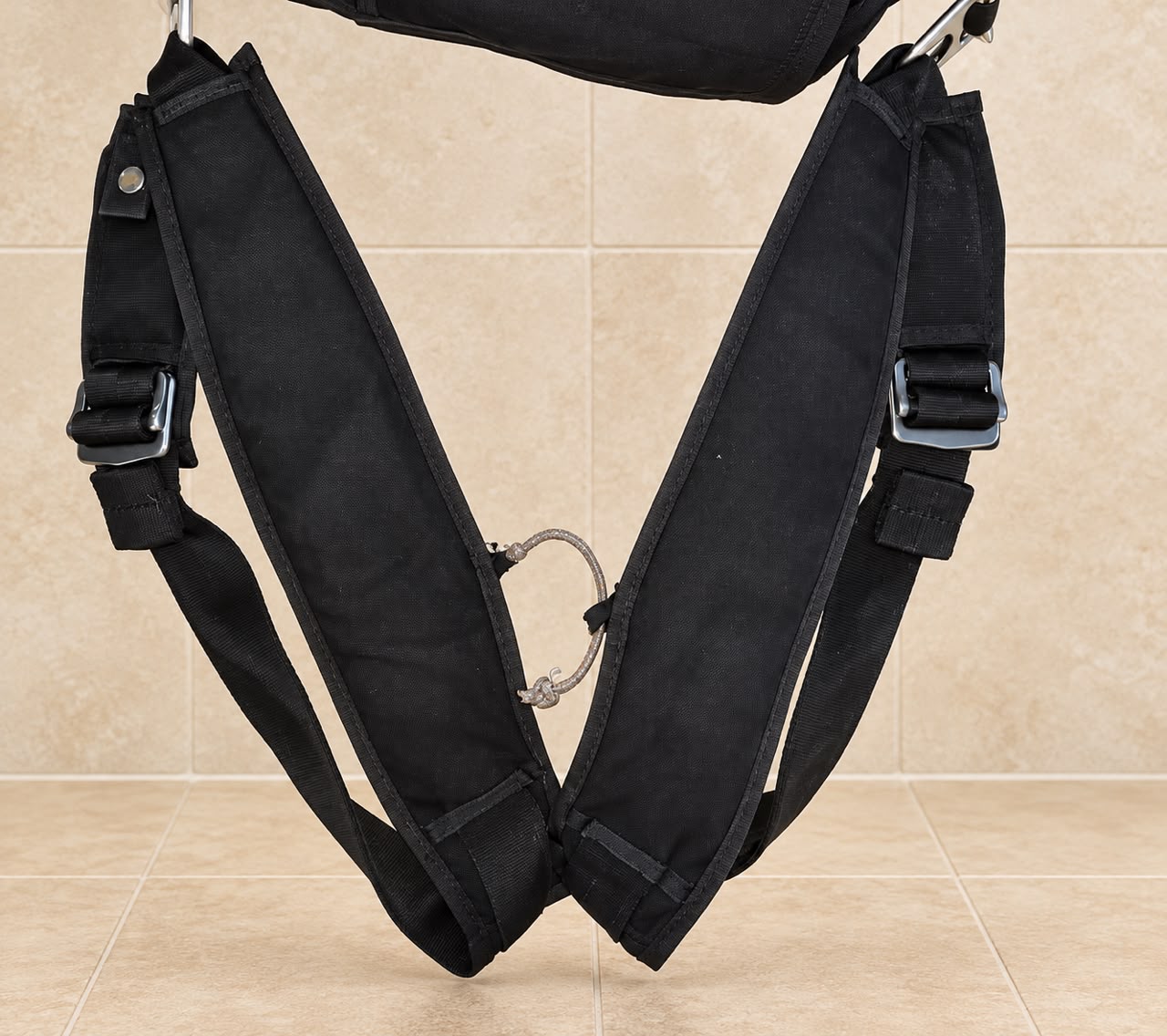


Used Vector V310


€4,650.00
Used Vector V310 Spider-Man Rig
Used Vector V310 Spider-Man skydiving rig in well-maintained condition, manufactured in 2019 and showing approximately 850–900 jumps. The main canopy is not included, giving the buyer flexibility to choose a suitable compatible main.
Included with the rig:
- Vector V310 harness/container
- DOM: 2019
- MLW 17.5 +1
- 3D padding
- Lazy bag + Classic pod
- PDR 143 reserve, DOM 2019
- 7 reserve repacks
- 0 reserve deployments
- CYPRES 2 Expert AAD, DOM 2019
- Recommended maintenance due around 2029
- Distinctive Spider-Man design
- Approximately 850–900 jumps
- Inspected and maintained annually by Véloce Parachutisme
The equipment is described as ready to jump with no immediate work required. Harness fit, current reserve status, AAD service condition,canopy has been confirmed by a qualified rigger and ready to use.
Used Vector V310 Spider-Man Rig – 2019 Harness/Container with PDR 143 Reserve and CYPRES 2 Expert
The Used Vector V310 offered here is a distinctive complete skydiving system built around a 2019 Vector V310 harness/container and presented in the well-known Spider-Man-themed configuration.
The seller describes it as the “official Spider-Man rig,” making the visual identity one of the most distinctive aspects of the system. More importantly, however, the equipment has a clear technical configuration and maintenance history that should matter more to a serious buyer than appearance alone.
The main canopy is not included in the sale.
The package includes the 2019 Vector V310 harness/container, a 2019 PDR 143 reserve canopy, and a 2019 CYPRES 2 Expert AAD.
The harness has a Main Lift Web measurement of 17.5 +1 and includes several comfort and packing-related options, including a lazy bag, classic pod, and 3D padding.
The complete system has approximately 850–900 jumps and, according to the seller, has been inspected and maintained annually by Véloce Parachutisme.
The seller describes the equipment as ready to jump and needing no immediate work, although any used parachute system should still receive a buyer-side inspection and fit confirmation before use.
Vector V310 Harness and Container
The V310 forms the structural center of the system.
UPT’s current fitment information places this container around:
Standard main canopy range: approximately 130–155 sq ft
Low-bulk main range: larger depending on design and pack volume
Standard reserve range: approximately 120–145 sq ft
The exact canopy model should always be checked because different materials and designs pack differently.
The seller is not including a main canopy, which gives the buyer flexibility to install a compatible main that matches both the container and personal canopy experience.
Why the Absence of a Main Canopy Can Be Useful
A complete rig without a main may initially seem less convenient, but it can actually benefit the right buyer.
The buyer is not forced to accept a canopy that may be unsuitable.
Instead, the main can be chosen based on:
Current jump experience.
Exit weight.
Recent canopy history.
Landing consistency.
Desired flight characteristics.
Actual pack volume.
Instructor guidance.
Container compatibility.
This is especially important with a compact container where canopy choice should never be dictated purely by what fits physically.
DOM 2019
The harness/container was manufactured in 2019.
That places it in a relatively modern generation compared with many older used sport rigs.
However, age should still be considered alongside total use.
With approximately 850–900 jumps, the container has seen meaningful service, so the buyer should focus on structural condition rather than calendar age alone.
Approximately 850–900 Jumps
The rig has around 850–900 jumps according to the supplied history.
That level of use makes maintenance history particularly important.
Areas that deserve careful inspection include:
Main lift web.
Leg straps.
Chest strap.
Three-ring system.
Riser covers.
BOC.
Main flap.
Reserve flap.
Hardware.
Handle pockets.
Closing-loop areas.
Structural stitching.
Padding.
A well-maintained higher-jump container can remain in very good working condition, but it should always be assessed physically.
Annual Maintenance by Véloce Parachutisme
The seller states that the equipment has been inspected and maintained annually by Véloce Parachutisme.
That is useful ownership history because regular professional attention can help identify wear before it becomes more significant.
A buyer should request any available service records, inspection notes, packing data cards, or invoices that support this maintenance history.
Ready-to-Jump Condition
The seller describes the rig as ready to jump with nothing needing immediate attention.
This is a strong selling point.
However, the phrase should be interpreted as the seller’s current condition statement rather than a replacement for the buyer’s own inspection.
Harness fit, reserve status, AAD status, and main-canopy compatibility still need to be confirmed for the new owner.
MLW 17.5 +1
The harness is listed with a Main Lift Web of 17.5 +1.
This measurement is one of the most important indicators of harness fit.
A buyer should compare it with personal body measurements rather than relying only on height or weight.
Torso length, shoulder width, hip dimensions, and leg proportions all influence the final fit.
Why Harness Fit Matters
A correctly fitting harness should keep the container close to the body.
It should not move excessively in freefall.
The leg straps should sit correctly.
The chest strap should remain comfortable.
Emergency handles should remain easy to reach.
A visually attractive rig is still the wrong rig if the harness does not fit.
3D Padding
The system includes 3D padding.
This can improve comfort around the back and harness contact areas.
Padding becomes especially noticeable during:
Aircraft rides.
Long jumping days.
Repeated gear-up cycles.
Canopy flight.
Ground movement.
However, padding does not compensate for poor harness sizing.
Correct dimensions remain the priority.
Lazy Bag Option
The rig includes a lazy bag option.
Deployment-bag configuration influences how the canopy and suspension lines are organized inside the container.
The bag should be inspected for:
Fabric condition.
Stitching.
Grommets.
Locking areas.
Bridle attachment.
Correct compatibility.
The next owner should be familiar with the exact packing system before use.
Classic Pod
A classic pod is also listed with the system.
The buyer should confirm whether this is the currently installed deployment bag or an additional configuration item.
Any deployment-bag change should be checked for compatibility with the selected main canopy and container volume.
PDR 143 Reserve
The reserve is a PDR 143, manufactured in 2019.
This is a strong size match for the V310.
UPT’s current sizing information places the V310 standard reserve range around 120–145 sq ft, making a 143-class reserve an appropriate physical fit for the container.
Seven Reserve Repacks
The reserve has had 7 repacks.
That provides useful maintenance context.
Each repack typically gives the rigger an opportunity to inspect the reserve and associated components.
The packing data card should be checked to confirm those entries and the current repack status.
Zero Reserve Deployments
The PDR 143 is reported to have 0 deployments.
This means the reserve has not been used in an emergency deployment according to the supplied history.
That is useful information, although current condition still matters more than deployment count alone.
Why Reserve Condition Matters
A reserve should be evaluated for:
Fabric condition.
Suspension lines.
Reinforcement tapes.
Stitching.
Freebag condition.
Pilot chute.
Packing history.
Storage environment.
Any previous repairs.
The fact that it has zero deployments does not remove the need for professional inspection.
CYPRES 2 Expert AAD
The rig includes a CYPRES 2 Expert manufactured in 2019.
The Expert model is designed for conventional sport skydiving use.
The unit should be checked for:
Exact DOM.
Serial number.
Self-test status.
Cutter condition.
Maintenance history.
Installation.
Display operation.
Important CYPRES Maintenance Information
The seller states that maintenance is due in 2029.
That aligns with Airtec’s 10-year recommended maintenance schedule for units manufactured from 2017 onward.
For a 2019 CYPRES 2, the manufacturer recommends service around 5 and 10 years, with a total service life of 15.5 years.
Therefore, the 2029 date should be understood as a recommended maintenance point rather than the unit’s final service-life date.
Why the 2019 AAD Adds Value
A 2019 AAD is substantially newer than many electronic devices found in older second-hand rigs.
That can reduce short-term replacement pressure.
However, buyers should still budget for the recommended 2029 service and eventual retirement at the end of the manufacturer-defined service life.
Spider-Man Design
The Spider-Man appearance gives the rig a highly recognizable visual identity.
For some buyers, that makes the system more appealing than a standard colorway.
However, aesthetics should remain secondary to:
Harness fit.
Structural condition.
Reserve status.
AAD condition.
Deployment-system condition.
Main-canopy compatibility.
Why This Rig Can Be Attractive
Several characteristics make the system appealing:
2019 Vector V310 container.
2019 reserve.
2019 CYPRES 2 Expert.
No reserve deployments.
Documented reserve repack history.
3D padding.
Lazy bag.
Classic pod.
Distinctive Spider-Man design.
Annual maintenance history.
No included main, allowing the buyer to choose an appropriate canopy.
Why Main Canopy Choice Matters
The absence of a main gives the buyer freedom, but that freedom should be used carefully.
A canopy should not be selected simply because it occupies the container correctly.
The jumper should first determine what canopy size and model are appropriate.
Then pack-volume compatibility should be checked.
parachute jump australia
For anyone researching parachute jump australia, personal equipment should be checked against current Australian rules, drop-zone requirements, reserve-repack standards, and local equipment procedures before use.
skydive byron bay
Anyone planning to skydive byron bay with privately owned equipment should confirm documentation and gear acceptance before travelling.
weight limit skydiving
The phrase weight limit skydiving is especially relevant when selecting the main canopy for this container.
The buyer should calculate exit weight rather than relying only on body weight.
cairns skydiving
For cairns skydiving, privately owned equipment should be confirmed with the intended operator beforehand.
skydiving helmet
A skydiving helmet is separate personal equipment and is not included unless specifically stated.
skydive helmets
Skydive helmets should be chosen according to fit, discipline, visibility, and personal preference.
hook blade knife
A hook blade knife is a separate emergency cutting tool and is not stated as included.
tracking jump
A tracking jump requires proper separation planning, break-off awareness, and secure equipment configuration.
parachute rig
This parachute rig includes the harness/container, reserve, and AAD, but does not include the main canopy.
linewear
Linewear will depend on whichever main canopy is installed.
Used mains should always be inspected before being added to the system.
base jumping
Base jumping uses different equipment and procedures.
This Vector system is intended for sport skydiving rather than BASE use.
sky helmet skydiving
The phrase sky helmet skydiving concerns separate head protection.
wingsuit sport
The wingsuit sport requires discipline-specific equipment and training.
Any intended wingsuit configuration should be reviewed with qualified instructors and riggers.
vector wingsuit
The phrase vector wingsuit can relate to configuring Vector systems for wingsuit use.
Actual suitability depends on the complete deployment setup rather than the container name alone.
full face skydiving helmet
A full face skydiving helmet is separate equipment and is not included.
skydiving downsizing chart
A skydiving downsizing chart should never be the sole basis for canopy selection.
Experience, exit weight, currency, landing performance, and coaching all matter.
landing flight risers
The phrase landing flight risers concerns canopy-control equipment and technique.
Any risers used with the future main should be inspected before installation.
fire parachute
A fire parachute is unrelated specialist equipment and is not part of this sport system.
cypress fire skydiving
The phrase cypress fire skydiving may appear in AAD-related searches.
The unit fitted here is a CYPRES 2 Expert and should be maintained according to Airtec requirements.
skydiving rigging
Professional skydiving rigging is essential when evaluating or assembling this system.
The selected main, reserve, AAD, deployment bag, pilot chute, and container must all work together correctly.
baseline jumping
The phrase baseline jumping may relate to BASE activity and does not describe the intended purpose of this rig.
sky diving helmet
A sky diving helmet is separate protective equipment and is not included.
hook knife skydiving
A hook knife skydiving accessory can form part of a jumper’s emergency equipment.
It is not stated as included.
landing flight risers
Landing flight risers should be inspected for webbing wear, stitching, hardware condition, and correct assembly.
skydiving glasses
Skydiving glasses or goggles are separate eye protection.
nude parachute jump
The phrase nude parachute jump does not change normal equipment requirements or inspections.
ifly colorado springs
iFLY Colorado Springs is an indoor body-flight facility and does not affect the rig’s technical condition.
skydive hook knife
A skydive hook knife is a separate emergency accessory and should be selected according to training and personal requirements.
skydiving helmet full face
A skydiving helmet full face is not part of the sale.
skydiving blue hole belize
Anyone planning skydiving blue hole belize with personal equipment should verify operator and travel requirements beforehand.
smallest canopy
The smallest canopy that fits the V310 is not automatically an appropriate canopy for the buyer.
Canopy progression should remain experience-led.
skydiving speed
Skydiving speed varies with discipline, body position, and equipment.
Secure handle retention and container maintenance remain important in faster freefall environments.
wing suits for sale
People searching wing suits for sale should treat wingsuit selection as a separate equipment and training decision.
skydiving nude
The phrase skydiving nude has no bearing on the technical specification of the rig.
parts of a parachute
The main parts of a parachute system represented here include the harness/container, reserve, AAD, deployment equipment, handles, and release system.
The main canopy remains to be selected.
container skydive
The container skydive component here is the 2019 Vector V310.
g35 helmet
A G35 helmet is separate personal equipment and is not included.
best skydiving helmet
The best skydiving helmet depends on fit, discipline, comfort, field of view, and personal preference.
skydive belize
Anyone planning to skydive belize should confirm personal-equipment acceptance with the relevant operation.
freefly pud handle
A freefly pud handle is one possible main deployment-handle style.
The actual deployment-handle configuration fitted to this rig should be checked directly.
gliding suit wingsuit
A gliding suit wingsuit requires appropriate experience and instruction.
The suit itself is not included.
jumper pilot
The phrase jumper pilot concerns aircraft operations rather than rig specification.
crw skydiving
CRW skydiving involves canopy relative work and requires specialist canopy and equipment decisions.
gear bag skydive
A gear bag skydive accessory can protect equipment during storage and transport but is not stated as included.
skydiving equipment list
A typical skydiving equipment list can include the complete rig, helmet, visual and audible altimeters, goggles, jumpsuit, and emergency cutting tool.
This listing provides the core rig minus the main canopy.
indoor wingsuit
Indoor wingsuit training takes place in specialist facilities and is separate from the equipment included here.
can you wear glasses while skydiving
For anyone asking can you wear glasses while skydiving, suitable goggles or helmet systems can often accommodate prescription eyewear.
wingsuit
A wingsuit is not included and should only be used with appropriate experience and a compatible deployment setup.
skydiving website
A reputable skydiving website can provide general information, but manufacturer manuals, qualified riggers, and instructors should take priority for equipment decisions.
cookie g4 helmet
A Cookie G4 helmet is separate equipment and is not included.
base canopy
A base canopy is intended for a different parachuting discipline and should not be installed simply because its dimensions appear compatible.
new skydive
A new skydive participant or recently licensed jumper should seek instructor guidance before buying a compact personal system.
#skydiving latest
For #skydiving latest technical information, current manufacturer manuals and service bulletins should take priority over social-media discussions.
canopy flight
Canopy flight experience should guide the selection of the main canopy eventually installed in this rig.
skydiver goggles
Skydiver goggles are separate personal equipment and are not included.
speed sky diving
Speed sky diving is a specialized discipline requiring advanced experience and suitable equipment configuration.
fly suits
Fly suits are separate garments and are not part of this sale.
skydiving rig
This skydiving rig provides the container, reserve, and electronic safety device while allowing the buyer to choose a suitable main.
safire 3
A Safire 3 is one possible main-canopy family.
The exact size should be checked against UPT pack-volume guidance and the jumper’s skill level before installation.
skydiving gliding suit
A skydiving gliding suit refers to wingsuit equipment and is not included.
fluid wings
Fluid Wings manufactures sport main canopies.
Any canopy from that manufacturer should be checked individually for pack volume and suitability before installation.
price of wingsuit
The price of wingsuit equipment is unrelated to the sale because no wingsuit is included.
tandem wingsuit
The phrase tandem wingsuit does not describe this system.
skydiving tube
A skydiving tube is a separate freefall accessory and is not included.
Why the V310 Size Matters
The V310 sits within a compact but versatile canopy range.
UPT currently lists standard main compatibility around 130–155 sq ft and standard reserve compatibility around 120–145 sq ft.
This makes the container useful for jumpers already operating comfortably within that canopy class.
Why the PDR 143 Is a Strong Match
A 143 sq ft reserve sits near the upper end of the V310 standard reserve range.
That allows the system to retain a substantial reserve size without relying on an unusually small emergency canopy.
Why Seven Repacks Matter
Seven repacks indicate repeated professional access to the reserve system.
The actual packing card should still be reviewed to confirm dates and identify any notes.
Why Zero Deployments Matter
A reserve with no deployment history has not been subjected to an emergency opening according to the seller.
However, storage, packing, and age still matter.
Why the CYPRES Schedule Should Be Understood Correctly
For a 2019 CYPRES 2, 2029 is the 10-year recommended maintenance point.
It is not the unit’s end-of-life date.
Airtec lists a 15.5-year service life for CYPRES 2 units manufactured from 2017 onward.
This distinction matters when evaluating long-term value.
Why Annual Maintenance Adds Confidence
A rig with 850–900 jumps benefits greatly from regular professional inspection.
Annual attention can identify:
BOC wear.
Riser-cover wear.
Closing-loop wear.
Three-ring contamination.
Harness abrasion.
Hardware issues.
Deployment-bag wear.
Reserve-system concerns.
The maintenance history should therefore be treated as a major part of the listing.
What Should Be Checked Before Purchase
Inspect the harness.
Confirm MLW.
Check leg straps.
Inspect chest strap.
Review structural stitching.
Inspect three-ring components.
Check riser covers.
Inspect BOC tension.
Check deployment bag.
Inspect reserve tray.
Review reserve packing card.
Confirm PDR 143 serial and DOM.
Verify CYPRES serial and DOM.
Confirm maintenance history.
Check cutter condition.
Confirm display and startup.
Review all previous repairs or alterations.
Why Buyer-Side Inspection Still Matters
The seller’s statement that nothing needs doing is useful, but safety-critical equipment should always be checked independently when ownership changes.
A qualified rigger can confirm that the current condition matches the description.
Why Main Selection Should Come After Skill Assessment
The new owner should not begin by asking what the smallest canopy is that fits the container.
The better order is:
Review recent canopy history.
Calculate exit weight.
Discuss appropriate wing loading.
Choose the canopy model.
Confirm pack-volume compatibility.
Install and inspect the complete system.
That sequence keeps safety and skill progression ahead of convenience.
Where This Rig Makes the Most Sense
This system is best suited to a licensed, current sport jumper whose body measurements match the harness and whose canopy experience fits the V310’s intended main range.
It can also appeal to a buyer who already owns a compatible main and wants a well-maintained modern Vector platform with a matched reserve and AAD.
When Professional Inspection Is Appropriate
Inspection is particularly valuable:
Before purchase.
Before first use.
At reserve repack.
After long storage.
After an unusual deployment.
After contamination.
After visible damage.
After major component changes.
Whenever maintenance history is unclear.
Final Section 1 Assessment
The Used Vector V310 Spider-Man rig combines a 2019 Vector V310 harness/container, 2019 PDR 143 reserve, and 2019 CYPRES 2 Expert AAD in a distinctive, well-maintained package.
The harness uses an MLW 17.5 +1 configuration and includes 3D padding, a lazy bag, and classic pod.
The reserve has 7 repacks and zero deployments.
The complete rig has approximately 850–900 jumps and has reportedly been inspected and maintained annually by Véloce Parachutisme.
The main canopy is not included, allowing the next owner to select a compatible main based on current skill, exit weight, canopy experience, and pack volume.
The CYPRES information deserves particular clarification: the stated 2029 date is consistent with the manufacturer’s 10-year recommended maintenance point for a 2019 unit. The current manufacturer service-life specification for post-2017 CYPRES 2 units is 15.5 years, so the unit’s nominal retirement date would fall later, depending on its exact DOM.
For the right jumper, this system offers an appealing combination of modern Vector construction, a substantial reserve size, relatively recent electronic safety equipment, known maintenance history, comfort options, and a highly distinctive Spider-Man appearance.
Before use, the harness fit should be confirmed, the reserve packing documentation should be checked, the CYPRES status should be verified, and the intended main canopy should be approved for both the container and the jumper’s experience.
Harness Fit, Reserve Condition, AAD Status, Container Wear and Practical Ownership
Understanding the Rig as a Complete System
A used parachute system should always be evaluated as one complete unit rather than as a group of unrelated components.
The harness matters.
The container matters.
The reserve matters.
The AAD matters.
The deployment bag matters.
The pilot chute matters.
The risers matter.
The handles matter.
The three-ring release system matters.
The final main canopy matters.
Because this particular rig is being sold without a main canopy, the buyer has additional flexibility, but that also means one major component still needs to be selected and matched correctly.
The rest of the system is already established around a 2019 harness/container, a 2019 reserve, and a 2019 electronic activation device.
That makes the rig relatively consistent in age across its major installed components.
Harness Fit Should Be Confirmed First
Before anything else, the buyer should confirm that the harness fits correctly.
The listed main lift web is 17.5 +1.
That gives a useful starting point, but body measurements should still be compared directly.
Torso length matters.
Shoulder width matters.
Hip size matters.
Leg length matters.
Chest size matters.
General body proportions matter.
A rig that is technically excellent but poorly fitted is still the wrong purchase.
Why Height and Weight Are Not Enough
Two jumpers with similar height and body weight can still need different harness dimensions.
One may have a longer torso.
Another may have broader shoulders.
One may have longer legs.
Another may carry more body mass around the waist.
This is why a used harness should be tried on whenever possible.
A qualified rigger can also help evaluate whether the harness geometry suits the buyer.
Main Lift Web Fit
The main lift web strongly influences how the rig sits on the body.
If it is too long, the container may sit lower than intended.
If it is too short, the harness may feel restrictive.
The correct fit should allow the container to remain close to the back without creating excessive pressure.
Shoulder Position
The shoulder straps should sit naturally.
They should not ride excessively toward the neck.
They should also not sit so loosely that the rig shifts during movement or freefall.
Stable shoulder position helps keep the container aligned properly.
Leg-Strap Fit
The leg straps should sit securely around the upper thighs.
They should tighten smoothly.
The hardware should remain easy to operate.
The padding should stay centered.
The straps should not create excessive pressure points.
Chest-Strap Condition
The chest strap should be inspected carefully.
Check the webbing.
Inspect the buckle.
Look at stitching.
Confirm smooth adjustment.
Any signs of fraying, contamination, or unusual wear should be reviewed.
Structural Webbing
The harness webbing should be examined for signs of use.
Look for:
Fraying.
Cuts.
Glazing.
Broken stitching.
Chemical contamination.
Unusual softness.
Discoloration.
Wear near hardware.
Any questionable structural wear should be evaluated professionally.
Structural Stitching
Structural stitching is one of the most important areas on a higher-jump harness.
Bartacks should remain intact.
Thread should not be broken.
High-load areas should be inspected carefully.
Any previous repairs should be identified and reviewed.
Why 850–900 Jumps Need Context
The rig has approximately 850–900 jumps.
That is significant use, but it does not automatically mean the container is worn out.
Condition depends on how the equipment was used and maintained.
Packing surfaces matter.
Storage matters.
Sun exposure matters.
Aircraft environments matter.
Regular servicing matters.
A well-maintained higher-jump rig can remain in strong condition.
Annual Professional Maintenance
The seller reports annual inspection and maintenance.
That is valuable ownership history.
Regular professional attention can help identify wear early.
It can also keep high-use components such as the pilot-chute pouch, release system, and handle pockets in better condition.
The buyer should request any available maintenance records.
Container Exterior Inspection
The exterior should be checked carefully.
Inspect:
Main closing flaps.
Reserve flap.
Riser covers.
Main pin protection.
Reserve pin protection.
Handle pockets.
Bottom-of-container area.
Fabric edges.
Corners.
Any heavy abrasion should be evaluated.
Main Tray Condition
The main tray will eventually hold the buyer’s chosen canopy.
Therefore, the area should be inspected before selecting a main.
Check the shape of the tray.
Look for stretching.
Inspect the corners.
Check closing-loop areas.
Look for evidence of repeated overstuffing.
Why Main Tray Condition Matters
A stretched or distorted tray can influence how the main bag sits.
It can also affect closing tension and flap alignment.
A high-use container should therefore be checked for geometry as well as simple cosmetic wear.
Closing Loop Area
The closing loop area should remain structurally sound.
Grommets should be smooth.
Sharp edges should not be present.
The loop itself should be replaced when worn.
Correct loop length will depend partly on the selected main canopy and actual pack volume.
Riser Covers
The riser covers should remain secure during normal movement and freefall.
They should also release correctly during deployment.
The buyer should check:
Retention.
Alignment.
Fabric condition.
Any magnetic or tuck-tab components.
Symmetry between sides.
Why Riser Cover Symmetry Matters
If one side behaves differently from the other, the cause should be investigated.
Uneven wear can result from packing habits, component age, or previous adjustments.
Both sides should function predictably.
Bottom-of-Container Pouch
The pilot-chute pouch should be inspected closely.
It should retain the pilot chute securely.
At the same time, it should allow a normal extraction.
The fabric should not be excessively stretched.
Stitching should remain intact.
Why Pouch Tension Matters
A pouch that is too loose can reduce pilot-chute security.
A pouch that is too tight can increase extraction effort.
Correct tension should be assessed by someone familiar with the system.
Pilot Chute
If a pilot chute is included with the rig, it should be inspected separately.
Check:
Fabric.
Mesh.
Handle attachment.
Bridle.
Kill line if fitted.
Any signs of wear.
The pilot chute can accumulate wear faster than the container itself.
Bridle Condition
The bridle should be inspected along its full length.
Look for abrasion.
Inspect stitching.
Check attachment points.
Make sure there is no contamination or damage.
Deployment Bag
The lazy bag and classic pod configuration should be understood before a new main is installed.
The bag should match the selected main and container.
Bag dimensions matter.
Locking stow areas matter.
Bridle attachment matters.
A bag that worked with a previous main may not automatically be ideal for a different canopy.
Why Bag Compatibility Matters
The deployment bag is part of the complete deployment sequence.
If the bag is too large or too small for the canopy, packing and extraction behavior can be affected.
A rigger should confirm compatibility when the new main is installed.
Main Canopy Selection
The buyer has the advantage of choosing the main independently.
That should be done based on experience, not container capacity alone.
The process should include:
Recent canopy history.
Exit weight.
Current skill.
Landing consistency.
Currency.
Instructor guidance.
Desired performance.
Pack volume.
Only after those factors are considered should the canopy be matched to the container.
Why the Smallest Possible Main Is Not the Goal
A smaller canopy may physically fit the tray.
That does not mean it is suitable.
Canopy progression should be based on skill rather than equipment opportunity.
The container should support the jumper’s progression, not accelerate it.
Exit Weight
Exit weight includes:
Body weight.
Rig weight.
Helmet.
Clothing.
Jumpsuit.
Altimeters.
Other equipment.
This total should be used when evaluating wing loading.
Why Wing Loading Matters
The same canopy can behave very differently under different jumpers.
A size that is appropriate for one person may be too aggressive for another.
That is why canopy choice should never be based only on container size.
PDR 143 Reserve Condition
The reserve is a 2019 PDR 143 with seven repacks and no reported deployments.
That is useful history.
However, current condition should still be checked during the reserve cycle.
The reserve should be inspected for:
Fabric condition.
Lines.
Reinforcement tapes.
Seams.
Attachment points.
Previous repairs.
Storage history.
Why Zero Deployments Matter
A reserve with no emergency deployments has not been subjected to a full operational opening according to the supplied history.
That is a positive point.
However, age, packing history, storage, and handling still matter.
Seven Repack History
Seven repacks provide a useful maintenance record.
The data card should be checked directly.
The entries should match the stated history.
Any comments or repair notes should also be reviewed.
Reserve Data Card
The packing data card is important documentation.
It should confirm:
Reserve identity.
Serial number.
DOM.
Repack dates.
Rigger signatures.
Any service notes.
The information should match the installed canopy.
Reserve Tray Inspection
The reserve tray should be inspected separately from the reserve canopy.
Check:
Reserve closing loop.
Freebag.
Pilot chute.
Pin protection.
Grommets.
AAD cutter location.
Handle cable housing.
The tray should remain clean and structurally sound.
Reserve Handle
The reserve handle should remain secure.
The cable should be in good condition.
The housing should be correctly routed.
The new owner should confirm that the handle is easy to find while wearing the rig.
Cutaway Handle
The cutaway handle should also be inspected.
The cables should be clean.
The housings should be properly routed.
The handle should remain secure but accessible.
Why Handle Familiarity Matters
Different harnesses place handles slightly differently.
A jumper should practice emergency procedures while wearing the actual rig.
This is especially important when moving from one equipment brand or harness size to another.
Three-Ring Release System
The three-ring system should be inspected carefully.
The rings should move freely.
The white loops should remain in good condition.
The release cables should be clean.
The housings should be secure.
The assembly should be correct on both sides.
Why Release-System Maintenance Matters
A neglected release system can develop increased resistance.
Routine cleaning and inspection help preserve predictable function.
Improvised modifications should be avoided.
CYPRES 2 Expert Status
The 2019 CYPRES 2 Expert is an important part of the system.
It should be treated as a separate electronic component with its own service history.
The buyer should confirm:
Exact DOM.
Serial number.
Startup self-test.
Cutter condition.
Control-head condition.
Recommended service history.
Installation.
Understanding the 2029 Maintenance Date
The stated 2029 date is important.
It is a recommended maintenance point rather than the final end-of-life date.
This distinction matters when estimating future ownership costs.
Why Service History Matters
Electronic safety equipment should not be evaluated only by age.
The buyer should know whether earlier maintenance has been completed where applicable.
Documentation adds confidence.
AAD Cutter
The cutter should be checked during reserve servicing.
Its cable should remain undamaged.
The body should remain secure.
Routing should be correct.
Any visible damage should be investigated.
Control Head
The display should be readable.
Buttons should function normally.
The control head should remain secure in its pocket.
The cable should not be pinched or damaged.
Processing Unit
The processing unit should remain secure.
The mounting pocket should be intact.
Any impact damage or contamination should be addressed professionally.
Why the Newer Electronics Add Value
The AAD is the same generation as the rest of the system and still has meaningful service life remaining.
That can reduce the need for immediate electronic replacement.
The scheduled maintenance cost should still be budgeted.
3D Padding Condition
The 3D padding should be inspected for wear.
Check:
Compression.
Stitching.
Fabric condition.
Any separation.
Any contamination.
Padding affects comfort but can also reveal how heavily the rig has been used.
Why Comfort Matters
A comfortable harness is easier to wear correctly.
If the rig creates pressure points, the jumper may be tempted to adjust straps poorly.
Correct fit and comfort should work together.
Storage History
Storage conditions can have a major effect on equipment.
The buyer should ask whether the rig was stored:
Indoors.
In direct sunlight.
In hot vehicles.
In damp areas.
Near chemicals.
Under heavy loads.
Good storage can preserve materials significantly.
Moisture Exposure
Look for:
Mildew.
Staining.
Odor.
Corrosion.
Unusual stiffness.
Moisture can affect fabric, hardware, stitching, and electronics.
Heat Exposure
Repeated high-temperature storage can accelerate aging.
A rig stored in a hot vehicle may age differently from one kept indoors.
UV Exposure
Sunlight can degrade some materials over time.
Color fading can offer clues, but visual appearance alone cannot confirm material strength.
Chemical Contamination
Fuel, oil, solvents, cleaners, and other chemicals can damage parachute materials.
Any suspicious staining or smell should be investigated.
Cleaning
The container should not be cleaned aggressively.
Harsh chemicals should be avoided.
Structural webbing should not be treated like ordinary clothing.
Manufacturer guidance should be followed.
Hardware Care
Metal hardware should remain clean and dry.
Severe corrosion should be assessed by a rigger.
Sharp edges should not be modified casually.
Daily Gear Check
Before jumping, the owner should follow an appropriate pre-jump equipment check.
This can include:
Chest strap.
Leg straps.
Handles.
Three-ring system.
Main pin.
Reserve pin.
Riser covers.
Pilot chute.
BOC.
Bridle routing.
AAD status.
The exact sequence should follow training and local procedures.
Post-Jump Inspection
After landing, the jumper should stay aware of equipment condition.
Check for:
Line damage.
Riser wear.
Pilot-chute damage.
Bridle abrasion.
Loose handles.
Contamination.
Unexpected wear.
Any unusual deployment should prompt additional inspection.
Packing Surface
A clean packing environment helps preserve equipment.
Rough concrete, sand, gravel, and dirty floors can accelerate fabric wear.
Using an appropriate packing area can reduce unnecessary abrasion.
Why Maintenance Records Add Value
A rig with close to 900 jumps benefits from documented maintenance.
Records can help confirm:
BOC replacement.
Riser work.
Handle changes.
Harness repairs.
Reserve servicing.
AAD service.
Other inspections.
The more complete the records, the easier the equipment is to assess.
Why Seller Statements Should Still Be Verified
The seller reports that the rig is ready to jump and needs nothing.
That is useful information.
However, a buyer should still verify the system independently.
This is normal practice for safety-critical used equipment.
Pre-Purchase Rigger Inspection
A professional inspection can evaluate:
Harness fit.
Webbing.
Stitching.
Hardware.
Container geometry.
Reserve.
AAD installation.
Deployment system.
Handle condition.
Three-ring system.
Any repair history.
This is one of the most useful steps before purchase.
Why Photos Are Not Enough
Photos can show:
Color.
General cleanliness.
Obvious abrasion.
Major cosmetic damage.
However, they cannot reliably show:
Harness fit.
Hidden stitching.
Reserve condition.
AAD service status.
Internal tray wear.
Cable routing.
Line compatibility.
A physical inspection remains much more valuable.
Matching a New Main
When a new main is chosen, the entire deployment configuration should be reviewed.
The rigger should confirm:
Canopy pack volume.
Bag compatibility.
Pilot-chute suitability.
Bridle routing.
Closing-loop length.
Tray tension.
Riser compatibility.
The complete system should work together.
Why Pack Volume Matters
Two canopies of the same nominal square footage can pack very differently.
Fabric type matters.
Canopy design matters.
Line type matters.
Age matters.
A canopy should not be selected by square footage alone.
Why Overstuffing Should Be Avoided
A canopy that is too large can place unnecessary strain on:
Flaps.
Grommets.
Closing loops.
Corners.
Riser covers.
Main tray.
Pin protection.
The container should close properly without excessive force.
Why Underfilling Also Matters
A canopy that packs too small can create loose closing tension.
The bag may move more than intended.
Pin protection can be affected.
Correct fit matters at both ends of the volume range.
Canopy Progression
The buyer should choose a main that matches current skill.
Downsizing should not happen just because the container allows it.
Training and recent performance should guide progression.
Future Ownership Costs
A realistic ownership budget may include:
Reserve repacks.
CYPRES maintenance.
Future AAD replacement.
Pilot-chute replacement.
Riser replacement.
BOC replacement.
Closing loops.
Deployment-bag replacement.
Container repairs.
Harness repairs.
Professional inspections.
Main canopy purchase.
Main canopy maintenance.
These should be considered along with the purchase price.
Why the Reserve Adds Strong Value
The PDR 143 is already matched physically to the V310 range.
That gives the buyer a substantial reserve size without needing to source another reserve immediately.
The condition should still be confirmed.
Why No Main Canopy Can Be an Advantage
The absence of a main lets the buyer avoid paying for a canopy that may not suit personal experience.
The new owner can select exactly what is appropriate.
That flexibility can be valuable.
Who May Appreciate This Rig
The system may suit a licensed jumper who:
Fits the harness.
Wants a modern Vector platform.
Already owns a compatible main.
Wants to choose a specific canopy separately.
Values a larger reserve within a compact container.
Appreciates a relatively recent AAD.
Likes the distinctive visual design.
Why Newer Jumpers Should Be Careful
A newer jumper should not choose the system only because it looks appealing or is complete except for the main.
The final canopy choice must remain appropriate.
Instructor input can be particularly valuable.
When Professional Inspection Is Appropriate
Professional inspection is useful:
Before purchase.
Before first use.
At reserve repack.
After long storage.
After contamination.
After damage.
After unusual deployment.
After installation of a new main.
Whenever history is uncertain.
Final Buyer Evaluation
The Used Vector V310 Spider-Man rig offers a strong combination of modern component dates, established reserve compatibility, comfort options, distinctive styling, and regular maintenance history.
The reserve has seven repacks and no reported deployments.
The AAD is from 2019.
The container has 3D padding.
The deployment system includes the listed bag options.
The rig has received annual professional attention.
The main is not included, which gives the buyer flexibility.
At the same time, the 850–900 jump history means the harness and container should be inspected carefully for normal service wear.
Final Practical Assessment
The Used Vector V310 Spider-Man rig provides a solid base for building a complete personal setup around a compatible main canopy.
Its major strengths are the 2019 container, 2019 PDR 143 reserve, 2019 CYPRES 2 Expert, documented reserve repack history, no reported reserve deployments, 3D padding, bag options, annual professional maintenance, and distinctive appearance.
The most important next steps are straightforward.
Confirm the 17.5 +1 harness fit.
Inspect the main lift web.
Check leg straps and chest strap.
Review structural stitching.
Inspect the three-ring system.
Check riser covers.
Inspect the BOC.
Review the deployment bag.
Inspect the PDR 143.
Verify the reserve data card.
Confirm the CYPRES DOM and maintenance status.
Inspect the cutter.
Check the control head.
Review previous service records.
Then select a main canopy based on experience, exit weight, and actual pack-volume compatibility.
Once these points have been confirmed by qualified professionals, the rig can provide a versatile and well-maintained foundation for continued sport skydiving.
Be the first to review “Used Vector V310”
Related products
used products

used products
used products
used products
used products

used products

used products
used products
Reviews
There are no reviews yet.