
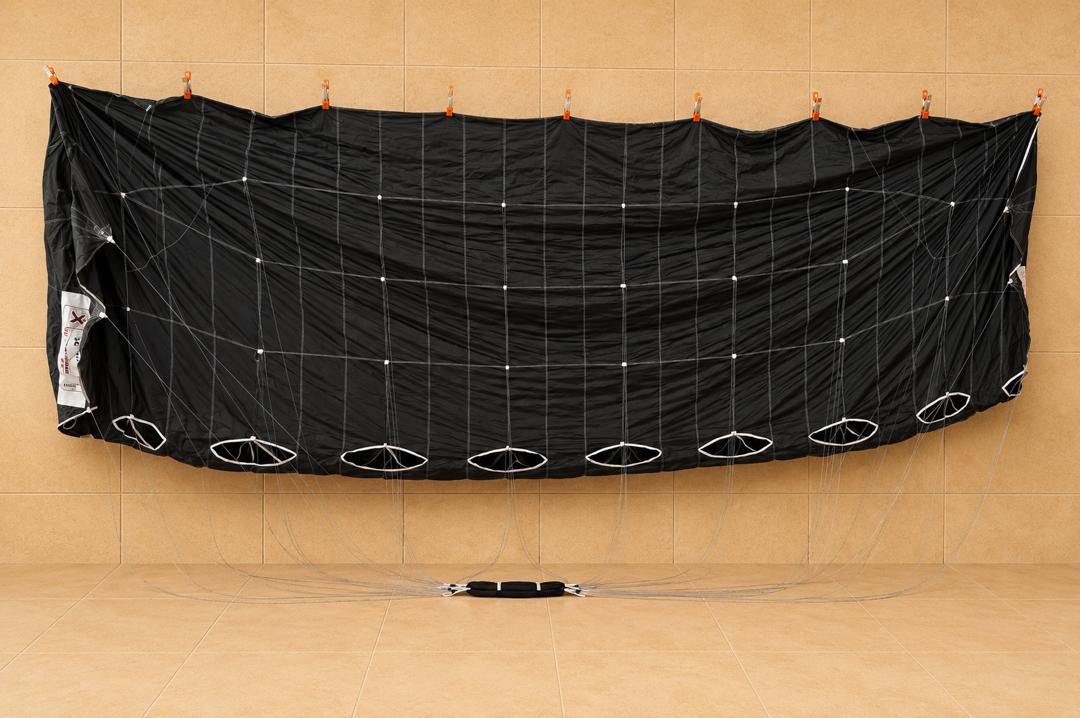


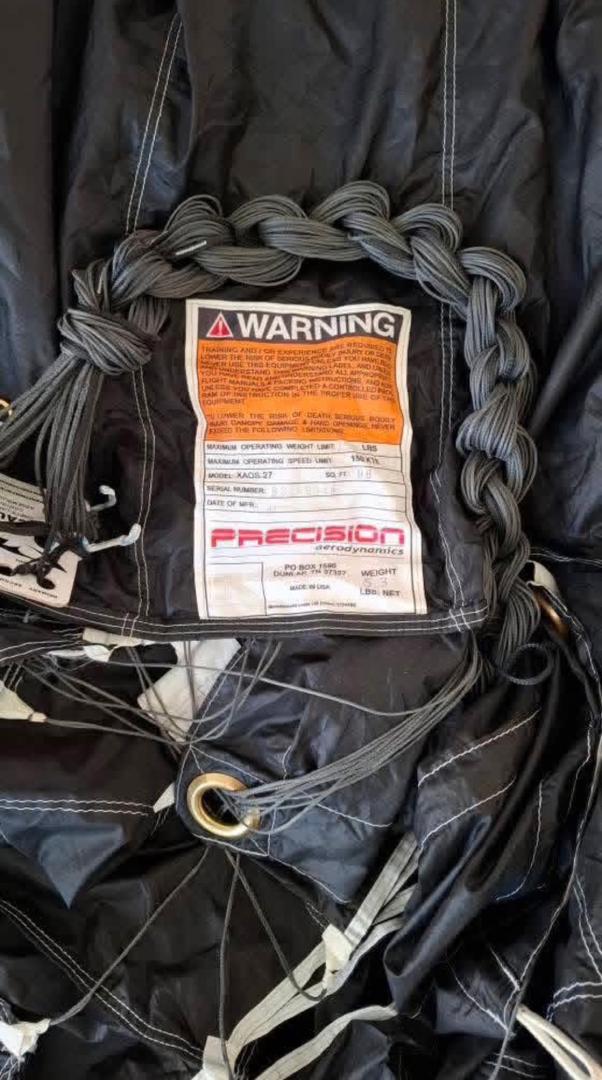






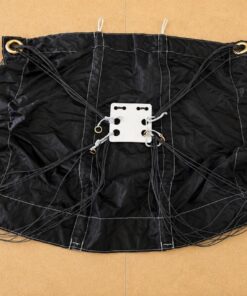

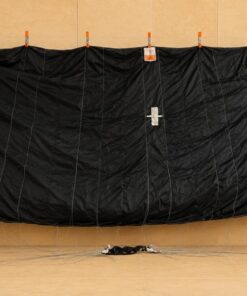
Used XAOS-27 98 ft


€1,100.00
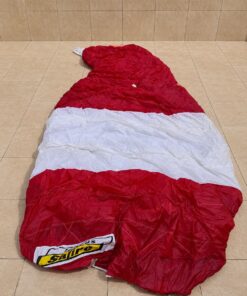
Used XAOS-27 98 ft² Product Description
The Used XAOS-27 98 ft² is a high-performance cross-braced main canopy from Precision Aerodynamics, designed for highly experienced skydivers who want fast flight, strong energy retention, precise control response, and advanced landing performance.
Built with a 27-cell cross-braced tri-cell structure, the canopy is engineered to maintain a rigid, efficient aerodynamic shape under higher wing loading. This contributes to responsive handling, excellent glide, strong acceleration, and powerful recovery characteristics when flown by a properly trained pilot.
The 98 ft² size places this canopy firmly in the advanced performance category. It is best suited to current canopy pilots with substantial experience on smaller, highly loaded wings and structured high-performance coaching.
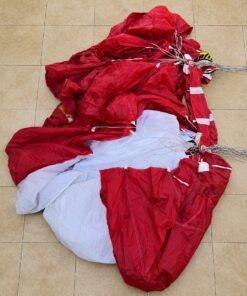
Because this is a used canopy, actual condition should be confirmed before purchase. Important areas include suspension-line condition, trim, fabric integrity, slider condition, attachment points, previous repairs, total jump count, and service history.
Key Highlights
- 98 ft² high-performance main canopy
- 27-cell cross-braced construction
- Designed for experienced canopy pilots
- Fast and highly responsive flight characteristics
- Strong glide and energy retention
- Precise harness, toggle, and riser response
- Powerful landing and flare potential
- Lightweight, low-drag line configuration
- Suitable for advanced sport and performance canopy flying
- Used condition should be professionally inspected
For an appropriately experienced and current pilot, a well-maintained XAOS-27 98 can deliver exceptional speed, precision, efficiency, and dynamic flight performance. Professional inspection, correct container compatibility, and suitable pilot experience should always be confirmed before use.
Used XAOS-27 98 ft² – High-Performance Cross-Braced Canopy for Experienced Pilots
The Used XAOS-27 98 ft² is a highly specialized cross-braced main canopy manufactured by Precision Aerodynamics for experienced skydivers seeking aggressive flight characteristics, efficient energy retention, strong acceleration, and advanced canopy-piloting capability. The XAOS-27 uses a 27-cell cross-braced tri-cell architecture and has been under continuous development since the late 1990s. Precision Aerodynamics currently lists the model in sizes ranging from 58 to 120 square feet, while its trim documentation specifically identifies 98 ft² as one of the standard sizes.
Unlike conventional recreational canopies, this design was created around high-performance flight. Precision Aerodynamics describes it as suitable for competitive canopy flight and everyday jumping by appropriately qualified high-performance pilots. Its construction uses DuPont Solar Max fabric and High Modulus Aramid continuous lines to reduce drag while supporting durability.
Because this example is used, exact jump count, date of manufacture, line condition, trim, repairs, fabric condition, slider condition, and ownership history should be independently verified before use.
Why Choose the XAOS-27 98?
The primary reason to choose a 98-square-foot cross-braced canopy is performance.
Cross-bracing provides additional internal structural support across the wing. This helps the canopy retain an efficient aerodynamic shape under higher loading and during aggressive flight.
Consequently, the wing can maintain substantial airspeed and energy throughout turns and recovery.
The manufacturer recommends approximately 2.6 pounds per square foot of wing loading for the XAOS-27 range, demonstrating clearly that this is an expert-level platform rather than a progression canopy.
Selection should therefore be based on demonstrated high-performance canopy experience, current skills, professional coaching, and appropriate loading.
How Good Is the 27-Cell Cross-Braced Design?
The XAOS-27 uses a 27-cell tri-cell configuration rather than a conventional nine-cell structure.
Its internal cross-bracing reduces deformation and allows the canopy to maintain a cleaner aerodynamic profile during high-speed flight.
This construction contributes to reduced drag, efficient glide, responsive handling, and sustained energy during landing approaches.
Precision Aerodynamics describes the design as the culmination of its cross-braced development program and positions the canopy specifically within the competitive swooping category.
Precision Engineering and Line Construction
The canopy is hand fabricated in the United States.
High Modulus Aramid continuous suspension lines are used because their small diameter can reduce aerodynamic drag while providing the strength required for high-performance operation.
Because line geometry is especially important on a cross-braced canopy, trim should be checked carefully on used equipment.
Precision Aerodynamics maintains individual trim specifications for the 98 ft² version, reinforcing the importance of correct line dimensions and symmetry.
Flight Speed and Energy Retention
The XAOS-27 is designed to carry significant speed.
Higher airspeed allows experienced canopy pilots to generate substantial lift and horizontal travel during correctly executed landing approaches.
However, greater energy also increases the consequences of poor judgment.
Turn initiation, recovery, altitude awareness, traffic management, and landing technique must therefore be highly developed before a canopy of this type is considered.
This wing should never be selected simply because a jumper wants a faster landing.
Everyday Use Versus Competition
Precision Aerodynamics makes an important distinction with the XAOS-27.
Although it was developed as a high-performance swooping platform, the company notes that appropriately qualified pilots can also use it as an everyday main canopy.
That versatility can make it appealing to experienced jumpers who want one system for normal freefall and advanced canopy flight.
Nevertheless, “everyday” does not mean beginner-friendly.
The design still requires advanced canopy judgment and disciplined flying.
Container Compatibility
The 98 ft² version is listed as a standard-fit option for certain Vector container sizes, including examples such as the V340 and V343.
However, container compatibility must always be confirmed for the exact rig.
Fabric condition, line bulk, deployment-bag dimensions, and container age can influence final pack volume.
A canopy fitting physically does not automatically prove that the combination is appropriate.
Everest Skydive and High-Altitude Searches
Search phrases including everest skydive, mount everest skydiving, mount everest skydive, skydiving from mount everest, skydiving in nepa, skydiving in nepal, nepal skydiving, and everest parachute jump relate to specialized high-altitude experiences rather than characteristics of this canopy.
Likewise, everest skydive, gunung everest, highest skydiving place in the world, highest skydiving in the world, top 10 highest skydive in the world for public, sky diving in world, mt everest kathmandu, and paragliding mount everest describe destination or altitude-related search intent.
Anyone asking what altitude do you skydive from should follow local operational procedures because exit altitude varies according to aircraft, drop zone, oxygen requirements, and jump type.
Nepal and Pokhara Search Interest
The term skydiving in nepal pokhara price relates to tourism and operator pricing rather than canopy value.
International use of personal equipment should involve confirmation of local regulations, reserve requirements, licensing recognition, and drop-zone procedures.
United States Skydiving Searches
Terms including iskydive miami, iskydive new york city, iskydive los angeles, iskydive dallas fort worth, iskydive nyc, iskydive dallas, homestead skydiving, skydiving in la california, skydiving new york state, skydive america california, parachute jump ny, skydiving charleston sc, and skydiving ventura refer to locations or commercial operators.
Similarly, wishlist skydiving, safest skydiving in the world, and ifly colorado springs relate to activity or facility searches rather than product specifications.
Australian Skydiving Searches
Searches for skydive australia, skydive aus, skydiving australia, sky diving australia, skydive australia airlie beach, skydive airlie beach, parachute jump melbourne, parachute jump australia, skydive byron bay, and cairns skydiving refer to Australian destinations.
Equipment compatibility and local operational requirements should always be confirmed before international travel.
Weight Limit and Wing Loading
The phrase weight limit skydiving is especially relevant with a 98 ft² canopy.
This model should not be chosen from body weight alone.
Exit weight, prior canopy experience, currency, loading history, landing consistency, and structured high-performance coaching are critical.
A skydiving downsizing chart can provide educational context, but it cannot determine individual suitability.
Helmet and Eye Protection
Searches for skydiving helmet, skydive helmets, sky helmet skydiving, full face skydiving helmet, sky diving helmet, skydiving helmet full face, and skydiving glasses refer to separate equipment.
These items are not normally included with the canopy unless specifically stated by a seller.
Emergency Cutting Equipment
A hook blade knife, hook knife skydiving, and skydive hook knife describe emergency cutting tools carried by some jumpers.
They are separate from the main canopy.
Selection and placement should follow appropriate training and equipment guidance.
Tracking, Wingsuit and Flight Disciplines
A tracking jump involves a different freefall profile from normal belly flight.
Likewise, wingsuit sport and searches for vector wingsuit relate to specialized disciplines and equipment.
A high-performance cross-braced canopy should not automatically be considered suitable for every discipline solely because it fits the container.
Deployment requirements should be evaluated separately.
Parachute Rig and Linewear
The canopy must be installed in an appropriate parachute rig with confirmed compatibility.
Visible linewear should receive particular attention on a used high-performance wing because line trim directly influences flight geometry.
Professional skydiving rigging inspection should include suspension lines, links, slider, attachment points, reinforcement, fabric, stitching, and previous repairs.
Riser Performance and Landing Technique
The phrase landing flight risers relates to advanced canopy control.
Rear and front riser inputs can significantly influence a high-performance wing, especially at higher loading.
However, these techniques should only be used within a structured training environment.
Repeated search use of landing flight risers does not change the underlying principle: advanced controls require advanced training.
BASE and Specialized Jumping
Searches for base jumping and baseline jumping refer to an entirely different discipline.
A conventional skydiving canopy should not automatically be used for fixed-object jumping.
Equipment architecture, deployment technique, altitude, and emergency options differ substantially.
Additional Search Topics
Search phrases such as fire parachute, cypress fire skydiving, and nude parachute jump do not represent engineering features of this canopy.
They are separate search topics and should not be interpreted as specifications or included accessories.
Important Information Before Purchase
The key characteristics of the Used XAOS-27 98 ft² are its 27-cell cross-braced tri-cell construction, 98-square-foot surface area, DuPont Solar Max fabric, High Modulus Aramid continuous lines, high-speed flight profile, strong energy retention, aggressive handling, and advanced swooping capability.
The manufacturer currently recommends approximately 2.6 lb/ft² as the model’s reference loading and specifically positions the canopy for highly experienced performance pilots.
For a used example, buyers should confirm jump count, date of manufacture, line-set age, line trim, repair history, slider condition, fabric integrity, previous loading, and professional inspection status.
When correctly matched to an experienced and current pilot, professionally inspected, and installed in a compatible system, the XAOS-27 98 can deliver exceptionally responsive flight, efficient aerodynamic performance, substantial energy retention, and the high-speed characteristics for which the design was created.
Opening Behavior, Flight Dynamics, Control Response, Glide, and Practical Performance
Opening Characteristics
A high-performance cross-braced canopy should be evaluated carefully from the moment deployment begins.
Opening behavior depends on body position, deployment speed, packing method, line condition, slider condition, pilot chute performance, and general canopy trim.
Because this type of wing is designed around high internal pressure and a highly structured airfoil, inflation may feel more energetic than on a larger conventional design.
Consistency matters more than one isolated opening.
If deployments repeatedly become unusually fast, asymmetric, or off-heading, the cause should be investigated rather than accepted as normal.
Why Line Trim Matters
Line trim has a major influence on opening and flight behavior.
As suspension lines age, their relative lengths can change.
Even small trim differences can alter pitch, heading stability, turn response, glide, front-riser pressure, and flare timing.
A used canopy should therefore be checked with more than a visual inspection.
A line set can still look clean while no longer matching original trim specifications.
Periodic measurement by a qualified specialist is one of the most useful ways to understand the actual condition of the wing.
Cross-Braced Structure in Flight
The internal structure of a cross-braced canopy helps the wing maintain a rigid and efficient shape under load.
This produces a highly pressurized feel in full flight and can reduce unwanted deformation during high-speed maneuvers.
The result is generally a more responsive and precise control experience.
However, greater structural efficiency also means pilot input can create stronger reactions.
Smooth and deliberate control is therefore essential.
Abrupt movements may produce rapid heading changes, increased descent, or substantial energy buildup.
Full-Flight Speed
Full-flight performance is one of the defining characteristics of this design category.
The canopy can maintain considerable forward speed and descend more aggressively than a larger, more conservative wing.
This increased speed can provide useful glide and powerful energy retention, but it also reduces the amount of time available to correct mistakes.
The pilot should develop a clear understanding of normal airspeed before introducing more complex control techniques.
Full flight should become the baseline used to compare every other control input.
Glide Performance
Glide depends on loading, trim, wind, air density, and pilot input.
In favorable conditions, an efficient cross-braced wing can cover substantial horizontal distance.
However, strong headwinds can reduce ground travel quickly.
Tailwinds can extend the ground track and may create a much faster visual approach.
A pilot should therefore learn the practical glide characteristics over several jumps and under different wind conditions.
One flight should never be used as the only reference.
Toggle Response
Toggle input is highly effective on a small performance-oriented canopy.
Light movements can create precise heading corrections, while deeper input can generate substantial turns and increased descent.
The pilot should avoid unnecessarily aggressive movements, particularly when close to the ground.
Progressive input provides more information about how the canopy is responding.
This helps maintain control while reducing unnecessary altitude loss.
Harness Control
Harness movement can have a significant effect on heading and roll.
Because the wing is responsive, even moderate weight shift may produce noticeable changes.
A balanced body position is therefore important.
Uneven pressure through the harness can create unwanted turns.
Experienced pilots may use controlled harness input to manage heading efficiently, but it should be explored carefully at altitude before being relied upon during an approach.
Front Control Pressure
Front control input can increase dive and airspeed.
On a performance canopy, the response can be substantial.
The pilot should understand the amount of pressure required and how quickly the wing accelerates.
Extended input can build considerable energy.
For this reason, such techniques should only be used by appropriately experienced pilots who have received structured coaching.
Altitude awareness remains critical throughout the maneuver.
Rear Control Efficiency
Rear control input can provide effective heading correction while preserving more speed than deeper toggle input.
This can be useful in certain phases of flight.
However, the control range should be learned progressively.
Too much input can increase sink or reduce efficiency.
The transition back to normal controls should also be smooth.
Any technique involving rear input near the ground should only be used after extensive high-altitude practice and appropriate coaching.
Recovery Characteristics
Recovery behavior is one of the most important features to understand.
After a diving turn, the wing needs time and altitude to return toward a more level flight path.
A high-performance canopy can maintain dive and speed for a significant period.
This creates impressive energy retention, but it also increases risk when turn initiation is poorly judged.
The pilot should understand recovery behavior at altitude before applying more advanced techniques lower in the pattern.
Energy Retention
Energy retention refers to how well the canopy carries speed through and after a maneuver.
A rigid and efficient airfoil can preserve substantial kinetic energy.
This can support powerful landing performance when handled correctly.
However, the same energy can produce serious consequences when timing, altitude, or technique is poor.
For that reason, performance should never be treated as a substitute for judgment.
The pilot must remain conservative until the wing’s behavior is fully understood.
Straight-In Approaches
Straight-in approaches are valuable when transitioning to a used high-performance canopy.
They remove unnecessary variables and allow the pilot to learn basic glide, descent, control pressure, and flare timing.
The first several jumps should generally focus on consistency rather than aggressive maneuvers.
A predictable pattern provides much better information about the wing’s normal behavior.
Once this baseline is established, more advanced techniques can be developed gradually under supervision.
Flare Performance
Flare performance depends on available airspeed, timing, wing loading, line trim, and control input.
A high-speed wing can generate significant lift during the flare when enough energy is available.
However, starting the flare too early may use lift before touchdown.
Starting too late can leave insufficient time to reduce descent.
The motion should be progressive and controlled.
Repeated conservative landings help the pilot identify the correct timing.
Landing Speed
Landing speed can be considerably higher than on larger recreational canopies.
This should be considered carefully before purchase or transition.
A pilot who is comfortable on a larger wing may still find the ground speed and visual picture significantly different.
Wind conditions can exaggerate this difference.
A tailwind landing, for example, can produce very high ground speed even when the wing behaves normally through the air.
Pattern Planning
Landing patterns should remain disciplined and predictable.
Entry points, turn locations, traffic separation, and final approach should all be planned early.
However, the pattern should remain flexible enough to accommodate other traffic or changing conditions.
A high-performance canopy covers distance quickly.
This means small planning errors can become larger problems in a short period.
The pilot should avoid chasing an ideal landing point with late, aggressive corrections.
Traffic Management
Traffic awareness becomes even more important with a fast canopy.
Different wings may be flying at very different speeds in the same landing area.
Predictable movement helps reduce conflict.
Sudden turns, unnecessary crossing, or aggressive approaches can increase risk significantly.
A conservative landing away from the preferred target is always better than forcing a crowded or poorly planned approach.
Used-Canopy Inspection
A used high-performance canopy should be inspected thoroughly before regular operation.
Important areas include fabric integrity, internal ribs, reinforcement, seams, suspension lines, control lines, slider components, attachment points, links, and previous repairs.
The history of the line set is especially important.
If its age or jump count is unknown, measurement becomes even more valuable.
Fabric Condition
Fabric condition affects both structural integrity and aerodynamic performance.
The material should be checked for abrasion, burns, holes, staining, contamination, and damaged stitching.
High-stress areas deserve particular attention.
Repeated exposure to sunlight can also weaken synthetic material over time.
The canopy should therefore be stored away from unnecessary heat and direct ultraviolet exposure.
Slider Inspection
The slider controls inflation and experiences significant loading during deployment.
Its fabric, tapes, stitching, and grommets should remain in good condition.
Grommets should be smooth and free from sharp edges.
A damaged grommet can accelerate suspension-line wear.
If opening behavior changes noticeably, slider condition should be included in the inspection.
Long-Term Practical Value
A well-maintained used cross-braced canopy can provide exceptional performance for a properly qualified pilot.
Its strongest attributes are efficient flight, responsive control, strong energy retention, rapid acceleration, and powerful landing capability.
However, these advantages come with increased responsibility.
Correct sizing, current experience, professional inspection, line-trim monitoring, conservative transition, and structured coaching are essential.
When these factors are managed carefully, the canopy can remain precise, predictable, and highly capable across many future jumps.
Precision Control, Advanced Flight Awareness, Landing Planning, Consistency, and Pilot Progression
Developing Precise Control
A small cross-braced canopy requires deliberate and consistent control inputs. Because the wing responds quickly to changes in harness pressure, toggles, and risers, unnecessary movement can create larger reactions than expected.
Precision begins with smooth handling.
The pilot should first understand the canopy’s normal full-flight behavior before introducing complex maneuvers. This includes becoming familiar with forward speed, descent rate, glide, control pressure, recovery behavior, and the amount of altitude lost during ordinary turns.
A strong baseline makes later decisions more predictable.
Establishing a Stable Body Position
Body position influences the way a responsive wing flies.
Uneven pressure through the harness can create heading changes even when the toggles remain neutral.
For that reason, the pilot should remain balanced and relaxed under the canopy.
A centered body position helps maintain predictable flight and reduces unintended roll.
Once this becomes natural, controlled weight shift can be introduced progressively.
The purpose should always be accuracy and efficiency rather than aggressive movement.
Understanding Control Pressure
Control pressure provides valuable feedback.
Light input may create a subtle heading correction, while deeper input can generate a stronger turn and greater altitude loss.
The pilot should learn how the pressure changes throughout the control range.
This information becomes especially useful when operating in changing wind conditions.
Consistent input helps create consistent outcomes.
If control pressure suddenly feels different from previous jumps, equipment condition should also be considered.
Glide Awareness
Efficient glide helps the pilot manage distance and landing-area selection.
However, ground movement can be misleading because wind changes the apparent speed and distance traveled.
A strong headwind may make the canopy appear slow even though airspeed remains high.
A tailwind can create rapid movement across the ground.
For this reason, pilots should evaluate glide using altitude, direction, and expected wind rather than visual ground speed alone.
Repeated observations improve judgment.
Pattern Planning
A predictable landing pattern reduces unnecessary workload.
The pilot should establish a clear entry point, planned direction, and final approach before reaching lower altitude.
Early decisions are generally safer than late corrections.
The pattern should remain flexible enough to accommodate traffic, wind changes, obstacles, or an alternate landing area.
A fast wing can cover significant distance quickly, so delays in decision-making may reduce available options.
Managing Altitude
Altitude awareness is essential throughout every part of the flight.
Turns consume altitude, and the amount lost increases when speed, bank angle, or turn duration increases.
A maneuver that feels manageable high above the ground may leave insufficient recovery time when performed lower.
The pilot should therefore establish conservative personal limits and respect them consistently.
Complex maneuvers should only be developed through structured professional coaching.
Turn Initiation
Smooth turn initiation allows the canopy to build response progressively.
Abrupt input can produce rapid roll, increased descent, and significant acceleration.
For that reason, the pilot should focus on controlled initiation and stable body position.
The objective is to understand the relationship between input and canopy response.
Repeating similar turns at safe altitude provides useful information about altitude loss and recovery behavior.
Recovery Behavior
After a turn, the canopy does not instantly return to level flight.
The wing continues through a recovery phase in which speed, pitch, and descent gradually change.
This recovery behavior is critical to understand.
A small high-performance canopy may retain dive longer than a larger recreational design.
The pilot should therefore study recovery at altitude and avoid relying on assumptions from previous equipment.
Consistent observation helps build a more accurate mental model.
Managing Energy
High-performance wings can retain substantial energy.
This energy may provide strong glide and powerful landing performance when managed correctly.
However, excess speed close to the ground increases the consequences of poor timing.
The pilot should learn how the canopy builds and releases energy through different inputs.
The aim should be controlled flight rather than maximum speed.
Energy management becomes safer when decisions are made early and maneuvers remain predictable.
Straight Approaches
Straight approaches remain one of the best methods for learning a different canopy.
They remove several variables and allow the pilot to focus on flare timing, glide, descent rate, and visual judgment.
For the first series of jumps, conservative approaches provide valuable information.
This makes it easier to identify how the canopy naturally behaves.
Advanced techniques can be introduced later under appropriate instruction.
Flare Timing
A successful flare depends on timing and available airspeed.
The pilot should begin the flare at an appropriate height and continue the movement progressively.
If the input starts too early, lift may be used before touchdown.
If it begins too late, there may not be enough time to reduce descent.
The correct timing develops through repetition.
Wind, loading, field elevation, and approach speed can all change the visual picture.
Flare Technique
Smooth flare input generally provides better feedback than an abrupt movement.
The first part of the flare begins changing the flight path, while the later portion continues reducing descent and managing remaining speed.
The exact feel may vary as line trim changes over time.
Therefore, any noticeable change in flare performance should be evaluated.
Technique should not be used indefinitely to compensate for mechanical changes.
Crosswind Conditions
Crosswinds require careful planning.
The canopy may drift sideways even when the nose remains aligned with the intended direction.
This can affect pattern position and final approach.
Corrections should be made early and smoothly.
Late aggressive turns should be avoided.
The pilot should also consider how nearby traffic is moving so that corrections do not create conflict.
Headwind Conditions
A strong headwind reduces ground speed and may shorten the distance covered.
This can create the impression that the canopy is descending more vertically.
The pilot should avoid overcorrecting based only on the visual ground picture.
Altitude and airspeed remain more useful references.
Pattern entry may need to be adjusted earlier to prevent landing short.
Tailwind Conditions
A tailwind increases ground speed significantly.
This can make the final approach appear much faster.
The pilot should account for this before entering the landing pattern.
Late recognition of increased ground speed can lead to rushed decisions.
Early planning provides more time to establish a stable approach.
Traffic Awareness
A responsive canopy may fly significantly faster than other wings sharing the same airspace.
Therefore, traffic separation requires constant attention.
The pilot should identify nearby canopies early and avoid unpredictable movement.
Clear, conservative flight paths are easier for others to understand.
A less convenient landing location is preferable to forcing a crowded approach.
Accuracy Development
Landing accuracy improves through repeatable planning.
The pilot should use recognizable reference points and evaluate where altitude is lost throughout the pattern.
Small corrections made early are more effective than large changes made late.
Recording observations can help reveal patterns.
Over time, the pilot learns how the canopy behaves under different winds and loading conditions.
Monitoring Opening Consistency
Opening behavior should also be tracked.
One unusual deployment may result from body position, packing, or temporary environmental factors.
Repeated changes are more important.
Consistent off-heading behavior, unusual inflation speed, or different slider movement may justify professional inspection.
Changes in line trim or component condition can influence deployment.
Recognizing Equipment Changes
A pilot who knows the canopy well can identify mechanical changes more easily.
Different toggle pressure, altered glide, weaker flare, unusual heading behavior, or increased turn tendency may indicate developing wear.
These observations should not be ignored.
A professional inspection can determine whether the issue relates to trim, lines, fabric, or another component.
Currency and Decision-Making
Currency has a major influence on performance.
After an extended break, timing, judgment, and visual references may feel different.
The safest approach is to return conservatively.
Simple patterns and straight approaches provide an opportunity to rebuild familiarity.
Previous experience remains valuable, but recent practice strongly affects decision quality.
Building Long-Term Consistency
Consistent performance develops through discipline rather than aggression.
The pilot should maintain smooth control inputs, accurate altitude awareness, predictable traffic behavior, and conservative decision-making.
Equipment condition should also be monitored continuously.
The most capable wing still depends on correct pilot judgment.
When training, inspection, currency, and flight planning are managed properly, the canopy can provide precise control, efficient performance, and highly predictable behavior across many future jumps.
Reliability, Maintenance, Inspection, Storage, Safety, and Long-Term Ownership
Long-Term Reliability
A high-performance cross-braced canopy can remain dependable for a long service life when it is inspected regularly, stored correctly, packed carefully, and operated within appropriate limits.
Reliability depends on far more than fabric age.
Suspension lines, internal ribs, reinforcement points, slider components, stitching, control lines, attachment points, links, and general material condition all contribute to how the wing behaves.
A canopy with relatively few jumps may still require attention if it has been stored poorly, exposed to harsh conditions, or maintained inconsistently.
Likewise, a heavily used example may remain serviceable if professional maintenance has been performed correctly and wear has been monitored closely.
Why Preventive Inspection Matters
Preventive inspection helps identify small issues before they affect performance.
High-performance wings are especially sensitive to changes in line trim, control-line length, and structural condition.
A minor change may alter opening characteristics, dive behavior, recovery, or flare response.
Routine checks should therefore become part of normal ownership.
However, personal inspection should never replace professional evaluation.
A qualified specialist can identify problems that are difficult to detect visually.
Fabric Condition
The upper and lower surfaces should be inspected for abrasion, holes, burns, contamination, damaged stitching, or unusual deformation.
Internal structure is also important because cross-braced construction relies on additional supporting panels to maintain the intended aerodynamic shape.
Damage inside the wing may not always be visible during a quick external inspection.
For that reason, a detailed professional assessment is valuable when purchasing a used canopy.
Internal Rib and Cross-Brace Inspection
Internal ribs and reinforcing structures experience substantial loading during deployment and high-speed flight.
These areas should remain free from torn stitching, distortion, or damaged fabric.
Because they help maintain the canopy’s pressurized shape, internal structural condition directly affects performance.
Any unusual deformation should be investigated.
Improvised repairs are not appropriate for structural components.
Repairs should be completed according to accepted methods and manufacturer guidance.
Suspension Line Condition
Suspension lines are among the most important service items.
Repeated deployment and flight gradually create wear.
Lines may become fuzzy, glazed, discolored, uneven, or altered in length.
High-performance wings can respond noticeably to small trim changes.
For this reason, line condition should be monitored carefully.
A line set that still looks acceptable may already be out of specification.
Periodic measurement provides a more accurate assessment than visual inspection alone.
Line Trim
Correct trim helps preserve the intended pitch, glide, turn response, dive behavior, and flare characteristics.
As different line groups change length over time, canopy geometry can shift.
This may cause the wing to feel different even though no obvious damage is visible.
Repeated changes in control pressure, recovery, or opening behavior should therefore be taken seriously.
A professional trim check can help determine whether the line set is still within acceptable limits.
Steering Line Wear
Steering lines experience repeated movement through guide rings and are handled during every packing cycle.
As a result, they may wear more quickly than some other lines.
Fraying, glazing, thinning, or uneven length should be monitored.
The lower sections deserve particular attention.
If one side begins to feel noticeably different from the other, inspection is appropriate.
Unequal steering geometry can affect turns and landing response.
Slider Condition
The slider plays a critical role during deployment.
Its fabric, reinforcement tapes, stitching, and grommets should remain in good condition.
Grommets should be smooth and free from sharp edges.
A damaged grommet can accelerate suspension-line wear.
The slider should also maintain its intended shape.
Unexpectedly hard openings or unusual slider descent should be investigated rather than accepted as normal.
Attachment Points
Line attachment points transfer flight loads into the canopy structure.
They should remain secure and free from distortion, torn stitching, or fabric damage.
High-stress areas require particularly careful inspection.
Even small changes deserve attention because the structural loads involved can be substantial.
Any uncertainty should be evaluated professionally before further use.
Link and Connector Inspection
Connecting hardware should remain secure and correctly installed.
Metal components should be checked for wear, deformation, sharp edges, or corrosion.
Soft connectors should be inspected for abrasion, damaged stitching, and correct routing.
The connection between the lines and risers should remain symmetrical.
Any component showing questionable wear should be replaced or professionally assessed.
Packing Care
Packing technique influences both deployment and material longevity.
The canopy should be handled on clean surfaces whenever possible.
Dragging it across concrete, gravel, asphalt, or rough flooring can create unnecessary abrasion.
Lines should remain organized and free from twists.
The slider should be positioned correctly.
A consistent packing routine helps produce more predictable deployments and makes unusual changes easier to identify.
Sunlight Exposure
Ultraviolet radiation can gradually weaken synthetic materials.
The canopy should therefore not be left exposed to direct sunlight for extended periods.
Normal packing outdoors is expected, but unnecessary exposure should be minimized.
When jumping stops for the day, the equipment should be packed and protected rather than left open in strong sunlight.
Good storage habits can contribute significantly to long-term material preservation.
Moisture and Water Exposure
Moisture should be managed carefully.
If the canopy becomes wet, it should be dried correctly before long-term storage.
Damp equipment packed for extended periods may develop staining, odor, or material degradation.
Saltwater exposure is especially serious because salt residue can affect fabric, stitching, and hardware.
Any significant water exposure should be followed by appropriate cleaning guidance and inspection.
Chemical Contamination
Fuel, oil, solvents, battery fluids, and harsh cleaning products can damage synthetic materials.
The canopy should be kept away from these substances.
Chemical exposure may not produce immediate visible damage.
For this reason, suspected contamination should be treated seriously.
Household cleaners should not be used casually.
Professional advice should be obtained before the canopy is returned to service.
Storage Conditions
The canopy should be stored in a cool, dry, clean environment.
Excessive heat should be avoided.
Long-term storage inside a hot vehicle or enclosed area exposed to direct sunlight can accelerate material aging.
A protective gear bag can help prevent dust, abrasion, and accidental contamination.
However, the equipment should be completely dry before extended storage.
Transport Protection
During transport, the system should be protected from crushing loads, sharp objects, and chemicals.
Heavy equipment should not be placed directly on top of the packed rig.
Care should also be taken around tools, fuel containers, lubricants, and batteries.
A dedicated gear bag provides a useful protective barrier.
Used-Canopy History
A buyer should gather as much history as possible.
Useful information includes total estimated jumps, manufacture date, number of owners, line-set replacement, repairs, hard openings, water exposure, storage conditions, and previous loading.
A complete service history adds confidence.
However, seller information should still be supported by professional inspection.
Ownership history can be incomplete, especially when a canopy has changed hands several times.
Monitoring Performance Changes
Changes in opening, glide, turn response, control pressure, dive behavior, or flare performance should be documented.
One unusual jump may result from packing, body position, or weather.
Repeated changes are more important.
If a pattern develops, professional inspection is appropriate.
Technique should not be used indefinitely to compensate for mechanical changes.
The underlying cause should be identified.
Currency and Conservative Use
Pilot currency remains critical.
A high-performance wing can react quickly to poor timing or delayed decisions.
After an extended break, conservative flying is generally more appropriate.
Simple approaches allow familiarity to return before more complex maneuvers are considered.
Past experience is valuable, but recent practice strongly influences judgment and timing.
Building a Strong Ownership Routine
Reliable long-term ownership comes from consistent habits.
Before use, visible lines, fabric, slider components, links, and general condition can be checked.
During flight, unusual behavior should be noticed.
Afterward, the canopy should be protected from heat, moisture, chemicals, rough surfaces, and unnecessary sunlight.
Professional inspections should be completed when needed.
Ultimately, careful maintenance, correct storage, line-trim monitoring, structured training, and disciplined operation help preserve both safety and performance.
When these habits remain consistent, a well-maintained high-performance canopy can continue delivering precise, predictable, and dependable flight characteristics across many future jumps.
Be the first to review “Used XAOS-27 98 ft”
Related products

used products

used products

used products

used products

used products

used products
used products

used products
Reviews
There are no reviews yet.