
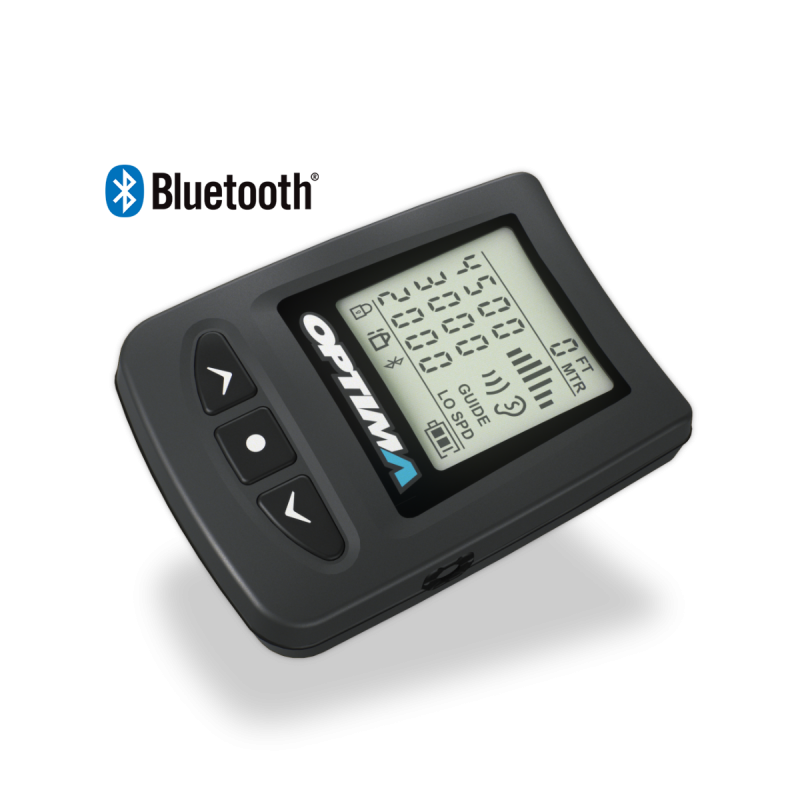


L&B Optima 3 Bluetooth Skydiving Audible Altimeter
L&B Optima 3 Bluetooth Skydiving Audible Altimeter Overview, Purpose, Precision, and Practical Use
The L&B Optima 3 Bluetooth Skydiving Audible Altimeter is an advanced electronic audible altimeter designed to provide trained skydivers with customizable altitude warnings during freefall, canopy descent, and selected wingsuit activities. Developed by L&B Altimeters, the L&B Optima 3 Bluetooth Skydiving Audible Altimeter combines multiple warning altitudes, configurable sounds, low-speed warnings, Bluetooth connectivity, and jump-data logging in a compact design. L&B states that the OPTIMA 3 is intended for disciplines including large formations, relative work, free flying, wingsuit flying, student and tandem operations, as well as canopy activities such as accuracy and CRW.L&B Optima3 Bluetooth skydiving audible altimeter
Unlike a visual altimeter, the L&B Optima 3 Bluetooth Skydiving Audible Altimeter communicates altitude information through audible signals. This allows a trained jumper to receive an additional altitude cue without having to look at a wrist-mounted or helmet-mounted visual display. Consequently, an audible instrument can become an important supplementary component of a carefully planned skydiving equipment list.
What Is the L&B Optima 3 Bluetooth Skydiving Audible Altimeter?
The L&B Optima 3 Bluetooth Skydiving Audible Altimeter is a compact electronic instrument that monitors atmospheric pressure and produces programmed audible warnings at selected altitudes.
The instrument provides three selectable warning altitudes for freefall. L&B also provides separate canopy-descent and low-speed warning functions, giving the L&B Optima 3 Bluetooth Skydiving Audible Altimeter broader functionality than a simple single-warning audible device.
The warning system can be configured with one, two, or three warnings. Different warning sounds can be selected, allowing the jumper to distinguish between stages of the programmed warning sequence.
The L&B Optima 3 Bluetooth Skydiving Audible Altimeter therefore provides an additional layer of altitude awareness while leaving actual decisions and procedures with the trained jumper.
Why Use the L&B Optima 3 Bluetooth Skydiving Audible Altimeter?
The main reason to use the L&B Optima 3 Bluetooth Skydiving Audible Altimeter is to provide an audible reference that complements visual altitude awareness.
During skydiving, a jumper may need to monitor formation position, body position, other participants, separation, deployment procedures, canopy traffic, and the surrounding environment. An audible signal can provide useful information without requiring the jumper to divert their eyes toward a display.
The L&B Optima 3 Bluetooth Skydiving Audible Altimeter is therefore particularly relevant for disciplines where maintaining visual attention on the environment is important.
It can be incorporated alongside equipment such as a skydiving helmet, parachute rig, visual altimeter, goggles, jumpsuit, and other discipline-specific equipment.
How the L&B Optima 3 Works
The L&B Optima 3 Bluetooth Skydiving Audible Altimeter continuously monitors ambient air pressure. According to the manufacturer, this allows the instrument to maintain real-time awareness of altitude and ground-level conditions.
As altitude changes, atmospheric pressure changes. The instrument processes these changes and activates the appropriate programmed warning when the selected altitude is reached.
Because the system is pressure-based, its operation should be understood within the limitations of atmospheric-pressure measurement.
The L&B Optima 3 Bluetooth Skydiving Audible Altimeter should therefore be regarded as an altitude-awareness aid rather than an independent decision-making system.
Three Freefall Warning Altitudes
One of the defining features of the L&B Optima 3 Bluetooth Skydiving Audible Altimeter is its three-warning configuration.
Three separate altitude points can be programmed for freefall warnings. This allows the jumper to create a sequence rather than relying on one isolated signal.
The first and second warnings can use different pulsating tones, while the third warning uses a higher-pitched chirp according to L&B’s published product information.
This differentiation makes the L&B Optima 3 Bluetooth Skydiving Audible Altimeter useful for jumpers who prefer clearly distinguishable warning stages.
The instrument can also be configured for fewer warnings when the jumper’s established procedures require a simpler warning sequence.
Canopy Descent and Low-Speed Warnings
The L&B Optima 3 Bluetooth Skydiving Audible Altimeter goes beyond freefall warnings by incorporating canopy-descent and low-speed warning functions.
The manufacturer describes short audible signals that can be programmed for selected altitudes during canopy descent or wingsuit flight.
This can provide an additional awareness cue during the later stages of a jump.
The system also includes guide tones that can produce a sequence of audible signals between selected canopy-warning altitudes.
These functions give the L&B Optima 3 Bluetooth Skydiving Audible Altimeter a broader operating role than an audible instrument designed solely for freefall.
Bluetooth Connectivity
Bluetooth is a major feature of the L&B Optima 3 Bluetooth Skydiving Audible Altimeter.
The instrument can connect to the L&B JumpTrack App, allowing users to access settings and recorded jump information through a compatible mobile device. L&B’s 2025 roadmap explains that pairing is performed through the JumpTrack application rather than through the phone’s ordinary Bluetooth settings.
This provides a convenient way to manage the L&B Optima 3 Bluetooth Skydiving Audible Altimeter without relying entirely on manual button navigation.
The Bluetooth system therefore adds a modern configuration and data-management capability to an instrument traditionally operated directly through physical controls.
JumpTrack App Integration
The JumpTrack integration is particularly useful for users who want easier access to their settings and jump information.
According to L&B, the L&B Optima 3 Bluetooth Skydiving Audible Altimeter can store up to 50 jumps, with jump profiles of up to 15 minutes accessible through Bluetooth using the JumpTrack App.
This provides useful opportunities for reviewing previous jumps and maintaining an electronic record.
The data can complement a traditional written jump log rather than necessarily replacing it.
Compact and Ergonomic Design
The L&B Optima 3 Bluetooth Skydiving Audible Altimeter has been designed with a compact, ergonomic form factor intended to minimize bulk.
L&B describes the design as small and ergonomic, with a curved profile intended to provide comfort and reduced bulk when installed inside a soft- or hard-shell helmet.
This makes the instrument relevant when building equipment around a skydiving helmet, including configurations involving full-face helmets or other compatible headgear.
Its compact nature can be particularly valuable because helmet interiors have limited available space.
Adjustable Sound Pitch
The L&B Optima 3 Bluetooth Skydiving Audible Altimeter allows the user to adjust the warning-sound pitch.
The instrument provides a pitch-selection system that lets the user choose an appropriate audible frequency.
This is useful because individual hearing characteristics, helmet configuration, and surrounding environmental noise can influence how easily a warning is recognized.
The manufacturer notes that the optimum resonance occurs around the center pitch and that volume characteristics change at pitches farther from that center point.
Consequently, sound configuration should be treated as an important part of equipment preparation.
Adjustable Sound Volume
The L&B Optima 3 Bluetooth Skydiving Audible Altimeter also provides adjustable sound volume.
L&B specifies a selectable range from 112 dB at the lowest setting to 117 dB at the highest setting, with the factory setting at level 7. The manufacturer also states that low battery conditions can automatically reduce the volume to level 1 until the batteries are replaced. LB
This makes battery condition particularly important.
A jumper should confirm that the instrument is operating correctly before relying on its audible warnings.
Where the L&B Optima 3 Can Be Used
The L&B Optima 3 Bluetooth Skydiving Audible Altimeter is intended for a wide range of skydiving disciplines.
L&B specifically identifies applications including large formations, relative work, free flying, wingsuit flying, student operations, tandem jumping, AFF, accuracy, and CRW.
It may therefore be relevant to jumpers involved in everything from conventional freefall to specialized activities such as tracking jump operations, wingsuit flying, and canopy flight.
The correct configuration, training, and equipment requirements always depend on the specific discipline.
International Skydiving Applications
Because skydiving takes place around the world, equipment frequently travels between different drop zones and countries.
The L&B Optima 3 Bluetooth Skydiving Audible Altimeter can be used in international environments where the jumper appropriately configures the instrument and follows local operating procedures.
Whether the destination involves parachute jump Australia, Skydive Byron Bay, Cairns skydiving, or another established drop zone, the same fundamental principles remain important: proper training, correct equipment preparation, and disciplined altitude awareness.
Search terms such as skydive Belize, skydiving Blue Hole Belize, and iFly Colorado Springs represent different forms of skydiving or flight-related experiences, but the ARES/OPTIMA family should always be used according to its intended operating environment rather than assuming that every activity requires the same equipment configuration.
Importance of Audible Altitude Awareness
The L&B Optima 3 Bluetooth Skydiving Audible Altimeter can provide a useful secondary information channel.
For example, a jumper wearing a full face skydiving helmet may benefit from an audible cue because visual attention can be directed toward the surrounding environment.
Likewise, a jumper participating in formation work, freefly, or appropriately trained wingsuit operations may appreciate the ability to receive an altitude warning without looking away from other important visual references.
The instrument is therefore best understood as a supplement to a comprehensive altitude-awareness system.
Important Safety Consideration
An audible altimeter should never be treated as the sole source of altitude information.
The L&B Optima 3 Bluetooth Skydiving Audible Altimeter provides warnings, but the jumper remains responsible for maintaining awareness and following the procedures established through appropriate training.
The manufacturer itself emphasizes that use is at the user’s own risk.
Consequently, the instrument should be combined with appropriate training, visual awareness, equipment checks, and discipline-specific procedures.
Why the L&B Optima 3 Stands Out
The L&B Optima 3 Bluetooth Skydiving Audible Altimeter combines several functions within one compact instrument.
Its key capabilities include:
Three configurable freefall warnings
Selectable one-, two-, or three-warning operation
Canopy-descent warnings
Low-speed warnings
Guide tones
Adjustable pitch
Adjustable volume
Bluetooth connectivity
JumpTrack compatibility
Jump logging
Jump-profile storage
Compact ergonomic construction
These features make the L&B Optima 3 Bluetooth Skydiving Audible Altimeter a versatile instrument for trained skydivers seeking detailed audible altitude awareness.
From conventional freefall to CRW skydiving, freefly, tracking, and appropriately trained wingsuit applications, its configurable warning system can be adapted to different jump profiles.
Final Overview
The L&B Optima 3 Bluetooth Skydiving Audible Altimeter is a sophisticated electronic instrument designed around one central objective: providing clear, configurable audible altitude information.
Its combination of multiple warning altitudes, canopy and low-speed warnings, adjustable sound characteristics, Bluetooth connectivity, and JumpTrack data access makes it substantially more versatile than a basic audible altimeter.
For skydivers researching equipment ranging from a skydiving helmet, skydiving rig, and skydiving glasses to specialized equipment for wingsuit or canopy disciplines, the L&B Optima 3 Bluetooth Skydiving Audible Altimeter can serve as an important supplementary component of a properly configured system.
The instrument does not replace training, visual awareness, or established procedures. Instead, the L&B Optima 3 Bluetooth Skydiving Audible Altimeter adds another carefully configurable source of information, allowing trained users to develop a more comprehensive approach to altitude awareness during their jumps.
Section 2: Warning Systems, Audible Profiles, Bluetooth Connectivity, and Practical Operation
The L&B Optima 3 Bluetooth Skydiving Audible Altimeter has been designed around a simple but important principle: altitude information should be available without requiring the jumper to look away from the surrounding environment. Instead of relying exclusively on a visual display, the instrument communicates selected altitude events through distinctive audible signals.
This approach makes the instrument particularly useful as a supplementary awareness device. The jumper can establish a sequence of warnings before the jump, then recognize those signals during the descent. At the same time, the instrument remains only one component of the overall equipment and awareness system.
Understanding the Three-Warning System
One of the most important characteristics of the instrument is its ability to provide three separate freefall warning points.
Rather than receiving one sound at one altitude, the jumper can establish a sequence of three warnings. This creates an audible progression that can be incorporated into an established jump plan.
Each warning can represent a different stage of the descent. The sounds are deliberately distinguishable, allowing the jumper to recognize the progression without needing to look at a display.
This configuration can be useful for experienced jumpers because different disciplines involve different sequences of movement, separation, and deployment preparation.
The settings should always be established before the jump and should correspond with the jumper’s training and normal operating procedures.
One, Two, or Three Warnings
The system does not require every jumper to use all three warning points.
Depending on the selected configuration, the user can operate with one, two, or three freefall warnings.
This flexibility allows the instrument to accommodate different preferences and different jumping activities.
A jumper who prefers a simple warning arrangement can select fewer warnings, while another jumper may prefer a three-stage sequence.
The important consideration is consistency. Once a configuration has been selected, the jumper should understand exactly what each sound represents.
Distinguishable Audible Signals
The different warning signals are an important part of the instrument’s design.
The first and second freefall warnings can use different pulsating sounds, while the third warning uses a higher-pitched signal.
This distinction helps create an audible sequence that can be recognized without visual confirmation.
A jumper who becomes familiar with the selected sounds can learn to associate each signal with a particular altitude point.
However, this familiarity should be developed on the ground before the instrument is used during a jump.
Why Sound Recognition Matters
Audible equipment works differently from a visual instrument.
With a visual altimeter, the jumper actively looks at the display. With an audible altimeter, the signal reaches the jumper through hearing.
This can be useful when visual attention is occupied by other tasks.
During formation flying, for example, a jumper may need to maintain awareness of the formation rather than repeatedly looking toward an instrument.
Similarly, freefly and wingsuit activities involve body movement and surrounding traffic that require substantial visual attention.
The audible signal can provide an additional cue without requiring the same visual action.
Sound Pitch Configuration
The instrument provides adjustable sound-pitch settings.
This allows the user to choose a sound characteristic that can be identified comfortably within the environment of their helmet and hearing.
Different helmet configurations can influence how sound reaches the ear.
For example, a full-face helmet may produce a different acoustic environment from an open-face configuration.
Consequently, the sound should be tested before the jump rather than assumed to be equally audible in every configuration.
Volume Adjustment
The volume can also be adjusted.
The manufacturer specifies multiple volume levels, allowing the user to select an appropriate setting.
This is an important feature because ambient sound during aircraft ascent and freefall can vary considerably.
Aircraft engines, airflow, helmet construction, and other equipment can all influence how an audible signal is perceived.
The user should therefore verify the volume during normal equipment preparation.
A sound that seems extremely loud in a quiet room may be perceived differently once the instrument is inside a helmet and exposed to the noise associated with flight.
Battery Condition and Volume
Battery condition is particularly important for an audible instrument.
The manufacturer’s documentation indicates that low battery conditions can affect the available volume.
This means battery inspection should be part of the pre-jump equipment routine.
An audible warning is only useful if the jumper can hear it clearly.
Therefore, the instrument should not simply be switched on and assumed to be ready.
The user should confirm that the battery condition, sound output, settings, and physical installation are all satisfactory before entering the aircraft.
Canopy Warning Functions
The instrument provides functions beyond the primary freefall warnings.
Canopy-descent warnings can be programmed to provide additional audible information during the later portion of the jump.
This gives the instrument a broader role than a device designed exclusively for freefall.
A jumper can configure appropriate warnings according to their established procedures and the type of activity being performed.
However, canopy warnings should always supplement visual observation.
The jumper remains responsible for observing other canopies, the landing area, wind conditions, obstacles, and traffic.
Low-Speed Warning
A low-speed warning provides another specialized function.
The instrument can recognize a change in speed and provide an audible indication under the relevant configured conditions.
This may be useful in activities where the jumper wants an additional audible cue associated with a particular portion of the flight profile.
However, the function should be understood before use.
The jumper should know what the sound means, when it is expected, and how it relates to the planned activity.
Guide Tones
The instrument also provides guide-tone functionality associated with canopy descent.
Guide tones can create a sequence of audible signals between selected points.
This can give the jumper additional information during the descent rather than relying solely on isolated warning sounds.
Such a feature can be useful for jumpers who prefer a more continuous audible reference during particular activities.
Nevertheless, configuration should always be based on established procedures and experience.
Different Disciplines Require Different Settings
There is no single configuration that is automatically appropriate for every type of skydiving.
A formation jumper may prefer one warning sequence.
A freefly jumper may choose another.
A wingsuit pilot may require a configuration that reflects a different flight profile.
A canopy-focused jumper may make use of the additional descent functions.
The flexibility of the instrument allows these differences to be accommodated.
However, flexibility also creates responsibility. The jumper must understand the selected settings before relying on them.
Use During Formation Skydiving
Formation skydiving requires constant attention to other participants.
An audible altimeter can provide useful information while allowing the jumper to maintain visual attention on the formation.
The first warning can provide an early indication of the planned stage of the jump, while subsequent signals can indicate later stages according to the jumper’s configuration.
The instrument does not determine when a formation should break off or when deployment should occur. Those decisions remain governed by training, planning, and established procedures.
The audible signal simply adds information.
Use During Freefly
Freefly involves rapid changes in body orientation and airflow.
An audible instrument can be useful because maintaining a visual focus on a helmet-mounted or wrist-mounted instrument may be inconvenient during some movements.
The Optima 3 can provide a recognizable signal while the jumper concentrates on body position and surrounding participants.
Nevertheless, the jumper should understand that unusual airflow can influence pressure-based altitude measurement.
Familiarity with the instrument and appropriate training remain essential.
Use During Tracking
Tracking involves substantial horizontal movement.
The jumper may be concentrating on direction, separation, other participants, and the planned deployment sequence.
An audible warning can provide another reference point without requiring the jumper to interrupt visual scanning.
The instrument should still be configured according to the jumper’s established tracking procedures.
Use During Wingsuit Flying
Wingsuit flying creates a distinctive aerodynamic environment.
The jumper experiences different airflow characteristics and typically travels horizontally over significant distances.
An audible instrument can therefore be useful as an additional altitude-awareness cue.
However, the configuration should be appropriate for the specific wingsuit discipline and the jumper’s training.
The instrument should not be treated as an automatic safety system.
Use During Tandem Operations
The manufacturer identifies tandem applications among the activities supported by the instrument.
In tandem operations, the equipment configuration and procedures are specialized.
An audible device can provide useful supplementary information, but tandem instructors and other qualified professionals must follow the procedures applicable to their operation.
The instrument should be configured and used according to the relevant professional requirements.
Use During Student Progression
The instrument can also be relevant to student environments where appropriately configured and approved.
However, students should never be expected to independently determine equipment settings without appropriate instruction.
The purpose of an audible device in a training environment should be explained clearly.
A student should know what each sound means and how it fits into their overall training procedure.
This prevents the instrument from becoming a source of confusion.
Use During CRW
Canopy Relative Work involves specialized canopy skills and requires a different approach to altitude awareness.
The Optima 3 includes functionality that can be useful for canopy-oriented disciplines.
Nevertheless, CRW participants must follow their established training and procedures.
An audible signal should complement, rather than replace, visual canopy awareness.
Bluetooth Connectivity
Bluetooth is one of the defining differences between the Optima 3 and many traditional audible instruments.
The Bluetooth connection allows compatible mobile devices to interact with the instrument through the L&B JumpTrack application.
This provides a more convenient way to manage settings and review stored information.
Instead of relying exclusively on physical controls, the jumper can use the application as part of the configuration process.
Connecting Through JumpTrack
The manufacturer specifies that Bluetooth pairing is performed through the JumpTrack application rather than through the ordinary Bluetooth menu on the mobile device.
This distinction is important.
A user who searches for the instrument through the phone’s standard Bluetooth settings may not obtain the expected result.
The appropriate application should therefore be installed and used according to the manufacturer’s instructions.
Managing Settings Through Bluetooth
Bluetooth connectivity provides a convenient method for accessing the instrument’s configurable functions.
Depending on the supported application version, the user can manage settings and review stored jump information.
This can simplify the preparation process, particularly for users who frequently change configurations.
For example, a jumper may maintain different configurations for different disciplines.
The application can make it easier to review those settings before making a change.
Jump Data Storage
The instrument can store jump information for later review.
The published specifications indicate storage for up to 50 jumps, with profiles of up to 15 minutes available through the Bluetooth system.
This provides a useful electronic reference for jumpers who like to analyze their activity.
The data can supplement personal notes and conventional logbook entries.
Reviewing Jump Profiles
Jump-profile data can provide useful information after landing.
A jumper can review the recorded profile to understand the general progression of the jump.
This can be particularly valuable when combined with:
Video footage
Coach feedback
Personal observations
Jump notes
Training objectives
The instrument cannot explain everything that happened during a jump, but its data can provide an additional objective reference.
Using Jump Data for Progression
Consistent recording can help jumpers understand their progression over time.
A jumper can compare different sessions and identify patterns in their activity.
For example, recorded information can be considered alongside changes in body position, jump type, or training goals.
This makes the Optima 3 more than a warning device.
It becomes a small data-management tool within the broader skydiving workflow.
Preparing the Instrument Before Boarding
The pre-jump preparation routine should include the audible instrument.
The jumper should confirm:
The unit powers on.
The correct warning bank is selected.
The warning altitudes are appropriate.
The volume is sufficient.
The pitch is familiar.
The battery is adequate.
The instrument is securely installed.
Bluetooth settings are not unexpectedly changed.
These checks reduce the possibility of discovering an incorrect configuration after takeoff.
Warning Banks and Configuration Management
Different warning configurations can be useful when a jumper participates in several disciplines.
One configuration might be used for formation work.
Another may be appropriate for freefly.
A different arrangement could be used for wingsuit flying.
The important point is that the jumper must know which configuration is active.
An instrument with many options becomes less useful if the user is uncertain about its current settings.
Therefore, configuration verification should be treated as part of the normal equipment routine.
Familiarization Before Jumping
A new user should spend time learning the instrument before using it during a jump.
This includes learning:
How to change settings
How to recognize each warning
How to adjust volume
How to adjust pitch
How to select a warning bank
How Bluetooth connectivity works
How jump data is accessed
Familiarity reduces cognitive load during the actual jump.
The user should already understand the instrument’s behavior before relying on its signals.
Importance of Distinct Warning Sounds
The warning sounds should be sufficiently recognizable that the jumper can distinguish them naturally.
A good configuration avoids unnecessary similarity between important signals.
The user should practice recognizing the selected sounds before jumping.
This is particularly relevant when several warnings are programmed.
The purpose of multiple warnings is defeated if the jumper cannot identify the difference between them.
Audible Awareness Inside a Helmet
Helmet design can affect the way sound is perceived.
A full-face helmet can create a different acoustic environment from an open helmet.
Padding, ear placement, airflow, and helmet construction can all influence perceived volume.
The L&B Optima 3 Bluetooth Skydiving Audible Altimeter should therefore be tested in the actual helmet configuration that will be used during jumping.
This is a practical equipment consideration that should not be overlooked.
Can You Use an Audible and Visual Altimeter Together?
An audible instrument is particularly useful when combined with a visual altimeter.
The two systems provide different forms of information.
The visual instrument provides a number that the jumper actively observes.
The audible instrument provides a signal that can be perceived without looking.
Using both within an appropriate equipment configuration can provide complementary information.
Neither system should be regarded as infallible, and both should be incorporated into the jumper’s training and procedures.
Maintaining the Instrument
Regular inspection is important.
The user should check the Optima 3 for:
Physical damage
Loose components
Battery issues
Unusual sound behavior
Mounting problems
Moisture
Contamination
The device should be kept clean and stored appropriately when not in use.
Because it is an electronic instrument, unnecessary exposure to moisture, impact, extreme temperatures, or harsh chemicals should be avoided.
Overall Practical Value
The L&B Optima 3 Bluetooth Skydiving Audible Altimeter provides a combination of configurable audible warnings, specialized descent functions, Bluetooth connectivity, and jump-data recording.
Its practical value comes from the way these functions work together.
Before a jump, the user can configure the warning sequence.
During the jump, the instrument provides audible cues.
After the jump, stored information can be reviewed.
This creates a complete workflow that extends beyond the actual freefall.
Final Thoughts on Section 2
The L&B Optima 3 Bluetooth Skydiving Audible Altimeter is designed to provide trained skydivers with a flexible audible information system.
Its multiple warning points, selectable sounds, adjustable volume and pitch, canopy functions, low-speed warning, Bluetooth connectivity, and jump-data capabilities provide a broad range of practical features.
The instrument should always be configured deliberately and checked before use.
Most importantly, the L&B Optima 3 Bluetooth Skydiving Audible Altimeter should complement proper training, visual awareness, and established skydiving procedures. Used in that context, it can provide a valuable additional source of information without requiring the jumper to divert visual attention from the surrounding environment.
Section 2: Warning Systems, Audible Profiles, Bluetooth Connectivity, and Practical Operation
The L&B Optima 3 Bluetooth Skydiving Audible Altimeter has been designed around a simple but important principle: altitude information should be available without requiring the jumper to look away from the surrounding environment. Instead of relying exclusively on a visual display, the instrument communicates selected altitude events through distinctive audible signals.
This approach makes the instrument particularly useful as a supplementary awareness device. The jumper can establish a sequence of warnings before the jump, then recognize those signals during the descent. At the same time, the instrument remains only one component of the overall equipment and awareness system.
Understanding the Three-Warning System
One of the most important characteristics of the instrument is its ability to provide three separate freefall warning points.
Rather than receiving one sound at one altitude, the jumper can establish a sequence of three warnings. This creates an audible progression that can be incorporated into an established jump plan.
Each warning can represent a different stage of the descent. The sounds are deliberately distinguishable, allowing the jumper to recognize the progression without needing to look at a display.
This configuration can be useful for experienced jumpers because different disciplines involve different sequences of movement, separation, and deployment preparation.
The settings should always be established before the jump and should correspond with the jumper’s training and normal operating procedures.
One, Two, or Three Warnings
The system does not require every jumper to use all three warning points.
Depending on the selected configuration, the user can operate with one, two, or three freefall warnings.
This flexibility allows the instrument to accommodate different preferences and different jumping activities.
A jumper who prefers a simple warning arrangement can select fewer warnings, while another jumper may prefer a three-stage sequence.
The important consideration is consistency. Once a configuration has been selected, the jumper should understand exactly what each sound represents.
Distinguishable Audible Signals
The different warning signals are an important part of the instrument’s design.
The first and second freefall warnings can use different pulsating sounds, while the third warning uses a higher-pitched signal.
This distinction helps create an audible sequence that can be recognized without visual confirmation.
A jumper who becomes familiar with the selected sounds can learn to associate each signal with a particular altitude point.
However, this familiarity should be developed on the ground before the instrument is used during a jump.
Why Sound Recognition Matters
Audible equipment works differently from a visual instrument.
With a visual altimeter, the jumper actively looks at the display. With an audible altimeter, the signal reaches the jumper through hearing.
This can be useful when visual attention is occupied by other tasks.
During formation flying, for example, a jumper may need to maintain awareness of the formation rather than repeatedly looking toward an instrument.
Similarly, freefly and wingsuit activities involve body movement and surrounding traffic that require substantial visual attention.
The audible signal can provide an additional cue without requiring the same visual action.
Sound Pitch Configuration
The instrument provides adjustable sound-pitch settings.
This allows the user to choose a sound characteristic that can be identified comfortably within the environment of their helmet and hearing.
Different helmet configurations can influence how sound reaches the ear.
For example, a full-face helmet may produce a different acoustic environment from an open-face configuration.
Consequently, the sound should be tested before the jump rather than assumed to be equally audible in every configuration.
Volume Adjustment
The volume can also be adjusted.
The manufacturer specifies multiple volume levels, allowing the user to select an appropriate setting.
This is an important feature because ambient sound during aircraft ascent and freefall can vary considerably.
Aircraft engines, airflow, helmet construction, and other equipment can all influence how an audible signal is perceived.
The user should therefore verify the volume during normal equipment preparation.
A sound that seems extremely loud in a quiet room may be perceived differently once the instrument is inside a helmet and exposed to the noise associated with flight.
Battery Condition and Volume
Battery condition is particularly important for an audible instrument.
The manufacturer’s documentation indicates that low battery conditions can affect the available volume.
This means battery inspection should be part of the pre-jump equipment routine.
An audible warning is only useful if the jumper can hear it clearly.
Therefore, the instrument should not simply be switched on and assumed to be ready.
The user should confirm that the battery condition, sound output, settings, and physical installation are all satisfactory before entering the aircraft.
Canopy Warning Functions
The instrument provides functions beyond the primary freefall warnings.
Canopy-descent warnings can be programmed to provide additional audible information during the later portion of the jump.
This gives the instrument a broader role than a device designed exclusively for freefall.
A jumper can configure appropriate warnings according to their established procedures and the type of activity being performed.
However, canopy warnings should always supplement visual observation.
The jumper remains responsible for observing other canopies, the landing area, wind conditions, obstacles, and traffic.
Low-Speed Warning
A low-speed warning provides another specialized function.
The instrument can recognize a change in speed and provide an audible indication under the relevant configured conditions.
This may be useful in activities where the jumper wants an additional audible cue associated with a particular portion of the flight profile.
However, the function should be understood before use.
The jumper should know what the sound means, when it is expected, and how it relates to the planned activity.
Guide Tones
The instrument also provides guide-tone functionality associated with canopy descent.
Guide tones can create a sequence of audible signals between selected points.
This can give the jumper additional information during the descent rather than relying solely on isolated warning sounds.
Such a feature can be useful for jumpers who prefer a more continuous audible reference during particular activities.
Nevertheless, configuration should always be based on established procedures and experience.
Different Disciplines Require Different Settings
There is no single configuration that is automatically appropriate for every type of skydiving.
A formation jumper may prefer one warning sequence.
A freefly jumper may choose another.
A wingsuit pilot may require a configuration that reflects a different flight profile.
A canopy-focused jumper may make use of the additional descent functions.
The flexibility of the instrument allows these differences to be accommodated.
However, flexibility also creates responsibility. The jumper must understand the selected settings before relying on them.
Use During Formation Skydiving
Formation skydiving requires constant attention to other participants.
An audible altimeter can provide useful information while allowing the jumper to maintain visual attention on the formation.
The first warning can provide an early indication of the planned stage of the jump, while subsequent signals can indicate later stages according to the jumper’s configuration.
The instrument does not determine when a formation should break off or when deployment should occur. Those decisions remain governed by training, planning, and established procedures.
The audible signal simply adds information.
Use During Freefly
Freefly involves rapid changes in body orientation and airflow.
An audible instrument can be useful because maintaining a visual focus on a helmet-mounted or wrist-mounted instrument may be inconvenient during some movements.
The Optima 3 can provide a recognizable signal while the jumper concentrates on body position and surrounding participants.
Nevertheless, the jumper should understand that unusual airflow can influence pressure-based altitude measurement.
Familiarity with the instrument and appropriate training remain essential.
Use During Tracking
Tracking involves substantial horizontal movement.
The jumper may be concentrating on direction, separation, other participants, and the planned deployment sequence.
An audible warning can provide another reference point without requiring the jumper to interrupt visual scanning.
The instrument should still be configured according to the jumper’s established tracking procedures.
Use During Wingsuit Flying
Wingsuit flying creates a distinctive aerodynamic environment.
The jumper experiences different airflow characteristics and typically travels horizontally over significant distances.
An audible instrument can therefore be useful as an additional altitude-awareness cue.
However, the configuration should be appropriate for the specific wingsuit discipline and the jumper’s training.
The instrument should not be treated as an automatic safety system.
Use During Tandem Operations
The manufacturer identifies tandem applications among the activities supported by the instrument.
In tandem operations, the equipment configuration and procedures are specialized.
An audible device can provide useful supplementary information, but tandem instructors and other qualified professionals must follow the procedures applicable to their operation.
The instrument should be configured and used according to the relevant professional requirements.
Use During Student Progression
The instrument can also be relevant to student environments where appropriately configured and approved.
However, students should never be expected to independently determine equipment settings without appropriate instruction.
The purpose of an audible device in a training environment should be explained clearly.
A student should know what each sound means and how it fits into their overall training procedure.
This prevents the instrument from becoming a source of confusion.
Use During CRW
Canopy Relative Work involves specialized canopy skills and requires a different approach to altitude awareness.
The Optima 3 includes functionality that can be useful for canopy-oriented disciplines.
Nevertheless, CRW participants must follow their established training and procedures.
An audible signal should complement, rather than replace, visual canopy awareness.
Bluetooth Connectivity
Bluetooth is one of the defining differences between the Optima 3 and many traditional audible instruments.
The Bluetooth connection allows compatible mobile devices to interact with the instrument through the L&B JumpTrack application.
This provides a more convenient way to manage settings and review stored information.
Instead of relying exclusively on physical controls, the jumper can use the application as part of the configuration process.
Connecting Through JumpTrack
The manufacturer specifies that Bluetooth pairing is performed through the JumpTrack application rather than through the ordinary Bluetooth menu on the mobile device.
This distinction is important.
A user who searches for the instrument through the phone’s standard Bluetooth settings may not obtain the expected result.
The appropriate application should therefore be installed and used according to the manufacturer’s instructions.
Managing Settings Through Bluetooth
Bluetooth connectivity provides a convenient method for accessing the instrument’s configurable functions.
Depending on the supported application version, the user can manage settings and review stored jump information.
This can simplify the preparation process, particularly for users who frequently change configurations.
For example, a jumper may maintain different configurations for different disciplines.
The application can make it easier to review those settings before making a change.
Jump Data Storage
The instrument can store jump information for later review.
The published specifications indicate storage for up to 50 jumps, with profiles of up to 15 minutes available through the Bluetooth system.
This provides a useful electronic reference for jumpers who like to analyze their activity.
The data can supplement personal notes and conventional logbook entries.
Reviewing Jump Profiles
Jump-profile data can provide useful information after landing.
A jumper can review the recorded profile to understand the general progression of the jump.
This can be particularly valuable when combined with:
Video footage
Coach feedback
Personal observations
Jump notes
Training objectives
The instrument cannot explain everything that happened during a jump, but its data can provide an additional objective reference.
Using Jump Data for Progression
Consistent recording can help jumpers understand their progression over time.
A jumper can compare different sessions and identify patterns in their activity.
For example, recorded information can be considered alongside changes in body position, jump type, or training goals.
This makes the Optima 3 more than a warning device.
It becomes a small data-management tool within the broader skydiving workflow.
Preparing the Instrument Before Boarding
The pre-jump preparation routine should include the audible instrument.
The jumper should confirm:
The unit powers on.
The correct warning bank is selected.
The warning altitudes are appropriate.
The volume is sufficient.
The pitch is familiar.
The battery is adequate.
The instrument is securely installed.
Bluetooth settings are not unexpectedly changed.
These checks reduce the possibility of discovering an incorrect configuration after takeoff.
Warning Banks and Configuration Management
Different warning configurations can be useful when a jumper participates in several disciplines.
One configuration might be used for formation work.
Another may be appropriate for freefly.
A different arrangement could be used for wingsuit flying.
The important point is that the jumper must know which configuration is active.
An instrument with many options becomes less useful if the user is uncertain about its current settings.
Therefore, configuration verification should be treated as part of the normal equipment routine.
Familiarization Before Jumping
A new user should spend time learning the instrument before using it during a jump.
This includes learning:
How to change settings
How to recognize each warning
How to adjust volume
How to adjust pitch
How to select a warning bank
How Bluetooth connectivity works
How jump data is accessed
Familiarity reduces cognitive load during the actual jump.
The user should already understand the instrument’s behavior before relying on its signals.
Importance of Distinct Warning Sounds
The warning sounds should be sufficiently recognizable that the jumper can distinguish them naturally.
A good configuration avoids unnecessary similarity between important signals.
The user should practice recognizing the selected sounds before jumping.
This is particularly relevant when several warnings are programmed.
The purpose of multiple warnings is defeated if the jumper cannot identify the difference between them.
Audible Awareness Inside a Helmet
Helmet design can affect the way sound is perceived.
A full-face helmet can create a different acoustic environment from an open helmet.
Padding, ear placement, airflow, and helmet construction can all influence perceived volume.
The L&B Optima 3 Bluetooth Skydiving Audible Altimeter should therefore be tested in the actual helmet configuration that will be used during jumping.
This is a practical equipment consideration that should not be overlooked.
Can You Use an Audible and Visual Altimeter Together?
An audible instrument is particularly useful when combined with a visual altimeter.
The two systems provide different forms of information.
The visual instrument provides a number that the jumper actively observes.
The audible instrument provides a signal that can be perceived without looking.
Using both within an appropriate equipment configuration can provide complementary information.
Neither system should be regarded as infallible, and both should be incorporated into the jumper’s training and procedures.
Maintaining the Instrument
Regular inspection is important.
The user should check the Optima 3 for:
Physical damage
Loose components
Battery issues
Unusual sound behavior
Mounting problems
Moisture
Contamination
The device should be kept clean and stored appropriately when not in use.
Because it is an electronic instrument, unnecessary exposure to moisture, impact, extreme temperatures, or harsh chemicals should be avoided.
Overall Practical Value
The L&B Optima 3 Bluetooth Skydiving Audible Altimeter provides a combination of configurable audible warnings, specialized descent functions, Bluetooth connectivity, and jump-data recording.
Its practical value comes from the way these functions work together.
Before a jump, the user can configure the warning sequence.
During the jump, the instrument provides audible cues.
After the jump, stored information can be reviewed.
This creates a complete workflow that extends beyond the actual freefall.
Final Thoughts on
The L&B Optima 3 Bluetooth Skydiving Audible Altimeter is designed to provide trained skydivers with a flexible audible information system.
Its multiple warning points, selectable sounds, adjustable volume and pitch, canopy functions, low-speed warning, Bluetooth connectivity, and jump-data capabilities provide a broad range of practical features.
The instrument should always be configured deliberately and checked before use.
Most importantly, the L&B Optima 3 Bluetooth Skydiving Audible Altimeter should complement proper training, visual awareness, and established skydiving procedures. Used in that context, it can provide a valuable additional source of information without requiring the jumper to divert visual attention from the surrounding environment.
L&B Optima3 Bluetooth Skydiving Audible Altimeter
The L&B Optima3 Bluetooth skydiving audible altimeter is an advanced electronic instrument designed for trained skydivers who want customizable audible altitude information in a compact and practical package. The L&B Optima3 Bluetooth skydiving audible altimeter combines multiple freefall warnings, canopy warning functions, low-speed alerts, adjustable sound characteristics, Bluetooth connectivity, and jump-data storage.
For skydivers who want an additional source of altitude awareness, the L&B Optima3 Bluetooth skydiving audible altimeter provides a practical solution. Instead of requiring the jumper to look at a visual display, the instrument communicates selected altitude events through recognizable audible signals.
The L&B Optima3 Bluetooth skydiving audible altimeter is therefore designed to complement an established skydiving equipment system. It can be used alongside a visual altimeter, parachute system, helmet, goggles, jumpsuit, and other appropriate equipment.
L&B Optima3 Bluetooth Skydiving Audible Altimeter Overview
The L&B Optima3 Bluetooth skydiving audible altimeter has been developed for skydivers who value customizable audible information. The instrument provides multiple warning points so that a jumper can create an audible sequence appropriate to their established procedures.
The L&B Optima3 Bluetooth skydiving audible altimeter provides three configurable freefall warning points. The user can select one, two, or three warnings depending on the desired configuration.
This flexibility allows the L&B Optima3 Bluetooth skydiving audible altimeter to accommodate different disciplines and personal preferences.
The instrument also provides additional functions for canopy descent and low-speed conditions, expanding the role of the L&B Optima3 Bluetooth skydiving audible altimeter beyond basic freefall warnings.
Why Choose the L&B Optima3 Bluetooth Skydiving Audible Altimeter?
The L&B Optima3 Bluetooth skydiving audible altimeter is designed for users who want more than a single audible altitude signal.
Its multiple warning points allow the jumper to recognize different stages of a planned descent.
The L&B Optima3 Bluetooth skydiving audible altimeter can provide an early warning, a secondary warning, and a later warning using distinguishable sounds.
This makes the L&B Optima3 Bluetooth skydiving audible altimeter particularly useful for experienced jumpers who want a structured audible-awareness system.
The Bluetooth capability also makes configuration and data access more convenient.
L&B Optima3 Bluetooth Skydiving Audible Altimeter Warning System
The warning system is one of the most important characteristics of the L&B Optima3 Bluetooth skydiving audible altimeter.
Three freefall altitude points can be programmed.
The L&B Optima3 Bluetooth skydiving audible altimeter allows the user to establish a sequence of warnings rather than relying on a single sound.
Different signals can be used for different warning points.
This means that the jumper can become familiar with the sound sequence before jumping and then recognize the progression during the descent.
The L&B Optima3 Bluetooth skydiving audible altimeter therefore provides an audible system that can be adapted to the user’s established procedures.
L&B Optima3 Bluetooth Skydiving Audible Altimeter Sound Profiles
Sound recognition is an important part of using an audible instrument.
The L&B Optima3 Bluetooth skydiving audible altimeter provides distinguishable warning signals that can be configured according to the selected warning sequence.
The user should become familiar with each sound before relying on the instrument during a jump.
The L&B Optima3 Bluetooth skydiving audible altimeter can therefore become an intuitive part of the jumper’s equipment routine once the selected sounds have been learned.
Sound familiarity is particularly important because the instrument communicates information through hearing rather than through a visual display.
L&B Optima3 Bluetooth Skydiving Audible Altimeter Pitch Adjustment
The L&B Optima3 Bluetooth skydiving audible altimeter provides adjustable pitch.
Pitch selection allows users to choose an audible frequency that can be recognized comfortably within their helmet environment.
The acoustic environment inside a helmet can differ substantially from the environment outside the helmet.
Therefore, the L&B Optima3 Bluetooth skydiving audible altimeter should be tested in the actual helmet configuration used for jumping.
The selected pitch should be easy for the user to recognize and should remain distinguishable from other sounds encountered during the jump.
L&B Optima3 Bluetooth Skydiving Audible Altimeter Volume
Volume is another important characteristic of the L&B Optima3 Bluetooth skydiving audible altimeter.
The instrument provides selectable volume levels, allowing users to configure the output according to their needs and equipment environment.
The L&B Optima3 Bluetooth skydiving audible altimeter should be tested before jumping to ensure that the selected warning sounds can be clearly recognized.
Helmet design, aircraft noise, airflow, and other environmental factors can affect perceived volume.
For that reason, the L&B Optima3 Bluetooth skydiving audible altimeter should always be checked in its actual installation environment.
L&B Optima3 Bluetooth Skydiving Audible Altimeter Canopy Warnings
The L&B Optima3 Bluetooth skydiving audible altimeter is not limited to freefall warning functions.
The instrument also provides canopy-descent warning capabilities.
This allows the L&B Optima3 Bluetooth skydiving audible altimeter to provide additional audible information during the canopy portion of the jump.
The jumper can configure appropriate warning points according to their established procedures.
The L&B Optima3 Bluetooth skydiving audible altimeter should nevertheless be regarded as a supplementary awareness device.
Visual observation of other canopies, traffic, wind, obstacles, and landing conditions remains essential.
L&B Optima3 Bluetooth Skydiving Audible Altimeter Low-Speed Warning
The low-speed warning provides another specialized feature.
The L&B Optima3 Bluetooth skydiving audible altimeter can provide an audible indication associated with a selected low-speed condition.
This can be useful for appropriately configured activities where speed information forms part of the jumper’s awareness process.
The L&B Optima3 Bluetooth skydiving audible altimeter should be configured carefully because the meaning of each sound must be understood before use.
The user should know exactly what the low-speed signal represents before relying on it.
L&B Optima3 Bluetooth Skydiving Audible Altimeter for Freefall
The L&B Optima3 Bluetooth skydiving audible altimeter is designed to provide useful audible information during freefall.
Freefall involves constantly changing altitude and airflow.
The jumper must also maintain awareness of body position, other participants, separation, and the planned sequence of the jump.
The L&B Optima3 Bluetooth skydiving audible altimeter adds another information channel without requiring the jumper to look toward a visual display.
This can be particularly useful when visual attention needs to remain directed toward other jumpers.
L&B Optima3 Bluetooth Skydiving Audible Altimeter for Formation Skydiving
Formation skydiving requires visual attention toward other participants.
The L&B Optima3 Bluetooth skydiving audible altimeter can provide a supplementary altitude cue while the jumper remains focused on the formation.
The multiple-warning system can be configured according to the jumper’s established formation procedures.
The L&B Optima3 Bluetooth skydiving audible altimeter should not determine break-off or deployment decisions. Those decisions remain part of the jumper’s training and established procedures.
The instrument simply provides additional information.
L&B Optima3 Bluetooth Skydiving Audible Altimeter for Freefly
Freefly involves different body positions and airflow patterns.
The L&B Optima3 Bluetooth skydiving audible altimeter can provide an audible reference during appropriately trained freefly activities.
Because the jumper may be changing orientation rapidly, an audible signal can provide information without requiring visual attention toward an instrument.
The L&B Optima3 Bluetooth skydiving audible altimeter should nevertheless be used with an understanding of the limitations associated with pressure-based altitude measurement.
L&B Optima3 Bluetooth Skydiving Audible Altimeter for Tracking
Tracking involves significant horizontal movement and requires careful altitude awareness.
The L&B Optima3 Bluetooth skydiving audible altimeter can provide additional audible information while the jumper concentrates on movement and separation.
The instrument should be configured according to the jumper’s training and established procedures.
The L&B Optima3 Bluetooth skydiving audible altimeter provides information, but the jumper remains responsible for interpreting that information appropriately.
L&B Optima3 Bluetooth Skydiving Audible Altimeter for Wingsuit Flying
Wingsuit flying creates a different aerodynamic environment from conventional freefall.
The L&B Optima3 Bluetooth skydiving audible altimeter may form part of an appropriate equipment configuration for trained wingsuit participants.
The jumper should understand how the instrument operates and how its pressure-based measurement system can be affected by airflow.
The L&B Optima3 Bluetooth skydiving audible altimeter is therefore best used as one component of a broader wingsuit altitude-awareness system.
L&B Optima3 Bluetooth Skydiving Audible Altimeter for Canopy Flight
Altitude awareness remains important after deployment.
The L&B Optima3 Bluetooth skydiving audible altimeter provides additional audible information during canopy descent.
The jumper must continue observing the surrounding environment.
Canopy traffic, wind, landing direction, obstacles, and other conditions cannot be monitored by an audible altimeter.
The L&B Optima3 Bluetooth skydiving audible altimeter therefore complements rather than replaces visual canopy awareness.
L&B Optima3 Bluetooth Skydiving Audible Altimeter Bluetooth Connectivity
Bluetooth connectivity is one of the major features of the L&B Optima3 Bluetooth skydiving audible altimeter.
The instrument can communicate with the appropriate L&B application, allowing users to manage supported settings and access stored information.
The Bluetooth function makes the L&B Optima3 Bluetooth skydiving audible altimeter convenient for users who want modern digital configuration capabilities.
Instead of relying exclusively on manual controls, the jumper can use the supported application for compatible functions.
L&B Optima3 Bluetooth Skydiving Audible Altimeter and JumpTrack
The L&B Optima3 Bluetooth skydiving audible altimeter integrates with the L&B JumpTrack application.
JumpTrack provides an interface through which supported instrument settings and jump information can be accessed.
This makes the L&B Optima3 Bluetooth skydiving audible altimeter useful for jumpers who want an electronic record of their activity.
The instrument can store information from previous jumps for later review.
L&B Optima3 Bluetooth Skydiving Audible Altimeter Jump Data
The ability to retain jump information gives the L&B Optima3 Bluetooth skydiving audible altimeter another practical purpose.
Jump data can provide additional information for personal review.
A jumper can consider stored information alongside:
Jump notes
Video
Coach feedback
Personal observations
Training goals
The L&B Optima3 Bluetooth skydiving audible altimeter therefore provides information that can support a more organized approach to reviewing previous jumps.
L&B Optima3 Bluetooth Skydiving Audible Altimeter Jump Profiles
Jump profiles provide a record of aspects of a previous descent.
The L&B Optima3 Bluetooth skydiving audible altimeter can retain supported profile information for review through the compatible application.
This can help users examine the general progression of a jump.
The data should not be interpreted as a complete representation of every event during the jump.
The L&B Optima3 Bluetooth skydiving audible altimeter provides numerical and electronic information, while the jumper’s observations provide additional context.
L&B Optima3 Bluetooth Skydiving Audible Altimeter Compact Design
The compact design of the L&B Optima3 Bluetooth skydiving audible altimeter allows it to be installed in compatible helmet configurations.
Space inside a helmet can be limited, making compact equipment particularly valuable.
The L&B Optima3 Bluetooth skydiving audible altimeter is designed to minimize unnecessary bulk while still providing multiple functions.
Proper installation remains important.
The device should be securely positioned without interfering with helmet operation or other equipment.
L&B Optima3 Bluetooth Skydiving Audible Altimeter Helmet Installation
Helmet integration should be carefully considered.
The L&B Optima3 Bluetooth skydiving audible altimeter should be positioned so that its sound can reach the jumper clearly.
Helmet padding, shell construction, ventilation, and other components can influence sound transmission.
The user should test the L&B Optima3 Bluetooth skydiving audible altimeter in the actual helmet configuration before relying on it.
This helps confirm that the warning signals remain recognizable during normal use.
L&B Optima3 Bluetooth Skydiving Audible Altimeter and Visual Altimeters
The L&B Optima3 Bluetooth skydiving audible altimeter can complement a visual altimeter.
The two instruments communicate information differently.
A visual altimeter provides a displayed altitude that the jumper actively observes.
The L&B Optima3 Bluetooth skydiving audible altimeter communicates programmed events through sound.
Using both appropriately can provide complementary information.
Neither instrument should be regarded as an automatic replacement for proper training and situational awareness.
L&B Optima3 Bluetooth Skydiving Audible Altimeter Pre-Jump Preparation
Preparation is essential before using the L&B Optima3 Bluetooth skydiving audible altimeter.
The jumper should check:
Battery condition
Warning bank
Warning altitudes
Pitch
Volume
Helmet installation
Sound recognition
General operation
The L&B Optima3 Bluetooth skydiving audible altimeter should be configured before boarding.
Any changes should be made while the jumper is on the ground.
L&B Optima3 Bluetooth Skydiving Audible Altimeter Sound Testing
Sound testing should be part of equipment preparation.
The L&B Optima3 Bluetooth skydiving audible altimeter should produce recognizable signals for each configured warning.
The user should know which sound corresponds to each warning.
This is particularly important when three warning points have been programmed.
The L&B Optima3 Bluetooth skydiving audible altimeter becomes most useful when the jumper is already familiar with its sound sequence.
L&B Optima3 Bluetooth Skydiving Audible Altimeter Battery Care
Battery condition is important because the L&B Optima3 Bluetooth skydiving audible altimeter depends on electronic power.
The user should inspect battery condition regularly and replace batteries according to manufacturer recommendations.
Reduced sound output should be investigated rather than ignored.
A reliable battery routine helps maintain predictable operation.
L&B Optima3 Bluetooth Skydiving Audible Altimeter Maintenance
Regular maintenance helps preserve the L&B Optima3 Bluetooth skydiving audible altimeter.
The instrument should be checked for:
Physical damage
Moisture
Loose components
Battery problems
Sound irregularities
Mounting issues
The L&B Optima3 Bluetooth skydiving audible altimeter should be stored appropriately when not in use.
Careful maintenance helps preserve the instrument for future jumping sessions.
L&B Optima3 Bluetooth Skydiving Audible Altimeter Storage
Proper storage protects the L&B Optima3 Bluetooth skydiving audible altimeter from unnecessary environmental exposure.
The instrument should be kept away from excessive moisture, extreme temperatures, harsh chemicals, and heavy impacts.
A protected equipment compartment can help prevent accidental damage.
The L&B Optima3 Bluetooth skydiving audible altimeter should be inspected after extended storage before returning to regular use.
L&B Optima3 Bluetooth Skydiving Audible Altimeter for Traveling Skydivers
The compact nature of the L&B Optima3 Bluetooth skydiving audible altimeter makes it convenient for traveling.
Skydivers may travel between different drop zones, countries, and disciplines.
The user can review the configuration before each new jumping environment.
The L&B Optima3 Bluetooth skydiving audible altimeter can therefore become a consistent part of a traveling jumper’s equipment system.
L&B Optima3 Bluetooth Skydiving Audible Altimeter for International Use
Skydiving takes place in many different countries and environments.
The L&B Optima3 Bluetooth skydiving audible altimeter can be used internationally when configured appropriately and operated according to the manufacturer’s instructions.
The jumper should always familiarize themselves with the local drop-zone procedures.
The instrument does not replace local training or operational requirements.
L&B Optima3 Bluetooth Skydiving Audible Altimeter for Experienced Jumpers
Experienced jumpers can benefit from the instrument’s extensive configuration options.
The L&B Optima3 Bluetooth skydiving audible altimeter allows users to create warning sequences that suit their established procedures.
The combination of multiple warnings, canopy functions, low-speed alerts, sound adjustment, Bluetooth connectivity, and jump-data storage provides considerable flexibility.
This makes the L&B Optima3 Bluetooth skydiving audible altimeter a useful option for jumpers who want an advanced audible instrument.
L&B Optima3 Bluetooth Skydiving Audible Altimeter for Skill Development
The L&B Optima3 Bluetooth skydiving audible altimeter can also support structured skill development.
Recorded jump information can be considered alongside coaching and personal observations.
A jumper can use this information to better understand previous sessions.
The instrument does not teach techniques, but the information it provides can contribute to a more organized learning process.
L&B Optima3 Bluetooth Skydiving Audible Altimeter Safety
The L&B Optima3 Bluetooth skydiving audible altimeter should always be considered a supplementary instrument.
It should not be used as the sole source of altitude awareness.
The jumper should maintain visual awareness, follow established procedures, and understand the limitations of pressure-based altitude measurement.
The L&B Optima3 Bluetooth skydiving audible altimeter provides information; it does not make decisions.
L&B Optima3 Bluetooth Skydiving Audible Altimeter Overall Performance
The L&B Optima3 Bluetooth skydiving audible altimeter combines multiple functions in one compact electronic instrument.
Its performance characteristics include:
Multiple freefall warnings
Canopy warnings
Low-speed warning
Adjustable pitch
Adjustable volume
Bluetooth connectivity
JumpTrack integration
Jump-data storage
Compact helmet-friendly design
These characteristics make the L&B Optima3 Bluetooth skydiving audible altimeter suitable for trained users who want a sophisticated audible-awareness system.
L&B Optima3 Bluetooth Skydiving Audible Altimeter Final Description
The L&B Optima3 Bluetooth skydiving audible altimeter is designed for skydivers who want a configurable and technologically advanced audible instrument.
The L&B Optima3 Bluetooth skydiving audible altimeter provides three freefall warning points, selectable sound profiles, adjustable pitch and volume, canopy and low-speed functions, Bluetooth connectivity, and electronic jump-data capabilities.
The L&B Optima3 Bluetooth skydiving audible altimeter can complement a complete equipment configuration and provide useful information without requiring the jumper to look toward a visual display.
For formation flying, freefly, tracking, wingsuit activities, canopy disciplines, and other appropriately trained applications, the L&B Optima3 Bluetooth skydiving audible altimeter offers a flexible platform for supplementary altitude awareness.
The L&B Optima3 Bluetooth skydiving audible altimeter should always be configured carefully, tested before jumping, maintained properly, and used within the user’s training and established procedures.
When incorporated responsibly, the L&B Optima3 Bluetooth skydiving audible altimeter provides a combination of audible warning flexibility, modern Bluetooth connectivity, compact construction, and useful jump-data functions for skydivers seeking an advanced electronic instrument.
Be the first to review “L&B Optima3 Bluetooth skydiving audible altimeter”
Related products

Altimeter
Altimeter

Altimeter

Altimeter

Altimeter


Reviews
There are no reviews yet.