

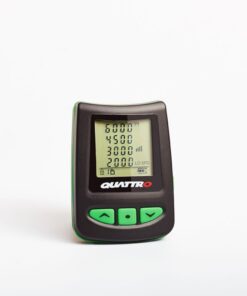

L&B Quattro Skydiving Audible Altimeter – Advanced Audible Altitude Awareness for Freefall, Tracking, Wingsuit, and Canopy Flight
L&B Quattro Skydiving Audible Altimeter Overview
The L&B Quattro Skydiving Audible Altimeter is a specialized audible altitude-awareness instrument developed by Larsen & Brusgaard for experienced skydivers who need multiple configurable warnings during freefall and slower descent. The original Quattro provides four high-speed warning altitudes, three low-speed warnings, up to three climb-to-altitude warnings, four warning banks, adjustable sound volume, selectable pitch, altitude offset, and Track Guide functionality. LB Altimeters specifically identifies the Quattro for advanced disciplines including formation flying, freeflying, wingsuit flying, tandem, AFF, accuracy, and CRW.
Why Choose the L&B Quattro?
The strongest reason to use the Quattro is the amount of altitude information it can provide without requiring the jumper to constantly look at a wrist-mounted display.
Four configurable high-speed warnings allow different phases of a descent to be marked acoustically. Meanwhile, three additional low-speed warnings can support slower flight phases. This combination makes the unit useful during a tracking jump, canopy flight, crw skydiving, or advanced wingsuit sport.
For people researching a complete skydiving equipment list, the audible is normally used alongside a visual altimeter, properly configured parachute rig, suitable skydiving helmet, emergency equipment, and correctly maintained canopy system.
Four High-Speed Warning Altitudes
The Quattro’s four high-speed warnings are one of its defining features. The manual describes configurable freefall alerts and notes that these warnings can be used for large formations, wingsuit flying, and other precision descents where multiple altitude cues are desirable.
The modern Quattro 3 continues this concept, with freefall warning ranges extending from 1,000 to 29,900 feet and an operating range extending to 40,000 feet.
These functions can be particularly valuable when monitoring skydiving speed, speed sky diving, separation, deployment preparation, and transitions between phases of a descent.
Track Guide for Separation Awareness
Track Guide produces short repeating tones between the first and second high-speed warnings.
LB describes this function as a way to help users monitor altitude separation during tracking groups or waves.
That makes the device particularly relevant for organized group movement where altitude awareness must remain consistent even while attention is divided between direction, separation, and nearby jumpers.
Low-Speed and Canopy Warnings
The Quattro also provides three selectable slower-speed warnings.
These can be configured for descent after deployment or for slower flight profiles. The current manual explains that these alerts may also be useful during specialized suit flying when preparing for separation and deployment.
Users researching landing flight risers, skydiving downsizing chart, smallest canopy, base canopy, safire 3, or fluid wings should understand that an audible warning device does not determine correct canopy choice or landing technique. Those decisions require proper instruction, currency, and equipment-specific training.
Wingsuit Applications
The Quattro is especially relevant to experienced users involved in wingsuit, vector wingsuit, gliding suit wingsuit, skydiving gliding suit, or other fly suits.
Its combination of high-speed warnings, slower-speed alarms, and Track Guide provides multiple opportunities for altitude cues during different stages of flight.
However, people searching wing suits for sale, price of wingsuit, tandem wingsuit, or indoor wingsuit are researching different equipment categories. The Quattro supplies audible altitude information; it does not control or replace flight training.
Helmet Integration
Audible instruments are typically mounted near the ear inside compatible headgear.
Therefore, anyone comparing a skydiving helmet, skydive helmets, sky helmet skydiving, full face skydiving helmet, sky diving helmet, skydiving helmet full face, g35 helmet, cookie g4 helmet, or the best skydiving helmet should verify that the chosen helmet offers suitable audible installation space.
LB currently sells dedicated holders for Quattro-family devices, including helmet mounting solutions.
Goggles and Vision Equipment
Searches involving skydiving glasses, skydiver goggles, or can you wear glasses while skydiving concern visual protection rather than audible altitude awareness.
One advantage of an audible device is that information is delivered by sound, reducing the need to look away simply to receive every configured altitude cue.
Nevertheless, visual altitude awareness remains essential.
Parachute System Context
The Quattro is not part of the structural parts of a parachute.
Components and searches such as container skydive, freefly pud handle, linewear, and skydiving rigging relate to the harness-container, deployment, line, or maintenance system.
Likewise, a gear bag skydive product simply helps transport equipment.
The audible should therefore be understood as supplementary personal instrumentation rather than a component of the main deployment system.
Emergency Equipment Is Separate
A hook blade knife, hook knife skydiving, or skydive hook knife serves an emergency cutting role and should never be confused with an audible instrument.
Likewise, fire parachute and cypress fire skydiving refer to entirely separate safety or equipment subjects.
The Quattro provides altitude alerts but does not replace emergency procedures, visual awareness, automatic activation equipment, or trained decision-making.
BASE and Specialized Disciplines
Searches for base jumping and baseline jumping refer to highly specialized disciplines with different training, equipment, and risk profiles.
An audible device can provide information, but owning one does not make specialized jumps appropriate or safe.
The same principle applies to high-performance canopy activity and advanced freefall techniques.
Drop Zones and Jump Locations
People searching parachute jump australia, skydive byron bay, cairns skydiving, ifly colorado springs, skydiving blue hole belize, or skydive belize are usually looking for facilities or experiences rather than equipment specifications.
Similarly, new skydive, skydiving website, and #skydiving latest are general discovery terms.
The Quattro itself is portable and can be configured for use across different operations, subject to proper setup and local procedures.
Weight Limits and Equipment Selection
The search term weight limit skydiving relates to equipment ratings, operator policies, aircraft limitations, and harness fit rather than to the audible device.
Likewise, a jumper pilot or instructor must consider the complete equipment system rather than relying on one instrument.
Proper gear selection should account for experience, discipline, fit, equipment ratings, and organizational requirements.
Unrelated Search Phrases
Some broad keyword datasets include terms such as nude parachute jump, skydiving nude, or skydiving tube. These do not describe Quattro features or functions.
They may appear in general search traffic, but they should not be treated as product specifications.
Why the L&B Quattro Stands Out
The Quattro stands out because it combines several layers of audible altitude awareness in one compact device.
Four high-speed warnings provide multiple freefall reference points. Three slower-speed warnings support canopy or slower flight phases. Track Guide adds separation-oriented cues. Multiple warning banks let experienced users maintain different setups for different disciplines. Adjustable pitch and volume help tailor the sound profile, while altitude offset and climb warnings add additional flexibility.
For experienced users involved in formation work, freeflying, advanced tracking, canopy disciplines, or suit flying, the L&B Quattro Skydiving Audible Altimeter offers a highly configurable secondary altitude-awareness system designed to complement—not replace—visual altitude monitoring, training, and established safety procedures.
Maintenance, Battery Care, Sound Output, Helmet Fit, Storage, and Long-Term Reliability
The L&B Quattro Skydiving Audible Altimeter is a compact electronic instrument, and dependable performance depends on careful handling, regular inspection, correct battery management, and proper storage. Because the device is designed to provide audible altitude cues close to the ear, even small issues with speaker output, power, housing condition, or helmet placement can reduce practical usefulness. A simple maintenance routine helps preserve reliability without unnecessary disassembly.
Building a Regular Inspection Routine
A short inspection should be completed before and after use.
The housing should be checked for cracks, impact marks, moisture, or contamination.
The buttons should respond normally.
The speaker opening should remain clear.
The battery condition should also be checked.
If the device is mounted inside a helmet, the mounting area should be inspected to confirm that the unit remains secure and correctly positioned.
Checking the Housing
The outer casing protects the internal electronics.
Although the unit is designed for demanding use, it should still be protected from unnecessary impact.
The device should not be thrown loose into a bag with heavy hardware.
A cracked or badly damaged housing can expose internal components to moisture or debris.
If structural damage appears, the unit should be inspected before further use.
Protecting the Speaker Area
The speaker is essential because the device communicates through sound.
The speaker opening should remain free from dirt, tape, fabric, or other obstruction.
If the audible output becomes weaker than normal, the first step should be to inspect the speaker area.
The unit should not be cleaned with sharp objects that could damage the internal sound component.
Testing Audible Output
The sound output should be checked regularly.
The user should confirm that tones are clear and loud enough to be recognized in the intended helmet configuration.
If the tone becomes distorted, unusually quiet, or intermittent, the device should not be trusted until the cause is understood.
A sound check is especially important after a hard impact or long storage period.
Managing Volume Settings
Volume should be set high enough to remain clearly audible in the intended environment.
However, unnecessarily excessive volume may be uncomfortable.
The selected level should be tested while wearing the actual helmet.
Testing the device outside the helmet may not provide an accurate indication of how it will sound during real use.
Battery Care
Battery condition should be monitored carefully.
The user should know the approximate age of the installed battery and replace it before reliability becomes uncertain.
Waiting until the device stops working completely is poor maintenance practice.
Battery status should be checked before important training days, travel, or periods of intensive use.
Preventing Unexpected Power Loss
Unexpected power loss can make the unit unavailable when needed.
A regular battery replacement schedule can reduce that risk.
If the device gives any indication of low power, the battery should be replaced according to manufacturer guidance.
A fresh battery is a relatively simple way to preserve confidence in the instrument.
Battery Compartment Inspection
The battery compartment should remain clean and dry.
Contacts should be free from visible corrosion.
If residue or corrosion appears, the device should be serviced properly rather than aggressively scraped or treated with unsuitable chemicals.
The battery cover should remain secure and should not show signs of damage.
Long-Term Battery Storage
If the device will not be used for an extended period, storage recommendations should be followed.
Depending on manufacturer guidance, battery removal may be appropriate for very long storage periods.
This helps reduce the risk of leakage.
Before returning the device to service, the battery compartment and contacts should be inspected.
Button and Control Care
Buttons should move and respond normally.
A control that becomes sticky, loose, or inconsistent should not be ignored.
The user should avoid pressing buttons with excessive force.
If the controls no longer operate predictably, the device should be inspected before normal use resumes.
Protecting Against Moisture
Moisture can affect electronic reliability.
If the device becomes wet, it should be dried before storage.
It should not be sealed immediately inside a damp helmet bag or pouch.
The helmet itself should also be allowed to dry because trapped moisture can remain around the instrument.
Condensation Management
Condensation can develop when equipment is moved between cold and warm environments.
If moisture appears, the device should be allowed to stabilize and dry.
The user should avoid powering or adjusting the unit unnecessarily while it is visibly wet.
Gradual temperature adjustment helps reduce condensation problems.
Cold-Weather Care
Low temperatures can affect battery performance.
Before use in cold conditions, battery status should be checked carefully.
The sound output and controls should also be tested.
If the device has been stored in a cold vehicle or unheated area, it may be useful to allow it to stabilize before final setup.
Hot-Weather Care
Extreme heat should also be avoided.
The device should not be left in direct sunlight or inside a closed hot vehicle for long periods.
Heat can reduce battery life and affect electronic components.
If the unit becomes very hot, it should be allowed to cool gradually before use.
Helmet Pocket Inspection
The helmet pocket or mounting area should be checked regularly.
Dust, foam fragments, or fabric can build up around the speaker.
The mounting area should also remain dry.
If the pocket becomes stretched or damaged, the instrument may shift away from the ear.
That can reduce the clarity of warning tones.
Correct Helmet Positioning
The device should sit close enough to the ear for tones to be heard clearly.
If it is positioned too far away, sound may be reduced.
If it is pressed uncomfortably against the head, the mounting arrangement should be adjusted.
Comfort and sound clarity should both be considered.
Preventing Device Movement
The instrument should remain secure inside the helmet.
It should not slide freely during movement.
A loose device can shift position and become harder to hear.
It may also create discomfort.
The mounting method should therefore be checked periodically.
Cleaning the Exterior
Routine cleaning should remain gentle.
A soft cloth can remove dust and light contamination.
Harsh solvents should be avoided unless specifically approved for the device.
The unit should not be submerged unnecessarily.
Cleaning should focus on preserving the housing and speaker opening.
Avoiding Improvised Repairs
Tape, glue, or improvised modifications should not be used to repair damaged controls or housing.
These fixes can obstruct the speaker, trap moisture, or interfere with button operation.
Proper repair is preferable.
A small electronic safety-support device should remain in its intended configuration.
Software and Setting Checks
The configured warning settings should be reviewed periodically.
Accidental changes can occur if buttons are pressed during transport or setup.
The user should confirm that warning altitudes, volume, pitch, and active memory bank remain correct before use.
This is especially important when the device is shared or used for different disciplines.
Checking Multiple Memory Banks
If several stored configurations are used, each one should be clearly understood.
The user should know which bank is active before beginning an operation.
A setting intended for one discipline should not be assumed appropriate for another.
Regular review reduces the chance of using the wrong profile.
Testing After Configuration Changes
Any major setting change should be tested before operational use.
The user should confirm that tones occur in the expected sequence and that volume is suitable.
Testing helps identify input mistakes.
It is better to discover an incorrect configuration during preparation than during an actual jump.
Post-Use Inspection
After use, the device should be checked for damage, moisture, or unusual behavior.
The helmet pocket should also be inspected.
If the unit produced weak or unexpected tones, that issue should be recorded and investigated before the next use.
Transport Protection
The device should remain protected during travel.
If it stays mounted inside the helmet, the helmet should be carried in a suitable bag.
Heavy equipment should not be placed directly on top.
If the device is removed, it should be stored in a small protective compartment.
Long-Term Storage
For extended storage, the unit should be kept in a dry, temperature-stable environment.
It should be protected from direct sunlight, heavy pressure, and high humidity.
The storage location should also reduce the chance of accidental loss.
Before future use, the device should receive a full functional check.
Recognizing Changes in Sound
Users become familiar with the normal tone and volume.
A noticeable change can provide early warning of a problem.
Lower volume, crackling, or intermittent sound should be investigated.
Battery condition, speaker obstruction, helmet placement, and physical damage are all possible causes.
Professional Service
Professional inspection is appropriate if the unit develops persistent sound problems, control issues, battery-contact damage, housing cracks, or unreliable operation.
Internal disassembly should not be improvised.
Qualified service is the safer choice when electronic faults are suspected.
Keeping a Simple Service Record
A basic record can help with long-term equipment management.
The user can note battery replacement dates, unusual sound behavior, impacts, repairs, and major setting changes.
This information becomes useful if a recurring issue develops.
Long-Term Reliability
The L&B Quattro Skydiving Audible Altimeter can remain dependable when maintenance is simple, consistent, and disciplined.
Battery management reduces unexpected shutdown.
Clean speaker openings preserve sound clarity.
Secure helmet mounting keeps the device correctly positioned.
Dry storage protects the electronics.
Regular setting checks prevent configuration mistakes.
With careful handling, routine testing, and timely servicing when needed, the unit can continue to provide reliable audible altitude support across repeated use.
Audible Warning Setup, Freefall Awareness, Canopy Alerts, Helmet Integration, and Practical Use
The L&B Quattro Skydiving Audible Altimeter is designed to support altitude awareness through a sequence of configurable sound alerts. Its practical value comes from the ability to assign different audible cues to different phases of a jump, allowing the user to receive information without relying entirely on visual instruments. When configured carefully, the device can support a structured descent plan, improve awareness during high-workload phases, and provide useful redundancy alongside other established methods of altitude monitoring.
Understanding the Audible Warning System
The device uses sound patterns to indicate that a selected altitude has been reached.
Rather than displaying information visually, it produces tones close to the ear.
This allows the user to receive a cue while still maintaining visual attention on body position, nearby participants, or the surrounding environment.
The benefit is not that visual awareness becomes unnecessary.
Instead, the audible provides an additional layer of information.
High-Speed Warning Configuration
The device allows several warning points to be configured for faster descent phases.
Each warning can represent a different stage of the planned sequence.
For example, one tone may be used as an early awareness cue, while another may mark a preparation point and a later one may indicate that immediate action is approaching.
The exact settings should match the user’s training and operating procedures.
Building a Logical Warning Sequence
Warnings should be arranged in a logical order.
The user should know exactly what each tone means before beginning the activity.
Too many unfamiliar signals can create confusion.
For this reason, the warning sequence should be tested and memorized during preparation.
Each tone should correspond to a clear and deliberate action or awareness point.
Low-Speed Alerts
The additional slower-descent alerts provide useful flexibility after the main high-speed phase.
These can be configured to support awareness during later stages of descent.
The user should select values that match established procedures.
The alerts should not be treated as instructions by themselves.
They are reminders that support trained decision-making.
Avoiding Over-Reliance on Sound
An audible instrument should never become the only source of altitude information.
Sound can be missed because of helmet fit, environmental noise, hearing protection, distraction, or equipment malfunction.
Visual checks should continue according to training.
The device works best when treated as a secondary support system rather than the sole reference.
Setting the Volume
Volume should be adjusted so that tones are clearly audible inside the actual helmet.
Testing outside the helmet can be misleading because sound characteristics change once the unit is placed near the ear.
The user should choose a level that can be heard reliably without being unnecessarily uncomfortable.
Adjusting Pitch
Pitch can help distinguish alerts more easily.
Some users may hear certain frequencies more clearly than others.
The selected tone should remain recognizable through the helmet and during periods of high wind noise.
Once a useful pitch is found, unnecessary changes should be avoided.
Consistency makes the signal easier to recognize automatically.
Using Multiple Memory Banks
Different saved configurations can be useful when the same device is used for different activities.
One setup may contain one sequence of warning points, while another may use different values.
The user should always confirm which profile is active before use.
A saved profile is only helpful if the correct one is selected.
Checking the Active Profile
The selected configuration should be verified as part of the pre-use routine.
The user should not assume that the same settings remain active from a previous session.
This becomes especially important if the device is shared.
A quick profile check can prevent a serious configuration mismatch.
Track Guide Function
The repeating guidance tones between selected warning points can provide useful progression information.
Instead of receiving only isolated alerts, the user receives additional cues during a defined altitude interval.
This can help with awareness during a structured separation phase.
The function should be understood and practiced before operational use.
Interpreting Repeating Tones
Repeating tones should have a clear meaning to the user.
If the signal is not understood immediately, it becomes less useful.
The user should know where the repeated sequence begins and where it ends.
Training with the configured pattern helps build recognition.
Climb-to-Altitude Warnings
The unit can also provide warnings during ascent.
These alerts can help remind the user of selected points before exit.
They may be useful for equipment checks, mental preparation, or other pre-exit procedures.
As with descent warnings, values should be chosen deliberately rather than entered without a clear purpose.
Preparing the Unit Before Boarding
The device should be checked before entering the aircraft.
Battery condition, volume, pitch, active profile, and warning settings should all be confirmed.
The unit should also be securely installed in the helmet.
This prevents unnecessary configuration work later.
Helmet Placement
The speaker should sit close enough to the ear for clear sound transmission.
If the unit is positioned too far away, warnings may become difficult to hear.
If it presses too firmly against the head, comfort may suffer.
The mounting position should therefore balance sound clarity with comfort.
Testing Sound Through the Helmet
The actual helmet should be worn during testing.
The user should confirm that each tone remains recognizable once the helmet is closed or fully fitted.
Padding thickness, ear pockets, ventilation, and shell design can all influence perceived volume.
A proper test gives more realistic information than listening to the device in open air.
Managing Wind Noise
High airflow creates significant background noise.
This is one reason helmet placement and volume selection matter.
The user should not assume that a tone heard clearly on the ground will sound identical in descent.
The device should be configured conservatively enough to remain recognizable in the expected environment.
Freefall Workload
During fast descent, the user may be managing body position, separation, orientation, and awareness of others.
An audible cue can reduce the need for constant visual instrument checking.
However, it should not distract from the surrounding environment.
The sound is most useful when the user understands it immediately and responds according to training.
Slower Flight Phases
Once descent rate changes significantly, different warning settings become relevant.
The user may choose to use additional alerts for later phases.
These should complement visual checks and established operating procedures.
No audible device should be treated as permission to delay normal altitude awareness.
Speed Recognition
The instrument distinguishes between different phases using descent behavior.
The user should understand that unusual body positions or transitions may affect how the device interprets movement.
This is another reason warnings should not replace visual information.
Electronic systems operate according to measured conditions, not intention.
Altitude Offset
If departure and landing references differ, an offset may be used where appropriate.
The selected value should come from accurate operational information.
It should be reviewed before use.
Incorrect offsets can cause warning points to occur at unexpected relative altitudes.
Environmental Conditions
Temperature, pressure, and weather conditions can influence electronic and pressure-sensing equipment.
The device should be allowed to stabilize when moved between significantly different environments.
Battery condition should receive additional attention during cold-weather use.
Managing Cold Conditions
Cold temperatures can reduce available battery performance.
The user should confirm power status before exposure.
The unit should also be checked for normal response after being stored in a cold location.
A device that behaves unusually should not be relied upon until it is inspected.
Managing Heat
Excessive heat should also be avoided.
The helmet and device should not be left in a closed hot vehicle for extended periods.
Heat can affect batteries and electronics.
If the unit becomes unusually hot, it should be allowed to cool before use.
Moisture and Condensation
Moisture can affect both comfort and electronics.
The device and helmet should be dried after damp use.
Condensation can form when equipment moves quickly between cold and warm environments.
The unit should be allowed to stabilize before storage.
Post-Use Review
After use, the user should consider whether the warning sequence was clear and appropriate.
Any missed, confusing, weak, or unexpected alert should be investigated.
This review can help determine whether the problem came from configuration, volume, helmet placement, or another factor.
Avoiding Frequent Unnecessary Changes
Once a reliable setup is established, constant adjustment can create confusion.
Settings should only be changed when there is a clear reason.
Frequent modifications increase the chance of selecting the wrong profile or forgetting what a particular tone represents.
Consistency supports faster recognition.
Training With the Device
The user should become familiar with the warning sequence during controlled preparation.
Each sound should have an understood meaning.
The goal is for recognition to become immediate rather than requiring conscious interpretation.
This improves practical usefulness during high-workload situations.
Practical Operational Value
The L&B Quattro Skydiving Audible Altimeter performs best when its warning system is carefully planned and consistently used.
High-speed alerts provide multiple awareness points.
Slower-descent warnings add flexibility after the main descent phase.
Track guidance can provide additional progression cues.
Ascent warnings support pre-exit preparation.
Multiple profiles allow different configurations to be stored.
Adjustable volume and pitch improve audibility.
When these features are combined with secure helmet placement, visual altitude checks, disciplined training, and regular setting verification, the device becomes a highly effective secondary altitude-awareness tool for experienced users.
Operational Workflow, Environmental Performance, Warning Discipline, Pre-Use Checks, and Performance Optimization
The L&B Quattro Skydiving Audible Altimeter performs best when it is integrated into a consistent preparation and review routine. Its configurable warning structure can support altitude awareness during multiple phases of a descent, but effective use depends on correct setup, secure placement, battery condition, sound recognition, environmental awareness, and disciplined verification before every use. The device should support an experienced user’s established procedures rather than replace them.
Building a Consistent Pre-Use Routine
A repeatable equipment check helps reduce configuration mistakes.
Before departure, the user should confirm battery status, active warning profile, programmed altitude points, volume, pitch, and helmet placement.
Each of these checks should be completed before the environment becomes busy.
A consistent order makes the process easier to remember and helps identify anything unusual before the device is needed.
Confirming the Correct Warning Profile
Multiple stored profiles are useful only when the correct one is active.
Before use, the selected profile should be reviewed rather than assumed.
This becomes particularly important when the device is used for different training formats or when another person has handled the equipment.
The selected configuration should match the planned activity and the user’s established procedures.
Reviewing Warning Altitudes
Each programmed warning point should have a clear purpose.
The user should understand exactly what every tone represents.
If a warning value no longer matches the planned activity, it should be corrected before departure.
Values should not be adjusted casually once the sequence has been established.
A clear and consistent system improves recognition under workload.
Using Distinct Warning Meanings
The warning sequence should be simple enough to recognize immediately.
If several tones have similar meanings, confusion can develop.
Each signal should represent a distinct stage or awareness point.
The goal is to reduce interpretation time.
A user should hear a tone and immediately understand its meaning rather than mentally working through several possibilities.
Checking Volume Through the Actual Helmet
Volume should always be evaluated with the device installed in the helmet.
A tone that sounds loud in open air may become significantly quieter once padding and helmet structure are placed around it.
The user should wear the complete setup during testing.
The sound should be easy to recognize without becoming painfully loud.
Positioning the Speaker Correctly
Speaker placement can strongly affect perceived volume.
The device should sit close enough to the ear that warnings remain clear.
It should not be buried behind thick padding or positioned where movement can shift it away.
At the same time, the unit should not press uncomfortably against the head.
A secure but comfortable fit provides the best balance.
Preventing Movement Inside the Helmet
The device should remain fixed once installed.
A loose unit may rotate or move during activity.
If this happens, the speaker can shift away from the ear and sound intensity may decrease.
The helmet pocket or mounting area should therefore be checked periodically.
Padding wear can gradually change how securely the device is held.
Preparing for High Wind Noise
Strong airflow creates substantial background noise.
This should be considered during sound testing.
The user should not assume that ground-level conditions represent what will be heard during rapid descent.
A properly selected volume and pitch can help warnings remain recognizable.
However, the device should still be treated as a secondary information source.
Understanding Workload
Periods of rapid descent can involve substantial mental workload.
The user may be monitoring orientation, position, nearby people, equipment, and planned actions simultaneously.
An audible alert can reduce the need to look repeatedly at another instrument.
However, warnings should remain simple enough that they do not create additional mental burden.
Avoiding Excessive Alerts
More warnings are not always better.
Too many signals can create confusion or cause the user to stop paying attention to them.
Only meaningful warning points should be programmed.
A focused configuration is generally easier to learn, easier to remember, and more useful during demanding conditions.
Managing Different Descent Phases
The device can provide different cues during faster and slower phases.
These should be configured so that each part of the descent has a logical warning structure.
The transition from one phase to another should be understood in advance.
The user should never rely on the sound system alone to determine what phase has been reached.
Using Repeating Guidance Effectively
Repeating guidance tones can provide a sense of progression between selected points.
This feature is most useful when the user has practiced with the sequence and understands what the repetition means.
If the signal is unfamiliar, it may become distracting.
Training should therefore occur before operational use.
Managing Ascent Alerts
Warnings during ascent can support preparation before departure from the aircraft.
These may be used to remind the user about equipment checks, mental preparation, or other planned tasks.
Ascent alerts should be selected with the same discipline as descent warnings.
They should have a clear purpose.
Environmental Pressure Changes
The device relies on atmospheric information to determine altitude.
Significant weather changes or differences between locations can influence pressure references.
The user should understand how the device handles these conditions and verify configuration before use.
Reference values should not be guessed.
Temperature Effects
Cold conditions can reduce battery performance.
Hot conditions can also place stress on electronics.
The device should not be left unnecessarily in extreme environments.
If it has been exposed to unusual temperatures, battery condition and general function should be checked before use.
Condensation Management
Moving equipment between cold and warm environments can create condensation.
Moisture should be allowed to evaporate before the unit is sealed inside a helmet bag.
The helmet itself should also be dried if necessary.
Trapped moisture can affect both electronics and padding over time.
Preparing for Repeated Use
Multiple sessions in one day require repeated checks.
A configuration that was correct earlier should not automatically be assumed correct later.
The active profile, battery status, and helmet position should be confirmed again.
This takes little time and reduces the chance of carrying an unnoticed problem into the next use.
Monitoring Battery Condition
Battery checks should become routine.
Low power can affect reliability.
A marginal battery should be replaced before an important session rather than pushed to failure.
Cold weather may make this even more important.
Keeping a simple replacement history can help prevent unexpected power loss.
Post-Use Sound Evaluation
After use, the user should consider whether every warning was clear.
Weak, distorted, missing, or unexpectedly timed signals should be investigated.
The problem may come from volume, helmet placement, battery condition, configuration, or the device itself.
Ignoring inconsistent behavior can allow a minor issue to become more serious.
Reviewing Configuration Changes
Any change to warning settings should be documented mentally or in writing.
The user should know what changed and why.
After adjustment, the new sequence should be tested before operational use.
This reduces the chance of encountering an unfamiliar signal during a demanding phase.
Avoiding Last-Minute Programming
Major configuration changes should not be made immediately before departure unless necessary.
Rushed adjustments increase the chance of input mistakes.
Whenever possible, profiles should be prepared and tested ahead of time.
The final check should confirm the setup rather than create it from scratch.
Training for Immediate Recognition
The warning tones should become familiar enough that recognition is automatic.
This comes through repeated, controlled practice.
If a user has to consciously remember what a tone means every time it is heard, the setup may be too complicated.
A simple and practiced warning structure is more effective.
Integrating Visual Cross-Checks
Audible information should be combined with visual monitoring.
The user should continue regular visual checks according to established procedures.
This provides redundancy and makes it easier to identify an unexpected or incorrect audible warning.
No single electronic device should be treated as infallible.
Managing Unexpected Alerts
If a warning occurs at an unexpected moment, the user should not assume that the sound is correct simply because it came from the device.
The situation should be evaluated using other available references and established procedures.
Unexpected behavior should then be investigated after the activity.
Post-Session Review
A short review can improve long-term reliability.
The user should consider sound clarity, timing, comfort, battery status, and helmet fit.
Any issues should be corrected before the next session.
Regular review helps prevent small problems from becoming familiar and ignored.
Preserving Consistency Across Different Activities
If different profiles are used, each should remain clearly separated.
The user should avoid creating configurations that are so similar that they become difficult to distinguish.
Clear naming, documentation, or routine selection procedures can help prevent mistakes.
Practical Performance Optimization
The L&B Quattro Skydiving Audible Altimeter delivers its greatest value when configuration, helmet fit, battery management, and warning recognition are treated as one complete system.
Correct profile selection prevents confusion.
Clear speaker placement improves sound transmission.
Appropriate volume and pitch improve recognition.
Battery checks reduce unexpected failure.
Environmental awareness helps maintain electronic reliability.
Visual cross-checking provides essential redundancy.
When these habits are consistently applied, the device becomes a dependable secondary altitude-awareness tool that supports organized, experienced, and disciplined use across a wide range of advanced descent conditions.
Be the first to review “L&B Quattro Skydiving Audible Altimeter”
Related products


Altimeter

Altimeter

Altimeter
Altimeter


Reviews
There are no reviews yet.