




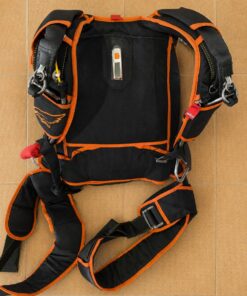



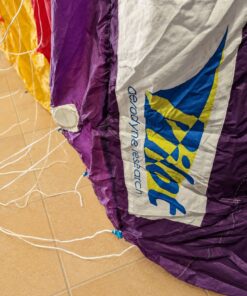
Used Complete rig wings w7

€2,450.00
The Used Complete Rig Wings W7 is a compact sport-skydiving system built around the Wings W7 harness/container platform. Designed for durability, secure canopy containment, comfortable harness support, and dependable deployment-system integration, it can offer strong value when the installed main, reserve, risers, pilot chute, AAD, and safety components are properly matched and maintained. Because this is used life-support equipment, the harness webbing, stitching, hardware, closing systems, reserve assembly, deployment components, canopy condition, repair history, and overall fit should be inspected by a qualified parachute rigger before use.
Used Complete Rig Wings W7 — Wings Harness/Container System with Compact W7 Canopy Sizing and Sport-Skydiving Configuration
Used Wings W7 Construction, Container Sizing, Harness Fit, Rig Components, Inspection, and Real-World Skydiving Use
The Used Complete Rig Wings W7 is built around the Wings harness/container platform, a sport-skydiving system designed with an emphasis on structural strength, comfort, secure canopy containment, and straightforward maintenance. Wings documentation states that its harness and reserve-container assembly are tested and approved under FAA TSO C23d. The harness uses high-strength Type 7 webbing in major load-bearing areas, while the design incorporates stainless-steel housings, reserve deployment hardware, main and reserve containers, and provisions for modern safety equipment.
The W7 refers specifically to the container size. Wings’ published quick-reference chart associates the W7 with approximately Sabre 120–135 main-canopy sizing and PDR 126–143 reserve sizing. However, Wings warns that actual pack volume varies with canopy design, age, climate, and packing technique. Therefore, another canopy of the same nominal square footage should not automatically be assumed to fit.
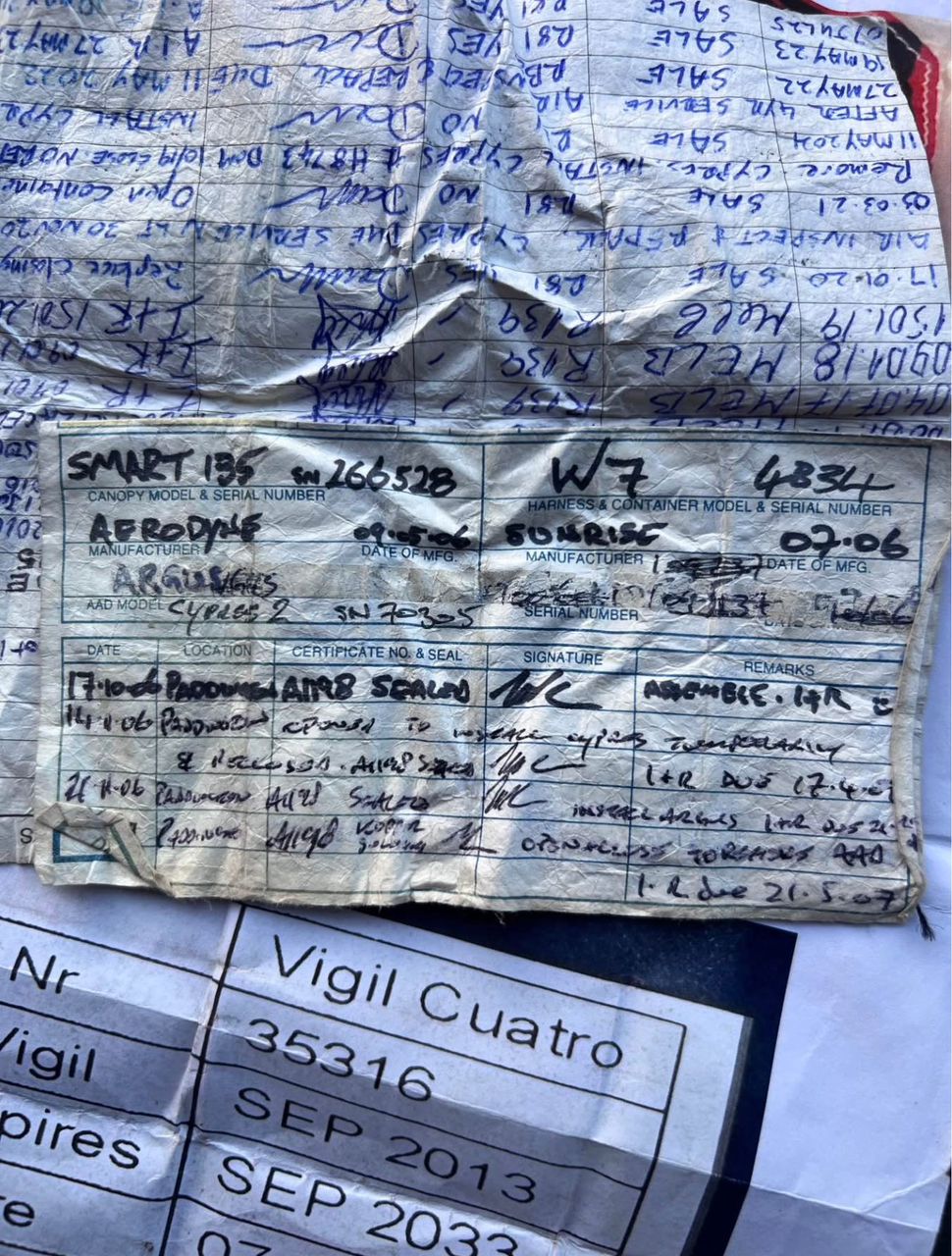
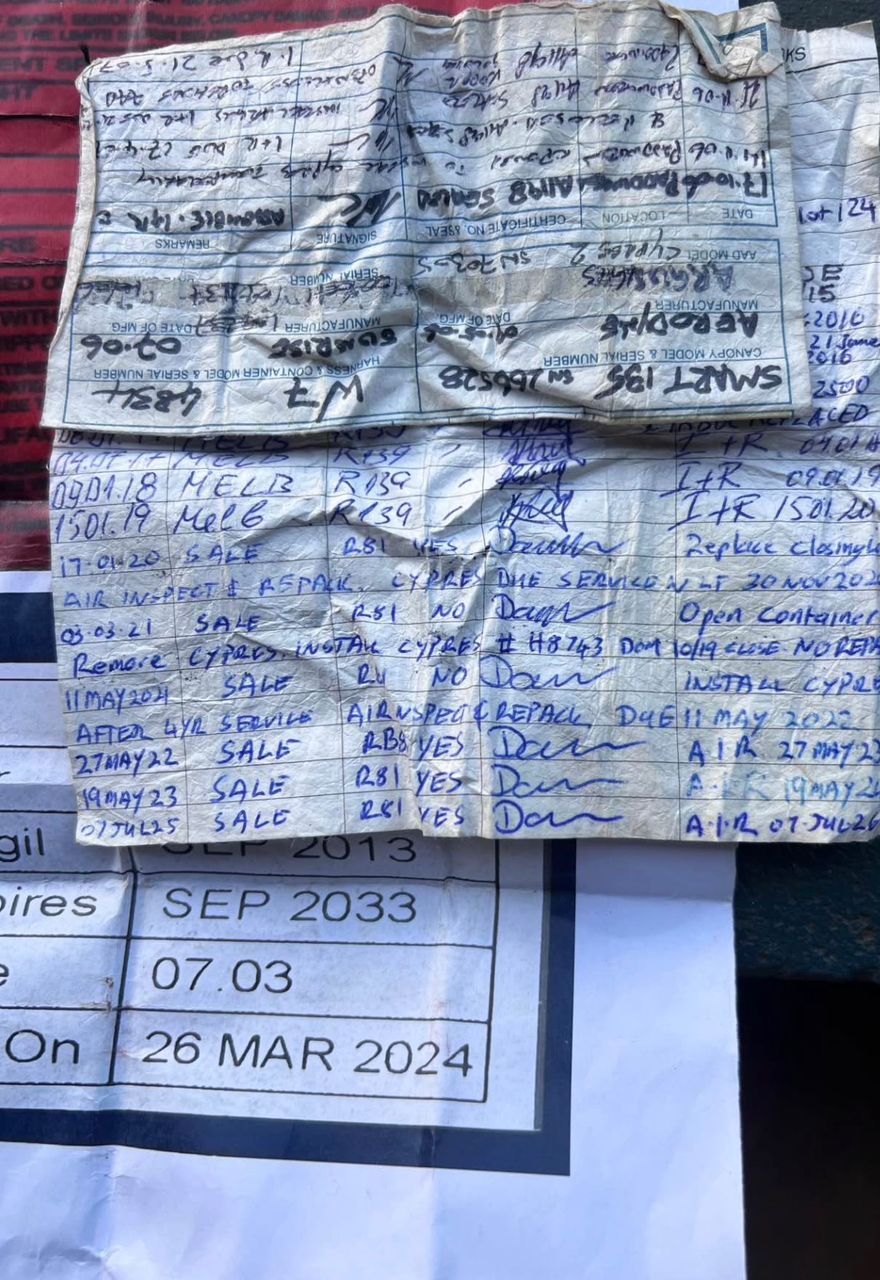
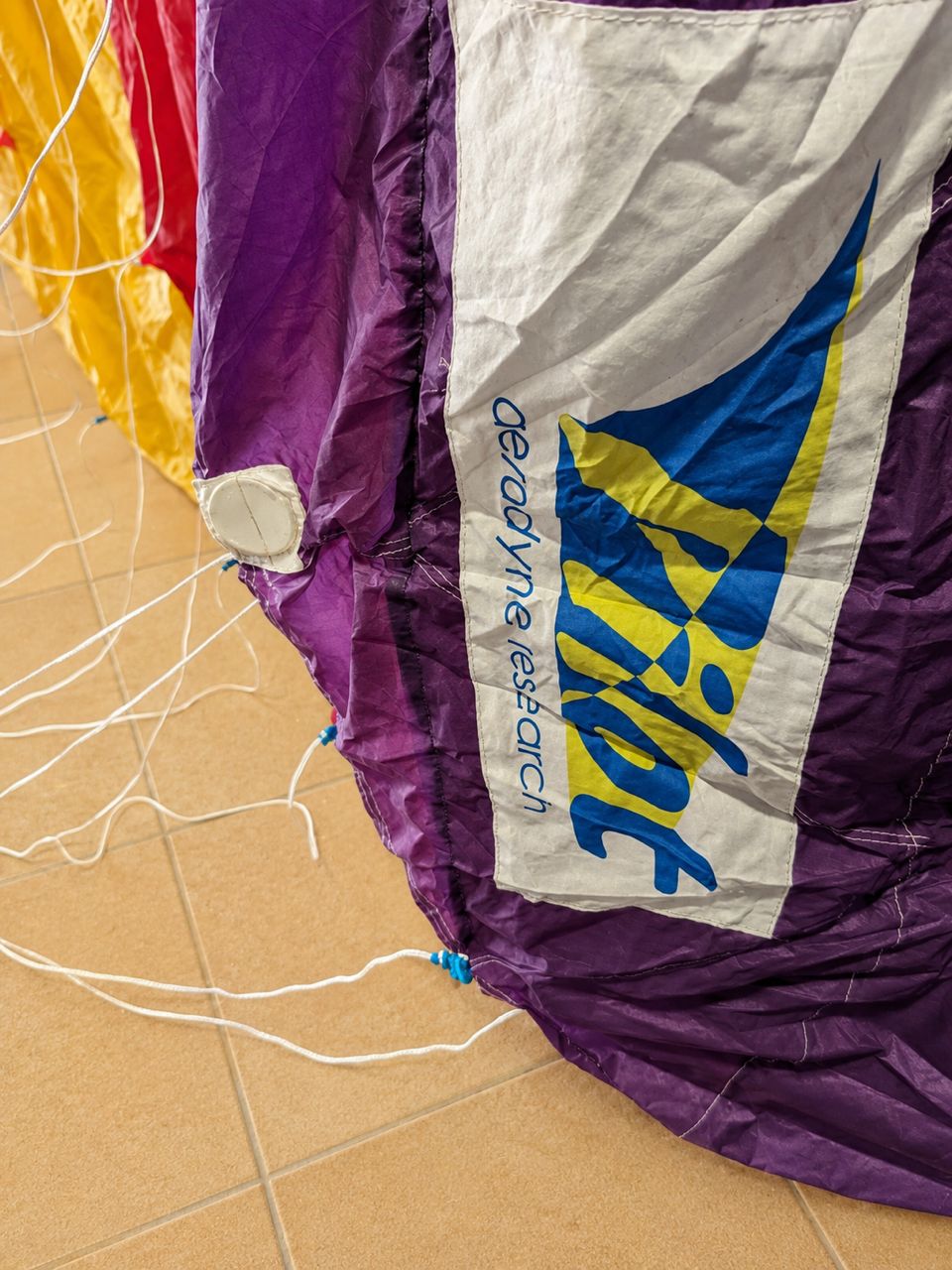
Because the listing is described only as a complete rig, the exact main canopy, reserve canopy, AAD, risers, pilot chute, RSL/MARD configuration, DOM, harness dimensions, jump count, and component history should be confirmed individually. A complete used system should be inspected by an appropriately qualified parachute rigger before use.
Parachute Jump Australia
For parachute jump Australia operations, local regulations, reserve servicing requirements, drop-zone rules, and equipment policies should be checked before using an imported or previously owned rig.
The W7 platform may provide an appropriately compact system when its harness dimensions and installed canopies match the jumper.
Skydive Byron Bay
Skydive Byron Bay represents the type of active drop-zone environment where correct equipment fit, current reserve documentation, and reliable deployment components are particularly important.
A used complete rig should arrive with as much maintenance and component history as possible.
Weight Limit Skydiving
Weight limit skydiving cannot be determined from the W7 container designation alone.
Maximum system limits depend on the harness/container certification and, critically, the lower applicable limits of the installed main and reserve canopies.
Actual suspended weight and wing loading should be evaluated separately.
Cairns Skydiving
Cairns skydiving can involve warm conditions and different landing environments.
Canopy selection, reserve loading, and harness fit should therefore be evaluated according to the actual jumper and intended operating conditions.
Skydiving Helmet
A skydiving helmet is separate from the Wings W7 but remains part of a complete personal skydiving equipment setup.
Skydive Helmets
Skydive helmets should provide appropriate fit and protection without interfering with visibility, handles, or other equipment.
Hook Blade Knife
A hook blade knife may be carried as emergency equipment.
Wings currently lists a hook-knife mounting option on some configurations, although the exact options installed on this used W7 must be confirmed visually.
Tracking Jump
During a tracking jump, secure riser covers, stable container fit, and reliable pilot-chute retention become particularly important.
A used system should therefore be checked for worn closure components and pilot-chute pouch material.
Parachute Rig
A parachute rig is a complete system rather than simply a backpack.
It can include the harness/container, main canopy, reserve canopy, main deployment bag, main pilot chute, risers, reserve deployment system, and optional electronic and mechanical safety devices.
Linewear
Linewear on both installed canopies should be evaluated.
Main suspension and steering lines experience regular operational wear, while reserve lines should be inspected during reserve servicing.
Visible abrasion, broken fibers, damaged stitching, or significant trim changes require attention.
Base Jumping
Base jumping uses specialized equipment and procedures.
A Wings W7 sport-skydiving harness/container should not be treated as a dedicated BASE system.
Sky Helmet Skydiving
A sky helmet skydiving search concerns personal protective equipment rather than the W7 container specification.
Wingsuit Sport
Wingsuit sport places additional demands on container security and deployment configuration.
Pilot-chute size, bridle configuration, deployment handle security, canopy suitability, and jumper experience should all be considered.
Vector Wingsuit
A vector wingsuit search may refer to equipment from another manufacturer or discipline.
It should not be confused with the Wings W7 harness/container.
Full Face Skydiving Helmet
A full face skydiving helmet can improve facial protection and wind shielding but does not determine harness or canopy compatibility.
Skydiving Downsizing Chart
A skydiving downsizing chart should not be used alone when deciding whether a W7 is suitable.
The W7 may accommodate relatively compact main canopies, but canopy size should follow demonstrated ability, exit weight, currency, and professional coaching.
Landing Flight Risers
Landing flight risers connect the main canopy to the harness through the three-ring release system.
Risers should be inspected for webbing wear, damaged stitching, guide-ring condition, brake-system wear, and connector integrity.
Fire Parachute
The phrase fire parachute does not describe the normal function of this system.
Cypress Fire Skydiving
Cypress fire skydiving may refer generally to safety-device discussions.
If an AAD is included with this used rig, its exact manufacturer, model, DOM, battery status, service requirements, cutter location, and installation should be verified independently.
Skydiving Rigging
Skydiving rigging is fundamental when assessing a used W7.
Wings publishes dedicated manuals covering reserve assembly, reserve routing, three-ring configuration, closing-loop specifications, RSL systems, and other maintenance procedures.
A qualified rigger should inspect the entire system before it is placed into service.
Baseline Jumping
Baseline jumping is unrelated to the intended sport-skydiving use of this harness/container.
Sky Diving Helmet
A sky diving helmet should be selected separately according to fit, discipline, protection, and comfort.
Hook Knife Skydiving
A hook knife skydiving accessory can be useful emergency equipment but is not a substitute for correct training or properly maintained rig components.
Landing Flight Risers
The repeated landing flight risers term highlights the importance of riser maintenance.
Three-ring loops, release housings, rings, cutaway cables, and riser webbing should all be inspected together.
Skydiving Glasses
Skydiving glasses or goggles provide eye protection but are independent of the harness/container.
Nude Parachute Jump
A nude parachute jump has no relationship to the structural condition or specification of this W7 system.
iFLY Colorado Springs
iFLY Colorado Springs provides indoor body-flight training.
Tunnel experience can improve freefall skills, but it does not replace parachute-equipment training, canopy instruction, or emergency-procedure practice.
Skydive Hook Knife
A skydive hook knife belongs to the emergency-accessory category and should remain securely mounted if carried.
Skydiving Helmet Full Face
A skydiving helmet full face setup should fit properly without restricting visibility or movement.
Skydiving Blue Hole Belize
For skydiving Blue Hole Belize or other destination jumping, current reserve documentation and airline-safe equipment transport become especially important.
Smallest Canopy
The smallest canopy that physically fits inside a container is not automatically the most appropriate canopy to use.
Packing compatibility and pilot suitability are two separate considerations.
Skydiving Speed
Skydiving speed affects equipment loading during deployment.
The Wings harness and reserve container system is certified under TSO-C23d, but the operating limits of installed canopies and other components must also be respected.
Wing Suits for Sale
Wing suits for sale concerns another specialized equipment category.
A wingsuit should only be paired with an appropriately configured rig and deployment system.
Skydiving Nude
Skydiving nude is unrelated to the engineering of the W7.
Parts of a Parachute
The parts of a parachute system can include the harness, reserve container, main container, main canopy, reserve canopy, risers, deployment bag, pilot chute, bridle, closing loops, ripcord, cutaway system, and optional safety devices.
Container Skydive
A container skydive system must correctly accommodate both installed canopies.
For the W7, Wings’ reference chart shows approximately Sabre 120–135 and PDR 126–143 as common reference combinations. Actual fit must still be verified because canopy pack volumes differ.
G35 Helmet
A G35 helmet is protective headgear and does not form part of the W7 harness/container.
Best Skydiving Helmet
The best skydiving helmet depends on discipline, fit, visibility, comfort, and personal requirements.
Skydive Belize
Skydive Belize is destination-related rather than a W7 specification.
Freefly Pud Handle
A freefly pud handle is a main-deployment handle configuration intended to remain secure during active freefall.
If this used rig includes one, the handle, pilot chute, bridle, and pouch should be inspected carefully.
Gliding Suit Wingsuit
A gliding suit wingsuit changes freefall characteristics significantly.
Deployment-system suitability should therefore be evaluated before this type of flying.
Jumper Pilot
A jumper pilot operates the aircraft, while the skydiver relies on the properly configured parachute system after exit.
CRW Skydiving
CRW skydiving involves specialized canopy-relative flight.
Canopy selection and rig configuration for this discipline should be determined independently of the W7 container size.
Gear Bag Skydive
A gear bag skydive setup helps protect the rig during transport.
The container should be kept away from moisture, chemicals, sharp objects, excessive heat, and unnecessary ultraviolet exposure.
Skydiving Equipment List
A skydiving equipment list normally includes a harness/container, main canopy, reserve canopy, deployment system, suitable safety devices, altimeter, helmet, goggles, and discipline-specific equipment.
Indoor Wingsuit
Indoor wingsuit training does not replace actual deployment or canopy experience.
Can You Wear Glasses While Skydiving
For can you wear glasses while skydiving, many helmets and goggles can accommodate prescription eyewear depending on their design.
Wingsuit
A wingsuit requires specialized training and careful consideration of the deployment system.
A used rig should be checked specifically for pouch retention, bridle condition, riser-cover security, and compatible main-canopy configuration before such use.
Skydiving Website
A reliable skydiving website is useful for manuals and technical information.
For Wings equipment, manufacturer documentation should take priority for rigging and compatibility questions.
Cookie G4 Helmet
The Cookie G4 helmet is a full-face helmet and is entirely separate from the Wings harness/container platform.
Base Canopy
A base canopy should not be installed or treated as a normal sport-skydiving main solely because its size appears compatible.
New Skydive
A new skydive participant should receive professional guidance before purchasing a complete used rig.
Harness fit, canopy loading, reserve sizing, and component condition should all be checked.
#Skydiving Latest
#skydiving latest may reveal equipment trends and discussions, but current manufacturer manuals and service bulletins are more authoritative for technical decisions.
The Wings website currently maintains manuals and service-bulletin information for its systems.
Canopy Flight
Canopy flight depends primarily on the installed main canopy rather than the W7 container itself.
The exact main included in this complete rig therefore needs to be identified before its glide, flare, speed, or responsiveness can be described accurately.
Skydiver Goggles
Skydiver goggles protect the eyes during freefall and remain separate from the rig.
Speed Sky Diving
Speed sky diving can involve very high freefall velocities, making properly rated and maintained equipment particularly important.
Fly Suits
Fly suits affect freefall aerodynamics but do not change the certified construction of the W7.
Skydiving Rig
A complete skydiving rig should be evaluated as one integrated assembly.
The W7 harness/container may be structurally serviceable while an installed canopy, AAD, riser set, or deployment component needs servicing or replacement.
Safire 3
A Safire 3 is a main canopy model.
Whether a particular size fits this W7 should be confirmed using actual pack volume and manufacturer or rigger guidance rather than nominal area alone.
Skydiving Gliding Suit
A skydiving gliding suit introduces wingsuit-specific freefall and deployment considerations.
Fluid Wings
Fluid Wings produces performance main canopies.
Any Fluid Wings canopy considered for this rig should be checked independently for volume, loading, skill requirements, and compatibility.
Price of Wingsuit
The price of wingsuit has no direct relationship to the value of a used Wings W7.
Used-rig value depends more heavily on age, harness condition, included canopies, AAD status, repair history, fit, and component serviceability.
Tandem Wingsuit
A tandem wingsuit is unrelated to the intended normal configuration of this personal sport rig.
Skydiving Tube
A skydiving tube may be used during specialized freefall activities but is unrelated to the W7’s technical construction.
Why the Wings W7 Is a Practical Compact Container
The W7 occupies a relatively compact position in the Wings sizing range.
The manufacturer’s reference chart associates it with approximately 120–135-size Sabre mains and PDR 126–143 reserves.
This makes the W7 potentially attractive to experienced sport jumpers seeking an appropriately sized personal system without moving into extremely small container dimensions.
How Good Is the Harness Construction?
Wings specifies 6,000 lb Type 7 webbing for the main lift web, leg straps, laterals, and reserve risers.
The system also incorporates tested hardware, stainless-steel housings, reinforced reserve-container construction, and TSO-C23d approval.
These specifications demonstrate robust engineering, although the actual condition of a used example still needs to be inspected.
Why Articulation Matters
Wings describes its articulated harness as allowing the system to pivot around the body instead of pinching during movement.
The design is intended to support comfort both in the aircraft and under canopy.
Exact harness options on this particular used W7 should still be confirmed because configurations vary.
How Precise Is the Fit?
Harness fit is determined by the original body measurements and any subsequent resizing.
A well-fitted W7 should sit securely on the jumper’s torso, position the leg straps properly, and keep emergency handles accessible.
The container model alone cannot determine whether it will fit a specific buyer.
Why Container Sizing Matters
A canopy that packs too tightly can make closure difficult, while one that is excessively small may not produce the intended container geometry.
Wings specifically warns that canopy fit varies with climate, packing technique, and canopy design.
Therefore, actual canopy compatibility should be confirmed professionally.
How the Reserve System Is Built
Wings specifies a reserve-container assembly with stainless-steel housings, a stainless-steel reserve ripcord handle, reinforced construction, an aluminum reserve floor plate, AAD provisions, and RSL compatibility.
The exact reserve configuration inside this used complete rig should be identified from the data card and canopy label.
Why the Three-Ring System Matters
The three-ring release system allows the main risers to be disconnected during emergency procedures.
Correct ring orientation, clean release cables, healthy loops, properly maintained housings, and undamaged risers are essential.
Wings provides dedicated technical documentation for three-ring assembly and maintenance.
Where This Complete Rig Fits Best
A correctly sized and professionally inspected W7 can suit recreational sport skydiving when the installed canopy sizes, harness measurements, reserve loading, and jumper experience are appropriate.
Its compact container size means suitability should be assessed carefully rather than assumed.
When Buying a Used W7 Makes Sense
A used W7 can offer good value when its components have documented service history and the harness fits the buyer.
Purchasing a complete system can also simplify equipment acquisition if the main, reserve, AAD, and container all match the intended user.
However, compatibility must be verified component by component.
Important Information About a Used Complete Rig
Before purchase, confirm the exact:
- Harness/container DOM and serial number
- Harness measurements
- Main canopy manufacturer, model, size, DOM, and jump count
- Reserve manufacturer, model, size, DOM, and repack date
- Reserve deployment history
- AAD manufacturer, model, DOM, and service status
- Main-riser age and condition
- Pilot-chute and deployment-bag condition
- RSL or MARD configuration
- Previous harness or container repairs
- Water, chemical, or severe UV exposure
- Packing data card
- Service-bulletin compliance
Why Professional Inspection Is Essential
This is life-support equipment.
A used complete rig should not be declared airworthy solely from photographs, seller claims, or the reputation of the manufacturer.
A qualified parachute rigger should inspect the harness, stitching, hardware, reserve system, main deployment components, risers, closing systems, safety devices, and installed canopies.
Overall, the Used Complete Rig Wings W7 can provide a compact, durable, and technically established sport-skydiving platform. Its TSO-C23d Wings construction, strong harness webbing, articulated design, reserve-system architecture, and established manufacturer support give it a solid foundation. However, its true suitability and value depend on the exact included components, harness fit, canopy compatibility, maintenance history, and professional inspection rather than the W7 designation alone.
Harness Condition, Reserve Readiness, Deployment Components, Fit, and Long-Term Reliability
Overall System Condition
A complete used rig should be evaluated as one integrated life-support system rather than as separate pieces of equipment.
The harness, container, main deployment system, reserve system, risers, hardware, closing loops, pilot chute, deployment bag, and optional safety devices all contribute to overall reliability.
A clean exterior does not automatically confirm that every internal component is serviceable.
For this reason, the condition of the complete assembly should be verified before use.
Harness Webbing
Harness webbing carries the jumper’s body load during opening and under canopy.
The webbing should remain free from deep cuts, burns, heavy abrasion, chemical contamination, or damaged stitching.
Areas near hardware, articulation points, leg straps, and structural junctions deserve particular attention.
Minor cosmetic fading can occur with age, but structural damage should always be evaluated professionally.
Main Lift Web
The main lift web is one of the most important structural sections of the harness.
It should remain correctly aligned and free from excessive wear.
If the harness has previously been resized, the modification should be identified where possible.
A professional alteration can remain fully serviceable, but unknown or improvised modifications should be inspected carefully.
Leg Strap Condition
Leg straps should move smoothly through their adjustment hardware while maintaining strong structural condition.
Wear can appear where the webbing repeatedly contacts buckles.
The stitching, webbing edges, adjustment hardware, and elastic keepers should all be checked.
The straps should also fit the jumper correctly rather than relying on extreme adjustment to compensate for poor harness sizing.
Chest Strap
The chest strap should remain free from cuts, excessive abrasion, or damaged stitching.
Its hardware should operate smoothly and hold securely.
The strap should sit naturally across the upper body without excessive tension.
Although it is only one part of the harness, poor chest-strap condition can affect overall fit and comfort.
Harness Fit
Correct fit is important for stability, comfort, and access to emergency handles.
The container should remain securely positioned against the back.
Leg straps should support the jumper evenly, while the shoulder area should remain comfortable without excessive movement.
A harness designed for someone with significantly different body measurements may require professional adjustment.
Shoulder Position
The shoulder area should sit securely without large gaps.
An excessively loose upper harness can allow the container to move during freefall.
On the other hand, an overly tight harness can restrict movement and create pressure points.
Correct sizing should create a secure but functional fit.
Handle Accessibility
The cutaway and reserve handles should remain accessible while the rig is worn normally.
Poor harness fit can change handle position considerably.
The user should confirm accessibility while wearing the complete system.
Any configuration that makes emergency handles difficult to locate should be reviewed before use.
Three-Ring Release System
The release system should remain clean and properly assembled.
The rings should be correctly shaped and free from significant corrosion.
Webbing loops should remain structurally sound.
The release cables should move smoothly through their housings.
Regular inspection helps ensure that the mechanism continues to operate as designed.
Cutaway Cables
Cutaway cables should remain smooth, clean, and free from kinks.
The housings should not be crushed, damaged, or sharply bent.
If excessive resistance is noticed during maintenance, the cause should be identified before the rig is returned to service.
Improvised lubrication or cleaning methods should be avoided.
Main Risers
Main risers experience repeated loading and should be treated as wear components.
Webbing, stitching, three-ring hardware, brake loops, guide rings, and connector areas should all be inspected.
Age alone does not determine condition, but accumulated jump cycles can produce wear that is not immediately obvious.
Connector Links
Soft links or metal connector links should remain correctly installed and free from significant damage.
Protective covers should remain in place where applicable.
Incorrect installation can create serious problems even when the canopy itself is in good condition.
Any uncertainty should be resolved by a qualified rigger.
Main Container Condition
The main container should retain its shape and remain structurally sound.
Closing flaps, grommets, stitching, bottom corners, bridle protection, and pilot-chute pouch should all be inspected.
Areas exposed to repeated friction may show more wear than the rest of the container.
Main Closing Loop
The main closing loop should remain the correct length and in good condition.
Fraying, flattening, contamination, or obvious wear should lead to replacement.
The loop should not be improvised from unsuitable materials.
Because it is inexpensive but critical, questionable closing loops should be replaced rather than reused.
Pilot-Chute Pouch
The pilot-chute pouch should hold the deployment handle securely.
Stretching of elastic or spandex material can occur with repeated use.
If retention becomes weak, the pouch may require repair.
A loose pouch should not be ignored simply because the pilot chute has not yet moved unexpectedly.
Main Pilot Chute
The pilot chute should be inspected for fabric damage, worn mesh, broken stitching, and attachment-point wear.
The handle should remain secure.
The bridle connection should also be checked.
A worn pilot chute can create deployment problems that may be incorrectly attributed to the canopy.
Bridle Condition
The bridle should remain free from cuts, burns, excessive abrasion, or damaged stitching.
Connection points should remain secure.
Areas exposed to repeated friction should be checked especially carefully.
Any significant deterioration should be corrected before further use.
Deployment Bag
The deployment bag should remain structurally sound and compatible with the installed main canopy.
Fabric, grommets, stitching, and line-stow areas should all be inspected.
An excessively worn bag can influence deployment reliability.
Any later modification should be assessed professionally.
Reserve Container
The reserve container should close correctly without unusual distortion.
Flaps, grommets, closing loop, pin protection, and structural stitching should remain in good condition.
Excessive bulging or abnormal closure tension may indicate a packing or compatibility issue.
Reserve Closing Loop
The reserve closing loop should be inspected during every service cycle.
It should be the correct length and material for the system.
Fraying, contamination, or damage should not be accepted.
Replacement should follow the approved procedure.
Reserve Handle
The reserve handle should remain secure in its pocket while remaining accessible.
The cable and pin should remain free from bending, corrosion, or significant wear.
The cable housing should also remain structurally sound.
Any unusual resistance should be investigated.
Reserve Pilot Chute
The reserve pilot chute should be examined for spring condition, fabric integrity, mesh condition, stitching, and corrosion.
The component should retain its intended shape.
Damage or deformation should be evaluated before the reserve is repacked.
Reserve Freebag
The freebag should remain free from tears, damaged stitching, worn grommets, or contamination.
Safety stows and line-stow areas should also be inspected.
Because the freebag is part of the emergency deployment sequence, small defects should be treated seriously.
Reserve Canopy Condition
The reserve canopy should be inspected according to required service intervals.
Fabric, suspension lines, steering lines, slider, attachment points, seams, ribs, and reinforcement areas should all remain serviceable.
Previous repairs should be identified and professionally assessed.
Reserve Lines
Reserve suspension lines should remain free from broken fibers, heavy abrasion, burns, or chemical contamination.
Line attachment points should remain secure.
Any unusual wear should be resolved before the reserve is packed again.
Reserve Slider
The reserve slider should remain structurally intact.
Grommets should be smooth and free from sharp edges.
Fabric and reinforcement tapes should show no significant wear.
Damage to the slider should be addressed before continued use.
Packing Data Card
The packing data card can provide valuable historical information.
It may show reserve repacks, deployments, inspections, and previous maintenance.
Incomplete records do not automatically make the system unusable, but they increase the importance of a detailed current inspection.
Reserve Deployment History
Any known reserve deployment should be disclosed.
A routine deployment followed by proper inspection may not create a problem.
However, water landings, obstacle contact, hard landings, or other unusual events may affect components differently.
RSL Condition
If a reserve static line is installed, the lanyard, shackle, routing, attachment points, and stitching should all be checked.
The system should be confirmed as correctly installed rather than assumed functional because a lanyard is visible.
MARD Configuration
If a main-assisted reserve deployment system is installed, its exact configuration should be identified.
Connections, routing, compatibility, and maintenance should follow approved procedures.
Any system added later should have clear documentation.
AAD Installation
An automatic activation device should be checked independently.
Model, manufacture date, service status, battery requirements, cutter routing, display condition, and installation should all be verified.
An older rig may have had different units installed during its service life.
Cutter Routing
The cutter cable should not be sharply bent, trapped, or crushed.
The closing loop should pass through the intended location.
Improvised cutter routing can reduce system reliability and should never be accepted.
Hardware Condition
Metal hardware should remain free from cracks, severe corrosion, sharp edges, or deformation.
Buckles should adjust smoothly and hold securely.
Articulation rings should remain properly aligned.
Damaged hardware should be assessed professionally.
Stitching Inspection
Structural stitching should remain intact throughout the harness and container.
Broken threads, pulled seams, damaged bartacks, or unusual repairs deserve attention.
Cosmetic loose thread ends should be distinguished from actual structural damage.
Previous Repairs
Professional repairs can be acceptable when completed correctly.
However, the location, quality, and extent of repair work matter.
Unknown or improvised repairs should be investigated before the rig is placed into service.
Water Exposure
Known water exposure should be disclosed.
Fresh water, salt water, and contaminated water can affect textile materials and metal hardware differently.
Saltwater exposure deserves particular attention because contamination can remain after drying.
Chemical Exposure
Fuel, solvents, acids, oils, battery chemicals, and aggressive cleaning products can damage webbing and parachute fabrics.
Any suspected contamination should be treated seriously.
The rig should be professionally evaluated before further use.
UV Exposure
Long periods of direct sunlight can gradually weaken textile materials.
Color fading alone does not determine structural condition, but significant ultraviolet exposure should be considered when inspecting older equipment.
Storage Conditions
The rig should be stored clean and dry.
Direct sunlight, excessive heat, moisture, sharp objects, chemicals, and unnecessary compression should be avoided.
Good storage can help preserve fabric, webbing, hardware, and electronic equipment.
Pre-Jump Inspection
Before each use, the jumper should inspect visible handles, pins, closing loops, risers, hardware, pilot chute, and external container condition.
Anything unusual should be investigated before boarding.
Post-Jump Inspection
After an unusual deployment, hard landing, water exposure, or obstacle contact, the system should be checked before the next pack job.
Small damage can become more serious if ignored.
Maintenance Records
Records of reserve servicing, component replacements, repairs, modifications, and significant incidents can improve long-term ownership.
Good documentation also makes future resale easier because the next owner can understand the system’s history.
Professional Evaluation
A qualified parachute rigger should inspect the complete assembly rather than focusing only on one component.
Harness webbing, stitching, hardware, deployment components, reserve system, risers, closing systems, and optional safety devices should all be considered together.
Long-Term Reliability
Long-term reliability depends on actual condition, maintenance, storage, component compatibility, and professional inspection.
A used complete rig should never be judged only by exterior appearance.
When the harness remains structurally sound, deployment components are maintained correctly, installed canopies are compatible, safety devices are current, and the entire system has been approved by a qualified rigger, it can continue to provide dependable recreational service.
Fit, Deployment Readiness, Reserve Integration, Component Care, and Long-Term Ownership
Fit and Comfort
A complete rig should fit securely without restricting normal movement.
The harness should remain stable across the shoulders, chest, hips, and legs while still allowing the jumper to reach all handles comfortably.
A poor fit can create discomfort, excessive container movement, and difficulty accessing emergency controls.
For this reason, harness dimensions should be checked before purchase rather than relying only on the general container size.
Shoulder Position
The shoulder area should sit firmly without large gaps or excessive pressure.
If the upper harness is too loose, the container may shift during movement.
If it is too tight, comfort and mobility can be reduced.
A properly fitted harness should remain secure while allowing natural movement in the aircraft, freefall, and under canopy.
Leg Strap Adjustment
Leg straps should support the body evenly.
The adjustment hardware should move smoothly and hold the webbing securely once tightened.
Excessively worn or polished webbing near the hardware should be examined carefully.
Elastic keepers should also remain functional so excess webbing can be managed correctly.
Chest Strap Adjustment
The chest strap should remain structurally sound and should move smoothly through its buckle.
It should not contain cuts, burns, heavy fraying, or damaged stitching.
The buckle should hold firmly once adjusted.
Correct positioning contributes to overall harness stability and comfort.
Emergency Handle Position
Emergency handles should remain in consistent and accessible positions while the complete rig is worn.
The reserve and cutaway handles should not be hidden by loose clothing or shifted excessively because of poor harness fit.
A used harness should be evaluated specifically for the new owner rather than assuming the original owner’s fit will be suitable.
Harness Movement
The container should stay reasonably stable against the jumper’s back.
Excessive movement can affect comfort and equipment accessibility.
Laterals, shoulder areas, leg straps, and articulation points all influence stability.
Any unusual looseness should be investigated before use.
Structural Webbing
The load-bearing webbing should be inspected throughout the harness.
Cuts, burns, contamination, deep abrasion, or broken fibers deserve immediate attention.
Wear often develops around hardware contact points and areas exposed to repeated movement.
The complete webbing structure should be considered rather than checking only visible front sections.
Load-Bearing Stitching
Structural stitching should remain intact.
Broken bartacks, pulled seams, or unusual repair work can affect harness integrity.
Loose cosmetic thread ends are different from damaged structural stitching.
A qualified rigger should determine whether questionable areas require repair.
Articulation Hardware
If articulation rings are fitted, the surrounding webbing and stitching should remain in good condition.
The rings should be smooth and free from cracks, deep corrosion, or deformation.
Articulation can improve comfort, but concentrated load areas require careful inspection.
Main Container Shape
The main container should maintain a clean and stable shape when packed.
Distorted flaps, unusual bulging, or excessive closure pressure may indicate a canopy-volume mismatch.
The container should close securely without requiring unreasonable force.
Pack volume should be matched to the actual installed canopy rather than estimated only from square footage.
Main Pin Protection
The main closing pin should remain properly protected by the container flaps.
It should not be exposed unnecessarily during normal movement.
The bridle should also remain correctly routed and protected.
Poor pin protection should be corrected before use.
Main Closing Loop Wear
The closing loop should be checked frequently because it experiences repeated friction.
Flattening, fraying, glazing, or contamination can indicate that replacement is appropriate.
The loop should remain the correct length for the packed configuration.
Improvised materials should never be substituted.
Pilot-Chute Retention
The deployment handle should sit securely inside its pouch.
Elastic and stretch materials can weaken with age.
If the pouch becomes loose, the deployment handle may no longer remain properly retained.
Any loss of retention should be corrected before the system is used.
Pilot-Chute Fabric
Fabric and mesh should remain free from tears, burns, excessive wear, or damaged stitching.
The handle and bridle attachment should also remain secure.
A worn pilot chute can affect deployment performance even when the canopy and container remain serviceable.
Bridle Inspection
The bridle should be inspected along its full length.
Abrasion, cuts, heat damage, and broken stitching should be identified.
Connection points deserve particular attention.
A compromised bridle should be repaired or replaced before further use.
Deployment Bag Condition
The deployment bag should remain compatible with the installed canopy.
Fabric, line-stow areas, grommets, and stitching should be checked carefully.
A worn bag can create deployment issues even when the main canopy itself remains in good condition.
Line Stow Areas
Areas used to retain suspension lines should remain structurally sound.
Damaged elastic, worn fabric, or distorted hardware can affect line organization during deployment.
Replacement components should match the correct system requirements.
Main Riser Condition
Risers should remain free from severe abrasion, cuts, contamination, and damaged stitching.
The three-ring attachment area deserves particular attention because it carries significant load.
Brake loops and guide rings should also be inspected.
Three-Ring Maintenance
The release system should remain clean and correctly assembled.
The rings should move freely and remain properly oriented.
Release cables should slide smoothly through the housings.
Routine inspection helps prevent contamination and stiffness from increasing release forces.
Cutaway Cable Routing
Cutaway cables should follow the intended routing through the housings.
Sharp bends, crushed housings, or contamination can increase friction.
Any unusual resistance discovered during maintenance should be investigated before the rig is returned to service.
Reserve Pin Condition
The reserve pin should remain straight, smooth, and correctly positioned.
The surrounding flaps should protect it during normal movement.
Any distortion or damage should be corrected before the reserve container is closed again.
Reserve Closing Loop
The reserve closing loop should remain serviceable and correctly configured.
Because it forms part of the reserve closure, questionable wear should be treated conservatively.
Replacement should follow the correct rigging procedure.
Reserve Pilot Chute
The reserve pilot chute should be inspected during servicing.
The spring, fabric, mesh, cap, and attachment points should remain in good condition.
Corrosion or deformation should be investigated.
Reserve Freebag
The freebag should remain clean and structurally sound.
Fabric, safety stows, stitching, and grommets all deserve attention.
Damage to the freebag can affect reserve deployment and should not be treated as cosmetic.
Reserve Canopy Fabric
Reserve fabric should remain free from tears, burns, contamination, or unusual wear.
Seams, reinforcement areas, attachment points, and internal structure should all be inspected.
Previous repairs should be identified where possible.
Reserve Lines
Suspension and steering lines should remain in good condition.
Broken fibers, excessive abrasion, burns, or contamination should be addressed before repacking.
The attachment points should also remain secure.
Reserve Slider
The slider should remain structurally sound.
Its grommets should be smooth and free from sharp edges.
Fabric and reinforcing tapes should show no significant damage.
Packing Data Card
The data card can provide useful information about reserve servicing.
It may document repack dates, previous deployments, repairs, and inspections.
A complete history is valuable when evaluating a used system.
Previous Reserve Use
If the reserve has been deployed, the circumstances should be documented where possible.
A normal deployment may not reduce serviceability when the system is properly inspected afterward.
However, water exposure, hard landings, or obstacle contact may create additional concerns.
Safety Device Installation
If an electronic activation device is fitted, its installation should be checked independently.
Model, manufacture date, service requirements, cutter position, display condition, and cable routing should all be verified.
The harness/container should not be assumed to make an older device automatically current.
Cutter Position
The cutter should remain correctly installed.
Its cable should not be trapped, crushed, or sharply bent.
The reserve closing loop should pass through the intended area according to the approved configuration.
Reserve Static Line Condition
If installed, the lanyard, connector, attachment point, routing, and stitching should all be checked.
The system should remain correctly assembled and free from twists or damage.
Assisted Reserve System
If an assisted reserve deployment system has been installed, its exact configuration should be confirmed.
Routing and attachment should match approved procedures.
Any modification performed after the original manufacture should have supporting documentation.
Hardware Wear
Metal hardware can develop surface wear, discoloration, or corrosion over time.
Deep corrosion, cracks, deformation, or sharp edges are more serious.
All buckles, rings, and adjustment hardware should function normally.
Container Fabric Wear
Bottom corners, flap edges, pilot-chute pouch areas, and regions near hardware may experience abrasion.
Minor surface wear may be expected on used equipment.
Thinning fabric, exposed reinforcement, or holes should be assessed professionally.
UV Exposure
Long-term sunlight exposure can affect textile materials.
The rig should not be stored in direct sunlight unnecessarily.
Extensive fading may indicate significant exposure, although color alone does not establish airworthiness.
Moisture Exposure
The system should be stored dry.
If it becomes wet, it should be handled appropriately before long-term storage.
Saltwater or contaminated water requires additional attention because both fabric and hardware may be affected.
Chemical Contamination
Fuel, solvents, acids, oils, and aggressive cleaning products can damage webbing and fabric.
Any suspected contamination should be treated seriously.
Household chemicals should not be used casually to clean life-support equipment.
Transport Care
During travel, the rig should be protected from heavy compression, sharp objects, liquids, and contamination.
Airline or vehicle transport can move handles, flaps, or other components.
A visual check should be completed after transportation.
Storage Environment
The rig should be stored in a clean, dry location away from excessive heat and direct sunlight.
Heavy objects should not remain stacked on top of the container.
Good storage helps preserve webbing, fabric, hardware, and electronic components.
Inspection Before Packing
Packing provides an opportunity to observe canopy condition, risers, suspension lines, deployment components, and container wear.
Anything unusual should be investigated before the system is closed.
Inspection After Landing
Following an unusual deployment, hard landing, water exposure, or obstacle contact, the system should be examined carefully.
Damage should not be hidden by immediately packing the rig again.
Maintenance Documentation
Records of repairs, reserve servicing, component replacements, harness resizing, and safety-device changes improve long-term ownership.
Documentation also helps a future rigger understand how the system has evolved.
Long-Term Ownership
A complete used system can provide good long-term value when its components are compatible and maintained correctly.
However, ownership costs should include reserve servicing, worn-component replacement, line maintenance, safety-device servicing, and possible harness adjustments.
Professional Evaluation
Professional evaluation remains essential because photographs and cosmetic appearance cannot reveal every structural concern.
A qualified rigger can assess the harness, container, reserve system, hardware, deployment components, risers, and previous modifications.
Long-Term Serviceability
Long-term serviceability depends on fit, structural condition, correct canopy sizing, reserve readiness, deployment-system health, maintenance history, storage, and professional inspection.
When all components remain compatible, worn parts are replaced when necessary, servicing is kept current, and the complete assembly is approved by a qualified rigger, a used complete rig can continue to provide reliable recreational service for many future jumps.
Be the first to review “Used Complete rig wings w7”
Related products


used products

used products

used products
used products
used products

used products


used products
Reviews
There are no reviews yet.