
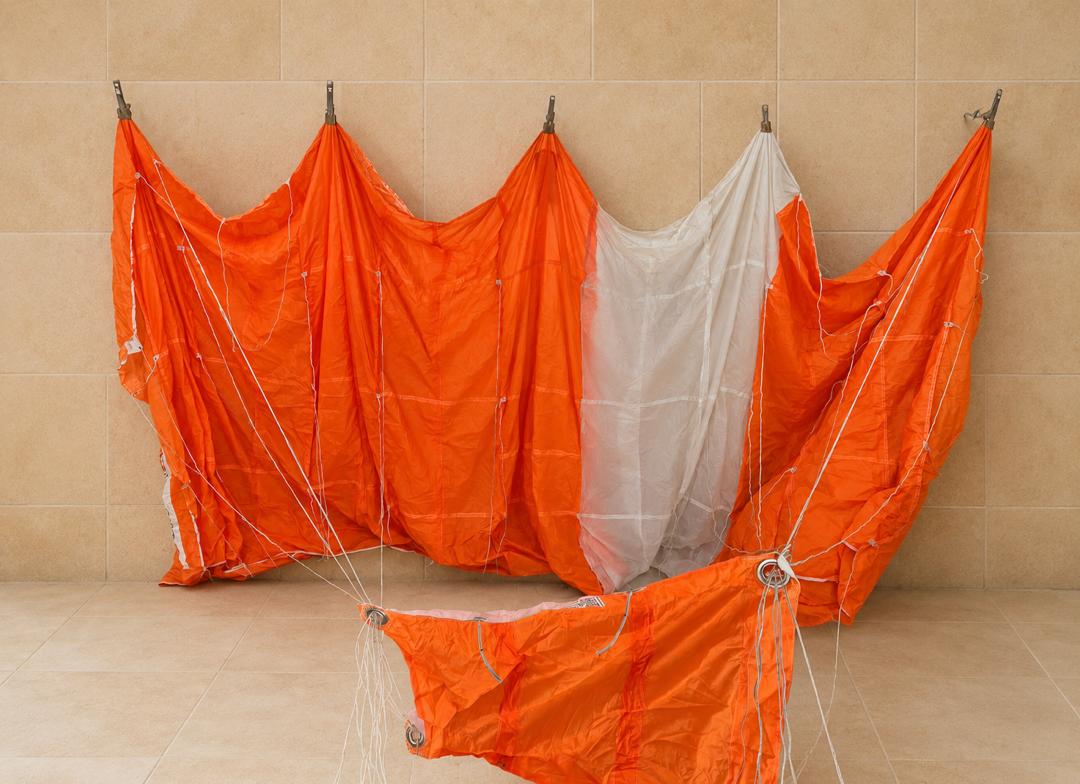
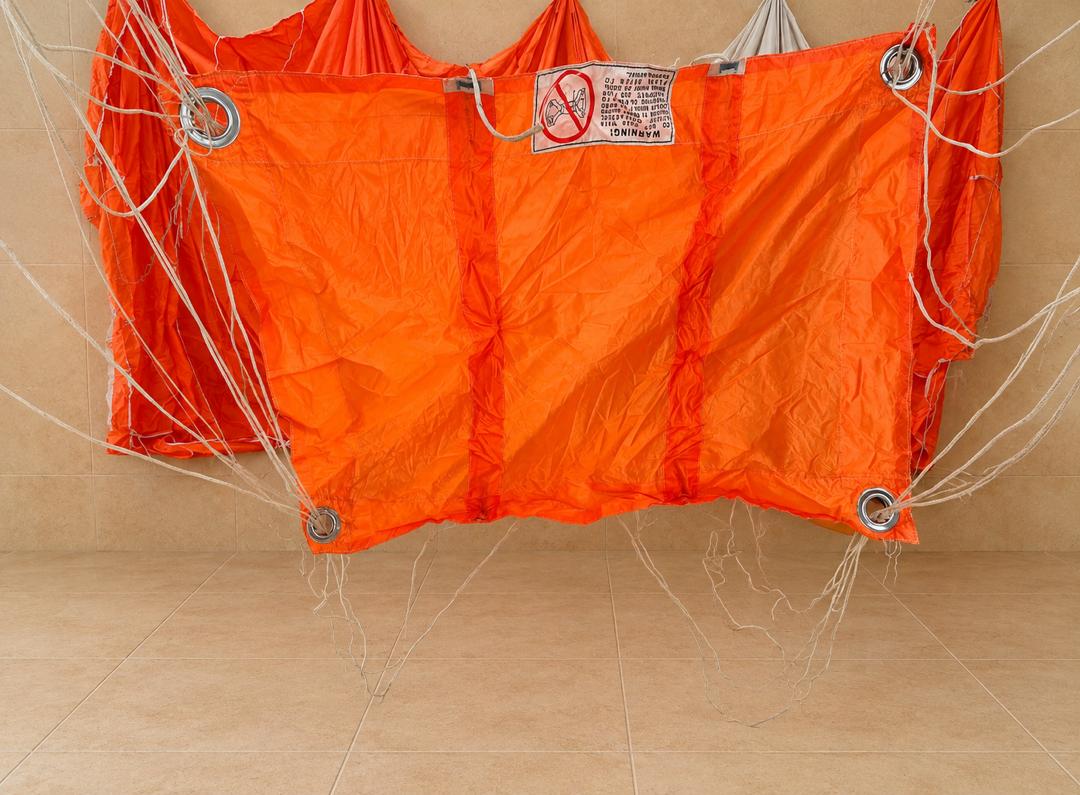
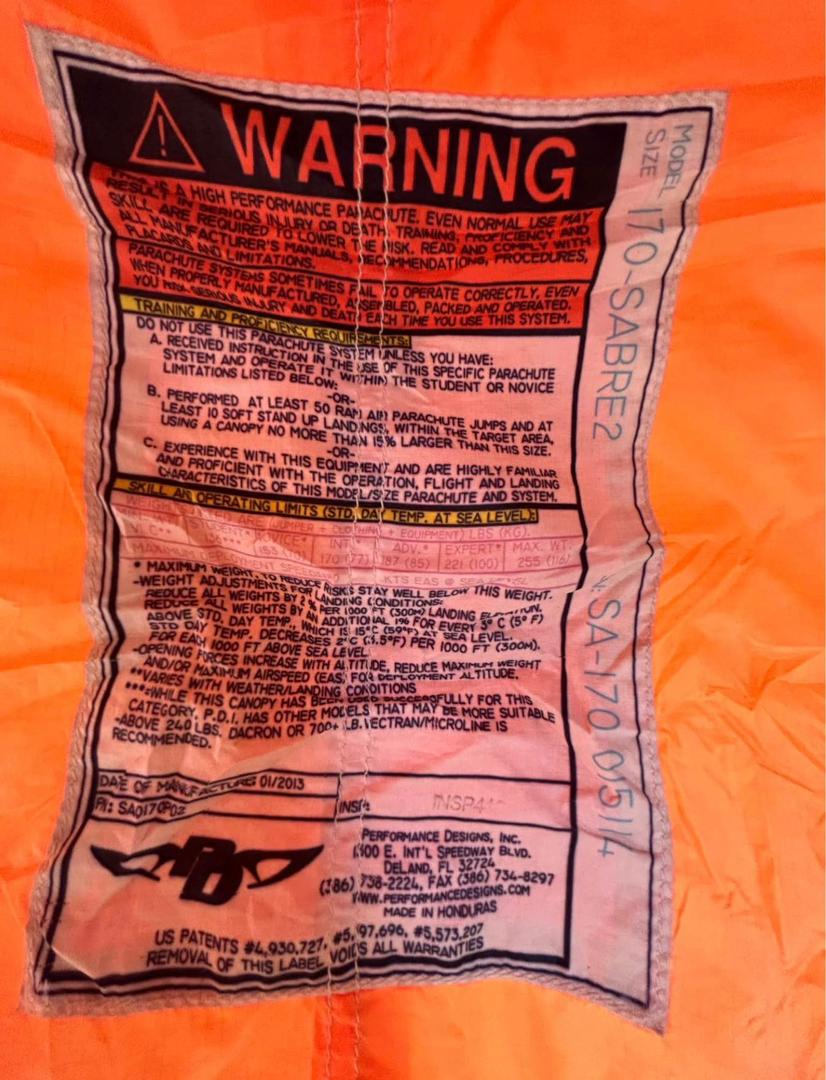
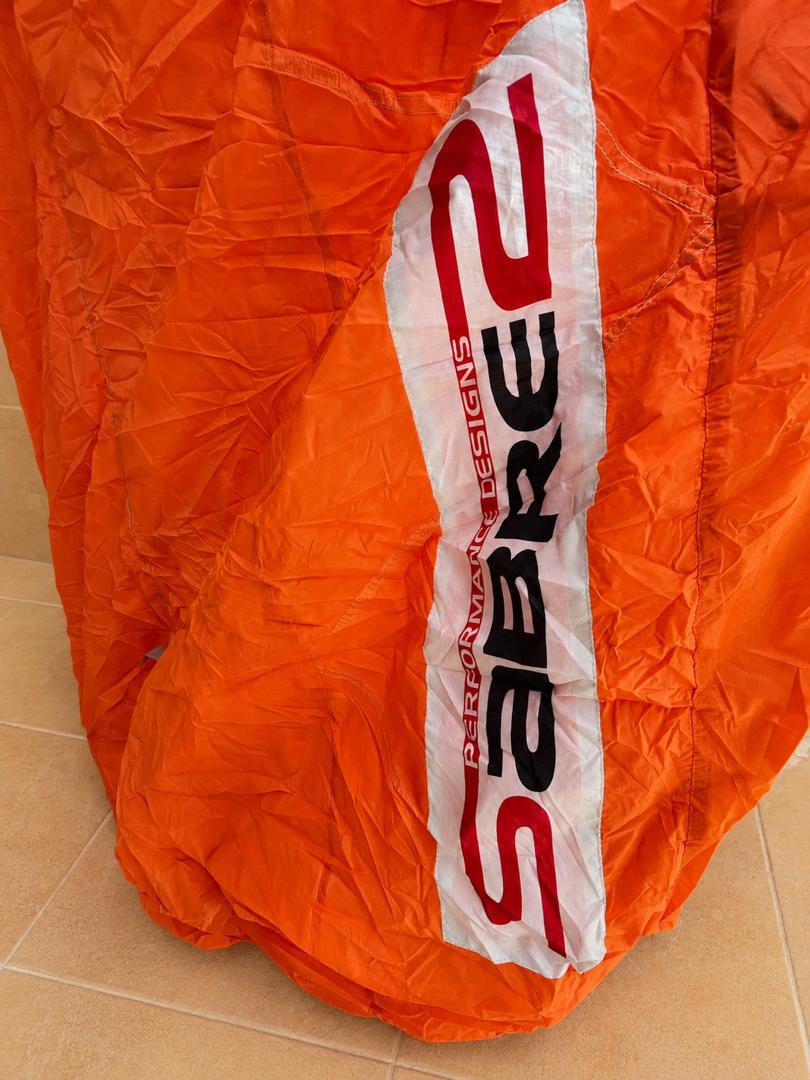
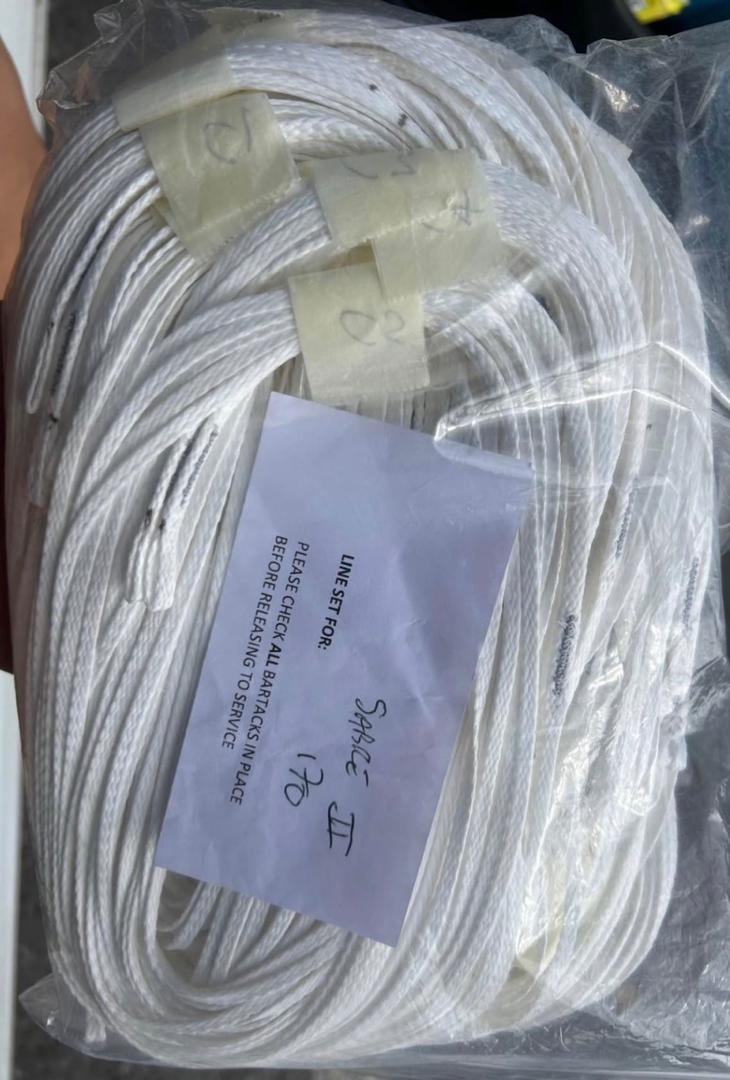
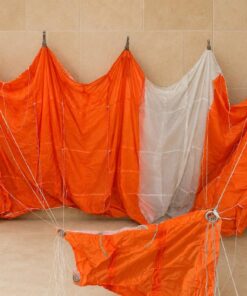

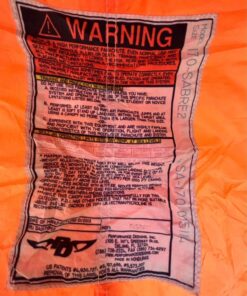
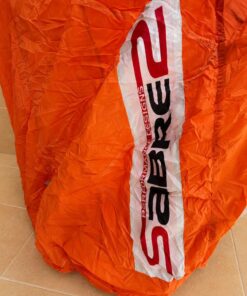
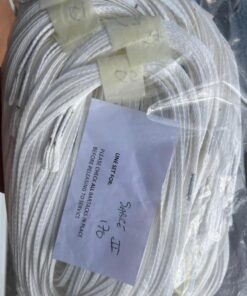
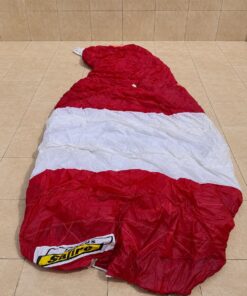
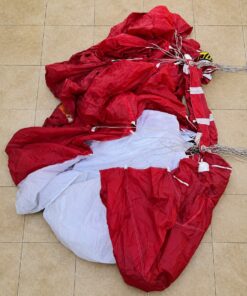
Used Sabre 2 170 canopy + extra line set


€1,250.00
The Used Sabre2 170 Canopy + Extra Line Set is a proven 9-cell zero-porosity main canopy offering responsive handling, a broad speed range, strong flare performance, and dependable recreational flight when properly matched to the jumper. The included spare line set adds useful maintenance value for future servicing. As used life-support equipment, the canopy, slider, suspension lines, attachment points, stitching, repairs, connectors, and spare line set should all be inspected by a qualified rigger before installation or use.
Used Performance Designs Sabre2 170 Canopy + Extra Line Set — 9-Cell ZP Main Canopy with Proven Handling, Powerful Flare, and Added Maintenance Value
Used Sabre2 170 Construction, Flight Characteristics, Line Condition, Compatibility, Safety, and Practical Ownership
The Used Sabre2 170 canopy + extra line set is based on one of Performance Designs’ best-known all-around main-canopy designs. Performance Designs introduced the Sabre2 in 2001 and describes it as a semi-elliptical 9-cell canopy known for a broad speed range, powerful bottom-end flare, relatively steep glide, and long recovery arc. The manufacturer now lists the Sabre2 within its legacy-product range, although technical documents, line-trim information, and replacement line sets continue to be supported.
The 170 sq ft version has a published span of approximately 20.94 ft, root/tip chord figures around 7.75/7.12 ft, and a 2.58:1 aspect ratio. Its construction uses zero-porosity canopy fabric, while Sabre2 line configurations have historically included approved line types such as Microline, Vectran, Dacron, and other model-appropriate options depending on configuration.
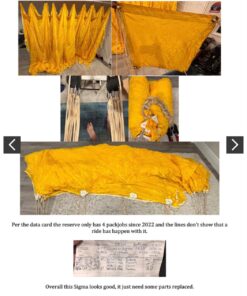
Because this particular canopy is used, its exact jump number, manufacture date, fabric condition, current line type, line cycles, repairs, patches, slider condition, and extra line-set material should be confirmed individually. A qualified parachute rigger should inspect the canopy and both line sets before use Used Sabre 2 170 canopy.
Parachute Jump Australia
A parachute jump Australia search may lead jumpers to drop zones where personal skydiving equipment is used. Local regulations, drop-zone rules, equipment requirements, and instructor or rigger approval should always be checked before taking a used canopy into service.
Skydive Byron Bay
Skydive Byron Bay represents the type of established skydiving operation where jumpers may encounter different main-canopy sizes and equipment configurations. Equipment suitability remains dependent on jumper experience, total exit weight, training, and local requirements.
Weight Limit Skydiving
Weight limit skydiving is highly relevant when evaluating any 170 sq ft canopy.
However, body weight alone does not determine suitability. Total exit weight, resulting wing loading, canopy experience, currency, training history, and professional guidance all matter.
Performance Designs publishes wing-loading guidance for the Sabre2, but a jumper should not select a canopy size solely from an online chart without instructor or rigger input.
Cairns Skydiving
Cairns skydiving involves conditions that may differ from another drop zone because temperature, wind, landing area, and operational procedures vary.
A canopy should therefore be evaluated in the context of the environment where it will actually be used.
Skydiving Helmet
A skydiving helmet forms part of a broader personal equipment setup but is separate from the canopy.
The canopy itself should receive an independent airworthiness inspection.
Skydive Helmets
Skydive helmets protect the head during normal skydiving activities, while the main canopy performs the aerodynamic descent and landing function.
Neither item should substitute for correct training.
Hook Blade Knife
A hook blade knife is emergency equipment commonly associated with parachuting and rigging environments.
It does not influence the performance characteristics of the Sabre2.
Tracking Jump
A tracking jump places emphasis on horizontal freefall movement before deployment.
Appropriate separation, deployment planning, and canopy traffic awareness must be handled through formal skydiving training rather than equipment marketing claims.
Parachute Rig
A parachute rig includes the harness/container system, reserve, deployment components, and compatible main canopy.
A Sabre2 170 should only be installed in a container approved for its pack volume and configuration.
A qualified rigger should confirm compatibility before installation.
Linewear
Linewear is particularly important when purchasing a used canopy.
Look for visible fuzzing, broken fibers, abrasion, heat damage, uneven lengths, damaged stitching, or evidence that the trim has changed.
However, some trim problems cannot be identified visually, which is why professional measurement is important.
Base Jumping
Base jumping uses specialized equipment and procedures.
A Sabre2 sport-skydiving main canopy should not automatically be treated as a dedicated BASE canopy.
Sky Helmet Skydiving
A sky helmet skydiving search concerns protective headgear and is independent of main-canopy construction.
Wingsuit Sport
Wingsuit sport involves specialized deployment considerations.
Canopy selection for wingsuiting should be made with qualified coaching because opening characteristics and deployment environment matter significantly.
Vector Wingsuit
A vector wingsuit search may relate to either wingsuit equipment or harness/container terminology.
Regardless, the Sabre2 170 must be evaluated according to actual compatibility, not keyword similarity.
Full Face Skydiving Helmet
A full face skydiving helmet offers additional facial coverage but does not affect the canopy’s aerodynamic characteristics.
Skydiving Downsizing Chart
A skydiving downsizing chart should never be treated as an automatic instruction to move to a smaller canopy.
Canopy progression depends on demonstrated skill, currency, judgment, landing consistency, instructor assessment, total exit weight, and environmental conditions.
Landing Flight Risers
Landing flight risers are part of the suspension and control system connecting the canopy lines to the harness/container.
Their condition should be inspected as part of the complete rig rather than assumed to be included with the canopy.
Fire Parachute
The phrase fire parachute is not a technical description of the Sabre2.
Cypress Fire Skydiving
Cypress fire skydiving appears to mix terminology associated with automatic activation devices and skydiving discussions.
An activation device is part of the reserve safety system and is separate from the main canopy.
Skydiving Rigging
Skydiving rigging is crucial with used equipment.
A qualified rigger should inspect the fabric, seams, attachment points, slider, lines, cascades, connector points, deployment components, and any repairs before the canopy is considered serviceable.
Baseline Jumping
Baseline jumping is unrelated to the approved sport-skydiving configuration of this main canopy.
Sky Diving Helmet
A sky diving helmet forms part of a complete personal equipment system but has no direct effect on canopy trim or flight.
Hook Knife Skydiving
A hook knife skydiving accessory is emergency equipment and remains independent from the canopy’s normal operation.
Landing Flight Risers
The repeated landing flight risers phrase reinforces the importance of inspecting the complete suspension system.
Risers, links, lines, and attachment points should be evaluated together before use.
Skydiving Glasses
Skydiving glasses or goggles help protect the eyes during freefall.
They should fit properly with the jumper’s helmet and other equipment.
Nude Parachute Jump
A nude parachute jump is unrelated to the technical suitability or condition of a main canopy.
iFLY Colorado Springs
iFLY Colorado Springs provides indoor body-flight activity rather than parachute canopy flight.
Wind-tunnel experience does not replace canopy-piloting training.
Skydive Hook Knife
A skydive hook knife is safety equipment used within parachuting environments but does not form part of the Sabre2’s aerodynamic design.
Skydiving Helmet Full Face
A skydiving helmet full face search concerns protective equipment rather than canopy specifications.
Skydiving Blue Hole Belize
Skydiving Blue Hole Belize represents destination-based skydiving, where equipment requirements and operating conditions should be confirmed with the organizing drop zone.
Smallest Canopy
The smallest canopy is not automatically the most advanced or desirable choice.
Canopy size must match the jumper’s competence and total exit weight.
A 170 sq ft canopy can represent very different levels of performance depending on wing loading.
Skydiving Speed
Skydiving speed changes considerably between freefall and canopy flight.
Under canopy, loading, control input, atmospheric conditions, canopy design, and trim all affect speed.
The Sabre2 is specifically known for a broad speed range.
Wing Suits for Sale
Wing suits for sale concerns a separate class of skydiving equipment.
A wingsuit purchase and canopy selection should be approached as separate safety decisions.
Skydiving Nude
Skydiving nude is unrelated to the engineering, condition, or maintenance of the canopy.
Parts of a Parachute
The parts of a parachute system include the canopy fabric, ribs, suspension lines, slider, connector system, risers, deployment components, harness/container, reserve, and associated safety equipment.
When buying used equipment, each component should be evaluated individually.
Container Skydive
A container skydive system must have an appropriate main-canopy volume range.
The Sabre2 170 should not simply be forced into a container because the model number appears close to another compatible canopy.
The container manufacturer’s sizing guidance should be followed.
G35 Helmet
A G35 helmet is a skydiving head-protection product and is separate from main-canopy performance.
Best Skydiving Helmet
The best skydiving helmet depends on fit, visibility, communication requirements, discipline, and personal preference.
Canopy selection requires an entirely different evaluation.
Skydive Belize
Skydive Belize is a location-oriented search phrase rather than a canopy specification.
Freefly Pud Handle
A freefly pud handle forms part of certain deployment systems.
Its suitability depends on the harness/container configuration rather than the Sabre2 canopy itself Used Sabre 2 170 canopy.
Gliding Suit Wingsuit
A gliding suit wingsuit changes freefall aerodynamics but does not alter the physical design of the canopy.
Deployment compatibility should be discussed with experienced wingsuit coaches and riggers.
Jumper Pilot
A jumper pilot transports skydivers to altitude, while canopy operation begins after exit and deployment.
Each role involves separate procedures and responsibilities.
CRW Skydiving
CRW skydiving, or canopy-relative work, requires discipline-specific training and appropriate equipment choices.
A canopy should never be assumed suitable for CRW merely because it is a nine-cell design.
Gear Bag Skydive
A gear bag skydive setup should protect the canopy and complete rig from dirt, moisture, sunlight, sharp objects, and unnecessary compression during transport.
Skydiving Equipment List
A skydiving equipment list generally includes a harness/container, main canopy, reserve canopy, deployment system, activation device where required, helmet, altimeter, suitable clothing, and eye protection.
The exact requirements vary by drop zone and jurisdiction.
Indoor Wingsuit
Indoor wingsuit training does not involve parachute deployment and therefore cannot substitute for real canopy-piloting instruction.
Can You Wear Glasses While Skydiving
For can you wear glasses while skydiving, many jumpers use compatible goggles or helmets that accommodate prescription eyewear.
This is separate from canopy selection.
Wingsuit
A wingsuit requires specialized training.
Main-canopy selection for wingsuit operations should emphasize suitability for that discipline and should be discussed with qualified instructors.
Skydiving Website
A reputable skydiving website can provide manufacturer manuals, technical documents, drop-zone information, and training resources.
For the Sabre2, Performance Designs’ own technical documentation should take priority over informal advice.
Cookie G4 Helmet
The Cookie G4 helmet belongs to the full-face skydiving helmet category and is independent from this canopy.
Base Canopy
A base canopy is designed for specialized BASE-jumping environments.
The Sabre2 is a sport-skydiving main canopy, not a dedicated BASE design.
New Skydive
A new skydive participant should follow the training program provided by qualified instructors rather than independently selecting a used high-performance canopy.
#Skydiving Latest
#skydiving latest may surface current equipment and community discussions, but manufacturer manuals and qualified professional inspections remain more authoritative for safety-critical decisions.
Canopy Flight
Canopy flight is where the Sabre2’s character becomes most relevant.
Performance Designs identifies its key traits as a relatively steep glide, long recovery arc, broad speed range, and powerful bottom-end flare.
Skydiver Goggles
Skydiver goggles provide eye protection in freefall but are independent of canopy performance.
Speed Sky Diving
Speed sky diving is a specialized freefall discipline and should not be confused with canopy speed or wing loading.
Fly Suits
Fly suits affect freefall aerodynamics and body-flight performance.
They do not change the Sabre2’s published size or aerodynamic design.
Skydiving Rig
A skydiving rig must combine compatible components.
Before this used canopy is installed, the harness/container, deployment bag, pilot chute, risers, links, and reserve configuration should be reviewed by a qualified rigger.
Safire 3
The Safire 3 is a different sport canopy platform.
Comparisons should consider opening characteristics, glide, handling, recovery behavior, packing, and suitability rather than assuming all similarly sized nine-cell canopies fly identically.
Skydiving Gliding Suit
A skydiving gliding suit refers to wingsuit equipment and belongs to a separate discipline from ordinary freefall.
Fluid Wings
Fluid Wings manufactures other parachute canopies.
Its products should be compared individually rather than treated as equivalent to the Sabre2.
Price of Wingsuit
The price of wingsuit is unrelated to the value or condition of this used canopy.
Used skydiving equipment should be priced according to model, age, jump count, fabric condition, line condition, repairs, maintenance history, and current support.
Tandem Wingsuit
A tandem wingsuit is not part of the normal use case for this canopy.
Specialized disciplines require dedicated training and approved equipment.
Skydiving Tube
A skydiving tube is typically associated with freefall visual displays or specialized formations rather than main-canopy construction.
Why the Sabre2 170 Remains Well Known
The Sabre2 earned its reputation as a versatile semi-elliptical nine-cell design.
Performance Designs describes it as suitable across a wide experience range when loaded appropriately, with noticeably different behavior as wing loading increases.
Therefore, the number “170” alone does not determine how demanding the canopy will feel.
How Good Is the Flare Performance?
One of the Sabre2’s most recognized characteristics is its powerful bottom-end flare.
Performance Designs highlights this together with the canopy’s broad speed range.
However, landing performance depends on line trim, canopy condition, loading, technique, density altitude, wind, and jumper proficiency.
Why the Extra Line Set Matters
An included extra line set can add meaningful maintenance value because suspension lines are wear components.
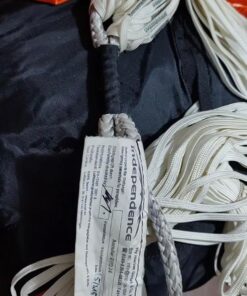
Performance Designs still offers replacement line sets for the Sabre2 170, including currently listed 825 Microline, 525 Dacron, and 750 Vectran configurations.
However, the exact material and condition of the extra line set included with this used canopy must be verified rather than assumed.
How Line Condition Affects Performance
Lines can wear visibly, but they can also shrink or move out of trim without dramatic external damage.
Changes in trim can affect openings, handling, turning behavior, and flare characteristics.
Therefore, an older line set should be measured against the manufacturer’s trim specifications by a qualified rigger.
Where This Canopy Fits Best
A Sabre2 170 can suit recreational sport skydiving when its loading and performance characteristics match the jumper’s demonstrated ability.
It should be used only within an approved, properly assembled rig and under the requirements of the relevant drop zone and governing organization.
When a Used Canopy Makes Sense
A used canopy can offer strong value when its service history is documented and its condition is professionally verified.
Age alone does not tell the complete story.
Jump count, packing environment, UV exposure, water exposure, storage, repairs, line cycles, slider condition, and maintenance history all influence remaining serviceability.
Important Used-Canopy Inspection Information
Before purchase or jumping, the canopy should be checked for porosity changes, damaged or worn fabric, seam integrity, attachment points, slider and grommet condition, line wear, line trim, connector condition, patches, previous repairs, and identification labels.
The extra line set should also be inspected separately.
A seller’s statement that the canopy “looks good” should never replace an independent rigger inspection.
Why Professional Inspection Is Essential
A parachute is life-support equipment.
Small defects that would be merely inconvenient in ordinary sporting gear can have much greater consequences in skydiving.
For that reason, final airworthiness, line-set installation, compatibility, and return-to-service decisions should be made by appropriately qualified rigging professionals.
Overall, a properly inspected Used Sabre2 170 canopy + extra line set can provide a proven 170 sq ft nine-cell ZP platform with established Performance Designs support, recognized flare performance, broad speed range, and the added maintenance value of a spare line set. Its actual suitability, however, depends on verified condition, correct rig compatibility, appropriate wing loading, current training, and professional inspection rather than product reputation alone.
Opening Behavior, Flight Feel, Flare Performance, Line Condition, and Used-Canopy Reliability
Opening Characteristics
Opening behavior is one of the most important qualities to evaluate on any used main canopy.
A healthy canopy should deploy in a controlled and predictable manner when it is packed correctly and used within its intended operating range.
However, actual openings can be influenced by packing technique, body position, deployment speed, slider condition, line trim, pilot-chute performance, and fabric condition.
For this reason, the canopy should not be judged from one isolated opening.
Consistent behavior across multiple jumps provides a much better indication of how the system is performing.
Why Line Trim Matters
Suspension lines do more than connect the canopy to the risers.
Their exact lengths determine the angle and shape of the wing in flight.
As lines wear or shrink, the canopy can gradually move out of its intended trim.
This may change opening characteristics, glide, control pressure, turning response, and flare timing.
A canopy can therefore appear visually clean while still requiring attention to the line system.
Professional measurement is the best way to confirm whether trim remains within acceptable limits.
Main Line Condition
The installed lines should be inspected carefully.
Look for broken fibers, heavy fuzzing, abrasion, discoloration, heat damage, uneven wear, or damaged stitching.
Wear is often concentrated around attachment points, cascades, slider-contact areas, and lower line sections.
Minor surface wear does not automatically mean the line set is unusable, but the complete condition should be evaluated by someone qualified to assess parachute equipment.
Value of the Spare Line Set
An additional line set can add practical value to a used canopy.
However, it should not automatically be assumed to be ready for installation.
Its material, age, storage condition, completeness, and compatibility should all be verified.
A spare set that has been stored correctly and matches the canopy model can reduce future maintenance inconvenience.
On the other hand, an old or incomplete set may have limited value.
Slider Condition
The slider plays a major role during deployment.
Its fabric, tapes, grommets, stitching, and overall shape should be examined carefully.
Damaged grommets can accelerate line wear.
Sharp edges, cracks, or deformation should be treated seriously.
The slider fabric should also remain structurally sound.
If the slider has been modified or replaced, the configuration should be checked to confirm that it is appropriate for the canopy.
Fabric Condition
The canopy fabric should be inspected across the top skin, bottom skin, ribs, seams, and reinforcement areas.
Look for tears, holes, abrasion, unusual discoloration, damaged stitching, or previous repairs.
Zero-porosity fabric can remain serviceable for many jumps, but age, heat, ultraviolet exposure, contamination, and poor storage can affect long-term condition.
A clean appearance does not always confirm structural integrity.
Seam Inspection
Seams help maintain the aerodynamic shape of the canopy.
Loose or broken stitching should therefore be identified early.
Particular attention should be given to high-load areas and attachment points.
Small sewing issues can sometimes be repaired, but the decision should be made by a qualified rigger.
Repairs should never be improvised with ordinary thread, glue, tape, or household materials.
Attachment Points
Line attachment points carry repeated load during opening and flight.
They should remain securely sewn and free from tearing or distortion.
Any damage around these areas deserves immediate attention because the loads are concentrated there.
If reinforcement tape appears worn, distorted, or separated from the surrounding fabric, the canopy should be inspected professionally before further use.
Control Lines
The steering system should remain symmetrical and free from excessive wear.
Control lines experience significant movement through guide rings and brake settings.
Their condition should be checked independently from the suspension lines.
Wear, fraying, incorrect length, or poor brake-setting configuration can affect handling and landing performance.
Toggle and Brake Setting Compatibility
Although toggles and risers may not be included with the canopy, their compatibility still matters.
The brake setting must correspond correctly with the installed line configuration.
Incorrect brake-line length can affect openings, full-flight performance, stall behavior, and flare response.
Any line replacement should therefore be completed according to the proper technical specifications.
General Flight Feel
The canopy is known for responsive but manageable handling when used at an appropriate loading.
Its flight characteristics can change considerably depending on total exit weight and pilot experience.
At lower loading, the canopy may feel more forgiving and slower.
As loading increases, speed, descent rate, responsiveness, and energy retention can become more pronounced.
For that reason, size alone cannot define how demanding the canopy will feel.
Glide Characteristics
Glide performance affects how efficiently the canopy covers horizontal distance while descending.
Trim condition, control input, wind, loading, and air density all influence practical glide.
A canopy that is significantly out of trim may feel different from a correctly maintained example.
Any unexpected change in glide compared with previous performance should prompt inspection of line condition and overall configuration.
Turning Response
Turning characteristics depend on canopy design, loading, control input, and line condition.
The canopy should respond smoothly without unusual asymmetry.
If one direction feels noticeably different from the other, the system should be inspected.
Uneven line shrinkage, control-line differences, harness input, or fabric distortion can all contribute.
Persistent asymmetry should never be ignored.
Recovery Behavior
After a control input, the canopy returns toward normal flight over a period of time.
The speed and character of this recovery are important to understand before advanced maneuvering is attempted.
A used canopy should not be assumed to behave exactly like a new example of the same model.
Line trim, fabric condition, and loading can change how the canopy feels.
Flare Performance
Landing performance depends heavily on the condition of the line set and correct control-line length.
A well-maintained canopy should provide progressive control input and useful lift during the flare.
However, flare effectiveness also depends on timing, airspeed, wind, density altitude, and pilot technique.
If the flare suddenly feels weaker than expected, line trim and brake-line condition should be checked before assuming the canopy fabric is responsible.
Stall Awareness
Every canopy has a stall point.
The exact behavior depends on loading, control configuration, and trim.
Users should understand the canopy’s handling characteristics through structured training rather than experimenting close to the ground.
Any unusual deep-control behavior should be discussed with a qualified instructor or rigger.
Wing Loading Considerations
Wing loading strongly influences performance.
The same 170-square-foot canopy can feel relatively conservative for one jumper and significantly more demanding for another.
Total exit weight, not body weight alone, should be used when assessing loading.
Experience, currency, landing accuracy, recent canopy progression, and local conditions should also be considered.
Container Compatibility
Pack volume must match the intended harness/container system.
A canopy that is too large can be difficult to pack correctly, while one that is too small may not sit securely in the deployment bag.
Compatibility should therefore be confirmed with the container manufacturer’s sizing guidance and a qualified rigger.
Deployment Bag Compatibility
The deployment bag should match the harness/container system and provide appropriate volume for the canopy.
The canopy should not simply be transferred between rigs without checking compatibility.
Incorrect bag size can affect packing and deployment behavior.
Pilot-Chute Condition
The main pilot chute is part of the deployment system rather than the canopy itself, but its condition directly affects deployment.
Mesh, fabric, stitching, bridle, and handle should all be inspected.
A worn or poorly matched pilot chute can create deployment problems that may be incorrectly blamed on the canopy.
Connector Condition
Soft links or metal connector links should be inspected carefully.
They should remain correctly installed and free from wear or distortion.
Protective covers should be positioned correctly where applicable.
Any questionable connector should be replaced or evaluated before use.
Storage History
Storage can significantly affect used parachute equipment.
The canopy should ideally have been kept clean, dry, and protected from direct sunlight, chemicals, excessive heat, and moisture.
Long-term exposure to ultraviolet light can degrade fabric strength.
Chemical contamination can also damage materials even when visible evidence is limited.
Water Exposure
If the canopy has been exposed to water, the circumstances should be understood.
Fresh water, salt water, dirty water, and chemically contaminated water can affect equipment differently.
Salt and contaminants should never be ignored.
A canopy with uncertain water-exposure history deserves careful professional inspection.
Previous Repairs
Repairs should be identified and evaluated.
Professional patches or stitching do not automatically reduce usability, but the quality, location, and extent of the repair matter.
The seller should disclose known damage and repair history where possible.
Poorly executed repairs are a warning sign.
Jump History
An accurate jump count can help estimate wear, although it should not be treated as the only measure of condition.
A lower-jump canopy can still be damaged by poor storage or hard use.
A higher-jump example may remain serviceable if it has been maintained carefully.
Physical inspection is therefore more important than jump count alone.
Pre-Jump Inspection
Before use, the canopy and deployment system should be checked for visible damage, correct assembly, line continuity, slider position, connector security, and brake settings.
Any uncertainty should be resolved before the rig is closed.
Post-Jump Inspection
After use, unusual openings, handling changes, hard landings, line twists, water exposure, or contact with obstacles should be noted.
A quick inspection can identify damage before the next pack job.
Long-Term Reliability
Long-term reliability depends on fabric condition, correct line trim, sound stitching, healthy attachment points, suitable deployment components, proper storage, and regular professional inspection.
The canopy should not be evaluated solely by appearance or brand reputation.
When it is maintained carefully, installed in a compatible system, inspected professionally, and used by a suitably trained jumper, a serviceable used 170-square-foot canopy with a verified spare line set can provide dependable recreational performance and useful long-term value.
Flight Consistency, Packing Condition, Control Response, Line-Set Management, and Long-Term Canopy Care
Flight Consistency
A used main canopy should deliver predictable behavior from opening through landing when it remains properly trimmed, packed, and maintained.
Consistency matters because unexpected changes in heading, glide, control pressure, or flare response can indicate wear or configuration problems.
A canopy that feels different from one jump to the next should be evaluated carefully.
Before blaming the wing itself, the complete system should be considered, including pack job, line condition, slider position, deployment components, risers, and pilot technique.
Opening Direction
Opening direction can be influenced by body position, packing, line symmetry, slider behavior, and canopy condition.
A used canopy should not be expected to produce a perfectly identical opening every time.
However, persistent heading problems or unusually aggressive behavior deserve attention.
Repeated issues should be discussed with a qualified rigger rather than treated as normal simply because the canopy is older.
Slider Movement
The slider should move freely along the lines during deployment.
Grommets should remain smooth and undamaged.
Sharp edges can accelerate line wear, while deformation may interfere with normal operation.
The slider fabric and tapes should also remain structurally sound.
A worn slider can influence openings even when the canopy fabric itself is still in good condition.
Packing Condition
Packing quality directly affects how a main canopy is presented during deployment.
A used canopy may become easier to pack as the fabric breaks in, but this does not mean it should be compressed carelessly.
The fabric, lines, slider, and nose should be organized according to appropriate packing procedures.
Any unusual resistance, line entanglement, or fabric damage discovered during packing should be investigated before use.
Why Fabric Condition Matters During Packing
Fabric that has been exposed to excessive heat, chemicals, ultraviolet light, or poor storage may behave differently from well-preserved material.
The canopy may still look acceptable while showing subtle changes in texture or structural integrity.
For this reason, inspection during packing provides a valuable opportunity to detect damaged stitching, abrasion, discoloration, or unusual wear.
Rib and Cell Inspection
Internal ribs help define the aerodynamic shape of the canopy.
Although they are less visible during routine handling, they should be inspected periodically.
Damage to ribs, crossports, seams, or reinforcement areas can affect structural integrity.
A qualified rigger should inspect internal areas if unusual deformation or damage is suspected.
Nose Condition
The leading-edge openings should remain structurally sound.
Torn fabric, damaged seams, or distorted reinforcement can influence inflation.
The nose should therefore be checked during maintenance and inspection.
Minor cosmetic wear is not automatically a problem, but structural damage should never be ignored.
Tail Condition
The trailing edge contains important control and reinforcement structures.
Damage here can influence handling and flare response.
The fabric should remain free from tearing, excessive abrasion, or loose stitching.
Any repair near the tail should be evaluated carefully because this area experiences repeated control loads.
Steering Line Condition
Steering lines are exposed to regular movement and friction.
They should be checked for wear, fraying, heat damage, uneven length, or damaged stitching.
Because the steering system directly influences flare and directional control, any questionable condition should be resolved before continued use.
Brake Line Length
Brake-line length influences full-flight configuration and flare range.
If the lines are too short or have changed significantly through wear or shrinkage, the canopy may not fly as intended.
If they are too long, usable flare travel may be affected.
A qualified rigger should measure and adjust the system according to proper technical specifications.
Line Shrinkage
Some line materials can shrink progressively through repeated use.
This may happen unevenly across different line groups.
As a result, the canopy can move out of trim even when the lines still look visually serviceable.
This is one of the main reasons why line condition should be assessed through measurement rather than appearance alone.
Extra Line Set Storage
A spare line set should be stored clean, dry, and protected from sunlight, moisture, chemicals, and sharp objects.
It should not be crushed unnecessarily or left loose where individual lines can become tangled.
The set should also remain clearly identified so there is no confusion regarding canopy model, size, or material.
Confirming Spare Line Compatibility
The spare set should be verified before installation.
The correct model and canopy size should be confirmed.
Line type and configuration should also match approved specifications.
A complete professional installation involves more than attaching new lines; brake settings, trim, connectors, and overall geometry must all be checked.
When a Line Change May Be Needed
A line replacement may become appropriate when wear, trim change, broken fibers, repeated opening changes, or altered handling indicate that the current set is no longer performing correctly.
Jump count alone should not determine replacement.
Actual condition and measured trim provide better evidence.
Control Response
Control inputs should feel progressive and reasonably symmetrical.
If one side requires noticeably different pressure or travel, the line system and canopy should be inspected.
Handling differences can result from uneven line lengths, damaged fabric, harness asymmetry, or other mechanical factors.
Persistent imbalance should not be accepted without investigation.
Full-Flight Behavior
In full flight, the canopy should maintain a consistent general attitude.
Unexpected turns, oscillation, or unusual control pressure may indicate that something has changed.
Environmental turbulence should always be considered, but repeated behavior in calm conditions deserves closer examination.
Glide Consistency
A canopy’s glide can change with loading, wind, density altitude, trim, and control input.
For that reason, one jump should not be used as the only reference.
However, a noticeable long-term change in glide characteristics can signal line-trim changes or other maintenance issues.
Flare Range
A healthy control system should provide sufficient usable travel for a progressive flare.
If the effective range becomes noticeably shorter or weaker, control-line length and overall trim should be checked.
The user should not attempt to compensate for mechanical issues purely through technique.
Landing Consistency
Consistent landings depend on canopy condition, proper loading, current training, wind, surface, and pilot judgment.
A used canopy should not be considered suitable simply because another jumper landed it successfully.
Individual skill and total exit weight significantly affect performance.
Wing Loading Review
Wing loading should be recalculated if the jumper’s body weight, equipment weight, or canopy size changes.
A small numerical difference can noticeably alter speed and responsiveness.
Progression decisions should be made conservatively and with qualified coaching.
Currency Considerations
A jumper returning after a long break may need a more conservative approach even if they previously flew the same size successfully.
Currency affects judgment, visual timing, traffic awareness, flare timing, and emergency response.
Equipment choice should therefore reflect current capability, not only historical experience.
Harness Compatibility
The canopy must work correctly with the harness/container, risers, deployment bag, and related components.
A mismatched system can create packing or deployment problems.
Compatibility should be confirmed before installation rather than assumed from approximate canopy size.
Riser Inspection
Risers should be checked for webbing damage, stitching condition, connector security, and hardware wear.
Control-guide rings should also remain smooth.
A worn riser system can affect reliability even when the canopy itself is in excellent condition.
Connector Inspection
The interface between lines and risers should remain correctly assembled.
Soft links, metal links, covers, and surrounding webbing should be inspected.
Any uncertainty about installation should be resolved by a qualified rigger.
Deployment Bag Condition
The deployment bag should remain structurally sound and correctly sized.
Damaged fabric, stitching, grommets, or locking components can influence deployment.
The bag should not be overlooked simply because it is not physically part of the canopy.
Pilot-Chute Compatibility
Pilot-chute size and condition can affect deployment speed and extraction.
An old or poorly matched pilot chute can create problems that may be misinterpreted as canopy behavior.
The complete deployment system should therefore be evaluated together.
Bridle Condition
The bridle should remain free from damaged stitching, cuts, burns, or excessive wear.
Connection points should be secure.
A compromised bridle can affect main deployment and deserves immediate attention.
Storage Environment
The canopy should be stored away from direct sunlight, excessive heat, moisture, chemicals, and sharp objects.
Dry indoor storage is generally preferable.
Long-term exposure to poor conditions can affect fabric and line materials even when the canopy is not being jumped.
Avoiding Chemical Contamination
Fuel, cleaning solvents, acids, oils, and other chemicals can damage parachute materials.
If contamination is suspected, the canopy should be removed from service until professionally assessed.
Chemical exposure should never be treated as a simple cosmetic issue.
Sunlight Exposure
Ultraviolet radiation can weaken textile materials over time.
The canopy should not be left spread out in direct sunlight unnecessarily.
Normal packing and jumping create some exposure, but avoidable long-term UV exposure should be minimized.
Moisture and Drying
If the canopy becomes wet, it should be dried properly before storage.
It should not be packed away damp for an extended period.
Water exposure involving salt, chemicals, or contaminated surfaces requires additional attention.
A rigger should be consulted when the exposure history is uncertain.
Repair History
Any patches, replaced panels, reinforcement work, or other repairs should be documented where possible.
A professional repair may be completely acceptable, but its location and quality still matter.
Unknown or poorly executed work should be inspected carefully.
Regular Rigger Inspection
Professional inspection is one of the most important parts of used-canopy ownership.
A rigger can evaluate trim, fabric, stitching, slider condition, connectors, previous repairs, and compatibility.
This becomes especially important when purchasing equipment with incomplete history.
Pre-Packing Inspection
Before packing, the canopy should be visually checked for line twists, damaged fabric, unusual wear, and obvious contamination.
The slider and control lines should also be observed.
Routine attention during every pack job makes changes easier to detect.
Post-Landing Inspection
After a hard landing, obstacle contact, unusual opening, or water exposure, the system should be checked before the next jump.
Small damage can become worse if ignored.
Any questionable condition should be professionally evaluated.
Documentation
Keeping basic records of jump count, line changes, repairs, inspections, and major maintenance can improve long-term ownership.
Accurate records also provide useful information if the canopy is later sold.
Long-Term Canopy Reliability.
Long-term reliability depends on much more than fabric appearance.
Line trim, slider condition, stitching, attachment points, steering lines, deployment components, storage history, repairs, and professional inspection all influence serviceability.
The included spare line set can be a valuable maintenance asset when its condition and compatibility are verified.
When the canopy is stored correctly, inspected routinely, installed in a compatible system, and operated by a suitably trained jumper, a serviceable 170-square-foot main can continue to provide predictable flight behavior, dependable control response, and useful recreational performance over an extended service life.
Be the first to review “Used Sabre 2 170 canopy + extra line set”
Related products

used products

used products

used products

used products
used products

used products
Reviews
There are no reviews yet.