




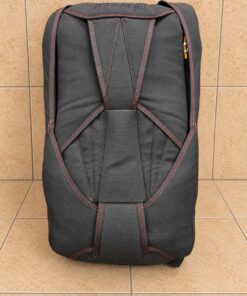



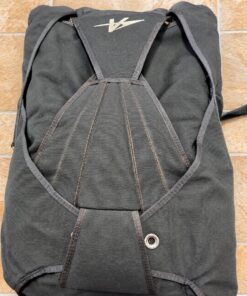
Used COMPLETE RIG | MIRAGE G4.2

€5,000.00
Used Complete Rig | Mirage G4.2 M4L
This Used Mirage G4.2 M4L complete rig combines a modern harness/container with a Performance Designs Sabre2 150 main, Performance Designs Optimum 176 reserve, and Vigil Cuatro AAD. The setup includes detailed serial numbers, manufacture dates, and recent service information, making it easier for prospective buyers and riggers to verify the equipment history.
Mirage G4.2 M4L Container
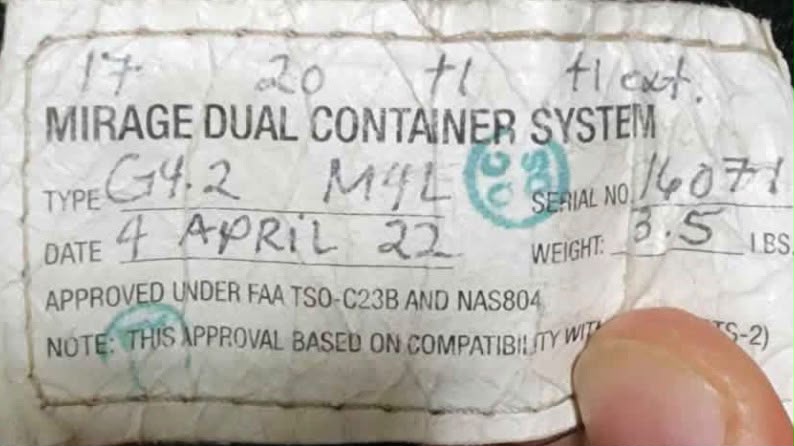
- Model: Mirage G4.2 M4L
- DOM: April 2022
- Serial Number: 16071
- Main Lift Web: 17″
- Leg Pads: 20″
- Extensions: +1 / +1
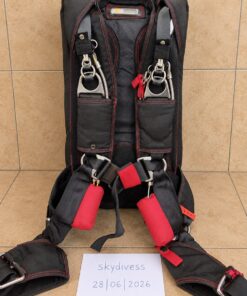
- Harness: Articulated
- Reserve Assist System: TRAP
- Color: Black with red stitching
Performance Designs Sabre2 150 Main
- Size: 150 sq ft
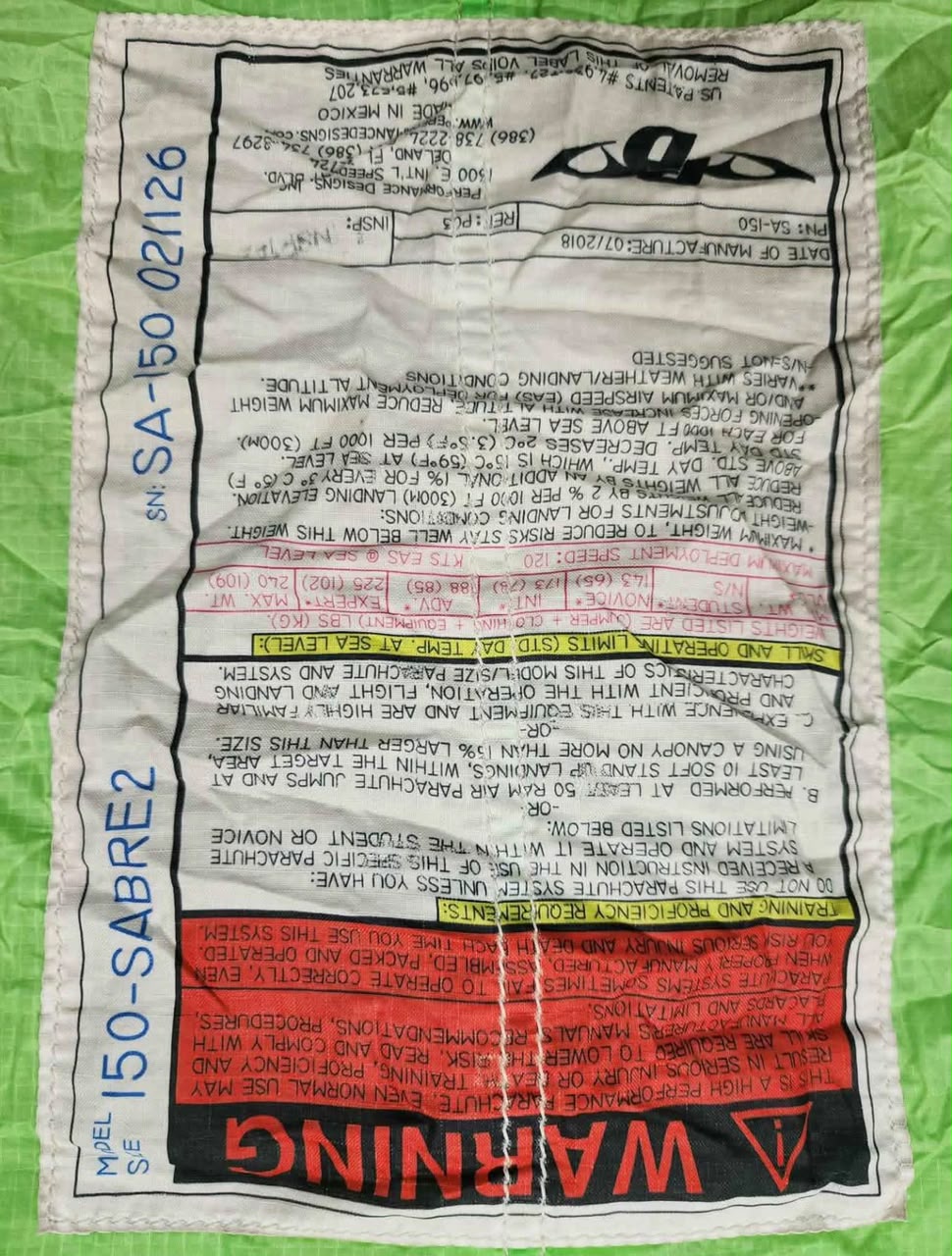
- DOM: July 2018
- Serial Number: SA-150-021126
- Jumps: Approximately 200
- Line Set: Replaced recently
- Line Set Jumps: Approximately 15
The relatively fresh line set is an important maintenance advantage because it has considerably fewer jumps than the canopy itself.
Performance Designs Optimum 176 Reserve
- Model: Optimum
- Size: 176 sq ft
- DOM: March 2021
- Serial Number: 026157
The reserve should have its current repack status and inspection documentation verified by an appropriately qualified rigger before use.
Vigil Cuatro AAD
- Model: Vigil Cuatro
- Serial Number: 47406
- DOM: January 2016
- Upgraded and tested: February 2026
- Stated expiration: January 2036
- Stated battery validity: January 2036
- Upgrade/test certificate: Included
The February 2026 service documentation is an especially useful part of the equipment history and should remain with the rig.
Why Consider This Complete Rig?
This setup provides the major components needed in one package rather than requiring a buyer to source the container, main, reserve, and electronic backup device individually. The newer 2022 container, approximately 200-jump main, nearly new line set, 2021 reserve, articulated harness, and documented 2026 AAD servicing create a well-documented used configuration.
Before purchase or use, the complete system should be professionally inspected for harness fit, canopy fabric condition, line trim, reserve repack status, risers, deployment components, hardware, closing system, TRAP configuration, and AAD installation.
For an appropriately trained jumper whose measurements and experience match the equipment, this Mirage G4.2 package offers a strong combination of modern container features, established Performance Designs canopies, and detailed component history.
Used COMPLETE RIG | MIRAGE G4.2 M4L – Sabre2 150, Optimum 176 & Vigil Cuatro
Used COMPLETE RIG | MIRAGE G4.2 Overview
The Used COMPLETE RIG | MIRAGE G4.2 combines a modern Mirage G4.2 M4L harness/container with a Performance Designs Sabre2 150 main, Optimum 176 reserve, and Vigil Cuatro automatic activation device. The container was manufactured in April 2022 and carries serial number 16071. Its harness configuration includes a 17-inch main lift web, 20-inch leg pads, +1 / +1 extensions, an articulated harness, and Mirage’s TRAP system. The exterior is finished in black with contrasting red stitching.
Mirage currently lists the M4L as an official G4.2 container size, and current G4.2 documentation identifies articulated harness configurations, stainless-steel hardware, magnetic riser covers, and the TRAP system as supported equipment.
The main canopy is a Performance Designs Sabre2 150, DOM July 2018, serial number SA-150-021126, with approximately 200 jumps. Importantly, it has a new line set with only about 15 jumps. Performance Designs describes the Sabre2 as a slightly tapered, zero-porosity nine-cell canopy known for soft openings, wide speed range, strong flare, and suitability for appropriately trained intermediate through experienced jumpers depending on wing loading.
The reserve is a Performance Designs Optimum 176, DOM March 2021, serial number 026157. PD lists the Optimum 176 as a 176-square-foot, seven-cell low-bulk reserve certified under TSO C23d, with a manufacturer-listed maximum suspended weight of 270 lb and maximum deployment speed of 150 knots.
The AAD is a Vigil Cuatro, serial number 47406, DOM January 2016. According to the supplied history, it was upgraded and tested by Vigil in February 2026, includes the upgrade/test certificate, and is stated to expire in January 2036. Vigil currently states that its units remain service-eligible within a 20-year service life from manufacture Used COMPLETE RIG MIRAGE G4.2.
Mirage G4.2 M4L
The M4L belongs to Mirage’s G4.2 standard container series. This specific container was manufactured in April 2022 and should be evaluated together with its installed main and reserve rather than as a standalone shell.
Articulated Harness
The articulated harness is designed to improve movement and comfort around the hip and torso areas. Proper fit remains important because articulation does not compensate for an incorrectly sized harness.
TRAP System
The installed TRAP system is Mirage’s MARD configuration. Current Mirage documentation lists the TRAP system among G4.2 reserve-deployment options.
17-Inch Main Lift Web
The harness uses a 17-inch main lift web, providing an important fit reference for prospective buyers.
20-Inch Leg Pads
The 20-inch leg pads should be compared with the intended jumper’s thigh and body proportions.
+1 / +1 Extensions
The +1 / +1 extensions are part of the original harness configuration and should be included when evaluating fit.
Black with Red Stitching
The black exterior with red stitching gives the complete setup a clean, distinctive appearance while keeping the main container visually understated.
Performance Designs Sabre2 150
The main is a Sabre2 150, a nine-cell zero-porosity design. PD describes it as a general-purpose sport canopy with strong flare and a broad performance range.
Approximately 200 Jumps
The main has approximately 200 jumps, which gives buyers a useful indication of its overall usage history.
New Line Set – Approximately 15 Jumps
The line set has only approximately 15 jumps, making it considerably newer than the canopy fabric itself.
Performance Designs Optimum 176
The reserve is an Optimum 176 constructed from PD’s low-bulk fabric. Performance Designs describes the Optimum as a seven-cell reserve engineered to provide low pack volume, predictable handling, and strong flare performance.
Vigil Cuatro
The installed Vigil Cuatro provides an electronic backup within the complete system. It was reportedly upgraded and tested by Vigil in February 2026, with the certificate included.
parachute jump australia
A parachute jump australia search often includes drop-zone and equipment requirements. Personal equipment should always meet applicable inspection and documentation standards.
skydive byron bay
Jumpers researching skydive byron bay should verify local equipment requirements before traveling with personal gear.
weight limit skydiving
The phrase weight limit skydiving highlights the importance of exit weight, canopy loading, harness fit, reserve limitations, and experience.
cairns skydiving
Those researching cairns skydiving should ensure their personal equipment satisfies the drop zone’s requirements.
skydiving helmet
A skydiving helmet forms part of personal protective equipment but is separate from this complete parachute system.
skydive helmets
Different skydive helmets support different disciplines, including freefly and general recreational use.
hook blade knife
A hook blade knife may be carried as emergency equipment depending on the jumper’s training and configuration.
tracking jump
A tracking jump requires proper separation awareness, planning, and suitable equipment.
parachute rig
This parachute rig combines the harness/container, main, reserve, risers, deployment components, and electronic backup into one integrated setup.
linewear
linewear should always be monitored, although the main canopy benefits from a recently replaced line set with very few jumps.
base jumping
base jumping uses different equipment and procedures from conventional aircraft skydiving, so this system should not be treated as fixed-object equipment.
sky helmet skydiving
A sky helmet skydiving search relates to head protection rather than harness or canopy compatibility.
wingsuit sport
The wingsuit sport has additional deployment considerations that should be evaluated separately.
vector wingsuit
A vector wingsuit search relates to another harness/container family and should not be confused with this Mirage configuration.
full face skydiving helmet
A full face skydiving helmet can provide additional facial and wind protection during freefall.
skydiving downsizing chart
A skydiving downsizing chart should never replace coaching, experience, currency, wing-loading analysis, and manufacturer guidance.
landing flight risers
landing flight risers should be inspected for webbing wear, hardware condition, stitching integrity, and correct installation.
fire parachute
The phrase fire parachute does not describe this sport parachuting system.
cypress fire skydiving
A cypress fire skydiving search should not be confused with this setup, which includes a Vigil-branded electronic device.
skydiving rigging
Professional skydiving rigging is essential for reserve packing, compatibility verification, repairs, and complete-system inspection.
baseline jumping
baseline jumping is sometimes used informally in fixed-object parachuting discussions, which involve different equipment requirements.
sky diving helmet
A sky diving helmet should fit securely without interfering with vision or emergency handles.
hook knife skydiving
A hook knife skydiving accessory may form part of emergency preparedness when properly positioned.
skydiving glasses
skydiving glasses or goggles provide eye protection when appropriate to the chosen helmet system.
nude parachute jump
A nude parachute jump does not change the inspection or serviceability requirements of the parachute system.
ifly colorado springs
ifly colorado springs relates to indoor body-flight training rather than outdoor parachute deployment.
skydive hook knife
A skydive hook knife is an emergency accessory and should remain accessible without interfering with other equipment.
skydiving helmet full face
A skydiving helmet full face configuration provides additional facial coverage compared with an open-face design.
skydiving blue hole belize
A skydiving blue hole belize search concerns international jumping, so travel documentation and equipment requirements should be checked beforehand.
smallest canopy
The smallest canopy is never automatically the best choice. Canopy selection should match jumper experience, body weight, wing loading, currency, and professional guidance.
skydiving speed
skydiving speed varies with freefall discipline, body position, equipment, and environmental conditions.
wing suits for sale
People researching wing suits for sale should evaluate suit choice separately from parachute-container compatibility.
skydiving nude
skydiving nude is unrelated to equipment airworthiness or maintenance.
parts of a parachute
Important parts of a parachute system include the harness, container, main, reserve, risers, deployment bag, pilot chutes, handles, lines, and electronic safety equipment.
container skydive
A container skydive system must be matched to appropriate main and reserve pack volumes.
g35 helmet
A g35 helmet is a separate personal-equipment item and is not included in this listed configuration.
best skydiving helmet
The best skydiving helmet depends on fit, discipline, comfort, visibility, and personal requirements.
skydive belize
Anyone planning to skydive belize should verify local equipment and reserve documentation requirements.
freefly pud handle
A freefly pud handle may be used on certain sport container configurations, although its presence should be confirmed on the actual rig.
gliding suit wingsuit
A gliding suit wingsuit requires appropriate training and deployment-system compatibility.
jumper pilot
A jumper pilot search can refer to different roles depending on context, although aircraft-pilot and parachutist responsibilities remain distinct.
crw skydiving
crw skydiving involves specialized canopy-relative work requiring discipline-specific equipment and training.
gear bag skydive
A quality gear bag skydive solution can protect the complete system during travel and storage.
skydiving equipment list
A skydiving equipment list generally includes a complete rig, helmet, altimeter, goggles, jumpsuit, and any discipline-specific accessories.
indoor wingsuit
Indoor wingsuit training takes place in specialized environments without conventional outdoor parachute deployment.
can you wear glasses while skydiving
For can you wear glasses while skydiving, suitable goggles or helmet systems can often accommodate corrective eyewear.
wingsuit
A wingsuit requires appropriate experience and compatible deployment equipment.
skydiving website
A trustworthy skydiving website should disclose manufacture dates, serial numbers, jump counts, line changes, reserve information, electronic-device history, and known repairs.
cookie g4 helmet
A cookie g4 helmet is a separate full-face helmet and should not be confused with the G4.2 designation of this harness/container.
base canopy
A base canopy is designed around different deployment requirements and should not automatically be paired with conventional sport equipment.
new skydive
A jumper preparing for a new skydive should use equipment appropriate to their experience and training level.
#skydiving latest
The phrase #skydiving latest reflects broader interest in modern parachute technology, equipment, canopy developments, and training.
canopy flight
Canopy flight characteristics depend on canopy design, wing loading, line trim, environmental conditions, and pilot experience.
skydiver goggles
skydiver goggles provide eye protection and remain separate from the parachute system.
speed sky diving
speed sky diving represents a specialized high-speed freefall discipline with its own equipment and training considerations.
fly suits
fly suits may include freefly, tracking, or conventional jumpsuits.
skydiving rig
This skydiving rig is a complete modern sport setup containing a matched harness/container, main, reserve, and electronic backup device.
safire 3
A safire 3 belongs to another main-canopy family and should not be confused with the installed nine-cell wing.
skydiving gliding suit
A skydiving gliding suit changes freefall performance but does not remove the need for compatible deployment equipment.
fluid wings
fluid wings represents another canopy-manufacturing ecosystem and is unrelated to the installed Performance Designs components.
price of wingsuit
The price of wingsuit equipment varies independently from the value of this complete parachute setup.
tandem wingsuit
A tandem wingsuit is not a standard application for this personal sport system.
skydiving tube
A skydiving tube is generally a freefall visual accessory rather than part of the structural parachute system.
Why Consider This Complete Setup?
The primary advantage is that the major components are already assembled into one comprehensive system: a relatively recent container, established main canopy, low-bulk reserve, and electronic activation device.
The new line set is another meaningful maintenance advantage because it has approximately 15 jumps compared with roughly 200 jumps on the canopy itself.
How Good Is the Configuration?
The component combination is well balanced for an appropriately trained sport jumper. The nine-cell main provides an established general-purpose platform, while the low-bulk reserve provides additional pack-volume efficiency. The articulated harness and TRAP system add modern container features.
How Is Precision Important?
Correct harness sizing, reserve pack volume, main pack volume, line trim, riser installation, closing-loop dimensions, electronic-device installation, and reserve packing all require precision.
Small configuration errors should never be dismissed because the system functions as integrated life-support equipment.
Where Is This Setup Best Used?
The setup is designed for conventional sport skydiving by a jumper whose training, body measurements, exit weight, currency, and canopy experience are appropriate for the installed equipment.
When Should It Be Inspected?
A complete inspection is particularly important before ownership transfer, after extended storage, following unusual deployment stress, after component replacement, or whenever equipment records are incomplete.
Important Information for Buyers
The complete configuration includes:
- Mirage G4.2 M4L
- DOM: April 2022
- Container S/N: 16071
- 17-inch MLW
- 20-inch leg pads
- +1 / +1 extensions
- Articulated harness
- TRAP system
- Black with red stitching
- Main: Performance Designs Sabre2 150
- Main DOM: July 2018
- Main S/N: SA-150-021126
- Main jumps: Approximately 200
- Line set: Approximately 15 jumps
- Reserve: Performance Designs Optimum 176
- Reserve DOM: March 2021
- Reserve S/N: 026157
- AAD: Vigil Cuatro
- AAD S/N: 47406
- AAD DOM: January 2016
- Upgraded/tested: February 2026
- Stated expiration: January 2036
- Stated battery validity: January 2036
- Upgrade/test certificate: Included
Overall Engineering Character
This complete setup combines a 2022 Mirage G4.2 M4L container, articulated harness architecture, TRAP reserve-assist system, Sabre2 150 with approximately 200 jumps and a nearly new line set, Optimum 176 reserve, and a Vigil Cuatro with documented February 2026 factory upgrade/testing.
The main canopy’s established design, relatively fresh lines, low-bulk reserve, modern container configuration, and documented electronic-device service history make the package straightforward for a prospective buyer to evaluate.
Before use, the entire system should still receive an inspection from an appropriately qualified rigger, including verification of harness fit, reserve repack status, canopy condition, line installation, AAD certificate, closing components, risers, hardware, deployment system, and serial-number documentation.
Component Condition, Harness Integrity, Main Canopy Wear, Reserve Readiness, AAD Status, and Long-Term Serviceability
Overall Condition Assessment
A complete used parachute system should be evaluated as an integrated life-support package rather than by appearance alone. The container, harness, main canopy, reserve, electronic activation device, risers, deployment components, handles, and hardware all age differently.
Therefore, each component should be inspected separately while also confirming that the complete configuration remains compatible and properly maintained.
Harness Webbing Condition
The harness webbing should remain free from cuts, fraying, burns, contamination, excessive stiffness, or unusual discoloration.
Particular attention should be given to the main lift web, laterals, leg straps, chest strap, and load-bearing junctions.
Even relatively recent equipment can develop wear through aircraft contact, packing, storage, or transport.
Main Lift Web Inspection
The vertical harness webbing should remain straight, secure, and structurally sound.
Any broken stitching, abrasion, deformation, or unusual wear should receive professional attention.
Because this area carries substantial load during deployment and suspended flight, damage should never be ignored.
Articulated Harness Condition
Articulation hardware should move smoothly where intended while remaining securely attached to the surrounding webbing.
The rings, junction points, stitching, and reinforcement areas should be inspected for corrosion, distortion, or wear.
Proper articulation can improve comfort, but only when the underlying structure remains healthy.
Leg Pad Inspection
Leg pads should remain firmly attached and free from crushed foam, torn covering material, damaged stitching, or excessive deformation.
Comfortable padding helps reduce pressure during longer periods in the aircraft and under canopy.
Both sides should remain similar in shape and condition.
Leg Strap Hardware
Adjustment hardware should move smoothly without slipping unexpectedly.
Webbing should remain flat through the hardware.
Any sharp edges, corrosion, or deformation should be addressed before continued use.
Chest Strap Condition
The chest strap should remain structurally sound and free from fraying or damaged stitching.
Its hardware should hold securely when adjusted.
Any unusual slipping should be investigated immediately.
Container Fabric Condition
The container should be inspected for cuts, abrasion, fading, damaged binding tape, loose seams, and contamination.
High-contact areas often show wear first.
A clean exterior is positive, although structural integrity remains more important than cosmetic appearance.
Main Closing System
The closing loop, grommets, pin area, flaps, and surrounding fabric should remain in good condition.
Frayed loops or damaged grommets can affect secure closure.
Closing components should be replaced according to appropriate maintenance standards rather than being used until failure.
Riser Cover Condition
Riser covers should remain secure during normal movement while opening correctly during deployment.
Magnets, tuck tabs, stiffeners, and stitching should all be checked.
Uneven retention can indicate wear or deformation.
Main Canopy Fabric
A canopy with approximately 200 jumps should still be evaluated according to actual fabric condition.
The top surface, lower surface, ribs, seams, stabilizers, nose, tail, and attachment points should be examined.
Storage history and exposure to sunlight, moisture, and rough packing surfaces can influence condition.
Newer Line Set
The relatively fresh line set is an important maintenance advantage.
With only a small number of jumps compared with the canopy itself, the lines should have significantly less service time.
However, installation quality, trim, routing, and attachment should still be verified professionally.
Line Attachment Points
Attachment areas should remain free from damaged stitching, fabric distortion, or unusual wear.
These sections transfer load directly into the canopy structure.
Even small abnormalities deserve attention.
Slider Condition
The slider should remain free from tears, distorted reinforcement, damaged grommets, or excessive wear.
Grommets should remain smooth.
Sharp edges can damage lines over repeated deployments.
Riser Condition
Risers should remain structurally sound and free from cuts, burns, fraying, or compromised stitching.
Hardware, control-line guides, and connection points should all be inspected.
Both risers should remain symmetrical in construction and condition.
Three-Ring Release System
Rings should remain correctly oriented, smooth, and free from deformation.
Flexible loops, release cables, housings, and stitching should be maintained carefully.
Regular cleaning and inspection help preserve reliable emergency operation.
Cutaway Handle Area
The release handle should remain secure in its pocket while still being accessible.
Cables should route correctly through their housings.
Unexpected resistance or looseness should be investigated before use.
Reserve Handle Area
The reserve handle should remain correctly positioned and unobstructed.
The pocket, cable, housing, and surrounding fabric should be inspected for wear.
Correct harness fit also helps maintain predictable handle access.
Reserve Canopy Condition
The reserve should be evaluated according to fabric condition, lines, slider, links, deployment components, inspection history, and repack documentation.
Manufacture date alone does not determine serviceability.
A current professional inspection remains essential.
Reserve Packing Records
The reserve data card should match the installed reserve and contain complete service information.
Repack intervals depend on the applicable jurisdiction.
Any missing or incomplete information should be resolved before the system is used.
Reserve Deployment System
The pilot chute, freebag, bridle, closing loop, and associated components should remain in good condition.
These parts should be inspected during reserve servicing.
Any contamination, wear, or structural damage should be documented.
Reserve Assist System
The installed reserve-assist system should be inspected for correct routing, attachment, and component condition.
Because it works as part of an emergency deployment sequence, maintenance should follow approved procedures.
Unapproved modifications should be avoided.
Electronic Activation Device Status
The electronic unit has important documented service history.
The supplied upgrade and test certificate should be retained with the equipment records.
Serial number, manufacture date, operational status, service history, and remaining life should all match the physical unit.
Control Unit Inspection
The display should remain readable and correctly positioned.
Cables should remain free from cuts, crushing, or unusual bends.
Any error message should be investigated before use.
Cutter and Cable Routing
The cutter and associated cables should remain installed according to approved configuration.
Routing should not interfere with other structural or deployment components.
Any questionable installation should be reviewed professionally.
Battery Status
Battery status should be confirmed according to the manufacturer’s documented service information.
The buyer should retain all upgrade and test paperwork.
Documentation becomes particularly useful when ownership changes.
Harness Fit Verification
Harness sizing should be assessed carefully before purchase.
Main lift web length, leg-pad dimensions, extensions, chest position, laterals, and overall body proportions all influence fit.
Similar height or weight alone does not guarantee correct sizing.
Pin Protection
Main and reserve closing areas should protect their pins from unintended movement.
Flaps should retain their intended shape.
Excessive bending or damaged stiffeners can reduce protection.
Deployment Bag Condition
The deployment bag should remain free from tears, distorted grommets, damaged seams, and excessive wear.
Line-stow areas should also remain secure.
Wear should be monitored during routine packing.
Pilot Chute Condition
The main pilot chute should be inspected for damaged fabric, stretched mesh, worn stitching, and secure attachment.
Its handle and retaining system should also remain serviceable.
Changes in condition should not be ignored.
Bridle Inspection
The bridle should remain free from abrasion, burns, cuts, contamination, and damaged stitching.
Attachment areas should remain secure.
High-contact sections deserve regular inspection.
Hardware Condition
Metal components should be checked for corrosion, cracks, deformation, or sharp edges.
Articulating hardware should move correctly.
Any damaged component should receive professional evaluation.
Storage History
A complete system should be stored in a cool, dry environment away from direct sunlight and chemicals.
Heat, moisture, and ultraviolet exposure can accelerate material degradation.
Good storage history can significantly influence long-term condition.
Moisture Protection
Wet equipment should be dried properly before being stored.
Moisture trapped inside fabric, webbing, or a closed gear bag can contribute to corrosion, mildew, and deterioration.
Long-term damp storage should be avoided.
Transport Protection
A padded gear bag helps protect handles, hardware, container fabric, risers, and deployment components.
Heavy objects should not be stacked directly on top of the system.
After rough travel, external inspection is advisable.
Documentation Review
All serial numbers, manufacture dates, service certificates, reserve records, line replacement information, and repair history should be organized and verified.
Good documentation provides a much clearer picture of the system’s maintenance history.
Pre-Purchase Inspection
Before ownership transfer, a complete professional inspection is strongly recommended.
The harness, container, main, reserve, lines, risers, deployment system, electronic equipment, hardware, and fit should all be reviewed together.
Long-Term Serviceability
Long-term serviceability depends on healthy webbing, sound stitching, secure hardware, good canopy fabric, correctly installed fresh lines, current reserve maintenance, documented electronic-device service, proper storage, and correct harness fit.
When these areas are maintained consistently, the complete system remains easier to evaluate, easier to maintain, and more dependable throughout responsible continued sport use.
Practical Fit, Integrated Component Performance, Deployment Readiness, Canopy Handling, and Ownership Considerations
Practical Equipment Character
This complete setup brings together a modern harness/container, an established main canopy, a low-bulk reserve, and an electronic backup device in one integrated system. For a buyer, the real value comes from how well those components work together, how accurately the harness fits, and how clearly the maintenance history can be verified.
Because every component has its own age and service history, evaluation should always go beyond appearance.
Harness Fit and Body Position
Correct harness fit is one of the most important factors in everyday comfort and safety.
The main lift web length, leg-pad dimensions, harness extensions, chest-strap position, and lateral alignment should all suit the intended user.
A properly fitted harness should sit securely against the torso without excessive movement, restriction, or awkward pressure.
Main Lift Web Relationship
The main lift web determines how the upper harness sits on the body.
If it is too long or too short, handle access and overall container position can be affected.
The buyer should therefore compare the actual harness dimensions with their own measurements.
Leg Pad Comfort
The leg pads should distribute pressure evenly around the thighs.
They should remain secure while still allowing comfortable movement during boarding, freefall, and canopy flight.
Padding should not be crushed, twisted, or excessively worn.
Harness Articulation
The articulated design helps improve freedom of movement around the hip area.
This can make the harness feel more natural during body movement and suspended flight.
However, the articulation points should remain smooth, secure, and free from wear.
Container Stability
The container should sit firmly against the back without excessive shifting.
Stable positioning helps maintain predictable handle access and reduces unnecessary movement.
Correct harness fit plays a major role in keeping the container properly positioned.
Main Canopy Practical Use
The installed main has a moderate jump history and benefits from a much newer line set.
That combination can be attractive because the canopy fabric has established use while the lines have relatively little service time.
Even so, actual fabric condition and line trim should still be checked before purchase.
Line Set Advantage
A recently replaced line set is one of the stronger maintenance points in this package.
Lines experience repeated loading and can change in length and condition over time.
A fresher set can reduce one major source of wear, provided the installation and trim are correct.
Line Trim Verification
Even newer lines should be inspected for correct trim.
Uneven shrinkage, installation error, or improper routing can affect canopy behavior.
Professional verification remains the safest approach.
Opening Characteristics
Deployment performance depends on packing consistency, line condition, slider condition, pilot chute condition, body position, and canopy health.
A properly maintained system should provide predictable behavior within the characteristics of the installed main.
Any significant change in opening behavior deserves attention.
Slider Performance
The slider should remain smooth, symmetrical, and free from damaged grommets.
Its interaction with the line set influences deployment progression.
Sharp or distorted grommets can accelerate line wear.
Riser Interaction
Risers should remain equal in length, condition, and hardware configuration.
Control-line guides, release rings, stitching, and attachment areas should all remain structurally sound.
Symmetry is important for predictable performance.
Toggle Accessibility
Control toggles should remain secure and easy to locate.
Retaining systems should hold them correctly during deployment.
Any looseness or uneven wear should be investigated.
Brake Line Condition
The brake lines should remain properly routed and free from excessive wear.
Guide rings and attachment points should not create unusual friction.
Their condition should be checked regularly even when the main line set is relatively new.
Canopy Handling
The installed main is designed for sport use and should only be flown by someone whose experience matches the canopy size and loading.
Handling characteristics depend strongly on exit weight, line trim, atmospheric conditions, and pilot technique.
Suitability should therefore be evaluated individually.
Flare Performance
Good flare performance depends on fabric health, line trim, brake settings, and pilot input.
A canopy should not be judged solely from jump count.
Actual condition provides a better indication of remaining performance.
Reserve Role
The reserve provides the emergency second canopy within the complete system.
Its value depends on current inspection status, proper packing, compatible volume, and documented maintenance.
The reserve data card should remain with the equipment.
Reserve Pack Volume
Low-bulk reserve construction can help achieve an efficient fit inside the container.
However, the installed reserve should still be checked against the container’s approved volume range.
Correct packing pressure matters for both closure and deployment.
Reserve Deployment Components
The reserve pilot chute, freebag, bridle, closing loop, and pin area should all remain in proper condition.
These components are reviewed during professional reserve servicing.
Any wear should be documented.
Reserve Assist Function
The installed reserve-assist system adds another layer to emergency deployment architecture.
Routing and connection should remain exactly as intended.
Because it interacts with emergency procedures, any maintenance should be performed by qualified personnel.
Electronic Backup Readiness
The electronic unit has documented recent factory-related servicing.
The test certificate should remain with the rig records.
Before use, the buyer should confirm that the unit powers on correctly and that its displayed status matches the documentation.
Cutter Installation
The cutter should remain correctly installed and free from damage.
Cable routing should not place unnecessary stress on the system.
Any concern should be addressed professionally.
Display Condition
The control display should remain readable and securely mounted.
Buttons and indicators should function normally.
A damaged or unclear display should not be ignored.
Main Closing System
The main closing loop, grommets, flaps, and pin should remain in good condition.
Closure should be secure without excessive force.
Abnormally difficult packing can indicate a volume or component issue.
Pin Protection
The closing flaps should shield the pin from unintended movement.
Stiffeners should retain their shape.
Damage in this area can reduce protection.
Deployment Bag Condition
The deployment bag should remain free from torn fabric, damaged seams, and distorted grommets.
Line-retention areas should also remain healthy.
Any excessive wear can influence deployment consistency.
Pilot Chute Condition
The pilot chute should remain structurally sound.
Fabric, mesh, handle, stitching, and attachment points should all be inspected.
Unexpected wear should be corrected before use.
Bridle Condition
The bridle should remain free from burns, cuts, abrasion, and contamination.
Attachment points should remain secure.
Because it experiences repeated deployment loading, routine inspection is important.
Aircraft Use
During boarding and movement inside the aircraft, handles, closing flaps, and container surfaces can contact seats and door frames.
Care should be taken to avoid snagging or excessive abrasion.
The rig should be checked after any unusual contact.
Packing Routine
A consistent packing routine supports predictable closure and deployment.
Packing should take place on a clean surface whenever possible.
Sand, gravel, oil, moisture, and sharp debris can accelerate wear.
Pre-Use Checks
Before use, the user should visually confirm handle position, chest strap routing, leg-strap security, closing areas, riser covers, and visible hardware.
This inspection should become routine.
Any unusual condition should be resolved before boarding.
Post-Use Checks
After landing, the user should look for abrasion, dirt contamination, unusual line wear, or changes in hardware.
Small problems are easier to address when detected early.
Inspection becomes especially important after a hard or unusual deployment.
Travel and Storage
The complete system should be protected during transportation.
A padded bag helps protect handles, pins, container fabric, risers, and electronic components.
During storage, the system should remain dry and away from direct sunlight.
Heat Protection
Excessive heat can damage fabrics, coatings, elastic components, and electronics.
Long-term storage in hot vehicles should be avoided.
Stable indoor conditions are preferable.
Moisture Management
If the equipment becomes wet, it should be dried thoroughly before storage.
Moisture can lead to corrosion, mildew, and material deterioration.
Closed storage should only occur once the system is fully dry.
Documentation
The service certificate, reserve data card, serial numbers, manufacture dates, and maintenance records should remain organized.
Accurate documentation adds confidence for future inspections and resale.
It also helps technicians understand the system’s history.
Ownership Value
A complete configuration with a newer container, moderate-use main, fresh line set, low-bulk reserve, and documented electronic-device servicing offers clear practical value.
However, the strongest benefit comes when all components are correctly matched and professionally maintained.
Professional Inspection
Before ownership transfer or continued use, the entire system should be inspected by a qualified rigger.
Fit, canopy condition, line trim, reserve status, electronic-device installation, closing components, risers, hardware, and deployment equipment should all be reviewed together.
Overall Practical Ownership
Everyday ownership becomes easier when the system has clear records, correct fit, healthy fabric, newer lines, current reserve maintenance, secure deployment components, and documented electronic servicing.
The combination of these factors makes the complete setup easier to assess and maintain.
When inspected carefully and matched to an appropriately trained user, it can provide a well-integrated and practical equipment package for continued responsible sport use.
Preventive Maintenance, Inspection Priorities, Storage Care, Service Records, and Long-Term Reliability
Preventive Maintenance Strategy
A complete used parachute system should be maintained according to the condition and service history of each component rather than by appearance alone. The harness/container, main canopy, reserve, line set, risers, deployment components, emergency handles, and electronic safety device all have different maintenance needs.
Consistent inspection helps identify gradual wear early and supports better long-term reliability.
Harness Webbing Care
The main lift web, chest strap, laterals, leg straps, and other structural webbing should remain free from fraying, cuts, burns, chemical contamination, and unusual stiffness.
High-load junctions should receive particularly close attention.
Any damage affecting structural webbing should be professionally evaluated before continued use.
Articulation Point Inspection
The articulated harness uses hardware at important movement points.
These areas should remain smooth, correctly aligned, and securely stitched.
Metal rings should be checked for corrosion, deformation, cracks, or sharp edges that could affect nearby webbing.
Leg Strap Condition
Leg straps should remain structurally sound and comfortable.
Padding, webbing, adjustment hardware, and stitching should all be inspected.
The straps should hold their adjustment without slipping unexpectedly.
Chest Strap Maintenance
The chest strap should remain clean, correctly routed, and free from fraying.
Its buckle should move smoothly while holding securely once adjusted.
Wear near hardware should be monitored because repeated movement can gradually affect the webbing.
Container Fabric Inspection
The outer container should be checked for abrasion, cuts, fading, damaged binding tape, and loose stitching.
Aircraft interiors, packing areas, and transportation can create surface wear.
Minor cosmetic wear may not affect serviceability, but structural damage requires professional assessment.
Closing Loop Condition
The main closing loop should be inspected frequently.
Fraying, flattening, contamination, or excessive wear can reduce reliability.
A worn loop should be replaced before deterioration becomes significant.
Grommet Inspection
Grommets should remain firmly seated and smooth.
Sharp edges or distortion can damage nearby fabric and closing components.
Routine inspection helps prevent unnecessary wear.
Pin Protection
The main and reserve closing areas should protect their pins from unintended movement.
Flaps and stiffeners should retain their intended shape.
Any deformation or excessive softness should be reviewed.
Riser Cover Condition
Riser covers should remain secure during normal movement while opening correctly during deployment.
Magnets, tuck tabs, stiffeners, and stitching should all remain functional.
Uneven retention can indicate wear.
Main Canopy Fabric Care
The main canopy should be protected from rough surfaces, excessive sunlight, moisture, chemicals, and dirt.
Its top surface, lower surface, ribs, nose, tail, stabilizers, and attachment areas should be inspected periodically.
Fabric condition should always be judged together with actual performance history.
Line Set Monitoring
The relatively fresh line set is a strong maintenance point, but it still requires inspection.
Lines should be checked for glazing, fraying, discoloration, trim changes, and unusual tension differences.
Newer lines are not automatically maintenance-free.
Brake Line Condition
Brake lines experience frequent wear at guide rings, toggle areas, and attachment points.
They should move smoothly and remain correctly routed.
Any excessive fuzzing or damage should be addressed early.
Line Attachment Points
Canopy attachment points should remain free from distorted fabric, damaged reinforcement, and loose stitching.
These areas transfer load into the canopy structure.
Small defects deserve professional attention.
Slider Inspection
The slider should remain symmetrical and structurally sound.
Fabric, reinforcement tape, and grommets should be checked.
Rough or damaged grommets can accelerate line wear.
Riser Condition
Risers should remain free from cuts, burns, fraying, contamination, and damaged stitching.
The release hardware, control-line guides, and attachment areas should remain secure.
Both sides should remain similar in condition.
Release System Maintenance
The release rings, flexible loops, cables, housings, and handle components should be maintained according to approved procedures.
Dirt and contamination can affect movement.
Any unusual resistance should be investigated.
Cutaway Handle Security
The release handle should remain firmly retained while still being accessible.
The pocket should not become excessively loose.
Cable routing should remain correct and unobstructed.
Reserve Handle Condition
The reserve handle should remain secure and easy to identify.
The surrounding pocket, cable, housing, and stitching should be checked for wear.
Correct harness fit supports predictable access.
Reserve Maintenance
The reserve should receive servicing according to applicable regulations and approved procedures.
Fabric, lines, slider, links, deployment components, and packing records should all be reviewed during service.
Reserve maintenance history should remain fully documented.
Reserve Data Card
The data card should accurately identify the installed reserve.
Inspection dates, repack history, repairs, and technician information should remain legible.
Missing records should be resolved before continued use.
Reserve Deployment Components
The reserve pilot chute, freebag, bridle, closing loop, and pin area should remain in proper condition.
These components are critical to emergency deployment.
Any questionable wear should be handled professionally.
Reserve Assist System Care
The installed reserve-assist system should remain correctly routed and securely connected.
Its components should be inspected during appropriate servicing.
Improvised modifications should never be introduced.
Electronic Device Documentation
The electronic safety device has documented recent servicing.
The supplied certificate should remain with the equipment records.
Serial number, manufacture date, service status, and stated remaining life should match the physical unit.
Electronic Control Unit
The control display should remain readable and securely installed.
Buttons, cables, and indicators should function normally.
Any fault indication should be investigated before use.
Cutter Inspection
The cutter should remain properly installed and free from visible damage.
Cable routing should not place unnecessary strain on the system.
Installation should remain consistent with approved configuration.
Battery and Service Status
Battery and service status should be checked according to the manufacturer’s documentation.
Because the unit has been recently tested and upgraded, the certificate becomes an important part of the ownership records.
The paperwork should be retained.
Pilot Chute Condition
The main pilot chute should be inspected for damaged fabric, stretched mesh, worn seams, and secure attachment.
Its handle and retaining system should also remain in good condition.
Unexpected wear should not be ignored.
Bridle Inspection
The bridle should remain free from cuts, burns, abrasion, contamination, and loose stitching.
Attachment points should remain secure.
High-contact areas deserve regular inspection.
Deployment Bag Care
The deployment bag should remain free from tears, damaged seams, distorted grommets, and excessive wear.
Line-retention areas should remain secure.
Any abnormal deterioration should be corrected before use.
Packing Surface
Packing should take place on a clean, smooth surface whenever possible.
Sand, gravel, oil, moisture, and sharp debris can accelerate wear on fabric and lines.
Clean packing habits support longer equipment life.
Avoiding Unnecessary Abrasion
The system should never be dragged across rough ground.
Container fabric, harness webbing, canopy material, and hardware can all suffer abrasion.
Carrying the system properly helps preserve its condition.
Sunlight Protection
Ultraviolet exposure can weaken synthetic materials over time.
The canopy and harness should not remain exposed to direct sunlight longer than necessary.
Shade and indoor storage are preferable.
Moisture Protection
Wet equipment should be dried completely before storage.
Moisture trapped inside fabric or webbing can contribute to mildew, corrosion, and material deterioration.
Damp gear should not be sealed inside a closed bag.
Temperature Management
Extreme heat should be avoided during storage.
Hot vehicles, enclosed sheds, and direct sunlight can affect fabric, elastic materials, coatings, and electronic equipment.
Stable indoor conditions are generally preferable.
Chemical Exposure
Fuel, oils, solvents, battery chemicals, and aggressive cleaning agents should be kept away from the equipment.
Chemical damage may not always be immediately visible.
Suspected contamination should be evaluated professionally.
Transport Protection
A suitable gear bag helps protect handles, pins, container fabric, hardware, risers, and electronics during travel.
Heavy luggage should not be stacked directly on the system.
The rig should be checked after rough handling.
Post-Travel Inspection
After transportation, handles, closing areas, riser covers, harness webbing, and visible hardware should receive a quick inspection.
Travel can shift components or create abrasion.
Small changes should be addressed before use.
Long-Term Storage
For extended storage, the system should remain dry, clean, protected from sunlight, and away from chemicals.
Excessive compression should be avoided.
Stable storage conditions help preserve fabric, webbing, hardware, and electronics.
Periodic Storage Checks
Equipment that is not being used should still be inspected occasionally.
Webbing, handles, hardware, closing loops, and container fabric should be reviewed.
Long periods of inactivity do not eliminate the need for maintenance.
Service Records
All manufacture dates, serial numbers, line replacements, reserve inspections, repairs, and electronic-device servicing should remain organized.
Clear records improve future maintenance decisions.
They also increase buyer confidence during resale.
Pre-Sale Preparation
Before changing ownership, the complete system should receive a professional inspection.
Harness fit, canopy fabric, line condition, reserve status, electronic-device documentation, deployment components, and hardware should all be reviewed.
Any known repairs should be disclosed clearly.
Long-Term Reliability
Long-term reliability depends on healthy webbing, strong stitching, sound hardware, good canopy fabric, correctly maintained lines, current reserve servicing, properly functioning emergency components, and accurate documentation.
The newer container, moderate-use main, fresh line set, low-bulk reserve, and recently serviced electronic device create a strong overall maintenance profile.
When inspection, storage, servicing, and documentation remain consistent, the system becomes easier to evaluate and more dependable throughout responsible continued sport use.
Be the first to review “Used COMPLETE RIG | MIRAGE G4.2”
Related products

used products

used products
used products
used products

used products
used products

used products


used products
Reviews
There are no reviews yet.