

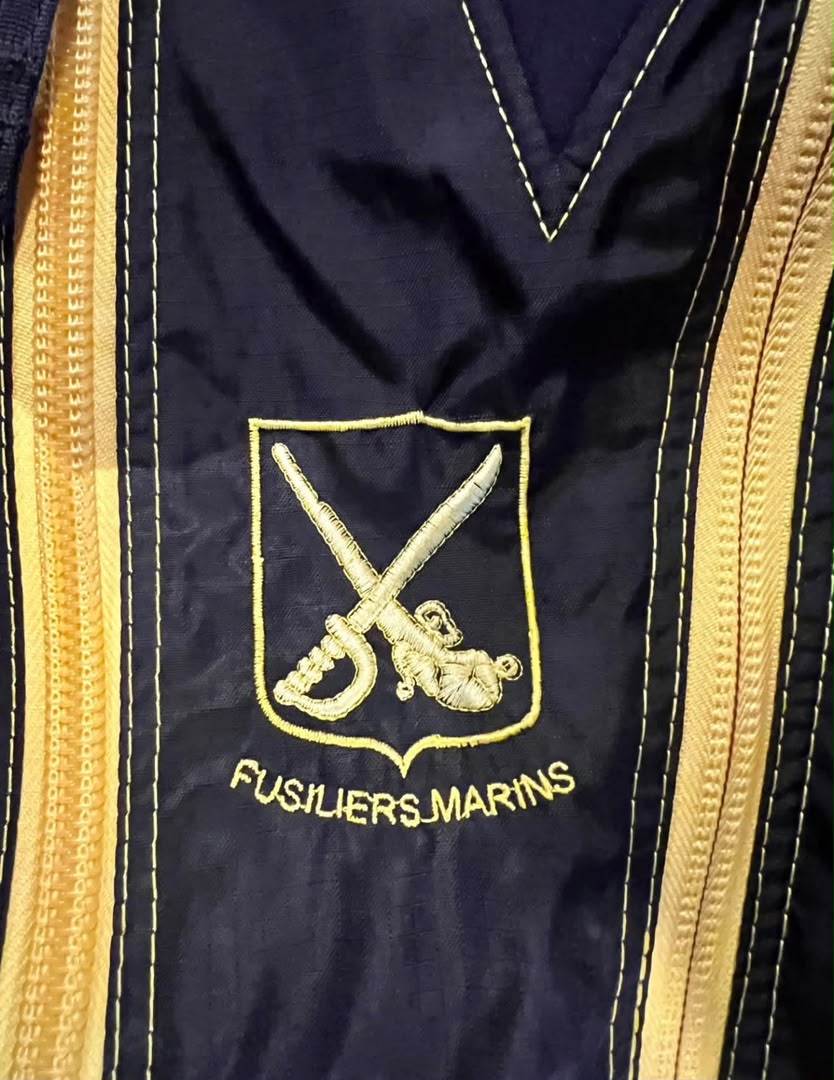
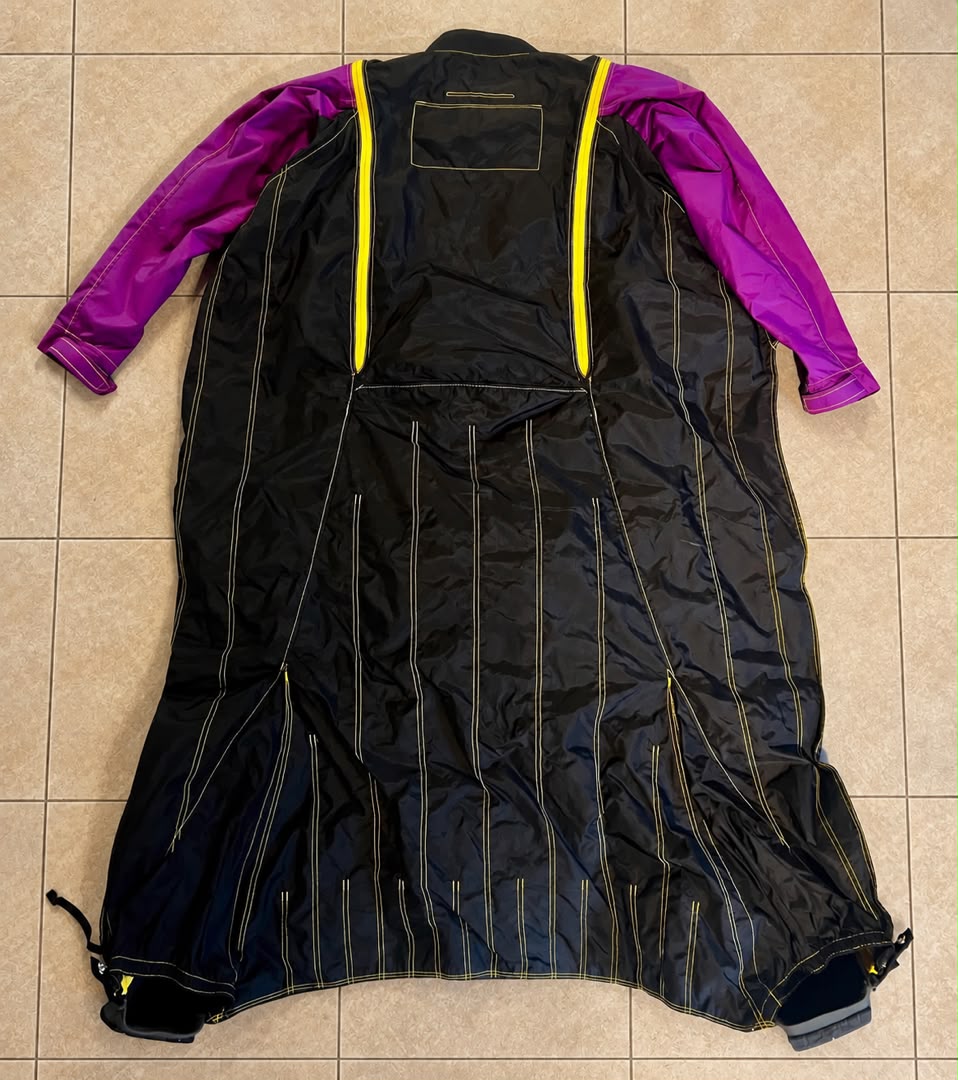


Used ETMDos

€650.00
This Used ETMDos tracking suit is a recent, performance-focused setup with a DOM of 2024, approximately 50 jumps, and sizing suited to a flyer around 167 cm tall and 58 kg. It comes fitted with a Trax sole, providing durable grip and practical footing for technical environments, while the suit itself is built around strong glide, speed, maneuverability, and excellent freedom of movement.
The ETMDos is designed for experienced flyers who want more aerodynamic performance than a conventional tracking suit while retaining significantly more arm mobility than a traditional wingsuit. Its inflated shape, responsive handling, and high-speed stability make it well suited to advanced tracking progression and technically demanding freefall use.
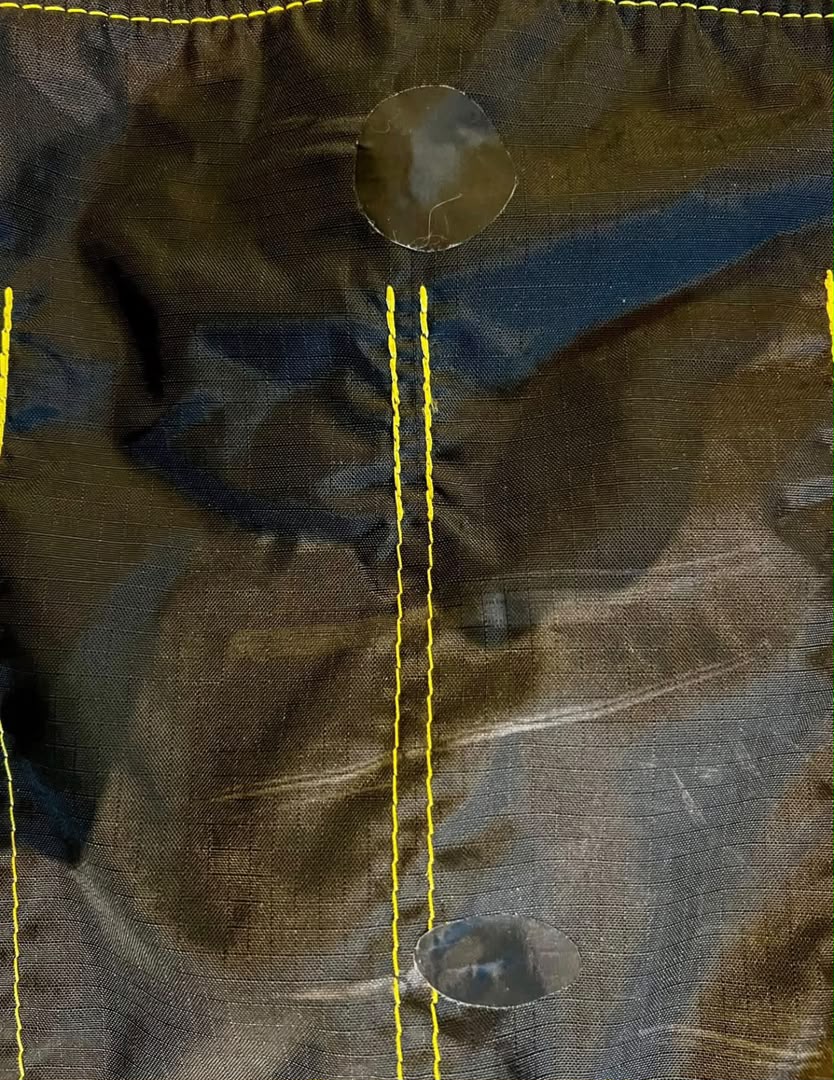
This example has two small holes, which should be inspected and repaired as needed before continued use. Aside from those disclosed marks, the relatively low jump count and recent manufacture date make it an attractive used option for someone whose body measurements closely match the original fit.
Key Details
- Model: ETMDos
- DOM: 2024
- Approximate Jumps: 50
- Original Fit: Around 167 cm / 58 kg
- Sole: Trax high-grip sole
- Condition: Used, relatively low jump count
- Known Damage: Two small holes
- Flight Character: Fast, stable, responsive, and efficient
- Mobility: Excellent arm freedom
- Performance Focus: Strong glide and advanced tracking capability
- Recommended For: Appropriately experienced and current flyers
Before use, the suit should be checked carefully around the two damaged areas, seams, zippers, air inlets, booties, sole attachments, knees, seat, and reinforcement panels. Proper fit is equally important because torso length, inseam, shoulder width, and arm length can influence both comfort and aerodynamic performance.
For the right flyer, this used ETMDos offers a compelling combination of recent manufacture, relatively low use, strong aerodynamic performance, Trax sole durability, responsive handling, and technical tracking capability in a well-specced used package.
Used Squirrel ETMDos Tracking Suit – DOM 2024, Sized for 167 cm / 58 kg, Trax Sole, Approximately 50 Jumps
Used ETMDos Overview, Fit, Condition, Trax Sole, Flight Performance, Tracking Capability, Speed, Maneuverability, and Technical Details
The Used ETMDos is a high-performance tracking suit designed for experienced flyers who want strong glide, speed, maneuverability, and significantly more aerodynamic performance than a conventional tracking garment while retaining much greater arm freedom than a traditional wingsuit. This particular suit has a DOM of 2024, is sized around a flyer approximately 167 cm tall and 58 kg, has approximately 50 jumps, comes with a Trax sole, and has two small holes that should be inspected before continued use.
Squirrel describes the ETMDos as an evolution of the original high-performance tracking concept, with increased speed and maneuverability, a lower-volume arm profile, MonoChamber construction, fully free arms, and booties that can be opened. The manufacturer positioned the design for pilots who wanted high glide and speed without committing to a conventional winged suit.
DOM 2024
The stated manufacture date is 2024.
That recent DOM is a major advantage for buyers looking for modern materials and relatively current aerodynamic construction.
However, DOM alone does not determine condition.
Jump count, storage, impact history, fabric wear, zipper condition, sole wear, and repairs all matter.
Approximately 50 Jumps
The suit has approximately 50 jumps.
That places it in a lightly to moderately used category rather than a heavily worn example.
For a technical flight suit, 50 jumps can still represent relatively limited use when the suit has been stored and handled correctly.
Two Small Holes
The suit has two small holes.
These should be clearly disclosed to the buyer and professionally inspected.
Their location matters because minor fabric damage in a low-load area can have a very different significance from damage near a seam, inlet, zipper, pressure surface, or reinforced section.
Fit for 167 cm / 58 kg
The suit is stated to fit around 167 cm and 58 kg.
This provides a useful reference, but height and weight alone cannot guarantee ideal fit.
Torso length, shoulder width, arm length, inseam, chest size, and leg proportions also affect aerodynamic performance and comfort.
A tracking suit that fits correctly should remain secure without excessive loose fabric.
Why Correct Fit Matters
Fit influences both comfort and aerodynamic performance.
A suit that is too loose may distort airflow.
A suit that is too tight may restrict movement.
Therefore, the intended user should compare actual body measurements before purchase.
Trax Sole
This example includes a Trax sole.
Current Squirrel-family product listings offer an Evolv Trax Sticky sole option, reflecting the brand’s emphasis on traction and durability in technical mountain and exit environments.
A grippy sole can provide additional confidence when walking on rock or preparing at exposed terrain.
Openable Bootie Design
The ETMDos design introduced booties that can be opened.
This improves practicality during walking and setup.
It also makes the suit easier to manage before flight.
High-Performance Tracking Design
The ETMDos was created to deliver high tracking performance without conventional wings.
Squirrel describes the original concept as a large suit intended to glide far and fast while preserving unrestricted arms.
That makes it especially attractive to experienced trackers progressing toward more technical flying.
MonoChamber Construction
The suit uses MonoChamber technology.
This design approach helps manage internal pressure across the suit.
The aim is to create a stable inflated shape while preserving control and responsiveness.
Full Arm Freedom
One of the most important characteristics is unrestricted arm movement.
Squirrel specifically describes the design as allowing 100% arm range of motion.
This separates the suit from a conventional wingsuit where arm wings create a much more connected aerodynamic structure.
Flight Speed
The suit is designed for high-speed flight.
However, skydiving speed and speed sky diving should never be treated as simple performance targets.
Actual speed depends on body position, suit inflation, pilot weight, altitude, atmospheric conditions, and skill.
Glide Performance
The ETMDos was developed for strong glide.
Squirrel describes it as capable of comfortable, stable high-speed flight with substantial tracking performance.
Experienced pilots can use this efficiency for long horizontal movement when conditions and training support it.
Maneuverability
The second-generation design increased maneuverability compared with the original version.
That improved handling makes body position and input discipline especially important.
Small changes can produce noticeable flight-path changes.
Stable High-Speed Flight
The platform was specifically designed to remain comfortable and stable in fast flight.
That stability is one of its strongest selling points for experienced trackers.
Tracking Jump Applications
A tracking jump is the natural discipline associated with this suit.
Its aerodynamic profile is designed to increase horizontal movement while maintaining free arm use.
However, progression should remain structured.
Base Jumping Use
The ETMDos is widely associated with base jumping and mountain tracking environments.
Squirrel’s own published material shows the suit used on technical BASE flights, while the design includes BASE-specific storage and suit options.
Baseline Jumping Search Term
The phrase baseline jumping is often used incorrectly when people mean BASE jumping.
This suit belongs to the specialized high-performance tracking category rather than conventional tandem or student skydiving equipment.
Wingsuit Sport Comparison
The wingsuit sport uses suits with fabric wings extending between the arms, legs, and body.
The ETMDos instead provides high tracking efficiency while preserving freer body movement.
Vector Wingsuit
The term vector wingsuit may appear during research into advanced body-flight equipment.
However, the ETMDos should be evaluated according to its own flight design rather than specifications from unrelated suits.
Gliding Suit Wingsuit
Searches for gliding suit wingsuit or skydiving gliding suit usually refer to garments that increase aerodynamic surface area.
This tracking suit achieves that goal differently from a conventional winged design.
Wing Suits for Sale
Buyers searching wing suits for sale may encounter advanced tracking suits alongside traditional wingsuits.
They should not assume the same experience requirements or flight behavior apply to both categories.
Price of Wingsuit
The phrase price of wingsuit often appears in buyer searches.
Used-equipment value depends on DOM, condition, jump count, sizing, damage, repairs, included sole configuration, and current manufacturer availability.
Indoor Wingsuit
An indoor wingsuit experience takes place in specialized wind facilities and differs significantly from aircraft or object-based tracking.
This used suit is intended for real freefall use, not simply tunnel simulation.
Tandem Wingsuit
The phrase tandem wingsuit concerns a specialized concept and is not a feature of this suit.
The ETMDos is intended for an individual experienced flyer.
Parachute Rig Compatibility
A parachute rig used with a large tracking suit should fit correctly and remain secure.
Deployment handles and container geometry must remain accessible.
The suit itself is not a container or parachute system.
Container Skydive Considerations
Anyone researching container skydive compatibility should ensure that the chosen harness/container works correctly with the suit.
Handle access is especially important.
Skydiving Rig
A skydiving rig includes life-support components such as a harness/container, main canopy, reserve, deployment system, and often an activation device.
This listing concerns the tracking suit only.
Parts of a Parachute
Searches for parts of a parachute may lead buyers to canopies, lines, risers, sliders, containers, pilot chutes, and harness components.
None of those should be assumed to be included with the suit.
Linewear
The keyword linewear applies to parachute suspension lines rather than the suit itself.
Suit inspection should instead focus on fabric, seams, zippers, inlets, booties, soles, and areas of abrasion.
Skydiving Rigging
Skydiving rigging concerns parachute equipment assembly and maintenance.
A rigger may also be useful when evaluating whether damage to the suit could interfere with deployment hardware or container access.
Skydiving Equipment List
A complete skydiving equipment list may include the rig, helmet, altimeter, goggles, suit, audible device, and other personal equipment.
This item represents one specialized component of that overall setup.
Skydiving Helmet
A skydiving helmet should be selected separately.
The suit does not include protective headgear unless explicitly stated.
Skydive Helmets
Searches for skydive helmets often involve full-face and open-face designs.
Helmet choice depends on discipline, visibility, communication, and personal preference.
Sky Helmet Skydiving
The term sky helmet skydiving generally refers to protective equipment for freefall.
It has no effect on the aerodynamic construction of the suit.
Full Face Skydiving Helmet
A full face skydiving helmet can provide eye and face protection during high-speed freefall.
Compatibility with peripheral vision and deployment procedures remains important.
Skydiving Helmet Full Face
The phrase skydiving helmet full face refers to the same general helmet category.
High-speed flyers should prioritize secure fit.
G35 Helmet
The g35 helmet is a separate personal-equipment product and is not included with this suit.
Best Skydiving Helmet
The best skydiving helmet depends on discipline and personal fit.
There is no single helmet that is automatically ideal for every flyer.
Cookie G4 Helmet
The cookie g4 helmet is another well-known full-face option frequently researched by skydivers.
It should be selected independently of the suit.
Skydiving Glasses
The keyword skydiving glasses concerns eye protection rather than flight-suit construction.
Skydiver Goggles
Skydiver goggles should remain secure at high airspeeds.
Can You Wear Glasses While Skydiving
People asking can you wear glasses while skydiving can often use appropriate goggles or compatible full-face helmets over corrective eyewear.
Hook Blade Knife
A hook blade knife is an emergency cutting tool.
It is not automatically included with this listing.
Hook Knife Skydiving
The phrase hook knife skydiving refers to emergency equipment used by some jumpers.
Skydive Hook Knife
A skydive hook knife should be mounted where it remains accessible without interfering with normal movement.
Freefly Pud Handle
A freefly pud handle is a deployment-handle configuration associated with certain parachute systems.
Suit fit should never obstruct handle access.
Landing Flight Risers
The term landing flight risers relates to canopy control after deployment, not freefall tracking performance.
Canopy Flight
Once deployment occurs, canopy flight becomes a separate phase.
The pilot must transition cleanly from suit flight to deployment and canopy control.
Skydiving Downsizing Chart
A skydiving downsizing chart applies to parachute canopy progression rather than tracking-suit sizing.
The two decisions should be made separately.
Smallest Canopy
Searching for the smallest canopy should never be connected directly to choosing this suit.
Canopy suitability depends on training, loading, and progression.
Base Canopy
A base canopy is specialized parachute equipment.
It is not included with the ETMDos unless specifically stated.
Safire 3
A safire 3 is a sport main canopy and belongs to a different product category.
Fluid Wings
Fluid Wings produces parachute canopies rather than tracking suits.
These should not be confused.
CRW Skydiving
crw skydiving involves canopy-relative flight after deployment.
It is unrelated to the freefall function of this tracking suit.
Parachute Jump Australia
Searches for parachute jump australia often concern drop zones, tandem jumping, or sport operations.
Local regulations and equipment rules should always be checked.
Skydive Byron Bay
skydive byron bay is a destination-related search and should not be interpreted as a product feature.
Cairns Skydiving
Similarly, cairns skydiving refers to destination jumping in Australia.
Weight Limit Skydiving
The phrase weight limit skydiving is relevant because equipment must always be matched to the user’s size.
For this suit, the stated reference fit is approximately 167 cm and 58 kg.
Skydiving Blue Hole Belize
skydiving blue hole belize refers to destination skydiving.
It has no direct relationship to the suit’s technical specifications.
Skydive Belize
skydive belize is another location-related search phrase.
iFLY Colorado Springs
ifly colorado springs refers to indoor body-flight training.
Tunnel experience can improve awareness and body control, although tracking suits behave differently in actual freefall.
Fire Parachute
The phrase fire parachute relates to unrelated emergency-equipment searches.
Cypress Fire Skydiving
The term cypress fire skydiving likely refers to activation-device or emergency-system searches.
No activation device is included with this suit.
Nude Parachute Jump
A nude parachute jump is a novelty concept rather than an equipment characteristic.
Skydiving Nude
The phrase skydiving nude has no technical relationship to the ETMDos.
Gear Bag Skydive
A gear bag skydive setup can help protect the suit from dirt, moisture, and abrasion.
Proper storage is important, especially around the soles, inlets, and zippers.
New Skydive
The term new skydive may be used by people searching current equipment or drop-zone information.
#Skydiving Latest
The phrase #skydiving latest often leads to current media, equipment, or community updates.
Skydiving Website
A reputable skydiving website can provide useful general information, but manufacturer instructions should remain the primary reference for suit care.
Fly Suits
The term fly suits can include tracking suits, wingsuits, and conventional freefall clothing.
This model sits toward the high-performance end of tracking equipment.
Skydiving Tube
A skydiving tube is a separate freefall prop used in specialized jumps.
It is not part of this suit.
Why This Used ETMDos Stands Out
The strongest selling points are its 2024 manufacture date, fit around 167 cm / 58 kg, approximately 50 jumps, Trax sole, and advanced high-performance tracking architecture.
Its two small holes should be disclosed and evaluated, but otherwise the suit offers a modern design centered around speed, glide, arm freedom, maneuverability, and high-speed stability.
For an appropriately experienced flyer whose body dimensions match the suit, this used ETMDos can offer a highly capable performance option with relatively low use and a recent DOM.
Fit, Aerodynamic Performance, Fabric Condition, Traction, Mobility, Damage Assessment, Comfort, and Real-World Use
This high-performance tracking suit is built for experienced flyers who want a strong balance of speed, glide, stability, maneuverability, and freedom of movement. With a recent manufacture date, approximately 50 reported jumps, and a relatively lightweight user profile, the suit represents a modern used option with moderate use rather than heavy wear. The most important practical considerations are correct body fit, inspection of the two small holes, sole condition, zipper function, fabric integrity, and whether the overall sizing matches the buyer closely enough to preserve aerodynamic performance.
Overall Fit
Correct fit is one of the most important factors in how the suit performs.
A well-fitted suit should remain secure around the torso, shoulders, arms, hips, and legs without creating excessive looseness.
Too much excess fabric can disturb airflow.
A suit that is too tight can restrict movement.
Height Matching
The stated sizing around 167 cm gives a useful reference point.
However, overall height is only one measurement.
Torso length, inseam, shoulder width, and arm length can significantly affect how the suit sits on the body.
Weight Matching
The stated 58 kg user weight is another important reference.
A lighter or heavier user may change how the suit inflates and feels during flight.
The best match is usually someone close to the original body dimensions.
Torso Length
Torso fit affects how the suit remains positioned during flight.
If the torso section is too long, excess fabric can gather.
If it is too short, movement may become restricted.
Shoulder Fit
The shoulder area should allow full movement without excessive bagginess.
A secure fit supports better control.
It also helps preserve the intended aerodynamic shape.
Arm Mobility
One of the major advantages of this style of suit is strong arm freedom.
The wearer should be able to move the arms naturally without the suit pulling aggressively across the shoulders.
Full movement can be especially useful during deployment preparation and equipment checks.
Leg Fit
The legs should remain comfortably fitted without excessive twisting.
Uneven fabric tension can affect stability.
Correct leg length also helps position the booties properly.
Bootie Position
The booties should sit securely around the footwear.
They should not twist or slide excessively.
Correct positioning helps maintain the intended lower-body aerodynamic surface.
Traction and Sole Condition
The integrated high-grip sole is useful when walking across rock, dry ground, or technical terrain.
The sole should be inspected for separation, cracks, excessive wear, or damage around the edges.
Good traction is valuable before flight as well as after landing.
Sole Attachment
The point where the sole joins the fabric deserves careful inspection.
This area experiences repeated flexing.
Loose stitching or separation should be repaired before continued use.
Aerodynamic Inflation
The suit is designed to create a stable inflated shape in freefall.
Correct fit and intact fabric help preserve this form.
Any damage that allows excessive air leakage can reduce efficiency.
Internal Pressure
A high-performance tracking design depends on controlled internal pressure.
Inlets should remain open and undamaged.
Internal airflow should not be obstructed by debris or fabric distortion.
Inlet Condition
All air inlets should be inspected carefully.
Their mesh, stitching, and surrounding fabric should remain intact.
Damage around an inlet can influence inflation and stability.
Glide Performance
The suit is designed to support strong horizontal movement.
Efficient glide depends on body position, suit inflation, loading, and environmental conditions.
The pilot should avoid assuming that published or previous performance will automatically transfer to a different user.
Speed Management
Higher performance also means greater sensitivity to body position.
Small changes in pitch, shoulder position, or leg angle can noticeably alter speed.
A smooth and controlled flying style is more effective than abrupt movement.
Stability
A stable suit should feel predictable once fully pressurized.
The pilot should avoid excessive tension.
Relaxed control generally produces smoother flight.
Maneuverability
The suit is designed to respond well to directional input.
Banking, pitch adjustment, and heading changes should be progressive.
The pilot should become familiar with the response before attempting demanding flights.
Body Position
Good body position remains essential.
The torso, shoulders, hips, and legs should work together.
Unnecessary asymmetry can create roll or heading changes.
Head Position
Head position can influence the rest of the body.
Looking too far up or down may affect pitch.
A neutral position usually supports better stability.
Arm Position
Arm position can be adjusted to influence glide and control.
The suit’s unrestricted design allows a broader range of movement.
However, large corrections should still be avoided.
Leg Position
The legs contribute significantly to pitch and direction.
Symmetrical leg input helps maintain heading.
Uneven positioning can create unwanted roll.
Deployment Preparation
Before deployment, the pilot should transition smoothly from full tracking flight.
The goal is to reduce excessive instability while maintaining awareness.
Handle access should remain clear at all times.
Harness and Container Interaction
The suit should not interfere with the harness or container.
Shoulder straps, leg straps, deployment handles, and risers should remain accessible.
Any fabric bunching around these areas should be addressed.
Handle Accessibility
Emergency and deployment handles must remain easy to locate.
The wearer should check this on the ground while fully geared.
Restricted access is unacceptable.
Zipper Condition
Every zipper should operate smoothly.
Teeth should remain aligned.
Sliders should not bind or separate unexpectedly.
Main Entry Zipper
The primary entry zipper experiences repeated use.
Its stitching should remain secure.
Any damage near the base or upper termination should be repaired.
Bootie Zippers
If the booties open using zippers, those zippers should also move freely.
They should close fully.
Loose or damaged teeth can reduce reliability.
Fabric Inspection
The entire exterior should be checked for abrasion, small tears, burns, or weakened areas.
Particular attention should be paid to knees, seat, elbows, booties, and inlet areas.
Two Small Holes
The two known holes should be inspected closely.
Their size, location, and proximity to seams or pressure surfaces matter.
Minor damage can sometimes be straightforward to repair, but it should never be ignored.
Repair Priority
Any hole near a load-bearing seam, inlet, zipper, or high-pressure area deserves professional attention.
Damage in a less critical panel may be simpler to repair.
The repair should preserve airflow and fabric strength.
Seam Condition
Structural seams should remain intact.
Loose or broken stitching can allow damage to spread.
Early repair is preferable.
High-Wear Areas
The knees, seat, lower legs, booties, and soles generally experience more abrasion.
These areas should be checked after every use.
Wear can develop faster there than on upper panels.
Interior Inspection
The inside of the suit should also be checked.
Hidden seam damage may not be visible externally.
Any internal tears or delamination should be investigated.
Ventilation and Comfort
High-performance suits can become warm during ground preparation.
Proper fit and breathable base layers help improve comfort.
The wearer should avoid bulky clothing that changes the aerodynamic fit significantly.
Layering
Cold-weather layers should be thin enough to preserve fit.
Bulky insulation can alter pressure distribution and mobility.
The suit should be tested while wearing the intended clothing.
Warm-Weather Use
In hot conditions, hydration and heat management matter.
The suit should not be left in direct sunlight longer than necessary.
Excessive heat can age fabric and adhesives.
Rain and Moisture
The suit should be dried fully if it becomes wet.
Moisture can encourage odor and material deterioration.
It should never be stored damp for long periods.
Dust and Dirt
Fine dirt can accumulate in zippers, seams, and soles.
The suit should be cleaned according to manufacturer guidance.
Harsh chemicals should be avoided.
Rock Contact
Technical terrain can create abrasion quickly.
The wearer should avoid dragging the suit across rough surfaces.
The sole and lower legs deserve particular attention.
Landing Area Considerations
The lower body can experience wear during rough landings.
Grass, gravel, vegetation, and rocky terrain all affect fabric condition.
Post-use inspection is worthwhile.
Post-Flight Inspection
After each use, check the sole, booties, knees, seat, zippers, inlets, and known repaired or damaged areas.
This helps identify new wear early.
Storage
The suit should be stored clean and dry.
It should not remain compressed under heavy gear.
A ventilated indoor environment is preferable.
Ultraviolet Protection
Direct sunlight can degrade synthetic materials.
The suit should be kept shaded when not in use.
Long exposure should be avoided.
Transport
A protective bag helps prevent snagging and contamination.
Sharp objects should be kept away from the fabric.
The suit should not be crushed unnecessarily.
Travel Inspection
After air or road travel, inspect the zippers, soles, inlets, and fabric before use.
Luggage compression can sometimes create unexpected wear.
Maintenance Records
Repairs should be documented.
Knowing when the holes were repaired and what method was used can help future buyers evaluate condition.
Suit Progression
An experienced flyer should approach a new suit progressively.
Initial jumps should focus on stability, range, speed control, and deployment transition.
This provides time to learn the suit’s individual feel.
Conservative First Use
The first few jumps after purchase should avoid maximum-performance flying.
The pilot should confirm fit, inflation, control response, and deployment comfort.
Evaluating Glide
Glide should be assessed gradually.
The pilot should compare body positions and response without forcing extreme angles.
Consistency is more valuable than chasing maximum distance.
Evaluating Speed
Speed should also be explored progressively.
Stable flight should remain the priority.
The suit’s performance should be learned over several jumps rather than one session.
Evaluating Turns
Directional response should be tested with small inputs first.
The pilot should observe how quickly the suit banks and recovers.
This helps build accurate control awareness.
Fatigue
Long days can affect body position.
As fatigue increases, posture may become less symmetrical.
Rest and concentration help maintain better control.
Used-Equipment Value
A recent manufacture date and only around 50 jumps are strong selling points.
The two small holes are the main disclosed condition concern.
Their repair status should be clear and transparent.
Professional Inspection
An experienced technician or manufacturer-approved repair service can assess the damage and general condition.
This is particularly useful before resale or long-term use.
Overall Real-World Suitability
This used high-performance tracking suit offers an attractive combination of recent manufacture, relatively low use, technical aerodynamic design, strong mobility, effective traction, and advanced flight capability. Its sizing is best suited to someone close to the original user’s measurements, while the two small holes should be inspected and repaired appropriately if needed. When fit, fabric condition, sole integrity, zippers, inlets, and damage areas are all confirmed, the suit can provide a capable and engaging platform for an experienced flyer seeking responsive, efficient, and versatile freefall performance.
Fabric Integrity, Seam Strength, Zipper Reliability, Sole Condition, Damage Repair, Storage Protection, Cleaning, and Long-Term Durability
A high-performance tracking suit depends on the condition of its fabric, seams, zippers, inlets, booties, sole system, and reinforcement areas. Because this example has approximately 50 reported jumps and only two known small holes, its overall use level remains relatively low. However, aerodynamic clothing should still be inspected carefully because even minor damage can affect fit, inflation, durability, and confidence in flight. Long-term reliability comes from early repairs, correct storage, careful cleaning, and regular inspection of high-wear areas.
Overall Fabric Condition
The outer fabric should remain smooth, flexible, and free from excessive abrasion.
Look for thinning, discoloration, burns, small cuts, and frayed areas.
Any change in texture can indicate wear.
Importance of Fabric Integrity
The suit relies on controlled airflow and internal pressure.
Damaged fabric can allow unnecessary leakage.
This may reduce efficiency or alter the way a panel maintains shape.
Two Small Holes
The two known holes should be inspected closely.
Their exact location matters.
Damage near a seam, inlet, zipper, bootie, or reinforced panel may require more attention than a small hole in a low-stress area.
Repair Assessment
A small hole should not simply be ignored because the suit still flies.
It should be evaluated before it grows.
Early repair is usually easier and cleaner.
Repair Quality
Any previous or future repair should preserve both strength and aerodynamic shape.
Loose patches, bulky stitching, or poorly positioned repairs can create unnecessary drag.
A neat professional repair is preferable.
Seam Condition
All seams should remain closed and evenly stitched.
Loose thread, pulled stitches, or separation can spread quickly.
Seams around the shoulders, hips, legs, and inlets deserve close attention.
Reinforced Areas
Reinforcement panels usually experience more load and abrasion.
These areas should remain firmly attached.
Any peeling, fraying, or stitching failure should be repaired.
Shoulder Panels
Shoulder fabric experiences movement during arm positioning.
Repeated stretching can create localized wear.
The area should remain flexible without showing stress marks.
Elbow Areas
Elbows can experience abrasion during ground preparation and movement.
Fabric should be checked for thinning.
Any rough contact damage should be addressed early.
Knee Areas
Knees are common wear points.
Walking, kneeling, and rocky exits can create abrasion.
These panels deserve regular inspection.
Seat Area
The seat may contact the ground during packing, resting, or rough landings.
Look for scuffs and fabric thinning.
Damage here can grow if ignored.
Lower-Leg Panels
The lower legs are exposed to dirt, rocks, and footwear movement.
Check for cuts and abrasion.
These panels often show wear earlier than upper sections.
Bootie Fabric
The booties should remain structurally sound.
Their fabric should not twist, tear, or separate from reinforced areas.
A damaged bootie can affect lower-body symmetry.
Bootie Fit
The booties should fit securely over the footwear.
Excessive looseness can create movement.
Too much tension can stress seams.
Sole Condition
The high-grip sole should remain firmly bonded and stitched.
Look for cracks, separation, excessive wear, and edge lifting.
Traction depends on good condition.
Sole Flexibility
The sole should remain flexible enough for comfortable movement.
Excessive stiffness can affect walking.
Cracking may indicate material deterioration.
Sole-to-Fabric Junction
The connection between the sole and fabric is a high-stress area.
Repeated bending can weaken stitching.
This junction should be checked after each use.
Zipper Reliability
Zippers should move smoothly.
Teeth should remain aligned.
Any binding or separation should be corrected before use.
Main Entry Zipper
The main zipper receives repeated loading.
Its top and bottom stops should remain secure.
The surrounding fabric should not pull away.
Bootie Zippers
Any lower-leg zippers should close fully.
They should not open unexpectedly during movement.
Damaged sliders or teeth should be repaired.
Zipper Stitching
The stitching around zippers should remain tight.
Loose thread can allow the zipper tape to separate.
Early repair prevents larger damage.
Inlet Condition
Air inlets are critical to inflation.
They should remain open and correctly shaped.
Fabric collapse, tearing, or damaged mesh can affect internal pressure.
Inlet Mesh
Mesh should remain free from holes.
Debris should not block airflow.
Any damaged section should be repaired.
Inlet Stitching
Stitching around inlet openings should remain secure.
These areas experience pressure during flight.
Loose seams can spread quickly.
Internal Fabric
The interior should also be inspected.
Hidden seam damage can develop without obvious external signs.
Turn the suit inside out periodically for inspection.
Internal Channels
Internal pressure channels should remain unobstructed.
Any internal tearing or loose fabric can interfere with airflow.
Professional repair may be needed.
Pressure Retention
The suit should inflate consistently.
If one side appears softer than the other, damage or fit issues may be involved.
Asymmetry should be investigated.
Inflation Changes
A gradual change in inflation can indicate small leaks, seam wear, or fabric damage.
The pilot should notice whether the suit feels different from previous jumps.
Symmetry
Both sides should maintain similar shape.
Uneven inflation can affect stability.
Fit, body position, and damage should all be considered.
Arm Mobility
Full arm movement should remain unrestricted.
Fabric repairs should not reduce range of motion.
The pilot should test movement on the ground after any repair.
Leg Mobility
The legs should move freely without excessive pulling.
Seam tension should be balanced.
Uneven restriction can affect flight posture.
Harness Interaction
The suit should sit cleanly beneath or around the harness.
Fabric should not bunch excessively under straps.
Repeated rubbing can create wear.
Handle Access
Deployment and emergency handles should remain fully accessible.
The suit must not cover or obstruct them.
This should be checked while fully geared.
Harness Abrasion
Harness straps can rub against the suit.
Areas under the shoulders, chest, and hips should be inspected.
Repeated contact can thin fabric.
Footwear Compatibility
The sole system should match the footwear being used.
Shoes that are too bulky can stress the bootie.
A secure fit improves durability.
Ground Movement
Walking carefully helps preserve the lower section.
Dragging the booties or scraping them against rock increases wear.
Good ground discipline extends service life.
Technical Terrain
Rocky terrain can be particularly hard on the suit.
Sharp surfaces can puncture fabric.
The wearer should avoid unnecessary contact.
Landing Wear
Landings can also damage fabric.
Sliding on rough ground can abrade the knees, hips, seat, and lower legs.
The suit should be inspected after any rough landing.
Dirt and Dust
Fine dirt can work into zippers and seams.
This increases abrasion.
The suit should be cleaned regularly.
Sand Exposure
Sand is especially damaging.
It can collect in zippers and sole edges.
Careful cleaning is important after beach or desert use.
Mud Exposure
Mud should be removed gently.
Aggressive scrubbing can damage fabric coatings.
The suit should be dried completely afterward.
Water Exposure
If the suit gets wet, it should be dried naturally.
It should not be stored damp.
Moisture can create odor and material degradation.
Salt Water
Salt residue can damage hardware and fabric.
If exposed, the suit should be rinsed appropriately and dried fully.
Special care is required around zippers.
Cleaning Method
Cleaning should be gentle.
Harsh detergents and solvents should be avoided.
Manufacturer guidance should determine the correct washing procedure.
Machine Washing
Machine washing may not always be appropriate.
Aggressive cycles can damage seams and coatings.
Hand cleaning is often safer unless the manufacturer specifies otherwise.
Drying
High heat should be avoided.
Air drying in a shaded area is preferable.
Direct sunlight can degrade synthetic materials.
Ultraviolet Exposure
Prolonged UV exposure can weaken fabric.
The suit should not be left in the sun between jumps longer than necessary.
A shaded packing area helps.
Heat Exposure
Excessive heat can damage fabric coatings, adhesives, and sole materials.
Hot vehicles should be avoided.
Long-term heat exposure can shorten service life.
Cold Conditions
Cold can make some materials stiffer.
The suit should be allowed to warm gradually.
Forceful folding when extremely cold should be avoided.
Storage
The suit should be stored clean and dry.
It should not remain tightly compressed for long periods.
A cool indoor environment is best.
Hanging Storage
If hung, the hanger should support the suit without stretching the shoulders.
Heavy narrow hangers should be avoided.
Broad support is preferable.
Folded Storage
If folded, avoid sharp creases.
The suit should not be placed under heavy items.
Periodic repositioning can help.
Protective Bag
A breathable gear bag helps protect against dust and abrasion.
The bag should remain dry.
Plastic storage in humid conditions can trap moisture.
Travel Protection
During transport, sharp objects should be kept away.
Heavy luggage should not crush the suit.
The sole and zipper areas should receive extra protection.
Airline Travel
After air travel, inspect the suit before use.
Compression and baggage handling can create unexpected damage.
Check the known hole areas carefully.
Pre-Jump Inspection
Before every jump, check the zippers, inlets, booties, sole, seams, and damaged areas.
The inspection only takes a few minutes.
It can prevent small issues from becoming serious.
Post-Jump Inspection
After landing, inspect high-wear areas.
Look for new cuts, abrasion, and loose stitching.
Any change should be documented.
Monitoring Existing Damage
The two known holes should be monitored even after repair.
Check whether the surrounding fabric is stretching or weakening.
Any enlargement requires attention.
Repair Records
Repairs should be documented.
Date, location, method, and person performing the repair should be recorded.
This improves future resale transparency.
Jump Count Records
Maintaining an accurate jump count helps track use jumper pilot.
It also helps future owners evaluate wear.
A clear history increases confidence.
Fit Changes Over Time
Body weight can change.
Even small changes may affect suit fit.
The owner should reassess comfort and inflation if body dimensions change significantly.
Used-Suit Evaluation
A future buyer should focus on fabric condition, fit, damage history, sole wear, and zipper reliability.
Jump count alone should not determine value.
A well-maintained suit with documented repairs can still be an excellent purchase.
Professional Inspection
An experienced repair specialist can evaluate whether damaged fabric remains structurally sound.
This is especially useful for holes near seams, inlets, or high-pressure areas sky diving helmet.
Long-Term Value
Careful maintenance helps preserve resale value.
Clean storage, early repairs, accurate records, and gentle handling all matter.
A recent manufacture date is most valuable when condition remains excellent.
Overall Long-Term Reliability
A lightly used high-performance tracking suit can remain reliable for many years when its fabric, seams, zippers, inlets, booties, sole, and reinforcement areas are maintained carefully. The two small holes are manageable condition concerns when properly assessed and repaired, while the moderate jump count suggests relatively limited wear. With correct cleaning, dry storage, regular inspections, early repair of damage, and careful ground handling, the suit can preserve its aerodynamic shape, mobility, comfort, and overall performance for a long service life.
Be the first to review “Used ETMDos”
Related products

used products

used products
used products
used products
used products


used products
used products
Reviews
There are no reviews yet.