
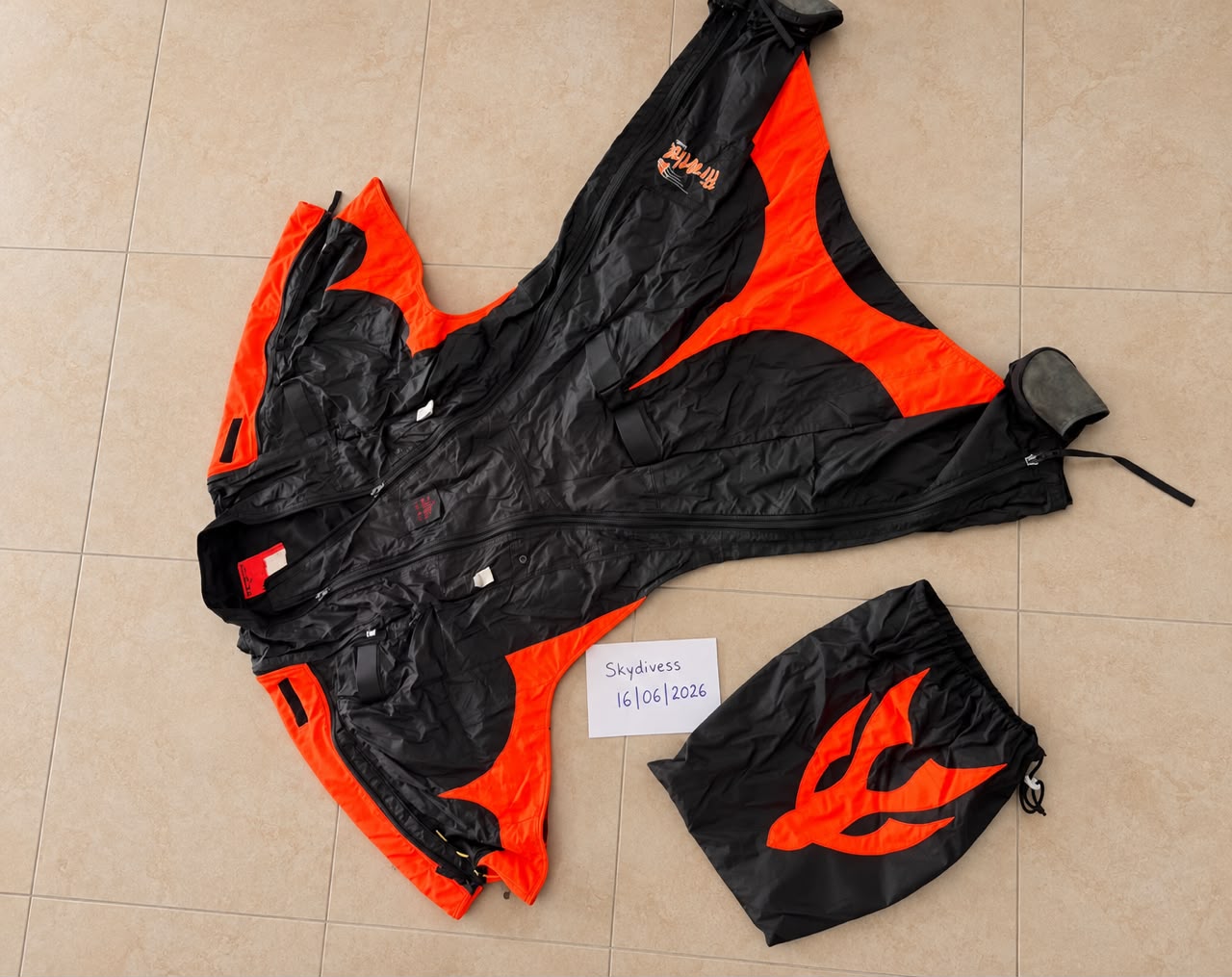

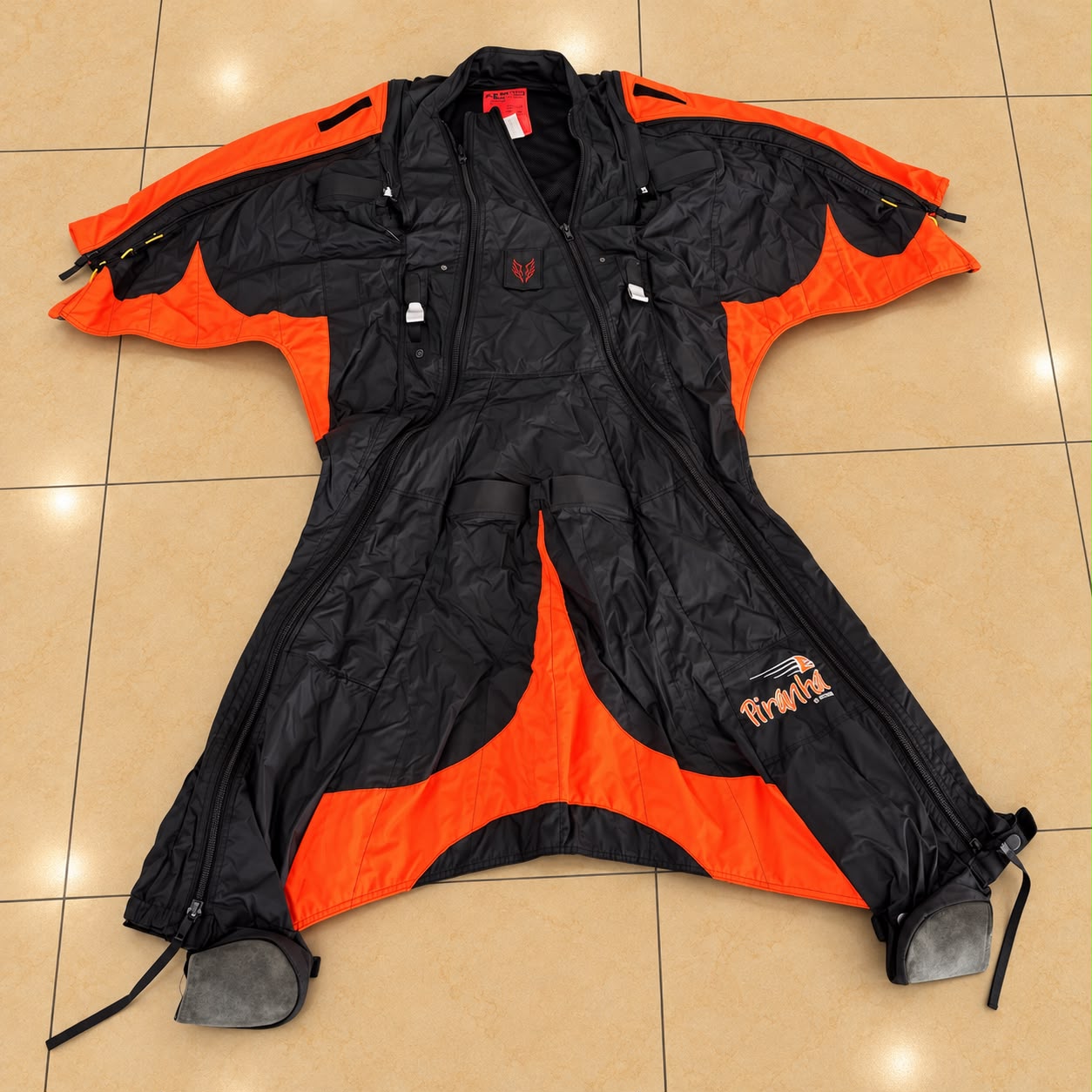


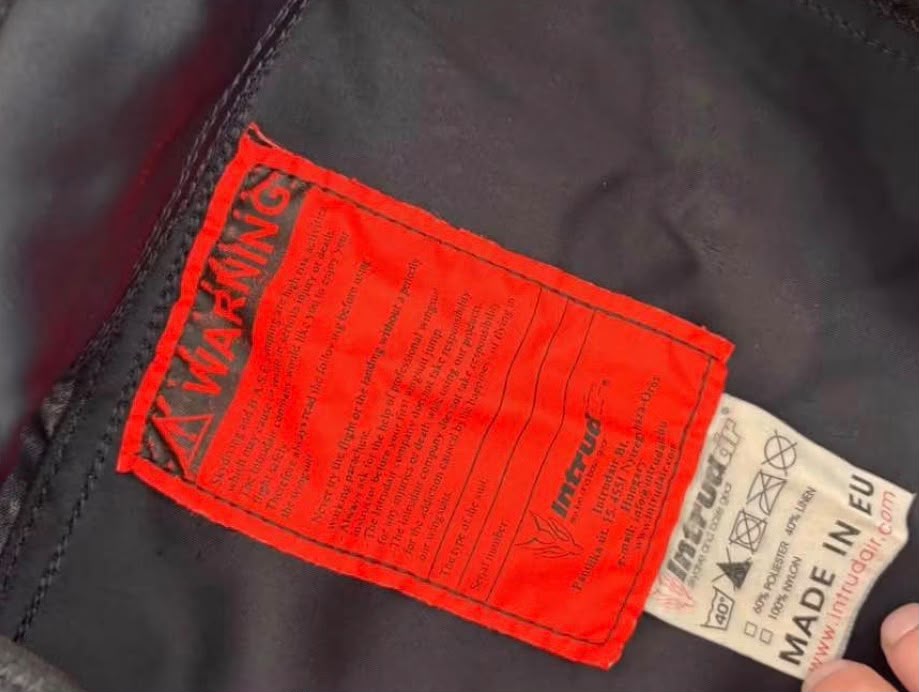



Used Intrudair Piranha Wingsuit

€400.00
Used Intrudair Piranha Wingsuit
Used Intrudair Piranha wingsuit in good condition, with approximately 150 jumps and no reported patches or problems. Designed as a stable, beginner-oriented wingsuit, it is a strong option for an appropriately trained flyer who wants to build confidence and improve control before progressing to a larger intermediate suit.
Key details:
- Intrudair Piranha wingsuit
- Approx. 150 jumps
- Good overall condition
- No reported patches
- No reported functional problems
- Size M
- Seller-estimated fit: approximately 165–180 cm
- Beginner/progression-oriented design
- Stable and manageable flight characteristics
- Suitable for developing glide, heading control and deployment consistency
- Designed to provide accessible pilot-chute reach
Because wingsuit fit depends on torso, chest, arm, leg and wingspan measurements as well as height, buyers should confirm the actual fit and inspect the fabric, seams, zippers, air inlets and booties before use.
Used Intrudair Piranha Wingsuit – Beginner-Friendly Wingsuit for Confidence, Progression and Controlled Flight
The Used Intrudair Piranha Wingsuit is a progression-focused wingsuit designed for jumpers who are moving into independent wingsuit flying and want a comparatively manageable platform before stepping into larger intermediate designs.
According to the supplied seller information, this particular suit has approximately 150 jumps, remains in good condition, and has no reported patches, repairs or known problems.
The stated size is M, while the seller estimates that it should suit a jumper approximately 165–180 cm tall.
That height range provides a useful starting reference, but wingsuit fit should never be determined by height alone. Chest, waist, hips, torso, arm length, wingspan, leg dimensions and the clothing normally worn underneath can materially influence the way a suit fits and pressurizes.
Intrudair currently positions the Piranha family as an entry-level wingsuit platform. The manufacturer describes its current Piranha as a suitable first independent suit, emphasizing stability, a relatively small and safe wing area, clean deployment access, agility and useful glide.
That design philosophy makes the Piranha particularly attractive to a jumper who wants to build confidence before progressing toward a larger intermediate wingsuit.
Seller-Stated Condition
The supplied listing information describes this suit as:
- Intrudair Piranha wingsuit
- Approximately 150 jumps
- Good overall condition
- No reported patches
- No reported problems
- Size M
- Seller-estimated fit: approximately 165–180 cm
- Suitable as a first personal wingsuit for an appropriately trained jumper
- Useful for confidence building before progression to an intermediate design
Approximately 150 Jumps
The suit is reported to have approximately 150 jumps.
Why Jump Count Matters
Every wingsuit jump exposes the garment to:
High-speed airflow
Repeated pressurization
Exit movement
Deployment movement
Harness friction
Landing and ground handling
Why 150 Jumps Does Not Automatically Mean Excessive Wear
Technical suits can remain in very good working condition when they are properly stored, maintained and inspected.
Actual fabric, zipper, seam and inlet condition matter more than a number alone.
No Reported Patches
The seller reports that the suit has no patches.
Why This Is Attractive
A suit without visible repair patches may indicate that it has avoided major fabric tears during its ownership history.
Why Inspection Still Matters
Internal seams and less visible areas should still be checked.
No Reported Problems
No functional problems are reported.
Why This Matters
A used wingsuit should ideally show predictable zipper operation, intact air inlets, secure seams and proper wing pressurization.
Why Buyer Inspection Is Still Important
A direct check should confirm the seller’s description.
Good Overall Condition
The suit is described as being in good condition.
Areas Worth Inspecting
Leading edges
Arm wings
Leg wing
Air inlets
Booties
Zippers
Seams
Internal ribs
Deployment-access area
Size M
The listed size is Medium.
Why Size Labels Are Only a Starting Point
Wingsuits depend heavily on individual body proportions.
Two jumpers of the same height may have very different:
Torso lengths
Arm lengths
Chest measurements
Shoulder width
Leg length
Wingspan
Seller-Estimated Fit of 165–180 cm
The seller believes the suit should fit approximately 165–180 cm.
Why Height Helps
Height can help eliminate obviously unsuitable sizes.
Why Height Alone Is Not Enough
Intrudair’s current custom sizing process uses detailed body measurements such as neck, chest, waist, hips, thigh, biceps, forearm, wrist, arm length, torso, wingspan and handle-related dimensions.
Therefore, prospective buyers should compare actual measurements rather than relying solely on the height range.
Why the Piranha Is Suitable for Progression
The Piranha family has long been positioned as a beginner-category wingsuit.
Intrudair’s 2019 catalogue listed the Piranha 3 as a beginner design associated with a First Flight Course, and its current successor remains positioned as a safe first personal wingsuit.
Why This Matters
A progression suit should provide enough aerodynamic capability to develop technique without forcing the jumper immediately into a much larger wing.
Why Stability Matters
A stable platform helps the flyer concentrate on:
Heading
Pitch
Altitude
Navigation
Body position
Deployment preparation
Why Stability Builds Confidence
Predictable response allows new wingsuit flyers to learn what small body movements do without constantly fighting the suit.
Why a Smaller Wing Area Matters
The Piranha uses a comparatively modest wing area within the wingsuit category.
Why This Can Help Learning
A smaller wing can provide:
Lower control sensitivity
More manageable pressurization
Greater movement freedom
Easier deployment preparation
Why Clear Pilot-Chute Access Matters
Intrudair specifically emphasizes clean pilot-chute access on the current Piranha design.
Why This Is Important
Deployment access is one of the most important characteristics in an entry-level wingsuit.
The jumper must be able to locate and extract the pilot chute consistently.
Why Bodyflight Fundamentals Still Matter
The wingsuit does not replace training.
Important Skills Include
Stable exits
Heading control
Altitude awareness
Navigation
Separation
Deployment procedure
Emergency procedures
Why a First Flight Course Matters
Intrudair historically associated the Piranha beginner category with first-flight-course progression.
Why Instruction Is Important
A qualified wingsuit instructor can teach:
Safe exit technique
Suit inflation management
Basic flight position
Navigation
Deployment sequence
Emergency considerations
Why This Suit Can Build Confidence
A good progression suit should encourage repeatable, controlled flying.
Confidence Comes From
Stable inflation
Predictable response
Manageable surface area
Clear deployment access
Comfortable flight position
Why Confidence Should Not Become Overconfidence
A beginner-oriented suit is still specialized flight equipment.
More glide and forward speed create additional airspace-management responsibilities.
Why This Suit Can Prepare a Flyer for Intermediate Designs
A jumper can use a manageable suit to develop:
Pitch control
Glide awareness
Heading stability
Backflying basics
Group awareness
Deployment consistency
Why Progression Should Be Gradual
The next suit should be chosen after demonstrated skill rather than simply after accumulating a fixed number of jumps.
Why Belly Flying Matters
Intrudair describes the Piranha as suitable for belly flying.
Why This Is the Foundation
Belly flight provides the basic orientation used to learn:
Pitch
Heading
Glide
Speed control
Why Backflying Matters
The manufacturer also highlights backflying capability.
Why Backflying Is Useful
It expands the flyer’s orientation skills and supports more advanced flocking and acrobatic development later.
Why Glide Matters
A wingsuit converts altitude into horizontal travel more efficiently than conventional freefall clothing.
Why Beginners Need to Understand Glide
Greater horizontal travel affects:
Navigation
Exit separation
Group separation
Deployment location
Why Speed Matters
Wingsuits can produce significant horizontal airspeed.
Why Speed Requires Discipline
A heading mistake can place the jumper far from the intended flight corridor.
Why Navigation Matters
The flyer should understand the planned direction of travel before exit.
Why This Matters
A wingsuit can cover significant ground during one skydive.
Why Deployment Planning Matters
Deployment should occur from a stable, controlled flight condition.
Why Preparation Matters
The flyer should transition deliberately rather than rushing into deployment.
parachute jump australia
parachute jump australia searches often relate to Australian drop zones, training and personal-equipment use.
A wingsuit should only be flown where the intended drop zone permits wingsuit operations and where the jumper satisfies local requirements.
skydive byron bay
skydive byron bay relates to skydiving operations around Byron Bay.
A visiting wingsuit flyer should confirm discipline requirements with the operator beforehand.
weight limit skydiving
weight limit skydiving depends on operator and equipment limits.
For a wingsuit, body weight also affects fit and flight behavior.
cairns skydiving
cairns skydiving refers to operations around Cairns.
Personal wingsuit use should be coordinated with the specific drop zone.
skydiving helmet
A skydiving helmet is separate from this suit but is an important part of a jumper’s overall equipment.
skydive helmets
skydive helmets should fit securely while preserving visibility and head mobility.
hook blade knife
A hook blade knife can form part of personal emergency equipment and should be located where it remains accessible.
tracking jump
A tracking jump involves horizontal freefall but does not provide the same aerodynamic performance or enclosed wing surfaces as a wingsuit flight.
parachute rig
A parachute rig remains separate from the suit.
The suit should always be tested with the actual rig to ensure correct fit and handle access.
linewear
linewear relates to parachute canopy suspension lines rather than the suit.
The parachute system should be inspected separately.
base jumping
base jumping has distinct training, equipment and environmental considerations.
A beginner-oriented skydiving wingsuit should not automatically be considered appropriate for BASE use.
sky helmet skydiving
A sky helmet skydiving setup should allow unrestricted head movement and good visual awareness during flight.
wingsuit sport
wingsuit sport involves specialized aerodynamic flight using fabric surfaces between the arms, torso and legs.
The Piranha is specifically designed for this discipline.
vector wingsuit
vector wingsuit searches may refer to Vector harness/container setups used by wingsuit flyers.
Any rig used with this suit should be checked for suitability by an experienced rigger or instructor.
full face skydiving helmet
A full face skydiving helmet can provide facial protection and reduce wind exposure.
Visibility remains particularly important during wingsuit flight.
skydiving downsizing chart
A skydiving downsizing chart applies to parachute canopy progression rather than wingsuit size.
Canopy choice and wingsuit choice should be evaluated separately.
landing flight risers
landing flight risers are part of the main parachute system rather than the wingsuit.
fire parachute
The phrase fire parachute does not describe the Piranha or its function.
This product is an aerodynamic flight suit.
cypress fire skydiving
The phrase cypress fire skydiving appears to mix AAD terminology with unrelated wording.
Any AAD fitted to the jumper’s rig should be checked separately.
skydiving rigging
skydiving rigging remains important because the suit must work safely with the jumper’s parachute system.
baseline jumping
baseline jumping should not be treated as identical to ordinary skydiving wingsuit flight.
Environment-specific training remains essential.
sky diving helmet
A sky diving helmet should remain secure during wingsuit flight and should not restrict awareness.
hook knife skydiving
A hook knife skydiving setup should remain accessible when the suit and harness are worn.
landing flight risers
The repeated phrase landing flight risers again refers to the parachute system rather than the suit.
skydiving glasses
skydiving glasses or goggles may be used with an open-face helmet.
nude parachute jump
A nude parachute jump is unrelated to the design or condition of this technical suit.
ifly colorado springs
ifly colorado springs is an indoor bodyflight facility.
Tunnel experience can improve body awareness but does not replace wingsuit-specific training.
skydive hook knife
A skydive hook knife is a separate emergency tool and should not be obstructed by the suit.
skydiving helmet full face
A skydiving helmet full face can work well for wingsuit flight when visibility and comfort are good.
skydiving blue hole belize
skydiving blue hole belize refers to destination skydiving.
Personal wingsuit operations should always be cleared with the operator.
smallest canopy
The smallest canopy is not automatically the best canopy to use with a wingsuit.
Deployment characteristics, experience and line-twist behavior should all be considered.
skydiving speed
skydiving speed during wingsuit flight varies with body position, suit, glide angle and pilot technique.
wing suits for sale
wing suits for sale include beginner, intermediate and advanced designs.
This used Piranha belongs toward the beginner/progression end of that spectrum.
skydiving nude
skydiving nude has no technical relationship to this product.
parts of a parachute
The parts of a parachute include the main canopy, reserve, container, harness, risers and deployment components.
The wingsuit is worn around the jumper and works alongside these systems.
container skydive
A container skydive setup should maintain secure handles and good pilot-chute access when used with a wingsuit.
g35 helmet
A g35 helmet is a separate skydiving helmet product and is not included unless specifically stated.
best skydiving helmet
The best skydiving helmet depends on fit, visibility, comfort and the flyer’s discipline.
skydive belize
skydive belize is related to destination jumping rather than the specifications of this suit.
freefly pud handle
A freefly pud handle is one type of deployment handle.
The pilot-chute handle should be tested for reliable access while wearing the suit.
gliding suit wingsuit
A gliding suit wingsuit uses pressurized fabric wings to increase horizontal flight performance.
The Piranha is designed around this principle but keeps its wing area relatively moderate for progression use.
jumper pilot
A jumper pilot flying a wingsuit must manage heading, glide, altitude and separation simultaneously.
crw skydiving
crw skydiving involves canopy-relative work after deployment and is separate from wingsuit freefall.
gear bag skydive
A gear bag skydive setup can help protect the wingsuit during transport and storage.
skydiving equipment list
A typical skydiving equipment list for a wingsuit flyer may include:
Parachute rig
Wingsuit
Helmet
Altimeter
Audible altimeter
Goggles if required
Hook knife
Gear bag
indoor wingsuit
indoor wingsuit training takes place in specialized facilities and differs from outdoor aircraft wingsuit flight.
can you wear glasses while skydiving
For can you wear glasses while skydiving, compatible goggles or full-face helmets can accommodate many prescription-glasses setups.
wingsuit
A wingsuit creates aerodynamic surfaces between the flyer’s limbs and body.
The Piranha is designed specifically as an approachable first personal suit within this category.
skydiving website
A reliable skydiving website should prioritize manufacturer manuals and qualified instruction when discussing technical equipment.
cookie g4 helmet
A cookie g4 helmet is a separate full-face helmet and is not included with the suit unless explicitly stated.
base canopy
A base canopy is a specialized parachute and is separate from the wingsuit itself.
new skydive
A new skydive participant should not move directly into wingsuit flight without satisfying the experience and training requirements of the relevant organization and instructor.
#skydiving latest
#skydiving latest is generally a social-media search phrase rather than a technical equipment specification.
canopy flight
canopy flight begins after wingsuit deployment and should be treated as a separate phase of the skydive.
skydiver goggles
skydiver goggles can provide eye protection during freefall.
speed sky diving
speed sky diving is a distinct high-speed vertical discipline and should not be confused with wingsuit flight.
fly suits
fly suits include many categories of technical skydiving clothing.
The Piranha belongs specifically to the wingsuit category.
skydiving rig
A skydiving rig should be evaluated for wingsuit compatibility before it is used with the Piranha.
Why Rig Compatibility Matters
The suit should not obstruct:
Pilot-chute access
Reserve handle
Cutaway handle
Harness geometry
safire 3
The safire 3 is a sport main canopy and is unrelated to the construction of the wingsuit itself.
skydiving gliding suit
A skydiving gliding suit is another descriptive term for wingsuit-type equipment that increases aerodynamic glide.
fluid wings
fluid wings is associated with sport parachute canopies rather than this wingsuit.
price of wingsuit
The price of wingsuit equipment varies based on design complexity, category, customization and condition.
A used beginner-oriented suit can provide lower-cost access to progression equipment when the fit and condition are appropriate.
tandem wingsuit
A tandem wingsuit is not part of this product and should not be confused with a personal wingsuit used by an appropriately trained solo jumper.
skydiving tube
A skydiving tube is a specialized freefall item and is unrelated to the Piranha’s aerodynamic construction.
Why This Used Piranha Is Attractive
Several seller-reported characteristics strengthen the listing:
Approximately 150 jumps
No reported patches
No reported functional problems
Good overall condition
Medium size
Useful height range
Beginner-oriented design
Why 150 Jumps Can Represent Good Used Value
A used suit with moderate jump numbers may provide substantial remaining service life when properly maintained.
Why Inspection Matters More Than Numbers
Fabric treatment, storage and care have a strong influence on condition.
Why No Patches Matter
The absence of reported patches suggests that the suit has not required obvious major external fabric repair.
What Should Still Be Checked
Internal ribs
Leading edges
Air inlets
Zipper stitching
Booties
Wing attachment seams
Why No Known Problems Matter
Predictable pressurization and closure function are particularly important.
Functional Check
The suit should be tried on and inspected before use.
Why the Piranha Can Be Good for Confidence
Intrudair’s current Piranha philosophy centers on stable, approachable flight and clear deployment access.
Why Confidence Is Important
A new wingsuit flyer has many tasks to manage simultaneously:
Altitude
Heading
Navigation
Separation
Body position
Deployment
A predictable suit reduces unnecessary workload.
Why Intermediate Progression Should Come Later
Intrudair’s range separates its Piranha beginner platform from intermediate models such as the Barracuda line. The company specifically describes the intermediate category as appropriate for flyers progressing from the Piranha or similar beginner suits.
Why This Supports a Logical Progression Path
The flyer can develop skill on a smaller, stable wing before stepping into larger surfaces and greater performance.
Why Suit Fit Affects Precision
Good wingsuit flight depends on symmetrical pressurization.
Poor Fit Can Create
Uneven tension
Restricted movement
Fabric flutter
Different wing loading from side to side
Why Arm Length Matters
Arm position helps control the wing surfaces.
Why Incorrect Sleeve Length Is Problematic
Excessive tension or excess material can alter comfort and control.
Why Torso Fit Matters
The torso connects the arm and leg wing geometry.
Why Correct Torso Length Helps
It allows full extension without excessive tension.
Why Leg Length Matters
The leg wing depends on proper foot and leg positioning.
Why Fit Should Be Tested Standing and Fully Extended
A suit can feel comfortable standing while becoming too tight in a flight position.
Why Deployment Access Must Be Confirmed
Before jumping, the flyer should wear the actual rig and practice touching and extracting the pilot chute.
Why This Matters
Intrudair emphasizes clear pilot-chute access as a defining feature of the Piranha design.
Why Emergency Handle Access Matters
The cutaway and reserve handles must remain readily accessible.
Ground Practice
The flyer should rehearse:
Pilot-chute reach
Cutaway-handle reach
Reserve-handle reach
Why Air Inlets Matter
The suit’s wings depend on airflow for internal pressurization.
Inspect For
Blocked openings
Tears
Loose stitching
Deformation
Why Leading Edges Matter
The leading edges influence wing shape and airflow.
Inspect For
Damage
Permanent creasing
Abrasion
Deformation
Why Zippers Matter
Wingsuits rely extensively on secure zipper closures.
Inspect
Main zipper
Arm-wing zippers
Leg-wing closures
Any access zippers
Why Zipper Security Matters
A compromised closure can alter wing shape and function.
Why Booties Matter
The foot area influences leg-wing tension and stability.
Check
Sole condition
Fabric
Attachment
Fit
Why Storage Matters
A wingsuit should be stored:
Clean
Dry
Cool
Protected from UV
Away from chemicals
Why UV Exposure Matters
Long-term sunlight can weaken synthetic fabric.
Why Moisture Matters
Damp storage can affect fabrics and zipper hardware.
Why Heat Matters
Extreme heat can damage technical materials.
Why Cleaning Should Be Gentle
Harsh chemicals can affect coatings and synthetic fabrics.
Follow Manufacturer Guidance
Technical garments should be cleaned according to their material requirements.
Why Professional Repairs Matter
Any structural repair should preserve aerodynamic symmetry.
Why Poor Repairs Are Problematic
Unequal stiffness or shape can affect flight behavior.
Why This Suit Should Be Tried With the Actual Rig
Harness/container geometry differs between rigs.
Confirm
Pilot-chute access
Emergency handles
Chest strap
Leg straps
Container position
Where This Suit Performs Best
The Piranha is most appropriate for supervised and appropriately planned wingsuit skydives where a beginner-category wingsuit matches the flyer’s training level.
When This Suit Makes Sense
It may make sense when the flyer:
Has completed appropriate prerequisite skydives
Has completed or is working with a qualified First Flight instructor
Wants a manageable first personal suit
Is not yet ready for a larger intermediate wing
Fits the suit properly
Can access all handles
Why It Should Not Be Bought Only Because It Is Beginner-Friendly
“Beginner” within wingsuiting does not mean beginner skydiver.
It refers to the early stage of wingsuit progression after the jumper has already met the required experience and training prerequisites.
Important Pre-Purchase Checks
Before purchasing, inspect:
Fabric
Air inlets
Leading edges
Internal ribs
Arm wings
Leg wing
Booties
Zippers
Seams
Deployment-access area
Fit Checks
Confirm:
Height
Chest
Waist
Hips
Torso
Arm length
Wingspan
Leg length
Why Seller Height Range Is Only a Guide
The stated 165–180 cm range is broad.
Actual body proportions should determine whether the suit fits correctly.
Why an Instructor Can Help Evaluate the Suit
An experienced wingsuit instructor may recognize fit or progression concerns that a newer flyer overlooks.
Why Used Wingsuit Buying Requires More Than Cosmetic Inspection
A suit can look clean while still having:
Stretched seams
Worn zippers
Damaged internal ribs
Deformed air inlets
Poor fit
Why This Piranha Can Be a Strong First Personal Suit
The key attraction is the balance between:
Manageable wing area
Stability
Glide
Agility
Clear deployment access
Progression capability
Final Section 1 Assessment
This Used Intrudair Piranha Wingsuit is an appealing option for an appropriately trained flyer looking for a stable, manageable first personal wingsuit.
According to the seller, the suit has approximately 150 jumps, remains in good condition, and has no patches or known problems.
It is listed as size M, with an estimated height fit of approximately 165–180 cm.
Those condition details are useful, but the buyer should still inspect the physical garment and confirm fit carefully.
Intrudair’s own product history supports the Piranha’s progression role. The company’s 2019 catalogue classified the Piranha 3 as a beginner wingsuit intended from a First Flight Course, while the current Piranha 5 continues to be marketed as a stable, easy-to-fly first suit with clear pilot-chute access and a relatively modest wing area.
That makes the Piranha concept particularly useful for confidence development.
Instead of immediately moving into a larger intermediate wing, a progressing flyer can concentrate on reliable exits, heading control, pitch management, glide, navigation, backflying fundamentals and clean deployment technique.
Intrudair’s current product range also reinforces this progression structure. Its intermediate Barracuda platform is specifically positioned for flyers moving up from the Piranha or comparable beginner suits.
Fit remains one of the most important considerations.
Although the seller suggests a 165–180 cm height range, Intrudair’s own sizing process uses numerous body measurements rather than height alone. Chest, waist, hips, torso, arm length, wingspan and leg dimensions all influence aerodynamic fit and handle access.
Before use, the buyer should therefore inspect the seams, zippers, leading edges, air inlets, arm wings, leg wing, booties and internal structure.
The suit should then be worn with the actual parachute rig to verify comfortable movement and unobstructed access to the pilot chute, cutaway handle and reserve handle.
For a properly trained flyer whose measurements match the suit, this used Piranha can offer a practical balance of stability, approachable handling and enough performance to build real wingsuit confidence before progressing into an intermediate design.
Section 2 – Fit, Flight Characteristics, Deployment Access, Inspection, Care, Progression and Real-World Ownership
Overall Character of the Suit
The Intrudair Piranha is designed as a beginner-oriented wingsuit for jumpers who already meet the experience requirements for wingsuit flying and want a manageable platform for developing stable, repeatable flight.
Its purpose is not to maximize surface area or extreme glide.
Instead, the design focuses on predictable pressurization, reasonable agility, accessible deployment procedures and a level of performance that can help a developing wingsuit flyer build confidence before moving into a larger intermediate suit.
According to the supplied condition information, this particular example has approximately 150 jumps, remains in good condition and has no reported patches or known problems.
That combination can make it attractive on the used market, especially for a buyer who wants a suit that has already been flown but has not accumulated extremely high use.
The most important considerations remain fit, structural condition and progression suitability.
Why Fit Comes First
Wingsuit sizing is more sensitive than ordinary clothing.
A suit should not simply be selected because the label says medium or because the jumper falls somewhere inside a broad height range.
The shape of the flyer’s body affects how the suit tensions, pressurizes and responds in flight.
Measurements That Matter
Important measurements include:
Height
Chest
Waist
Hips
Torso
Shoulder width
Arm length
Wingspan
Thigh circumference
Leg length
Why Height Alone Is Not Enough
Two people can both be 175 cm tall yet have very different body proportions.
One may have a long torso and short legs.
Another may have a short torso and long arms.
Those differences can change the way the wing surfaces are tensioned.
Why the Seller’s 165–180 cm Range Is Still Useful
It provides an initial reference.
A buyer clearly outside that range is less likely to obtain a suitable fit.
However, anyone inside the range should still compare actual measurements.
Why Medium Is Only a Starting Point
A size label groups a wide range of possible body dimensions into one category.
Technical suits need more precise assessment.
Ground Try-On
The suit should be tried on before use whenever possible.
Check Standing Position
Look for:
Comfortable torso length
Natural shoulder position
Full arm extension
Full leg extension
Secure foot placement
No excessive pulling
No excessive loose fabric
Why Standing Comfort Is Not Enough
Wingsuit flight places the body into extended positions.
A suit can feel comfortable when standing upright but become restrictive when the flyer extends arms and legs fully.
Flight-Position Check
The jumper should simulate a basic wingsuit position on the ground.
Check
Arm tension
Leg-wing tension
Shoulder movement
Torso tension
Bootie alignment
Why Excessive Tension Is a Problem
A suit that is too tight can restrict movement and make the flyer work against the garment.
Why Excessive Looseness Is Also a Problem
Too much loose fabric can create inconsistent inflation or flutter.
Rig Compatibility
The suit should always be checked with the actual parachute rig.
Why This Matters
The harness changes how the suit sits around the body.
Important Areas
Main lift web
Leg straps
Chest strap
Container position
Main deployment handle
Cutaway handle
Reserve handle
Why Handle Access Is Critical
A wingsuit should never make emergency or deployment handles difficult to reach.
Pilot-Chute Access
The flyer should practice reaching the main deployment handle while wearing the full system.
Why This Matters
Deployment happens after sustained flight and should remain simple and repeatable.
Why Reaching the Handle Once Is Not Enough
The motion should feel natural and reliable.
Cutaway Handle Access
The jumper should confirm that the cutaway handle remains easy to identify and reach.
Reserve Handle Access
The same applies to the reserve handle.
Why Ground Drills Matter
Familiarity reduces hesitation during an emergency.
Harness Webbing Over the Suit
Harness webbing should lie naturally.
Why Bunched Material Is Undesirable
Excess fabric under straps can create discomfort or change fit.
Chest Strap
The chest strap should remain easy to operate.
Leg Straps
The leg straps should remain secure and comfortable.
Why the Suit Should Not Interfere With Rig Geometry
The parachute system must retain its normal fit and function.
Wing Construction
The Piranha uses integrated fabric wings between the arms, torso and legs.
Why These Surfaces Matter
They increase aerodynamic area and generate lift.
Why Smaller Wing Area Helps Progression
A more modest surface area can make the suit easier to manage compared with larger intermediate and advanced designs.
Why Smaller Does Not Mean Ineffective
A beginner suit can still generate significant horizontal speed and glide.
Why This Matters
The flyer must still plan navigation, separation and deployment carefully.
Internal Pressurization
The suit depends on airflow entering through its inlets.
Why Pressurization Matters
Internal pressure gives the wings their aerodynamic shape.
Why Stable Pressurization Helps Learning
Predictable wing shape allows the flyer to focus on body position rather than constantly fighting unstable surfaces.
Air Inlets
The air-entry structures should be inspected carefully.
Look For
Tears
Loose stitching
Deformation
Blockages
Why Inlets Matter
Damaged inlets can reduce wing pressure.
Why Uneven Inlet Performance Matters
Uneven inflation can make the suit feel asymmetrical.
Leading Edges
The forward-facing edges of the wings should remain structurally sound.
Why This Matters
They influence how airflow enters and moves around the suit.
Check For
Abrasion
Permanent creases
Damage
Distortion
Arm Wings
The arm wings should remain symmetrical.
Why Symmetry Matters
Uneven wing tension can affect heading and roll.
Check
Fabric
Seams
Zippers
Internal structure
Leg Wing
The leg wing plays a major role in stability and glide.
Why This Matters
Changes in leg extension affect pitch and performance.
Check
Center seam
Booties
Zippers
Internal ribs
Fabric condition
Bootie Fit
The foot section should remain secure.
Why This Matters
The leg wing depends on correct foot and leg tension.
Why Loose Foot Position Is Unhelpful
It can reduce control and alter wing shape.
Zipper Condition
The suit relies on several important zippers.
Why Zippers Matter
They help maintain closure and structural shape.
Inspect
Teeth
Sliders
Pull tabs
Stitching
Stops
Why Forcing a Zipper Is Wrong
A damaged tooth or trapped fabric can become worse if pulled aggressively.
Zipper Maintenance
Keep zippers clean.
Why Dirt Matters
Dust, sand and debris can accelerate wear.
Seam Condition
Seams should remain intact throughout the suit.
High-Stress Areas
Shoulders
Underarms
Crotch
Leg wing
Booties
Zipper ends
Inlets
Why These Areas Deserve Attention
They experience repeated tension during flight and gearing up.
Internal Rib Condition
Internal ribs help preserve wing shape.
Why They Matter
The wings need internal structure to maintain stable airfoil form.
Why Internal Damage Can Be Hard to See
The outside surface may appear normal.
Why Internal Inspection Helps
Turning the suit inside out where practical can reveal hidden issues.
Reported 150 Jumps
Approximately 150 jumps represents moderate use.
Why This Is Not Necessarily High
Wingsuits can remain serviceable for many jumps if maintained properly.
Why Actual Condition Matters More
Jump numbers do not reveal:
Storage conditions
Sun exposure
Water exposure
Repairs
Fabric abrasion
Zipper wear
No Reported Patches
The seller states that the suit has no patches.
Why This Is Positive
It suggests there have been no obvious major fabric tears requiring external patching.
Why Internal Inspection Is Still Needed
A suit can have seam wear without visible patches.
No Reported Problems
No known functional issues are reported.
Why This Is Useful
It suggests the suit has remained serviceable in normal use.
Why Buyer Verification Still Matters
Condition claims should be supported by direct inspection.
Good Overall Condition
A used suit in good condition can offer strong value.
Why Cosmetic Marks Are Not Always Important
Minor surface wear may not affect flight.
Why Structural Damage Is Different
Seam failure, zipper damage or inlet damage can affect performance.
Beginner-Oriented Flight Character
The Piranha is intended to provide accessible handling.
Why This Helps a Developing Flyer
A stable platform reduces unnecessary workload.
Why Stability Matters on Exit
A manageable suit can help the jumper establish controlled flight more quickly.
Why Stability Matters During Navigation
Predictable response makes heading corrections easier.
Why Stability Matters Before Deployment
A calm transition to deployment is easier to manage.
Why Confidence Building Is Valuable
A developing flyer needs repeated successful jumps.
Confidence Should Come From
Stable exits
Consistent navigation
Predictable glide
Reliable deployment
Safe separation
Why Equipment Alone Does Not Create Confidence
Confidence should come from skill and repetition rather than relying on the suit.
Why Overconfidence Is Dangerous
Even a beginner-oriented suit can cover substantial distance.
Exit Technique
The flyer should establish a controlled exit.
Why This Matters
Early instability can delay clean inflation.
Why Simple Exits Help Learning
Complex exits add unnecessary variables.
Initial Inflation
The suit should pressurize as relative wind develops.
Why the First Seconds Matter
The flyer should focus on heading and body position rather than immediately chasing glide.
Why Progressive Exploration Is Better
Performance should be learned gradually.
Heading Control
Heading should remain stable throughout the jump.
Why Small Errors Matter
A wingsuit can travel far horizontally.
A small directional mistake can become a large navigation error.
Navigation Planning
The intended flight path should be briefed before boarding.
Why This Matters
The flyer should know:
Planned heading
Turn points
Breakoff area
Deployment area
Why Ground References Help
Recognizable landmarks can support navigation.
Why Wind Matters
Upper winds can move the flight path significantly.
Why Spot Awareness Matters
The jumper should understand where the aircraft is relative to the landing area.
Altitude Awareness
Altitude remains one of the most important responsibilities.
Why Wingsuit Flight Can Distract
The sensation of glide and speed can draw attention away from altitude.
Why Visual and Audible Altimeters Can Help
Redundant awareness tools can support discipline.
Why Electronics Do Not Replace Attention
The flyer must still actively monitor altitude.
Breakoff
Breakoff should be planned before the jump.
Why This Matters
Jumpers need enough space before deployment.
Why Wingsuits Need Extra Horizontal Awareness
Separation is not only vertical.
Deployment Transition
The flyer should prepare deliberately for deployment.
Why Smooth Transition Helps
Abrupt movement can create instability.
Why Deployment Position Matters
The pilot chute should be extracted from a stable, appropriate flight condition.
Pilot Chute Reach
The motion should be rehearsed.
Why This Helps
The deployment sequence should feel automatic.
Why Full Wing Pressurization Changes Movement
The suit may feel stiffer during flight than when standing.
Deployment Practice
Ground rehearsal should account for this difference.
Beginner Progression
The Piranha is well suited to skill development when used within appropriate coaching.
Early Goals
Stable exit
Straight flight
Altitude awareness
Navigation
Controlled deployment
Later Goals
Improved glide
Speed control
Backflying
Group positioning
Why Skill Order Matters
Advanced maneuvers should not distract from basic safety.
Backflying
Backflying can be a useful progression skill.
Why This Matters
It expands body-control understanding.
Why It Should Be Learned Progressively
Orientation changes can increase workload.
Why Coaching Helps
An instructor or experienced wingsuit coach can provide external feedback.
Video Debriefing
Video can reveal:
Pitch
Roll
Heading
Asymmetry
Leg position
Arm position
Why Video Is Valuable
Many body-position errors are difficult to feel accurately.
Flight Data
Experienced jumpers may choose to review GPS or flight data.
Why Data Can Help
It can reveal trends in:
Horizontal speed
Glide
Flight consistency
Why Numbers Should Not Become the Main Goal
Stable, predictable flight matters more than chasing a single performance figure.
Why Beginner Suits Still Require Discipline
The word beginner refers to the wingsuit category, not to a beginner skydiver.
Why Prerequisite Experience Matters
The jumper should already have strong freefall fundamentals.
Why First Flight Instruction Matters
Formal training helps establish:
Exit technique
Navigation
Emergency procedures
Deployment technique
Airspace awareness
Why Group Flight Requires More Experience
Flying near other suits adds additional complexity.
Why Solo Skill Should Be Reliable First
The jumper should understand the suit independently before adding large formations.
Group Spacing
Distance should be maintained.
Why This Matters
Wingsuits can approach each other quickly.
Closing Speed
Relative speed can become high even when both flyers are moving forward.
Why Visual Awareness Is Important
The jumper should continuously scan the group.
Why Fixed Focus Is Dangerous
Tunnel vision can cause loss of awareness.
Suit Condition After Each Jump
The garment should be checked regularly.
Inspect
Zippers
Inlets
Seams
Booties
Fabric
Why Frequent Checks Help
Small damage can be caught early.
Landing Area Contact
Avoid dragging the suit.
Why This Matters
Rough surfaces can abrade fabric.
Dirt
Remove dirt and debris.
Why This Helps
Grit can damage zippers and fabric.
Water Exposure
The suit should be dried thoroughly if it becomes wet.
Why Damp Storage Is Harmful
Moisture can encourage odor, mildew and material deterioration.
Salt-Water Exposure
Salt should be treated carefully.
Why Salt Is More Aggressive
It can affect zippers and leave abrasive residue.
Cleaning
Cleaning should follow manufacturer recommendations.
Why Harsh Detergents Should Be Avoided
Strong chemicals can damage technical fabrics or coatings.
Why High Heat Is Unhelpful
Synthetic materials can be damaged by excessive temperature.
Drying
Air drying in a protected environment is generally preferable.
Why Long UV Exposure Should Be Avoided
Ultraviolet light can weaken fabrics.
Storage
Keep the suit clean and dry.
Avoid
Direct sunlight
Extreme heat
Damp rooms
Chemical fumes
Sharp objects
Why Storage Shape Matters
Do not crush the suit excessively under heavy items.
Gear Bag
A protective bag can reduce abrasion.
Why Separate Storage Helps
Buckles and metal hardware from other equipment can snag the fabric.
Travel
The suit can be transported with normal skydiving gear.
Why Careful Packing Matters
Avoid bending or crushing structural areas excessively.
Aircraft Environment
Be careful around:
Door frames
Bench hardware
Seat edges
Other equipment
Why Snags Matter
Many technical-garment tears begin on the ground or in the aircraft.
Warm-Weather Use
The suit may become warm before exit.
Why This Matters
Technical fabric reduces airflow while waiting.
Why Hydration Matters
Heat and dehydration can affect concentration.
Cold-Weather Use
Additional base layers may be required.
Why This Can Change Fit
Extra clothing increases body volume.
Why Cold-Weather Fit Should Be Tested
The suit should not become overly tight.
Body Weight Changes
Changes in weight can affect fit.
If Weight Increases
The suit may become tighter.
Possible Effects
Reduced mobility
Higher seam tension
Different pressurization
If Weight Decreases
The suit may become looser.
Possible Effects
Fabric flutter
Reduced tension
Less precise handling
Why Fit Should Be Reassessed Over Time
A technical garment should continue to match the user.
Suit Repairs
Any repair should preserve symmetry.
Why This Matters
Different stiffness from one side to the other can affect flight.
Why Technical Repairs Should Be Done Properly
Ordinary clothing repair methods may not preserve aerodynamic performance.
Patches
The suit currently has no reported patches.
Why Future Repairs Should Be Documented
A clear repair history helps later owners.
Used-Suit Inspection
A buyer should inspect the suit carefully before purchase.
Ask About
Storage history
Water exposure
Repairs
Hard landings
Zipper replacement
Alterations
Why Storage Questions Matter
A suit can age even when not being jumped.
Why Modification History Matters
Resizing or structural alterations can affect performance.
Check Original Measurements
If available, compare the original order measurements.
Why This Is Valuable
They may provide a more accurate fit reference than size M alone.
Try-On With Base Layers
The buyer should wear the type of clothing normally used underneath.
Why This Matters
The suit may fit differently over winter layers.
Try-On With the Actual Rig
This is one of the most important checks.
Confirm
Pilot-chute reach
Cutaway handle reach
Reserve handle reach
Harness position
Leg-strap comfort
Why a Suit That Fits Without a Rig May Not Fit With One
Harness webbing changes the effective tension of the garment.
Why the Piranha Can Be Good Used Value
A beginner-category suit with approximately 150 jumps can still offer substantial useful life if condition is good.
Why Used Gear Can Make Sense for Progression
A developing flyer may not need a brand-new suit immediately.
Why Fit Is More Important Than Price
A cheaper suit that fits poorly is poor value.
Why Condition Is More Important Than Color
Appearance is secondary to function.
Why Progression Suitability Is More Important Than Performance Numbers
The right suit helps build skill.
Why Moving Too Quickly to an Intermediate Suit Can Be Counterproductive
A larger wing can increase workload before fundamentals are fully developed.
Why This Suit Can Help Bridge the Gap
It offers enough performance for meaningful progression without jumping directly to a much larger wing.
Intermediate Transition
A future move to an intermediate suit should be based on demonstrated ability.
Useful Signs of Readiness
Stable exits
Reliable navigation
Good altitude awareness
Consistent deployments
Controlled backflying
Safe group flying
Why Jump Count Alone Is Not Enough
Different jumpers progress at different rates.
Instructor Evaluation
An experienced coach can help determine readiness.
Resale Considerations
Beginner-oriented wingsuits can remain attractive on the used market because new flyers continually enter the discipline.
Factors Affecting Value
Condition
Size
Jump count
Repair history
Fit range
Age
Why No Patches Can Help Resale
A clean repair history is often attractive to buyers.
Why Documentation Helps
Sizing and repair records reduce uncertainty.
Long-Term Ownership Costs
Possible future expenses include:
Zipper repair
Seam repair
Fabric repair
Bootie repair
Professional resizing
Why Routine Care Reduces Costs
Early attention to small problems can prevent larger repairs.
Practical Strengths
This example offers:
Approximately 150 reported jumps
Good condition
No reported patches
No known problems
Beginner-oriented flight characteristics
Stable progression platform
Moderate wing area
Useful deployment access
Practical Considerations
A buyer should still evaluate:
Actual fit
Suit age
Internal seam condition
Zipper wear
Air-inlet condition
Rig compatibility
Who May Be a Good Match
The suit may suit a jumper who:
Has appropriate wingsuit prerequisites
Has completed suitable training
Matches the actual measurements
Wants a manageable first personal suit
Wants to build confidence before moving to a larger design
Who May Need Something Different
Another suit may be better for someone who:
Is outside the size range
Needs a larger intermediate wing
Has not yet completed wingsuit training
Cannot access deployment handles comfortably
Why the Suit Should Not Be Bought Only Because It Is Labeled Beginner
Beginner-category wingsuits still require experienced skydivers.
Why Equipment Choice Should Match Skill
A correctly matched suit supports safer progression.
Final Section 2 Assessment
The Used Intrudair Piranha offers a practical combination of manageable wingsuit performance, moderate reported use and a design intended to support early wingsuit progression.
Its seller-reported condition is encouraging.
Approximately 150 jumps, no reported patches, no known problems and good overall condition make it an appealing candidate for someone looking for a first personal wingsuit or a confidence-building platform before moving into a larger intermediate design.
Fit remains the most important consideration.
The seller-estimated 165–180 cm height range and medium size provide useful guidance, but actual torso, chest, waist, hips, arm length, wingspan and leg measurements should be compared before purchase.
The suit should then be tested with the actual parachute rig.
Main deployment, cutaway and reserve handles must remain fully accessible, and the harness should sit normally over the garment.
Structurally, the buyer should inspect the air inlets, leading edges, arm wings, leg wing, internal ribs, booties, zippers and seams.
The absence of reported patches is positive, but hidden wear can still exist in internal or high-stress areas.
From a flight perspective, the Piranha’s value lies in providing enough glide and aerodynamic performance to develop real wingsuit skills without immediately moving into a significantly larger wing.
Stable exits, heading control, altitude awareness, navigation, clean deployments and controlled backflying should remain the priority.
Performance numbers should come later.
Long-term care is relatively straightforward.
The suit should be kept clean, dry and protected from excessive sunlight, heat, chemicals and abrasion.
Zippers should remain free of dirt, and any repair should preserve aerodynamic symmetry.
For an appropriately trained flyer whose measurements match the garment, this Piranha can provide a strong used option for building confidence, improving control and preparing for an eventual transition into an intermediate wingsuit.
Section 3 – Long-Term Reliability, Condition Monitoring, Fit Changes, Storage, Repair, Progression and Buyer Guidance
Long-Term Ownership Perspective
A used wingsuit should be treated as technical flight equipment rather than ordinary clothing.
The fabric, inlets, zippers, internal ribs, leading edges, seams, booties and deployment-access areas all contribute to the way the suit performs in freefall.
That means long-term ownership depends on more than whether the garment looks clean.
A suit can appear visually attractive while developing hidden wear around internal seams or high-tension areas.
Likewise, a suit with minor cosmetic marks may still perform well if the structural elements remain sound.
According to the supplied information, this particular suit has approximately 150 jumps, remains in good overall condition and has no reported patches or known problems.
Those details make it an attractive used example.
However, the strongest buying decision comes from combining seller history with careful physical inspection and a proper fit check.
Why Long-Term Condition Matters
Wingsuit performance depends on maintaining the intended aerodynamic shape.
Repeated pressurization places stress on seams and internal structures.
Ground handling can wear booties and lower-leg areas.
Aircraft interiors can snag fabric.
Zippers can collect dirt.
Storage conditions can gradually affect technical materials.
Therefore, routine inspection is more useful than relying only on the total jump count.
Fabric Condition
The outer fabric should be checked over the entire suit.
Look For
Abrasion
Cuts
Pinholes
Snags
Heat damage
Discoloration
Chemical stains
Why Small Damage Matters
Even minor defects can become larger once exposed repeatedly to high-speed airflow and internal wing pressure.
Why Early Repair Helps
A small problem is generally easier to manage before it spreads.
Leading-Edge Condition
The leading-edge areas deserve particular attention.
Why This Matters
These surfaces meet the relative wind directly.
Their shape contributes to clean airflow and stable pressurization.
Check For
Permanent creasing
Abrasion
Flattening
Distortion
Fabric separation
Why Deformation Matters
A damaged or distorted leading edge can change how air flows over the wing.
Arm-Wing Condition
The arm wings should remain symmetrical.
Why Symmetry Matters
Uneven tension can influence roll and heading.
Check
Upper fabric
Lower fabric
Internal ribs
Zippers
Attachment seams
Why Both Sides Should Match
The flyer relies on balanced aerodynamic surfaces.
Leg-Wing Condition
The leg wing plays a major role in pitch, glide and stability.
Inspect
Center seam
Internal ribs
Foot attachment areas
Zippers
Booties
Why the Center Area Matters
It experiences repeated tension when the flyer fully extends the legs.
Internal Rib Condition
Internal ribs give the wings their shape.
Why This Matters
The external fabric alone does not create the complete aerodynamic profile.
Why Hidden Damage Can Be Important
An internal rib can loosen while the outside still looks normal.
Why Internal Inspection Is Valuable
Where practical, the suit should be turned inside out to inspect internal stitching and structure.
Seam Integrity
All main seams should remain secure.
High-Stress Areas
Shoulders
Underarms
Torso
Crotch
Thighs
Leg wing
Booties
Zipper ends
Why These Areas Matter
They repeatedly carry tension during suit inflation and movement.
Loose Stitching
A loose thread should be inspected carefully.
Why Pulling It Is a Bad Idea
Pulling can enlarge a damaged seam.
Why Professional Repair Is Better
Technical garments should be repaired in a way that preserves strength and symmetry.
Zipper Condition
Zippers are central to the suit’s function.
Why This Matters
The wings depend on secure closure.
Inspect
Teeth
Slider
Pull tab
Stops
Stitching
Why Smooth Operation Matters
A zipper should close without excessive force.
Why Forcing a Zipper Can Cause Damage
Misaligned teeth or trapped fabric can become worse when pulled aggressively.
Dirt and Sand
Zippers should be kept free of grit.
Why This Matters
Abrasive particles accelerate wear.
Air-Inlet Condition
The inlets should remain clean and correctly shaped.
Why This Matters
Internal pressurization depends on them.
Check For
Tears
Collapsed openings
Loose stitching
Debris
Why Uneven Inflation Can Indicate a Problem
It may be caused by:
Inlet damage
Poor fit
Internal damage
Body-position asymmetry
Why Pressurization Matters
The wings need internal pressure to maintain their intended aerodynamic profile.
Why Stable Pressure Helps Control
A predictable wing is easier to fly accurately.
Bootie Condition
The foot areas should be checked after regular use.
Why This Matters
They experience significant mechanical wear on the ground.
Look For
Sole abrasion
Separation
Loose stitching
Fabric damage
Why Foot Fit Matters
The leg wing depends on stable foot position.
Why Loose Booties Are Unhelpful
They can reduce precise tension through the lower wing.
Reported 150-Jump History
The approximate jump count provides useful context.
Why This Is Moderate Use
It indicates the suit has been actively flown but is not described as having extremely high jump numbers.
Why Jump Count Alone Is Limited
Two suits with 150 jumps can have very different condition depending on:
Storage
Landing surfaces
Aircraft environment
Cleaning
Repairs
Sun exposure
No Reported Patches
The absence of reported patches is a positive selling point.
Why This Matters
It suggests no obvious major external fabric damage has required patching.
Why It Does Not Eliminate Inspection
Internal damage or seam wear can exist without patches.
No Reported Problems
The suit is described as functioning without known issues.
Why This Is Encouraging
Stable operation and intact construction are important.
Why a Buyer Should Still Verify It
Used technical equipment should be assessed directly whenever possible.
Fit Over Time
A wingsuit that fits well today may not always fit the same way.
Why This Matters
Body weight and shape can change.
Weight Gain
A tighter fit can result.
Possible Effects
Restricted movement
Higher seam tension
Different pressurization
Reduced comfort
Weight Loss
The suit may become looser.
Possible Effects
Fabric flutter
Less precise tension
Reduced efficiency
Why Reassessment Matters
A technical suit should continue to match the flyer’s body.
Height Range
The seller estimates the suit for approximately 165–180 cm.
Why This Is Only a Guide
Height does not reveal:
Torso length
Arm length
Wingspan
Leg length
Chest
Hip width
Why Torso Length Matters
One-piece wing geometry links the upper and lower body.
Too Short a Torso
The suit may bunch.
Too Long a Torso
The suit may pull excessively.
Why Both Are Undesirable
The aerodynamic surfaces should tension naturally.
Arm Length
The sleeves and arm wings should align with the flyer’s natural reach.
Why This Matters
The flyer should not need to overextend to tension the wing.
Wingspan
Wingspan affects how the arm surfaces fit.
Why This Matters
Two people of similar height can have noticeably different wingspans.
Leg Length
The lower suit should allow full extension.
Why This Matters
The leg wing depends on strong symmetrical tension.
Chest and Shoulder Fit
The upper body should remain secure without restricting breathing or arm movement.
Why This Matters
The jumper needs both aerodynamic control and emergency-handle access.
Rig Compatibility
A proper fit check should always include the actual parachute system.
Why This Matters
The harness changes how the suit sits on the torso.
Check
Main lift web
Leg straps
Chest strap
Container position
Why Bunched Fabric Is Unhelpful
It can create pressure points and alter suit tension.
Main Deployment Handle
The pilot chute should remain easy to reach.
Why This Is Especially Important
Deployment access is one of the critical advantages of a beginner-oriented wingsuit.
Practice With the Actual Rig
The flyer should rehearse deployment motion on the ground.
Why Repetition Helps
The movement should feel natural before the first jump in the suit.
Cutaway Handle
The cutaway handle should remain clearly accessible.
Reserve Handle
The same applies to the reserve handle.
Why Emergency Access Is Non-Negotiable
Aerodynamic performance is secondary to emergency usability.
Rig Changes
If the flyer later changes harness/container, the suit should be checked again.
Why This Matters
Handle positions and harness dimensions may change.
Why Previous Compatibility Is Not Enough
A suit that worked perfectly with one rig may interfere with another.
Storage Environment
Technical fabric should be stored clean and dry.
Avoid
Direct sunlight
Extreme heat
Chemical fumes
Damp rooms
Sharp objects
Why UV Exposure Matters
Ultraviolet light can weaken synthetic materials over time.
Why Heat Matters
Excessive heat can affect coatings, fabric and synthetic components.
Why Moisture Matters
Damp conditions can encourage odor, mildew and material degradation.
Why Chemicals Are a Concern
Fuel, solvents, oils and strong cleaners can damage technical fabrics.
Gear Bag Storage
A protective bag is useful.
Why This Helps
It reduces unnecessary abrasion and contamination.
Why Separate Storage Can Be Better
Buckles and metal hardware from other equipment can snag fabric.
Folding
The suit should be folded carefully.
Why Structural Areas Should Not Be Crushed
Repeated compression can distort stiffened areas.
Hanging
If stored on a hanger, use proper support.
Why Poor Hanging Is Unhelpful
Long-term stress on one point can distort material.
Long-Term Storage
Even when the suit is not being used, occasional inspection is useful.
Why This Matters
Problems such as mildew or zipper corrosion can develop unnoticed.
Return After Storage
Before jumping again, inspect:
Fabric
Seams
Zippers
Air inlets
Booties
Rig compatibility
Why a Ground Test Should Come First
Issues are easier to address before boarding.
Cleaning
Cleaning should remain conservative.
Why Harsh Cleaning Is Unhelpful
Technical materials can be damaged by strong detergents or solvents.
Why Manufacturer Guidance Matters
Fabric treatments can differ between generations.
Drying
The suit should be dried completely before storage.
Why High Heat Should Be Avoided
Synthetic materials can be sensitive to heat.
Why Prolonged Sun Drying Is Not Ideal
It increases UV exposure.
Salt-Water Exposure
Salt should be removed carefully.
Why Salt Is Aggressive
It can remain abrasive and affect zipper hardware.
Fresh-Water Exposure
Even fresh water requires complete drying.
Why Moisture Should Not Be Trapped
Closed storage can create odor and material deterioration.
Aircraft Wear
Many wingsuit problems begin before freefall.
Why Aircraft Interiors Matter
Door frames, benches and exposed hardware can snag fabric.
Boarding
The flyer should be careful around sharp edges.
Why This Matters
A small snag can create a tear.
Seating
Avoid pinching large wing sections under hard equipment.
Why This Helps
Fabric and internal ribs should not be crushed unnecessarily.
Pre-Jump Inspection
A short inspection should be part of the normal routine.
Check
Zippers
Inlets
Booties
Seams
Fabric
Handle access
Why This Can Be Quick
Most issues can be spotted in a few minutes.
Post-Jump Inspection
Look for new damage after landing.
Why This Helps
Fresh abrasion is easier to identify immediately.
Ground Movement
Avoid dragging the suit.
Why This Matters
Concrete, gravel and rough surfaces can damage the lower sections.
Progression Management
The suit should continue to match the flyer’s current level.
Why This Matters
A beginner-oriented design has a specific purpose.
Early Progression Goals
Stable exits
Heading control
Altitude awareness
Navigation
Deployment consistency
Intermediate Goals
Better glide
Better speed control
Backflying
Group flight
Why the Basics Come First
Advanced performance is not useful without stability.
Exit Consistency
The flyer should be able to leave the aircraft in a controlled manner.
Why This Matters
A clean exit reduces workload immediately.
Why Complex Exits Should Wait
They introduce unnecessary variables.
Heading Control
The suit should be flown on a predictable line.
Why This Matters
Horizontal movement can be substantial.
Small Heading Errors
A few degrees of drift can become a large displacement over time.
Navigation
The flyer should understand the intended ground track.
Why This Matters
Wingsuits can travel far from the aircraft exit point.
Wind Awareness
Upper winds can change the practical flight path.
Why This Matters
Forward flight and wind can combine in unexpected ways.
Altitude Awareness
Altitude should remain a constant priority.
Why This Can Be Challenging
The flyer is managing several tasks at once.
Why Audible Altimeters Can Help
They can support awareness.
Why They Do Not Replace Visual Checks
Active monitoring remains essential.
Breakoff Planning
Breakoff should be established before exit.
Why This Matters
Every flyer needs sufficient separation before deployment.
Deployment Preparation
The jumper should transition smoothly toward deployment.
Why Abrupt Changes Are Unhelpful
They can create instability.
Deployment Position
The body should be controlled.
Why This Matters
A stable deployment generally reduces unnecessary complications.
Pilot-Chute Access
The flyer should never have to search for the handle.
Why Ground Rehearsal Is Valuable
Repeated practice builds reliable movement.
Group Flying
Group flights add complexity.
Why This Matters
Other flyers may have different speeds and glide angles.
Closing Speed
Relative movement can become high.
Why Separation Matters
Small errors can develop quickly.
Visual Scanning
The flyer should look around rather than fixating on one person.
Why Tunnel Vision Is Dangerous
Awareness can be lost.
Backflying
Backflying can be an important progression step.
Why It Helps
It broadens orientation control.
Why It Should Be Learned Properly
Unstable transitions can increase workload.
Coaching
Professional feedback can accelerate development.
Why External Observation Helps
The flyer cannot always feel small asymmetries.
Video Review
Useful areas include:
Pitch
Heading
Leg position
Arm position
Deployment transition
Why Video Is Valuable
It makes invisible habits easier to identify.
GPS or Flight Data
Experienced flyers may review data.
Why This Can Help
It shows trends in:
Glide
Forward speed
Consistency
Why Data Should Not Drive Progression Alone
Good numbers do not automatically mean good flying.
Stability Comes First
Controlled, predictable flight matters more.
Suit Changes
Repairs, resizing or modifications should be approached carefully.
Why This Matters
Aerodynamic symmetry can be affected.
Resizing
Professional alteration may be possible.
Why This Should Not Be Casual
Changing arm, torso or leg dimensions can alter wing tension.
Patch Repairs
If a future patch becomes necessary, it should preserve material strength.
Why Symmetry Matters
Different stiffness from side to side can influence feel.
Zipper Replacement
A damaged zipper may eventually require replacement.
Why Correct Type Matters
Length, tooth size and orientation can all affect function.
Bootie Repair
Booties can wear through ground contact.
Why Early Repair Helps
Small damage is easier to manage before it spreads.
Used-Suit Buyer Questions
A buyer should ask:
How was it stored?
Was it ever soaked?
Was it exposed to salt water?
Was it altered?
Were any zippers replaced?
Was it ever repaired internally?
Why Storage Questions Matter
Condition depends on more than jump numbers.
Why Water History Matters
Moisture can affect both fabric and hardware.
Why Alteration History Matters
Resizing may change fit significantly.
Why Original Measurements Are Valuable
If available, original sizing information is more useful than a simple medium label.
Why This Helps the Buyer
It allows a closer comparison with body dimensions.
Why Try-On Before Purchase Is Best
Measurements are helpful, but actual movement reveals more.
Test
Standing
Full extension
Deployment reach
Emergency-handle reach
Why This Matters
A wingsuit is used dynamically, not simply worn.
Warm-Weather Use
The suit can become warm before exit.
Why Hydration Matters
Heat can reduce concentration.
Cold-Weather Use
Additional clothing may be required.
Why This Affects Fit
Base layers add bulk.
Why Cold-Weather Testing Matters
The suit should remain comfortable over intended layers.
Long-Term Ownership Costs
Routine maintenance is usually limited compared with a parachute rig.
Possible Future Costs
Zipper repair
Seam repair
Bootie repair
Fabric repair
Professional alteration
Why Preventive Care Helps
Small repairs are usually easier and cheaper than major reconstruction.
Resale Value
A beginner-oriented suit can remain attractive because many jumpers enter the discipline each year.
Factors Affecting Value
Condition
Size
Fit range
Jump count
Repair history
Age
Why No Reported Patches Helps
A clean external repair history can appeal to buyers.
Why Good Documentation Helps
Future owners can understand the suit more confidently.
Keep Records
Document:
Repairs
Alterations
Zipper replacement
Professional servicing
Why This Matters
It creates a clearer ownership history.
Practical Long-Term Strengths
This example offers several attractive qualities:
Approximately 150 reported jumps
Good overall condition
No reported patches
No reported problems
Manageable beginner-oriented flight character
Useful progression potential
Practical Long-Term Considerations
A buyer should still evaluate:
Exact fit
Internal condition
Air-inlet condition
Zipper wear
Bootie wear
Rig compatibility
Who May Be a Good Long-Term Match
The suit may suit someone who:
Meets wingsuit prerequisites
Has completed suitable training
Matches the actual measurements
Wants a stable first personal suit
Plans to build confidence gradually
Who May Need Another Option
Another suit may be more suitable if the jumper:
Is outside the fit range
Already needs a larger intermediate wing
Cannot reach handles comfortably
Has not yet completed appropriate training
Why Beginner-Friendly Does Not Mean Risk-Free
The suit can still generate significant horizontal performance.
Why This Matters
Navigation, separation and deployment planning remain essential.
Why Confidence Should Come From Repetition
The jumper should become comfortable through consistent, controlled flights.
Why Progression Should Not Be Rushed
Moving to a larger wing too quickly can increase workload.
Why a Stable Platform Has Value
It allows the flyer to refine technique before chasing higher performance.
Why This Suit Can Remain Useful for Many Jumps
A good progression suit can continue serving as a training platform even after the flyer gains experience.
Why Familiar Equipment Helps Learning
The flyer can focus on technique without constantly adapting to a new suit.
Final Section 3 Assessment
This Used Intrudair Piranha Wingsuit represents a practical progression-focused option for an appropriately trained flyer who wants a manageable platform for continued skill development.
The seller reports approximately 150 jumps, good overall condition, no patches and no known problems.
Those details create an appealing used-equipment profile, but condition should still be confirmed through direct inspection.
The most important long-term factors are fabric integrity, seam condition, zipper reliability, air-inlet shape, internal rib condition, bootie wear and aerodynamic symmetry.
The suit should also continue to fit correctly.
The stated medium sizing and approximate 165–180 cm height range provide only a starting point.
Torso length, wingspan, chest, hips, arms and legs all influence the way the suit tensions and pressurizes.
Any major change in body weight or shape should therefore prompt a new fit assessment.
Compatibility with the parachute rig remains equally important.
The pilot-chute handle, cutaway handle and reserve handle must remain easy to reach.
The harness should sit naturally over the suit, and fabric should not bunch under critical webbing.
Before jumping a new or different rig, the full setup should be tested again on the ground.
Long-term care is straightforward but important.
The suit should be stored dry, clean and protected from prolonged sunlight, excessive heat, chemicals and abrasion.
Zippers should be kept free of sand and dirt.
Wet fabric should be dried completely.
Any repair or alteration should preserve the suit’s original geometry and aerodynamic balance.
From a progression standpoint, the Piranha’s greatest value is that it allows the flyer to concentrate on fundamental wingsuit skills without immediately moving into a larger and more demanding platform.
Stable exits, heading control, navigation, altitude awareness, deployment consistency and controlled backflying should remain the priorities.
Once those skills become reliable, a move to a larger intermediate design can be evaluated with an experienced instructor.
For the right buyer, this suit can therefore offer more than simply used equipment value.
It can provide a familiar, stable and confidence-building platform for developing consistent wingsuit technique over many jumps.
With correct fit, regular inspection, suitable training and disciplined maintenance, it can remain a practical and rewarding first personal wingsuit before progression into higher-performance designs.
Be the first to review “Used Intrudair Piranha Wingsuit”
Related products

used products

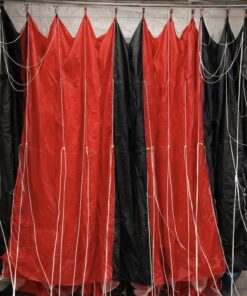
used products
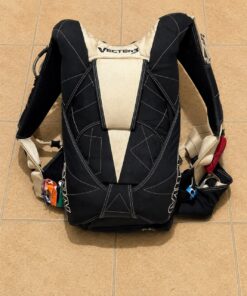

used products
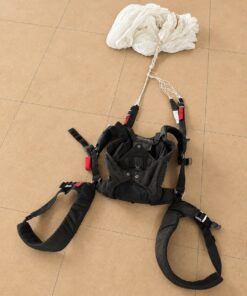
used products
used products
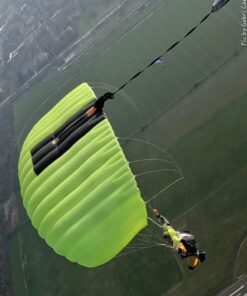

used products
used products
Reviews
There are no reviews yet.